Buying a Used Car in Australia 2026: The Complete Checklist

Buying a used car in Australia is mostly a paperwork problem pretending to be a mechanical one. The engine matters, obviously. But the ways people actually lose money are quieter: buying a car with finance still owing on it that the lender can lawfully repossess, buying a repairable write-off without knowing, or buying privately and discovering that you have no legal protection whatsoever.
The good news is that the two checks that prevent nearly all of it cost about $2 and $200 respectively, and take a combined afternoon.
The single biggest decision is where you buy. From a licensed dealer you get a cooling-off period, a statutory warranty and Australian Consumer Law guarantees that cannot be signed away. From a private seller you get none of those three — the car is sold as is, and if the gearbox goes on the drive home, that is your problem. Private cars are usually thousands cheaper for exactly that reason.
The short answer
Your rights depend on your state and who you buy from
This is the part almost nobody looks up before signing, and it is worth two minutes. Cooling-off periods and statutory warranties are set by state law and differ sharply — and the gap between buying from a dealer and buying privately is enormous everywhere.
The inspection checklist
Work through this while you are standing at the car. It is ordered the way you would actually inspect one — paperwork first, because if the paperwork is wrong nothing else matters. Tick as you go; nothing is saved or sent anywhere.
The seven steps, in order
- Set the real budget — purchase price plus 10 to 15 per cent for on-road costs.
- Decide dealer or private, knowing exactly what each one gives up.
- Run the PPSR check before any money changes hands.
- Check the write-off and stolen status, which the same certificate covers.
- Inspect the car yourself using the checklist above.
- Drive it properly — at least 20 minutes, including highway speed.
- Pay for an independent inspection before you commit.
Step 1: Work out what you can actually afford
The advertised price is not the cost. Stamp duty, transfer fees, registration and insurance add roughly 10 to 15 per cent on top, and the first-year insurance premium is usually the largest single addition.
| Cost | On a $20,000 car | On a $35,000 car |
|---|---|---|
| Stamp duty | $600 – $840 | $1,050 – $1,470 |
| Transfer fee | $30 – $60 | $30 – $60 |
| Registration and CTP | $600 – $1,100 | $600 – $1,100 |
| Comprehensive insurance, year one | $1,200 – $2,500 | $1,500 – $3,000 |
| Pre-purchase inspection | $150 – $250 | $150 – $250 |
| PPSR check | $2 | $2 |
| Add to your budget | $2,580 – $4,750 | $3,330 – $5,880 |
Get an insurance quote before you buy, not after
Step 2: Dealer or private?
There is a real trade-off here, and it is not simply “dealers are safer”. You are trading money for legal protection.
| Licensed dealer | Private seller | |
|---|---|---|
| Price | Typically $2,000 – $5,000 more | Cheaper, sometimes much |
| Cooling-off period | 1 to 3 business days | None, anywhere in Australia |
| Statutory warranty | 1 to 3 months depending on state, age and kilometres | None |
| Consumer guarantees | Yes — acceptable quality, cannot be signed away | None |
| Clear title guaranteed | Yes, dealers must sell free of encumbrance | No — your risk, check the PPSR |
| Trade-in accepted | Yes | No |
| Finance available on site | Usually, though rarely the cheapest | No |
| Room to negotiate | Moderate | Often substantial |
The rough rule: on an older, cheaper car where a statutory warranty would be thin anyway, private makes sense if you are disciplined about the checks. On a newer or more expensive car, the dealer premium buys protection that is genuinely worth something — and Australian Consumer Law guarantees keep applying long after the statutory warranty runs out.
The consumer guarantee dealers hope you do not know about
Step 3: The $2 check that prevents the worst outcome
The Personal Property Securities Register is a national government database. A vehicle search costs $2 at ppsr.gov.au and returns a certificate in seconds. It is, without exaggeration, the highest-value two dollars in Australian consumer life.
What the certificate tells you
- Whether there is money owing on the car. If a previous owner financed it and the loan is still registered, the financier can lawfully repossess the vehicle from you even though you paid the seller in full and in good faith. You would then be chasing the seller for your money, which in practice often means chasing nobody.
- Whether it has been written off — and in which category.
- Whether it has been reported stolen. A stolen vehicle is returned to its rightful owner and you lose both the car and the money.
- Basic vehicle details — make, model, colour and year, which you can check against the car in front of you.
How to run it properly
- Get the VIN — the 17-character vehicle identification number — not just the rego. A VIN search is the reliable one, because plates can be swapped.
- Find the VIN on the compliance plate (usually in the engine bay or door jamb), at the base of the windscreen, and on the registration papers. Check all three match. If they do not, walk away and do not explain why.
- Search at ppsr.gov.au — the official government site. Plenty of resellers charge $30 or more for the same $2 search dressed up in a nicer PDF.
- Run it on the day you intend to pay. A certificate from three weeks ago proves nothing about today.
- Keep the certificate. It records the search time, which matters if a dispute arises later.
If the PPSR shows finance owing, do not proceed on a promise
Step 4: Write-offs — the two categories that matter
An insurer declares a vehicle a total loss when repairing it costs more than it is worth. Australia then splits those cars into two very different categories, recorded on the national Written-Off Vehicles Register.
| Statutory write-off | Repairable write-off | |
|---|---|---|
| What it means | Damage so severe the vehicle can never safely return to the road | Uneconomical to repair, but structurally repairable |
| Can it be re-registered? | Never, anywhere in Australia, even if repaired | Yes in most states, after a forensic inspection |
| Legitimate use | Parts and scrap only | Can be a genuine bargain — or a hidden disaster |
| Insurance | Not applicable | Many insurers will not offer comprehensive cover at all |
New South Wales is stricter than everywhere else: repairable write-offs generally cannot be re-registered there at all, with a narrow exception for hail-damaged cars kept by their original owner. Other states allow re-registration after an inspection that checks both repair quality and signs of rebirthing — the practice of disguising a stolen car using a written-off car’s identity.
A repairable write-off is not automatically a bad buy, but it is never a casual one
Step 5: Inspecting the car yourself
You are not trying to diagnose the car. You are trying to find enough wrong to either walk away or justify paying for a professional inspection. Go in daylight, never in the rain, and never at night — wet or dark panels hide almost everything.
Start with the paperwork, before you look at the car
- The seller’s name must match the registration papers, and their photo ID must match both. If someone is selling “for a friend” or “for my brother who is overseas”, stop.
- The VIN on the car must match the papers and your PPSR certificate — check the compliance plate and the windscreen VIN.
- Service history with stamps or invoices, and the dates and kilometres should form a sensible progression. Big unexplained gaps matter.
- Ask to see it at the seller’s home address, and check it matches the registration. Meeting in a car park is a real warning sign in a private sale.
The body
Crouch at each corner and sight down the side of the car. Ripples, wavy reflections and mismatched paint texture are the giveaways for panel repair. Uneven panel gaps and doors that need a shove to close suggest the shell has been out of alignment — which means a real accident, not a shopping-trolley ding.
Check for rust in the wheel arches, sills, boot floor under the mat, and around the windscreen. Surface rust is manageable; bubbling paint means it is coming from underneath and is much worse than it looks. Lift the boot carpet and look at the spare-wheel well — it is where flood damage and rear-end repairs hide.
Tyres tell you about the car, not the tyres
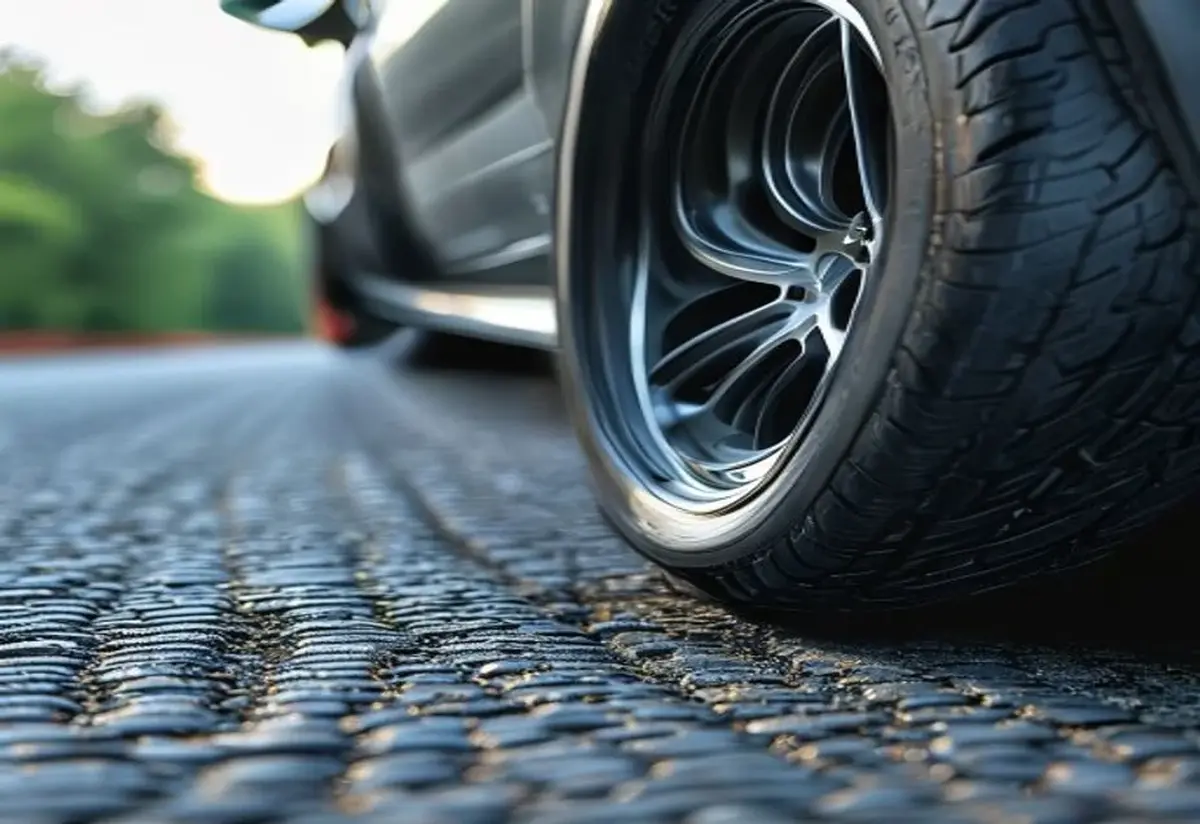
Four tyres of different brands suggests an owner who replaced them one at a time as they failed — usually a sign of minimal maintenance elsewhere. Uneven wear across the tread points to alignment or suspension problems. Wear on the inner edge only is a classic worn-suspension symptom and is not cheap to fix. Check the spare exists and holds air.
Under the bonnet, cold
Insist on seeing the car started from cold. A seller who has warmed the engine up before you arrive may be hiding a hard start, a rattle, or smoke. Check the oil on the dipstick — it should be brown-black and smooth, not milky (coolant in the oil, potentially a head gasket) or gritty. Look at the coolant in the overflow bottle: clear green, pink or blue is fine; rusty or oily is not.
Watch the exhaust on start-up and again when revved. Blue smoke means burning oil. White smoke that persists after warm-up can mean coolant in the cylinders. A brief puff of white vapour on a cold morning is just condensation and is normal.
Step 6: The test drive
Twenty minutes minimum, and it must include some highway speed. A ten-minute lap of the block tells you almost nothing — most of the expensive faults only appear when the car is warm and loaded.
- Start with the radio off and the windows down for the first few minutes, listening.
- Brakes: find an empty stretch, brake firmly. The car should pull up straight with no pulsing through the pedal and no grinding.
- Steering: on a flat, straight road, briefly relax your grip. Persistent pull to one side means alignment or worse.
- Transmission: an automatic should change gears without hunting, clunking or flaring. A manual clutch that bites right at the top of the pedal travel is near the end of its life.
- Highway: get to 80–100 km/h. Vibration through the wheel or seat points to wheels, tyres or driveshafts.
- Full lock both ways in a quiet car park, listening for clicking — a classic CV joint symptom.
- Reverse and park it. Check the reversing camera, sensors and handbrake actually work.
- Warning lights: all should illuminate at start-up and then go out. A light that never comes on at all may have had its bulb removed deliberately.
If the seller will not let you drive it, the viewing is over
Step 7: The independent inspection
This is the step people skip to save $200, and it is the most expensive corner in the entire process. A pre-purchase inspection costs $150 to $250 and takes about an hour. The motoring clubs — NRMA, RACV, RACQ, RAA, RAC and their equivalents — all offer them, as do mobile mechanics who will come to the seller’s address.
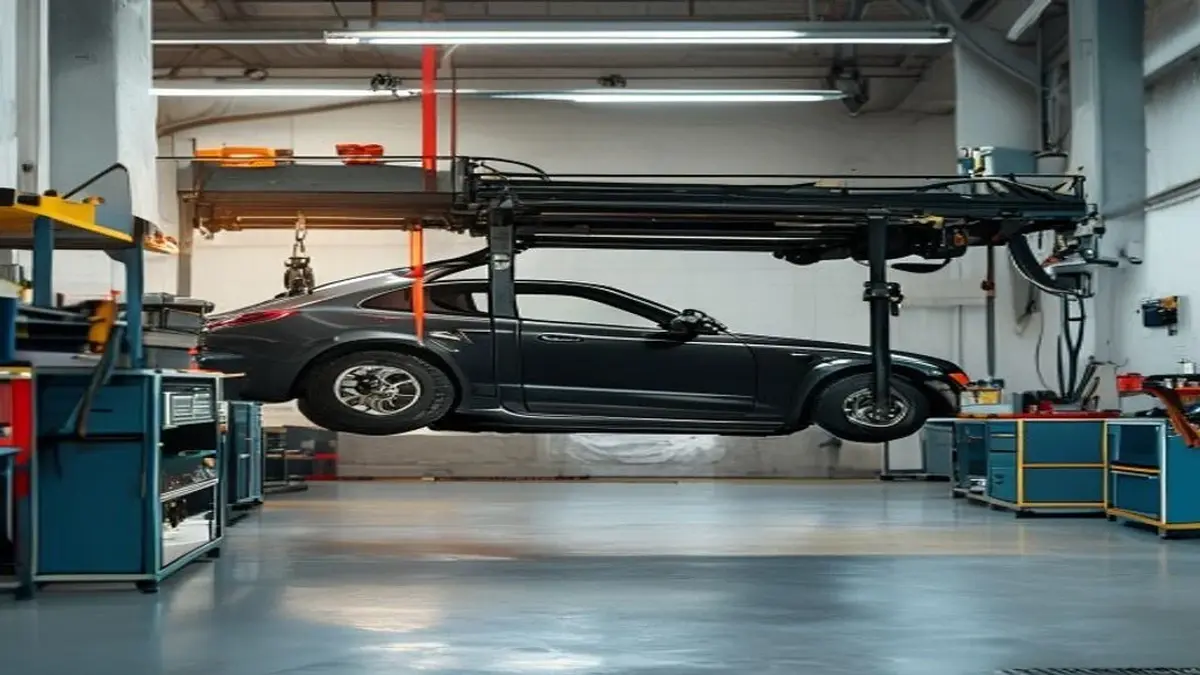
- It puts the car on a hoist, which is the only way to see the underbody, exhaust, suspension bushes and evidence of structural repair.
- It reads the diagnostic fault codes, including stored codes for faults that are not currently showing a dashboard light.
- It produces a written report, which is genuine negotiating leverage. “It needs $900 of tyres and brakes in the next few months” is a very different conversation from “I reckon the tyres look a bit low”.
- On any car over about $10,000, it is roughly 1 to 2 per cent of the purchase price to avoid a five-figure mistake.
A seller who refuses an independent inspection on a car they claim is sound has told you what you needed to know. A seller who agrees readily has just made your decision considerably easier.
Negotiating without being awkward about it
Australian private sellers generally expect some negotiation; dealers build a margin in and expect more. The most effective approach is unemotional and evidence-based.
- Research the real market first. Look at completed listings for the same model, year and kilometres, not the asking prices. Asking prices are aspirations.
- Lead with the inspection report, not with opinions. Specific costed items are hard to argue with.
- Make one considered offer rather than a lowball. Insultingly low offers usually end the conversation with a private seller.
- Be genuinely prepared to walk. This is the entire source of your leverage, and it only works if it is true. There is always another car.
- At a dealer, negotiate the drive-away price, not the sticker price, so on-road costs cannot be quietly reinflated afterwards.
- Ignore payment-per-week framing. Dealers who steer the conversation to weekly repayments are usually hiding the total cost or the interest rate. Always compare total price and total interest.
Paying and paperwork
- Re-run the PPSR on the day of payment.
- Pay traceably — bank transfer with a clear reference. Avoid large cash payments, which leave you with no record of what was paid or when.
- Get a written receipt with the date, price, both parties’ names and addresses, the VIN and the odometer reading, signed by both.
- Complete the transfer form and lodge it within the deadline — generally 14 days.
- Arrange insurance before you drive away, not after you get home.
- Sellers: lodge the notice of disposal immediately. Until the transfer is recorded, every fine the buyer collects comes to you.
Full details on transfer deadlines, stamp duty and the fees in each state are in our car registration and stamp duty guide.
Red flags that should end the viewing
- The VIN does not match the papers or the PPSR certificate.
- The seller’s name is not on the registration, or they cannot produce matching ID.
- Pressure to pay a deposit to “hold” the car before you have inspected it or run the PPSR.
- Refusal of a test drive or an independent inspection.
- A price well below market with an emotional urgency story attached — moving overseas tomorrow, deceased estate, must sell today.
- Meeting anywhere but the registered address in a private sale.
- A freshly steam-cleaned engine bay on an otherwise ordinary car. It is sometimes just pride, and sometimes hiding leaks.
- Service history that stops a year or two ago, with no explanation.
- Any request to record a lower price on the transfer form to reduce stamp duty. That is a false declaration and you would be the one making it.
New to Australia? Read this part twice
Buying your first car here is one of the earlier large purchases most new arrivals make, often before they have local credit history, a local licence or any sense of what things should cost. That combination attracts a particular kind of seller.
- You do not need permanent residency to buy or register a car. You need an address in the state and, in most cases, proof of identity. Temporary visa holders register vehicles routinely.
- You will usually need an Australian address for registration, and the car must be registered in the state where it is normally kept.
- Convert to an Australian licence sooner rather than later. It is required within a set period in every state, and the length of time you have held an Australian licence feeds directly into your insurance premium.
- Get an insurance quote before you buy. Without local driving history you may be rated as a brand-new driver, which can add $600 to $1,200 a year. Ask each insurer whether they recognise an overseas no-claims letter — some do, and almost none volunteer it.
- Beware the “backpacker special”. Cheap cars sold quickly between travellers are frequently unregistered, un-roadworthy, or carry finance. The PPSR check matters more here, not less.
- Free interpreter services exist at every state transport authority and fair trading body. Using one for a transfer or a dispute is entirely normal.
- Do not let anyone else register the car in their name “to make it easier”. Whoever is on the registration owns it, and unwinding that later is difficult.
A reasonable first-car strategy
Buying a used car: frequently asked questions
Official sources
| What | Where |
|---|---|
| PPSR vehicle search ($2) | ppsr.gov.au |
| Your consumer rights on cars | ACCC — new and second-hand cars |
| NSW buying and selling | NSW Government |
| Victoria used car rights | Consumer Affairs Victoria |
| Queensland buying a used vehicle | Queensland Government |
| WA car warranties | WA Consumer Protection |
Where to go next
Once you have chosen a car, work out the full cost of putting it on the road with our registration and stamp duty guide, check what cover will cost in our car insurance cost guide, and make sure you understand the compulsory injury insurance in our CTP and green slip guide. If you are weighing up a European model, are used European cars reliable in Australia? covers the running and repair costs that follow you for years, and novated lease versus buying compares the two main ways to pay. For the bigger picture, see the cost of living in Australia price guide.
A note on what this guide is
Buying through Marketplace or Gumtree? Read our guide to Marketplace and Gumtree scams first — vehicle listings attract the costliest scams on those platforms.
You May Also Like
Car Registration Cost in Australia 2026: Rego and Stamp Duty by State

CTP Insurance and Green Slips: How It Works in Every Australian State (2026)