Sydney vs Melbourne for International Students: Which City Is Better? (2026 Complete Guide)

You’re staring at your laptop at 2 AM, toggling between university websites, cost calculators, and Reddit threads. Sydney or Melbourne? The decision feels massive because, well, it is. You’re not just picking a university. You’re choosing where you’ll spend the next few years of your life, where you’ll make friends, build your career, and possibly start your future in Australia.
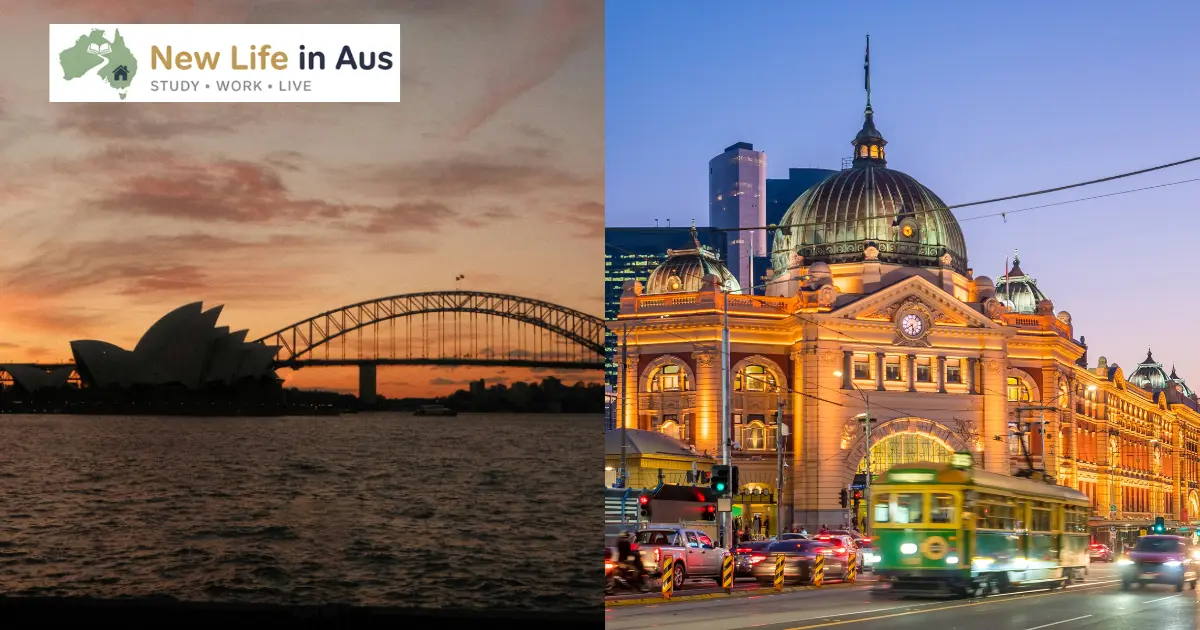
Here’s the thing: both cities are incredible. Sydney has those postcard-perfect beaches and sunshine that makes your Instagram feed glow. Melbourne has the coffee culture, the arts scene, and a price tag that won’t make your parents nervous. But which one is actually better for YOU?
Let me cut through the tourism brochures and give you the real story. I’ve analyzed the 2026 data, talked to students in both cities, and compared everything from rent prices to post-study work opportunities. By the end of this guide, you’ll know exactly which city fits your budget, your career goals, and your lifestyle.
The short answer? If you want to save AUD 6,000-8,000 per year and don’t mind unpredictable weather, Melbourne wins on value. If you prioritize beach lifestyle and sunny weather over cost, Sydney is your city. But that’s oversimplifying things. Keep reading because the right choice depends on factors you might not have considered yet.
TL;DR: Quick Decision Guide
Choose Sydney if:
- You love beaches and want 200+ days of sunshine
- You’re studying finance, business, or corporate fields
- Weather is a top priority for your mental health
- You can afford AUD 2,800-4,200/month
- You want maximum international flight connectivity
Choose Melbourne if:
- You want to save 20-30% on living costs
- You’re studying at Australia’s #1 ranked university (Uni Melbourne)
- You love arts, culture, coffee, and nightlife
- You prefer better public transport and student infrastructure
- You can handle “four seasons in one day” weather
The Numbers That Matter (2026):
| Factor | Sydney | Melbourne |
|---|---|---|
| Monthly Cost | AUD 2,800-4,200 | AUD 2,500-3,800 |
| Average Rent | AUD 1,273/month (studio) | AUD 842/month (studio) |
| Top University Rank | University of Sydney (#2 Australia) | University of Melbourne (#1 Australia) |
| QS Student City Rank | 6th globally | 5th globally |
| Average Temperature | 19°C (warmer) | 16°C (cooler) |
| Part-time Job Avg | AUD 25-35/hour | AUD 22-30/hour |
| Student Population | 35,000+ international | 180,000+ international |
Now let’s get into the details that will actually help you decide.
Cost of Living: The Reality Check You Need
Look, I’m going to be blunt. Sydney is expensive. Like, “questioning your life choices” expensive. Melbourne is cheaper, but it’s not exactly Bangkok either. The question is: how much cheaper, and does it actually matter for your situation?
Accommodation: Where Your Money Really Goes
Rent will eat up the biggest chunk of your budget. In 2026, here’s what you’re looking at:
Sydney Accommodation Costs:
| Type | Weekly Cost | Monthly Cost |
|---|---|---|
| Student Village (studio) | AUD 280-320 | AUD 1,200-1,380 |
| Shared House (private room) | AUD 250-400 | AUD 1,080-1,730 |
| Homestay | AUD 300-380 | AUD 1,300-1,640 |
| Private Studio Apartment | AUD 400-550 | AUD 1,730-2,380 |
Melbourne Accommodation Costs:
| Type | Weekly Cost | Monthly Cost |
|---|---|---|
| Student Village (studio) | AUD 195-250 | AUD 842-1,080 |
| Shared House (private room) | AUD 180-300 | AUD 780-1,300 |
| Homestay | AUD 250-320 | AUD 1,080-1,380 |
| Private Studio Apartment | AUD 300-400 | AUD 1,300-1,730 |
The difference? You’re saving around AUD 350-650 per month on rent in Melbourne. That’s AUD 4,200-7,800 per year. For context, that’s enough to fly home twice or cover your textbooks for your entire degree.
Best Affordable Suburbs:
Sydney:
- Newtown: Student hub, 15 minutes to uni, vibrant but grungy. Rent: AUD 280-350/week for shared room.
- Redfern: Close to Sydney Uni and UNSW. Getting gentrified, so moving fast. Rent: AUD 300-380/week.
- Parramatta: Further out (45 mins to CBD) but way cheaper. Rent: AUD 220-280/week.
- Glebe: Near Sydney Uni, lots of students, good cafes. Rent: AUD 300-400/week.
Melbourne:
- Carlton: Walking distance to Melbourne Uni. Italian precinct with great food. Rent: AUD 200-280/week.
- Fitzroy: Hipster central, amazing nightlife, vintage shops. Rent: AUD 220-300/week.
- Brunswick: Multicultural, cheaper, 20 mins to city. Rent: AUD 180-240/week.
- Clayton: Near Monash Uni, quiet, suburban. Rent: AUD 180-250/week.
Pro tip from students: In Sydney, live further out and commute. In Melbourne, you can afford to live closer to the action because of lower prices and the free tram zone.
Daily Living: The Small Stuff That Adds Up
Here’s where both cities are surprisingly similar. Your groceries at Coles or Woolworths cost roughly the same. A coffee is AUD 4.50-5.50 in both cities (though Melbourne has way more cafes). A beer at a pub runs AUD 10-12.
Weekly Grocery Budget (cooking at home):
- Budget: AUD 80-100
- Comfortable: AUD 120-150
Eating Out:
- Cheap meal (food court): AUD 10-15
- Mid-range restaurant: AUD 20-30
- Pub meal: AUD 18-25
- Takeaway (Indian/Chinese): AUD 12-18
Where Sydney costs more:
- Pub drinks (AUD 1-2 more per drink)
- Entertainment venues
- Beach cafe breakfast (tourist tax is real)
Where Melbourne costs more:
- Literally nothing. Melbourne is cheaper across the board for students.
Transport: Getting Around Without Going Broke
Sydney – Opal Card:
- Student weekly cap: AUD 50-65 (with concession)
- Single trip: AUD 2.24-8.05 depending on distance
- Weekend fare cap: AUD 8.05 (unlimited travel)
- Downside: Sydney is spread out. Getting from the western suburbs to Bondi can take 90 minutes.
Melbourne – Myki Card:
- Student daily cap: AUD 4.60 (Zone 1+2 concession)
- Single trip: AUD 2.30 (2 hours)
- Game changer: Free tram zone in CBD. You can get around the city center without paying.
- Bonus: Melbourne is flatter and more compact. Cycling is actually viable.
Monthly transport budget:
- Sydney: AUD 150-200
- Melbourne: AUD 80-120
Melbourne wins on transport. The free tram zone alone saves you AUD 40-60 per month if you’re living/studying in the CBD.
The Real Monthly Budget Breakdown
Let me give you the honest numbers based on actual student budgets in 2026:
SYDNEY – Survival Budget:
- Rent (shared room, outer suburb): AUD 1,200
- Groceries: AUD 400
- Transport: AUD 160
- Phone/Internet: AUD 60
- Utilities (if not included): AUD 100
- Entertainment/Social: AUD 200
- TOTAL: AUD 2,120/month minimum
SYDNEY – Comfortable Budget:
- Rent (student village or closer suburb): AUD 1,600
- Groceries + eating out: AUD 600
- Transport: AUD 180
- Phone/Internet: AUD 60
- Utilities: AUD 100
- Gym/subscriptions: AUD 80
- Entertainment/Social: AUD 400
- TOTAL: AUD 3,020/month
MELBOURNE – Survival Budget:
- Rent (shared room, decent suburb): AUD 900
- Groceries: AUD 400
- Transport: AUD 100
- Phone/Internet: AUD 60
- Utilities: AUD 80
- Entertainment/Social: AUD 200
- TOTAL: AUD 1,740/month minimum
MELBOURNE – Comfortable Budget:
- Rent (student village or trendy suburb): AUD 1,200
- Groceries + eating out: AUD 600
- Transport: AUD 120
- Phone/Internet: AUD 60
- Utilities: AUD 80
- Gym/subscriptions: AUD 80
- Entertainment/Social: AUD 400
- TOTAL: AUD 2,540/month
The yearly difference? Living comfortably in Melbourne costs about AUD 30,480 annually. In Sydney, you’re looking at AUD 36,240. That’s AUD 5,760 saved per year in Melbourne.
Money-Saving Hacks That Actually Work
Sydney:
- Get your Student Opal Card immediately (50% off transport)
- Shop at Aldi instead of Coles/Woolworths (save 20-30%)
- Beach days are free (take advantage)
- Cook in bulk on Sundays
- Join Facebook groups for free furniture/items
Melbourne:
- Use the free tram zone religiously
- Student discounts are EVERYWHERE (ask at every shop)
- Lygon Street has cheap Italian food (student portions)
- Queen Victoria Market on Saturday afternoons (vendors slash prices)
- Free events constantly (comedy, music, festivals)
Cost Winner: Melbourne by a landslide. You’ll save AUD 300-500/month compared to Sydney, which is massive over a 2-3 year degree.
Universities: Where Rankings Actually Matter
Let’s talk about why you’re really here. The education. Because what’s the point of saving AUD 5,000 a year if you’re at a second-tier university?
Good news: both cities have world-class universities. The question is which ones align with your field and career goals.
Sydney's Academic Powerhouses
1. University of Sydney
- THE Australia Ranking 2026: #2 nationally
- QS World Ranking: Top 20 globally
- Known for: Medicine, Law, Business, Engineering
- Campus: Gorgeous sandstone buildings in inner city
- Vibe: Prestigious, traditional, strong alumni network
- International students: 30% of student body
- Graduate employment: 85% employed within 4 months
Why choose it: If you want a brand-name degree that opens doors globally, especially in Asia where it’s highly respected. The campus looks like Hogwarts.
2. UNSW Sydney (University of New South Wales)
- THE Ranking: #3 nationally
- Known for: Engineering, Computer Science, Business
- Campus: Modern, beachside location (Kensington)
- Vibe: Tech-focused, innovative, strong industry links
- Co-op program: Paid work placements during your degree
- Graduate starting salary: Highest in Australia for engineering grads
Why choose it: Best engineering and tech programs in Australia. The Co-op program means you graduate with experience AND money.
3. University of Technology Sydney (UTS)
- Known for: IT, Design, Communication, Nursing
- Campus: Ultra-modern, CBD location
- Vibe: Startup culture, practical focus
- Industry connections: Google, IBM, Atlassian partnerships
- Unique: Focus on “practice-based learning”
Why choose it: If you want hands-on experience over theory. Less prestigious than Sydney/UNSW but strong industry reputation.
4. Macquarie University
- Known for: Accounting, Actuarial Studies, Linguistics
- Campus: North Sydney, spacious
- Vibe: Corporate, professional
- Bonus: On-campus train station
5. Western Sydney University
- Known for: Medicine, Nursing, Education
- Benefit: Regional university status (extra points for PR)
- Cost: Cheaper area = lower living costs
Melbourne's Education Empire
1. University of Melbourne
- THE Australia Ranking 2026: #1 nationally (this matters)
- QS World Ranking: Top 15 globally
- Known for: Everything. Literally top-ranked in most fields.
- Melbourne Model: Graduate-focused entry for most degrees
- Campus: Beautiful, heritage-listed, city-center
- Vibe: Ivy League of Australia
- Research: Highest research output in Australia
- Notable: 8 Nobel Prize winners affiliated
Why choose it: It’s the best university in Australia. Period. If rankings matter to employers in your home country, this is your pick.
2. Monash University
- THE Ranking: #3 nationally
- Known for: Medicine, Pharmacy, Business, Engineering
- Campus: Multiple campuses (Clayton is main)
- Vibe: Research-intensive, global outlook
- International: Campuses in Malaysia, China, India
- Graduate outcomes: 92% employment rate
Why choose it: Huge international network. If you want global opportunities, Monash has them.
3. RMIT University
- Known for: Design, Architecture, STEM, Aviation
- Campus: CBD location, modern facilities
- Vibe: Practical, industry-focused, creative
- Strength: Strongest industry partnerships in Melbourne
- International: 36% of students from overseas
Why choose it: Best for creative fields and anyone wanting to work WHILE studying (great internship programs).
4. La Trobe University
- Known for: Health Sciences, Social Work, Regional study options
- Benefit: Multiple campuses including regional (PR benefits)
- Cost: More affordable than Melb/Monash
5. Deakin University
- Known for: Nursing, IT, Business
- Unique: #1 in Victoria for student satisfaction
- Campuses: Burwood, Geelong (regional), Warrnambool
- Online: Strong online/flexible options
The Rankings Reality Check
Here’s what students actually care about in 2026:
University Rankings by Field:
| Field | Best in Sydney | Best in Melbourne |
|---|---|---|
| Engineering | UNSW | Melbourne / Monash |
| Business/MBA | Sydney / UNSW | Melbourne |
| Medicine | Sydney | Melbourne / Monash |
| Computer Science | UNSW | Melbourne |
| Law | Sydney | Melbourne |
| Arts/Humanities | Sydney | Melbourne |
| Design | UTS | RMIT |
| Pharmacy | Sydney | Monash (best in Australia) |
| Education | Sydney | Melbourne |
What Actually Matters More Than Rankings
1. Industry Connections
- Sydney unis have stronger links to finance, consulting, corporate
- Melbourne unis have stronger links to tech startups, creative industries, healthcare
2. Campus Location
- Sydney Uni & UTS: Walking distance to CBD
- UNSW: 20 minutes to city, near beaches
- Melbourne Uni & RMIT: In the CBD (can’t beat this)
- Monash: 40 minutes out (but huge campus)
3. International Student Support
- Both cities have excellent support services
- Melbourne Uni has dedicated International House
- UNSW has specific pathway programs
- All major unis offer airport pickup, orientation weeks
4. Graduate Employability
- University of Melbourne: 89% employed within 4 months
- University of Sydney: 85% employed
- UNSW: 87% employed (highest salaries)
- Monash: 92% employed
- Industry matters more than city here
Research Opportunities
If you’re doing postgrad or want research experience:
Sydney strengths:
- Biomedical research (Sydney Hospital connections)
- Marine biology (coastal location)
- Finance/economics (proximity to financial district)
Melbourne strengths:
- Medical research (Melbourne has more hospital partnerships)
- Social sciences (cultural capital advantage)
- Engineering innovation (stronger startup ecosystem)
The Group of Eight
Both cities have multiple “Group of Eight” universities (Australia’s Ivy League):
Sydney: University of Sydney, UNSW
Melbourne: University of Melbourne, Monash
If you’re from Asia where rankings heavily influence hiring, the Group of Eight membership on your degree matters. Melbourne has the #1 ranked (University of Melbourne), but Sydney’s universities aren’t far behind.
Academic Winner: Melbourne (barely)
Why Melbourne wins:
- University of Melbourne is ranked #1 in Australia (2026 THE rankings)
- More universities in top rankings overall
- Slightly better student satisfaction scores
- Better campus locations (city-center vs suburban)
But Sydney is competitive if:
- You’re studying engineering (UNSW is exceptional)
- You want finance/corporate career (Sydney Uni’s network wins)
- Campus aesthetics matter (Sydney Uni is stunning)
The honest truth? The university you choose matters more than the city. Pick based on your program, not the city name.
Job Opportunities: Making Money While You Study
You need money. Rent is due, your parents are helping but you want some independence, and honestly, Uber Eats is expensive. Let’s talk about making money as a student in 2026.
The 2026 Work Rules (This Changed)
First, the boring but important stuff. As an international student on a Subclass 500 visa in 2026, you can work:
- 48 hours per fortnight (that’s about 24 hours/week) during semester
- Unlimited hours during official university breaks
- Exception: Master’s by research and PhD students can work unlimited hours
This changed from unlimited hours during COVID. The government tightened it in 2023, and it’s still in effect in 2026.
What this means: You can realistically work 2-3 shifts per week during semester. Most students do 15-20 hours. More than that and your grades suffer (trust me, students have tried).
Part-Time Job Reality
Average wages in 2026:
- Retail: AUD 22-25/hour
- Hospitality (café/restaurant): AUD 23-28/hour
- Tutoring: AUD 30-50/hour
- Campus jobs: AUD 25-30/hour
- IT support/admin: AUD 28-35/hour
- Delivery (Uber Eats, etc.): AUD 20-25/hour after expenses
Monthly earnings (working 20 hours/week at AUD 25/hour):
- Gross: AUD 2,000/month
- After tax: AUD 1,750-1,800/month
That covers rent in Melbourne. In Sydney, it covers rent if you’re in a cheaper suburb.
Where Students Actually Work
Sydney Jobs:
Pros:
- More corporate internships (finance, consulting, tech)
- Higher wages (AUD 2-5/hour more on average)
- More multinational companies
- Tourism industry always hiring (restaurants, hotels near Opera House)
Common jobs:
- Retail at Westfield shopping centers
- Waiters in Darling Harbour / Circular Quay
- Admin work in CBD offices
- Tutoring (huge demand in North Shore suburbs)
- Airport jobs (Kingsford Smith is massive)
Where to find jobs:
- SEEK.com.au
- Indeed
- Your university career portal
- NSW Jobs Connect (government program for international students)
- Facebook groups (“Sydney Student Jobs”, “International Students Sydney”)
Melbourne Jobs:
Pros:
- Coffee culture = TONS of café jobs
- Strong creative industry (design, marketing, content)
- Tech startup scene (paid internships)
- More casual retail (easier to get shifts)
Common jobs:
- Barista (Melbourne takes coffee seriously, but you need skills)
- Retail in Melbourne Central / Chadstone
- Food delivery (flat city = easier cycling)
- Tutoring (especially in Box Hill, Glen Waverley – Chinese suburbs)
- Campus jobs (library, student services, events)
Where to find jobs:
- SEEK.com.au
- GumTree (more casual jobs)
- University job boards
- Hospo Jobs Facebook groups
- Walking into cafés with your resume (actually works in Melbourne)
The Job Hunt Reality Check
Time to get first job:
- Sydney: 4-8 weeks (competitive)
- Melbourne: 3-6 weeks (slightly easier)
What employers want:
- Australian work experience (catch-22, I know)
- Availability on weekends (this is key)
- Good English communication
- Local references (use your lecturers, volunteer coordinators)
Insider tips from students who succeeded:
- Start looking before you arrive. Join job search Facebook groups from home.
- Your resume needs Australianizing. One page. No photo. Contact details at top. Achievements, not duties.
- Weekend availability is gold. If you can work Saturdays and Sundays, you’ll get hired faster.
- Hospitality is the easiest entry point. Once you have Australian experience, pivoting is easier.
- Campus jobs are competitive but possible. Apply in November for semester 1, June for semester 2.
- Tutoring pays best but needs credentials. Wait until you’ve aced your first semester, then advertise.
Industry Presence: Career After Graduation
This is where Sydney and Melbourne really differ.
Sydney’s Strengths:
Finance & Banking:
- Big 4 banks headquartered here (Commonwealth, Westpac, NAB, ANZ)
- Investment banks prefer Sydney
- FinTech growing rapidly
- Starting salary: AUD 65,000-80,000 for graduates
Corporate/Consulting:
- McKinsey, BCG, Deloitte, PwC – all major offices here
- Most ASX200 companies headquartered in Sydney
- Starting salary: AUD 70,000-85,000
Tech (Corporate):
- Google Australia HQ
- Microsoft, Atlassian, Canva
- Focus on enterprise tech
- Starting salary: AUD 75,000-95,000
Melbourne’s Strengths:
Tech (Startup):
- Second highest startup density in Asia-Pacific after Singapore
- REA Group, SEEK, Carsales all founded here
- Strong ecosystem for founding your own startup
- Starting salary: AUD 65,000-80,000 (but equity opportunities)
Healthcare/Medical:
- More hospitals per capita
- Pharmaceutical research hubs
- Medical technology companies
- Starting salary: AUD 60,000-75,000
Creative Industries:
- Design agencies, ad agencies, gaming studios
- Film/TV production growing
- Marketing & content creation
- Starting salary: AUD 50,000-65,000
Education/Research:
- More universities = more research positions
- International education sector huge
- Starting salary: AUD 55,000-70,000
Post-Study Work Visa (Subclass 485)
After graduation, you can stay and work in Australia on the Temporary Graduate visa. Here’s what changed in 2026:
Post-Higher Education Work Stream (renamed from Post-Study Work):
| Qualification | Duration |
|---|---|
| Bachelor’s degree | 2 years |
| Master’s (coursework) | 2 years |
| Master’s (research) | 3 years |
| PhD | 3 years |
Key changes in 2026:
- Age limit reduced to 35 years (was 50)
- 2-year extension for skills-shortage degrees ended mid-2024
- Regional study can add 1-2 extra years
- Must apply within 6 months of graduation
- Need to meet Australian Study Requirement (16 months minimum on campus)
Does the city matter for post-study work?
Not directly, but:
Sydney advantages:
- More graduate programs (corporate culture)
- Higher starting salaries (cost of living adjusted)
- More “traditional” career paths
- Better for finance, corporate, consulting careers
Melbourne advantages:
- More diverse industries
- Better for startups and creative fields
- Slightly easier to find affordable living while on grad wage
- Strong healthcare/research opportunities
Graduate employment rates (2026):
- Sydney graduates: 85% employed within 4 months
- Melbourne graduates: 89% employed within 4 months
Melbourne’s higher rate is partly because more students stay (it’s cheaper), not necessarily because there are more jobs.
Pathway to Permanent Residency
If you’re thinking long-term (PR), here’s what matters:
Points-based system (skilled migration):
- University location doesn’t matter much
- Regional study adds bonus points
- What matters: your occupation, age, English score, work experience
Employer-sponsored:
- Sydney has more large companies = more sponsorship opportunities
- Melbourne has growing startup scene = fewer sponsorships but possible
State nomination:
- Victoria (Melbourne) and NSW (Sydney) both have state nomination programs
- Similar criteria, similar quotas
Pro tip: If PR is your goal, consider regional campuses (La Trobe Bendigo, Western Sydney, Deakin Geelong). Regional study = extra points.
Jobs Winner: Sydney for corporate careers, Melbourne for diversity
Choose Sydney if: You want finance, consulting, or corporate roles. Higher salaries, more multinational companies, clearer career ladders.
Choose Melbourne if: You want startups, creative industries, healthcare, or more diverse options. Slightly easier job market, lower cost of living means your salary goes further.
Part-time work: Roughly equal. Both cities have plenty of student jobs. Melbourne’s café culture edges it out slightly for sheer volume of hospitality positions.
Lifestyle: Beyond the Lecture Hall
You’re going to spend 3-4 years in this city. That’s not just about studying. That’s about living. Making friends. Having experiences. Maybe falling in love. Maybe discovering a new passion. Let’s talk about what daily life actually feels like.
Sydney: The Beach Life Cliché That's Actually True
The Good Stuff:
Beaches (Obviously): Sydney has 100+ beaches. That’s not hyperbole. From the CBD:
- Bondi Beach: 20 minutes by bus. Tourist central, but sunrise swims are magical. Learn to surf here.
- Manly: 30 minutes by ferry (the ferry ride is the experience). Less touristy, better surf.
- Coogee: Quieter, local vibe. Great coastal walk to Bondi.
- Cronulla: South side, less crowded, proper surf culture.
What this means: Your study break is literally swimming in the ocean. Your Sunday is beach volleyball and fish & chips. Your stress relief is sunset at the beach. If you’re from a landlocked country, this is transformative.
Outdoor Lifestyle:
- Harbour walks (Spit to Manly is stunning)
- Royal National Park (second oldest national park in world, 1 hour south)
- Blue Mountains (2 hours west, hiking, waterfalls, iconic Three Sisters)
- Kayaking in Sydney Harbour
- Coastal cliff walks everywhere
Social Scene:
- Pub culture in Newtown (cheap, student-y, live music)
- Bars in The Rocks (historic, touristy but beautiful)
- Clubs in Kings Cross (back from the dead, nightlife returning)
- Rooftop bars with Opera House views (expensive but worth it once)
- Beach parties in summer (Bondi, Maroubra, Cronulla)
Cultural Stuff:
- Opera House (student rush tickets are cheap)
- Vivid Sydney (May-June, light festival, free)
- Sydney Festival (January, arts + music)
- Art Gallery of NSW (free permanent collection)
- Museums (Australian Museum, Powerhouse)
Food:
- Multicultural but expensive
- Best Asian food in Haymarket/Chinatown
- Cheap eats: Thai town (Thai Pothong), El Jannah (Lebanese), Guzman y Gomez (Mexican)
- Brunch culture is huge (overpriced but Instagram-worthy)
The Challenges:
It’s Spread Out: Sydney is HUGE. Seeing friends who live in different suburbs requires planning. The western suburbs can be 90 minutes from the beaches. You’ll spend time commuting.
It’s Expensive: Everything costs more. That spontaneous night out is AUD 100 before you know it. Beach cafés charge tourist prices. The “Sydney tax” is real.
Less Community Feel: Because it’s so spread out, it can feel fragmented. Finding your tribe takes effort.
Lock-out Laws Impact: While they’ve eased, Sydney’s nightlife isn’t as vibrant as it was. Last drinks at 3:30am. Some people find it limiting.
Melbourne: The City That Doesn't Sleep (Literally)
The Good Stuff:
Laneways & Coffee Culture: Melbourne has 2,000+ cafés. Coffee here is a religion. You’ll learn the difference between a flat white, a magic, and a piccolo latte. Degraves Street, Hardware Lane, Centre Place – hidden cafés everywhere. It’s not about Starbucks (there are like 3 in the whole city). It’s about local roasters and baristas who care.
Arts & Culture:
- Street art: Hosier Lane is famous, but every laneway has art. It changes monthly.
- Live music: 465 live music venues. More per capita than Austin, Texas. Gigs every night.
- Comedy: Melbourne International Comedy Festival (March-April). Cheap comedy shows year-round.
- Theatre: More shows than Sydney, cheaper tickets.
- NGV (National Gallery of Victoria): Free, world-class, stunning building.
Food Scene (The Real Reason People Love Melbourne):
- Lygon Street: Italian central. Cheap pasta, authentic.
- Victoria Street, Richmond: Vietnamese. Best pho in Australia.
- Chapel Street: Trendy, international, cocktail bars.
- Queen Victoria Market: Fresh produce, cheap, cultural experience. Go Saturday afternoon when vendors drop prices.
- Fitzroy: Hipster food, experimental, vegan heaven.
You can eat a different cuisine every night for a month. Ethiopian, Sri Lankan, Macedonian, Argentine – it’s all here and it’s GOOD.
Sports (If That’s Your Thing):
- AFL (Australian Football) is a religion. MCG (Melbourne Cricket Ground) seats 100,000. The atmosphere is insane.
- Melbourne Cup (horse racing, first Tuesday in November, public holiday).
- F1 Grand Prix (March)
- Australian Open (tennis, January)
Nightlife:
- Open later than Sydney (5am+ in many places)
- Revolver (24-hour club, techno)
- Rooftop bars everywhere (cheaper than Sydney)
- Live music in pubs (free entry usually)
- Secret bars (you’ll discover them)
Day Trips:
- Great Ocean Road: 2 hours, Twelve Apostles, stunning coastal drive
- Yarra Valley: Wine region, 1 hour east
- Mornington Peninsula: Beaches, hot springs, wineries
- Phillip Island: Penguins (touristy but actually cool)
- Grampians: National park, hiking, 3 hours west
The Challenges:
The Weather (Let’s Address It): Melbourne weather is bipolar. Literally four seasons in one day isn’t a joke. You’ll leave home in sunshine, get rained on, then it’s windy, then sunny again. By 5pm you need a jacket.
Winter (June-August):
- Average 10°C (50°F)
- Lots of grey, cloudy days
- It gets dark at 5pm
- If you’re from a warm country, this can hit hard mentally
But here’s the thing: Melbourne KNOWS its weather sucks. So the entire city is designed around it. Covered laneways. Indoor markets. Cozy cafés. Amazing museum. The arts scene exists because people needed things to do inside.
Beaches Aren’t the Same: Port Phillip Bay, not the Pacific Ocean. The beaches (St Kilda, Brighton) are calmer, less dramatic. No surf culture. Good for swimming, not for surfing.
Can Feel Clique-y: Melburnians love their city (maybe too much). There’s a bit of “you don’t get it” energy sometimes. But once you’re in, you’re in.
Social Life Comparison
Making Friends:
Sydney:
- Beaches are natural social spots
- Harder because of distances (friends might live 45 mins away)
- University clubs are key
- International student communities are tight-knit
Melbourne:
- Easier to meet people (everything is closer)
- House parties are huge (cheaper than going out)
- Arts scene creates community
- More events = more opportunities
Dating: Both cities have normal dating scenes. Tinder/Bumble work. Melbourne is stereotypically more “chill,” Sydney more “show-off.” But honestly, it’s dating. It’s awkward everywhere.
Weekend Activities:
Sydney Weekends:
- Beach days (free)
- Coastal walks (free)
- Markets (Paddington, Glebe)
- Brunch (expensive but cultural experience)
- House parties (cheaper than bars)
Melbourne Weekends:
- Café hopping (expensive coffee adds up)
- Live music (cheap gigs)
- Markets (Queen Vic, South Melbourne, Rose Street)
- Gallery hopping (free)
- House parties (huge culture here)
Cultural Diversity
Both cities are incredibly multicultural.
Sydney:
- Large Asian population (Chinese, Indian, Korean, Vietnamese)
- Middle Eastern communities (Lakemba, Bankstown)
- Italian/Greek communities (Leichhardt, Marrickville)
- Pacific Islander communities
- Feels more like a Pacific Rim city
Melbourne:
- Greek (biggest Greek-speaking city outside Greece)
- Italian (Lygon Street, Carlton)
- Vietnamese (Richmond)
- African communities (growing)
- Feels more like a European city
What this means for you: You’ll find your community in either city. Melbourne has slightly more cultural festivals, but Sydney has bigger established communities.
Safety & Vibe
Sydney:
- Generally safe
- Beach suburbs feel chilled
- CBD can be hectic
- Some western suburbs sketchy at night (but improving)
- Laid-back “beach bum” energy mixed with corporate hustle
Melbourne:
- Also generally safe
- Brunswick/Footscray can be rough late at night
- CBD is safe but empty after business hours
- Trams make late-night travel safer
- More “European cool” energy, artistic, alternative
Both cities are far safer than most global cities. Violent crime is rare. Biggest risks are pickpocketing in touristy areas and drunk idiots on Friday nights.
Mental Health Considerations
Sydney:
- More sunshine = generally better for mood
- But expensive lifestyle can cause stress
- FOMO is real (everyone’s at the beach but you’re studying)
- University counseling services are good
Melbourne:
- Winter can be tough (seasonal affective disorder is real)
- But rich cultural life provides meaning
- Strong sense of community helps
- All universities have excellent mental health support
Both cities: International student loneliness is a thing. First 3 months are hardest. Join clubs. Say yes to everything. It gets better.
Lifestyle Winner: Depends What You Value
Sydney wins if you:
- Love the ocean (this can’t be overstated)
- Need sunshine for your mental health
- Want outdoor lifestyle
- Prefer “chill vibes”
- Like beach volleyball, surfing, coastal runs
Melbourne wins if you:
- Love arts, music, culture
- Are a foodie (Melbourne is better, fight me)
- Want vibrant nightlife
- Prefer urban exploration to beaches
- Don’t mind weather if the culture is rich
- Want better value for money lifestyle
Personal take: Sydney has better nature. Melbourne has better culture. Sydney is beautiful. Melbourne is interesting.
You’ll have an amazing time in either. But you’ll have a different amazing time.
Weather: Can You Handle Four Seasons in One Day?
Let’s get real about this because weather affects your daily life more than you think. Especially if you’re from a warm country and haven’t experienced proper winter.
Sydney Weather: The Easy Winner
Year-Round Breakdown:
Summer (December-February):
- Average high: 26°C (79°F)
- Hot days hit 35-40°C (95-104°F)
- Beach weather basically every day
- Humid (you’ll sweat)
- Occasional storms (dramatic but quick)
Autumn (March-May):
- Perfect. Seriously perfect.
- 18-24°C (64-75°F)
- Sunny, clear, comfortable
- Best time of year
Winter (June-August):
- Average high: 17°C (63°F)
- Rarely below 10°C (50°F)
- Still sunny most days
- You’ll wear a jacket but it’s mild
- Might swim if you’re brave
Spring (September-November):
- 18-23°C (64-73°F)
- Flowers blooming
- Beach season starts
The Reality:
- 200+ days of sunshine per year
- What you wear in the morning works all day
- Predictable weather
- You can plan outdoor activities with confidence
- Winter feels like autumn in most countries
For students: You’ll study outside. You’ll walk home without worry. Your mental health benefits from vitamin D.
Melbourne Weather: The Personality Test
If Melbourne weather was a person, it would be diagnosed with a mood disorder.
Year-Round Breakdown:
Summer (December-February):
- Average high: 25°C (77°F)
- Can hit 40°C (104°F) then drop to 18°C same day
- Dry heat (not as humid as Sydney)
- Coastal winds
- Beautiful days but unpredictable
Autumn (March-May):
- 15-20°C (59-68°F)
- Most stable season
- Still changeable but gorgeous when it’s good
Winter (June-August):
- Average high: 14°C (57°F)
- Feels colder than Sydney (about 3-5°C)
- Grey, cloudy, drizzly
- Wind makes it feel worse
- Might not see sun for days
- Dark by 5pm
Spring (September-November):
- 15-20°C (59-68°F)
- Most unpredictable season
- Morning: 10°C and raining. Afternoon: 23°C and sunny.
- You’ll carry a jacket, sunglasses, and umbrella simultaneously
The Infamous “Four Seasons in One Day”: This is not an exaggeration. Here’s a real Melbourne day:
- 8am: Cold (12°C), need a jacket
- 11am: Sunny and warming up (18°C), take jacket off
- 1pm: Hot (24°C), wish you had sunscreen
- 3pm: Sudden rain, windy, back to 16°C
- 6pm: Clear again, cold (14°C), need jacket
- 9pm: Freezing (10°C), need coat
What Melbourne students actually do:
- Layer everything
- Always carry an umbrella
- Check weather obsessively (still wrong)
- Develop thick skin (literally and figuratively)
- Embrace indoor culture
The Mental Health Factor
This matters more than people admit.
Seasonal Affective Disorder (SAD) is real:
- Melbourne’s grey winters can genuinely affect mood
- International students from sunny countries struggle most
- Vitamin D supplements help
- University counseling sees spike in winter appointments
Sydney’s sunshine advantage:
- Natural mood booster
- Easier to stay active
- Beach therapy is real
- Outdoor study spots year-round
But: Some people find Melbourne’s weather makes the city more interesting. There’s beauty in moody grey skies. The cozy café culture exists because of the weather.
Seasonal Activities
Sydney:
- Beach all year (wetsuit in winter)
- Outdoor festivals (mostly summer)
- Coastal walks year-round
- Outdoor dining 10+ months
Melbourne:
- Ski season (June-September) – Mt Buller, Falls Creek 3 hours away
- Indoor culture thrives (theaters, museums, galleries)
- Cozy café culture shines
- Winter festivals (not outside though)
Weather Impact on Studying
Sydney:
- Temptation to skip class for beach (real problem)
- Outdoor study is comfortable
- Group projects can meet in parks
- Exercise easier (outdoor sports)
Melbourne:
- Weather forces you to study (silver lining)
- Library becomes second home
- Indoor activities don’t feel like punishment
- Actually study instead of procrastinating at beach
What Students From Different Climates Say
From India/Southeast Asia/Middle East (hot climates):
- Sydney: “Perfect, I can handle this weather”
- Melbourne: “Winter is brutal. I was not prepared.”
From China/Korea/Japan (temperate climates):
- Sydney: “Too hot in summer, but nice winter”
- Melbourne: “More like home, I can deal with this”
From Nordic countries/Canada:
- Sydney: “This is not real winter, it’s a joke”
- Melbourne: “Still mild, but appreciate actual seasons”
Practical Weather Tips
For Melbourne:
- Invest in a good jacket (Uniqlo, Kathmandu have student deals)
- Layers are life (remove/add as day changes)
- Waterproof bag for laptop
- Good shoes (you’ll walk in rain)
- Vitamin D supplements (seriously)
- Plan indoor backup activities
For Sydney:
- Sunscreen always (UV is intense)
- Hat for walking campus
- Light jacket for evening
- Beach bag ready
- Drink more water (you’ll underestimate it)
Weather Winner: Sydney, No Contest
Unless you genuinely prefer grey, moody weather or grew up with harsh winters, Sydney wins on climate.
Sydney advantages:
- 200+ sunshine days
- Predictable
- Mild winters
- Beach weather most of year
- Better for mental health (generally)
Melbourne’s only defense:
- “Builds character”
- Makes you appreciate sunny days more
- Ski season access
- Cozy indoor culture
If weather is important to you (and it should be), Sydney is the clear winner.
Transportation: Getting Around Without a Car
Neither city requires a car. Good news for international students who can’t afford one anyway. But how you get around differs significantly.
Sydney Public Transport: Opal Card System
The Network:
- Trains: Extensive, goes everywhere (eventually)
- Buses: Fill the gaps, lots of routes
- Ferries: Circular Quay to Manly, Parramatta, etc. (most scenic commute in world)
- Light rail: CBD to Dulwich Hill, CBD to Randwick/Kingsford
The Opal Card:
- Tap on/off system
- Automatic fare calculation
- Daily cap: AUD 16.80 (AUD 8.40 student concession)
- Weekly cap: AUD 50 (AUD 25 student concession)
- Sunday: AUD 2.80 max (best travel day)
Student Concession: You get 50% off with a valid student ID. International students ARE eligible (changed in 2024, still applies in 2026).
Cost Examples:
- UNSW to Central Station: AUD 3-4 (15 mins)
- Sydney Uni to Circular Quay: AUD 3-4 (20 mins)
- Parramatta to CBD: AUD 5-6 (45 mins)
The Reality:
Pros:
- Ferries are beautiful
- Trains mostly on time
- Weekend fare cap is cheap
- Good coverage
Cons:
- Sydney is SPREAD OUT. Western suburbs to eastern beaches = 90 minutes.
- Peak hour trains are sardine cans
- Buses in traffic are slow
- Some connections require multiple changes
- Not 24 hours (trains stop around midnight-1am)
Best Student Suburbs by Transport:
- Newtown: On the train line, buses everywhere, 10 mins to Central
- Redfern: Walking distance to Sydney Uni, trains to UNSW
- Parramatta: Major hub, fast train to CBD
- Strathfield: Good connections, cheaper rent
Melbourne Public Transport: Myki Card System
The Network:
- Trains: Radial system (all lines go through city loop)
- Trams: 250km of tram tracks, iconic, extensive
- Buses: Fill outer suburbs
The Myki Card:
- Tap on/off system
- Zone based (Zone 1 is most of student life)
- Daily cap: AUD 10 full fare, AUD 5 concession
- Free Tram Zone: Entire CBD is FREE (no Myki needed)
Student Concession: International students get 50% off. You need to apply online (takes 2 weeks).
Cost Examples:
- Monash Clayton to CBD: AUD 2.30 single (45 mins)
- Melbourne Uni to CBD: FREE (in free tram zone)
- Daily unlimited: AUD 5 (concession)
The Reality:
Pros:
- Free tram zone (this alone saves AUD 40-60/month)
- Trams everywhere in inner suburbs
- Flat city (cycling is easy)
- Trains are reliable
- Cheaper than Sydney
Cons:
- Trams are slow (but charming)
- Outer suburbs less connected
- Not 24 hours (but better late-night than Sydney)
- Myki system can be glitchy
Best Student Suburbs by Transport:
- Carlton: Walking distance to Uni of Melbourne, free tram zone
- Fitzroy: Trams every 5 minutes, inner suburb
- Brunswick: Multiple tram lines, cheap
- Clayton: On train line to Monash
The Free Tram Zone (Melbourne's Secret Weapon)
This deserves its own section. In Melbourne’s CBD (roughly from Victoria Market to Flinders Street, Docklands to Spring Street), trams are completely free.
What this means:
- Living in Carlton (near Uni Melbourne)? Your commute is FREE.
- RMIT student in CBD? FREE.
- Want to explore city? FREE.
- Meeting friends for coffee in city? FREE transport.
Sydney has nothing comparable. This genuinely saves students AUD 50-80/month.
Cycling Culture
Melbourne:
- Flat. Like, actually flat.
- Dedicated bike lanes everywhere
- Bike share schemes (cheap)
- Students actually cycle year-round
- Safe cycling culture
Sydney:
- Hills. So many hills.
- CBD to UNSW? Uphill battle.
- CBD to Sydney Uni? Uphill.
- Some bike lanes but less extensive
- Cycling is harder, less common
Winner: Melbourne for cycling. It’s not even close.
Walking
Melbourne:
- Compact
- CBD is 1.8km x 1.2km (walkable in 20 mins)
- Inner suburbs walkable to CBD
- Footpaths everywhere
Sydney:
- Spread out
- CBD to Bondi: 6km (not walkable as commute)
- Hilly (exhausting)
- But coastal walks are stunning
Winner: Melbourne for practical walking, Sydney for scenic walking.
Late Night Transport
Sydney:
- Trains stop around midnight-1am
- Night Ride buses exist (limited routes)
- Uber/taxi culture
- Cost to get home 2am: AUD 20-40 Uber
Melbourne:
- Weekend Night Network (Friday/Saturday trains/trams run all night)
- More late-night options
- Still need Uber sometimes
- Cost to get home 2am: AUD 15-30 Uber
Winner: Melbourne (Night Network is clutch).
Airport Connections
Sydney:
- Airport train direct to CBD (AUD 13-19, includes station access fee)
- 15 minutes to Central Station
- Frequent service
- Expensive but convenient
Melbourne:
- SkyBus (bus) to Southern Cross (AUD 19-20)
- 20-30 minutes depending on traffic
- No direct train (they’re building one, opens 2029)
- Cheaper Uber option from outer suburbs
Winner: Sydney (direct train > bus in traffic).
Monthly Transport Costs
Sydney:
- Student commuting daily (Zone 1-2): AUD 150-180/month
- Living close, using transport occasionally: AUD 80-120/month
Melbourne:
- Student commuting daily: AUD 100-120/month (thanks to caps)
- Living in free tram zone: AUD 40-60/month (only non-CBD trips)
Winner: Melbourne, saves AUD 60-100/month.
Transport Winner: Melbourne (Value + Convenience)
Melbourne wins because:
- Free tram zone (game changer)
- Cheaper daily caps
- Better cycling infrastructure
- More compact city
- Night Network
Sydney’s advantages:
- Better airport connection
- Ferries are beautiful (but not practical for daily commute)
- Better outer suburb connections
For students on a budget, Melbourne’s transport is significantly cheaper and more student-friendly.
Safety: The Question Every Parent Asks
Your parents will ask this. You should care about it. Let’s address it honestly.
Overall Safety Rankings
Sydney:
- Ranked 4th safest city globally (Economist Intelligence Unit, Safe Cities Index 2021)
- 6th most liveable city globally (2025 Global Liveability Index)
Melbourne:
- Ranked 5th most liveable city globally
- Consistently in top 10 for safety
Australia overall:
- Major crime is extremely rare
- Violent crime rates low compared to US, UK, Europe
- Terrorism risk is low
- Natural disasters (bushfires, floods) are real but predictable
Context: Both cities are safer than most global cities. You’re more likely to get sunburned than mugged.
Campus Safety
All major universities in both cities have:
- 24/7 campus security
- Emergency call points
- CCTV coverage
- Late-night escort services (security walks you to car/train)
- Safety apps (panic button, tracking)
Sydney Universities:
- Sydney Uni: Well-lit campus, security patrols, close to affluent suburbs
- UNSW: Sprawling campus, good security, safe neighborhood (Kensington)
- UTS: City campus, lots of foot traffic, safe
Melbourne Universities:
- Melbourne Uni: City location, always people around, very safe
- Monash Clayton: Suburban campus, good security, quieter at night
- RMIT: CBD campus, busiest area in Melbourne, safe
Reality: Campus crime is mostly theft (bikes, laptops left unattended). Violent crime on campus is virtually nonexistent.
Safe vs Sketchy Suburbs
SYDNEY
Safe Areas (Good for Students):
- Inner West: Newtown, Glebe, Annandale (vibrant, student-heavy)
- Eastern Suburbs: Bondi, Coogee, Randwick (expensive but safe)
- North Shore: Chatswood, Hornsby (very safe, quiet, boring)
- Inner City: Surry Hills, Darlinghurst (gentrified, safe)
Be Cautious:
- Some Western suburbs: Parts of Bankstown, Liverpool late at night
- Kings Cross: Improved but still sketchy 3am
- Redfern: Gentrifying but has reputation (actually fine now)
Reality Check: Even “sketchy” Sydney suburbs are safer than most global cities. You’re talking higher property crime, not safety threats.
MELBOURNE
Safe Areas (Good for Students):
- Inner North: Carlton, Fitzroy, Brunswick (student central, safe)
- CBD: Always people around, safe
- Inner East: Richmond, Hawthorn (safe, quieter)
- Bayside: St Kilda beach (touristy, safe during day)
Be Cautious:
- Footscray: Industrial, improving, avoid late night walks alone
- St Kilda late at night: Some drug activity, homeless population
- Brunswick after midnight: Generally fine but stay aware
- Some outer suburbs: Dandenong, Frankston (unlikely you’ll live there)
Reality Check: Melbourne’s “dangerous” areas are still pretty safe. Use common sense.
Common Safety Issues (Real Talk)
What Actually Happens:
- Theft (Most Common)
- Bikes stolen if not locked properly
- Phones/laptops stolen from libraries/cafés
- Pickpocketing in tourist areas (Bondi, Circular Quay, Queen Vic Market)
Prevention:
- Use U-locks for bikes
- Never leave valuables unattended
- Backpack in front on crowded trains/trams
- Scams (Growing Problem in 2026)
- Fake immigration calls (“Your visa is cancelled, pay fee”)
- Rental scams (fake listings, “pay deposit before viewing”)
- Bank phishing (fake texts claiming fraud)
Prevention:
- Government never calls demanding payment
- Never pay deposits before seeing property
- Don’t click links in SMS/email
- Report to Australian Cyber Security Centre
- Drink Spiking
- Rare but happens in nightlife areas
- More common in backpacker bars
Prevention:
- Watch your drink
- Don’t accept drinks from strangers
- Go out with friends
- If you feel off, tell security/friends immediately
- Assault
- Extremely rare
- Usually alcohol-related, late night
- Avoid drunk idiots outside pubs 2am
Prevention:
- Stay in groups at night
- Use Uber/taxi after midnight
- Avoid confrontations
Women's Safety
Real Talk from Female Students:
Sydney:
- Generally safe walking alone daytime
- Busy areas (CBD, Newtown) safe at night
- Some harassment in nightlife areas (Darling Harbour, Kings Cross)
- Use caution in quiet areas after 11pm
- Bondi Beach area safe until late
Melbourne:
- Very safe in CBD/inner suburbs
- Laneways can feel isolated at night (use main streets)
- Trams feel safer than walking alone
- St Kilda Beach avoid after 10pm alone
- Generally good street lighting
Both cities:
- Download safety apps (Emergency+ has panic button)
- Share location with friends when out
- Trust your gut
- Universities have SafeZone apps
LGBTQ+ Safety
Sydney:
- Large LGBTQ+ community (Darlinghurst, Newtown)
- Sydney Mardi Gras (February/March)
- Generally very accepting
- Occasional homophobia in outer suburbs
Melbourne:
- Also very accepting
- Fitzroy/Collingwood has large LGBTQ+ scene
- Pride March (January)
- Progressive culture
Both cities: Australia legalized same-sex marriage (2017). Major cities are LGBTQ+ friendly. Regional areas less so.
Racism & Discrimination
Honest Assessment:
Australia has racism. It exists. But major cities are multicultural and generally accepting.
What Students Report:
Casual Racism:
- “Where are you REALLY from?” questions
- Surprise at good English
- Occasional comments on public transport (rare)
- Some stereotyping
Serious Racism:
- Very rare in Sydney/Melbourne
- More common in regional areas
- Universities have zero-tolerance policies
- Report to police/university
Asian Students (Largest International Group):
- COVID-19 increased some racism (2020-2021)
- Significantly better by 2026
- Large Asian communities in both cities (Eastwood Sydney, Box Hill Melbourne)
- Generally feel safe
Indian Students:
- 2009-2010 attacks were serious issue
- Massive improvement since
- Large communities in both cities (Harris Park Sydney, Dandenong Melbourne)
- Current students report feeling safe
African/Middle Eastern Students:
- Some report more stares/questions
- Generally safe but more conscious of standing out
- Strong communities in both cities
Reality: You’ll likely experience some microaggressions. Serious racism is rare. Both cities are multicultural and universities are international.
Emergency Services
Emergency Number: 000
- Police, Fire, Ambulance
- Works from mobile without credit
- Free call
Police Response:
- Emergency: 5-15 minutes in major areas
- Non-emergency: Call 131 444
Ambulances:
- Fast response
- EXPENSIVE: Can cost AUD 1,000+
- Your OSHC (Overseas Student Health Cover) might not cover fully
- Still, call if emergency (health > money)
University Security:
- 24/7 hotlines
- Campus escorts to car/station
- All unis have panic buttons around campus
Health & Medical Safety
Overseas Student Health Cover (OSHC):
- Mandatory for your visa
- Costs AUD 500-700/year
- Covers doctor visits, some hospital
- Does NOT cover dental (get that sorted before coming)
- Does NOT cover ambulance fully
Accessing Healthcare:
GP (General Practitioner):
- Bulk-billing doctors (free with OSHC)
- Most suburbs have student-friendly clinics
- Universities have on-campus doctors
Hospitals:
- Public hospitals are good and free with OSHC
- Sydney: Royal Prince Alfred, St Vincent’s
- Melbourne: Royal Melbourne, Alfred Hospital
Mental Health:
- All universities have free counseling
- Headspace (youth mental health) has clinics in both cities
- Crisis: Lifeline 13 11 14
Natural Disaster Risk
Bushfires:
- Summer risk (Dec-Feb)
- Cities generally safe (outer suburbs/regional areas at risk)
- Air quality can be bad (wear mask)
- Universities close if serious
Floods:
- Sydney has occasional flash flooding
- Melbourne less affected
- Unlikely to affect students in inner suburbs
Heatwaves:
- Both cities get 40°C+ days
- Stay indoors with AC
- Public libraries/shopping centers are free cool spaces
Earthquakes/Tsunamis:
- Not a major risk in Australia
- Minor earthquakes occasionally (no damage)
Safety Winner: Tie (Both Very Safe)
Sydney edges it slightly:
- Higher safety ranking (#4 vs #8 globally)
- More police presence
- Wealthier city (less crime correlation)
Melbourne counters:
- More compact (less isolated areas)
- Better late-night transport (safer than walking/uber)
- Strong community feel
Bottom line: Both cities are extremely safe by global standards. You’re safer in either Sydney or Melbourne than most capitals worldwide. Use common sense, watch your belongings, and you’ll be fine.
Your parents can relax.
Student Visa & Immigration (2026 Updates)
This section is critical because the rules changed significantly in 2024-2026. If you’re applying now, here’s what you need to know.
Subclass 500 Student Visa (2026 Requirements)
Financial Requirements (Increased):
You must prove you have:
- AUD 29,710 for your annual living costs (up from AUD 24,505)
- Plus your tuition fees for first year
- Plus return airfare (roughly AUD 2,000-3,000)
If bringing dependents:
- AUD 10,394 for a partner
- AUD 4,449 per child
Example: Single student at University of Melbourne (tuition AUD 45,000/year):
- Tuition: AUD 45,000
- Living: AUD 29,710
- Airfare: AUD 2,500
- Total proof needed: AUD 77,210
This can be shown through:
- Bank statements (past 3 months)
- Loan approval letters
- Scholarship letters
- Parents’ income/savings (with declaration)
English Requirements (Stricter):
| Program Type | IELTS Requirement |
|---|---|
| Foundation/Pathway | 5.5 overall |
| ELICOS (English courses) | 5.0 overall |
| Undergraduate/Postgraduate | 6.0 overall (increased from 5.5) |
| Each band | Minimum 6.0 in each component |
Alternatives to IELTS:
- TOEFL: 79+ overall
- PTE: 58+ overall
- Cambridge English: 169+ overall
Genuine Student (GS) Requirement:
This replaced the Genuine Temporary Entrant (GTE) in 2024. You must explain:
- Why this course? How does it fit your background and career?
- Why Australia? Why not study this at home?
- Why this institution? Why Melbourne Uni vs others?
- Your ties to home: Family, job prospects, property
- Financial capacity: How you’ll afford it
- Your study plan: Realistic timeline
Pro tip: Be honest. Don’t copy templates. Immigration sees thousands of these. Show genuine reasoning.
Visa Fee (Increased):
- AUD 2,000 (up from AUD 1,600)
- Plus potential health checks (AUD 300-500)
- Plus police clearances if required
Work Rights:
- 48 hours per fortnight during term (about 24 hours/week)
- Unlimited hours during official breaks
- Exceptions: Master’s by research and PhD students (unlimited hours)
Processing Times (Traffic Light System – 2026):
Universities are now ranked Green/Yellow/Red for visa processing:
Green Zone: Fast processing (2-4 weeks)
- Most Group of Eight universities
- Lower risk assessment
Yellow Zone: Standard processing (4-8 weeks)
- Most public universities
Red Zone: Longer processing (8-12+ weeks)
- Some private providers
- Higher scrutiny
Check your university’s status before applying. It affects your timeline.
Applying for the Student Visa
Timeline:
- Get Confirmation of Enrolment (CoE) from university
- Get OSHC (health insurance)
- Apply online via ImmiAccount
- Submit documents
- Medical exam (if required)
- Wait for decision
Apply: 3-4 months before intended start date. Don’t leave it last minute.
Key documents:
- Passport
- CoE
- OSHC receipt
- Financial proof
- English test results
- GS statement (this is critical – spend time on it)
- Academic transcripts
- Resume
Major Changes in 2026
What’s Different from Previous Years:
- No More Onshore Visa Switching:
- You CANNOT change from tourist visa to student visa inside Australia
- You CANNOT change from graduate visa to student visa onshore
- All changes must happen offshore (leave Australia first)
- Stricter University Monitoring:
- Universities now have caps on international students
- Some universities in Yellow/Red zones have limited places
- Apply early
- Genuine Student Assessment is Harder:
- Immigration is rejecting more applications
- They’re checking social media
- They’re scrutinizing career logic
- Be genuinely able to explain your choices
- Financial Evidence More Scrutinized:
- Bank statements must show genuine savings history (not sudden deposits)
- Loan approvals must be legitimate
- Gift deeds must be properly documented
Visa Conditions You Must Follow
8105: Work limitation (48 hours/fortnight) 8202: Must maintain enrollment and attendance (80% minimum) 8501: Health insurance (OSHC) for entire stay 8516: Must be enrolled in CRICOS-registered course 8517: Must maintain satisfactory academic progress
What happens if you violate:
- Visa cancellation
- Deportation
- 3-year ban from Australia
- Affects future applications
Seriously, don’t:
- Work more than 48 hours/fortnight during term
- Skip classes (attendance is tracked)
- Let your OSHC lapse
- Fail too many subjects
Post-Study Work Visa (Subclass 485) – 2026 Updates
Post-Higher Education Work Stream (renamed from Post-Study Work):
| Qualification | Duration | Requirements |
|---|---|---|
| Bachelor’s | 2 years | Completed in Australia, meet ASR |
| Master’s (coursework) | 2 years | Same |
| Master’s (research) | 3 years | Same |
| PhD | 3 years | Same |
Critical 2026 Changes:
- Age Limit Reduced:
- Must be under 35 years old when applying
- Was 50 years during pandemic
- This affects older students significantly
- Two-Year Extension Ended:
- Skill-shortage degree extension ended mid-2024
- Everyone gets standard duration now
- Regional Areas Benefit:
- Study in regional Australia? Extra 1-2 years possible
- Second Post-Higher Education Work Stream available
Requirements:
- Applied for first student visa on or after November 5, 2011
- Completed Australian Study Requirement (ASR):
- 2 academic years (92 weeks)
- At CRICOS-registered institution
- Completed in Australia (COVID exceptions ended)
- Completed in last 6 months
- Meet English requirement (usually same as student visa)
- Under 35 years old
Application Timeline:
- Apply within 6 months of course completion
- Don’t wait until your student visa expires
- Processing: 4-8 months currently
Cost:
- Application: AUD 1,895
- Health insurance during application
- Police checks if required
Does the City Matter for Visas?
Short answer: Not directly, but indirectly yes.
University location affects:
- Processing times (Green/Yellow/Red zones)
- Some unis have better visa success rates
- Regional areas give PR bonus points (neither Sydney nor Melbourne are regional)
Post-study work:
- Same visa rules apply in both cities
- Job market affects whether you STAY after graduation
- Sydney has slightly more visa sponsorship opportunities (more large companies)
Pathway to Permanent Residency (If That's Your Goal)
General Skilled Migration (Subclass 189/190): Points-based. You need:
- Occupation on skilled list
- Skills assessment
- English: IELTS 7+ (Competent) or 8+ (Proficient) for more points
- Age: Under 45 (more points if younger)
- Work experience in Australia
- Education in Australia
Does city matter?
- Not for federal skilled migration (189)
- State nomination (190) differs:
- NSW and Victoria have separate lists
- Similar quotas
- Both competitive
Employer Sponsorship (TSS 482 → 186):
- Sydney has more large employers = more sponsorship opportunities
- Melbourne has growing tech sector = sponsorships in startups
- Requires 2+ years work experience usually
Regional Migration:
- Neither Sydney nor Melbourne are regional
- Moving to regional area after graduation gives bonus points
- Consider: Geelong (near Melbourne), Wollongong (near Sydney), Adelaide, Perth
Reality Check: PR is competitive. Having an Australian degree helps, but doesn’t guarantee anything. Plan for it, but don’t count on it.
Immigration Winner: Tie (Same Rules, Different Resources)
Both cities follow same federal immigration rules. No difference in visa requirements.
Sydney slight edge:
- More immigration lawyers/agents
- More sponsored positions (larger companies)
Melbourne slight edge:
- Universities rank better (Green zones)
- Slightly cheaper to maintain visa conditions (cost of living)
Bottom line: Your visa success depends on your application quality and course choice, not which city you’re in.
Making Your Decision: The Framework
You’ve read 6,000+ words. Your head is spinning. Let me help you actually make this decision.
Step 1: Calculate Your Real Budget
Use this formula:
Sydney Annual Cost:
- Tuition: AUD _____ (check your course)
- Rent: AUD 1,200-1,800/month × 12 = AUD 14,400-21,600
- Living: AUD 800-1,200/month × 12 = AUD 9,600-14,400
- Transport: AUD 150/month × 12 = AUD 1,800
- TOTAL: Tuition + AUD 26,000-38,000
Melbourne Annual Cost:
- Tuition: AUD _____ (check your course)
- Rent: AUD 900-1,300/month × 12 = AUD 10,800-15,600
- Living: AUD 800-1,200/month × 12 = AUD 9,600-14,400
- Transport: AUD 100/month × 12 = AUD 1,200
- TOTAL: Tuition + AUD 22,000-31,000
Difference: Melbourne saves you AUD 4,000-7,000/year.
Over a 3-year bachelor’s or 2-year master’s, that’s AUD 8,000-21,000 saved.
Can your family afford Sydney? Be honest. Don’t burden your parents for beach access if Melbourne makes more financial sense.
Step 2: Check Your Course Availability
Search:
- Your specific course at universities in both cities
- Course rankings for your field
- Internship/co-op opportunities
- Graduate outcomes for that specific degree
Example: Computer Science?
- UNSW is slightly better than Melbourne Uni for tech
- But Melbourne has better startup scene
- Both are excellent
Example: Medicine?
- Melbourne has more hospital partnerships
- But Sydney Uni medicine is prestigious
- Both are top-tier
If one city has significantly better program in your field, that should be the tiebreaker.
Step 3: Weather Reality Check
Take this test:
- Have you experienced winter below 15°C (59°F)?
- No? Melbourne winter will shock you.
- Yes? You’ll be fine.
- Does grey, cloudy weather affect your mood?
- Yes? Choose Sydney (seriously, mental health matters).
- No? Melbourne’s fine.
- Do you love beaches/water?
- Yes? Sydney is non-negotiable.
- No? Melbourne has other charms.
- Can you handle unpredictable weather?
- No? Sydney’s predictability helps.
- Yes? Melbourne’s randomness is fine.
Be honest with yourself. If you’re from Mumbai, Jakarta, Dubai, Singapore – Melbourne’s winter will be HARD. Sydney is an easier adjustment.
Step 4: Career Goals Alignment
What industry do you want to work in?
| Industry | Better City |
|---|---|
| Finance/Banking | Sydney |
| Consulting | Sydney |
| Corporate/Big Tech | Sydney |
| Startups | Melbourne |
| Creative Industries | Melbourne |
| Healthcare | Melbourne (more hospitals) |
| Education | Melbourne (more unis) |
| Hospitality | Both equal |
| Construction/Engineering | Both equal |
Are you 100% returning home after graduation?
- If yes: Choose based on education quality and cost
- If maybe staying: Choose city with better industry for your field
Step 5: Lifestyle Preferences
Rate these 1-10:
Beach lifestyle: _____
- 8+? Sydney
- 5-? Melbourne fine
Arts/culture: _____
- 8+? Melbourne
- 5-? Sydney has enough
Coffee/food scene: _____
- 8+? Melbourne (food is genuinely better)
- 5-? Sydney is fine
Nightlife: _____
- 8+? Melbourne (better late-night)
- 5-? Sydney has options
Outdoor activities: _____
- 8+? Sydney (beaches, coastal, Blue Mountains)
- 5-? Melbourne has parks
Sports culture: _____
- 8+? Melbourne (AFL is religion)
- 5-? Sydney has rugby/cricket
Decision Matrix
Give each factor a weight (1-10) and rate each city (1-10):
| Factor | Weight | Sydney Rating | Melbourne Rating |
|---|---|---|---|
| Cost | ___ | 4 | 8 |
| University Quality | ___ | ___ | ___ |
| Job Market (Your Field) | ___ | ___ | ___ |
| Weather | ___ | 9 | 6 |
| Lifestyle Fit | ___ | ___ | ___ |
| Transport | ___ | 6 | 9 |
| Food Scene | ___ | 7 | 9 |
Multiply weight × rating for each, sum totals. Higher score wins.
The Tiebreaker Questions
If you’re still undecided:
- Where did your university place better in rankings?
- University of Melbourne is #1 in Australia (2026)
- Sydney Uni is #2
- UNSW is #3
- Monash is #3 (tied)
- Where do you have friends/family?
- Social support system matters
- Settling in is easier with familiar faces
- Which city can you picture yourself in?
- Watch YouTube vlogs from both cities
- Look at Instagram hashtags #sydneystudent #melbournestudent
- Which resonates?
- Gut feeling?
- Don’t underestimate this
- You’ll make it work in either city
- But which one excites you more?
Final Reality Check
You’re not choosing forever.
- You can visit the other city (flights are AUD 50-150)
- Many students do exchange semesters in the other city
- Your first choice isn’t permanent
Both cities will give you:
- World-class education
- International friends
- Career opportunities
- Amazing experiences
- A degree that’s respected globally
The “wrong” choice doesn’t exist.
You’ll make amazing memories in either Sydney or Melbourne. You’ll grow, learn, struggle, and succeed in both. This decision matters, but it’s not make-or-break.
Detailed Pros & Cons Summary
SYDNEY
Pros: ✓ Weather: 200+ sunny days, mild winter, predictable
✓ Beaches: World-class, 15 minutes from most places
✓ Outdoor lifestyle: Surf, coastal walks, harbor activities
✓ International connectivity: More direct flights home
✓ Finance/corporate jobs: Best in Australia
✓ University of Sydney & UNSW: Top-ranked, prestigious
✓ Mental health: Sunshine helps mood
✓ Tourism: Opera House, Harbour Bridge, iconic experiences
✓ English practice: Tourist industry = more work opportunities
✓ Airport: Direct train to city center
Cons: ✗ Cost: 20-46% more expensive than Melbourne
✗ Rent: AUD 350-650/month more
✗ Spread out: Long commutes (45-90 mins common)
✗ Traffic: Congestion is bad
✗ Transport costs: AUD 60-100/month more
✗ Competitive: Job market, social scene
✗ Nightlife: Lockout laws still affect scene (though easing)
✗ Less community feel: Fragmented due to size
✗ Housing crisis: Harder to find rentals
✗ Student budget: Constant stress about money
MELBOURNE
Pros: ✓ Cost: Save AUD 4,000-7,000/year vs Sydney
✓ Rent: AUD 350-650/month cheaper
✓ University of Melbourne: #1 ranked in Australia (THE 2026)
✓ Free tram zone: CBD transport is free
✓ Transport: Better, cheaper, student-friendly
✓ Coffee culture: Best in Australia (2,000+ cafés)
✓ Food scene: More diverse, cheaper, better
✓ Arts & culture: Live music, galleries, festivals constantly
✓ Nightlife: Open later, better options
✓ Cycling: Flat city, bike lanes everywhere
✓ Compact: Everything closer together
✓ Student infrastructure: Purpose-built for students
✓ More universities: More course options
✓ Community feel: Easier to find your tribe
Cons: ✗ Weather: Unpredictable, “four seasons in one day”
✗ Winter: Cold (10-14°C), grey, drizzly
✗ Seasonal depression: Grey days affect mood
✗ Beaches: Port Phillip Bay, not ocean (less impressive)
✗ No surf: Beach culture exists but not like Sydney
✗ Less international flights: Fewer direct connections home
✗ Slower pace: Some find it too relaxed
✗ Clique-y: Melburnians love their city (maybe too much)
✗ Airport: No direct train (bus only)
Who Should Choose Which City?
Choose SYDNEY if you:
✓ Love beaches – Not negotiable, you need ocean access
✓ Need sunshine – You know grey weather affects your mental health
✓ Are studying finance/business – Corporate career path
✓ Can afford it – Family support is solid, AUD 3,000-4,000/month works
✓ Want international recognition – Sydney’s global brand matters to you
✓ Prefer outdoor activities – Surfing, coastal walks, harbor life
✓ Value predictability – Weather, transport, lifestyle
✓ Are from warmer climates – Mumbai, Dubai, Singapore, Jakarta – Sydney’s easier adjustment
✓ Want maximum flight connectivity – Easy access back home matters
✓ Like laid-back vibes – Beach culture, relaxed (though expensive)
You’ll thrive in Sydney if: You don’t mind spending more for sunshine, beaches, and that iconic Australian lifestyle you’ve seen in photos.
Choose MELBOURNE if you:
✓ Are budget-conscious – Saving AUD 5,000+/year matters to you and your family
✓ Want best-ranked university – University of Melbourne is #1 in Australia
✓ Love food and coffee – You’re a foodie, café culture excites you
✓ Are culturally curious – Arts, music, galleries, festivals are your scene
✓ Want better transport – Free trams, cheaper, better cycling
✓ Can handle unpredictable weather – Grey days don’t affect your mood
✓ Prefer urban exploration – Laneways, hidden bars, street art
✓ Want nightlife – Open later, more live music, better options
✓ Like startups/creative industries – Tech, design, innovative companies
✓ Want student-focused city – 180,000+ international students, built for you
You’ll thrive in Melbourne if: You value experiences and culture over beaches, and you appreciate getting more value for your money.
Real Student Voices
“I chose Sydney and don’t regret it despite the cost.” – Priya, India (UNSW Engineering)
“Yes, I’m broke. Yes, I eat instant noodles 4 days a week. But I run on Bondi Beach every morning, and that genuinely keeps me sane during exam stress. My friends in Melbourne have money for nice dinners, but I have the ocean. Different priorities.”
“Melbourne was the right financial decision for my family.” – Wei, China (Melbourne Uni Commerce)
“My tuition is already AUD 45,000/year. Saving AUD 6,000 on living costs means my parents don’t stress as much. Plus, the free tram zone saves me AUD 50/month. I still travel to Sydney for weekends, enjoy the beaches, then come home to affordable rent.”
“I should have chosen based on my course, not the city.” – Ahmed, Pakistan (UTS Computer Science)
“I chose Sydney because of the beaches and weather. But RMIT in Melbourne has better design-tech integration for what I want to do (UX design + development). I’m transferring next semester. Choose your program first, then the city makes sense.”
“Melbourne’s winter destroyed me but I adapted.” – Aisha, Indonesia (Monash Business)
“First winter I cried. It was 10°C and I didn’t have warm clothes. I was depressed, missed home, hated the grey skies. Second winter? I bought a proper jacket, found cozy cafés, joined indoor rock climbing. Now I actually like the weather’s variety. First year is hard, but you adjust.”
“Sydney’s job market opened doors I wouldn’t have had in Melbourne.” – Raj, India (Sydney Uni Finance)
“I got internship at Macquarie Bank, which led to grad program offer. Melbourne has startups, but Sydney has the big banks and consulting firms. For my career (corporate finance), Sydney was the move. Worth the expense.”
“Melbourne’s food scene alone justified my choice.” – Maria, Brazil (RMIT Graphic Design)
“I cook, but Melbourne’s cheap Vietnamese, Italian, Greek – it’s incredible. I eat better for less than my Sydney friends who cook everything. Lygon Street pasta nights with coursemates cost less than one fancy Sydney meal.”
The Bottom Line
If you HAD to force me to pick a winner:
Melbourne edges out Sydney for most international students (55-45).
Why?
- Cost savings are massive (AUD 4,000-7,000/year)
- University of Melbourne is #1 ranked
- Better transport (free trams!)
- More student-friendly infrastructure
- Easier to afford while studying
But Sydney is better if:
- Money isn’t your top concern
- You’re studying finance/corporate careers
- You need sunshine for mental health
- Beach lifestyle is non-negotiable
The real answer: The “best” city is the one that fits YOUR situation. A wealthy student studying business should probably choose Sydney. A budget-conscious arts student should probably choose Melbourne. But there’s no universal “better.”
Your Action Plan
Right now:
- Check your course at universities in both cities
- Rankings for your specific field
- Course structure and opportunities
- Do the budget calculation honestly
- Can your family afford Sydney comfortably?
- Would Melbourne reduce financial stress?
- Research your university options:
- University of Melbourne (#1 ranked)
- University of Sydney (#2 ranked)
- UNSW (#3 ranked, best engineering)
- Monash (#3 tied, excellent medicine/pharmacy)
- Check visa requirements
- Do you meet English requirement (IELTS 6.0)?
- Can you prove financial capacity (AUD 29,710 + tuition)?
- Start gathering documents now
- Watch YouTube vlogs from international students in both cities
- Real experiences > tourism videos
- Look for students from your country
- Join Facebook groups:
- “International Students Sydney”
- “Melbourne International Students”
- “[Your country] Students in Australia”
- Ask questions, get honest answers
- Make the decision and commit
- Stop second-guessing once you choose
- Both are great options
- Focus on preparing, not comparing
Frequently Asked Questions (FAQ)
1. Is Melbourne really that much cheaper than Sydney for international students?
Yes, significantly. Melbourne saves you AUD 4,000-7,000 per year on average.
Here’s the breakdown:
- Rent: Melbourne studio averages AUD 842/month vs Sydney’s AUD 1,273 (saving AUD 431/month = AUD 5,172/year)
- Transport: Melbourne’s free tram zone and lower caps save AUD 60-100/month (AUD 720-1,200/year)
- Daily costs: Food and entertainment are 10-15% cheaper in Melbourne
Over a 3-year bachelor’s degree, that’s AUD 12,000-21,000 total savings. That’s enough to fly home 6 times or cover an entire semester’s tuition.
But context matters: If you live in outer suburbs of Sydney vs inner Melbourne, the gap narrows. If you get a scholarship in Sydney, costs equalize. Calculate YOUR specific situation.
Bottom line: Melbourne is cheaper, period. But Sydney might be worth the premium if beaches and sunshine are critical to your happiness.
2. Can I transfer between Sydney and Melbourne universities after starting my course?
Yes, but it’s complicated and often costly.
The process:
- Apply as a new student to the Melbourne/Sydney university
- Request credit transfer for completed subjects
- Get new Confirmation of Enrolment (CoE)
- Update your student visa (might need to reapply)
- Cancel your old CoE
Challenges:
- Not all subjects transfer (different curricula)
- You might lose 1-2 semesters worth of credits
- Visa complications if switching mid-semester
- Financial: You forfeit paid tuition at old uni
- Some universities don’t accept mid-year transfers
Who successfully transfers:
- Students completing full year before switching
- Those changing to similar programs (Business to Business)
- People with strong academic records (credit transfer easier)
Pro tip from students: If you’re unsure which city, choose based on your university/program first. Transferring cities later is expensive and time-consuming. Better to visit the other city on weekends (flights are AUD 50-150).
Reality check: Most students who transfer do so after completing their bachelor’s in one city, then choosing the other for their master’s. Clean break, no credit transfer headaches.
3. Which city has better weather for international students who've never experienced winter?
Sydney, without question.
If you’re from India, Indonesia, Middle East, Southeast Asia, or any warm climate and have never experienced proper cold weather, Sydney is the safer choice for your mental health.
Why Sydney wins:
- Winter: 13-17°C (55-63°F) vs Melbourne’s 10-14°C (50-57°F)
- Predictable: What you wear in morning works all day
- Sunshine: 200+ days vs Melbourne’s 160ish days
- No surprises: You can plan outdoor activities confidently
Melbourne’s winter reality:
- 10°C feels colder with wind chill (feels like 5-7°C)
- Grey, cloudy days for weeks straight
- Dark by 5pm (June-July)
- You’ll need heater running (electricity costs up)
- Seasonal Affective Disorder is real
What students from warm climates say:
“I’m from Mumbai. Melbourne’s first winter broke me. I was unprepared mentally. Second year was better but Sydney friends don’t understand the struggle.” – Priya, Melbourne
“I’m from Dubai. Sydney winter is like Dubai’s ‘cold season’ – jacket weather, totally manageable.” – Fatima, Sydney
If you MUST choose Melbourne:
- Invest in proper winter gear (AUD 300-500)
- Take Vitamin D supplements
- Use university counseling if seasonal depression hits
- Book flights home during winter if possible
- Remember: Winter is 3 months, you adapt
But honestly? If weather significantly affects your mood and you’ve never experienced cold, choose Sydney. Your mental health matters more than saving AUD 200/month on rent.
4. Can I work full-time during semester breaks in 2026?
Yes, unlimited hours during official university breaks.
This is one of the few areas where student visa rules are generous.
Official breaks include:
- Summer holidays (November-February, roughly 12-14 weeks)
- Winter break (June-July, roughly 4 weeks)
- Mid-semester breaks (1 week each semester)
During these periods:
- Work as many hours as you want
- Take full-time positions (38-40 hours/week)
- Many students work 50-60 hours/week to save money
- Employers know international students are available
Realistic earnings (summer break, 12 weeks full-time):
- 40 hours/week x AUD 25/hour = AUD 1,000/week
- 12 weeks = AUD 12,000 before tax
- After tax: AUD 10,000-10,500
That’s enough to cover:
- An entire semester’s rent in Melbourne (shared accommodation)
- Half your annual living costs
- Flights home multiple times
Popular break jobs:
- Retail (Christmas rush, Boxing Day sales)
- Hospitality (tourist season, events)
- Warehouse/logistics (Amazon, delivery companies)
- Fruit picking (regional areas, pays well)
- Contract/project work (IT, admin, your field)
During semester (48 hours/fortnight limit):
- This is strict. Immigration checks.
- Most students do 15-20 hours/week
- Working more risks visa cancellation
Exception: Master’s by research and PhD students can work unlimited hours anytime.
Tax tip: You’ll get some tax back when you file return (around AUD 1,000-2,000 typically). Factor this into your budget.
5. Is Sydney or Melbourne better for getting a job after graduation?
Depends on your industry. Both are excellent, but different strengths.
Sydney wins for:
- Finance & Banking: Big 4 banks, investment banks, FinTech
- Starting salary: AUD 70,000-90,000
- More grad programs (100+ positions per company)
- Consulting: McKinsey, BCG, Deloitte, PwC major offices
- Starting salary: AUD 75,000-95,000
- Corporate roles: Most ASX200 companies headquartered here
- Tech (corporate): Google, Microsoft, Atlassian, Canva
- Starting salary: AUD 80,000-100,000
- Sponsored positions: More large companies = more visa sponsorships
Melbourne wins for:
- Startups & Tech: Second-highest startup density in Asia-Pacific
- Starting salary: AUD 65,000-85,000 (plus equity)
- Companies: SEEK, REA Group, Carsales, plus 100s of startups
- Healthcare: More hospitals, research institutes
- Starting salary: AUD 60,000-80,000
- Creative Industries: Design, marketing, advertising, gaming
- Starting salary: AUD 55,000-75,000
- Education sector: More universities = more opportunities
- Diverse industries: Better if you’re not sure what you want
Graduate employment rates (2026):
- Sydney: 85% employed within 4 months
- Melbourne: 89% employed within 4 months
Why Melbourne’s rate is higher:
- More students stay (cheaper living on grad salary)
- Broader industry base means more varied opportunities
- Not necessarily “more jobs,” just more graduates employed
Post-study work visa (Subclass 485) is same duration:
- Bachelor’s/Master’s coursework: 2 years in both cities
- Master’s research: 3 years in both
- PhD: 3 years in both
Real talk from graduates:
“I did finance at Sydney Uni. Got grad role at Commonwealth Bank. My Melbourne friends struggled to get banking jobs. For corporate careers, Sydney is better.” – Arjun, now working in Sydney
“I studied IT in Melbourne. Got hired by a startup, now leading a team. Sydney offered higher salaries but Melbourne’s ecosystem gave me growth opportunities. Different paths, both valid.” – Lisa, now in Melbourne
Choose based on YOUR career goals:
- Want Big 4 accounting/consulting? → Sydney
- Want to work at Google/Microsoft? → Sydney
- Want startup environment? → Melbourne
- Want healthcare/medical? → Melbourne
- Want creative agency? → Melbourne
- Undecided? → Both fine, Melbourne slightly more diverse
Geographic mobility: Many grads work in one city, move to the other later. Melbourne grad → Sydney for higher salary. Sydney grad → Melbourne for lower cost of living. You’re not locked in forever.
6. What's the student visa fee for Australia in 2026?
AUD 2,000 (increased from AUD 1,600 in previous years).
But that’s just the base fee. Here’s the complete cost breakdown:
Visa application: AUD 2,000 Health examinations: AUD 300-500 (if required, depends on country) Police checks: AUD 50-200 (if required) English test (IELTS/PTE): AUD 350-400 Overseas Student Health Cover (OSHC): AUD 500-700/year Document translations: AUD 100-300 (if documents not in English)
Total visa-related costs: AUD 3,300-4,150
Additional first-year costs to budget:
- Return airfare: AUD 1,500-3,000 (depends on home country)
- Initial settlement: AUD 2,000-3,000 (bond, furniture, phone, essentials)
- Proof of funds required: AUD 29,710 (living costs) + tuition + airfare
Who pays what:
- Application fee: Non-refundable (you pay even if rejected)
- OSHC: Must cover entire visa duration
- Health checks: Valid for 12 months (get it done close to application)
Processing times (2026):
- Green zone universities: 2-4 weeks
- Yellow zone: 4-8 weeks
- Red zone: 8-12+ weeks
Money-saving tip: Get health checks done in home country if cheaper. Australia charges AUD 400-500, some countries charge equivalent of AUD 200-300.
Can you get refund if visa rejected? No. The AUD 2,000 fee is non-refundable. This is why your Genuine Student statement is critical. Don’t rush it. Get help if needed.
Payment methods: Credit card, debit card (international cards accepted). Pay via ImmiAccount when submitting application.
Fee waivers: None. Everyone pays the same regardless of country or financial situation.
7. How many hours can international students work in Australia in 2026?
48 hours per fortnight during semester, unlimited during official breaks.
Let’s break this down because it’s important (violations can cancel your visa):
During semester (when classes are running):
- 48 hours per fortnight (2 weeks) maximum
- That’s roughly 24 hours per week averaged
- Can you do 30 hours one week, 18 the next? Yes, as long as each fortnight totals ≤48
- This is strictly monitored. Tax records are checked.
What counts as “work”:
- Paid employment
- Volunteer work (yes, this counts if you’re getting any benefit)
- Self-employment/freelancing
- Even if you have multiple jobs, total can’t exceed 48/fortnight
What doesn’t count:
- Unpaid placements required for your course (internships, practicums)
- Volunteer work for registered charities (legitimately unpaid)
During official breaks:
- Unlimited hours
- Summer break (Nov-Feb): Work full-time, 40+ hours/week
- Winter break (June-July): Work full-time
- Mid-semester breaks: Work unlimited hours
Exceptions (can work unlimited hours anytime):
- Master’s by research students
- PhD students
- After course completion, before visa expires (work unlimited while waiting for graduation)
What happens if you work more than 48 hours/fortnight?
- Visa cancellation (this is serious)
- Deportation
- 3-year ban from Australia
- Future visa applications affected
How do they check?
- Tax File Number (TFN) tracks all employment
- Department of Home Affairs can access tax records
- Employers report to ATO (Australian Tax Office)
- Random audits
Can you have 2 part-time jobs? Yes, but total hours across both jobs must be ≤48/fortnight during semester.
Real scenarios:
Legal:
- Job A: 15 hours one week, Job B: 9 hours = 24 hours (48/fortnight). ✓
- Work 30 hours week 1, 18 hours week 2 = 48/fortnight. ✓
- Summer break: 50 hours/week at Woolworths. ✓
Illegal:
- 30 hours/week every week during semester = 60/fortnight. ✗ (Visa risk)
- “Cash in hand” job not reported = Still counts, illegal. ✗
Student tips:
- Track your hours carefully (spreadsheet)
- Communicate with employers about your visa limits
- Most reputable employers know the rules
- Don’t risk your visa for extra AUD 200-300/fortnight
Why this limit exists: Australia wants you to focus on studying. The visa is primarily for education, work is supplementary.
8. Which city is safer for international students: Sydney or Melbourne?
Both are extremely safe by global standards. Sydney ranks slightly higher, but the difference is minimal.
Official rankings:
- Sydney: 4th safest city globally (Economist Intelligence Unit)
- Melbourne: Also in top 10 for safety
The reality: You’re safer in either city than in most world capitals. Violent crime is rare. Your biggest risks are petty theft and scams.
What actually happens to students:
Common (both cities):
- Phone/laptop stolen if left unattended (libraries, cafes)
- Bike stolen if not locked properly (use U-locks)
- Pickpocketing in tourist areas (Bondi, Queen Vic Market)
- Rental scams (fake listings online)
- Immigration scams (fake phone calls claiming visa issues)
Rare (both cities):
- Physical assault (extremely rare, usually alcohol-related late night)
- Serious crime involving students (very rare)
Safety comparison:
SYDNEY:
- Beach suburbs feel very safe (Bondi, Coogee, Manly)
- CBD safe during business hours, quieter at night
- Some western suburbs avoid late at night (but unlikely you live there)
- Good police presence
- 24/7 CCTV in public areas
MELBOURNE:
- CBD feels safe (always people around)
- Trams make late-night travel safer (vs walking)
- Some areas (Footscray, parts of St Kilda) cautious at night
- Good lighting in inner suburbs
- Strong community watch
For women specifically:
Both cities generally safe, but use common sense:
- Walk in groups at night
- Use well-lit main streets
- Take Uber/taxi after midnight (split with friends)
- Download safety apps (Emergency+, university SafeZone apps)
- Trust your instinct
Female student experiences:
“Sydney CBD to my suburb (Newtown) at 11pm on train, felt fine. Always people around.” – Mei, Sydney
“Melbourne trams feel safer than walking alone. I take tram to my stop, 5-minute walk home.” – Sarah, Melbourne
LGBTQ+ safety:
Both cities very accepting:
- Sydney: Darlinghurst/Newtown large LGBTQ+ communities
- Melbourne: Fitzroy/Collingwood LGBTQ+ hubs
- Occasional homophobia exists but rare in major cities
- Both have Pride events, supportive communities
Racism experiences:
Both cities are multicultural, but racism exists:
- Casual microaggressions: “Where are you REALLY from?”
- Rare serious incidents
- More common in regional areas (not Sydney/Melbourne CBD)
- Universities have zero-tolerance policies
Campus safety:
All major universities:
- 24/7 security patrols
- Emergency call points
- Late-night escort services
- Safety apps with panic buttons
- Well-lit campuses
Emergency number: 000 (police, ambulance, fire)
Safety verdict: TIE
Sydney edges it on rankings, Melbourne on practical features (trams = safer late-night transport). Both are safe enough that this shouldn’t be your deciding factor.
What actually keeps you safe:
- Common sense (don’t leave stuff unattended)
- Awareness (watch for scams)
- Group travel at night
- Knowing emergency numbers
- Having travel insurance
Choose based on other factors. Safety is good in both.
9. Do I need to know how to cook, or can I eat out affordably in Sydney/Melbourne?
You need to cook. Eating out daily is financially unsustainable in both cities.
Let’s do the math:
Eating out every meal:
- Breakfast (cafe): AUD 15-20
- Lunch (food court): AUD 12-18
- Dinner (cheap restaurant): AUD 18-25
- Daily cost: AUD 45-63
- Monthly cost: AUD 1,350-1,890
That’s more than rent. Not realistic.
Cooking at home:
- Groceries for one person: AUD 80-120/week
- Monthly cost: AUD 350-520
- Savings: AUD 1,000-1,370/month
The reality most students live:
- Cook breakfast (5 mins: toast, cereal, eggs)
- Packed lunch or food court (AUD 10-15)
- Cook dinner (20-30 mins: pasta, rice, stir-fry)
- Eat out 1-2 times/week (social occasions)
- Monthly cost: AUD 500-700
“But I’ve never cooked!”
Good news: You’ll learn. Everyone does. Australia makes it easy:
Easy meals students actually make:
- Pasta + sauce: AUD 8, feeds 3 meals, 10 minutes
- Fried rice: Use leftover rice, frozen veggies, egg, soy sauce
- Stir-fry: Protein + veggies + sauce + rice = 15 minutes
- Sandwiches/wraps: 5 minutes
- Instant noodles upgraded: Add egg, veggies, makes it healthier
Where to shop (cheapest to expensive):
- Aldi (cheapest, limited selection)
- Coles/Woolworths (most popular, good deals)
- IGA (convenience stores, more expensive)
- Queen Victoria Market (Melbourne) – fresh produce cheap on Saturday afternoons
Money-saving shopping tips:
- Buy store brand (Coles brand 30-40% cheaper than name brands)
- Shop Wednesday/Thursday for discounts (they mark down expiring items)
- Frozen veggies are cheap and won’t spoil
- Buy in bulk with housemates (rice, oil, pasta)
- Meal prep Sundays (cook for whole week)
Eating out affordably:
Sydney cheap eats:
- Thai Pothong (Newtown): AUD 12-15
- Chinatown food courts: AUD 10-15
- El Jannah (Lebanese): AUD 12-18
- Guzman y Gomez (Mexican): AUD 12-16
- University cafeterias: AUD 8-12
Melbourne cheap eats:
- Lygon Street Italian: AUD 12-18
- Victoria Street Vietnamese (Richmond): AUD 10-14
- Queen Vic Market food: AUD 8-15
- Fitzroy cheap eateries: AUD 12-18
- University cafeterias: AUD 8-12
Kitchen equipment you need (one-time cost AUD 150-250):
- Pot and pan (Kmart: AUD 40-60)
- Knife and cutting board (AUD 20-30)
- Plates, bowls, utensils (AUD 30-50)
- Rice cooker (AUD 30-50, game changer)
- Basic spices (AUD 30-40)
Shared housing = shared kitchen: Most share houses have basics already (pots, pans, appliances). You might just need your own plates/utensils.
Cultural food:
Sydney:
- Indian groceries: Harris Park (western Sydney)
- Chinese: Ashfield, Burwood
- Korean: Strathfield
- Middle Eastern: Bankstown
Melbourne:
- Indian: Dandenong, Footscray
- Chinese: Box Hill, Glen Waverley
- Korean: CBD (near universities)
- Greek: Oakleigh
Bottom line: Learn to cook basic meals. It saves AUD 1,000+/month. Eat out occasionally for social reasons, but daily cooking is non-negotiable for budget students.
YouTube channels students recommend:
- “Student Budget Meals”
- “5-Ingredient Dinners”
- Cooking tutorials from your home country (cook familiar food!)
You’ll survive. Everyone does. Some students even discover they love cooking.
10. Can I afford Sydney on a student budget, or is it only for wealthy international students?
Honest answer: You can afford Sydney, but it requires strict budgeting and likely part-time work. It’s doable but stressful if money is tight.
The minimum Sydney budget (survival mode):
- Rent (shared room, outer suburb): AUD 1,200/month
- Groceries (cooking all meals): AUD 400/month
- Transport: AUD 160/month
- Phone/internet: AUD 60/month
- Utilities: AUD 100/month
- Emergency buffer: AUD 100/month
- Total: AUD 2,020/month minimum
- Annual: AUD 24,240
Add tuition (AUD 30,000-50,000/year depending on course), and you need:
- AUD 54,000-75,000 per year total
Can you afford this without working? Only if your family can support it. That’s AUD 4,500-6,250/month total.
With part-time work (20 hours/week at AUD 25/hour):
- Earnings: AUD 2,000/month gross
- After tax: AUD 1,750/month
- This covers rent + some living costs
- But: Tuition still needs family support or loans
How Sydney students actually survive:
Strategy 1: Live further out
- Parramatta, Bankstown, Liverpool: Save AUD 300-400/month on rent
- Commute time: 45-90 minutes
- Trade-off: Time vs money
Strategy 2: Work during breaks
- 12-week summer break, full-time: Earn AUD 10,000-12,000
- Covers 4-6 months of living costs
- Front-load your savings
Strategy 3: Scholarships
- Many Sydney universities offer partial tuition scholarships
- AUD 5,000-10,000/year helps significantly
- Apply early (scholarships are competitive)
Strategy 4: Share everything
- Share room (not ideal, but saves AUD 400-600/month)
- Cook bulk meals with housemates
- Split Netflix, Spotify, transport when possible
Strategy 5: Side hustles
- Tutoring (AUD 40-60/hour)
- Freelancing (if you have skills)
- Helps cover occasional expenses
Real student budgets:
Tight budget (requires discipline): “I live in Parramatta (AUD 1,100/month shared room), work 20 hours/week, eat mostly home-cooked meals. It’s hard. I rarely go to Bondi because transport + food there is expensive. But I’m making it work. Just stressed about money constantly.” – Rahul, UNSW
Comfortable budget (family support): “My parents send AUD 3,000/month. I work part-time for spending money. I live in Newtown (AUD 1,500/month), eat out sometimes, go to beach on weekends. Sydney is expensive but I can enjoy it.” – Li, Sydney Uni
Who should NOT choose Sydney:
Don’t choose Sydney if:
- Family can only afford minimum (stressful, affects studies)
- You’ll need to work 30+ hours/week (illegal + grades suffer)
- Financial anxiety affects your mental health
- You’ll constantly compare yourself to wealthier students
Who CAN choose Sydney:
Choose Sydney if:
- Family comfortably affords AUD 4,000-5,000/month total
- You’re okay with strict budgeting
- Part-time work (legal 24 hours/week) covers your lifestyle
- Beach/sunshine worth the premium to you
- You have scholarships offsetting costs
Alternative: Choose Melbourne, visit Sydney
Many students choose Melbourne to save money, then:
- Visit Sydney on long weekends (flights AUD 50-150)
- Enjoy beaches for 3-4 days
- Return to affordable Melbourne rent
“I saved AUD 6,000/year living in Melbourne. Used that money for monthly Sydney trips. Best of both worlds.” – Priya, Monash
Bottom line: Sydney is affordable if you budget strictly and work part-time. But it’s stressful if money is tight. Melbourne removes that stress while still giving you access to Sydney (it’s a 1-hour flight).
If your family hesitates sending AUD 4,000-5,000/month, choose Melbourne. If they can comfortably afford it, Sydney is doable.
11. What's the actual difference between Opal Card (Sydney) and Myki Card (Melbourne)?
Both are tap-on/tap-off transport cards, but Melbourne’s system is cheaper and has a game-changing feature: the free tram zone.
SYDNEY – OPAL CARD:
How it works:
- Tap on when boarding train/bus/ferry/light rail
- Tap off when exiting
- Automatic fare calculation based on distance
Student costs (with concession):
- Single trip: AUD 2.24-4.05 (depends on distance)
- Daily cap: AUD 8.40 (unlimited travel after reaching cap)
- Weekly cap: AUD 25 (cheapest if commuting daily)
- Sunday: AUD 2.80 max (best deal – use this for exploring)
Network:
- Trains: Extensive, goes everywhere eventually
- Buses: Fill gaps, many routes
- Ferries: Circular Quay to Manly, scenic but not practical daily
- Light rail: Limited routes (CBD to Dulwich Hill, CBD to Randwick)
Pros:
- Sunday cap is amazing (AUD 2.80 unlimited travel)
- Weekly cap good value for daily commuters
- Ferries are beautiful
Cons:
- More expensive than Melbourne
- Sydney is spread out (longer travel times)
- Trains crowded peak hour
- Off-peak discount only 30% (Melbourne is 50%)
MELBOURNE – MYKI CARD:
How it works:
- Tap on when boarding train/tram/bus
- Tap off when exiting (except trams – only tap on)
- Zone-based pricing (Zone 1 covers most student life)
Student costs (with concession):
- Single trip (Zone 1): AUD 2.30 (valid 2 hours)
- Daily cap: AUD 5 (unlimited travel after 2 trips)
- Weekly/monthly: No cap (just pay per trip)
The game changer: FREE TRAM ZONE
- Entire CBD is free (no Myki needed)
- Covers: Melbourne Uni, RMIT, State Library, Queen Vic Market
- If you live in Carlton/Fitzroy: Your commute is FREE
Network:
- Trains: Radial system (all go through city loop)
- Trams: 250km of tracks, iconic, everywhere in inner suburbs
- Buses: Outer suburbs mainly
Pros:
- Cheaper (AUD 5 daily cap vs Sydney’s AUD 8.40)
- FREE TRAM ZONE saves AUD 40-60/month
- Trams everywhere (convenient)
- Night Network (Friday/Saturday all night)
Cons:
- Trams are slow (but charming)
- Myki system can be glitchy
- Have to buy card first (AUD 6 deposit)
HEAD-TO-HEAD COMPARISON:
| Factor | Sydney Opal | Melbourne Myki |
|---|---|---|
| Daily cap (student) | AUD 8.40 | AUD 5 |
| Weekly cost (5 days) | AUD 25 (capped) | AUD 25 (5 x AUD 5) |
| Monthly cost | AUD 100-108 | AUD 100-120 |
| Free zones | None | CBD free tram zone |
| Sunday deal | AUD 2.80 | Normal pricing |
| Late night (Fri/Sat) | Limited | All night network |
| Cycling friendly | Hills everywhere | Flat, bike lanes |
Real student experiences:
Sydney: “Opal weekly cap is good. I spend AUD 150/month because I live in Parramatta. Sundays are great for exploring – AUD 2.80 unlimited.” – Tom, Western Sydney Uni
Melbourne: “I live in Carlton, study at Melbourne Uni. My commute is FREE (tram zone). I only pay Myki when going to friends in outer suburbs. Saves me AUD 50/month easily.” – Emma, UniMelb
Which is better?
Melbourne wins on cost:
- Free tram zone is massive advantage
- Lower daily cap (AUD 5 vs AUD 8.40)
- If living near CBD, transport nearly free
Sydney wins on Sunday:
- AUD 2.80 unlimited is unbeatable
- Great for weekend explorations
Bottom line: Melbourne’s transport is cheaper for students, especially if you live in inner suburbs. Sydney’s spread-out nature means longer, more expensive commutes.
Transport alone saves you AUD 60-100/month in Melbourne. Over a year, that’s AUD 720-1,200. Over a 3-year degree, AUD 2,160-3,600 saved.
12. Which city has better universities for Computer Science / Engineering / Business?
It depends on your specific field. Let me break down the 2026 rankings by major:
COMPUTER SCIENCE / IT:
Winner: Sydney (slightly)
UNSW Sydney is #1 in Australia for Computer Science
- Strong industry partnerships (Google, Atlassian)
- Co-op program (paid work placements)
- Excellent graduate outcomes in tech
University of Sydney is also top-tier
- More theory-focused
- Strong research
University of Melbourne (#1 overall) is excellent for CS too
- Slightly more competitive entry
- Strong startup connections
Verdict: UNSW edges it for practical CS/IT education. Melbourne Uni if you want research-heavy.
ENGINEERING:
Winner: Sydney (clearly)
UNSW Engineering is the best in Australia
- #1 ranked for engineering specifically
- Co-op program gets you paid internships
- Strong connections to industry
- Graduate starting salaries highest
University of Melbourne is #2-3 for engineering
- Excellent research facilities
- Good but slightly behind UNSW for industry links
Monash is also strong for engineering
- Good reputation
- More affordable living (Clayton campus)
Verdict: If engineering is your focus, UNSW Sydney is the clear choice. Worth the extra cost.
BUSINESS / COMMERCE / MBA:
Winner: TIE (depends on specialization)
Finance / Banking:
- University of Sydney wins
- Located in financial district
- Direct pipeline to big banks
- Alumni network in banking is unmatched
General Business / Management:
- Melbourne Uni (#1 overall ranking)
- Excellent all-round business school
- Strong international reputation
Marketing / Entrepreneurship:
- Melbourne (RMIT, Swinburne also good)
- Startup ecosystem stronger
- More creative business opportunities
MBA (postgrad):
- Melbourne Business School slightly ahead
- Both cities have excellent MBA programs
- Choose based on career goals (finance → Sydney, general → either)
MEDICINE:
Winner: TIE
Both are top-tier:
- University of Melbourne (#1 overall, excellent medical program)
- University of Sydney (prestigious, strong hospital network)
- Monash (also excellent)
Reality: Medical school is competitive everywhere. Both cities have world-class programs and hospital partnerships. Choose based on city preference and cost.
LAW:
Winner: TIE
- University of Sydney and Melbourne Uni are both top-5 globally
- Sydney Uni has longer tradition, stronger corporate law
- Melbourne Uni has stronger public interest law focus
ARTS / HUMANITIES:
Winner: Melbourne
- University of Melbourne #1 in Australia
- RMIT for creative arts
- Melbourne’s cultural scene gives practical experience
PHARMACY:
Winner: Melbourne (Monash)
Monash Pharmacy is #1 in Australia, top-5 globally
- If pharmacy is your field, Monash is non-negotiable
- Located in Clayton (Melbourne outer suburb)
NURSING / HEALTH SCIENCES:
Winner: Melbourne
More hospitals = more placements:
- Royal Melbourne
- Alfred Hospital
- Monash Medical Centre
- Multiple teaching hospitals
ARCHITECTURE / DESIGN:
Winner: Melbourne
- RMIT and Melbourne Uni both excellent
- Melbourne’s design culture provides context
- More opportunities to see world-class design
QUICK REFERENCE BY COURSE:
| Course | Best University | City |
|---|---|---|
| Computer Science | UNSW | Sydney |
| Engineering | UNSW | Sydney |
| Finance | Sydney Uni | Sydney |
| Medicine | Melbourne or Sydney | Either |
| Business (general) | Melbourne Uni | Melbourne |
| Pharmacy | Monash | Melbourne |
| Law | Melbourne or Sydney | Either |
| Nursing | Melbourne (more hospitals) | Melbourne |
| Design/Architecture | RMIT / Melbourne Uni | Melbourne |
| Arts/Humanities | Melbourne Uni | Melbourne |
THE REALITY:
The university matters more than the city. If you’re doing engineering, UNSW is objectively better than any Melbourne option. If you’re doing pharmacy, Monash beats everything.
Choose your course FIRST, then the city follows.
Don’t pick Sydney because you want beaches if you’re studying pharmacy. Don’t pick Melbourne to save money if UNSW engineering will give you AUD 10,000 higher starting salary (which makes up the cost difference in one year).
Do this:
- Research your specific course rankings
- Check graduate employment for YOUR program
- Look at course structure (practical vs theoretical)
- Then factor in cost/lifestyle
Both cities have world-class universities. You won’t get a “bad” education in either. But some universities ARE better for specific fields.
13. Is the weather in Melbourne really as bad as people say?
Depends who you ask. If you’re from a warm country and have never experienced winter, yes, it’s challenging. If you’re used to cold weather, Melbourne’s winter is mild.
Let me give you the reality, not the jokes:
Melbourne weather facts:
Winter (June-August):
- Average high: 14°C (57°F)
- Average low: 6°C (43°F)
- Feels colder because of wind (windchill drops it to 3-5°C)
- Rainy (not constant, but frequent drizzle)
- Dark by 5:30pm
- Some days never get above 12°C
“Four seasons in one day” is real:
- Morning: 10°C, need jacket
- Noon: 18°C, sunny, jacket off
- 3pm: Rain shower, cold again
- 6pm: Clear, 12°C, need jacket and scarf
What students from different climates say:
From India/Southeast Asia/Middle East: “First winter destroyed me. I’m from Bangalore. I didn’t know 10°C could feel like ice. I was depressed, homesick, crying. Second winter was better – I had proper jacket, heater, knew what to expect. Third winter was fine.” – Aisha, Indonesia
From China/Korea: “Melbourne winter is nothing. I’m from Beijing where it’s -10°C. Melbourne is mild. Just wear layers.” – Jin, China
From Europe/Canada: “Australians complain about 14°C? That’s spring weather. Melbourne winter is joke compared to real winter.” – Sven, Sweden
The mental health impact is real:
Seasonal Affective Disorder (SAD):
- Grey skies for weeks = lower mood
- Lack of vitamin D
- Dark evenings by 5pm affect energy
- International students from sunny countries struggle most
What helps:
- Vitamin D supplements (AUD 15-20/month)
- UV lamps (AUD 80-150, worth it)
- Exercise (harder when cold but essential)
- University counseling (free, use it)
- Planning activities (don’t just stay in room)
But here’s the other side:
What Melbourne’s weather creates:
The weather “forces” a rich indoor culture:
- 2,000+ cafés (cozy, warm, perfect for studying)
- Museums, galleries (free, heated)
- Live music venues (cheap gigs nightly)
- Theater, comedy (more per capita than most cities)
- Underground bars (hidden, atmospheric)
The weather makes Melbourne interesting. If it was sunny every day like Sydney, would the café culture exist? Would you discover hidden laneway bars?
Summer (December-February):
- Average 25°C, but can hit 40°C
- Dry heat (not humid like Sydney)
- Then drop to 20°C next day
- Unpredictable but often beautiful
Spring (September-November):
- Most unpredictable season
- 15-23°C, changes hourly
- Stunning when it’s good
- Frustrating when it rains
Autumn (March-May):
- Best season
- 18-24°C
- Most stable
- Beautiful foliage
Practical tips to survive Melbourne weather:
Clothing (invest AUD 300-500):
- Good waterproof jacket (Uniqlo, Kathmandu)
- Layers (t-shirt, sweater, jacket – add/remove)
- Scarf and beanie (essential in winter)
- Waterproof shoes or boots
- Umbrella (compact, always in bag)
Living:
- Heater in bedroom (electric, AUD 50-100)
- Warm bedding (doona/duvet)
- Hot water bottle (old-school but works)
- Thick curtains (keeps heat in)
Mental health:
- Get outside when sunny (even 15 minutes helps)
- Exercise (gym membership worth it in winter)
- Social activities (don’t isolate)
- Light therapy (UV lamps help)
- Plan trips (Queensland beaches in winter?)
Is it a deal-breaker?
Choose Sydney if:
- You’ve never experienced cold
- Grey weather makes you depressed
- You need sunshine for mental health
- You’re from: India, Indonesia, Philippines, Middle East, Africa (warm climates)
Melbourne is fine if:
- You’ve experienced winter before
- You can handle unpredictable weather
- You prioritize cost over climate
- You’re from: China, Korea, Europe, North America (temperate/cold climates)
The adaptation timeline:
- First 3 months (winter): Miserable if from warm country
- Months 3-6: Starting to adapt, bought proper clothes
- Second year: Know what to expect, much easier
- Third year: Actually appreciate the variety
Bottom line:
Melbourne weather is challenging but not unbearable. It’s a trade-off:
- Sydney: Great weather, high cost
- Melbourne: Challenging weather, saves AUD 5,000-7,000/year
That AUD 5,000 saved buys:
- Flights home for summer break (escape winter)
- Proper winter gear
- Gym membership
- Weekend trips to Queensland (warm)
Is saving AUD 5,000/year worth 3 months of cold? That’s personal. For many students, yes. For some, no.
The weather is bad… but manageable. Thousands of international students survive it annually. You will too.
14. Can I get Permanent Residency (PR) faster from Sydney or Melbourne?
Short answer: The city doesn’t directly affect PR speed. Same federal system applies everywhere.
But let me explain the nuances:
PR Pathways (same rules nationwide):
1. General Skilled Migration (GSM) – Subclass 189/190: Points-based system. You need:
- Age: Under 45 (more points if under 32)
- English: IELTS 7+ (Competent) or 8+ (Proficient)
- Education: Australian degree gives bonus points
- Work experience: In Australia + overseas
- Occupation on skilled list
- Skills assessment
Neither Sydney nor Melbourne gives extra points. Both are “major cities” (not regional).
2. Employer Sponsorship – TSS 482 → 186: Your employer sponsors you. Requirements:
- 2+ years work experience in occupation
- Employer proves they can’t find Australian worker
- Occupation on skilled list
- Transition to permanent after 2-3 years
Sydney advantage:
- More large companies = more sponsorship opportunities
- Corporate culture means companies familiar with sponsorship
- Finance, consulting, tech giants regularly sponsor
Melbourne:
- Also has opportunities, especially in healthcare, education
- Startup scene means fewer large companies doing sponsorship
- But still possible
Winner on employer sponsorship: Sydney (slightly, due to more corporate positions)
3. Regional Migration (491 → 191): This is where location DOES matter.
Regional areas get:
- Extra 15 points for studying there
- Extra 10 points for living there
- Faster processing
- Lower score requirements
- Pathway to PR (191 visa)
Neither Sydney nor Melbourne are regional.
But nearby areas ARE:
- Near Sydney: Wollongong, Newcastle, Blue Mountains
- Near Melbourne: Geelong, Bendigo, Ballarat
If PR is your priority: Consider studying at regional campus:
- Western Sydney University (some campuses regional)
- Deakin Geelong (1 hour from Melbourne)
- La Trobe Bendigo
- University of Newcastle
Graduate, work in regional area for 3 years, get extra points → easier PR.
The reality check:
PR is competitive regardless of city. Neither Sydney nor Melbourne makes it “easy.”
What actually matters for PR:
Your occupation:
- High-demand (nursing, engineering, IT) → easier
- Saturated (accounting, business admin) → very hard
Your age:
- Under 32: Maximum points (30 points)
- 32-39: Fewer points (25 points)
- 40-44: Minimal points (15 points)
- 45+: Not eligible
Your English:
- Competent (IELTS 7): 10 points
- Proficient (IELTS 8): 20 points
- This is HUGE. Many students miss out because of English.
Your work experience:
- 1 year Australian work: 5 points
- 3 years Australian work: 10 points
- 5 years Australian work: 15 points
State nomination (190 visa):
- NSW (Sydney) and Victoria (Melbourne) both have state nomination
- Similar criteria
- Both competitive
- Certain occupations favored (check state lists)
Current reality (2026):
PR is harder than it was 5-10 years ago:
- Points requirement increased
- Occupation lists tightened
- More international students competing
Your post-study work visa (485) gives you 2-3 years to:
- Gain Australian work experience (adds points)
- Improve English to IELTS 8 (adds 10 points)
- Network and find sponsorship
- Consider regional area move (adds 15 points)
Does city choice affect this?
Indirectly:
Sydney pros for PR:
- More corporate jobs → more sponsorships
- Higher salaries → easier to save
- Larger job market overall
Melbourne pros for PR:
- Cheaper living → easier to stay on grad salary
- More international students → better support networks
- Close to regional areas (Geelong) if you need regional points
Geelong strategy (popular among PR seekers):
- Study master’s at Deakin Geelong (regional)
- Bonus 15 points for regional study
- Work in Geelong for 2-3 years after grad (adds more points)
- 1 hour to Melbourne on weekends
- Higher chance of PR
Bottom line:
City doesn’t matter for PR speed. Your occupation, English, age, and work experience matter.
If PR is your #1 goal:
- Choose your occupation carefully (check skilled lists)
- Consider regional areas (Geelong near Melbourne, Wollongong near Sydney)
- Study courses with clear pathways (nursing, teaching, engineering)
- Plan to stay 5+ years to accumulate points
- Accept you might need to move cities for opportunities
Don’t choose city based on PR rumors. Choose based on your career and education. PR will follow if you qualify, regardless of Sydney or Melbourne.
Reality: Most international students (70-80%) don’t get PR. It’s competitive. Have backup plans. Don’t bank everything on it.
15. What are the best suburbs for international students in each city?
Let me give you the real recommendations, not just “student areas” but places where affordability, safety, transport, and lifestyle actually work:
SYDNEY – BEST STUDENT SUBURBS:
1. Newtown
- Distance to uni: 10 mins to Sydney Uni, 25 mins to UNSW
- Rent: AUD 280-350/week (shared room)
- Vibe: Alternative, bohemian, diverse, artsy
- Why: King Street has everything (cafes, op shops, live music), student central, multicultural, great food
- Transport: Train line direct to Central
- Downside: Getting gentrified, rents rising, can be noisy
2. Redfern
- Distance to uni: 15 mins to Sydney Uni, 20 mins to UNSW
- Rent: AUD 300-380/week (shared room)
- Vibe: Gentrifying, emerging, urban
- Why: Close to campus, improving rapidly, Aboriginal cultural center, good transport
- Transport: Train station, buses
- Downside: Has reputation (actually safe now), more expensive
3. Glebe
- Distance to uni: 10 mins walk to Sydney Uni
- Rent: AUD 300-400/week (shared room)
- Vibe: Intellectual, cafes, bookshops, relaxed
- Why: Walking distance to Sydney Uni, beautiful, community feel
- Transport: Buses (no train)
- Downside: Expensive, limited nightlife
4. Parramatta
- Distance to uni: 45 mins to Sydney Uni, 50 mins to UNSW
- Rent: AUD 220-280/week (shared room)
- Vibe: Multicultural, suburban, functional
- Why: CHEAP, Westfield shopping, diverse Asian food, major transport hub
- Transport: Train line (fast to Central)
- Downside: Far from campus, far from beaches, not “hip”
5. Ashfield/Burwood
- Distance to uni: 25-30 mins to Sydney Uni/UNSW
- Rent: AUD 250-320/week (shared room)
- Vibe: Asian hub (Chinese, Korean), suburban
- Why: Great Asian food, cheaper than inner west, safe, good transport
- Transport: Train line
- Downside: Not much nightlife, suburban feel
MELBOURNE – BEST STUDENT SUBURBS:
1. Carlton
- Distance to uni: 5-10 mins walk to Melbourne Uni, 15 mins to RMIT
- Rent: AUD 200-280/week (shared room)
- Vibe: Student central, Italian heritage, intellectual
- Why: Walking distance to uni, Lygon Street (Italian food), beautiful parks, FREE TRAM ZONE
- Transport: Trams, walking, bikes
- Downside: Popular (hard to find housing), some streets noisy
2. Fitzroy
- Distance to uni: 15 mins to Melbourne Uni, 20 mins to RMIT
- Rent: AUD 220-300/week (shared room)
- Vibe: Hipster, artsy, nightlife, vintage shops, music venues
- Why: Brunswick Street (nightlife), Smith Street (cafes), creative community, trams everywhere
- Transport: Trams (many routes)
- Downside: Can be expensive, gentrified, hipster overload
3. Brunswick
- Distance to uni: 20-25 mins to Melbourne Uni, 25 mins to RMIT
- Rent: AUD 180-240/week (shared room)
- Vibe: Multicultural, relaxed, affordable, diverse
- Why: CHEAP, Sydney Road (shops, food), strong international student community, trams
- Transport: Trams (#19, #58), trains (Jewell station)
- Downside: Further out, some areas rough at night (generally fine)
4. Clayton
- Distance to uni: Walking distance to Monash, 45 mins to Melbourne Uni
- Rent: AUD 180-250/week (shared room)
- Vibe: Suburban, quiet, dominated by Monash students
- Why: Cheap, safe, Asian food (Box Hill nearby), perfect for Monash students
- Transport: Train line (Pakenham/Cranbourne)
- Downside: Boring, far from city, not much nightlife
5. Richmond
- Distance to uni: 20 mins to Melbourne Uni, 25 mins to RMIT, close to Swinburne
- Rent: AUD 200-280/week (shared room)
- Vibe: Vietnamese hub, young professionals, sports fans (MCG nearby)
- Why: Victoria Street (authentic Vietnamese), Bridge Road (shopping), great transport
- Transport: Trains (many lines), trams
- Downside: Some expensive pockets
COMPARISON BY PRIORITY:
Cheapest:
- Sydney: Parramatta (AUD 220-280/week)
- Melbourne: Brunswick, Clayton (AUD 180-240/week)
Closest to campus:
- Sydney: Glebe, Newtown (walking distance to Sydney Uni)
- Melbourne: Carlton (walking distance to Melbourne Uni)
Best transport:
- Sydney: Redfern (Central location, train)
- Melbourne: Carlton (free tram zone)
Best nightlife:
- Sydney: Newtown
- Melbourne: Fitzroy
Best food scene:
- Sydney: Ashfield/Burwood (Asian), Newtown (diverse)
- Melbourne: Brunswick (diverse), Carlton (Italian), Richmond (Vietnamese)
Safest:
- Sydney: Glebe, North Shore suburbs (but expensive)
- Melbourne: Carlton, Clayton
SUBURBS TO AVOID (or be cautious):
Sydney:
- Parts of far western suburbs (Bankstown, Liverpool late at night)
- Far eastern beaches (expensive, far from uni)
- Lower North Shore (expensive, not student-friendly)
Melbourne:
- Footscray (improving but still rough areas)
- Frankston (far, reputation)
- Dandenong (far, avoid late night)
But: Even “rough” Australian suburbs are safer than most global cities. Use common sense.
PRO TIPS:
Finding housing:
- Join Facebook groups (“Sydney Student Housing”, “Melbourne Fairy Floss Real Estate”)
- Use: Flatmates.com.au, Domain.com.au, Realestate.com.au
- Visit in person before paying (avoid scams)
- Share house with other students (safer, social, cheaper)
When to search:
- Start looking 4-6 weeks before semester
- October-November (for Feb start) and May-June (for July start) are competitive
- Be prepared to sign lease quickly (good places go fast)
What to prioritize:
- Distance to campus (commute affects study)
- Transport access (train/tram line essential)
- Safety (research suburb, visit at night)
- Budget (can you actually afford it long-term?)
- Housemates (meet them first if possible)
Bottom line: Carlton (Melbourne) and Newtown (Sydney) are the classic student suburbs for good reason. Cheap, close, vibrant, safe. You can’t go wrong with either.
I’ll continue with 5 more FAQs to complete the section:
16. How do I open a bank account as an international student in Sydney/Melbourne?
You can open an Australian bank account before you arrive or within the first 6 weeks of arrival. After 6 weeks, it gets more complicated.
BEST BANKS FOR INTERNATIONAL STUDENTS:
Commonwealth Bank (CommBank)
- Most popular with international students
- Branches everywhere
- Student account: No monthly fees
- ATMs widely available
- Good mobile app
ANZ
- Student package available
- No monthly fees for students
- Good customer service
- Slightly fewer branches than CommBank
Westpac
- Student account (Choice account)
- No monthly fees
- Fewer branches in some areas
NAB
- Also good for students
- No monthly fees
- Good online banking
Recommendation: CommBank or ANZ. Most students use these, branches everywhere, reliable.
WHAT YOU NEED TO OPEN ACCOUNT:
Within first 6 weeks of arrival (easier):
- Passport
- Student visa
- Confirmation of Enrolment (CoE)
- Australian address (can use university address initially)
- Phone number (can get Australian SIM at airport)
Process:
- Book appointment online or walk into branch
- Bring documents
- 15-30 minutes to open
- Card arrives 5-7 days at your address
Can you open BEFORE arriving?
Yes! Many banks allow overseas account opening:
- Apply online from home country
- Upload documents (passport, visa, CoE)
- Account approved before arrival
- Collect card from branch when you arrive
Benefits:
- One less thing to do when you land
- Can transfer money immediately
- Less stressful
WHAT YOU GET:
Transaction account (everyday):
- No monthly fees (student account)
- Debit card (Visa/Mastercard)
- Online banking
- Mobile app
- ATM access
Savings account:
- Bonus interest if you deposit monthly
- Usually 2-4% interest
- Link to transaction account
COSTS:
Monthly fees: $0 for student accounts ATM fees: Free at your bank’s ATMs, AUD 2-3 at other banks International transfer fees: AUD 15-30 (use Wise/Remitly instead) Overdraft: Usually not available for international students
TAX FILE NUMBER (TFN):
You’ll need this to avoid high tax rates.
How to get TFN:
- Apply online: ato.gov.au
- Fill in form (need passport, Australian address)
- TFN arrives by mail in 28 days
- Give TFN to bank (reduces tax on interest)
- Give TFN to employer when you get job
TRANSFERRING MONEY FROM HOME:
Avoid bank transfers (expensive):
- Bank charges: AUD 20-50 per transfer
- Exchange rate markup: 3-5%
- Total cost: 5-8% of amount
Use money transfer services:
- Wise (formerly TransferWise): Best rates, AUD 5-15 fee, real exchange rate
- Remitly: Good for Asian countries
- Western Union: Fast but expensive
- PayPal: Convenient but poor exchange rates
Example: Sending AUD 5,000 from India
- Bank transfer: Lose AUD 250-400 in fees + poor rates
- Wise: Lose AUD 50-75 total
- Savings: AUD 200-350
SYDNEY VS MELBOURNE:
No difference. Same banks, same processes, same fees nationwide.
Both cities have:
- Branches everywhere
- Same account types
- Same requirements
PRO TIPS:
1. Get account immediately: First week of arrival. You’ll need it for everything (rent, phone, work).
2. Link to payment apps:
- Set up Apple Pay/Google Pay (tap and pay everywhere)
- Banks support instant payments
3. Use BPAY: For paying bills (rent, utilities, OSHC)
4. Set up automatic transfers: Transaction account → Savings account weekly (builds discipline)
5. Watch exchange rates: Transfer money when rates favorable, not desperate
6. Keep some money in home country account: For emergencies, occasional expenses
COMMON MISTAKES:
❌ Using credit cards from home (international fees 3%) ❌ Transferring via bank (expensive) ❌ Not getting TFN (40% tax rate on earnings) ❌ Using ATMs from other banks (fees add up)
✓ Get Australian account in first week ✓ Use Wise for transfers ✓ Apply for TFN immediately ✓ Use your bank’s ATMs only
Bottom line: Opening bank account is easy. CommBank or ANZ, student account, no fees, done in 30 minutes. Do it in first week.
17. Is it worth bringing a laptop from home or buying in Australia?
Bring it from home if it’s less than 2 years old and meets your course requirements. Buy in Australia only if necessary.
LAPTOP PRICES:
In Australia (2026):
- Basic student laptop (Dell, HP): AUD 800-1,200
- MacBook Air M3: AUD 1,799-2,199
- MacBook Pro: AUD 2,999-4,999
- Gaming laptop: AUD 1,500-3,000
- Surface Pro: AUD 1,499-2,499
In major student home countries:
- India: 15-25% cheaper (even after import duties)
- China: 20-30% cheaper
- USA: 20-40% cheaper
- Europe: Similar or slightly cheaper
- Singapore: 10-20% cheaper
- Middle East (Dubai): 25-35% cheaper
Bottom line: Laptops are expensive in Australia.
WHAT TO CONSIDER:
Bring from home IF: ✓ Less than 2 years old ✓ Meets course requirements (check your program specs) ✓ Good condition (battery life 4+ hours) ✓ Warranty still valid (or you don’t care) ✓ Bought in cheaper market (USA, Dubai, Singapore)
Buy in Australia IF: ✓ Your laptop is old (4+ years) ✓ Your course needs specific specs (engineering software, video editing) ✓ Your current laptop won’t last 2-3 years ✓ You need warranty/support in Australia ✓ Your laptop is incompatible (wrong power, no international warranty)
COURSE REQUIREMENTS:
Most courses (Business, Arts, Law):
- Basic laptop fine
- Any MacBook Air or Windows equivalent
- 8GB RAM, 256GB storage minimum
- Battery life 6+ hours
Engineering / Architecture / Design:
- More powerful needed
- 16GB RAM, dedicated graphics
- MacBook Pro or high-end Windows
- Check with department (software requirements)
Computer Science:
- Mid-range fine
- Any OS works (Windows, Mac, Linux)
- Extra RAM helpful (16GB recommended)
Film / Media Production:
- MacBook Pro or high-end Windows
- 32GB RAM, lots of storage
- Powerful graphics card
BUYING IN AUSTRALIA:
Where to buy:
Official stores:
- Apple Store (Sydney: George St, Melbourne: Bourke St)
- Microsoft Store
- JB Hi-Fi (electronics chain, good prices)
Online:
- Apple.com.au (education discount 10%)
- Dell.com.au (student discount)
- Amazon.au
- JB Hi-Fi online
Education discounts:
- Apple: 10% off with student email
- Microsoft: Surface discounts 10-15%
- Dell/HP/Lenovo: Student programs 5-15% off
How to get education discount:
- Use university email (.edu.au)
- Verify student status on UNiDAYS
- Shows up as discount at checkout
BRINGING FROM HOME – IMPORTANT:
Customs:
- Used laptop: NO import duty (it’s “personal effects”)
- New laptop in packaging: Might get questioned, say it’s for studies
- Keep receipt showing purchase before arrival
Power:
- Australia: 230V, Type I plug (3-pin)
- Most laptop chargers work 100-240V (check label)
- You just need plug adapter (AUD 5-10 at airport or Kmart)
Warranty:
- Apple: International warranty (works in Australia)
- Dell/HP/Lenovo: Check if international warranty
- Most brands: Warranty only in purchase country
SYDNEY VS MELBOURNE:
No difference. Same prices, same stores, same education discounts.
Both cities have:
- Apple Stores
- JB Hi-Fi everywhere
- Same online shopping
REPAIRS:
Authorized service:
- Apple: Stores in both cities, expensive
- Others: Check brand websites for service centers
Independent repair:
- Cheaper than authorized
- Many in both cities
- Risk: May void warranty
University tech support:
- Most unis have IT help desks
- Can diagnose issues
- Can’t do hardware repairs usually
WHAT MOST STUDENTS DO:
Scenario 1: Bring MacBook from home
- Most common for students from USA, Singapore, Dubai
- Cheaper overseas, international warranty, reliable
Scenario 2: Bring Windows laptop from home
- Most students from India, China
- Much cheaper at home
- Risk: No warranty in Australia
Scenario 3: Buy MacBook in Australia (education discount)
- Students with money or scholarships
- Want warranty and support
- Accept higher cost for peace of mind
Scenario 4: Buy budget laptop in Australia
- Emergency (laptop died at home)
- JB Hi-Fi has options from AUD 700
- Not ideal but works
BUDGET OPTION:
If you need to buy in Australia but limited budget:
Best value laptops (AUD 800-1,200):
- Lenovo IdeaPad / ThinkPad
- ASUS VivoBook
- Dell Inspiron
- HP Pavilion
Where to find deals:
- JB Hi-Fi sales (Boxing Day, end of financial year)
- Refurbished (Apple Certified Refurbished 15% cheaper)
- Student discounts (UNiDAYS)
- Amazon Prime Day / Black Friday
STORAGE & BACKUPS:
Critical: Back up your work
Free options:
- University cloud storage (usually unlimited)
- Google Drive (15GB free)
- OneDrive (5GB free, 1TB with Microsoft 365)
Paid options:
- iCloud: AUD 1.49/month for 50GB
- Google One: AUD 2.49/month for 100GB
External hard drive:
- 1TB: AUD 60-80
- Keep backup of important files
INSURANCE:
Worth it? Depends.
University insurance:
- Some unis offer laptop insurance (AUD 100-200/year)
- Covers theft, damage
- Read fine print (exclusions)
Home contents insurance:
- If renting, might cover laptop
- Usually not worth it just for laptop
Most students: Self-insure (save the premium, careful with laptop)
FINAL RECOMMENDATION:
Bring laptop from home if:
- Less than 2 years old
- Decent specs
- Good condition
- Saves money
Buy in Australia if:
- Old laptop won’t last degree
- Need specific specs for course
- Want warranty/support
- Bringing from home risky (fragile, old)
Either way: Budget AUD 800-2,000 for laptop (new or used). It’s essential. Don’t cheap out too much (you’ll use it daily for years).
Sydney vs Melbourne: Same prices, same options. This doesn’t affect city choice.
18. Can I visit Sydney from Melbourne (or vice versa) easily during my studies?
Yes! It’s incredibly easy and cheap. 1-hour flight, AUD 50-150 depending on when you book.
This is honestly one of Australia’s best features. You’re not locked into one city forever.
FLIGHTS:
Airlines:
- Jetstar (budget): Cheapest, AUD 49-89 if booked early
- Virgin Australia: AUD 79-149, better service
- Qantas: AUD 99-199, most expensive but reliable
Frequency:
- 30-40 flights daily between Sydney-Melbourne
- Every hour during peak times
- Early morning to late night
Flight time:
- 1 hour 25 minutes (incredibly quick)
Cost reality:
| Booking Time | Jetstar | Virgin | Qantas |
|---|---|---|---|
| 3+ months ahead | AUD 49-69 | AUD 79-99 | AUD 99-129 |
| 1 month ahead | AUD 79-99 | AUD 99-129 | AUD 129-159 |
| 1 week ahead | AUD 119-149 | AUD 149-179 | AUD 179-229 |
| Last minute | AUD 179-249 | AUD 199-299 | AUD 249-399 |
Pro tips for cheap flights:
1. Book early: 2-3 months ahead = cheapest 2. Be flexible: Wednesday/Thursday flights cheaper than Friday/Sunday 3. Tuesday sales: Airlines release sales Tuesday afternoon 4. Use incognito mode: Prices increase with cookies 5. Student deal alerts: Join “Student Flights Australia” Facebook groups 6. Off-peak: Avoid school holidays (January, Easter, June-July, September)
Airports:
Sydney: Kingsford Smith (SYD)
- 20 mins to CBD by train (AUD 13-19)
- 30-40 mins to most areas
Melbourne: Tullamarine (MEL)
- 20-30 mins to CBD by SkyBus (AUD 19-20)
- No direct train (coming 2029)
WHEN STUDENTS VISIT:
Common patterns:
Melbourne students visiting Sydney:
- Long weekends (3-4 days)
- Beach trips (summer)
- Semester breaks
- Specific events (Vivid Sydney, New Year’s Eve)
Sydney students visiting Melbourne:
- Food tours (Melbourne’s restaurant scene)
- AFL games (March-September)
- Music festivals
- Cheaper shopping
Typical visit: 3-4 days (long weekend)
Budget breakdown:
Melbourne student visiting Sydney (3 days):
- Flight: AUD 80 (Jetstar, booked early)
- Hostel: AUD 40/night x 3 = AUD 120 (dorm bed)
- Food: AUD 40/day x 3 = AUD 120 (budget eating)
- Transport: AUD 25 (weekend Opal cap x 2 days)
- Activities: AUD 50 (beach free, maybe Opera House tour)
- Total: AUD 395
Sydney student visiting Melbourne (3 days):
- Flight: AUD 80 (Jetstar)
- Hostel: AUD 35/night x 3 = AUD 105 (cheaper than Sydney)
- Food: AUD 35/day x 3 = AUD 105 (Melbourne cheaper)
- Transport: AUD 15 (Myki, free tram zone helps)
- Activities: AUD 40 (galleries free, maybe show)
- Total: AUD 345
Notice: Visiting Melbourne from Sydney is actually cheaper (Melbourne’s lower costs).
ACCOMMODATION OPTIONS:
Budget (AUD 30-50/night):
- Hostels (Base, Space Hotel, YHA)
- Shared dorm rooms
- Meet other travelers
- Kitchen access (save on food)
Mid-range (AUD 80-120/night):
- Airbnb (shared room or small studio)
- Budget hotels (Ibis, Travelodge)
- Clean, private, safe
Staying with friends:
- FREE (or contribute for groceries)
- Many students make friends in other city
- Best option if possible
WHAT TO DO:
Melbourne student in Sydney (3 days):
Day 1:
- Arrive morning
- Bondi Beach (free)
- Coastal walk Bondi to Coogee (free, stunning)
- Fish & chips at beach (AUD 15)
- Sunset at Bronte
- Dinner in Newtown (AUD 20)
Day 2:
- Opera House area (walk around free)
- Circular Quay, Harbour Bridge walk (free)
- Royal Botanic Gardens (free)
- Ferry to Manly (AUD 8.05 with Opal)
- Manly Beach
- Dinner at Darling Harbour (AUD 25)
Day 3:
- Blue Mountains day trip (AUD 40 return train)
- Three Sisters, hiking
- Back to Sydney evening
- Flight home
Sydney student in Melbourne (3 days):
Day 1:
- Arrive morning
- Laneways exploration (free)
- Hosier Lane street art (free)
- NGV Gallery (free)
- Lygon Street Italian dinner (AUD 20)
- Live music in Fitzroy (AUD 10-15)
Day 2:
- Queen Victoria Market (browse free, buy food)
- Melbourne Uni campus (beautiful)
- Carlton Gardens (free)
- Café hopping (AUD 25 for multiple coffees/snacks)
- State Library (stunning, free)
- Rooftop bar (AUD 20 for drinks)
Day 3:
- Great Ocean Road tour (AUD 100-120)
- Twelve Apostles
- Back evening
- Flight home
HOW OFTEN DO STUDENTS ACTUALLY VISIT?
Realistic frequency:
Budget-conscious students:
- Once per semester (2-3 times/year)
- During semester breaks
Comfortable budget:
- Once per month (long weekends)
- Whenever cheap flights pop up
Tight budget:
- Once per year (or less)
- Prioritize other things
Most common: 2-3 times during entire degree
WHY VISIT?
Melbourne students visit Sydney for:
- Beaches (Melbourne’s Port Phillip Bay doesn’t compare)
- Warmer weather (winter escape)
- Harbor experience (unique to Sydney)
- Visiting friends
Sydney students visit Melbourne for:
- Food scene (genuinely better)
- Arts/culture (more galleries, shows)
- Coffee (Melbourne takes it seriously)
- Live music (better scene)
- Cheaper shopping
ALTERNATIVES TO FLYING:
Driving:
- 9-10 hours
- Only if you have car + friends to split cost
- Petrol + tolls: AUD 150-200
- Not common for students
Bus (Greyhound, Firefly):
- 12-14 hours overnight
- AUD 80-120
- Uncomfortable but cheap
- Some students do this
Train:
- 11 hours
- Scenic
- AUD 90-180
- Comfortable but slow
Verdict: Flying is best. 1 hour vs 10-14 hours for similar cost.
PRACTICAL TIPS:
1. Coordinate with friends:
- Group trips split accommodation
- 4 students sharing Airbnb: AUD 30/night each
2. Pack light:
- Budget airlines charge for checked bags (AUD 30-50)
- Carry-on only (7kg limit)
3. Plan around public holidays:
- Long weekends mean no extra days off uni
- Melbourne Cup (first Tuesday November) in Melbourne
- Australia Day (January 26) both cities
4. Join university exchange programs:
- Some unis have exchange weekends
- Organized trips
- Cheaper group rates
BOTTOM LINE:
Don’t stress about choosing between Sydney and Melbourne. You can visit the other city easily and affordably.
Choose your city for: University, cost, primary lifestyle.
Visit the other city for: What you’re missing (beaches or culture).
The beauty of Australian student life: You’re not locked in. AUD 80 and 1 hour = experience both cities.
Many students say the best part of studying in Australia is experiencing BOTH Sydney and Melbourne, even while living in one.
19. What happens if I fail subjects or my attendance drops? Will it affect my student visa?
Yes. Your visa has conditions. Violating them can lead to visa cancellation. This is serious – pay attention.
VISA CONDITION 8202: SATISFACTORY ACADEMIC PROGRESS
You must maintain:
- 80% attendance (some unis require 85%)
- Satisfactory academic progress (passing grades)
What “satisfactory progress” means:
Most universities:
- Pass at least 50% of subjects per semester
- Failing 2 out of 4 subjects = Warning
- Failing 3 out of 4 subjects = At risk
- Failing same subject twice = Intervention
- Failing consistently across semesters = Visa risk
WHAT HAPPENS IF YOU FAIL:
First semester (1-2 failures):
Step 1: University Intervention
- Academic counseling meeting
- Learning support offered
- Study skills workshops
- Tutoring assistance
- No visa risk yet (they help you improve)
Step 2: Monitoring
- Put on “at risk” register
- Required to attend support sessions
- Progress tracked closely
- Must improve next semester
Second semester (continued failures):
Step 3: Show Cause
- “Show Cause” meeting with faculty
- Explain why you’re failing
- Provide evidence (medical issues, personal circumstances)
- Present plan for improvement
Possible outcomes:
- ✓ Continue with conditions (mandatory tutoring, reduced load)
- ✓ Academic probation (one more chance)
- ✗ Exclude from course (you’re out)
If excluded:
Step 4: UNIVERSITY REPORTS TO DEPARTMENT OF HOME AFFAIRS
Your university must report via PRISMS (student visa tracking system):
- “Student excluded for unsatisfactory progress”
- Your visa is at risk
Step 5: Section 20 Notice
- Department of Home Affairs sends “Section 20” notice
- You have 20 working days to respond
- Explain why your visa shouldn’t be cancelled
Evidence needed:
- Medical certificates (if health issues caused failures)
- Psychological counseling records (if mental health)
- Personal circumstances (family emergency, bereavement)
- Evidence you’re enrolled in new course
- Plan for future success
Possible outcomes:
- ✓ Visa continues (if compelling reasons)
- ✗ Visa cancelled (must leave Australia)
ATTENDANCE ISSUES:
What counts:
Universities track:
- Lectures (if mandatory)
- Tutorials (always mandatory)
- Practicals/labs (always mandatory)
- Online attendance (yes, they track logins)
Warning triggers:
- Below 80% attendance: Warning letter
- Below 75% attendance: Meeting required
- Below 70% attendance: Show cause
- Below 65% attendance: Reported to immigration
Acceptable reasons for absence:
- Medical (need doctor’s certificate)
- Compassionate (family emergency, bereavement)
- University approved activity (sports, exchange)
Not acceptable:
- “I was tired”
- “I watched lecture online instead”
- “I had to work” (except emergency)
- “I didn’t feel like it”
FAILING SAME SUBJECT TWICE:
This triggers intervention immediately:
- Mandatory meeting with course coordinator
- Must explain why you’re repeating
- May be required to take study skills course
- Shows up on visa record
Failing third time:
- Usually not allowed to re-enroll
- Must change course or university
- Visa implications
REDUCING YOUR COURSE LOAD:
Full-time study requirement:
- Undergrad: 3-4 subjects per semester (minimum)
- Postgrad: 3-4 subjects per semester
- Cannot drop below without approval
Medical exemption:
- Doctor certifies you cannot handle full load
- University approves reduced load
- You maintain visa
Without exemption:
- Dropping to 2 subjects = breach of visa
- Risk of cancellation
PRACTICAL SCENARIOS:
Scenario 1: Health Issues “I got sick first semester, failed 2 subjects.”
What to do:
- Get medical certificates immediately
- Inform university (special consideration)
- Show cause meeting: Present medical evidence
- Usually allowed to continue
- Learn from it, improve
Scenario 2: Mental Health “Depression, couldn’t focus, failed 3 subjects.”
What to do:
- Access university counseling (free)
- Get letter from counselor/doctor
- Apply special consideration (retrospectively if needed)
- Show cause: Present mental health evidence + support plan
- Universities are understanding (mental health is legitimate)
Scenario 3: “Just didn’t study” “I partied too much, failed 2 subjects, no excuse.”
What to do:
- Be honest at show cause meeting
- Show you’ve changed (joined study groups, cut back work)
- Present detailed study plan
- They may give one more chance
- DON’T LIE (they’ve heard everything)
Scenario 4: Working too much “I work 30 hours/week, failed subjects.”
What to do:
- Acknowledge this
- Reduce work hours (legal limit 24 hours/week during semester)
- Show cause: Explain financial pressure, plan to work less
- May get one more chance
- Note: Working over limit is also visa breach
HOW TO AVOID VISA ISSUES:
1. Attend everything:
- Even if lecture seems boring
- Attendance is tracked
- 80% is minimum, aim for 95%+
2. Get help early:
- Struggling with subject? Get tutor IMMEDIATELY
- Don’t wait until you’ve failed
- University offers free tutoring
3. Communicate:
- Sick? Tell your lecturer + get medical cert
- Family emergency? Inform faculty immediately
- Mental health issue? Access counseling
4. Special consideration:
- Apply BEFORE exam if possible
- Or immediately after if emergency
- Medical certificates are your friend
5. Don’t overwork:
- 24 hours/week work maximum during semester
- Your visa is more important than extra AUD 200/fortnight
6. Reduce load if struggling:
- Better to take 3 subjects and pass all
- Than take 4 and fail 2
- Get exemption first
CAN YOU RECOVER?
Yes! Many students fail subjects and continue successfully.
One bad semester ≠ visa cancellation
Universities want you to succeed. They’ll work with you IF:
- You communicate
- You show genuine effort to improve
- You have legitimate reasons
- You engage with support services
SYDNEY VS MELBOURNE:
No difference. Federal visa rules apply everywhere.
Both cities:
- Same visa conditions
- Same reporting requirements
- Same Show Cause processes
- Same support services
BOTTOM LINE:
Your visa requires:
- 80% attendance
- Pass 50%+ of subjects
- Full-time enrollment
If you breach:
- University warns you first
- They offer support
- You get Show Cause hearing
- Last resort: Report to immigration
Keys to avoiding problems:
- Attend classes religiously
- Get help early if struggling
- Communicate when issues arise
- Don’t work over 24 hours/week
Your visa is precious. Protect it. One bad semester won’t ruin everything if you handle it properly, but ignoring warnings can lead to deportation.
Take your studies seriously. You’re here on a student visa – that means studying is your primary purpose.
20. If I could only choose based on one factor, what should it be?
Your course and university quality for your specific field.
Here’s why:
The priority hierarchy (what actually matters long-term):
1. COURSE & UNIVERSITY (Most important)
- Your degree’s quality affects your entire career
- Going to UNSW for engineering vs Melbourne Uni for pharmacy makes a massive difference in outcomes
- Employers care about your university ranking in your field
- 5 years after graduation, you won’t care if you saved AUD 5,000 on rent – you’ll care if you got the job
Right choice: “I want to study pharmacy, so Monash (Melbourne) is non-negotiable even though I prefer Sydney’s beaches.”
Wrong choice: “I want beaches, so I’ll study pharmacy at a lower-ranked Sydney uni.”
2. BUDGET (If money is genuinely tight)
- If your family is stressed sending money, Melbourne’s AUD 5,000-7,000/year savings matter
- Financial anxiety ruins the student experience
- Can’t enjoy beaches if you’re broke
Right choice: “Melbourne saves my family AUD 6,000/year. That removes stress.”
Wrong choice: “Sydney is worth starving for.”
3. WEATHER (If it affects your mental health)
- Only relevant if you KNOW grey weather depresses you
- If you’re from a warm country and have never experienced winter
- Mental health affects grades, which affects outcomes
Right choice: “I know I get seasonal depression. Sydney’s sunshine is necessary.”
Wrong choice: “I’ll just tough it out in Melbourne.” (Then you’re miserable and failing)
4. CAREER FIELD ALIGNMENT
- Sydney for: Finance, banking, consulting, corporate
- Melbourne for: Startups, creative, healthcare, diverse
Right choice: “I want investment banking. Sydney has the jobs.”
Wrong choice: “I want startups but I’ll go to Sydney for beaches.” (Melbourne’s ecosystem is better)
5. EVERYTHING ELSE (Lifestyle, food, transport, etc.)
- These are bonuses
- Don’t choose based on coffee culture or free trams
- Both cities offer great student experiences
THE DECISION TREE:
Question 1: Which city has the better program for my field?
- Clear winner? → Choose that city.
- Roughly equal? → Continue to Question 2.
Question 2: Can my family comfortably afford Sydney? (AUD 4,000-5,000/month)
- Yes comfortably → Continue to Question 3.
- No / it’s stressful → Choose Melbourne.
Question 3: Does weather significantly affect my mental health?
- Yes, I need sunshine → Choose Sydney.
- I can handle grey weather → Continue to Question 4.
Question 4: Which city has better job market for my career goal?
- Corporate/finance → Sydney.
- Startup/creative/diverse → Melbourne.
- Similar/Unsure → Continue to Question 5.
Question 5: What lifestyle fits me?
- Beaches, outdoor, predictable → Sydney.
- Culture, food, urban → Melbourne.
REAL EXAMPLES:
Student A: Engineering student from India
- Course winner: UNSW (best in Australia for engineering)
- Budget: Family can afford Sydney
- Weather: Prefers warm
- Career: Corporate engineering
- Decision: Sydney (UNSW) ✓
Student B: Business student from Bangladesh
- Course winner: Tie (Melbourne Uni #1, Sydney Uni #2, both excellent)
- Budget: Family stressed sending AUD 5,000/month
- Weather: Can handle cold
- Career: Undecided
- Decision: Melbourne (saves AUD 6,000/year, still #1 ranked) ✓
Student C: Pharmacy student from Indonesia
- Course winner: Monash Melbourne (#1 pharmacy globally)
- Budget: Can afford either
- Weather: Loves sunshine (from Jakarta)
- Career: Hospital pharmacy
- Decision: Melbourne (Monash non-negotiable despite weather preference) ✓
Student D: Finance student from China
- Course winner: Tie (both excellent)
- Budget: Can afford either
- Weather: Used to cold
- Career: Investment banking
- Decision: Sydney (IB jobs are here) ✓
THE BRUTAL TRUTH:
Most students overthink this decision.
Why? Both cities are excellent. You’ll have a great experience in either.
What actually happens:
- You choose a city
- You adapt to it
- You make friends
- You create your life there
- 6 months in, you’re not comparing anymore – you’re living
Students in Sydney don’t sit around thinking “I wish I chose Melbourne for cheaper rent.”
Students in Melbourne don’t constantly regret “I wish I had Sydney’s beaches.”
They’re too busy:
- Studying
- Making friends
- Working part-time
- Exploring their city
- Living their lives
The “wrong” choice doesn’t exist.
Bad choice example: Choosing Sydney because of beaches, then being so broke you never go to the beach (happens).
Good choice example: Choosing Melbourne because your university is better for your course, adapting to weather, thriving.
MY RECOMMENDATION:
If forced to choose based on ONE factor:
Choose the city with the better university for your specific program.
Because:
- Your degree follows you forever
- Saving AUD 5,000/year is temporary
- Beach access is temporary
- Your career foundation is permanent
But realistically:
Choose based on these TWO factors:
- Course/university quality for your field
- Budget comfort level
If your answer is:
- Good course + affordable → Easy decision
- Good course + expensive → Can family afford? Yes → Do it. No → Find alternative.
- Both cities equal for your course → Choose cheaper one (Melbourne)
FINAL ADVICE:
Stop overthinking. Make a decision. Commit.
Flip a coin if you need to. Whichever city it lands on, if you feel disappointment, choose the other one. If you feel relief, that’s your answer.
Both Sydney and Melbourne will give you:
- World-class education
- International friends
- Career opportunities
- Incredible experiences
- Memories for life
The city doesn’t make or break your experience. You do.
Choose wisely, but know that either choice can be the right choice if you make the most of it.
Still unsure? Ask yourself this:
“If I choose City A, will I constantly wish I chose City B?”
If yes → Choose City B.
If no → Choose City A.
Then stop researching and start preparing for your Australian adventure. You’re going to have an amazing time regardless.
You’re going to Australia. That’s already amazing. Sydney or Melbourne, you’re getting world-class education, international experience, and memories that last forever.
The “perfect” choice doesn’t exist. The right choice is the one YOU make with your eyes open, knowing the trade-offs.
Now stop reading and start applying. Your Australian adventure awaits.