Prepaid vs Postpaid Mobile Plans: Complete Guide 2026

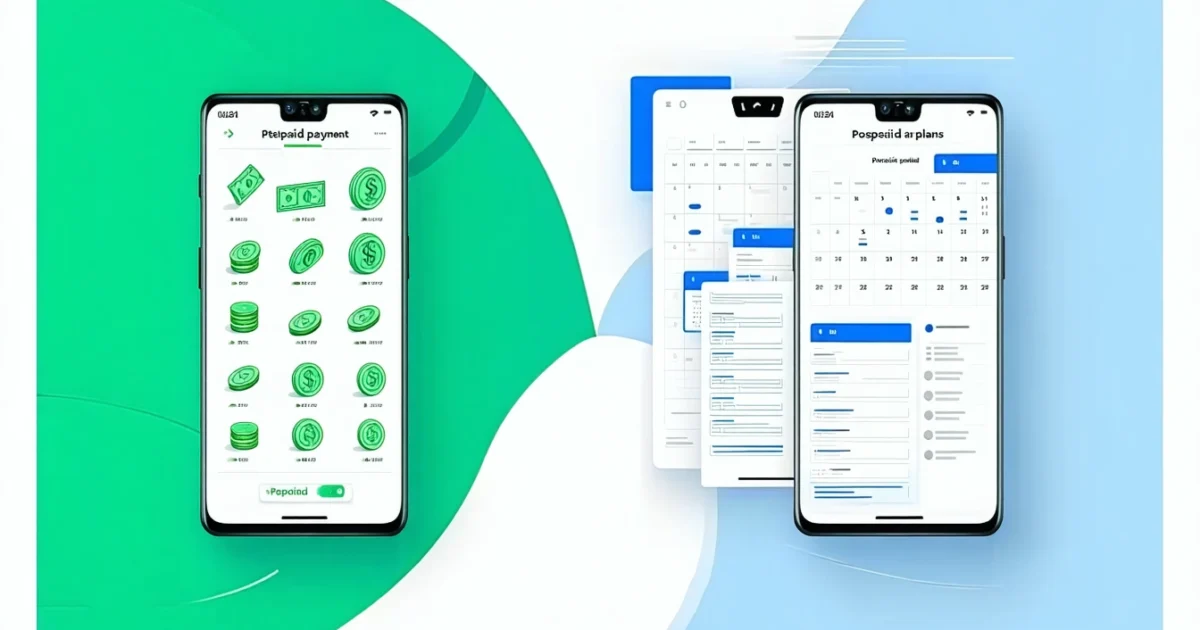
Prepaid vs postpaid mobile plans represent two fundamentally different payment structures in Australia’s telecommunications market. Prepaid plans require you to pay upfront for credit before using services, while postpaid plans bill you monthly after service usage. Understanding these differences helps you choose the right mobile plan based on your budget, usage patterns, and commitment preferences.
Both plan types offer distinct advantages in the Australian market. Prepaid plans provide budget control and flexibility without credit checks or contracts. Meanwhile, postpaid plans typically offer better value for heavy users, premium features, and handset financing options.
The choice between these payment structures affects everything from monthly costs to service features. Additionally, factors like data allowances, call rates, and contract obligations vary significantly between prepaid and postpaid options across major Australian carriers like Telstra, Optus, and Vodafone.
TL;DR
- Prepaid plans require upfront payment with no contracts or credit checks, offering budget control but potentially higher per-unit costs
- Postpaid plans bill monthly after usage, providing better value for heavy users and premium features but requiring credit approval
- Choose prepaid for flexibility and budget control, or postpaid for consistent service and better value with higher usage
Understanding Mobile Plan Types: Prepaid vs Postpaid Explained
Mobile plan payment structures fundamentally determine how Australian consumers access telecommunications services. Prepaid plans operate on a pay-first model where customers purchase credit before using services. Conversely, postpaid plans function as pay-later arrangements where carriers bill customers monthly after service consumption.
The prepaid system requires users to top up their account balance before making calls, sending messages, or using data. This payment method ensures customers never exceed their available credit, providing immediate spending control. Furthermore, prepaid services activate instantly upon credit purchase without requiring lengthy approval processes.
Postpaid arrangements operate differently by extending credit to customers based on their creditworthiness. Carriers provide services throughout the billing cycle, then invoice customers for actual usage. This system typically includes monthly plan allowances for calls, texts, and data, with additional charges applying when customers exceed these limits.
How Payment Methods Affect Service Delivery
Service delivery varies significantly between these payment structures in Australia’s mobile market. Prepaid customers experience immediate service suspension when credit depletes, preventing bill shock but potentially interrupting important communications. Additionally, prepaid plans often exclude premium features like international roaming or device financing options.
Postpaid subscribers enjoy uninterrupted service throughout their billing cycle, even when exceeding plan allowances. However, this convenience comes with potential for unexpected charges if usage monitoring fails. Moreover, postpaid plans typically include value-added services such as entertainment subscriptions, cloud storage, and priority network access.
Network priority also differs between payment types across Australian carriers. Postpaid customers generally receive higher network priority during congestion periods, ensuring better call quality and faster data speeds. Meanwhile, prepaid users may experience reduced performance during peak usage times, particularly in densely populated areas.
Australian Mobile Market Context
Australia’s telecommunications landscape shapes how carriers structure their prepaid and postpaid offerings. Major networks including Telstra, Optus, and Vodafone compete intensively across both payment models, driving innovation and competitive pricing. Consequently, Australian consumers benefit from diverse plan options tailored to different usage patterns and financial preferences.
The Australian market demonstrates unique characteristics that influence plan selection. Geographic coverage becomes crucial for rural and remote users, where Telstra’s superior network reach often justifies premium pricing regardless of payment structure. Urban consumers, however, enjoy broader choice with multiple carriers offering competitive coverage and pricing.
Regulatory frameworks established by the Australian Competition and Consumer Commission ensure fair practices across both payment models. These regulations mandate clear pricing disclosure, cooling-off periods for postpaid contracts, and protection against excessive charges. Therefore, Australian consumers receive standardized protections regardless of their chosen payment structure.
Market trends indicate growing sophistication in both prepaid and postpaid offerings. Digital-first carriers like Boost Mobile and Belong leverage online platforms to reduce costs while maintaining competitive service quality. This evolution benefits price-conscious consumers seeking quality mobile services without traditional carrier overheads, similar to how student banking options have evolved to meet specific demographic needs.
What is Prepaid: Pay-As-You-Go Mobile Plans
Prepaid mobile services operate on a simple principle: customers pay for their mobile service before using it. Unlike postpaid plans that bill users after consumption, prepaid requires upfront payment through recharges or top-ups. This payment model eliminates monthly bills, credit checks, and long-term contracts while providing complete spending control.
The prepaid system functions through a credit balance mechanism stored on your mobile account. When you make calls, send texts, or use data, the carrier deducts charges from your available credit in real-time. This immediate deduction ensures you never exceed your budget or accumulate unexpected charges.
How Prepaid Billing Works
Prepaid billing operates through a pay-before-use model that reverses traditional telecommunications charging. Customers purchase credit through various recharge methods, then consume services until their balance depletes. The carrier’s billing system monitors usage continuously, deducting charges according to your plan’s rates.
Most Australian carriers offer prepaid plans with included allowances for calls, texts, and data. Once you exhaust these inclusions, the system either blocks further usage or charges additional fees from your remaining credit balance. This structure prevents bill shock while maintaining service predictability.
Recharge and Top-Up Mechanisms
Recharging your prepaid service involves adding credit through multiple convenient channels. Physical recharge vouchers remain popular, available at supermarkets, convenience stores, and mobile carrier outlets across Australia. Additionally, online recharging through carrier websites, mobile apps, or third-party platforms provides 24/7 accessibility.
Automatic recharge options eliminate manual top-up requirements by linking your bank account or credit card to your mobile service. The system automatically deducts recharge amounts when your balance falls below predetermined thresholds. However, you retain full control over these automatic payments, unlike postpaid direct debits.
- Physical vouchers from retail outlets
- Online recharging via carrier websites and apps
- Automatic top-ups linked to payment methods
- Phone banking through carrier customer service
- Third-party platforms offering competitive recharge rates
Credit Balance Management and Monitoring
Effective credit balance management requires regular monitoring through carrier-provided tools. Most Australian networks offer balance checking via SMS codes, mobile apps, or online account portals. These platforms display your current credit, plan inclusions, expiry dates, and usage history in real-time.
Modern prepaid services include usage alerts that notify customers when approaching credit limits or plan allowance thresholds. These proactive notifications prevent unexpected service interruptions while helping users optimize their mobile spending patterns. Furthermore, detailed usage breakdowns enable better plan selection for future recharges.
Credit expiry represents a crucial aspect of prepaid management. Most carriers impose expiry periods ranging from 28 days to 365 days, depending on recharge amounts and plan types. Unused credit typically expires unless you recharge before the deadline, making regular monitoring essential for cost-effective service.
Service Suspension When Credit Depletes
When your prepaid credit balance reaches zero, carriers implement service suspension to prevent unauthorized charges. This suspension typically blocks outgoing calls, text messages, and data usage while maintaining your ability to receive calls and emergency services. The specific suspension rules vary between carriers and plan types.
During suspension periods, your mobile number remains active for a limited time, usually between 90 to 180 days depending on your carrier’s policy. This grace period allows you to recharge and restore full service without losing your number. However, prolonged inactivity may result in permanent disconnection and number recycling.
Emergency call access remains available even during service suspension, ensuring safety compliance with Australian telecommunications regulations. This critical feature maintains your ability to contact emergency services regardless of credit balance status, providing essential safety protection for all prepaid users.
What is Postpaid: Monthly Billing Mobile Plans
Postpaid mobile services operate on a billing system where customers use services first and pay later through monthly invoices. Unlike prepaid plans that require upfront payment, postpaid subscribers receive telecommunications services on credit, with carriers billing them after usage occurs during each billing cycle.
The fundamental difference lies in payment timing and credit arrangements. Consequently, postpaid plans offer greater flexibility for heavy users while requiring stronger financial commitments from subscribers.
How Postpaid Billing Works
Postpaid billing follows a pay-after-use model where carriers track your monthly usage and generate bills accordingly. Your carrier records all calls, texts, and data consumption throughout the billing period, then calculates charges based on your plan inclusions and any excess usage.
Monthly bills typically include your base plan fee plus any additional charges for exceeding included allowances. Moreover, carriers often provide detailed usage breakdowns showing exactly how you consumed your monthly inclusions across different service categories.
Automatic payment systems streamline the billing process, with most carriers offering direct debit or credit card payment options. This automation ensures consistent service continuity without requiring manual intervention each month.
Monthly Billing Cycles and Payment Dates
Billing cycles typically run for 30-day periods, though some carriers use calendar month cycles from the first to last day of each month. Your billing cycle start date depends on when you activated your service, creating a consistent monthly pattern for bill generation and payment.
Payment due dates usually fall 14 to 21 days after bill generation, giving you sufficient time to review charges and arrange payment. Late payment fees apply when you miss due dates, potentially ranging from $10 to $25 depending on your carrier’s policies.
Bill delivery occurs through email, SMS, or postal mail based on your communication preferences. Additionally, most carriers provide online account portals and mobile apps for convenient bill viewing and payment management.
Credit Checks and Account Setup Requirements
Australian carriers perform credit assessments before approving postpaid applications, evaluating your financial history and ability to meet monthly payment obligations. These checks typically involve reviewing your credit report through agencies like Equifax or Experian to assess payment reliability.
Required documentation includes proof of identity, residential address verification, and income evidence for higher-value plans. International students and temporary residents may need additional documentation or security deposits to establish postpaid services.
Credit check outcomes determine your plan eligibility and potential security deposit requirements. Furthermore, poor credit history may result in application rejection or requirements for upfront deposits ranging from $200 to $1,000.
Contract Terms and Ongoing Commitments
Postpaid plans typically involve 12 to 24-month contracts that lock you into specific monthly fees and service terms. These agreements often include device payment plans when you purchase phones through your carrier, spreading handset costs across your contract period.
Early termination fees apply when you cancel contracts before completion, potentially costing hundreds of dollars depending on remaining contract duration. These fees compensate carriers for subsidized device costs and guaranteed revenue expectations.
Monthly plan changes usually require carrier approval and may trigger new contract terms or fees. However, some carriers offer flexible month-to-month postpaid options without long-term commitments, though these typically cost more than contracted plans.
Contract renewal notifications arrive before expiration, allowing you to negotiate new terms or switch carriers without penalty. This renewal period provides opportunities to reassess your mobile needs and explore competitive offers from other providers.
Key Differences Between Prepaid and Postpaid Plans
Understanding the fundamental differences between prepaid and postpaid mobile plans helps Australian consumers make informed decisions about their telecommunications needs. These two billing models operate on opposite payment structures and offer distinct advantages depending on your financial situation and usage patterns.
Payment Timing and Billing Structure
Prepaid plans require upfront payment before you can access mobile services, operating on a pay-as-you-go basis. You purchase credit or recharge vouchers that provide specific amounts of data, calls, and text messages for predetermined periods.
Conversely, postpaid plans bill you monthly after service consumption, similar to utility bills. Your carrier provides services throughout the billing cycle, then charges your nominated payment method at month’s end based on your plan inclusions and any excess usage.
This payment timing difference affects cash flow management significantly. Moreover, prepaid users never receive unexpected bills since services stop when credit expires, while postpaid customers may face bill shock from excess usage charges.
Credit Requirements and Financial Verification
Prepaid services eliminate credit check requirements entirely, making them accessible to customers with poor credit history, limited income documentation, or temporary residency status. You simply purchase credit and begin using services immediately without financial verification.
Meanwhile, postpaid applications trigger comprehensive credit assessments that examine your payment history, current debts, and income stability. Carriers evaluate your creditworthiness to determine approval, plan eligibility, and potential security deposit requirements.
International students and temporary residents often find prepaid options more accessible, as postpaid providers may require additional documentation or substantial security deposits. Furthermore, credit check failures can prevent postpaid approval entirely, while prepaid remains universally available.
Contract Flexibility and Commitment Levels
Prepaid plans offer maximum flexibility without contractual obligations, allowing you to change carriers, plans, or cease services at any time without penalties. This freedom appeals to customers seeking short-term solutions or those uncertain about long-term mobile needs.
In contrast, postpaid contracts typically span 12 to 24 months with binding terms and early termination fees. These agreements often include subsidized handset payments that spread device costs across contract duration, creating financial obligations beyond monthly service fees.
Contract modifications usually require carrier approval and may trigger new terms or fees. However, this commitment structure often provides better value through discounted monthly rates and included device financing options.
Service Features and Plan Inclusions
Postpaid plans typically include premium features such as international roaming, mobile hotspot capabilities, entertainment subscriptions, and priority network access. These value-added services enhance the overall mobile experience but increase monthly costs accordingly.
Alternatively, prepaid offerings focus on essential services with fewer premium inclusions to maintain competitive pricing. Basic prepaid plans may exclude international roaming, limit hotspot functionality, or provide lower network priority during peak usage periods.
Customer service levels often differ between plan types, with postpaid customers receiving priority support and dedicated service channels. Additionally, postpaid users typically access the latest network technologies and features before prepaid customers.
Cost Structure and Pricing Models
| Aspect | Prepaid | Postpaid |
|---|---|---|
| Monthly Base Cost | $15-$60 | $30-$100+ |
| Setup Fees | None | $0-$50 |
| Device Financing | Full upfront payment | Monthly installments |
| Excess Charges | Service stops | Additional fees apply |
Prepaid pricing operates on transparent, fixed-cost models where you pay exactly what you receive without hidden fees or unexpected charges. When your allowance expires, services simply stop until you purchase additional credit.
Conversely, postpaid billing can include various additional charges such as excess data fees, international usage costs, premium SMS charges, and device insurance premiums. These variable costs can significantly increase your monthly bill beyond the base plan price.
Data and Call Allowance Differences
Postpaid plans generally offer larger data allowances and unlimited call options, with many providers including unlimited national calls and texts as standard features. High-tier postpaid plans may provide unlimited data or very large allowances exceeding 100GB monthly.
Meanwhile, prepaid allowances tend to be more conservative, typically ranging from 5GB to 50GB monthly depending on price points. Call allowances may include caps on national calls or exclude certain premium numbers from unlimited calling features.
Data rollover policies also differ significantly between plan types. Postpaid plans often include generous rollover allowances, while prepaid services may have stricter expiry terms or limited rollover capabilities that encourage regular recharging.
Network prioritization during congestion periods typically favors postpaid customers, potentially resulting in faster speeds and better connectivity for contract users during peak times. This technical difference can impact user experience, particularly in densely populated areas or during high-demand periods.
Prepaid Mobile Plans: Advantages and Disadvantages
Prepaid mobile plans deliver distinct advantages that appeal to budget-conscious consumers and those seeking financial control. However, these benefits come with specific trade-offs that impact user experience and service quality.
Key Benefits of Prepaid Plans
Contract-free flexibility stands as the primary advantage of prepaid services. Users avoid lengthy commitments and can switch providers immediately without termination fees or penalties. This freedom particularly benefits students and temporary residents who require short-term mobile solutions.
Furthermore, budget control becomes automatic with prepaid plans since spending limits are predetermined by credit purchases. Consequently, bill shock scenarios become impossible as services simply cease when credit expires rather than accumulating unexpected charges.
Credit checks are eliminated entirely from the prepaid activation process. This accessibility allows individuals with poor credit history or no credit record to obtain mobile services immediately, making prepaid plans ideal for newcomers to Australia or those rebuilding their financial standing.
Additionally, plan modifications occur instantly with prepaid services. Users can upgrade, downgrade, or completely change their allowances without waiting periods or administrative processes that typically accompany postpaid plan changes.
Notable Disadvantages and Limitations
Per-unit costs often exceed postpaid rates when comparing equivalent usage patterns. Prepaid customers typically pay premium prices for data, calls, and texts, with less favorable bulk pricing structures than contract plans offer.
Moreover, premium features remain largely unavailable to prepaid users. Advanced services such as international roaming packages, priority network access, and comprehensive device insurance options are commonly restricted to postpaid customers.
Handset financing options are severely limited for prepaid customers. Most carriers reserve attractive device payment plans, trade-in programs, and subsidized smartphone offers exclusively for contract customers, forcing prepaid users to purchase devices outright.
Service interruption risks create ongoing management requirements for prepaid users. When credit balances approach zero, services can cease unexpectedly, potentially causing communication disruptions during critical moments. This unpredictability contrasts with the continuous service guarantee that postpaid plans provide.
Network prioritization policies also disadvantage prepaid customers during peak usage periods. Carriers typically allocate bandwidth preferentially to postpaid subscribers, resulting in slower speeds and reduced connectivity quality for prepaid users in congested areas.
Postpaid Mobile Plans: Advantages and Disadvantages
Postpaid mobile plans operate on a credit-based billing system where customers receive services first and pay monthly charges afterward. This payment structure fundamentally shapes both the benefits and limitations that postpaid subscribers experience compared to prepaid alternatives.
Premium Features and Enhanced Value
Postpaid customers gain access to premium network features that carriers typically reserve for contract subscribers. These include priority network access during congested periods, comprehensive international roaming packages, and advanced security features like enhanced fraud protection.
Heavy data users particularly benefit from postpaid plans through superior value propositions. Contract plans frequently offer unlimited data allowances, generous included minutes, and bulk pricing structures that significantly reduce per-unit costs compared to prepaid alternatives.
Device Financing and Upgrade Programs
Handset financing options represent a major postpaid advantage, allowing customers to spread smartphone costs across monthly installments. Carriers offer attractive device payment plans, trade-in programs, and subsidized handset deals exclusively to contract customers.
Furthermore, postpaid subscribers access priority upgrade opportunities when new devices launch. These programs often include early upgrade eligibility, device protection plans, and exclusive pre-order access that prepaid customers cannot obtain.
Service Reliability and Consistency
Postpaid plans guarantee uninterrupted service continuity regardless of usage patterns or payment timing. Unlike prepaid services that cease when credit expires, contract plans maintain connectivity until the monthly billing cycle completes, eliminating unexpected service disruptions.
This reliability proves particularly valuable for business users and families who require consistent communication access without monitoring credit balances or managing top-up schedules.
Credit Requirements and Financial Commitments
However, postpaid plans require comprehensive credit assessments that can exclude customers with limited credit history or poor financial records. Carriers conduct thorough background checks, potentially requiring security deposits or guarantors for approval.
Contract obligations create long-term financial commitments that bind customers to specific carriers and plans. Early termination fees, minimum contract periods, and cancellation penalties significantly reduce flexibility compared to prepaid alternatives.
Overage Charges and Bill Shock
Postpaid customers face potential overage charges when exceeding plan allowances, creating unpredictable monthly costs. Data overages, international calling fees, and premium service charges can dramatically increase bills beyond expected amounts.
Additionally, bill shock scenarios occur when customers unknowingly trigger expensive services or exceed usage limits, resulting in substantially higher charges that only become apparent during billing periods.
Limited Plan Flexibility
Plan modification restrictions limit postpaid customers’ ability to adjust services quickly. Contract terms often prevent immediate downgrades, require administrative processes for changes, and impose waiting periods before modifications take effect.
This inflexibility contrasts sharply with prepaid services, where customers can instantly switch plans, adjust allowances, or modify services without contractual constraints or carrier approval processes.
Cost Comparison: Which Plan Type Offers Better Value
Understanding the true cost differences between prepaid vs postpaid plans requires examining multiple pricing factors beyond monthly fees. Furthermore, value assessment depends heavily on individual usage patterns and financial priorities.
Per-GB Data Costs Comparison
Prepaid plans typically charge higher per-gigabyte rates but offer predictable data costs without overage penalties. Major Australian carriers price prepaid data between $10-15 per GB when purchased as add-ons or included in monthly bundles.
Conversely, postpaid plans provide lower base data rates, often $5-8 per GB within plan allowances. However, excess data charges can reach $10-20 per GB when customers exceed their monthly limits, creating potentially expensive overages.
| Plan Type | Base Data Rate | Excess Data Rate | Overage Protection |
|---|---|---|---|
| Prepaid | $10-15/GB | N/A (Hard cap) | Automatic cutoff |
| Postpaid | $5-8/GB | $10-20/GB | Optional (fees apply) |
Call and Text Rate Differences
Voice calling rates show minimal differences between plan types for domestic calls. Both prepaid and postpaid plans commonly include unlimited local and national calls within their monthly allowances.
However, international calling reveals significant cost variations. Prepaid plans charge $0.50-2.00 per minute for international calls, while postpaid plans often include international minutes or charge $0.20-1.50 per minute depending on destination countries.
SMS messaging costs remain relatively uniform across both plan types. Most modern plans include unlimited domestic texts, though international SMS rates range from $0.50-0.75 per message regardless of plan structure.
Hidden Fees and Additional Charges
Prepaid plans maintain transparent pricing structures with minimal hidden costs. The primary additional charges include SIM card fees ($2-5) and occasional recharge processing fees when using certain payment methods.
Meanwhile, postpaid plans accumulate various additional charges that increase total costs. Connection fees ($30-50), monthly account keeping fees ($2-5), and paper billing charges ($2-3) commonly appear on postpaid bills.
- Early termination fees: $200-800 depending on remaining contract period
- Plan change fees: $25-50 for mid-contract modifications
- Payment processing fees: $2-5 for non-direct debit payments
- International roaming activation: $5-10 setup charges
Long-term Cost Analysis for Different Usage Patterns
Light users consuming under 5GB monthly typically save $200-400 annually with prepaid plans. These customers avoid paying for unused allowances while maintaining complete cost control without contract obligations.
Heavy data users exceeding 20GB monthly often find better value in postpaid unlimited plans. Despite higher base costs, unlimited data eliminates overage risks that could make prepaid plans significantly more expensive.
Additionally, family plans demonstrate where postpaid options excel financially. Shared data pools and multi-line discounts can reduce per-line costs to $30-40 monthly, compared to individual prepaid plans at $40-60 per line.
Heavy users can save up to $600 annually with postpaid unlimited plans compared to equivalent prepaid data purchases
Value-Added Services and Inclusions
Postpaid plans frequently include premium services that add substantial value beyond basic connectivity. Streaming service subscriptions, international roaming packages, and device insurance commonly accompany higher-tier postpaid offerings.
Popular inclusions encompass Netflix subscriptions ($10.99 monthly value), Spotify Premium ($11.99 monthly), and international roaming credits worth $50-100 annually. These bundled services can justify higher monthly costs for customers who would purchase them separately.
Conversely, prepaid plans focus on core connectivity services with fewer additional inclusions. However, this simplicity appeals to budget-conscious customers who prefer purchasing entertainment and premium services independently based on their specific preferences.
Ultimately, the better value option depends on individual usage patterns, financial preferences, and service requirements. Students managing tight budgets often benefit from prepaid flexibility, while families and heavy users may find postpaid plans more economical overall.
Choosing Between Prepaid and Postpaid: Decision Factors
Selecting between prepaid and postpaid plans requires careful evaluation of multiple personal and financial factors. Furthermore, your decision impacts both immediate costs and long-term mobile service satisfaction across Australia’s competitive telecommunications market.
Usage Patterns and Monthly Consumption
Your monthly data consumption directly influences which plan type delivers better value. Heavy users exceeding 50GB monthly typically benefit from postpaid unlimited plans, while light users consuming under 20GB often find prepaid options more economical.
Additionally, call and text patterns affect plan selection significantly. Business professionals making frequent interstate calls may prefer postpaid plans with unlimited national calling, whereas casual users benefit from prepaid flexibility without commitment penalties.
Budget Preferences and Financial Situation
Monthly budget constraints often determine plan feasibility more than advertised features. Prepaid plans enable strict spending control by preventing bill shock, making them ideal for students and budget-conscious consumers managing limited finances.
Conversely, postpaid plans suit customers with stable monthly income who prioritize convenience over cost control. Moreover, family budgets may benefit from shared postpaid plans despite higher individual line costs, particularly when managing multiple connections efficiently.
Credit History and Approval Requirements
Credit checks represent a significant barrier for postpaid plan approval, especially affecting international students and recent migrants to Australia. Carriers typically require established credit history or substantial security deposits for postpaid services.
Meanwhile, prepaid plans eliminate credit requirements entirely, accepting customers regardless of financial history. This accessibility makes prepaid options particularly valuable for newcomers establishing their Australian financial profile, similar to how student bank accounts provide financial access without extensive credit history.
Desired Features and Service Inclusions
Premium features distinguish postpaid offerings from basic prepaid services across Australian carriers. International roaming, device insurance, and streaming service bundles commonly accompany postpaid plans but remain absent from most prepaid alternatives.
However, feature requirements vary significantly among users. Tech-savvy consumers may prefer purchasing streaming services independently rather than accepting bundled offerings, making feature-light prepaid plans more appealing despite fewer inclusions.
Flexibility Needs and Commitment Preferences
Contract flexibility represents a crucial decision factor for many Australian consumers. Prepaid plans offer complete freedom to switch carriers monthly without penalties, appealing to users prioritizing adaptability over long-term savings.
In contrast, postpaid contracts typically require 12-24 month commitments with early termination fees ranging from $200-600. Nevertheless, these commitments often unlock better device financing options and premium network priority during congested periods.
Network Coverage and Carrier Considerations
Network quality varies between prepaid and postpaid services, even within the same carrier infrastructure. Postpaid customers typically receive network priority during peak usage periods, resulting in faster speeds and more reliable connections in congested areas.
Furthermore, carrier selection impacts both plan types differently across Australia’s diverse geography. Rural users may find Telstra’s extensive coverage justifies higher postpaid costs, while urban customers can access competitive prepaid options from Optus and Vodafone without coverage compromises.
Ultimately, the optimal choice depends on balancing these factors against your specific circumstances, usage requirements, and financial priorities within Australia’s competitive mobile market landscape.
Switching Between Plan Types: Process and Considerations
Switching between prepaid and postpaid plans requires careful planning and understanding of carrier-specific processes. Most Australian carriers facilitate these transitions through online portals, retail stores, or customer service channels, though timing and documentation requirements vary significantly.
How to Switch from Prepaid to Postpaid
Converting from prepaid to postpaid typically involves a credit assessment process that evaluates your financial eligibility for contract services. Carriers require identification documents, proof of income, and residential verification before approving postpaid applications.
Additionally, existing prepaid customers often receive preferential treatment during the application process, particularly if they demonstrate consistent payment history and high usage patterns. However, carriers may require security deposits ranging from $200-500 for customers with limited credit history or previous payment issues.
Moving from Postpaid to Prepaid Options
Transitioning from postpaid to prepaid involves fewer barriers but requires careful attention to contract obligations and termination fees. Customers must settle outstanding device payments and complete minimum contract periods to avoid early termination charges.
Furthermore, postpaid customers lose access to device financing options and premium network priority when switching to prepaid services. Nevertheless, this transition offers immediate billing control and eliminates monthly credit assessments or contract commitments.
Number Portability and Account Transfer
Mobile number portability allows customers to retain their phone numbers when switching between plan types or carriers within Australia. The porting process typically completes within 2-4 hours for simple transfers, though complex transitions may require 24-48 hours.
Account holders must provide their current carrier with proper authorization and account verification before initiating transfers. Importantly, customers should avoid cancelling existing services until the new carrier confirms successful number portability completion.
Timing Considerations and Billing Cycles
Strategic timing minimizes costs and service disruptions during plan transitions. Prepaid customers should switch before their current recharge expires to avoid losing unused credit, while postpaid users benefit from switching near billing cycle ends to minimize pro-rated charges.
Moreover, carriers often process account changes at specific times during business hours, making weekday transitions more reliable than weekend attempts. Peak migration periods around contract renewal dates may also result in longer processing times and increased wait periods.
Potential Fees and Contract Implications
Switching costs vary significantly based on current plan status and destination carrier requirements. Early termination fees for postpaid contracts range from $15-25 per remaining month, while device payment balances become immediately payable upon cancellation.
- Connection fees: $25-40 for new postpaid activations
- SIM card charges: $2-10 depending on carrier and plan type
- Credit check fees: $0-15 for postpaid applications
- Number porting charges: Usually free between major carriers
Additionally, customers may forfeit accumulated loyalty benefits, bonus data allowances, or promotional pricing when switching between plan types. Therefore, comparing total switching costs against long-term savings helps determine whether transitions provide genuine financial advantages.
Frequently Asked Questions
What's the main difference between prepaid and postpaid mobile plans in Australia?
The main difference is when you pay. Prepaid plans require you to pay upfront for credit before using services, while postpaid plans bill you monthly after you’ve used the services. Prepaid offers immediate budget control, while postpaid provides ongoing service with monthly billing.
Do I need a credit check for prepaid mobile plans?
No credit check is required for prepaid plans in Australia. Since you pay upfront, carriers don’t need to assess your creditworthiness. This makes prepaid plans ideal for people with poor credit history, students, or those who prefer not to undergo credit assessments.
Which plan type offers better value for heavy mobile users?
Postpaid plans typically offer better value for heavy users. They usually include larger data allowances, unlimited calls and texts, and premium features at lower per-unit costs. Heavy users benefit from monthly plan inclusions rather than paying higher prepaid rates for extensive usage.
Can I get a new phone with both prepaid and postpaid plans?
Phone options vary significantly between plan types. Postpaid plans commonly include handset financing options, allowing you to pay off expensive phones over 12-36 months. Prepaid plans typically require you to purchase phones outright, though some carriers offer limited device payment options for prepaid customers.
What happens if I run out of credit on a prepaid plan?
When prepaid credit depletes, services are immediately suspended until you top up your account. You won’t be able to make calls, send texts, or use data. However, you can usually still receive calls and emergency services remain accessible. This prevents bill shock but may interrupt important communications.
Do prepaid and postpaid customers get the same network priority?
Postpaid customers generally receive higher network priority on Australian networks. During busy periods, postpaid users typically experience better call quality and faster data speeds. Prepaid customers may notice slower performance during peak times, especially in crowded areas.
Which major Australian carriers offer both prepaid and postpaid plans?
All major Australian carriers offer both options:
- Telstra – Extensive prepaid and postpaid range with premium network coverage
- Optus – Competitive options across both payment structures
- Vodafone – Strong prepaid offerings and comprehensive postpaid plans
Each carrier structures their plans differently, so comparing options across providers helps find the best value.
Can I switch from prepaid to postpaid with the same carrier?
Yes, most Australian carriers allow switching between prepaid and postpaid plans. However, moving to postpaid requires a credit check and potentially a new contract. You can usually keep your phone number when switching, but may need to get a new SIM card depending on your carrier’s requirements.
You May Also Like

Best Cheap EVs in Australia 2026: Top Affordable Electric Cars

BYD Cars Australia: Full Review, Models & Prices (2026)