Tax Return for International Students in Australia 2026: Step-by-Step

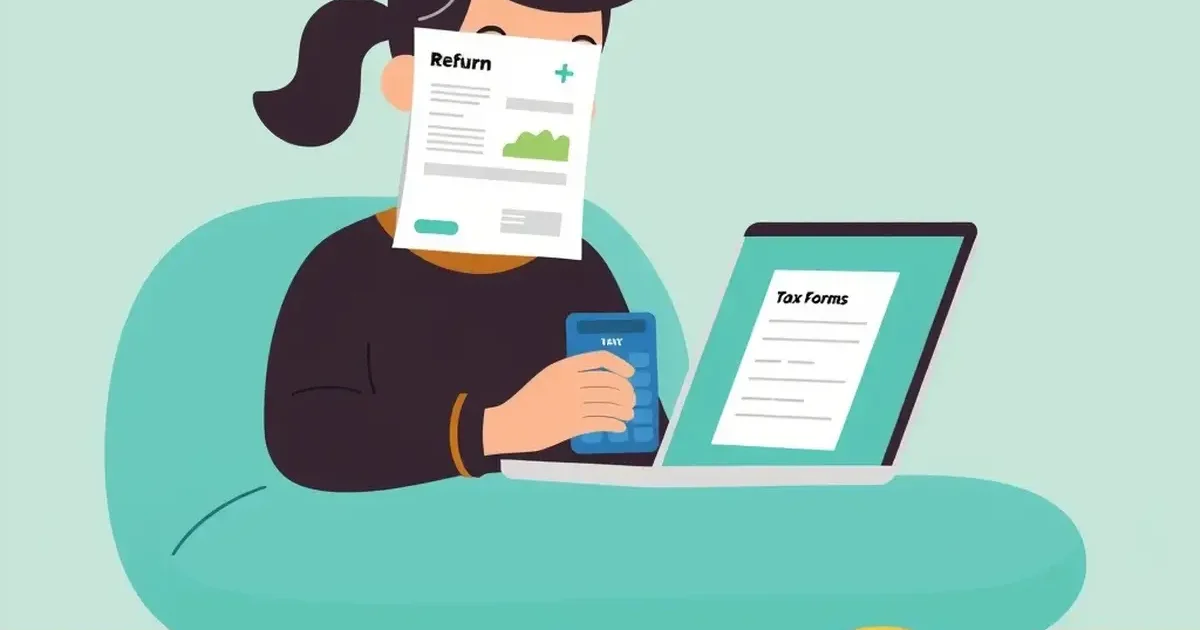
If you are an international student who worked in Australia, you almost certainly need to lodge a tax return, and the good news is you will very likely get money back. Most students are treated as Australian residents for tax, which means a generous tax-free threshold and, very often, a refund of the tax your employer withheld during the year. This is the complete step-by-step guide to lodging your tax return as an international student in Australia for 2026: who needs to lodge, how to do it for free yourself, the residency and Medicare rules, what you can claim, and the mistakes to avoid.
Most student returns are simple and take 30 to 60 minutes online. We will walk through the whole process and the key rules that decide how big your refund is.
This is general information, not personal tax advice. For your own situation, check the ATO or use a registered tax agent.
TL;DR: Your Student Tax Return
If you earned income or had tax withheld, you must lodge a tax return for the year ending 30 June, by 31 October if you do it yourself. Most international students are residents for tax purposes, so you get the $18,200 tax-free threshold and usually a refund, often $1,000 to $3,000. Lodge free through myGov and myTax (wait until late July so your income pre-fills), claim your work-related deductions and any Medicare levy exemption, and the ATO pays refunds in about 2 to 4 weeks. No income at all? Submit a quick non-lodgement advice instead.
Do You Need to Lodge a Tax Return?
Yes, if either of these applies to you for the financial year (1 July to 30 June): you earned any income in Australia, or your employer withheld tax from your pay. Since almost every student job withholds some tax, that means most working students must lodge, and lodging is how you claim that withheld tax back as a refund.
No income? You still tell the ATO
What You Need Before You Start
- A Tax File Number (TFN) — see our guide to the TFN and how to apply
- A myGov account linked to ATO online services
- Your income statements (your employer reports these to the ATO; they pre-fill from mid-July)
- Your bank details for your refund
- Records of any work-related expenses you want to claim
- Details of any other income, such as bank interest or ABN/gig work
What This Guide Covers
- The step-by-step process to lodge online for free
- Tax residency, the tax-free threshold and the Medicare levy exemption
- The deductions students can claim, and how to boost your refund
- Deadlines, common mistakes, and when to use a tax agent
How to Lodge Your Tax Return: Step by Step
Lodging online through myTax is free and, for most students, takes under an hour. Follow these steps in order.
- Get your Tax File Number (TFN). You need one to lodge. If you do not have it yet, apply free through the ATO before you start.
- Create a myGov account and link it to the ATO. Go to my.gov.au, set up an account, then link “Australian Taxation Office” under Services. You may need your TFN plus two proof points, such as a bank account or an employer’s details.
- Wait until late July. Your employer reports your income to the ATO after 30 June. By mid-to-late July it pre-fills in myTax, so waiting means most of your return fills itself in correctly.
- Open myTax and check your pre-filled income. In ATO online services, choose “Lodge” then myTax. Confirm the pre-filled wages, bank interest and any government payments are complete and correct.
- Add any income that is not pre-filled. Include cash jobs, tips, and any ABN or gig income (rideshare, delivery, freelancing). You must declare all income, even if it is not shown automatically.
- Enter your deductions. Add your work-related expenses, such as uniforms and laundry, tools, self-education and working-from-home costs (covered in the next section).
- Claim the Medicare levy exemption if eligible. Most international students can claim this, which we explain shortly.
- Review your estimated refund and bank details. myTax shows your estimated refund or amount owing. Double-check your bank account so the refund reaches you.
- Lodge, and keep your records. Submit the return and save copies of everything for five years.
Trouble linking myGov to the ATO?
You have two main ways to lodge. Here is how they compare.
| Do it yourself (myTax) | Registered tax agent | |
|---|---|---|
| Cost | Free | A fee (itself deductible next year) |
| Best for | Simple returns, one or two jobs | ABN income, multiple jobs, unsure cases |
| Deadline | 31 October | Usually later, if registered before 31 Oct |
| Effort | 30–60 minutes | They do most of the work |
For a closer look at the online process, see our guide to lodging your first tax return online.
Residency, the Tax-Free Threshold and Medicare
These three rules decide how much tax you pay and how big your refund is, so they are worth understanding before you lodge.
Are you a resident for tax purposes?
This is separate from your visa. Tax residency is based on whether you actually live here, and most international students who stay for six months or more during the year are residents for tax purposes, even on a temporary student visa. That is good news, because residents get the tax-free threshold and lower rates. Only students here very briefly are likely to be non-residents. Our full guide to resident vs non-resident tax explains the tests.
| Taxable income | Resident rate | Non-resident rate |
|---|---|---|
| $0 – $18,200 | 0% (tax-free) | 30% |
| $18,201 – $45,000 | 16% | 30% |
| $45,001 – $135,000 | 30% | 30% |
The tax-free threshold
As a resident you pay no tax on the first $18,200 you earn each year. Because most student jobs withhold some tax along the way, lodging your return is how you get that withheld tax back. In the financial year you first arrive, you receive a part-year tax-free threshold, adjusted for the months you were in Australia, rather than the full amount. From your second year you get the full $18,200.
The Medicare levy exemption
Most students can claim back the Medicare levy
Put together, being a resident, claiming the threshold and claiming the Medicare exemption is why so many students receive a healthy refund. You can estimate yours with our Australian tax calculator.
Deductions: What Students Can Claim
Deductions lower your taxable income and grow your refund. You can claim work-related costs you paid yourself, were not reimbursed for, and can prove. Common student deductions include:
- Compulsory uniforms with a logo, and laundering them
- Protective gear such as non-slip shoes, gloves or hi-vis where required
- Tools and equipment for work (under $300 in full; over $300 depreciated)
- Self-education and short courses related to your current job
- The work-related portion of your phone and internet
- Working-from-home running costs for remote or admin work
- Union fees and professional or student-body memberships tied to work
- Travel between two jobs on the same day
- Donations of $2 or more to registered charities
The $300 rule
For the categories that apply most to students, see our guides to deductions for students and casual workers and the working from home deduction. A self-education claim must relate to your current job, not a future career, and you cannot claim everyday clothing, your normal commute, or anything your employer paid back.
How to maximise your refund
- Claim the tax-free threshold with your main employer so the right tax is withheld.
- Claim every legitimate work-related deduction, and keep the receipts.
- Apply for a Medicare Entitlement Statement and claim the levy exemption.
- Declare all income so your return is correct and not delayed or amended.
- Lodge after late July so your data pre-fills accurately.
- Keep your bank details current so the refund arrives quickly.
One honest note: ignore any promise of a guaranteed huge refund. Your refund depends on how much you earned, how much tax was withheld, and what you can genuinely claim, so be accurate rather than aggressive.
Deadlines, Mistakes and Getting Help
The Australian financial year runs 1 July to 30 June. If you lodge yourself, your return is due by 31 October. If you use a registered tax agent and are on their books before that date, you usually get more time. Lodging late can trigger a Failure to Lodge penalty and interest, so even if you cannot pay, always lodge on time.
Common student tax-return mistakes
Consider a registered tax agent if you have ABN or rideshare income, multiple jobs, or you are simply unsure, their fee is deductible the following year, and they can give you more time to lodge. Always check an agent is registered with the Tax Practitioners Board.
Leaving Australia?
If you finish your studies and leave, you can still lodge your final return, and you may be able to lodge early in some cases. You can also claim your superannuation as a Departing Australia Superannuation Payment (DASP) once you have left permanently and your visa has ceased, see our guide to claiming back your super when you leave. While you are here, it is worth understanding how superannuation works too.
That is the whole process. Get your TFN and myGov ready, wait for pre-fill, lodge free on myTax, claim the threshold, the Medicare exemption and your deductions, and your refund should land within a few weeks. For more, see our broader international student tax guide and our guides to TFN vs ABN and reading your payslip.
Frequently Asked Questions
Final Thoughts
Lodging your tax return as an international student is simpler and more rewarding than it sounds. Get your TFN and myGov sorted, wait until late July, lodge free through myTax, claim what you are entitled to, and most students walk away with a healthy refund. Just do not miss the 31 October deadline, or lodge through a registered tax agent if you need more time or help.
You May Also Like

Novated Lease vs Buying a Car in Australia (2026): Which Is Cheaper?

HECS-HELP Repayment Calculator 2026-27: Thresholds, Rates & How Much You Pay