Halal Food in Australia: The Complete Guide (2026)

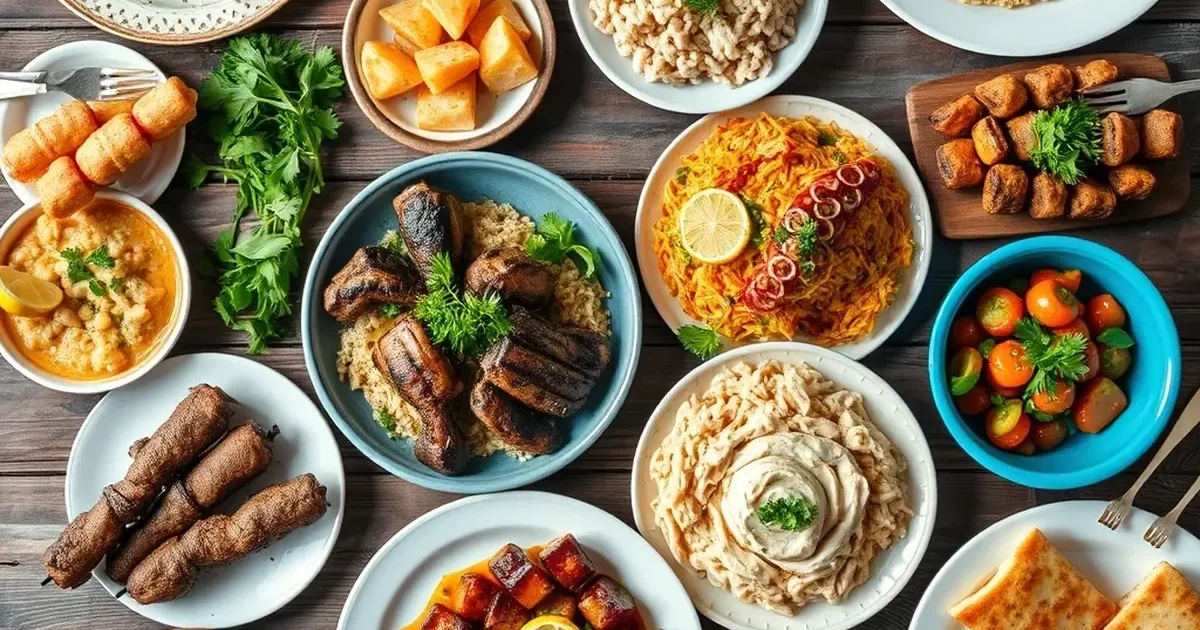
Australia is home to one of the most vibrant and diverse halal food scenes anywhere outside the Muslim world. With more than 813,000 Muslims at the 2021 census, a food culture shaped by waves of migration from the Middle East, South Asia, Southeast Asia and Africa, and a red-meat industry that makes the country one of the planet’s biggest exporters of halal-certified meat, eating halal here is easier and more delicious than most newcomers expect. From the legendary halal strip of Lakemba in Sydney to Persian fine dining on the Gold Coast, Afghan feasts in Adelaide and Indonesian satay under the stars in Darwin, this is the complete national guide to halal food in Australia — the numbers, the cuisines, how certification works, and a city-by-city map of where to eat.
This is a pillar guide that ties together our deep, suburb-by-suburb halal guides to every Australian capital plus the Gold Coast and Sunshine Coast. Use the map and the city sections below to jump to wherever you are, and follow the links for the full local detail — venues, butchers, cafes and all.
The Halal Food Map of Australia
Halal food in Australia is concentrated where the Muslim community is largest — above all in Sydney and Melbourne, followed by Brisbane, Perth and Adelaide, with growing scenes in Canberra, the Gold Coast, Darwin, the Sunshine Coast and Hobart. The map below shows, at a glance, where halal food is most abundant and easiest to find.
In practical terms: in Sydney and Melbourne you can eat halal almost anywhere, any night, across dozens of cuisines. Brisbane, Perth and Adelaide have large, easy halal scenes concentrated in particular suburbs. Canberra, the Gold Coast, the Sunshine Coast and Darwin are smaller but genuinely good, and Hobart — the most modest — still surprises. Wherever you are, this guide (and the city links throughout) will point you to the right neighbourhoods.
Halal Australia by the Numbers
Australia’s halal food scene is built on a large and fast-growing Muslim community. At the 2021 census, 813,392 people identified as Muslim — about 3.2% of the population, up from around 604,000 in 2016 — making Islam the largest religion in Australia after Christianity, and one of the fastest-growing. That community is not spread evenly: it is heavily concentrated in Sydney and Melbourne, which is exactly why halal food is so abundant in those cities.
Muslim population by state and territory
| State / Territory | Muslim population (2021, approx.) | Share of Australian Muslims |
|---|---|---|
| New South Wales | ~361,000 | ~44% |
| Victoria | ~273,000 | ~33% |
| Western Australia | ~67,000 | ~8% |
| Queensland | ~60,000 | ~7% |
| South Australia | ~26,000 | ~3% |
| ACT | ~11,000 | ~1.3% |
| Northern Territory | ~4,000 | ~0.5% |
| Tasmania | ~4,000 | ~0.5% |
Around 43% of Australian Muslims live in New South Wales and 33% in Victoria — so more than three-quarters of the country’s Muslims are in just two states. Both Greater Sydney and Greater Melbourne have Muslim populations of well over 4% (Greater Melbourne is around 5%), comfortably above the national average, which is why those two cities have by far the deepest halal food scenes.
Where the community is most concentrated
Within the big cities, the Muslim population clusters in particular local government areas — and the halal food follows:
- Sydney: Canterbury-Bankstown (Lakemba, Bankstown, Punchbowl, Greenacre) and Cumberland (Auburn, Merrylands) — some suburbs here are among the most Muslim-concentrated in the country.
- Melbourne: Hume (Broadmeadows, Meadow Heights, Roxburgh Park), Greater Dandenong (Dandenong) and Wyndham (Tarneit, Werribee) in the growth corridors.
- Brisbane: the southern suburbs and the City of Logan (Kuraby, Underwood, Woodridge).
- Perth, Adelaide and beyond: the northern and western suburbs of each city, close to the main mosques.
The Halal Industry: A National Powerhouse
Halal in Australia is not just a dining choice — it is a major industry. The country is one of the world’s largest exporters of halal-certified red meat, and the vast majority of Australia’s export abattoirs are halal-certified as standard, since so much of their product goes to the Middle East and Southeast Asia. In 2025, Australian red meat and livestock exports to the Middle East and North Africa hit a record A$2.2 billion, almost all of it halal.
| Halal industry indicator | Figure |
|---|---|
| Australian halal market size (2025, est.) | Around A$15 billion |
| Red meat & livestock exports to the Middle East (2025) | Record A$2.2 billion (overwhelmingly halal) |
| Export abattoirs | Most are halal-certified as standard for export |
| Global halal food market | Valued in the trillions of US dollars and growing |
For everyday diners, this industrial scale has a happy side effect: a robust, well-regulated halal supply chain. Fresh halal meat is widely available through dedicated butchers, and many supermarket chicken lines are halal-certified — because the certification infrastructure that serves the export trade also serves local Muslim consumers.
Mosques & Community Infrastructure
The halal food scene sits within a growing network of Muslim community infrastructure. Australia now has more than 340 purpose-built mosques, and well over 800 mosques and prayer spaces (musollas) when smaller community prayer rooms are included — spread across all eight states and territories. The number has grown steadily with the community, from around 340 mosques in 2016. Alongside them are Islamic schools, community centres and a network of halal certifying authorities. Where there is a mosque, there is almost always good halal food nearby — a useful rule of thumb anywhere in the country.
A Brief History of Halal Food in Australia
Australia’s connection to Islam — and to halal food — is far older than most people realise, stretching back centuries before European settlement.
| Era | What happened |
|---|---|
| 1700s (and earlier) | Macassan trepang fishers — Muslim seafarers from Sulawesi — traded along the northern coast, the earliest sustained Muslim contact with Australia |
| 1860s onward | Afghan and South Asian cameleers opened up the outback; the Ghan railway is named after them |
| 1888–1890 | Adelaide City Mosque built — the oldest mosque still in use in Australia; a mosque also rose at Broken Hill |
| 1960s–70s | Post-war migration brings Turkish and Lebanese communities; Canberra Mosque opens (1961) |
| 1970s–2000s | Lebanese, Turkish and Bosnian settlement builds the Sydney and Melbourne scenes |
| 2000s–today | Afghan, Iraqi, African, Bangladeshi, Pakistani and Indonesian arrivals add huge cuisine diversity |
The through-line: food follows community
What "Halal" Means in Australia
Halal is an Arabic word meaning “permissible” — food that Muslims are allowed to eat under Islamic law. In practice, for a restaurant meal, halal mainly comes down to the meat: it must be from permitted animals (no pork), slaughtered according to Islamic rites, and free from cross-contamination with non-halal items and alcohol. Its opposite is haram (forbidden), which includes pork and its by-products and alcohol. In Australia, where the great majority of venues are not Muslim-owned, it helps to understand that “halal” on a menu can mean three quite different things.
- Fully halal-certified (or 100% halal): the venue holds a current certificate from a recognised authority, and everything it serves is halal, with no pork or alcohol on the premises. The strictest and most reassuring category.
- Muslim-owned / Muslim-operated: run by Muslim owners using halal meat, but not necessarily formally certified. Extremely common and generally trusted — but worth confirming.
- Halal options available: a mainstream restaurant that sources halal-certified meat for some dishes, while also serving pork or alcohol on the same premises. Fine for many diners; check if strict separation matters to you.
Halal Certification in Australia
Australia has a well-developed halal certification system — partly because the export meat industry depends on it. A number of Islamic bodies are officially recognised to certify halal, and their marks are protected under Australian trade-mark law. These are the main ones you will encounter.
| Certifying body | Abbrev. | Notes |
|---|---|---|
| Australian National Imams Council | ANIC | Major national certifier (based in Chullora, NSW); recognised for red-meat export |
| Australian Federation of Islamic Councils | AFIC | National peak body; certifies many poultry brands |
| Islamic Co-ordinating Council of Victoria | ICCV | Australia’s largest halal certifier; internationally accredited |
| Halal Certification Authority Australia | HCAA | Long-established, widely recognised (Sydney-based) |
| Supreme Islamic Council of Halal Meat in Australia | SICHMA | Focused on halal red meat |
| Halal Australia | — | National certification body |
| Global Australian Halal Certification | GAHC | Recognised for red-meat export certification |
| State Islamic societies | — | Local certification and community support (e.g. in SA, WA, Tasmania, the NT) |
How to verify a halal certificate
Is Supermarket Meat Halal in Australia?
This is one of the most common questions for new arrivals, and the answer is nuanced. Standard fresh meat at Coles, Woolworths and Aldi is not automatically halal-slaughtered, so you should not assume it is. However, all three chains stock some specifically halal-certified products — most commonly certain chicken lines — which carry a recognised halal certification logo on the packaging. The rule is simple: read the label and look for a certification mark. For a full halal range, including hand-slaughtered options and a wider selection of cuts, a dedicated halal butcher is the most reliable choice — and Australia has excellent ones in every city (see the guides linked below).
Are Fast-Food Chains Halal in Australia?
Halal status at the big chains varies enormously — and often by individual outlet — so it always pays to check the specific store. Here is a general guide to the major chains, but treat it as a starting point and confirm locally, as certification can change.
| Chain | Typical halal status | Notes |
|---|---|---|
| El Jannah | Halal-certified | The Lebanese charcoal-chicken chain uses halal-certified chicken across its stores |
| Guzman y Gomez (GYG) | Halal chicken at many stores | Chicken is halal-certified at participating outlets — confirm the specific store |
| PappaRich | Often halal | Malaysian chain; many outlets are halal — confirm locally |
| Nando’s | Varies by store | Some outlets use halal chicken; check each one |
| Red Rooster | Mostly not; a few halal | Select locations are fully halal-certified (e.g. Springwood, QLD) — check the store |
| Subway / Oporto | Varies by store | Some individual outlets are halal-certified — confirm locally |
| KFC | Generally not halal | Treat as not halal unless a store clearly displays current certification |
| McDonald’s | Not halal-certified | McDonald’s Australia has stated its restaurants do not serve halal-certified food |
Always verify chains outlet by outlet
Halal Certification in Australia: How the System Works
Unlike some countries, Australia has no single government halal authority. Instead, halal certification is handled by a number of independent, private certifying bodies, most of them accredited to certify for export markets by the Department of Agriculture, Fisheries and Forestry under the government’s export halal program. This matters because Australia is one of the world’s largest exporters of halal red meat, and importing countries — especially in the Gulf, South-East Asia and beyond — require that meat be certified by an approved Australian Islamic organisation. That export discipline is a big reason Australian halal meat is trusted globally.
For domestic diners, the picture is more mixed. A restaurant, butcher or product may be certified by any one of several recognised bodies, may simply source certified meat without being certified itself, or may be Muslim-operated and trusted by reputation. There is no legal requirement for a venue to be certified to describe its food as halal, which is exactly why verifying for yourself matters.
What certification actually checks
- The source of the meat — that animals were slaughtered according to Islamic requirements by a certified supplier, with proper records.
- Ingredients — that no pork, pork derivatives, alcohol or other non-halal ingredients (such as certain gelatines, enzymes or emulsifiers) are used.
- Handling and separation — that halal and non-halal products are stored, prepared and cooked without cross-contamination.
- Ongoing audits — certification is not one-and-done; approved bodies re-inspect and renew, and can withdraw a certificate.
How to verify a certificate
If a venue displays a certificate, check three things: the name of the certifying body, whether the certificate is current (they carry issue and expiry dates), and whether it covers the whole kitchen or only specific products. Reputable venues are happy to show it. Many certifiers also list currently certified businesses on their websites, so you can cross-check. For packaged food, look for the certifier’s logo on the label rather than a vague “halal” claim. And remember the practical hierarchy most Australian Muslims use: fully certified is the most reassuring, Muslim-operated with a known meat supplier is widely trusted, and “halal options available” at a mainstream venue is fine for many but worth a question if strict separation matters to you.
A quick word on stunning and standards
The Cuisines of Halal Australia
Halal food in Australia is not one cuisine but dozens, each brought by a different community and concentrated in the suburbs where that community settled. This diversity is the single best thing about eating halal here: on any given week you could have Lebanese charcoal chicken, Afghan pulao, Persian kebabs, Malaysian laksa, Uyghur hand-pulled noodles and East African injera — all halal, all excellent. Here is a guide to the great halal cuisines of Australia, where each is strongest, and what to order.
| Cuisine | Where it’s strongest | Signature dishes to try |
|---|---|---|
| Lebanese & Middle Eastern | Sydney (Bankstown, Lakemba), Melbourne (Sydney Road) | Charcoal chicken with garlic toum, mixed grill, manoush, hummus, baklava |
| Turkish | Auburn (Sydney), Coburg (Melbourne), Yarralumla (Canberra) | Pide, iskender kebab, gozleme, lahmacun, Turkish delight |
| Persian | Gold Coast, Sydney, Adelaide, Canberra | Chelo kabab koobideh, joojeh kabab, fesenjan, saffron rice |
| Afghan | Adelaide (Parwana), Dandenong (Melbourne), Auburn (Sydney) | Kabuli palaw, mantu, ashak, bolani, charcoal kebabs |
| Pakistani & Indian | Harris Park (Sydney), Brisbane, Perth, everywhere | Biryani, karahi, butter chicken, tandoori, thali |
| Malaysian & Indonesian | Darwin, Perth, city food courts nationwide | Nasi lemak, laksa, satay, nasi goreng, roti canai |
| Uyghur & Central Asian | Sunnybank (Brisbane), Belconnen (Canberra), Adelaide | Laghman hand-pulled noodles, cumin lamb skewers, samsa |
| African (Somali, Sudanese, Eritrean) | Footscray (Melbourne), Moorooka (Brisbane) | Injera with stews, tibs, sambusa, Sudanese tilapia |
| Bangladeshi | Lakemba (Sydney) | Biryani, fish curry, jhalmuri, fuchka, haleem |
| Yemeni & Arabian mandi | Sydney, Melbourne, Rockdale | Lamb mandi, haneeth, saltah on fragrant rice |
| Halal steak & seafood | Sydney (Volcanos), Gold Coast (Charis Seafoods) | Dry-aged halal steak, halal fish and chips, ribs |
| Charcoal chicken (chains) | National — Sydney, Melbourne, Brisbane, Canberra | Charcoal chicken, garlic sauce, chips and pickles |
A few cuisines deserve special mention. Lebanese charcoal chicken is arguably Australia’s defining halal dish, thanks to chains like El Jannah. Persian fine dining has quietly become world-class, especially on the Gold Coast. Uyghur food — halal Central Asian cooking — is a hidden gem in cities like Brisbane and Canberra. And halal Asian food (Malaysian, Indonesian, Korean, Uyghur, halal Chinese) is the hardest to find but hugely rewarding, with Darwin, Sunnybank and Perth leading the way.
The homegrown halal success story: El Jannah
Whatever you are homesick for, there is almost certainly a halal version of it somewhere in Australia. The city guides linked in the next sections show exactly where to find each cuisine, suburb by suburb.
The Great Halal Cuisines, in Depth
Each of Australia’s halal cuisines has its own story, its own heartland and its own must-order dishes. Here is a closer look at the big ones.
Lebanese & Middle Eastern
Lebanese food is the backbone of halal Australia. Brought by decades of migration, it gave the country its defining halal dish — charcoal chicken with garlicky toum — and built the food scenes of Sydney’s Bankstown belt and Melbourne’s Sydney Road. Beyond charcoal chicken, expect mixed grills of shish tawook and kafta, mezze spreads of hummus and tabbouleh, fresh manoush (Lebanese flatbread) from the bakeries, and sweet shops piled with baklava and knafeh. It is affordable, generous and made for sharing, and it is the easiest halal cuisine to find anywhere in the country.
Turkish
Turkish food is a close cousin, strongest in Auburn (Sydney), Coburg (Melbourne) and Yarralumla (Canberra). The stars are pide — the boat-shaped Turkish flatbread pizza — lahmacun, gozleme (hand-rolled stuffed pastry), and iskender kebab (sliced doner over bread with tomato, yoghurt and browned butter). Turkish sweet shops are a destination in their own right, turning out fresh baklava, kunefe and Turkish delight to eat in with black tea. Portions are famously huge and prices low.
Persian
Persian cuisine has quietly become some of the best halal fine dining in Australia, above all on the Gold Coast (Shiraz, Rumi) but also in Sydney and Adelaide. It is aromatic rather than fiery, built around saffron, char-grilled meats and beautiful rice: chelo kabab koobideh (minced lamb skewers), joojeh (saffron chicken), barg (fillet), and rich stews like fesenjan. Ask for tahdig, the prized crunchy layer of rice from the bottom of the pot.
Afghan
Afghan food carries Australia’s oldest Muslim heritage, from the cameleer era to today’s acclaimed Parwana in Adelaide and the Afghan bazaar of Dandenong in Melbourne. It is mild, fragrant and deeply shareable: kabuli palaw (rice with lamb, carrot and raisins), mantu and ashak (dumplings under yoghurt), bolani (stuffed flatbread) and charcoal kebabs. It is a wonderful entry point for anyone new to halal dining.
Pakistani & Indian
South Asian food is everywhere halal in Australia, from Harris Park (Sydney’s Little India) to Brisbane, Perth and the Sunshine Coast. Expect fragrant biryani, wok-cooked karahi, creamy butter chicken, smoky tandoori grills, and thali platters that let you sample a whole spread. Note that some of the best-known desi spots are pure vegetarian (sidestepping the halal question entirely), while others use halal meat — worth a quick confirm.
Malaysian, Indonesian & halal Asian
Because Malaysian and Indonesian cuisines come from majority-Muslim countries, they are among the most reliably halal-friendly — and a highlight in Perth (with its large Malaysian community) and Darwin (with its Indonesian ties). Order nasi lemak, laksa, satay, rendang, nasi goreng and roti canai. Harder-to-find halal Asian food — Uyghur hand-pulled noodles, halal Korean barbecue, halal Chinese Lanzhou noodles — is a real treat, with Brisbane’s Sunnybank, Canberra’s Belconnen and Adelaide leading the way.
East African
East African food — Somali, Sudanese, Ethiopian and Eritrean — is a Melbourne (Footscray) and Brisbane (Moorooka) specialty. Much of it is halal by default, especially from the Somali and Sudanese communities. The signature experience is injera, a spongy sourdough flatbread that doubles as plate and cutlery, served with rich spiced stews (wot), tender tibs and sambusa (the East African samosa). At Ethiopian and Eritrean venues, which serve both Muslim and Christian communities, just confirm the meat is halal.
A Glossary of Popular Halal Dishes in Australia
New to some of these cuisines? This glossary covers the dishes you will see again and again on halal menus across Australia — what they are and where they come from — so you can order with confidence.
| Dish | Origin | What it is |
|---|---|---|
| Charcoal chicken | Lebanese | Whole or half chicken grilled over charcoal, served with garlicky toum sauce, chips and pickles |
| Toum | Lebanese | Fluffy, intense garlic sauce — the essential partner to charcoal chicken |
| Manoush (manakish) | Lebanese | Flatbread baked with za’atar, cheese or minced meat — a breakfast staple |
| Shish tawook | Levantine | Marinated grilled chicken skewers |
| Kafta | Levantine | Grilled skewers of spiced minced lamb or beef |
| Shawarma | Levantine | Spit-roasted chicken or beef, thinly sliced into wraps with garlic sauce and pickles |
| Mandi / haneeth | Yemeni | Slow-cooked lamb or chicken on a mountain of fragrant spiced rice, for sharing |
| Knafeh | Levantine | Hot, stringy cheese pastry soaked in syrup and topped with pistachio |
| Baklava | Middle Eastern / Turkish | Layered filo pastry with nuts and syrup |
| Pide | Turkish | Boat-shaped Turkish flatbread pizza with various toppings |
| Iskender kebab | Turkish | Sliced doner over bread with tomato sauce, yoghurt and butter |
| Gozleme | Turkish | Hand-rolled savoury pastry filled with spinach and cheese or minced lamb |
| Chelo kabab koobideh | Persian | Charcoal-grilled minced lamb skewers over saffron rice |
| Joojeh kabab | Persian | Saffron-marinated grilled chicken |
| Fesenjan | Persian | Rich stew of walnut and pomegranate with slow-cooked meat |
| Tahdig | Persian | The prized crispy layer of rice from the bottom of the pot |
| Kabuli palaw | Afghan | The Afghan national dish: rice with lamb, sweet carrot and raisins |
| Mantu | Afghan | Steamed dumplings topped with yoghurt and lentil sauce |
| Bolani | Afghan | Stuffed, pan-fried flatbread (potato, leek or pumpkin) |
| Biryani | South Asian | Fragrant layered rice with spiced lamb, chicken or vegetables |
| Karahi | Pakistani | Wok-cooked curry of tomato, ginger and meat |
| Nihari / haleem | South Asian | Slow-cooked spiced stews — nihari with meat, haleem with lentils and wheat |
| Nasi lemak | Malaysian | Coconut rice with sambal, egg, peanuts and sides |
| Laksa | Malaysian | Spicy coconut noodle soup |
| Satay | Indonesian / Malaysian | Charcoal-grilled skewers with peanut sauce |
| Nasi goreng | Indonesian | Fried rice with sweet soy, often topped with a fried egg |
| Laghman | Uyghur | Hand-pulled noodles with cumin-spiced lamb and vegetables |
| Injera with wot | East African | Spongy sourdough flatbread served with spiced meat and vegetable stews |
| Sambusa | East African | The East African samosa, filled with spiced meat or lentils |
This is only a starting point — halal Australia offers far more, from Bangladeshi jhalmuri and Sri Lankan kottu to Sudanese tilapia and Turkish künefe. The best way to learn is to eat your way around, and the city guides linked throughout will lead you to each.
Halal Desserts, Sweets and Drinks
Halal Australia is not just about grills and curries — the dessert and drink scene is huge, and almost all of it is naturally halal (no alcohol, no gelatine issues when made traditionally). Dessert bars are some of the most popular halal venues in every major city, and they stay open late.
- Knafeh — hot, stretchy cheese pastry soaked in sugar syrup and topped with crushed pistachio. Sydney’s Lebanese heartland does it exceptionally well, and knafeh vans and bakeries have become an event in themselves.
- Baklava and Arabic sweets — layered filo, nuts and syrup, sold by the box at Lebanese and Turkish sweet shops. Perfect for gifts and gatherings.
- Turkish delight, künefe and Turkish ice cream (dondurma) — the stretchy, showman’s ice cream you will find at Turkish venues in Auburn and beyond.
- Persian sweets and saffron ice cream (bastani) — rosewater, saffron and pistachio flavours from Persian bakeries.
- South Asian sweets (mithai) — gulab jamun, jalebi, barfi and rasgulla from Indian, Pakistani and Bangladeshi sweet shops in Little India precincts nationwide.
- Kunafa-chocolate and dessert mash-ups — the modern, viral end of the scene: pistachio-chocolate bars, cronut-style pastries and loaded waffles at dessert cafes.
Drinks: coffee, tea and mocktails
The halal drinks culture is rich too. Look for Arabic coffee (qahwa) spiced with cardamom, Turkish coffee and çay served in tulip glasses, Persian tea, South Asian masala chai and Afghan green tea. Many halal dessert bars and Middle Eastern restaurants also serve elaborate mocktails, fresh juices, milkshakes and specialty drinks like Vimto, jallab, tamarind and rose sharbat — so a night out eating and drinking halal, with no alcohol involved, is easy and completely normal across urban Australia. For a special dinner, a growing number of restaurants offer sophisticated non-alcoholic pairings.
Halal Food City by City
Here is a snapshot of the halal scene in each major Australian city, with a link through to our full, suburb-by-suburb guide for the local detail. We start with the five biggest scenes — Sydney, Melbourne, Brisbane, Perth and Adelaide.
Sydney — the halal capital of Australia
Sydney is, without contest, the halal food capital of Australia. Home to the country’s largest Muslim community, it has entire suburbs built around halal cuisine — above all Lakemba, whose Haldon Street is the most concentrated halal strip in the nation, and the Lebanese heartland of Bankstown, Punchbowl and Greenacre. Sydney is also the only city with genuine halal fine dining (two-hatted AALIA) and dedicated halal steakhouses, and it hosts the famous Lakemba Ramadan Nights night market.
| Area | Halal highlight |
|---|---|
| Lakemba | The halal capital — Lebanese, Yemeni, Bangladeshi and Pakistani; Ramadan Nights |
| Bankstown / Punchbowl / Greenacre | Lebanese charcoal chicken (El Jannah, Al Aseel), halal steakhouses |
| Auburn | Turkish and Afghan — grills, pide and sweets |
| Harris Park (Little India) | Indian, Pakistani and Nepali — biryani and chaat |
| CBD | Halal fine dining (AALIA), Malaysian (Mamak), Pakistani (Lal Qila) |
👉 Read the full guide: Halal Food in Sydney: The Best Halal Restaurants by Suburb.
Melbourne — the largest Muslim community
Melbourne has the largest Muslim community of any Australian capital, and a halal scene to match. Its classic strip is Sydney Road through Brunswick and Coburg — sometimes called “Little Lebanon” — while Dandenong in the south-east is Australia’s Afghan food capital, centred on the Thomas Street bazaar. Add African food in Footscray, Iraqi and Turkish in Broadmeadows and Roxburgh Park, and booming halal scenes in the western growth suburbs of Werribee and Tarneit, and Melbourne is a halal-eater’s dream.
| Area | Halal highlight |
|---|---|
| Sydney Road (Brunswick, Coburg) | Lebanese, Turkish and Middle Eastern — “Little Lebanon” |
| Dandenong | Australia’s Afghan food capital — kabuli pulao, mantu, sweets |
| Broadmeadows / Roxburgh Park | Iraqi, Turkish and Lebanese |
| Footscray / Sunshine | Somali, Ethiopian and other African cuisines |
| Werribee / Tarneit (the west) | Fast-growing South Asian, Afghan and halal Thai scene |
👉 Read the full guide: Halal Food in Melbourne: The Best Halal Restaurants by Suburb.
Brisbane — the southside & Sunnybank
Brisbane’s halal scene is concentrated on the southside, above all the Logan Road corridor (Kuraby, Underwood, Springwood) which is dense with Afghan and Pakistani grills, halal cafes and butchers. Sunnybank — Brisbane’s Asian food capital — is a rare source of halal Asian food (Uyghur, Korean barbecue, Malaysian), while Moorooka is the city’s “Little Africa” for Sudanese and Ethiopian food. The City of Logan and West End round things out.
| Area | Halal highlight |
|---|---|
| Logan Road (Kuraby, Underwood, Springwood) | Afghan, Pakistani, halal cafes; a fully halal Red Rooster in Springwood |
| Sunnybank | Halal Asian — Uyghur (LouLan), Korean BBQ (Mooink), Malaysian |
| Moorooka (“Little Africa”) | Sudanese, Ethiopian and Eritrean food on Beaudesert Road |
| City of Logan (Woodridge) | Turkish, Jordanian, kebabs — very multicultural |
| West End & CBD | Turkish (Mado), modern Middle Eastern (Layla), Persian (Farah) |
👉 Read the full guide: Halal Food in Brisbane: The Best Halal Restaurants by Suburb.
Perth — Victoria Park & the halal Malaysian scene
Perth’s biggest halal strip is Albany Highway in Victoria Park, packed with Middle Eastern, Malaysian and Asian halal restaurants. The city has a notably strong halal Malaysian and Indonesian scene, reflecting its large Malaysian community, alongside Pakistani, Afghan and African food. The CBD and Northbridge (near the Perth Mosque), Cannington around Westfield Carousel, the south-eastern suburbs of Thornlie, Gosnells and Maddington, and Mirrabooka in the north are the main suburban hubs.
| Area | Halal highlight |
|---|---|
| Victoria Park (Albany Highway) | Perth’s halal capital — Middle Eastern, Malaysian and Asian |
| CBD & Northbridge | Middle Eastern, Indian and Malaysian near the Perth Mosque |
| Cannington & Carousel | Pakistani, Malaysian and Asian around the shopping centre |
| Thornlie / Gosnells / Maddington | South-eastern suburban hub — Afghan, Pakistani, African |
| Mirrabooka | African (Somali) and Middle Eastern in the north |
👉 Read the full guide: Halal Food in Perth: The Best Halal Restaurants by Suburb.
Adelaide — the Afghan heartland & the Central Market
Adelaide has the oldest Muslim heritage in Australia — the cameleers built Adelaide City Mosque in the 1880s — and that history lives on at the acclaimed Parwana Afghan Kitchen in Torrensville. The Central Market and Gouger Street are the halal hub, home to the halal-certified Algerian icon Le Souk. The northern suburbs (Salisbury, Parafield Gardens) are the everyday-halal heartland for Afghan, Persian and Uyghur food, with more in the western suburbs (Findon, Woodville, Kilkenny).
| Area | Halal highlight |
|---|---|
| Central Market / Gouger Street (CBD) | Halal-certified Algerian (Le Souk), Jerusalem, Moroccan, Malaysian |
| Torrensville | The celebrated Parwana Afghan Kitchen |
| Salisbury / Parafield Gardens (north) | Persian (Shandiz), Afghan, Uyghur, Hyderabadi |
| Findon / Woodville / Kilkenny (west) | Levantine, Uyghur and 100% halal desi |
| Prospect / Blair Athol (inner north) | Persian and Lebanese charcoal |
👉 Read the full guide: Halal Food in Adelaide: The Best Halal Restaurants by Suburb.
Halal Food City by City, Continued
The smaller capitals and the Queensland tourist coasts each have their own character — from Canberra’s Turkish institution to Darwin’s market satay and the Gold Coast’s Persian fine dining. Here is the rundown, with links to each full guide.
Canberra — Yarralumla & the town centres
Canberra punches above its weight, with halal food spread across its town centres. Yarralumla is home to the beloved Turkish Halal Pide House and the historic Canberra Mosque; the inner north (Civic, Braddon, Dickson) is the main dining hub; and Belconnen and Gungahlin add halal Uyghur, Singaporean and Sri Lankan food, plus El Jannah.
| Area | Halal highlight |
|---|---|
| Yarralumla | Turkish Halal Pide House; the historic Canberra Mosque |
| Inner north (Braddon, Dickson) | Afghan (Bamiyan), Pakistani (Zaiqah), a fully halal burger joint (sburgers) |
| Belconnen & Gungahlin | Uyghur, El Jannah, Singaporean (Lion City), Sri Lankan (Little Lanka) |
👉 Read the full guide: Halal Food in Canberra: The Best Halal Restaurants by Area.
Darwin — the markets & Southeast Asian flavours
Tropical Darwin has a distinctly Southeast Asian halal scene, thanks to its closeness to Indonesia. The CBD holds the icons — 100% halal-certified Hanuman, top-rated Darwin Tandoor, and halal Korean barbecue — while the famous markets (Mindil Beach, Parap) serve legendary Indonesian satay from Sari Rasa. Casuarina and Palmerston round out the suburbs.
| Area | Halal highlight |
|---|---|
| CBD (Mitchell St) | Hanuman (100% halal), Darwin Tandoor, Junoon, BUB & SOOL Korean BBQ |
| The markets (Mindil, Parap) | Sari Rasa Indonesian satay under the stars |
| Casuarina & Palmerston | PappaRich, Korean fried chicken, kebabs and butchers (Millner) |
👉 Read the full guide: Halal Food in Darwin: The Best Halal Restaurants by Area.
Hobart — the Moonah heartland
Australia’s smallest capital still delivers. The northern suburbs of Moonah and Glenorchy are the everyday-halal heartland — Pakistani (Darcy’s), Afghan (Zafira), halal-certified falafel (Saba’s) and halal burgers (Flafe) — while the CBD and waterfront offer upscale Middle Eastern (Syra), Persian (Shemroon) and fully halal Malaysian (Taste of Malaysia).
| Area | Halal highlight |
|---|---|
| Moonah & Glenorchy | Pakistani, Afghan, halal-certified falafel and burgers — the halal heartland |
| CBD, waterfront & Battery Point | Syra (Middle Eastern), Shemroon (Persian), Taste of Malaysia |
| Sandy Bay (near UTAS) | Turkish Tukka charcoal grill |
👉 Read the full guide: Halal Food in Hobart: The Best Halal Restaurants by Area.
Gold Coast — Persian fine dining & a halal holiday
The Gold Coast is one of Australia’s best halal-holiday destinations, and its signature is Persian fine dining — the halal-certified Shiraz, Rumi and Baba Joon. Surfers Paradise and Broadbeach add halal-certified Indonesian (Little Bali) and Malaysian (Kopitalk), while Southport and Labrador — near the Gold Coast Mosque — have famous halal seafood at Charis.
| Area | Halal highlight |
|---|---|
| Surfers Paradise & Broadbeach | Persian (Shiraz, Rumi), Indonesian (Little Bali), Malaysian (Kopitalk) |
| Southport & Labrador | Halal seafood (Charis), halal Chinese, Uyghur; near the Arundel Mosque |
| Cafes & suburbs | 100% halal Flamingco at Pacific Fair; a big acai-bowl scene |
👉 Read the full guide: Halal Food on the Gold Coast: The Best Halal Restaurants by Area.
Sunshine Coast — Maroochydore & Kawana
The Sunshine Coast is smaller but reliable. Maroochydore is the halal hub — led by the acclaimed Pakistani-Indian Thali Dhaba — while Kawana has the fully 100% halal Urban Lamb. Caloundra, Mooloolaba and Nambour add kebabs, Indian and Afghan.
| Area | Halal highlight |
|---|---|
| Maroochydore | Thali Dhaba (Pakistani-Indian), Momo Chicken, kebabs — the halal hub |
| Kawana (Buddina, Birtinya) | Urban Lamb (100% halal), Roti & Bao |
| Caloundra & beyond | Thali Dhaba, Kebab Haven, Afghan (Bamiyan) |
👉 Read the full guide: Halal Food on the Sunshine Coast: The Best Halal Restaurants by Area.
Halal Australia at a Glance: City Comparison
| City | Scene size | Signature strength | Best area to start |
|---|---|---|---|
| Sydney | Very large | The halal capital — every cuisine; fine dining & steakhouses | Lakemba |
| Melbourne | Very large | Largest community; Lebanese, Turkish & Afghan | Sydney Road / Dandenong |
| Brisbane | Large | Southside; halal Asian & African | Sunnybank / Logan Road |
| Perth | Large | Halal Malaysian & Middle Eastern | Victoria Park |
| Adelaide | Medium | Afghan heritage; Central Market | Gouger Street / Torrensville |
| Gold Coast | Medium | Persian fine dining; halal holidays | Surfers Paradise |
| Canberra | Growing | Turkish institution; halal Asian | Yarralumla / Dickson |
| Darwin | Growing | Southeast Asian; market satay | Mitchell Street / Mindil Market |
| Sunshine Coast | Small | Pakistani-Indian; 100% halal takeaway | Maroochydore |
| Hobart | Small | Pakistani, Afghan & Malaysian | Moonah |
Living & Travelling Halal in Australia
Beyond restaurants, eating halal in Australia is about knowing where to shop, how to navigate Ramadan, which cities suit a halal holiday, and the tools that make finding halal food effortless. Here is the practical side.
Halal butchers & groceries
Cooking at home is the cheapest and most reliable way to eat halal, and every Australian city has dedicated halal butchers — usually clustered in the migrant-heavy suburbs near the main mosques, and many offering hand-slaughtered chicken and a wide range of cuts. A large number double as international grocers, stocking spices, rice, bread and pantry staples from the Middle East, South Asia, Southeast Asia and Africa. Major supermarkets (Coles, Woolworths, Aldi) also stock some halal-certified products — most commonly certain chicken lines — but you must read the label for a certification mark, as their standard fresh meat is not halal-slaughtered. Each of our city guides lists the best local halal butchers and grocers.
Ramadan in Australia
Ramadan is the highlight of the halal food calendar. The most famous celebration is Sydney’s Lakemba Ramadan Nights, a month-long night market on Haldon Street that draws crowds in the hundreds of thousands — one of the biggest halal food events in the Southern Hemisphere, with a couple of hundred stalls serving everything from camel burgers to knafeh. Melbourne, Brisbane and other cities host their own Ramadan night markets and community iftars, and mosques across the country open their doors for shared meals after sunset. Even if you are not fasting, visiting a Ramadan night market — hungry, just after Maghrib — is one of the great Australian food experiences.
Halal holidays: the best cities for a halal trip
Australia is increasingly a destination for Muslim travellers, and some places are especially easy for a halal holiday:
- The Gold Coast — arguably Australia’s premier halal-holiday spot, with halal-certified fine dining, beachfront halal-certified Indonesian and Malaysian, and theme parks nearby.
- Sydney and Melbourne — the easiest cities to eat halal anywhere, any time, plus world-famous sights.
- Darwin — for a tropical trip built around the Mindil Beach Sunset Market and Southeast Asian halal food.
- Perth and Adelaide — relaxed, with strong halal Malaysian (Perth) and a unique Afghan heritage (Adelaide).
Theme parks & attractions: plan ahead
Apps, directories & community pages
Technology makes finding halal food easy. A few tools worth having:
- Halal directories: HalalHQ and Zabihah let you search halal venues (and mosques/prayer spaces) by suburb, with reviews and cuisine filters. Queensland Halal Eats covers the Sunshine State in depth.
- Instagram & community pages: follow local halal food accounts — like Tasty Halal (Sydney), Halal Foodie Guru (Brisbane/Gold Coast/Sunshine Coast), Halal Food Melbourne, Halal Adelaide, ACT Halal and Halal Places in Tasmania — for new openings and honest reviews.
- Google Maps: searching “halal restaurants + [your suburb]” almost always surfaces nearby options with hours, photos and reviews.
- Prayer-time apps: Muslim Pro and similar apps combine prayer times, qibla direction and nearby mosque and halal-food listings.
Five tips to find halal food anywhere in Australia
- Follow the community. Head for the suburbs with a mosque and a migrant community — the halal food will be there.
- Look for the certificate — but don’t rely on it alone. Certified venues usually display their certificate, but many trusted Muslim-owned spots use halal meat without formal certification.
- Just ask. Staff are used to the question — ask about the meat supplier, certification, and whether pork or alcohol is on the premises.
- Verify chains outlet by outlet. A Nando’s or GYG may be halal in one suburb and not another. Never assume.
- Use the city guides. For exactly where to eat, our suburb-by-suburb guides (linked throughout) do the legwork for you.
Halal Food Beyond the Big Cities
The capitals and the Queensland coasts have the deepest halal scenes, but you are not out of luck in regional Australia. Many larger regional cities and university towns have a growing Muslim community, a mosque or prayer space, and at least a handful of halal options — usually kebab shops, Indian and Pakistani restaurants, and a halal butcher or two.
- Newcastle & the Hunter (NSW) — a growing community with halal kebabs, Middle Eastern and South Asian food, and halal butchers.
- Wollongong (NSW) — a university city with a solid spread of halal Middle Eastern, Turkish and desi options.
- Geelong (VIC) — Melbourne’s neighbour has halal kebabs, Afghan and Indian food and a local mosque.
- Cairns & Townsville (QLD) — tropical north Queensland has halal Indian, Malaysian and kebab options for residents and travellers.
- Regional university towns — places like Toowoomba, Albury-Wodonga, Bendigo and Ballarat typically have at least a kebab shop or Indian restaurant using halal meat, and often a halal grocer.
The same rules apply everywhere: head for the suburbs near the mosque, look for a certificate or ask, and use halal directories and Google Maps. Even in smaller towns, a halal butcher is often the anchor of the local Muslim community — and a good first stop.
Halal Grocery and Meat Shopping in Australia
Cooking halal at home in Australia is straightforward, and it has never been easier. Between dedicated halal butchers, ethnic grocers, the big supermarkets and online delivery, you can stock a fully halal kitchen almost anywhere in the country.
Halal butchers
The halal butcher is the anchor of every Muslim community in Australia. In the Muslim-heavy suburbs of Sydney, Melbourne and the other capitals, halal butchers are everywhere — often several on a single shopping strip — offering lamb, beef, chicken, goat and specialty cuts, frequently certified and usually cheaper and fresher than supermarket meat. Even in smaller cities and regional towns, you will typically find at least one halal butcher, and it is often the best place to ask about the local community, restaurants and prayer times.
Supermarkets
Woolworths, Coles, Aldi and IGA all stock halal-certified products, though they are not always obviously labelled. Much of the fresh and frozen chicken in Australian supermarkets is halal-certified at the processing stage (brands like Steggles and others carry certification), and many packaged goods carry a certifier’s logo. Supermarkets in Muslim-heavy areas often have dedicated halal and international sections with halal frozen meat, sausages and ready meals. The catch: supermarket red meat (beef and lamb) is generally not halal unless labelled, so for those a halal butcher is the reliable choice. Always read the label and look for a recognised certifier’s mark rather than a generic claim.
Ethnic grocers and online delivery
Middle Eastern, South Asian, Afghan, Turkish, Malaysian and African grocers are treasure troves: halal meat, spices, rice, breads, pickles, sweets and hard-to-find ingredients, usually at great prices. Precincts like Lakemba, Auburn and Fairfield in Sydney, or the equivalent strips in every capital, are worth a dedicated shop. On top of that, a growing number of online halal butchers and grocers deliver certified meat and pantry staples Australia-wide — a lifeline for Muslims in regional areas without a local halal shop. Search for halal delivery in your state, and check the certification details on the website before ordering.
Australia for Muslim Migrants and Travellers
For Muslims moving to or visiting Australia, food is usually one of the first worries — and one of the quickest to disappear. Australia is a genuinely halal-friendly country. It has a large, established and growing Muslim population, mosques and prayer spaces in every capital and most regional cities, halal butchers and grocers in every major community, and a restaurant scene where halal is normal rather than niche. Australian Muslims come from more than a hundred backgrounds — Lebanese, Turkish, Afghan, Pakistani, Bangladeshi, Indonesian, Malaysian, Somali, Bosnian and many more — and that diversity is exactly what makes the food so good.
If you are new, the fastest way to settle in is to find your nearest Muslim-heavy suburb — the guides linked throughout this article point to them in every city. That is where you will find the mosque, the halal butcher, the grocers, the restaurants and, just as importantly, the community that will tell you where everything else is. Within a week you will have your regular charcoal chicken shop, your butcher and your grocer sorted.
- Workplaces and schools are generally accommodating of halal diets, prayer breaks and Ramadan fasting; many workplaces and universities have prayer rooms, and halal catering is widely available.
- Ramadan and Eid are visible public events in the big cities, with festivals, night markets and community prayers — you will not feel alone.
- Travelling domestically is easy: every capital and tourist hub has halal options, and the city guides here cover them. For remote road trips, stock up in the last big town and carry snacks.
- Halal apps and directories (covered above) make finding food in an unfamiliar area quick, and Google Maps reviews are reliable for spotting Muslim-recommended venues.
Eating halal in Australia, in short, is not a compromise. From world-class Lebanese in Sydney’s south-west to Afghan feasts in Melbourne, Malaysian hawker food, halal fine dining and dessert bars that stay open past midnight, the country offers one of the richest halal food cultures in the Western world — and it is getting better every year.
Key Takeaways
If you remember nothing else about halal food in Australia, remember these points:
- Australia is genuinely halal-friendly. With 813,000+ Muslims (3.2% of the population) and one of the world’s great halal-meat industries, halal food is easy to find in every capital city.
- Sydney and Melbourne lead. They have the largest Muslim communities and the deepest, most varied halal scenes — you can eat halal almost anywhere, any night.
- It’s a world of cuisines. Lebanese, Turkish, Persian, Afghan, Pakistani, Indian, Malaysian, Indonesian, Uyghur, African and more — all halal, all excellent.
- Certification is robust but “halal” has shades. Look for certification, but know that many trusted venues are Muslim-owned without formal certificates — when it matters, just ask.
- Chains vary by outlet. Always confirm the specific store; El Jannah and dedicated halal spots remove the guesswork.
- Use the city guides. For exactly where to eat, our suburb-by-suburb guides — linked throughout — do the work for you.
Your next step: pick your city
Frequently Asked Questions
Final Thoughts
Australia offers a halal food scene that is bigger, deeper and more varied than almost anywhere outside the Muslim-majority world — the product of a large, fast-growing and remarkably diverse Muslim community and one of the world’s great halal-meat industries. Whether you live here, are moving here, or are just visiting, you will find world-class halal food in every capital and beyond. Use this guide as your national overview, then dive into the full, suburb-by-suburb city guides linked throughout for exactly where to eat.
You May Also Like

Best Hospitals in Australia (2026): The Complete City-by-City Guide

Best Hospitals in Darwin (2026): Public, Private and How to Choose