Concrete Driveway Cost in Australia (2026): Prices, Crossovers & Calculator

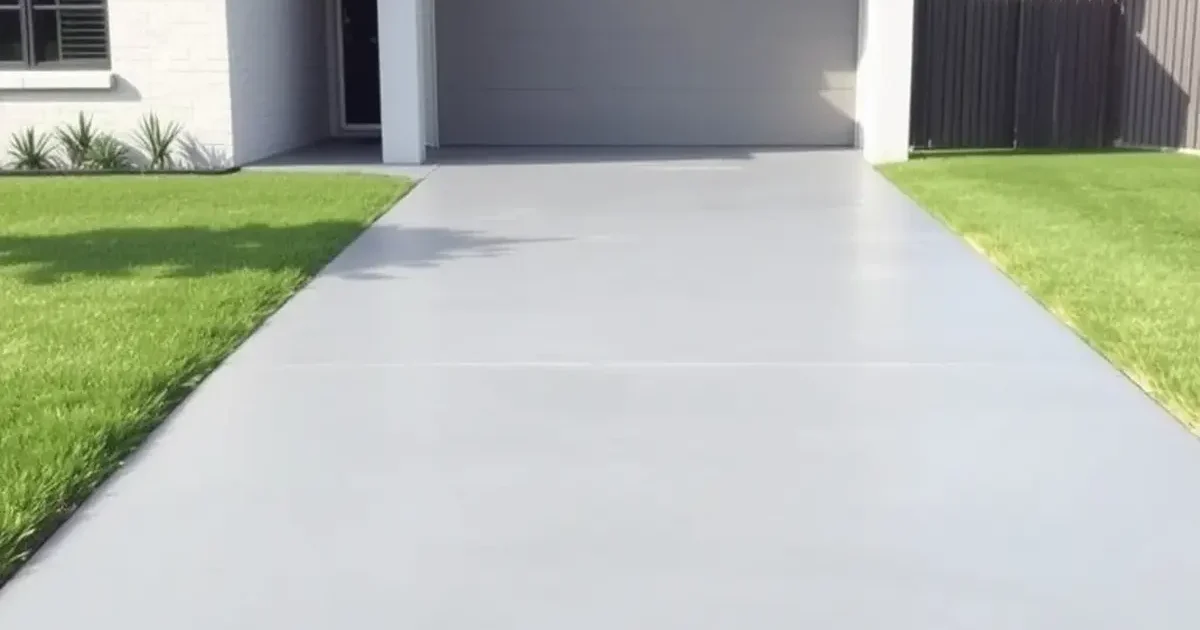
A concrete driveway costs $85 to $130 per square metre supplied and laid in Australia in 2026 with a plain broom finish, or $140 to $220 per m² in exposed aggregate. In real terms, a single driveway (about 36 m²) costs $3,050 to $4,700, a standard double (60 m²) runs $5,100 to $7,800, and a long or rural driveway of 100 m² lands around $8,500 to $13,000 plain.
Two things catch people out. First, the crossover — the section between your property boundary and the road — is council land, needs formal approval, and is built to a heavier spec than the rest of your driveway. Pouring one without approval risks a fine of $500 to $5,000 plus removal at your cost. Second, quotes vary wildly: three concreters pricing the same 60 m² driveway came back at $5,200, $5,900 and $7,400. This guide covers the real per-metre rates, the council process, how concrete stacks up against asphalt and pavers over 10 years, and the specs to write into your brief.
Concrete driveway cost calculator (2026)
Enter your driveway’s width and length, choose a finish, and tick anything that applies. A single driveway is usually about 3 m wide; a double is 5–6 m.
Indicative 2026 estimates from published Australian concreter pricing. Site access, soil, drainage and council requirements all move the final figure. Always get three written quotes. Not a quote or financial advice.
Concrete driveway cost by size
| Driveway | Typical size | Plain broom | Exposed aggregate |
|---|---|---|---|
| Single, short | 3 m × 12 m (36 m²) | $3,050 – $4,700 | $5,050 – $7,900 |
| Double, standard | 6 m × 10 m (60 m²) | $5,100 – $7,800 | $8,400 – $13,200 |
| Single, long | 3 m × 20 m (60 m²) | $5,100 – $7,800 | $8,400 – $13,200 |
| Large / rural | 100 m² | $8,500 – $13,000 | $14,000 – $22,000 |
Check the crossover before you get quotes
The council crossover: the part most people miss
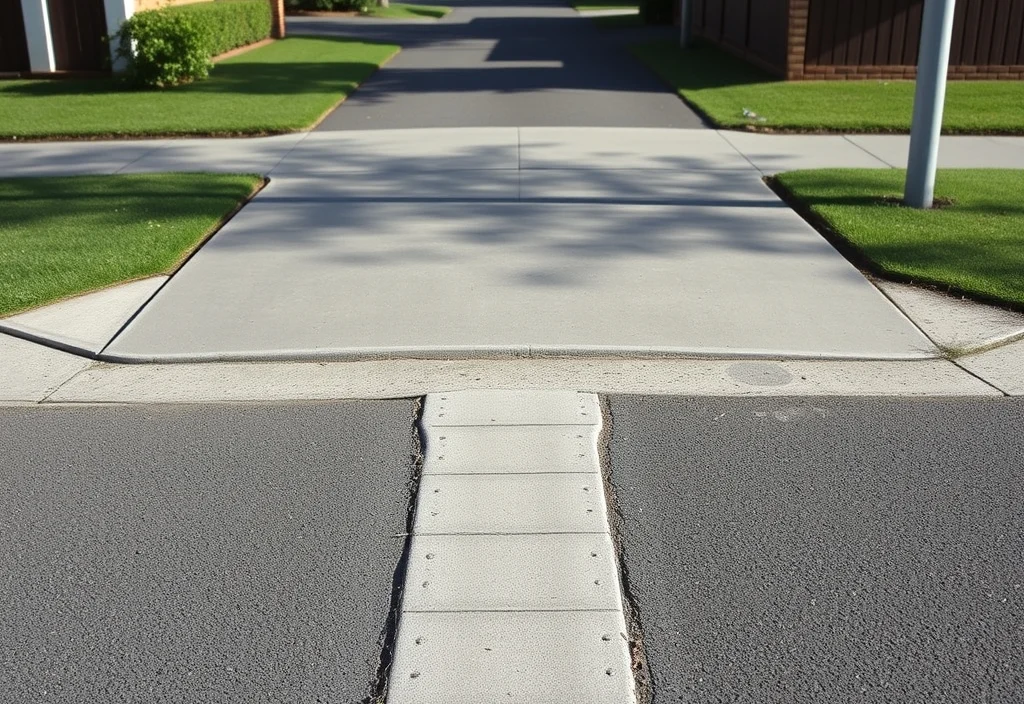
Your driveway has two distinct parts. The section inside your boundary is yours to build. The crossover — from your boundary across the nature strip and footpath to the kerb — sits on council land, and it cuts the council’s kerbing. That makes it council-controlled work, and every Australian council requires approval for a new or modified crossover.
What it costs and how long it takes
| Item | Typical |
|---|---|
| Council application fee | $280 – $650 (SEQ councils often $400 – $750) |
| Manningham Council (VIC) | $327 |
| City of Casey (VIC) | $347 |
| Processing time | 4 – 8 weeks (some councils 10 – 15 business days) |
| Penalty for building without approval | $500 – $5,000, plus removal and reinstatement at your cost |
The crossover is built to a heavier spec than your driveway
This is the detail that surprises people, and it is why a crossover costs more per square metre than the driveway behind it. Councils typically require:
- Minimum 150 mm thickness with SL82 mesh — heavier than the 100 mm and SL72 that is standard for the driveway on your own property, because it carries turning vehicles and sometimes service trucks.
- Minimum 3 m width for a single vehicle crossing, 5 m for a double.
- Maximum gradient of 1:4 (25%), so vehicles do not scrape.
- Compliant drainage that maintains existing water flow along the gutter — you cannot dam the kerb line.
Apply before you book the concreter
One practical note: if your existing crossover is staying and you are only replacing the driveway inside your boundary, you generally do not need crossover approval — but you should still check, because some councils want notification for any work in the road reserve.
Concrete vs asphalt vs pavers: which is actually cheaper?
Asphalt wins on day one and loses over a decade. Pavers look the part and cost the most to live with. Concrete sits in the middle upfront and usually comes out ahead on whole-of-life cost — which is the number that actually matters for something you will own for 30 years.
| Material | Installed cost/m² | Lifespan | Maintenance |
|---|---|---|---|
| Asphalt | $25 – $100 (typically ~$60) | 15 – 20 years | Reseal every 3–5 yrs at $15–$25/m² |
| Concrete, plain | $85 – $130 | 25 – 40 years | Seal every 5–7 yrs (optional) |
| Concrete, exposed aggregate | $140 – $220 | 25 – 40 years | Seal every 5–7 yrs (recommended) |
| Concrete pavers | $75 – $140 | 30+ years | Weeding, joint sand every 3–5 yrs, re-lay at 20–25 yrs |
| Brick pavers | $110 – $170 | 30+ years | As above |
The honest summary for each:
- Asphalt is the cheapest to lay and the fastest to install, and it suits long rural driveways where covering area cheaply matters most. But you are resealing every three to five years, and replacing it in 15 to 20.
- Concrete costs more upfront and lasts 25 to 40 years with very little attention. For most suburban driveways it is the default for good reason.
- Pavers look excellent and individual units can be lifted and replaced, but the joints grow weeds, the sand needs topping up every three to five years ($100–$300), and a full re-lay at 20 to 25 years costs $1,500–$3,000 on a 40 m² driveway.
How long a concrete driveway lasts, and looking after it
A properly built driveway — correct thickness, correct mesh, well-compacted sub-base — lasts 25 to 40 years. Almost every early failure traces back to one of those three things being skimped, which is exactly why the cheapest quote is so often the most expensive decision.
- Sealing every five to seven years ($8–$15/m²) prevents most surface cracking and staining. Worth it for exposed aggregate and coloured finishes; optional on plain broom.
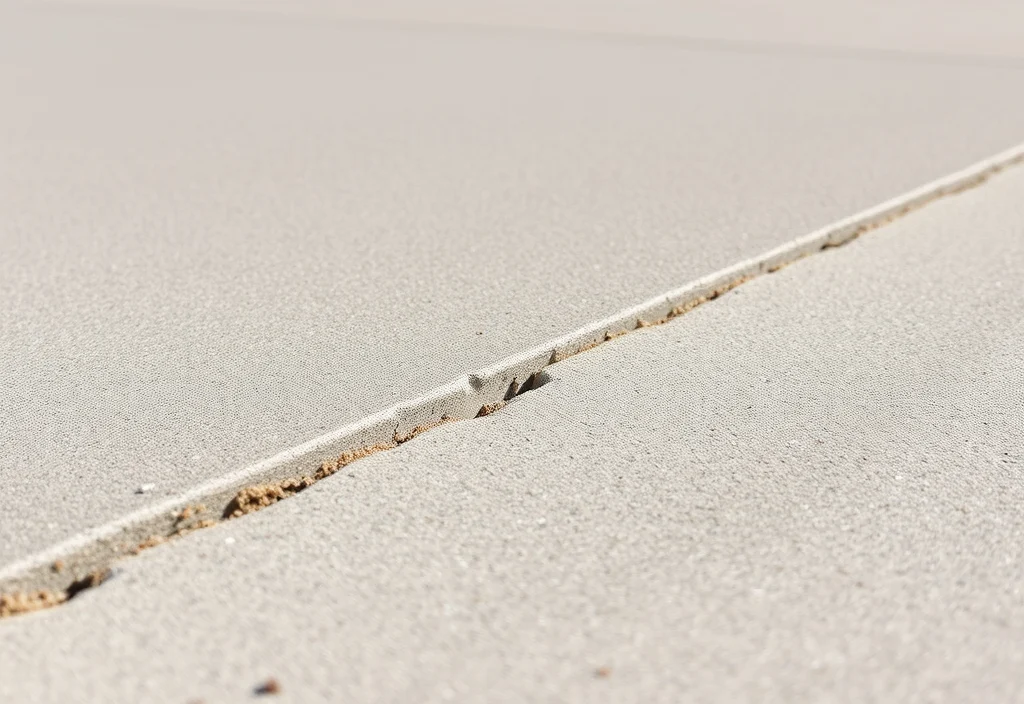
- Hairline cracks under 3 mm are normal and can be filled with a polyurethane crack filler. Concrete cracks — control joints are there so it cracks where you chose.
- Structural cracks, movement between slabs, or sections lifting need a saw-cut repair and a professional look at the sub-base.
- Oil stains lift most easily when fresh; a sealed surface gives you far longer to get to them.
- Keep heavy trucks off it — a residential slab is designed for cars, not concrete trucks or skip bins.
The specs to demand, and the extras that move the price
Hand every concreter the same written brief. It is the only way to compare quotes honestly, and it stops anyone winning your job by quietly planning a thinner slab.
- 100 mm minimum thickness on your property, 125 mm if a caravan, boat trailer or heavy 4WD will sit on it.
- SL72 mesh as standard on the driveway; the crossover needs 150 mm and SL82 to council spec.
- Compacted sub-base to a stated depth — what is under the slab decides its life.
- Control joints at correct spacing, so cracking happens on the lines rather than randomly.
- Falls and drainage directing water away from the house and not damming the gutter.
- Concrete strength — N25 is a common residential driveway specification; ask what they are pouring.
| Extra | Typical cost |
|---|---|
| Demolition and removal of the old driveway | $30 – $60 per m² incl. disposal |
| Site preparation and excavation (50 m²) | $500 – $1,500 |
| Sloping block | About +$10 per m² |
| Sealing | $8 – $15 per m² |
| Council crossover application | $280 – $650 |
| Difficult access (no truck or pump access) | Ask specifically — can be significant |
How long the job takes
The pour itself is quick; the waiting is not. Budget four to eight weeks for council crossover approval before anything starts. On site, demolition and excavation take a day or two, formwork and mesh another day, and the pour itself is usually a single morning. After that you can walk on it in 24–48 hours, drive a car on it after about seven days, and put heavy loads such as a caravan on it at 28 days, when the concrete has reached full design strength. Driving on it too early is one of the most common causes of early cracking.
How to save money without wrecking the job
- Get three quotes on an identical brief. A 42% spread on the same job is normal — that is $2,200 on a 60 m² driveway for an hour of your time.
- Choose plain broom over decorative. Exposed aggregate adds roughly 60%, about $3,300 extra on a 60 m² driveway.
- Keep the existing crossover if it is sound and correctly positioned — that avoids the permit, the wait and the heavier slab.
- Pour other areas at the same time — paths, a shed slab, the patio — to spread set-up, delivery and minimum-load charges.
- Book in autumn or winter, when concreters are less busy than the spring rush.
- Never economise on thickness, mesh or sub-base. This is the one place where saving $500 can cost you $6,000 in a decade.
Pricing other concreting at the same time? See our concreting cost per square metre guide for slabs, paths and patios, or our concrete price per m³ guide if you are buying ready-mix from a supplier. More home project costs are collected in our cost of living and services price guide.
Frequently asked questions
Prices are indicative 2026 figures from published Australian concreter and trade pricing and vary by state, site conditions and access. Council crossover fees, specifications and penalties differ by council — always confirm with your own council before work starts. Use a licensed concreter. General information only, not construction or financial advice.
You May Also Like

Moving to Australia: The Complete Checklist and Guide (2026)

NT Public Holidays 2026: Full Calendar, Dates and How Darwin and Alice Springs Celebrate