Concrete Costs Australia 2026: Price Per m3 & m2 Guide

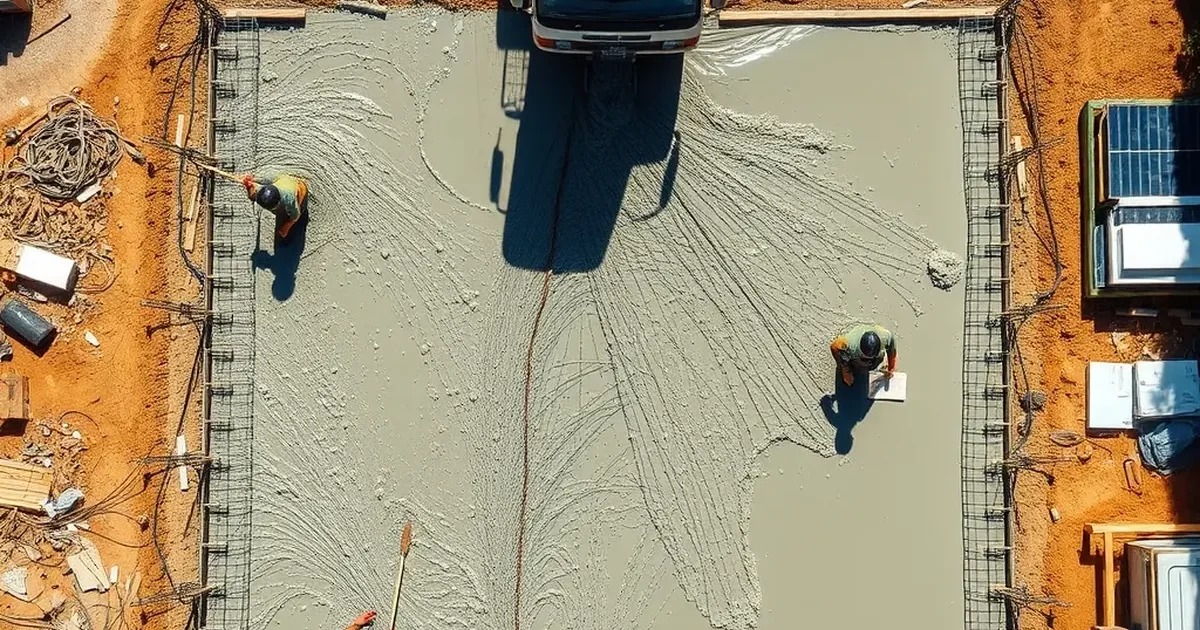
Concrete costs in Australia vary significantly across regions and project requirements, with prices ranging from $150 to $300 per cubic metre for standard ready-mix concrete in 2026. Most Australian contractors charge between $180-$220 per m3 for standard residential applications, while premium mixes can reach $350 per m3. Additionally, many projects are quoted per square metre, typically costing $25-$45 per m2 depending on slab thickness and specifications.
Hiring a concreter rather than buying concrete? This guide covers ready-mix priced per cubic metre. If you want the price of a finished driveway, slab or path laid by a concreter — quoted per square metre — see our concreting cost per square metre guide.
Understanding how much concrete costs requires considering multiple factors beyond the base material price. Furthermore, delivery charges, pump hire fees, and labour costs can add substantial amounts to your total project budget. Major suppliers like Boral, Hanson, and Holcim offer competitive pricing, but rates fluctuate based on location, order quantity, and seasonal demand.
Smart planning and accurate quotes help Australian property developers and contractors control concrete expenses effectively. Therefore, comparing multiple suppliers and understanding pricing structures becomes essential for budget management.
TL;DR
- Standard concrete costs $180-$220 per m3 in Australia, with premium mixes reaching $350 per m3
- Per square metre pricing ranges $25-$45 for typical residential slabs depending on thickness
- Additional costs include pump hire ($300-$800), delivery ($50-$150), and labour ($40-$80 per m2)
- Major suppliers (Boral, Hanson, Holcim) offer competitive rates with regional price variations across Australian cities
Concrete Cost Calculator (Australia, 2026)
Estimate the cost of your concrete before you call a supplier. Enter your slab area (or volume), pick a strength grade and your state, and this tool estimates the concrete, delivery and pump costs as a realistic range.
Estimate your concrete cost
Concrete Cost Overview: What to Expect in 2026
Australian concrete prices have stabilized in early 2026 after years of volatility, with standard ready-mix concrete averaging between $150-$300 per cubic metre across the nation. Most residential and commercial projects fall within the $180-$220 per m3 range, while specialized high-strength mixes command premium rates up to $350 per m3. However, these base prices represent only the starting point for total project costs.
Regional Price Variations Across Major Cities
Melbourne concrete suppliers typically charge $170-$210 per m3 for standard 20MPa mixes, benefiting from competitive local markets and established supply chains. Meanwhile, Sydney prices range $185-$230 per m3 due to higher transport costs and urban delivery challenges. Brisbane contractors pay similar rates to Sydney, while Perth faces the highest costs at $200-$280 per m3 because of its geographic isolation and limited supplier competition.
| City | Standard Mix (20MPa) | Premium Mix (32MPa+) | Delivery Zone |
|---|---|---|---|
| Melbourne | $170-$210 | $250-$320 | 40km radius |
| Sydney | $185-$230 | $270-$350 | 50km radius |
| Brisbane | $180-$225 | $260-$340 | 45km radius |
| Perth | $200-$280 | $290-$380 | 30km radius |
Regional suppliers like Boral, Hanson, and Holcim maintain consistent pricing structures, though local independent operators often provide competitive alternatives. Additionally, rural areas typically face 15-25% higher costs due to extended delivery distances and reduced supplier density.
Per M3 vs Per M2 Pricing Methods
Understanding the difference between cubic metre (m3) pricing and square metre (m2) pricing helps contractors choose the most cost-effective approach for their projects. Concrete suppliers price materials by volume (m3), calculating the total cubic metres needed based on area multiplied by thickness. Conversely, contractors often quote clients per square metre of finished slab, incorporating material, labour, and equipment costs into a single rate.
For example, a 100mm thick residential slab requires 0.1 m3 of concrete per square metre of coverage. Therefore, if concrete costs $200 per m3, the material cost equals $20 per m2. However, contractors typically charge $25-$45 per m2 for complete slab installation, reflecting additional expenses like reinforcement, labour, and equipment hire.
A 150mm thick driveway slab uses 0.15 m3 per m2, meaning $200/m3 concrete translates to $30/m2 in material costs alone
Factors Behind Recent Price Increases
Concrete prices have risen 35-45% since 2020 due to multiple economic pressures affecting the construction industry. Raw material costs represent the primary driver, with cement prices increasing due to energy costs and carbon emission regulations. Furthermore, sand and aggregate shortages in major metropolitan areas have pushed aggregate costs up by 25-30% over the past three years.
Labour shortages across the concrete industry have also contributed significantly to price inflation. Truck drivers, plant operators, and concrete finishers command higher wages due to skills shortages, while fuel costs directly impact delivery charges. Moreover, environmental compliance costs and quality control requirements have added operational expenses that suppliers pass through to customers.
Supply chain disruptions during 2021-2023 created lasting impacts on pricing structures, even as logistics have normalized. Consequently, many suppliers maintain higher base prices to account for potential future volatility, while others offer volume discounts to secure larger contracts and improve cash flow predictability.
Concrete Price Per Cubic Metre (m3) Breakdown
Ready-mix concrete prices vary significantly across Australia, with standard concrete costing $180-$220 per cubic metre delivered to most metropolitan areas. This price range covers typical residential applications like driveways, footpaths, and house slabs using 20-25 MPa strength concrete. However, regional variations and supplier differences create substantial price fluctuations that contractors must navigate carefully.
Premium concrete mixes command $250-$350 per m3 due to specialized additives and higher performance requirements. These premium options include high-strength concrete (40+ MPa), coloured concrete with integrated pigments, and specialty mixes containing fibres or waterproofing agents. Additionally, decorative concrete with exposed aggregate finishes typically costs 20-30% more than standard mixes.
| Concrete Type | Price Range (per m3) | Common Applications |
|---|---|---|
| Basic mix (20 MPa) | $150-$180 | Footings, non-structural |
| Standard ready-mix (25 MPa) | $180-$220 | Driveways, slabs, paths |
| High-strength (40+ MPa) | $250-$300 | Commercial, structural |
| Coloured concrete | $280-$350 | Decorative applications |
| Specialty mixes | $300-$400 | Marine, industrial |
Regional Price Variations Across Australia
Concrete costs fluctuate considerably between Australian states due to transport distances, local aggregate availability, and market competition. Sydney and Melbourne typically offer the most competitive pricing at $180-$200 per m3 for standard mixes, benefiting from multiple suppliers and shorter delivery distances. Conversely, Perth and Adelaide often see prices 15-25% higher due to limited local competition and greater transport costs.
Regional Queensland markets experience significant price variations, with Brisbane averaging $190-$210 per m3 while remote mining towns may exceed $300 per m3 due to logistics challenges. Similarly, Tasmania and Northern Territory locations often face premium pricing due to limited local production capacity and higher freight costs from mainland suppliers.
Remote locations can pay up to 80% more than metropolitan areas for the same concrete mix
Major Supplier Pricing Comparison
Boral concrete prices typically range from $185-$225 per m3 for standard residential mixes, positioning them competitively in most metropolitan markets. Their extensive plant network allows consistent pricing across major cities, though rural deliveries incur additional transport charges of $15-$30 per m3 depending on distance.
Hanson concrete costs generally align with Boral’s pricing structure at $180-$220 per m3, but they often provide volume discounts for orders exceeding 20 cubic metres. Furthermore, Hanson’s specialty in high-performance concrete makes them competitive for commercial projects requiring 40+ MPa strength ratings.
Holcim concrete prices tend to be slightly higher at $190-$235 per m3, reflecting their focus on premium quality and environmental sustainability. However, their eco-friendly mixes using recycled materials appeal to environmentally conscious builders, despite the price premium of 5-10% over standard suppliers.
- Independent suppliers often undercut major brands by $10-$20 per m3
- Volume discounts typically reduce costs by 5-15% for orders over 15 m3
- Pump hire adds $150-$300 per delivery regardless of supplier
- Weekend deliveries incur surcharges of $50-$100 per load
Local concrete suppliers frequently offer competitive alternatives to major brands, particularly for smaller residential projects. These independent operators may charge $160-$190 per m3 for basic mixes, though their geographic coverage remains limited compared to national suppliers with extensive distribution networks.
Concrete Cost Per Square Metre (m2) Explained
Most concreters quote residential slabs using per square metre pricing rather than cubic metre rates, making it essential to understand how thickness directly impacts your final costs. Standard residential slabs typically range from $25-$45 per m2, but this figure varies significantly based on slab thickness, reinforcement requirements, and site accessibility.
Slab thickness fundamentally determines the volume of concrete required per square metre. A 100mm thick slab uses 0.1 cubic metres of concrete per m2, while a 150mm slab requires 0.15 m3 per m2, and a 200mm slab needs 0.2 m3 per m2. Consequently, thicker slabs cost proportionally more per square metre due to increased material consumption.
How Thickness Affects M2 Pricing
| Slab Thickness | Concrete Volume per m2 | Typical Cost per m2 | Common Applications |
|---|---|---|---|
| 100mm | 0.1 m3 | $25-$32 | Pathways, light-duty areas |
| 150mm | 0.15 m3 | $35-$42 | Standard house slabs, garages |
| 200mm | 0.2 m3 | $45-$55 | Heavy-duty slabs, commercial |
Reinforcement requirements also influence per square metre costs significantly. Steel mesh reinforcement adds approximately $8-$12 per m2, while steel bar reinforcement for structural slabs increases costs by $15-$25 per m2. Additionally, edge beams and footings require separate pricing calculations beyond the basic slab rate.
When Contractors Quote Per M2 vs Per M3
Contractors typically quote per square metre for standard residential slabs where thickness remains consistent across the entire pour. This pricing method simplifies calculations for homeowners and accounts for labour, finishing, and reinforcement in a single rate. However, contractors switch to per cubic metre pricing for complex projects with varying thicknesses or when concrete volume becomes the primary cost driver.
Commercial projects often use cubic metre pricing because structural requirements vary significantly across different areas. Furthermore, large-scale pours exceeding 50 cubic metres typically receive volume discounts that make m3 pricing more transparent and competitive.
Calculating M2 Costs from M3 Prices
Converting cubic metre prices to square metre costs requires multiplying the m3 rate by the slab thickness in metres. For example, if concrete costs $200 per m3 and your slab thickness measures 150mm (0.15m), the material cost equals $30 per m2 ($200 × 0.15). However, this calculation covers only concrete supply, not labour or finishing work.
Quick Conversion Formula
Labour and finishing typically add $15-$25 per m2 to material costs, depending on surface requirements and site complexity. Therefore, a 150mm slab using $200/m3 concrete would cost approximately $45-$55 per m2 including all components. This comprehensive approach ensures accurate budget planning for residential concrete projects.
Site access significantly impacts both pricing methods, with difficult access adding $5-$10 per m2 regardless of whether contractors quote per square metre or cubic metre. Similarly, weekend pours and rush deliveries increase costs proportionally across both pricing structures.
Concrete Price by Strength Grade (MPa)
Concrete is priced partly by its strength grade, measured in MPa (megapascals). The higher the grade, the more cement it contains and the more it costs per cubic metre. These are typical 2026 ready-mix ranges before delivery and pump hire.
| Grade | Typical use | Price per m³ (2026) |
|---|---|---|
| 20 MPa | Footpaths, garden edging, light paths | $180 – $220 |
| 25 MPa | Driveways, residential slabs, shed floors | $210 – $250 |
| 32 MPa | Heavy-duty driveways, structural slabs, footings | $250 – $300 |
| 40 MPa | High-strength structural, commercial, high-load areas | $300 – $380 |
For most home projects – a driveway, a shed floor or a standard slab – 25 MPa or 32 MPa is what you will be quoted. Do not over-specify: paying for 40 MPa when 25 MPa is fine is one of the most common ways people overspend on concrete.
Major Supplier Prices: Boral, Hanson, Holcim and Hymix
Australia’s ready-mix market is dominated by a handful of large suppliers. Exact list prices are not published and vary by plant, order size and location, but as a guide for standard grades in 2026:
| Supplier | Notes | Typical standard mix per m³ |
|---|---|---|
| Boral | One of the largest national suppliers | $200 – $320 |
| Hanson | Major national network of plants | $200 – $320 |
| Holcim | National supplier, wide grade range | $200 – $320 |
| Hymix | Well known in several states incl. SA | $200 – $320 |
Always get a written quote from at least two suppliers
Adelaide and state-specific pricing
Concrete prices vary by state and even by city, driven by cement freight, local demand and competition. As a rough guide, metropolitan Sydney, Melbourne and Brisbane sit around the national average, Perth tends to run slightly higher, and Adelaide is often competitive – a common Adelaide search is for Hymix 32 MPa pricing, which for a standard 32 MPa mix falls in the $250-$300 per m³ band before delivery. Regional and remote areas (and the NT and Tasmania) pay more because of freight. Use the calculator above with your state selected for a location-adjusted estimate.
Factors That Affect Concrete Pricing
Multiple variables influence concrete costs beyond basic supply rates, making accurate pricing estimates complex for commercial projects. Understanding these factors helps contractors and developers anticipate total project expenses while avoiding unexpected charges during construction phases.
Concrete Grade and Strength Requirements
Concrete strength specifications directly impact pricing, with higher-grade mixes commanding premium rates. Standard 20MPa concrete costs approximately $180-$220 per m3, while 25MPa grades increase prices to $200-$240 per m3. Commercial applications requiring 32MPa concrete typically cost $230-$280 per m3 due to increased cement content and specialized aggregates.
Structural engineers specify concrete grades based on load-bearing requirements, environmental exposure, and building codes. Consequently, footings and structural elements often require higher-strength concrete than decorative slabs, creating varied pricing across project components. Additionally, specialized applications like precast elements or high-rise construction may demand grades exceeding 40MPa, further escalating material costs.
Special Additives and Admixtures
Chemical admixtures enhance concrete performance but increase costs by $15-$50 per cubic metre depending on additive types and concentrations. Waterproofing admixtures add $20-$35 per m3 for basement walls and water-retaining structures. Meanwhile, accelerating agents cost $15-$25 per m3 but enable faster construction schedules in cold weather conditions.
Fiber reinforcement systems add $25-$45 per m3 while reducing steel mesh requirements in industrial floors. Similarly, air-entraining agents improve freeze-thaw resistance for $10-$20 per m3, essential for exposed concrete surfaces. However, multiple admixtures can interact negatively, requiring specialized mix designs that increase both material and testing costs.
Delivery Distance and Site Accessibility
Transportation costs escalate rapidly beyond standard delivery zones, typically within 20-30 kilometers of concrete plants. Suppliers charge $3-$8 per kilometer beyond free delivery areas, making remote projects significantly more expensive. Furthermore, concrete trucks must complete deliveries within 90 minutes of batching to maintain workability standards.
Site accessibility challenges increase delivery costs through specialized equipment requirements or extended pumping distances. Narrow access roads, overhead restrictions, or unstable ground conditions may necessitate smaller trucks, increasing the number of deliveries and associated charges. Additionally, sites requiring traffic management or escort vehicles add $100-$300 per delivery to standard rates.
Order Quantity and Minimum Charges
Most suppliers impose minimum order quantities of 1-3 cubic metres, with smaller loads incurring surcharges of $50-$150 per delivery. Conversely, large orders exceeding 50 cubic metres often qualify for volume discounts of $10-$25 per m3, making bulk purchases more economical. However, construction scheduling must accommodate continuous pours to maximize these savings.
Partial truck loads waste capacity and increase per-cubic-metre costs through inefficient resource utilization. Therefore, contractors optimize order sizes to match truck capacities, typically 6-8 cubic metres for standard mixers or 10-12 cubic metres for larger vehicles. Strategic ordering reduces waste while maintaining competitive pricing structures.
Seasonal Demand Fluctuations
Peak construction seasons drive concrete prices higher through increased demand and limited plant capacity. Summer months typically see price increases of $15-$30 per cubic metre compared to winter rates, particularly in metropolitan areas with high construction activity. Additionally, holiday periods and public holidays incur surcharges of $25-$50 per m3 for emergency deliveries.
Weather conditions affect both pricing and availability, with extreme temperatures limiting pouring windows and increasing costs. Hot weather requires specialized mixes with retarding agents, while cold conditions necessitate heated concrete or accelerators. These seasonal adjustments can increase material costs by 10-20% during challenging weather periods.
Pump Hire Requirements
Concrete pumping becomes essential for sites with limited truck access, elevated pours, or complex geometries. Standard concrete pumps cost $800-$1,200 per day, while specialized boom pumps for high-rise construction range from $1,500-$3,000 daily. However, pumping enables faster placement and reduces labour requirements, often offsetting equipment costs.
Pump selection depends on concrete volume, vertical height, and horizontal distance requirements. Line pumps handle smaller residential projects efficiently, while boom pumps provide greater reach and placement speed for commercial applications. Additionally, pump operators require specialized training and certification, contributing to overall equipment costs but ensuring safe, efficient concrete placement.
Additional Costs Beyond Raw Concrete
Commercial concrete projects require numerous services beyond the base material cost, with these additional expenses often doubling the total project budget. Understanding these supplementary costs enables accurate project planning and prevents budget overruns during construction phases.
Concrete Pump Hire and Equipment Costs
Concrete pump hire represents a significant expense, typically ranging from $300-$800 per day for standard line pumps used in residential applications. Commercial boom pumps command higher rates of $800-$1,500 daily, while specialized high-reach equipment costs $1,500-$3,000 per day. These pumping costs vary based on equipment size, reach requirements, and regional availability.
Pump operators require certified training and specialized skills, adding $400-$600 daily to equipment hire costs. Furthermore, pump setup and cleaning time extends rental periods beyond actual pouring duration, typically adding 2-4 hours to daily hire charges.
Delivery and Transportation Charges
Concrete delivery charges depend primarily on distance from the batching plant to the construction site. Standard delivery fees range from $50-$150 per load, with charges increasing significantly for remote locations. Sites beyond 20 kilometers from concrete plants often incur additional distance surcharges of $2-$4 per kilometer.
Multiple truck loads require coordination and scheduling, potentially increasing delivery costs through waiting time charges. Additionally, difficult site access requiring smaller agitator trucks or specialized vehicles attracts premium delivery rates of $100-$200 per load.
Labour Costs for Placement and Finishing
Professional concrete placement and finishing services cost between $40-$80 per square metre, depending on complexity and finish requirements. Basic slab pours with float finishing occupy the lower end of this range, while decorative finishes, exposed aggregate, or stamped concrete command premium rates of $80-$150 per m².
Skilled concreters charge $60-$90 per hour for specialized work, including edge forming, control joint cutting, and surface texturing. Moreover, complex architectural concrete requires experienced tradespeople, increasing labour costs by 30-50% compared to standard commercial pours.
Reinforcement Materials and Installation
Steel reinforcement mesh costs $8-$15 per square metre including installation, while rebar reinforcement ranges from $12-$25 per m² depending on bar diameter and spacing requirements. Heavy-duty reinforcement for commercial applications can increase these costs to $30-$50 per m² for complex reinforcement schedules.
Reinforcement installation requires skilled steel fixers charging $45-$65 per hour for precise placement and tying. Additionally, reinforcement cutting, bending, and waste factors typically add 10-15% to material costs for standard projects.
Site Preparation and Formwork Expenses
Site preparation costs vary dramatically based on existing conditions, ranging from $15-$40 per m² for basic excavation and leveling. Complex sites requiring rock breaking, soil stabilization, or extensive earthworks can increase preparation costs to $80-$200 per m².
Formwork construction and hire represents another substantial expense, typically costing $25-$60 per linear metre for standard edge forms. Complex architectural formwork or curved structures require custom fabrication, increasing costs to $100-$300 per linear metre depending on complexity and reuse potential.
Cost Planning Tip
Ready-Mix vs DIY Concrete: Cost Comparison
Choosing between ready-mix concrete delivery and mixing your own concrete significantly impacts both project costs and quality outcomes. While DIY concrete mixing appears cheaper upfront, the total cost calculation includes materials, equipment hire, labour time, and potential quality issues that affect long-term durability.
When DIY Concrete Mixing Makes Financial Sense
Small-scale projects under 2 cubic metres often benefit from DIY concrete mixing, particularly when labour costs exceed material savings. Home handymen can achieve cost savings of 30-40% on projects like garden paths, small slabs, or repair work where perfect consistency isn’t critical.
However, DIY mixing becomes cost-prohibitive for larger projects due to equipment hire, time investment, and physical demands. Projects requiring more than 5 cubic metres typically favour ready-mix delivery due to labour efficiency and consistent quality requirements.
Bagged Concrete vs Ready-Mix Cost Breakdown
| Feature | ||
|---|---|---|
| Cost per m³ | $280-$350 | $180-$220 |
| Labour Hours | 8-12 hours/m³ | 2-3 hours/m³ |
| Equipment Needed | Mixer hire $80/day | Pump hire $150/hour |
| Quality Control | Variable | Consistent |
| Minimum Order | No minimum | 6m³ typical |
Bagged concrete mix costs $14-$18 per 20kg bag, requiring approximately 18-20 bags per cubic metre. This translates to $280-$350 per m³ before considering mixer hire, labour time, and potential waste from inconsistent mixing ratios.
Conversely, ready-mix concrete delivers consistent quality at $180-$220 per m³ including delivery within metropolitan areas. The price differential becomes more pronounced when factoring labour costs at $35-$45 per hour for manual mixing and placement.
Labour and Equipment Considerations
DIY concrete projects require significant physical labour, with experienced handymen managing approximately 0.5-1 cubic metres per day for quality results. Manual mixing demands continuous effort, proper timing, and immediate placement to prevent setting issues.
Equipment rental adds substantial costs to DIY projects. Concrete mixer hire costs $80-$120 per day, while wheelbarrows, floats, and finishing tools add another $40-$60 daily. Large projects may require multiple mixer loads, extending rental periods and increasing total equipment costs.
Furthermore, DIY mixing requires water access, adequate workspace, and disposal arrangements for excess materials. These logistical challenges often create hidden costs through extended project timelines and additional material purchases.
Quality and Consistency Advantages
Ready-mix concrete provides superior consistency through computerized batching systems that precisely control water-cement ratios, aggregate proportions, and admixture dosages. This consistency ensures predictable strength development and durability performance across the entire pour.
Ready-mix concrete achieves 95% strength consistency compared to 70-80% for hand-mixed concrete
Professional ready-mix suppliers conduct regular quality testing, maintaining detailed batch records and providing strength certificates for commercial applications. This documentation proves essential for building compliance and warranty requirements.
Additionally, ready-mix delivery includes professional placement advice, timing coordination, and technical support throughout the pour process. These services reduce the risk of costly mistakes that frequently occur with inexperienced DIY concrete work, particularly regarding proper curing procedures and surface finishing techniques.
How to Get Accurate Concrete Quotes
Securing accurate concrete quotes requires providing suppliers with comprehensive project details and understanding exactly what each quote includes. Most pricing discrepancies stem from incomplete information or misunderstood scope requirements, leading to unexpected costs during construction.
Essential Information Suppliers Need
Concrete suppliers require specific project details to calculate accurate pricing for your job. The volume calculation forms the foundation of any quote, measured in cubic metres (m³) for the total concrete needed. Additionally, suppliers need your exact delivery address to determine transport costs and accessibility requirements.
Furthermore, timing requirements significantly impact pricing structures. Peak construction periods during spring and summer typically command premium rates, while winter scheduling often provides cost savings. Suppliers also need minimum 24-48 hours notice for standard deliveries, with same-day requests incurring rush charges.
- Project specifications: concrete strength grade, aggregate size, special additives
- Site access: truck accessibility, pumping requirements, distance from road
- Delivery timing: preferred dates, time windows, weather contingencies
- Pour requirements: continuous pour needs, multiple loads, holding time limits
Maximizing Online Calculator Effectiveness
Online concrete calculators provide preliminary cost estimates but require accurate measurements and realistic assumptions. These tools typically calculate volume using length × width × depth formulas, then apply regional pricing averages to generate ballpark figures.
However, calculator accuracy depends on inputting correct dimensions and understanding their limitations. Most calculators use standard $150-$200 per m³ pricing ranges but cannot account for site-specific factors like access difficulties, special mix requirements, or current market fluctuations.
Calculator Best Practices
Critical Questions for Suppliers
Asking the right questions ensures quote accuracy and prevents costly surprises during delivery. Start by confirming the concrete strength grade matches your project requirements, as upgrading from 20MPa to 32MPa concrete adds $15-$25 per m³ to base pricing.
Moreover, clarify delivery logistics thoroughly. Standard truck access requires 4-metre width clearance and 4.2-metre height clearance, with concrete pumping adding $8-$12 per m³ when direct access proves impossible. Understanding these requirements prevents last-minute additional charges.
- What concrete strength grade does this quote include?
- Are delivery charges included or calculated separately?
- What minimum order quantities apply?
- How long can concrete remain in the truck before placement?
- What weather conditions affect delivery scheduling?
- Are weekend or after-hours deliveries available?
Comparing Multiple Supplier Quotes
Effective quote comparison requires standardizing all variables across suppliers to identify genuine price differences. Create a comparison spreadsheet listing concrete grade, volume, delivery date, and total costs including all surcharges for each supplier.
Price variations between suppliers often reflect different service levels rather than pure cost differences. Boral, Hanson, and Holcim typically charge premium rates but offer consistent quality and reliable scheduling, while smaller regional suppliers may provide competitive pricing with more flexible terms.
| Comparison Factor | Major Suppliers | Regional Suppliers |
|---|---|---|
| Base Price per m³ | $160-$190 | $140-$170 |
| Delivery Reliability | 95%+ on-time | 85-90% on-time |
| Minimum Orders | 6-8 m³ | 4-6 m³ |
| Technical Support | Comprehensive | Basic |
Understanding Quote Inclusions and Exclusions
Concrete quotes vary significantly in what services and costs they include, making careful analysis essential for accurate budgeting. Standard quotes typically include concrete materials and basic delivery within specified radius limits, usually 15-20 kilometres from the plant.
Nevertheless, many additional costs appear as exclusions or optional extras. Concrete pumping, extended delivery distances, waiting time beyond 30 minutes, and special additives like waterproofing agents all generate separate charges that can increase total costs by 20-40%.
Pros
- Clear itemized pricing breakdown
- Transparent delivery terms
- Specified concrete specifications
- Defined service inclusions
Cons
- Hidden surcharge potential
- Vague waiting time policies
- Unclear weather delay procedures
- Limited technical support details
Additionally, examine payment terms and cancellation policies carefully. Most suppliers require 50% deposits for large orders, with balance due on delivery. Cancellation within 24 hours typically incurs 25-50% penalty charges, while weather-related delays usually allow rescheduling without penalties.
Money-Saving Tips for Concrete Projects
Strategic planning and smart purchasing decisions can reduce concrete costs by 15-30% without compromising quality. Commercial projects particularly benefit from understanding supplier pricing structures, optimal ordering strategies, and timing considerations that influence final costs.
Optimal Ordering Quantities to Avoid Waste Charges
Concrete suppliers impose significant waste charges when orders fall short of truck capacity or exceed project requirements. Standard trucks carry 6-8 cubic metres, making these volumes the most cost-effective ordering quantities for price per m³ calculations.
Furthermore, ordering in multiples of truck capacity eliminates partial load surcharges that can add $50-$100 per delivery. Calculate your exact requirements using length × width × depth measurements, then round up to the nearest truck load rather than ordering precise amounts.
Ordering Strategy
Additionally, coordinate multiple pours within short timeframes to qualify for bulk pricing discounts. Suppliers typically offer 5-15% reductions for orders exceeding 50 cubic metres within a single project or delivery period.
Timing Your Concrete Pour for Better Rates
Concrete prices fluctuate based on demand patterns, seasonal factors, and supplier scheduling constraints. Tuesday through Thursday morning deliveries typically cost 10-20% less than weekend or Monday pours when demand peaks.
Similarly, off-peak seasons from May through August offer the most competitive pricing as construction activity decreases. Suppliers often provide winter discounts of 5-15% to maintain steady production volumes during slower periods.
- Peak pricing periods: September-April construction season
- Premium time slots: Friday afternoons, weekends, public holidays
- Optimal booking windows: 7-14 days advance notice
- Last-minute surcharges: 24-48 hour bookings cost 15-25% extra
Moreover, flexible scheduling allows suppliers to optimise delivery routes, potentially reducing transport costs that they pass on as savings. Accepting delivery windows rather than specific times can yield $20-$40 per load discounts.
Choosing the Right Concrete Grade for Your Application
Specifying appropriate concrete grades prevents over-engineering costs while ensuring structural adequacy. 20 MPa concrete suits most residential applications including driveways, paths, and house slabs, costing $160-$180 per m³.
However, upgrading to 25 MPa or 32 MPa grades unnecessarily can increase costs by $15-$30 per cubic metre. Conversely, using inadequate grades requires costly remediation work that far exceeds initial savings.
| Application | Recommended Grade | Price Range per m³ | Typical Uses |
|---|---|---|---|
| Footpaths | 20 MPa | $160-$175 | Pedestrian areas, garden paths |
| Driveways | 25 MPa | $170-$185 | Residential vehicle access |
| House slabs | 25-32 MPa | $175-$195 | Foundation requirements |
| Commercial floors | 32-40 MPa | $190-$220 | Heavy load applications |
Consult structural engineers or building certifiers to determine minimum grade requirements before ordering. This professional advice costs $200-$500 but prevents expensive over-specification or inadequate concrete selection.
Negotiating Better Rates for Larger Projects
Volume discounts become negotiable for projects requiring 20+ cubic metres of concrete. Suppliers prefer large orders that improve truck utilisation and reduce administrative overhead per cubic metre delivered.
Start negotiations by obtaining quotes from multiple suppliers, then leverage competitive pricing to secure better rates. Emphasise total project volume, repeat business potential, and flexible scheduling to strengthen your negotiating position.
Pros
- 10-20% discounts available for 50+ m³ orders
- Flexible payment terms for established customers
- Priority scheduling for large projects
- Reduced delivery charges for consolidated pours
Cons
- Requires significant upfront planning
- Limited supplier flexibility for changes
- Potential quality consistency issues across deliveries
- Higher financial commitment and risk
Furthermore, consider partnering with other contractors or developers to combine orders and achieve volume thresholds. This collaborative approach can reduce individual project costs while maintaining supplier relationships for future work.
Avoiding Common Costly Mistakes
Preparation oversights and communication failures generate the most expensive concrete project complications. Site access problems requiring concrete pumping add $8-$15 per cubic metre when not planned initially.
Additionally, inadequate site preparation forces delays that trigger waiting time charges of $150-$200 per hour after the first 30 minutes. Ensure formwork, reinforcement, and access routes are completely ready before scheduling delivery.
- Weather contingencies: Check forecasts 48 hours before pouring
- Equipment readiness: Confirm pump trucks, floats, and finishing tools
- Labour coordination: Schedule adequate crew for timely placement
- Permit compliance: Verify council approvals and inspection requirements
Moreover, ordering incorrect concrete specifications necessitates costly adjustments or complete replacement. Double-check grade requirements, slump specifications, and any special additives with your engineer before confirming orders.
Finally, maintain clear communication with suppliers about delivery timing, site conditions, and access requirements. Miscommunication accounts for 60% of concrete delivery problems and associated extra charges that impact project budgets significantly.
This guide is part of our complete Cost of Living in Australia price guide — the hub for what everything costs in 2026, from rent and groceries to home projects, insurance and tax.
Frequently Asked Questions
You May Also Like

Moving to Australia: The Complete Checklist and Guide (2026)

NT Public Holidays 2026: Full Calendar, Dates and How Darwin and Alice Springs Celebrate