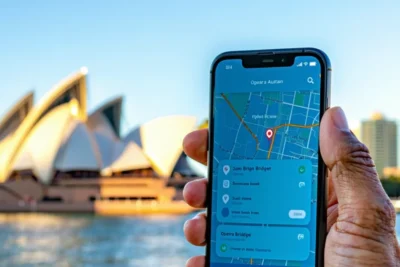
How to Use LinkedIn Effectively to Find Professional Jobs in Australia


For international students chasing professional and graduate roles in Australia, LinkedIn is not optional — it is the single most important tool you have. Recruiters live on it, a large share of good jobs are filled through it (often before they are ever advertised), and it is the one place where you can reach hiring managers directly even if you arrived in the country knowing no one. Yet most students treat it as an online resume they set up once and forget. This guide shows you how to actually work LinkedIn: building a profile recruiters find, growing the right network, tapping the hidden job market, and messaging recruiters without being ignored.
I am an international student finishing my Master’s at the University of Melbourne, and LinkedIn has done more for my job search than any job board. Here is the strategy that works for newcomers hunting professional jobs in Australia.
LinkedIn in one box
Why LinkedIn Matters More in Australia Than You Think
In Australia, professional hiring runs on relationships and recruiters, and both are concentrated on LinkedIn. Internal recruiters and agencies actively search the platform for candidates, many roles are filled through referrals and networks before a public ad ever appears, and even when you apply somewhere else, the hiring manager will often look you up on LinkedIn before deciding whether to call. If your profile is thin or missing, you are invisible in exactly the place decisions get made.
This matters even more for international students. When you arrive without a local professional network, LinkedIn is the most level playing field you will find: you can connect with alumni from your university, follow the companies you want to work for, and message a recruiter directly, all without an introduction. Australian professional culture is genuinely open to the “coffee chat” and the informational message — reaching out politely is normal and expected, not pushy. The students who understand this get a months-long head start on the ones who only ever hit “apply.”
What LinkedIn does that job boards can't
- It reaches the hidden job market. Many roles are filled through connections and recruiter outreach before they are advertised — LinkedIn is how you get in front of them.
- It lets recruiters find you. A keyword-optimised profile with Open to Work turned on means opportunities come to your inbox.
- It puts you one message from a decision-maker. Hiring managers, team leads and recruiters are all reachable directly.
- It builds credibility over time. Engaging thoughtfully in your field makes your name familiar before you ever apply.
None of this replaces a good resume or applying through company websites — it multiplies them. Over the next sections we will build your profile properly, grow a network that actually helps, use LinkedIn’s job tools the right way, and reach out to recruiters in a way that gets replies.
Building a Profile Recruiters Actually Find
Your profile has one job: to make a recruiter who has never met you think “I should talk to this person.” That means it has to be complete, keyword-rich so it surfaces in searches, and quick to read. Work through these elements top to bottom.
Photo and banner
Use a clear, friendly headshot — good lighting, plain background, professional but approachable. You do not need a photographer; a well-lit photo against a wall works. Profiles with a photo get far more views and messages than those without. Add a simple background banner too — even a clean colour or a city skyline looks more polished than the default grey and signals you have put thought into your presence.
The headline: your most valuable line
Your headline appears everywhere — in searches, comments and messages — and it is heavily weighted in LinkedIn’s search. Do not leave it as the default “Student at University of Melbourne.” Use a formula: who you are + key skills or field + what you are seeking. Compare these:
- Weak: “Student at University of Melbourne”
- Strong: “Business Analytics Master’s Student | SQL, Power BI, Excel | Seeking Part-Time Data & Analyst Roles in Melbourne”
- Strong: “Aspiring Marketing Coordinator | Social Media & Content | Open to Graduate Roles in Australia”
Pack it with the keywords a recruiter would type to find someone like you. Those keywords are exactly how you show up in their search results.
The About section
Write three to five short paragraphs in the first person. Open with who you are and what you are strong at, cover your key skills and a couple of achievements, say what you are looking for, and finish with a simple call to action (“Feel free to connect or message me about data and analyst roles in Melbourne”). This is prime keyword real estate, so weave in the terms from your target jobs naturally. Write like a human, not a robot — warmth reads well in Australia.
Experience, skills and the rest
- Experience — mirror your resume, with achievement bullets and numbers. Include casual, part-time and overseas roles; they all count.
- Skills — add up to the maximum of relevant skills and pin your top three. Recruiters filter by these, and endorsements add weight. Endorse others and many will return the favour.
- Education — list your Australian course and your overseas degree; the education field also powers the alumni tool you will use for networking.
- Featured section — pin a portfolio, a project, a certificate or a piece of writing to show, not just tell.
- Recommendations — a couple of short recommendations from a manager, lecturer or colleague are gold. Ask, and offer to write one back.
- Custom URL and location — set a tidy custom URL (linkedin.com/in/yourname) for your resume, and set your location to the Australian city you are targeting so you appear in local searches.
Turn on "Open to Work"
Use the Open to Work setting to tell LinkedIn (and recruiters) the roles, locations and job types you want. You can show it only to recruiters (a private setting) or display the green “#OpenToWork” banner on your photo. The banner is a personal choice — some feel it looks eager, but for students and newcomers it genuinely brings in recruiter messages, and there is no shame in it. At minimum, use the recruiter-only version so you appear in their dedicated candidate searches.
Make your profile keyword-searchable
Growing the Right Network
A profile no one sees does little. Your network is what puts you in front of opportunities — but the goal is not a huge pile of random connections. It is a relevant network of people in your field, at your target companies, and from your university, built with a little genuine effort. Here is how to grow it the right way.
Who to connect with
- Alumni from your university — the warmest connections you have. A shared university makes people far more likely to accept and help.
- People in your target field and roles — analysts, coordinators, engineers, whatever you are aiming for, so your feed fills with relevant conversations.
- People at companies you want to work for — team members, team leads, and their recruiters.
- Recruiters in your industry — both internal and agency recruiters who place people in your kind of role.
- Classmates, colleagues and lecturers — your existing circle; their networks become reachable to you.
Use the alumni tool
This is the international student’s secret weapon. Go to your university’s LinkedIn page and open “Alumni.” You can filter graduates by where they work, what they do and where they live — so you can find, say, University of Melbourne graduates now working as analysts at the companies you are targeting. These people share your background, remember what it was like to job-hunt as a student, and are unusually willing to accept a request and have a chat.
Always personalise the request
Never send the blank default request to someone you want a relationship with. A short, warm note dramatically increases both acceptance and the odds they remember you. Keep it genuine and low-pressure — you are opening a door, not asking for a job.
To an alumnus: “Hi Sarah, I am also a University of Melbourne student (Business Analytics) and saw you are now an analyst at [Company]. I would love to connect and hear a little about your journey there. Thanks!”
To someone in your field: “Hi James, I am a data analytics student in Melbourne building my skills in SQL and Power BI. I really enjoy your posts on analytics and would love to connect and learn from your work.”
To a recruiter: “Hi Priya, I am a Business Analytics Master’s student seeking part-time analyst roles in Melbourne, with strong Excel and SQL skills. I would love to connect in case any suitable opportunities come up.”
Engage so people actually see you
Connecting is the start; staying visible is what builds familiarity. Spend a few minutes most days leaving a thoughtful comment on posts in your field — a real observation, not just “Great post!” Share the occasional relevant article, and once you are comfortable, post your own updates: a project you finished, something you learned, a reflection on your course. When your name keeps appearing in someone’s feed with something useful attached, you stop being a stranger — and that is exactly when referrals and replies start happening.
Ask for the coffee chat
Once you have connected and interacted a little, it is completely normal in Australia to ask for a short informational chat. Keep the ask small and specific: “Would you be open to a quick 15-minute call about how you moved into analytics at [Company]? I am mapping out my own path and would really value your perspective.” You are not asking for a job — you are asking for insight, and people are generally happy to give 15 minutes. These conversations are where the hidden job market opens up, because the person you chatted with is the one who thinks of you when a role appears.
Finding Jobs and Working the Hidden Market
Now the practical part. LinkedIn’s job tools are strong, but the real advantage comes from combining them with the network you are building — because a referral will beat a cold application almost every time. Here is how to use both.
Search smart and set alerts
Use the job search filters properly: location (your city), date posted (last 24 hours or week), experience level (entry-level or internship for students), and job type (part-time, full-time, contract). Then save the search as a job alert so LinkedIn emails you the moment new roles appear. Speed matters — applying in the first day or two, while the listing is fresh and the pile is small, measurably improves your odds. Sort by “most recent,” not “most relevant,” so you catch new posts first.
Easy Apply vs the company website
LinkedIn’s “Easy Apply” lets you apply in a couple of clicks with your profile — convenient, but so easy that popular roles attract hundreds of applicants. Where a listing links out to the company’s own careers site, it is usually worth taking the extra few minutes to apply there with a tailored resume and cover letter; those applications often get more serious attention. A good rule: use Easy Apply for volume, but for the roles you really want, apply on the company site and back it up with a connection.
Turn a cold application into a warm one
This is where LinkedIn beats every job board. Before you apply, click through to see who works at the company. Do you have a connection there — an alumnus, a second-degree link, someone in the team? If so, that changes everything. You can ask them about the role, and in many companies you can ask them to submit you as a referral, which often means your application is looked at first. A short, honest message works:
“Hi Alex, I noticed [Company] is hiring a junior analyst and I am about to apply. I saw you work on that team — would you be open to a quick chat about what they are looking for? And if you think I would be a fit, I would be grateful for a referral, though no pressure at all.”
Follow companies and let recruiters find you
- Follow your target companies so their openings and news appear in your feed, and engage with their posts to get on their radar.
- Keep Open to Work on (at least the recruiter-only setting) so you appear in the candidate searches recruiters run every day.
- Check “how you match” — LinkedIn shows how your profile lines up with a job’s requirements and how many people have applied, which helps you prioritise.
- Look for “actively recruiting” and smaller applicant counts — fresh roles with fewer applicants are your best-value targets.
Be realistic about visa sponsorship
Remember: LinkedIn is one channel, not the whole strategy. Keep applying through other job boards and company sites too. But by combining fresh alerts, tailored applications and warm referrals, you turn LinkedIn from a passive profile into an active pipeline.
Messaging Recruiters and Hiring Managers
Reaching out directly is where nervous job-seekers freeze — but done well, a short, respectful message is one of the highest-return things you can do on LinkedIn. The golden rules: be brief, be specific, make it easy for the person to help you, and never make them do work to figure out what you want.
Messaging a recruiter
Recruiters are paid to find good candidates, so a clear message from a well-matched person is genuinely welcome. Tell them who you are, what you want, why you fit, and your work rights — then a soft ask.
“Hi Priya, I am a Business Analytics Master’s student in Melbourne with strong SQL, Power BI and Excel skills and two years of retail experience. I am looking for part-time or graduate analyst roles and have full working rights on my student visa. If you have anything suitable now or in future, I would love to be considered — happy to send my resume. Thank you!”
Messaging someone in the team (informational)
To a team member or manager, do not ask for a job — ask for insight. It is lower pressure, more likely to get a reply, and often leads to the job anyway.
“Hi Alex, I am a data analytics student really interested in how your team works at [Company]. Would you be open to a quick 15-minute chat about your experience there and any advice for someone starting out? I would really appreciate it.”
You don't need Premium
Paid InMail is not required. The free approach works: send a connection request with a short personalised note, and once they accept you can message them normally. Engaging with their posts first — a thoughtful comment or two — warms the ground so your request is not a cold approach. LinkedIn Premium (often available as a free trial, and free for many students through their university) adds InMail and extra insights, but plenty of students land roles without ever paying.
After you apply, and following up
When you have applied for a role, it is fine to send the recruiter or hiring manager a brief note flagging it: “I have just applied for the [role] and wanted to introduce myself — I would love to be considered.” If you do not hear back, wait about a week, then follow up once, politely. One well-timed follow-up shows initiative; repeated messages do the opposite. If there is still no reply, let it go and put your energy into the next opportunity.
Dos and don'ts of outreach
- Do keep it short — a few sentences someone can read and reply to on their phone.
- Do personalise every message with a specific detail; never mass-paste the same text.
- Do state your work rights clearly so there is no guessing.
- Don’t open with “Can you give me a job?” — ask for consideration or insight instead.
- Don’t be pushy or send multiple messages if there is no reply.
- Don’t take silence personally — recruiters get flooded, and no reply is rarely about you.
Most messages will not get a response, and that is completely normal. You are playing a numbers game with warmth: send enough thoughtful, well-targeted messages and some will land — and one good connection can change your whole search.
Your 7-Day LinkedIn Action Plan
All of this can feel like a lot, so here is a simple week to go from a neglected profile to an active job-search engine. Spend 30 to 45 minutes a day, and by the end of the week you will have done the hard setup and built the daily habit that keeps it working.
| Day | Focus | What to do |
|---|---|---|
| 1 | First impression | Add a clear photo and banner, write a keyword-rich headline, set a custom URL and your Australian city |
| 2 | Your story | Write the About section, add and pin your top skills, switch on Open to Work |
| 3 | Proof | Fill in experience with achievement bullets, add education, pin work to Featured, request two recommendations |
| 4 | Alumni | Use the alumni tool to send 10 personalised connection requests to graduates in your field |
| 5 | Targets | Follow 10 target companies, connect with a few recruiters, and save job searches as alerts |
| 6 | Visibility | Leave thoughtful comments on 5 posts and share one relevant article |
| 7 | Action | Apply to 5 fresh roles and send 2 outreach messages (one recruiter, one informational) |
After week one, keep a 15-minute daily rhythm: check your alerts and apply early, accept and send a few connections, and leave one or two genuine comments. Consistency, not intensity, is what makes LinkedIn pay off.
Common LinkedIn Mistakes to Avoid
- An incomplete profile — empty sections and the default “Student at…” headline make you invisible in search.
- No photo — profiles without one are skipped; you do not need a professional shoot, just a clear headshot.
- Mass, unpersonalised requests — the blank default request is forgettable and often ignored.
- Only clicking Easy Apply — ignoring networking and referrals means competing blind with hundreds of others.
- Connecting then vanishing — a network you never engage with does nothing for you.
- Being vague — “Do you have any jobs?” is hard to help with; say exactly what you want and why you fit.
- Ignoring the alumni tool — your university network is your warmest, most willing audience.
- Giving up after a week — LinkedIn compounds over months; the students who keep going are the ones who win.
Frequently Asked Questions
Related Guides
Pair this with our guides on finding graduate roles in Australia, landing your first professional IT job, the Australian-style resume guide, and networking in Australia.
Final Thoughts
LinkedIn rewards consistency, not intensity. You do not need to go viral or spend hours a day — you need a recruiter-ready profile and a small daily habit of connecting, engaging and applying early. Do that for a few months and the platform quietly changes your job search: recruiters start messaging you, your name becomes familiar in your field, and the hidden job market opens up. For an international student building a career in Australia from scratch, that is the whole game.
You May Also Like

National Police Check in Australia (2026): How to Apply, Cost and Which Type You Need

Working with Children Check in Australia (2026): State-by-State Guide