How to Call New Zealand from Australia: Complete Guide 2026

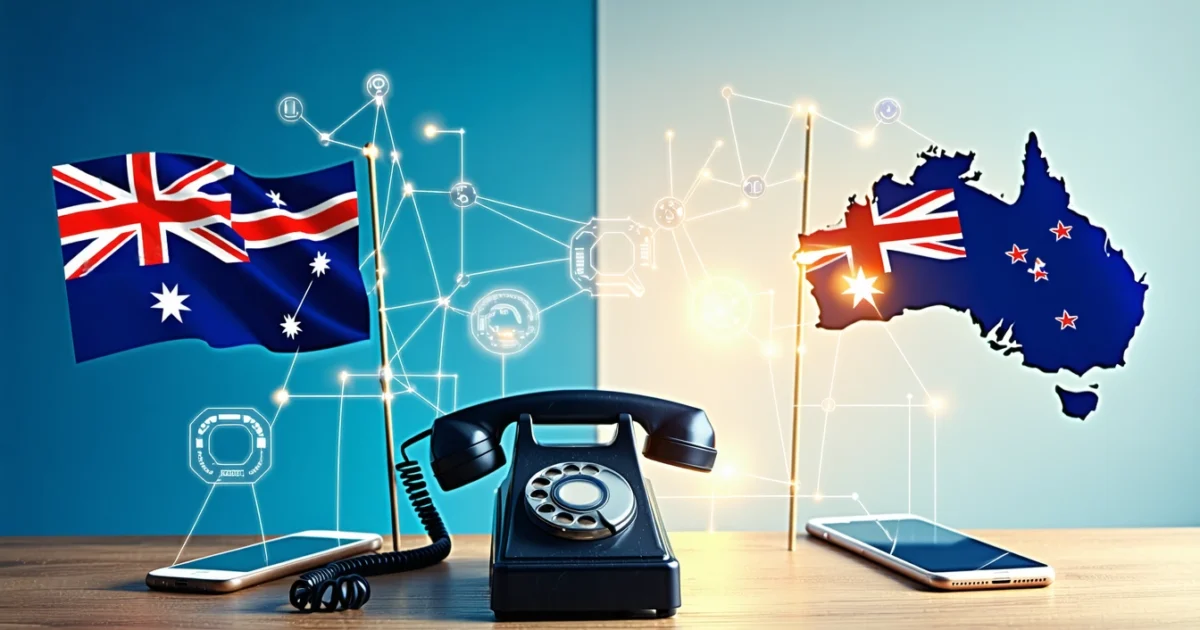
How to call New Zealand from Australia requires dialling the international exit code 0011, followed by New Zealand’s country code 64, then the area code (without the leading zero) and local number. This complete sequence ensures your call connects successfully across the Tasman Sea.
Whether you’re calling family in Auckland, business contacts in Wellington, or friends in Christchurch, understanding the correct dialling format saves time and prevents connection failures. Additionally, knowing your options for prepaid vs postpaid mobile plans can help you choose the most cost-effective calling method.
Beyond traditional phone calls, modern alternatives like WhatsApp, Skype, and other internet-based services offer significant savings. Furthermore, timing considerations across different time zones and understanding calling costs from major Australian providers like Telstra, Optus, and Vodafone help you make informed decisions about when and how to connect with New Zealand.
TL;DR
- Dial 0011 + 64 + area code + local number to call New Zealand from Australia
- Remove the leading zero from NZ area codes (Auckland 09 becomes 9, Wellington 04 becomes 4)
- Consider WhatsApp or Skype for cheaper alternatives to traditional international calls
- Account for time zone differences – New Zealand is typically 2 hours ahead of eastern Australia
Dialling New Zealand from Australia: The Complete Process
Making international calls to New Zealand requires following a specific dialling sequence that connects your Australian phone to the New Zealand telecommunications network. The complete process involves four essential components that must be entered in the correct order for successful call completion.
Step-by-Step Dialling Sequence
Australian callers must dial 0011 + 64 + area code + local number to reach New Zealand destinations. This sequence begins with Australia’s international exit code, followed by New Zealand’s country identifier, then the specific regional code and individual phone number.
- Dial 0011 (Australia’s international exit code)
- Enter 64 (New Zealand’s country code)
- Add the area code without the leading zero
- Complete with the local phone number
Understanding Australia's International Exit Code
Australia uses 0011 as its international access code, which signals to the telecommunications network that you’re making an overseas call. This prefix instructs your phone carrier to route the call through international switching systems rather than domestic networks.
Every international call from Australia begins with this code, regardless of the destination country. Therefore, whether you’re calling New Zealand, the United States, or the United Kingdom, 0011 remains the consistent starting point for all overseas connections.
New Zealand's Country Code and Usage
New Zealand’s international country code is +64, which identifies the destination country to global telecommunications networks. When dialling from Australia, you enter 64 immediately after the exit code 0011, creating the sequence 0011-64.
This country code applies to all New Zealand phone numbers, including landlines and mobile phones across both the North and South Islands. Consequently, whether you’re calling Auckland, Wellington, Christchurch, or any other New Zealand location, 64 remains the universal country identifier.
Removing the Leading Zero from Area Codes
New Zealand area codes begin with zero when dialled domestically, but international callers must drop this leading zero from the area code. For example, Auckland’s domestic area code 09 becomes simply 9 when calling from Australia.
This zero removal rule applies universally to all New Zealand regional codes. Wellington’s 04 becomes 4, Christchurch’s 03 becomes 3, and Hamilton’s 07 becomes 7 when dialling internationally from Australia.
Example Calls to Major New Zealand Cities
Here are practical examples showing the complete dialling sequence for New Zealand’s three largest cities:
| City | Domestic Format | From Australia | Example Number |
|---|---|---|---|
| Auckland | 09 XXX XXXX | 0011 64 9 XXX XXXX | 0011 64 9 123 4567 |
| Wellington | 04 XXX XXXX | 0011 64 4 XXX XXXX | 0011 64 4 567 8901 |
| Christchurch | 03 XXX XXXX | 0011 64 3 XXX XXXX | 0011 64 3 234 5678 |
Mobile numbers in New Zealand typically start with 021, 022, 025, or 027. When calling a New Zealand mobile from Australia, you would dial 0011 64 21 XXX XXXX (removing the leading zero from 021).
Understanding these dialling patterns helps ensure successful connections while avoiding common mistakes that cause call failures. Additionally, if you’re considering different calling options, reviewing prepaid vs postpaid mobile plans can help you choose the most cost-effective approach for international calling needs.
New Zealand Area Codes and Mobile Prefixes
Understanding New Zealand’s numbering system helps Australian callers identify different phone types and regions before dialling. Moreover, recognising these patterns ensures you select the correct dialling format for landlines versus mobile numbers.
Major City Area Codes
New Zealand’s three largest cities use distinctive area codes that identify their geographic regions. Auckland operates under area code 09, serving the North Island’s most populous metropolitan area. Meanwhile, Wellington uses area code 04 for the capital region, while Christchurch employs area code 03 throughout the South Island’s largest city.
These major urban centres contain millions of phone numbers within their respective area code boundaries. Furthermore, each area code covers surrounding suburban and rural areas beyond the main city limits.
Regional Area Codes Across Both Islands
New Zealand divides its landline numbering plan across both North and South Islands using systematic area code allocation. The North Island primarily uses area codes 06 (Taranaki, Manawatu-Wanganui, Hawke’s Bay), 07 (Waikato, Bay of Plenty), and 09 (Auckland, Northland).
Conversely, the South Island operates predominantly under area code 03, which covers Christchurch, Dunedin, Queenstown, and most southern regions. This unified approach simplifies the South Island’s telephone system compared to the North Island’s multiple regional codes.
| Area Code | Region | Major Cities/Areas |
|---|---|---|
| 03 | South Island | Christchurch, Dunedin, Queenstown |
| 04 | Wellington Region | Wellington, Lower Hutt, Porirua |
| 06 | Central North Island | New Plymouth, Palmerston North, Napier |
| 07 | Northern North Island | Hamilton, Tauranga, Rotorua |
| 09 | Auckland Region | Auckland, Whangarei, Great Barrier Island |
Mobile Phone Prefixes
New Zealand mobile numbers begin with specific three-digit prefixes that immediately identify them as cellular services. The primary mobile prefixes include 021, 022, 027, and 029, each assigned to different mobile network operators.
Vodafone primarily uses the 021 and 027 prefixes for its mobile subscribers. Similarly, Spark (formerly Telecom) operates mobile services under the 021 and 027 ranges, while 2degrees utilises the 022 and 029 prefixes for its customer base.
- 021: Vodafone and Spark mobile services
- 022: 2degrees mobile network
- 027: Vodafone and Spark mobile services
- 029: 2degrees mobile network
Toll-Free and Premium Rate Numbers
New Zealand operates several special number ranges for toll-free and premium rate services. Toll-free numbers begin with 0800 or 0508, allowing callers to contact businesses without incurring charges on domestic calls.
However, premium rate numbers starting with 0900 charge higher rates for services like competitions, adult content, or technical support. Additionally, some businesses use 0900 numbers to generate revenue from incoming calls while providing information or entertainment services.
International callers from Australia typically cannot reach toll-free numbers, as these services restrict access to domestic callers only. Therefore, businesses often provide alternative international contact numbers for overseas customers.
Identifying Landline vs Mobile Numbers
Distinguishing between New Zealand landlines and mobiles becomes straightforward once you understand the numbering patterns. Landline numbers always begin with area codes (03, 04, 06, 07, 09), while mobile numbers consistently start with 02X prefixes.
This distinction affects calling costs significantly, as international mobile calls typically cost more than landline calls. Consequently, identifying the number type helps you estimate call charges before dialling from Australia.
For example, a number starting with 09 123 4567 represents an Auckland landline, while 021 234 5678 indicates a mobile phone. Understanding this pattern helps you choose appropriate calling methods, especially when considering prepaid vs postpaid mobile plans for international calling needs.
Mobile numbers always start with 02X (021, 022, 027, 029), while landlines use geographic area codes (03, 04, 06, 07, 09)
Calling Costs and Best Value Options
Understanding international calling rates helps Australian residents make cost-effective calls to New Zealand. Moreover, different providers offer varying rates and billing structures that significantly impact your monthly phone expenses.
Standard International Calling Rates
Telstra charges approximately $2.20 per minute for standard international calls to New Zealand landlines and $2.50 per minute for mobile numbers. Furthermore, Telstra applies a 35-cent connection fee per call and bills in 60-second increments.
Optus offers slightly lower rates at $1.99 per minute to New Zealand landlines and $2.29 per minute to mobiles. Additionally, Optus charges a 39-cent flagfall fee and uses 30-second billing increments after the first minute.
Vodafone provides competitive rates of $1.89 per minute for landlines and $2.19 per minute for mobile calls. However, Vodafone applies a 45-cent connection charge with 60-second billing blocks.
| Provider | Landline Rate | Mobile Rate | Connection Fee | Billing Increment |
|---|---|---|---|---|
| Telstra | $2.20/min | $2.50/min | $0.35 | 60 seconds |
| Optus | $1.99/min | $2.29/min | $0.39 | 30 seconds |
| Vodafone | $1.89/min | $2.19/min | $0.45 | 60 seconds |
International Calling Add-ons and Monthly Plans
Monthly international calling packs provide substantial savings compared to standard per-minute rates. For instance, Telstra’s International Day Pass costs $5 daily and includes unlimited calls to New Zealand landlines plus 300 minutes to mobiles.
Optus International Talk offers a $15 monthly add-on with 300 minutes to New Zealand landlines and mobiles combined. Similarly, Vodafone’s International Minutes Pack provides 200 minutes for $10 monthly to selected countries including New Zealand.
These add-ons work best for regular callers who exceed 10-15 minutes monthly to New Zealand. Consequently, occasional callers might find better value with prepaid plans that offer flexible international calling options.
Peak vs Off-Peak Calling Times
Australian providers typically apply standard international rates regardless of calling time, unlike domestic calls with peak and off-peak variations. Nevertheless, some specialty international calling services offer off-peak discounts during Australian business hours.
Third-party calling card services sometimes provide 20-30% cheaper rates during off-peak periods, usually between 10 PM and 8 AM AEST. However, major carriers maintain consistent international rates throughout the day for simplicity.
Time zone differences between Australia and New Zealand create natural calling patterns. For example, calling New Zealand during Australian evening hours (7-10 PM AEST) reaches recipients during their convenient daytime hours (9 PM-12 AM NZST).
Hidden Costs and Billing Increments
Connection fees represent the most significant hidden cost in international calling. These charges apply to every call regardless of duration, making short calls disproportionately expensive compared to longer conversations.
Billing increments create additional costs through rounding up call durations. For instance, a 31-second call with 60-second billing increments charges for a full minute, effectively doubling the cost for brief conversations.
- Flagfall fees: $0.35-$0.45 per call connection
- Minimum call charges: Usually one full billing increment
- SMS charges: $0.75-$1.20 per international text to New Zealand
- Roaming charges: Apply when calling from overseas locations
Understanding these billing structures helps you calculate true calling costs. Therefore, comparing total costs including connection fees and billing increments provides more accurate expense estimates than per-minute rates alone.
A 2-minute call to New Zealand costs $4.75-$5.45 including connection fees across major Australian providers
Alternative Calling Methods and Apps
Modern messaging applications offer significantly cheaper alternatives to traditional phone calls when contacting New Zealand from Australia. These internet-based calling solutions utilize your existing WiFi or mobile data connection, bypassing expensive international calling rates entirely.
WiFi Calling Through Messaging Apps
WhatsApp provides completely free voice calls to New Zealand when both parties use the application. Similarly, Facebook Messenger enables unlimited calling without additional charges beyond your standard data usage. These applications compress audio efficiently, consuming approximately 1MB per minute of talk time.
FaceTime Audio delivers exceptional call quality between Apple devices, utilizing advanced audio codecs for crystal-clear conversations. However, this service requires both callers to own compatible iOS or macOS devices, limiting its universal applicability compared to cross-platform alternatives.
Skype Calling Options and Rates
Skype-to-Skype calls remain completely free regardless of call duration or destination country. Nevertheless, calling traditional New Zealand phone numbers through Skype requires purchasing calling credit or subscription plans.
| Skype Option | Cost to NZ Mobiles | Cost to NZ Landlines | Monthly Subscription |
|---|---|---|---|
| Pay-as-you-go | $0.045/minute | $0.023/minute | None |
| New Zealand Unlimited | Unlimited | Unlimited | $6.99 AUD |
| World Unlimited | Unlimited | Unlimited | $13.99 AUD |
Furthermore, Skype Credit purchases start from $10 AUD minimum, making it cost-effective for regular international callers. The platform automatically deducts charges per minute from your available credit balance.
Viber and Telegram Voice Calls
Viber Out offers competitive rates for calling New Zealand landlines at approximately $0.019 per minute, while mobile calls cost around $0.089 per minute. Additionally, Viber-to-Viber calls between app users remain completely free with excellent audio quality.
Telegram focuses primarily on messaging but provides high-quality voice calls between users at no additional cost. The application uses advanced encryption protocols, ensuring secure communications across international borders.
Other notable alternatives include Signal for privacy-focused calling and Discord for group conversations. These platforms prioritize different features while maintaining cost-effective international communication capabilities.
VoIP Services and Internet Calling
Voice over Internet Protocol (VoIP) services transform your internet connection into a powerful calling platform. Professional VoIP providers like Vonage, RingCentral, and 8×8 offer business-grade calling solutions with advanced features.
These services typically charge $0.01-$0.05 per minute for New Zealand calls, significantly undercutting traditional carrier rates. Moreover, many VoIP providers include unlimited calling plans to specific countries or regions for monthly subscription fees.
However, VoIP calling quality depends heavily on your internet connection stability and bandwidth availability. Poor network conditions can result in dropped calls, audio delays, or choppy conversations that traditional phone lines avoid.
When to Choose Apps vs Traditional Calls
Choose traditional phone calls for emergency situations, important business communications, or when calling recipients who lack smartphone access. Conventional calling methods provide guaranteed connectivity and superior reliability during critical conversations.
Conversely, select app-based calling for casual conversations, regular family check-ins, or extended discussions where cost savings matter most. These digital alternatives excel when both parties have reliable internet access and compatible devices.
App-based calls can reduce international calling costs by up to 95% compared to traditional carrier rates
Additionally, consider your mobile plan data allowances when choosing calling methods. Unlimited data plans make app-based calling extremely cost-effective, while limited data plans might favor traditional calling for longer conversations.
Timing Your Calls: Australia-New Zealand Time Zones
Understanding time differences between Australia and New Zealand ensures your calls connect at appropriate hours for both parties. Furthermore, these time variations change throughout the year due to different daylight saving schedules across regions.
Time Differences Across Australian States and NZ Regions
Australia spans three main time zones, while New Zealand operates on a single time zone with regional variations. Consequently, the time difference between Australia and New Zealand varies depending on your specific location within each country.
| Australian Time Zone | New Zealand Time Difference | Example Cities |
|---|---|---|
| AEST (Eastern) | NZ is 2 hours ahead | Sydney, Melbourne, Brisbane |
| ACST (Central) | NZ is 2.5 hours ahead | Adelaide, Darwin |
| AWST (Western) | NZ is 5 hours ahead | Perth, Broome |
New Zealand’s Chatham Islands operate 45 minutes ahead of mainland New Zealand time. Therefore, calls to Chatham Islands require additional time calculations beyond standard New Zealand scheduling considerations.
Daylight Saving Considerations for Both Countries
Daylight saving changes complicate timing calculations because Australia and New Zealand implement different start and end dates. Additionally, not all Australian states observe daylight saving, creating further complexity for call scheduling.
Australian daylight saving runs from the first Sunday in October to the first Sunday in April. However, Queensland, Western Australia, and Northern Territory maintain standard time year-round, avoiding seasonal adjustments.
New Zealand implements daylight saving from the last Sunday in September to the first Sunday in April. Consequently, time differences between countries can vary by one hour during transition periods when only one country observes daylight saving.
Best Times to Call for Business and Personal Conversations
Business calls between Australia and New Zealand work best during overlapping business hours from 10:00 AM to 3:00 PM Australian time. These hours correspond to reasonable business times in New Zealand across all Australian time zones.
- From Eastern Australia: Call between 10:00 AM – 3:00 PM (12:00 PM – 5:00 PM NZ time)
- From Central Australia: Call between 10:30 AM – 2:30 PM (12:00 PM – 4:00 PM NZ time)
- From Western Australia: Call between 1:00 PM – 6:00 PM (6:00 PM – 11:00 PM NZ time)
Personal calls offer more flexibility throughout the day. Nevertheless, consider your recipient’s schedule and preferences when planning casual conversations or family check-ins.
Avoiding Early Morning and Late Evening Calls
Respect social calling etiquette by avoiding calls before 8:00 AM or after 9:00 PM in the recipient’s local time zone. These boundaries help maintain positive relationships and prevent disrupting sleep schedules or family time.
Emergency calls obviously override these guidelines, but routine business or personal calls should respect reasonable hours. Moreover, consider weekend calling patterns, as many people prefer later morning starts on Saturday and Sunday.
When calling from Western Australia to New Zealand, late afternoon calls in Perth correspond to late evening in New Zealand. Therefore, Western Australian callers need particular attention to timing considerations.
Seasonal Time Zone Changes and Their Impact
Time differences fluctuate during four distinct periods throughout the year due to different daylight saving schedules. Understanding these variations helps maintain consistent calling schedules regardless of seasonal changes.
The most confusing period occurs in early October when Australia begins daylight saving but New Zealand hasn’t yet started. During this brief window, time differences temporarily shift by one hour compared to standard calculations.
Time differences between Australia and New Zealand can vary by up to one hour during daylight saving transition periods
Similarly, late March and early April create another transition period when New Zealand ends daylight saving before Australia. These seasonal adjustments affect call scheduling and require careful attention to current time zone differences.
Smart phone users benefit from automatic time zone updates that handle these calculations automatically. However, manual time checking remains important for scheduling calls in advance or coordinating with recipients using different devices.
Mobile and Roaming Considerations
Modern mobile technology offers multiple pathways for calling New Zealand from Australia, each with distinct cost implications and practical considerations. Understanding these options helps you choose the most economical approach for your communication needs.
Using Australian Mobile Networks for International Calls
Australian mobile carriers charge premium rates for direct international calls to New Zealand. Telstra typically charges $2.50 per minute for standard international calls, while Optus and Vodafone offer similar pricing structures. However, these carriers frequently provide international calling add-ons that significantly reduce per-minute costs.
Most carriers offer international calling packs ranging from $10 to $30 monthly. These packages typically include 100-300 minutes of calling to New Zealand at reduced rates. Additionally, many providers offer special rates for calls to mobile versus landline numbers in New Zealand.
International Roaming When Visiting New Zealand
International roaming charges can quickly escalate when using your Australian mobile in New Zealand. Standard roaming rates often exceed $3 per minute for outgoing calls and $1.50 per minute for incoming calls. Furthermore, data roaming charges typically range from $10-15 per megabyte without a roaming pack.
Major Australian carriers provide travel roaming packages for New Zealand visits. These packages usually cost between $5-15 per day and include generous call, text, and data allowances. Consequently, activating a roaming pack before departure prevents bill shock and provides predictable daily costs.
Prepaid vs Postpaid International Calling Options
Prepaid mobile plans often provide better cost control for international calling compared to postpaid options. Prepaid users can purchase specific international calling credits without ongoing monthly commitments. Moreover, prepaid plans prevent unexpected charges since calls stop when credit runs out.
Postpaid plans typically offer more comprehensive international packages with higher monthly allowances. These plans suit regular callers who need consistent access to international calling features. However, postpaid users risk exceeding package limits and incurring additional charges.
| Plan Type | Cost Control | International Packages | Best For |
|---|---|---|---|
| Prepaid | Excellent | Limited options | Occasional callers |
| Postpaid | Moderate | Comprehensive | Regular callers |
Travel SIM Cards and Local New Zealand Mobile Options
Travel SIM cards provide significant cost savings for extended New Zealand visits. International travel SIMs offer competitive rates for calls back to Australia and local New Zealand calling. These cards typically cost $20-40 and include substantial call and data allowances.
Local New Zealand SIM cards represent the most economical option for longer stays. Major New Zealand carriers like Spark, Vodafone NZ, and 2degrees offer prepaid plans starting from $20 monthly. These plans include generous data allowances and affordable international calling rates to Australia.
Purchasing a local SIM requires an unlocked mobile device and valid identification. Most New Zealand carriers sell SIM cards at airports, convenience stores, and mobile shops. Activation typically takes 10-15 minutes and provides immediate access to local rates.
Data Usage for Internet-Based Calling Methods
Internet-based calling applications consume varying amounts of data depending on call quality settings and duration. Voice calls typically use 0.5-1 MB per minute, while video calls consume 6-8 MB per minute. Therefore, understanding data consumption helps manage mobile data allowances effectively.
WhatsApp calls use approximately 0.7 MB per minute for voice calls and 5 MB per minute for video calls. Similarly, Skype consumes 0.5 MB per minute for voice and 7 MB per minute for video. These applications automatically adjust quality based on available bandwidth.
Wi-Fi calling eliminates mobile data usage entirely when connected to wireless networks. Most modern smartphones support Wi-Fi calling features that seamlessly switch between mobile and wireless connections. Additionally, many hotels, cafes, and public spaces in both Australia and New Zealand provide free Wi-Fi access for travelers.
Internet-based calling can reduce international calling costs by up to 90% compared to traditional mobile rates
Frequently Asked Questions
What is the complete dialling sequence to call New Zealand from Australia?
To call New Zealand from Australia, dial 0011 + 64 + area code + local number. Start with 0011 (Australia’s international exit code), then 64 (New Zealand’s country code), followed by the area code without the leading zero, and finally the local phone number.
Do I need to remove the zero from New Zealand area codes when calling internationally?
Yes, you must remove the leading zero from New Zealand area codes when calling from Australia. For example, Auckland’s domestic code 09 becomes 9, Wellington’s 04 becomes 4, and Christchurch’s 03 becomes 3.
What are some cheaper alternatives to traditional international calls to New Zealand?
Several cost-effective alternatives include:
- WhatsApp calling – Free voice and video calls over WiFi or mobile data
- Skype – Low-cost international calling rates
- Facebook Messenger – Free voice and video calls
- Viber – Free calls to other Viber users
- International calling cards – Often cheaper than standard mobile rates
What is the time difference between Australia and New Zealand?
New Zealand is typically 2 hours ahead of eastern Australia (Sydney, Melbourne). However, this can vary during daylight saving transitions as both countries change their clocks on different dates. Always check current time differences before making calls.
How much do international calls to New Zealand cost from Australian mobile providers?
Costs vary significantly between providers and plans. Telstra, Optus, and Vodafone offer different international calling rates, typically ranging from $1-3 per minute for standard calls. Many providers offer international calling packs or add-ons that can reduce these costs substantially.
Can I call New Zealand mobile phones using the same dialling format?
Yes, the same format applies to both landlines and mobile phones in New Zealand. Dial 0011 + 64 + mobile number (without the leading zero). New Zealand mobile numbers typically start with 2 (after removing the leading zero).
What should I do if my call to New Zealand doesn't connect?
If your call fails to connect, check these common issues:
- Ensure you’ve included the 0011 exit code
- Verify you’ve used 64 as the country code
- Confirm you’ve removed the leading zero from the area code
- Check your international calling is activated with your provider
- Verify the complete phone number is correct
Are there any special considerations for calling New Zealand during business hours?
When calling for business purposes, remember that New Zealand business hours are typically 9 AM to 5 PM NZST/NZDT. With New Zealand being 2 hours ahead of eastern Australia, this translates to 7 AM to 3 PM Australian Eastern Time, making morning calls from Australia ideal for reaching New Zealand businesses.