Study in Wollongong, Newcastle & Geelong: Regional Uni Guide

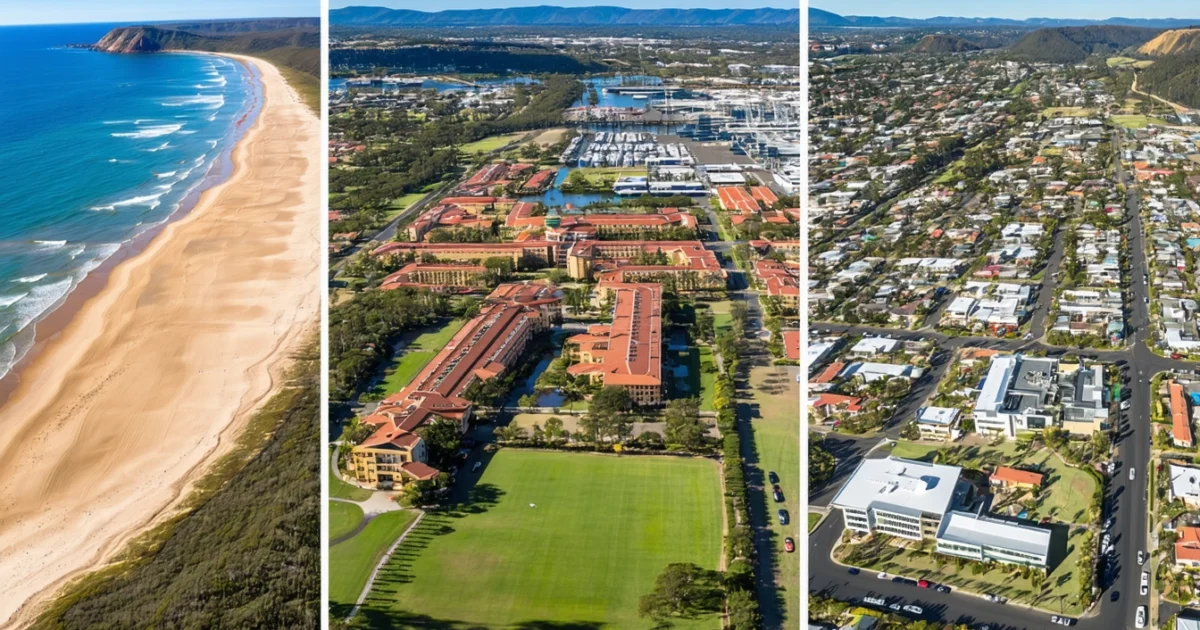
Popular regional study cities in Australia: Wollongong, Newcastle and Geelong offer exceptional alternatives to expensive metropolitan universities while delivering quality education and vibrant student experiences. These coastal and regional hubs provide significantly lower living costs, smaller class sizes, and strong industry connections that often translate to better graduate employment outcomes. Moreover, international students can supplement their income through part-time work opportunities while enjoying a more relaxed lifestyle compared to Sydney or Melbourne.
Each city brings unique advantages to the table. Wollongong combines beach living with the University of Wollongong’s renowned engineering and business programs. Meanwhile, Newcastle offers world-class medical and engineering education through the University of Newcastle, set against an industrial heritage backdrop. Finally, Geelong provides access to Deakin University’s specialized health and education courses while maintaining easy connections to Melbourne.
Students typically save 30-40% on accommodation costs compared to major cities, while still accessing quality campus facilities and diverse extracurricular activities. Furthermore, these regional centers often provide clearer pathways to graduate employment through established industry partnerships and internship programs.
TL;DR
- Cost savings: 30-40% lower accommodation and living expenses than Sydney/Melbourne
- Quality education: University of Wollongong, University of Newcastle, and Deakin University offer excellent programs
- Better outcomes: Smaller class sizes, strong industry connections, and higher graduate employment rates
- Lifestyle benefits: Beach access, community atmosphere, and easier work-study balance
- Career advantages: Regional industry partnerships and clearer pathways to permanent residency
Why Choose Regional Cities for University Study in Australia
Regional universities deliver exceptional value through significantly reduced living costs while maintaining high academic standards. Students typically spend $200-300 per week on accommodation in cities like Wollongong, Newcastle, and Geelong, compared to $400-600 weekly in Sydney or Melbourne. Additionally, everyday expenses including groceries, transport, and entertainment cost substantially less in these regional centers.
Furthermore, regional institutions provide more intimate learning environments with smaller class sizes averaging 20-30 students versus 100+ in metropolitan universities. Consequently, students receive personalized attention from lecturers and develop stronger mentor relationships. This enhanced academic support translates directly into better learning outcomes and higher course completion rates.
Regional universities maintain robust industry connections that create abundant internship and work placement opportunities. For instance, the University of Wollongong partners with local steel and technology companies, while Newcastle’s medical programs connect students with regional health networks. These partnerships often lead to graduate employment within the same organizations where students complete their practical training.
Quality of life significantly improves in regional study destinations through reduced traffic congestion, cleaner environments, and stronger community bonds. Students enjoy shorter commute times, easier access to recreational facilities, and more affordable social activities. Moreover, the relaxed pace allows better work-study balance, particularly beneficial for international students managing part-time employment alongside their studies.
Graduate employment rates in regional areas continue climbing as businesses recognize the talent pool emerging from local universities. Regional graduates often secure positions faster than their metropolitan counterparts due to reduced competition and established industry relationships. Additionally, many regional employers offer competitive salaries to attract and retain skilled graduates, creating excellent career prospects for university alumni.
The community atmosphere in regional cities fosters networking opportunities that extend beyond university years. Students build lasting professional relationships with local business leaders, government officials, and industry experts. These connections prove invaluable when seeking employment, starting businesses, or pursuing further career advancement in Australia’s growing regional economies.
Wollongong: Coastal Study Hub South of Sydney
The University of Wollongong stands as one of Australia’s premier coastal study destinations, combining academic excellence with an enviable beachside lifestyle just 80 kilometers south of Sydney. Established in 1975, UOW consistently ranks among the top 2% of universities worldwide and maintains particular strength in engineering, business, health sciences, and information technology programs.
Engineering programs at UOW attract students globally through their innovative curriculum and industry partnerships. The university’s Faculty of Engineering and Information Sciences offers specialized degrees in civil, mechanical, electrical, and mining engineering, with graduates achieving employment rates exceeding 85% within six months of completion. Furthermore, the business school delivers comprehensive programs in commerce, management, and economics that prepare students for Australia’s competitive corporate landscape.
Health sciences education flourishes at UOW through extensive clinical partnerships with local hospitals and healthcare networks. Students pursuing nursing, medicine, psychology, and allied health degrees benefit from hands-on training opportunities throughout the Illawarra region. Additionally, the university’s IT programs emphasize practical skills development through industry collaborations, ensuring graduates possess relevant technical expertise for Australia’s digital economy.
Student Accommodation and Living Costs
Campus accommodation at UOW provides diverse housing options ranging from $180 to $320 per week for on-campus residences. International House and Campus East offer fully furnished rooms with meal plans, while Weerona College provides a traditional collegiate experience with academic support services. Meanwhile, off-campus housing presents more affordable alternatives, with shared apartments typically costing $150 to $250 per week depending on proximity to campus.
Living expenses in Wollongong remain significantly lower than Sydney’s costs, with students budgeting approximately $400 to $600 weekly for accommodation, food, transport, and entertainment. Grocery shopping at local Woolworths, Coles, and IGA stores costs roughly $80 to $120 per week for basic necessities. Moreover, the city’s compact size reduces transport costs, with many students cycling or walking to campus from nearby suburbs.
Part-time employment opportunities abound throughout Wollongong’s hospitality, retail, and service sectors. Students frequently secure positions in rideshare services, cafes, restaurants, and shopping centers, earning between $22 to $28 per hour for casual work. Additionally, the university employs students as tutors, research assistants, and campus support staff, providing valuable work experience alongside income generation.
Beach Lifestyle and Recreation
Wollongong’s coastal location offers students unparalleled access to pristine beaches stretching from North Wollongong to Port Kembla. Popular beaches include City Beach, North Beach, and Fairy Meadow, where students enjoy swimming, surfing, volleyball, and beach barbecues throughout the year. Consequently, the outdoor lifestyle significantly enhances student wellbeing and provides natural stress relief during exam periods.
The Illawarra Escarpment provides exceptional hiking and mountain biking opportunities just minutes from campus. Students explore trails through Mount Keira, Mount Kembla, and the Royal National Park, experiencing Australia’s diverse flora and fauna. Furthermore, the region’s temperate climate supports year-round outdoor activities, from coastal walks to rainforest exploration in nearby national parks.
Cultural attractions enrich student life through the Wollongong Art Gallery, WIN Entertainment Centre, and numerous festivals celebrating the region’s multicultural heritage. The city hosts regular markets, live music events, and food festivals that showcase local produce and international cuisines. Similarly, sporting facilities including the University Recreation and Aquatic Centre provide comprehensive fitness and wellness programs for students.
Transport Links and Career Prospects
Transport connections between Wollongong and Sydney operate efficiently through regular train services on the South Coast Line. Students travel to Sydney’s Central Station in approximately 90 minutes, enabling internship opportunities, cultural experiences, and networking events in Australia’s largest city. Additionally, rideshare services provide convenient local transport options for students without private vehicles.
Career prospects for UOW graduates remain exceptionally strong due to the university’s industry partnerships and regional economic growth. The Illawarra region hosts major employers including BlueScope Steel, Port Kembla Port Corporation, and numerous healthcare organizations seeking skilled graduates. Moreover, Sydney’s proximity expands employment opportunities across finance, technology, consulting, and government sectors.
Graduate employment statistics demonstrate UOW’s success in preparing career-ready professionals, with 79% of graduates securing full-time employment within four months of completion. The university’s career services department facilitates industry connections through internship programs, career fairs, and mentorship opportunities. Therefore, students benefit from both regional employment stability and metropolitan career advancement possibilities throughout their professional development.
Newcastle: Industrial Heritage Meets Modern Education
Newcastle stands as Australia’s seventh-largest city, where industrial heritage seamlessly blends with contemporary educational excellence. The University of Newcastle serves over 40,000 students across multiple campuses, establishing itself as a leading research institution in the Hunter Valley region. Furthermore, the university’s strategic location provides students with unique opportunities to engage with both traditional industries and emerging sectors.
University of Newcastle Profile and Research Focus
The University of Newcastle ranks among Australia’s top research universities, with particular excellence in health sciences, engineering, and environmental studies. Research initiatives focus on coal and energy transition, medical innovation, and sustainable technologies that address regional and global challenges. Additionally, the university maintains strong partnerships with industry leaders including BHP, Origin Energy, and Hunter New England Health.
International recognition comes through the university’s membership in prestigious research networks and its five-star QS rating for research impact. The institution attracts significant research funding, with over $180 million invested annually in groundbreaking projects. Moreover, collaborative research centers facilitate knowledge transfer between academic researchers and industry practitioners throughout the Hunter region.
Key Programs: Medicine, Engineering, Business, Education
Medicine programs at Newcastle emphasize rural and regional healthcare, preparing graduates for diverse practice environments across Australia. The Joint Medical Program with the University of New England produces highly skilled doctors who understand community health needs. Consequently, medical graduates demonstrate exceptional employment rates and contribute significantly to healthcare delivery in underserved areas.
Engineering disciplines encompass mining, civil, mechanical, and electrical specializations that align with regional industry demands. Students gain practical experience through industry placements with major employers including Glencore, Yancoal, and Newcastle Port Corporation. Furthermore, engineering programs incorporate sustainability principles and renewable energy technologies that prepare graduates for the evolving energy sector.
Business education focuses on entrepreneurship, international trade, and resource sector management through the Newcastle Business School. Programs integrate real-world case studies from Hunter Valley enterprises, providing students with relevant industry knowledge. Additionally, education programs prepare teachers for diverse classroom environments, with strong emphasis on Indigenous education and rural teaching practices.
Student Housing and Rental Market Overview
On-campus accommodation options include Edwards Hall, Barahineban, and International House, providing diverse living experiences for domestic and international students. These facilities offer meal plans, study spaces, and social programs that enhance the university experience. However, demand often exceeds availability, particularly during peak enrollment periods.
Private rental markets in Newcastle suburbs like Jesmond, New Lambton, and Waratah cater specifically to student populations. Shared accommodation typically costs between $150-250 per week, while studio apartments range from $280-400 weekly. Moreover, proximity to campus and public transport significantly influences rental prices and availability throughout the academic year.
Students often benefit from rideshare opportunities to supplement income while studying, particularly given Newcastle’s growing transport network. The rental market remains competitive but more affordable than Sydney or Melbourne alternatives. Therefore, early applications and shared living arrangements provide the most cost-effective housing solutions for students.
Cost of Living Comparison with Major Cities
| Expense Category | Newcastle | Sydney | Melbourne |
|---|---|---|---|
| Weekly Rent (Shared) | $150-250 | $250-400 | $200-350 |
| Groceries (Weekly) | $80-120 | $100-150 | $90-140 |
| Public Transport | $25-40 | $50-70 | $45-65 |
| Dining Out | $15-25 | $25-40 | $20-35 |
Living costs in Newcastle remain approximately 25-30% lower than Sydney and Melbourne, making it an attractive option for budget-conscious students. Transportation expenses decrease significantly due to Newcastle’s compact size and efficient public transport network. Additionally, entertainment and dining options provide excellent value compared to major metropolitan areas.
Students typically budget between $400-600 weekly for comfortable living, including accommodation, food, transport, and recreational activities. Part-time employment opportunities help offset expenses, with many students working in hospitality, retail, or tutoring roles. Furthermore, the lower cost base allows students to save money or allocate funds toward travel and professional development activities.
Cultural Scene, Nightlife and Student Activities
Newcastle’s cultural renaissance has transformed the city into a vibrant hub for arts, music, and entertainment. The Newcastle Art Gallery, Civic Theatre, and numerous live music venues provide diverse cultural experiences for students. Moreover, the annual This That Festival and Mattara Festival showcase local talent and attract national performers to the region.
Nightlife centers around King Street and the Honeysuckle Precinct, offering everything from craft breweries to dance clubs. Student-friendly venues provide discounted drinks and themed nights specifically targeting the university demographic. Additionally, beach culture plays a significant role in social activities, with Nobbys Beach and Bar Beach hosting regular events and gatherings.
The University of Newcastle supports over 200 student clubs and societies covering academic, cultural, sporting, and special interest areas. Student activities include orientation week festivities, cultural celebrations, and professional networking events throughout the academic year. Consequently, students develop strong social connections and leadership skills that enhance their university experience and career prospects.
Graduate Employment in Hunter Valley Industries
Graduate employment rates from the University of Newcastle consistently exceed national averages, with 82% of graduates securing full-time employment within four months of completion. The Hunter Valley’s diverse economy provides opportunities across mining, energy, healthcare, education, and emerging technology sectors. Furthermore, regional employers actively recruit Newcastle graduates due to their practical skills and local industry knowledge.
Major employers including BHP, Origin Energy, Hunter New England Health, and Newcastle Port Corporation maintain strong recruitment relationships with the university. Graduate programs and internship opportunities facilitate smooth transitions from study to professional careers. Additionally, the region’s focus on energy transition creates new employment opportunities in renewable energy and environmental consulting.
Starting salaries for Newcastle graduates range from $55,000-75,000 annually, depending on the field and employer. The lower cost of living means graduates enjoy higher disposable income compared to major city counterparts. Moreover, career progression opportunities within regional industries often provide faster advancement paths and greater responsibility for ambitious graduates seeking leadership roles.
Geelong: Victoria's Growing Education Centre
Deakin University’s Geelong campus serves as the flagship institution transforming this coastal city into a major educational hub. The Waterfront Campus occupies prime real estate along Corio Bay, while the Waurn Ponds Campus houses specialized facilities for health sciences and engineering. Additionally, the historic Geelong Grammar School and Gordon Institute of TAFE contribute to the city’s educational ecosystem, creating a comprehensive learning environment for students at all levels.
Deakin University offers specialized courses across health, education, business, and arts that align with regional industry demands. The School of Medicine produces graduates for Barwon Health and regional healthcare networks, while the Faculty of Business and Law maintains strong connections with local manufacturing and service industries. Furthermore, the education programs prepare teachers for Victorian schools, addressing critical workforce shortages in regional areas.
Student accommodation options in Geelong provide affordable alternatives to Melbourne’s expensive housing market. On-campus residences at Waurn Ponds accommodate over 1,200 students, while the Waterfront Campus offers modern apartment-style living. Moreover, private rental properties near both campuses typically cost 40-50% less than comparable Melbourne accommodations, making Geelong an attractive option for budget-conscious students.
Living costs in Geelong enable students to maintain comfortable lifestyles on modest budgets. Weekly expenses average $350-450 including accommodation, food, and transport, compared to $550-700 in Melbourne. Consequently, students can focus on their studies without the financial stress common in major cities. Local part-time employment opportunities in retail, hospitality, and tutoring help students supplement their income while gaining valuable work experience.
Geelong’s proximity to Melbourne provides the best of both worlds for students seeking regional affordability with metropolitan access. The V/Line train service connects Geelong to Melbourne’s Southern Cross Station in just one hour, enabling students to access internships, cultural events, and networking opportunities in the capital. However, many students discover that Geelong’s own cultural scene, including the annual Pako Festa and Geelong After Dark festival, provides rich experiences without the need for frequent city trips.
Career opportunities in Geelong span traditional manufacturing and emerging service sectors, creating diverse pathways for graduates. Ford’s former manufacturing site now hosts the Carbon Revolution facility producing lightweight car wheels, while companies like Alcoa and Shell maintain significant operations. Additionally, the growing healthcare sector, anchored by University Hospital Geelong and Epworth Geelong, provides opportunities for health science graduates. International students can explore flexible work options while studying, including rideshare driving opportunities that help them understand the local geography and culture.
The city’s transformation into a knowledge economy creates new opportunities in technology, research, and professional services. Deakin’s partnership with local industry drives innovation in advanced manufacturing, biotechnology, and renewable energy sectors. Therefore, graduates often find themselves at the forefront of emerging industries, with starting salaries ranging from $50,000-70,000 annually and excellent prospects for career advancement within the region’s evolving economic landscape.
Comparing Study Costs Across the Three Cities
Understanding the financial landscape across Wollongong, Newcastle, and Geelong helps students make informed decisions about their educational investment. Moreover, each city presents distinct cost structures that significantly impact the total expense of university study in Australia.
Tuition Fees Comparison for Domestic and International Students
| Student Type | Wollongong (UOW) | Newcastle (UON) | Geelong (Deakin) |
|---|---|---|---|
| Domestic Undergraduate | $6,000-12,000 | $6,500-11,500 | $7,000-13,000 |
| International Undergraduate | $32,000-45,000 | $30,000-42,000 | $33,000-47,000 |
| Domestic Postgraduate | $8,000-15,000 | $7,500-14,000 | $8,500-16,000 |
| International Postgraduate | $35,000-52,000 | $33,000-48,000 | $36,000-54,000 |
International students face substantially higher tuition costs across all three cities, with Geelong typically commanding the highest fees due to Deakin University’s premium positioning. However, Newcastle often provides the most competitive international rates, particularly for engineering and business programs. Consequently, the annual tuition difference between cities can reach $5,000-8,000 for international students.
Accommodation Costs: On-Campus vs Off-Campus Options
Accommodation expenses vary dramatically between on-campus residential colleges and private rental markets in each city. Furthermore, the proximity to major metropolitan areas directly influences housing affordability and availability.
- Wollongong on-campus: $280-420 per week (catered), $180-280 per week (self-catered)
- Newcastle on-campus: $250-380 per week (catered), $160-250 per week (self-catered)
- Geelong on-campus: $290-450 per week (catered), $190-300 per week (self-catered)
Off-campus rental markets present more affordable alternatives, with shared accommodation typically costing $150-250 per week in Newcastle, $180-280 per week in Wollongong, and $170-270 per week in Geelong. Additionally, Newcastle’s abundant rental supply keeps prices competitive, while Wollongong’s proximity to Sydney creates upward pressure on housing costs.
Daily Living Expenses: Food, Transport, Entertainment
Daily living costs reflect each city’s economic environment and proximity to major urban centers. Nevertheless, all three cities maintain relatively affordable lifestyle expenses compared to Sydney or Melbourne.
| Expense Category | Wollongong | Newcastle | Geelong |
|---|---|---|---|
| Groceries (weekly) | $80-120 | $75-110 | $85-125 |
| Public Transport (monthly) | $60-80 | $50-70 | $65-85 |
| Dining Out (meal) | $15-25 | $12-22 | $16-26 |
| Cinema Ticket | $18-22 | $16-20 | $19-23 |
Transport costs favor students who utilize rideshare services strategically, with rideshare apps offering convenient alternatives to public transport. Moreover, student subscription services can reduce transport expenses significantly across all three cities.
Part-Time Work Availability and Minimum Wage Rates
Employment opportunities for students vary considerably across the three regional cities, with each location offering distinct advantages for part-time work seekers. Additionally, Australia’s national minimum wage of $23.23 per hour applies uniformly, though actual earning potential differs by industry and location.
Wollongong benefits from proximity to Sydney’s job market, enabling students to access higher-paying positions in the metropolitan area. Similarly, the local economy supports diverse employment in retail, hospitality, tutoring, and research assistance roles. International students can explore opportunities like rideshare driving, which provides flexible income while maintaining study commitments.
Newcastle’s mining and port industries create demand for casual workers in logistics, administration, and support services. Furthermore, the city’s growing tourism sector generates seasonal employment in hospitality and event management. Students typically earn between $25-35 per hour in skilled casual positions.
Geelong’s manufacturing base and healthcare sector provide stable part-time opportunities, particularly for students in relevant study areas. Consequently, engineering and health science students often secure paid internships or casual roles that complement their academic programs.
Financial Support and Scholarship Opportunities
Each university offers comprehensive financial assistance programs designed to reduce the economic burden of higher education. However, scholarship availability and eligibility criteria vary significantly between institutions and student categories.
University of Wollongong provides over $15 million annually in scholarships, including the prestigious Excellence Scholarships worth up to $6,000 per year for high-achieving students. Additionally, the UOW Advantage Scholarship supports students from disadvantaged backgrounds with both financial assistance and mentoring programs.
University of Newcastle offers the largest scholarship program among the three institutions, distributing more than $20 million yearly through various schemes. Notably, the Newcastle University Scholarship provides up to $5,000 annually for domestic students, while international students can access the Global Excellence Scholarship worth up to $10,000.
Deakin University in Geelong focuses on merit-based and equity scholarships, with the STEM scholarship program offering up to $8,000 per year for science and technology students. Furthermore, the university’s partnership with industry creates sponsored scholarship opportunities in engineering and business disciplines.
Newcastle offers the most affordable overall study experience, with total annual costs averaging $25,000-30,000 for domestic students and $45,000-55,000 for international students
Students should also consider establishing appropriate banking relationships early in their studies, with specialized student bank accounts offering fee-free transactions and overdraft facilities. Therefore, careful financial planning across tuition, accommodation, living expenses, and income opportunities enables students to maximize their educational investment in these thriving regional cities.
Student Life and Campus Culture
Regional study cities create vibrant student communities that blend academic excellence with rich cultural experiences. Consequently, Wollongong, Newcastle, and Geelong each offer distinctive campus environments that shape student life through diverse facilities, activities, and support systems.
Campus Facilities and Student Services Comparison
University of Wollongong operates state-of-the-art facilities across its compact campus, including the recently renovated UniCentre that houses dining options, retail spaces, and student support services. Additionally, the campus features modern lecture theatres, collaborative learning spaces, and specialized laboratories that support hands-on learning experiences.
University of Newcastle spans multiple campuses with the main Callaghan campus offering extensive facilities including the Forum student hub, comprehensive library systems, and purpose-built research centers. Moreover, the university provides shuttle services between campus locations and maintains 24-hour study spaces during exam periods.
Deakin University Geelong combines heritage buildings with contemporary facilities at both Waterfront and Waurn Ponds campuses. Furthermore, students access cutting-edge technology through the DeakinSync platform and benefit from integrated student services that streamline academic and administrative processes.
| University | Library Hours | Study Spaces | Food Options | Health Services |
|---|---|---|---|---|
| UOW | 24/7 during exams | 2,000+ seats | 15+ outlets | On-campus clinic |
| Newcastle | Extended hours | 3,500+ seats | 20+ outlets | Medical center |
| Deakin Geelong | 24/5 access | 2,500+ seats | 12+ outlets | Wellness hub |
Clubs, Societies and Extracurricular Activities
Student organizations flourish across all three universities, with Newcastle leading in total club membership at over 15,000 active participants across 200+ societies. Similarly, these organizations span academic disciplines, cultural interests, recreational activities, and professional development opportunities.
Wollongong hosts approximately 150 student clubs ranging from the popular Engineering Society to specialized groups like the Multicultural Society and Debating Union. Meanwhile, the university’s annual O-Week attracts thousands of students to explore extracurricular involvement opportunities.
Deakin Geelong operates over 100 student clubs with strong emphasis on industry connections through professional societies in business, health sciences, and technology fields. Additionally, the DUSA (Deakin University Student Association) coordinates major events including cultural festivals and career networking sessions.
Sports Facilities and Recreational Opportunities
Athletic facilities vary significantly among the three universities, with Newcastle offering the most comprehensive sports infrastructure including an Olympic-standard swimming complex and professional-grade sporting fields. Furthermore, the university competes at elite levels in multiple sports through the Newcastle Knights university teams.
University of Wollongong provides excellent recreational facilities through the UniSport program, featuring modern gymnasiums, tennis courts, and fitness centers with group classes. Moreover, the coastal location enables unique activities like surfing clubs and beach volleyball competitions.
Deakin Geelong operates comprehensive sports facilities across both campuses, including the Elite Sports Precinct that serves both students and community members. Consequently, students access professional coaching, sports science support, and competition opportunities in regional and national tournaments.
Newcastle students participate in over 40 different sports, with 25% of the student body actively involved in recreational or competitive athletics
International Student Support and Community
International student services create welcoming environments that facilitate academic success and cultural integration. Therefore, all three universities maintain dedicated support teams that assist with visa requirements, academic transitions, and social connections.
University of Wollongong supports over 17,000 international students through comprehensive orientation programs, buddy systems, and ongoing academic support services. Additionally, the International House provides specialized accommodation and cultural programming for overseas students.
Newcastle serves approximately 12,000 international students with tailored support including English language programs, cultural mentoring, and employment guidance for international students. Moreover, the university’s Global Engagement Office coordinates exchange programs and international partnerships.
Deakin Geelong supports 8,000+ international students through integrated support services including academic skills workshops, cultural celebration events, and professional development programs. Furthermore, the university’s DeakinTALENT program connects international students with local employment opportunities.
Social Scene and Networking Opportunities
Regional cities offer intimate social environments where students build lasting professional and personal networks. Consequently, smaller cohort sizes enable closer relationships between students and faculty members compared to metropolitan universities.
Wollongong’s social scene centers around the campus precinct and nearby beaches, with popular student venues including The Illawarra Hotel and various beachside cafes. Additionally, the city’s compact size means students frequently encounter classmates and professors in social settings, strengthening community bonds.
Newcastle provides the most diverse social opportunities among the three cities, with vibrant nightlife districts, cultural events, and professional networking meetups. Similarly, the city’s growing startup ecosystem creates valuable connections between students and local entrepreneurs through regular industry events.
Geelong’s social scene combines traditional pub culture with emerging hospitality venues, particularly around the revitalized waterfront district. Moreover, students benefit from cost-effective social activities due to the city’s affordable entertainment options and student-friendly businesses.
Professional networking opportunities flourish through industry partnerships, with all three universities hosting regular career fairs, guest lectures, and alumni events. Therefore, students develop valuable connections that enhance career prospects while enjoying rich social experiences in these dynamic regional communities.
Career Prospects and Graduate Outcomes
Graduate employment rates across Wollongong, Newcastle, and Geelong consistently exceed national averages, with each city demonstrating distinct strengths in specific industries. Furthermore, regional universities maintain strong industry connections that translate into tangible career opportunities for students.
Graduate Employment Statistics by City
University of Wollongong achieves an impressive 89.2% graduate employment rate within four months of completion, particularly excelling in engineering and health sciences. Additionally, the university’s proximity to Sydney creates dual opportunities in both regional and metropolitan job markets.
University of Newcastle records 87.8% graduate employment with exceptional outcomes in medicine, nursing, and business disciplines. Moreover, Newcastle’s diversified economy supports graduates across multiple sectors, from healthcare to emerging technology industries.
Deakin University Geelong maintains 86.5% graduate employment rates with particular strength in education, psychology, and sports science programs. Consequently, Geelong’s growing reputation as an education hub creates abundant opportunities for teaching graduates.
Industry Partnerships and Internship Programs
Each university cultivates extensive industry partnerships that provide students with practical experience through structured internship programs. Therefore, students gain valuable workplace exposure while building professional networks within their chosen fields.
Wollongong’s partnerships include BlueScope Steel, Illawarra Health, and numerous engineering consultancies that offer hands-on experience in metallurgy, healthcare, and infrastructure development. Similarly, these collaborations often result in direct graduate recruitment opportunities.
Newcastle partners with Hunter New England Health, Port of Newcastle, and emerging fintech companies to provide diverse internship experiences. Additionally, the university’s Industry Transformation Research Program connects students with cutting-edge projects in renewable energy and digital innovation.
Deakin Geelong maintains strong relationships with Barwon Health, Ford Australia, and regional manufacturing companies that create pathways from classroom to career. Furthermore, the university’s Industry-Based Learning program ensures students complete real-world projects before graduation.
Starting Salary Expectations by Field
| Field | Wollongong | Newcastle | Geelong |
|---|---|---|---|
| Engineering | $72,000-$78,000 | $70,000-$76,000 | $68,000-$74,000 |
| Nursing | $65,000-$70,000 | $66,000-$71,000 | $64,000-$69,000 |
| Business/Commerce | $58,000-$65,000 | $60,000-$67,000 | $56,000-$63,000 |
| Education | $68,000-$72,000 | $67,000-$71,000 | $69,000-$73,000 |
| IT/Computer Science | $65,000-$72,000 | $68,000-$75,000 | $62,000-$69,000 |
Regional starting salaries often provide greater purchasing power compared to metropolitan areas due to significantly lower living costs. Moreover, many graduates discover their salaries stretch further while maintaining proximity to major cities for career advancement opportunities.
International students pursuing Masters in IT and Computer Science programs find particularly strong employment prospects across all three cities. Consequently, technology graduates benefit from both competitive salaries and diverse career pathways in Australia’s growing digital economy.
Professional Networking Opportunities
Regional cities offer unique networking advantages through smaller professional communities where meaningful connections develop more easily than in larger metropolitan areas. Additionally, students often interact directly with industry leaders through guest lectures, mentorship programs, and collaborative research projects.
Professional associations maintain active chapters in each city, including Engineers Australia, Australian Computer Society, and various health professional bodies. Furthermore, regular networking events, workshops, and continuing education seminars create ongoing opportunities for career development.
Alumni networks prove particularly valuable in regional settings, where graduates often remain connected to their universities and local industries. Therefore, current students benefit from established pathways and mentorship opportunities that facilitate smooth transitions into professional careers.
Pathways to Permanent Residency for International Students
Regional study locations provide significant advantages for international students seeking permanent residency through Australia’s skilled migration programs. Specifically, graduates from designated regional areas access additional visa pathways and priority processing under current immigration policies.
The Regional Sponsored Migration Scheme (RSMS) offers direct pathways for skilled graduates who secure employment in regional areas. Additionally, state nomination programs in NSW, Victoria frequently prioritize applicants with regional study and work experience.
Students completing degrees in high-demand fields such as engineering, healthcare, and education benefit from enhanced migration prospects due to skill shortages in regional areas. Moreover, the two-year post-study work visa provides valuable time to establish careers and meet residency requirements.
Many international students supplement their income through flexible work opportunities, including driving for Uber or Didi services available in these regional cities. Consequently, students can gain Australian work experience while supporting their studies and building toward permanent residency goals.
Making Your Decision: Key Factors to Consider
Choosing between Wollongong, Newcastle, and Geelong requires careful evaluation of multiple factors that will shape your entire university experience. Furthermore, your decision impacts not only your academic journey but also your career prospects and quality of life in Australia.
Course Availability and Academic Reputation
Each city offers distinct academic strengths that align with different career paths. University of Wollongong excels in engineering, computer science, and business programs, while maintaining strong industry connections with Sydney-based companies. Meanwhile, University of Newcastle leads in medicine, architecture, and renewable energy research.
Deakin University in Geelong provides exceptional programs in health sciences, education, and creative arts. Additionally, the university’s innovative teaching methods and modern facilities attract students seeking cutting-edge learning environments. Consequently, your chosen field of study should heavily influence your city selection.
Research rankings and graduate employment rates provide valuable insights into program quality. Moreover, Masters in IT and Computer Science programs vary significantly between these institutions in terms of specializations and industry partnerships.
Personal Budget and Financial Considerations
Living costs differ substantially across these three regional cities. Specifically, Geelong typically offers the most affordable accommodation options, with shared housing ranging from $150-200 per week. In contrast, Wollongong’s proximity to Sydney results in higher rental prices of $180-250 per week.
Newcastle falls between these extremes, offering moderate living costs while providing excellent value for money. Additionally, all three cities allow international students to work part-time, with opportunities including driving for Uber or Didi services to supplement income.
Transportation costs also impact your budget significantly. However, each city provides student discounts on public transport, making daily commuting affordable for most students.
Lifestyle Preferences and Climate Factors
Climate preferences play a crucial role in your daily comfort and wellbeing. Wollongong enjoys a subtropical oceanic climate with mild winters and warm summers, perfect for beach enthusiasts. Similarly, Newcastle offers excellent coastal weather with consistent sea breezes.
Geelong experiences a more temperate climate with cooler winters and moderate summers. Nevertheless, the city provides easy access to both Melbourne’s cultural attractions and the scenic Bellarine Peninsula. Therefore, students seeking variety in recreational activities often prefer Geelong’s strategic location.
Each city offers unique lifestyle advantages, from Wollongong’s surf culture to Newcastle’s vibrant music scene and Geelong’s artistic community. Ultimately, your personal interests and hobbies should guide this aspect of your decision.
Career Goals and Industry Connections
Industry presence varies significantly between these regional study destinations. Wollongong benefits from proximity to Sydney’s financial and technology sectors, providing internship and graduate opportunities with major corporations. Consequently, business and IT students often find superior networking prospects.
Newcastle serves as a major industrial hub with strong connections to mining, healthcare, and renewable energy sectors. Additionally, the city’s port facilities create opportunities in logistics and international trade. Therefore, engineering and commerce students frequently secure relevant work experience.
Geelong’s manufacturing heritage has evolved into advanced manufacturing and biotechnology industries. Moreover, the city’s proximity to Melbourne expands career opportunities while maintaining regional study advantages. Students can also explore flexible work options like managing finances through student banking services while building their careers.
Support Systems and Community Feel
Community support systems significantly impact your academic success and personal wellbeing. Each city offers distinct advantages in terms of student services, multicultural communities, and social integration opportunities.
Wollongong’s compact size creates a close-knit university community where students easily connect with peers and faculty members. Furthermore, the city’s diverse international student population ensures strong support networks for newcomers from various cultural backgrounds.
Newcastle provides a perfect balance between city amenities and community atmosphere. Additionally, the university’s strong alumni network creates mentorship opportunities and career guidance for current students. Meanwhile, Geelong offers a welcoming regional community with excellent support services for international students.
Consider visiting each city before making your final decision, as the community feel often becomes apparent only through personal experience. Ultimately, choosing the right regional study city sets the foundation for your entire Australian educational journey and future career success.
Frequently Asked Questions
How much can I save by studying in regional cities like Wollongong, Newcastle, or Geelong?
Students typically save 30-40% on accommodation and living expenses compared to Sydney or Melbourne. Accommodation costs range from $200-300 per week in regional cities versus $400-600 weekly in major metropolitan areas. Additionally, everyday expenses including groceries, transport, and entertainment are substantially lower in these regional centers.
Are regional universities in Australia of lower quality than metropolitan ones?
No, regional universities maintain high academic standards while offering unique advantages. Universities like Wollongong, Newcastle, and Deakin provide excellent programs with smaller class sizes (20-30 students versus 100+ in metropolitan universities), personalized attention from lecturers, and stronger mentor relationships that lead to better learning outcomes.
What are the employment prospects for graduates from regional universities?
Regional university graduates often experience better employment outcomes due to strong industry partnerships and reduced competition. Universities maintain robust connections with local businesses, creating abundant internship opportunities that frequently lead to graduate employment within the same organizations where students complete practical training.
Can international students work part-time while studying in regional cities?
Yes, international students can supplement their income through part-time work opportunities in regional cities. The relaxed pace and better work-study balance in these areas make it easier to manage part-time employment alongside studies, compared to the demanding lifestyle in Sydney or Melbourne.
What specific programs are these regional universities known for?
- University of Wollongong: Renowned engineering and business programs
- University of Newcastle: World-class medical and engineering education
- Deakin University (Geelong): Specialized health and education courses
What lifestyle benefits do regional study cities offer?
Regional cities provide exceptional quality of life improvements including beach access, reduced traffic congestion, cleaner environments, and stronger community bonds. Students enjoy shorter commute times, easier access to recreational facilities, more affordable social activities, and a relaxed pace that supports better work-study balance.
Do regional universities offer the same campus facilities as metropolitan ones?
Yes, regional universities provide quality campus facilities and diverse extracurricular activities while maintaining significantly lower costs. Students access modern libraries, laboratories, sports facilities, and student services comparable to metropolitan universities, but with less crowding and more personalized support.
Are there advantages for permanent residency applications when studying in regional areas?
Regional study can provide clearer pathways to permanent residency through various Australian immigration programs that favor regional area study and employment. Additionally, the strong industry connections and graduate employment opportunities in regional centers can support visa applications requiring Australian work experience.