University Clubs and O-Week in Australia (2026): The $373 You Already Paid

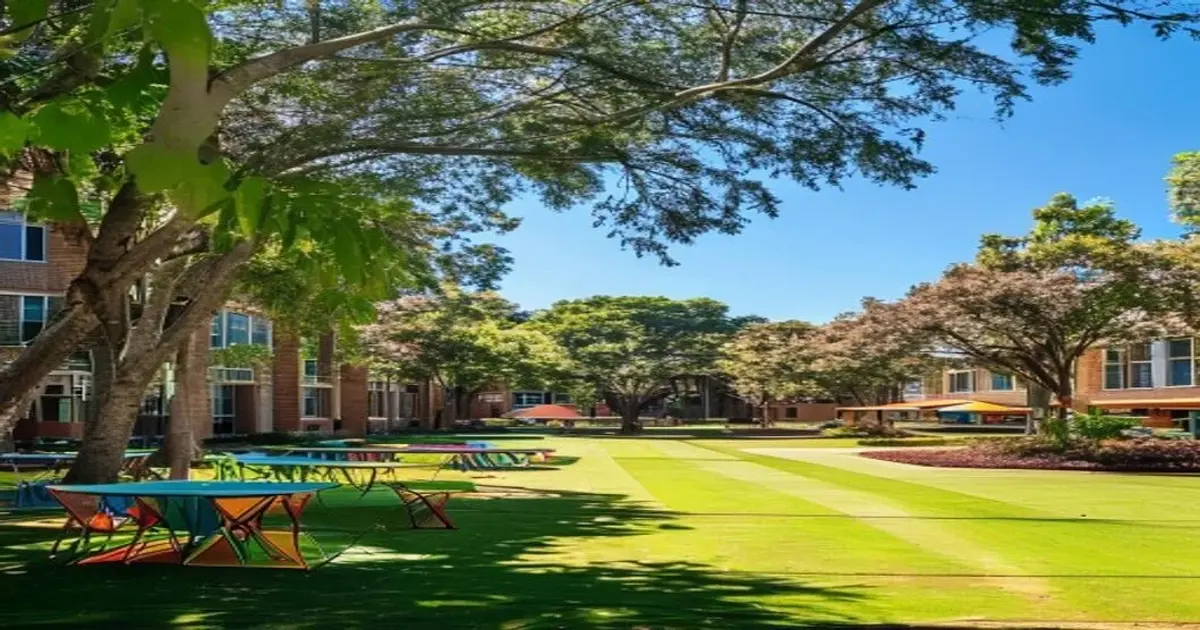
Every article about university clubs opens the same way: join clubs, make friends, build your resume. This one starts somewhere more useful. You have already been charged for these clubs. In 2026 the maximum is $373 a year, you paid it upfront, and if you’re on a student visa you were not allowed to defer it.
Clubs are only one of the routes into Australian social life — our wider guide to how to make friends in Australia covers the rest. So the real question isn’t whether to join something. It’s what you’re entitled to, how to get it, and — honestly, because the research here is more mixed than anyone admits — which parts actually help your career and which parts are just pleasant.
The short version
- SSAF is $373 for a full-time student in 2026, and by law at least 40% of it must go to student-led organisations — the bodies that run the clubs.
- International students cannot defer SSAF through SA-HELP. You pay it upfront. Domestic students can borrow it. That makes not using it a straight cash loss.
- Union or guild membership is free at most big universities — Melbourne, Sydney, UNSW, UQ, UWA, Curtin, ANU, Adelaide. RMIT and Deakin charge.
- Individual clubs are genuinely cheap. $1 to $10 covers most academic and social clubs. $20 to $170 for outdoor and sport clubs with gear.
- ⚠️ The career claim is weaker than you’ve been told. The best-powered Australian study — nearly 52,000 graduates — found club participation had little effect on employment outcomes. Mentoring and formal leadership/award programs did. That distinction is the most useful thing in this article.
- ⚠️ Unpaid club roles don’t count towards your 48-hour work limit. Paid office-bearer roles almost certainly do — and some carry honoraria in the tens of thousands.
- Free food on campus isn’t a rumour, it’s legislated. “Providing food or drink to students on a campus” is a named allowable use of your SSAF.
Start with the money: what SSAF is and what it buys
The Student Services and Amenities Fee is a compulsory charge your university adds on top of tuition. It exists because compulsory student union fees were abolished in 2005 under Voluntary Student Unionism, campus services collapsed, and in 2011 Parliament created SSAF to fund them again — this time paid to the university rather than to the union.

| Situation | 2026 amount |
|---|---|
| Maximum, full-time student | $373.00 |
| Maximum, part-time (capped at 75%) | $279.75 |
| ANU, full-time | $373.00 ($186.50 per half-year) |
| University of Sydney, per semester full-time | $186.50 (due 25 Mar and 25 Aug 2026) |
| UNSW, per term full-time | $124.00 |
| UniSQ (on-campus or online) | $46.63 per unit, max 8 units |
| Victoria University Online | $2.72 per credit point, max $261 |
⚠️ If you’re on a student visa, you cannot defer this
SA-HELP is the government loan that lets students put SSAF on their HELP debt instead of paying it. To use it you must be an Australian citizen, a permanent humanitarian visa holder, an eligible New Zealand Special Category Visa holder, or a Pacific Engagement Visa holder. A subclass 500 student visa holder qualifies for none of these and must pay upfront.
Three traps worth knowing:
- HECS-HELP and FEE-HELP do not cover SSAF. UNSW says so explicitly. It is a separate charge with a separate loan scheme.
- There is an incurral date, and after it passes there is no fix. UNSW’s 2026 incurral dates are 22 Jan (Summer), 12 Mar (T1), 25 Jun (T2), 8 Oct (T3). Once passed, SA-HELP applications are refused and the legislation gives universities no power to remit the debt.
- Check your written agreement. A provider can only charge an international student SSAF if the written agreement between you and the university contains a clause specifying the fee. If it doesn’t, they cannot charge it for the life of that agreement. Some universities exempt exchange, study-abroad and cross-institutional students entirely; the University of Melbourne simply builds SSAF into international course fees.
What your $373 is legally allowed to fund
This isn’t discretionary. The Higher Education Support Act 2003 sets out a closed list of allowable purposes, and universities cannot spend SSAF on anything outside it. Several items on that list are worth reading carefully, because they’re written in a way most students never see:
- “supporting the administration of a club most of whose members are students” — clubs funding is an explicitly named category
- “providing food or drink to students on a campus of the provider” — this is why the free sausage sizzle exists
- “supporting students’ sporting or other recreational activities”
- “supporting debating by students” and “supporting an artistic activity by students”
- “giving students information to help them in their orientation” — O-Week is a named purpose
- “helping meet the specific needs of overseas students relating to their welfare, accommodation and employment“
Two more rules changed the picture recently, and both work in your favour:
- The 40% rule. Since 1 January 2025, a provider charging SSAF must allocate at least 40% of that year’s SSAF revenue to one or more student-led organisations — and “student-led” has a legal test: the governing body must be majority current or recent students, democratically elected. Universities have a transition period of up to three years (five for some providers), but the direction is fixed.
- Universities must publish where it went. Every provider has to release a SSAF Allocation Report within six months of the reporting period, publicly and without a login. If you want to know what your campus spends on clubs, that document is the answer, and you’re entitled to read it. Providers must also formally consult elected student representatives about how the money is spent.
Put plainly: a large slice of your $373 is already earmarked for the clubs. Whether you collect on that is up to you.
What's actually there, and what it costs
Australian universities don’t run clubs themselves. A separate student union, association or guild affiliates them, funds them, insures them and runs O-Week. Which body it is, and whether you have to pay to belong, varies more than people expect.

| University | Body | Clubs | Membership |
|---|---|---|---|
| Free to join the union or guild | |||
| Melbourne | UMSU | 230+ (25,000+ memberships) | Free |
| Sydney | USyd Student Union | 200+ | Free (optional Rewards $30/sem) |
| UNSW | Arc | 300+ | Free (optional VIP $20) |
| Queensland | UQU | 220+ (35,000+ students) | Free |
| UWA | Student Guild | 140–180 | Free if you pay SSAF |
| Curtin | Student Guild | 100+ | Free |
| ANU | ANUSA | 110+ | Free |
| Adelaide | AUSA | 200+ | Free |
| UTS | ActivateUTS | 180+ (37,000+ memberships) | No org fee, per-club only |
| Monash | MSA Clubs | 100+ | Optional MSA+ $20–50 |
| Macquarie | No students’ union — run by the university | 90+ | No union fee |
| Paid membership | |||
| RMIT | RUSU | 90+ | $12 per calendar year |
| Deakin | DUSA | 100+ | $10 / $30 / $45 per year |
Club counts often differ between pages on the same union’s own website, so treat these as the right order of magnitude rather than exact. The important number is the second column: at almost every large Australian university, being a member of the body that runs the clubs costs you nothing extra.
Individual club fees are genuinely small
These are real published prices from real clubs, not an invented range:
| Club | Fee |
|---|---|
| Under $10 — most academic and social clubs | |
| UTS Hindu Society | $1 |
| UQ Computing Society | $2 |
| UMSU Arts Students Society · SUAnime (Sydney) · UWA Surgical Society | $5 |
| Curtin Engineers Club | $5.50 |
| UQ Food Science Club | $9 |
| UNSW PhotoSoc · Adelaide Computer Science Club · QUT Accounting Students’ Association | $10 |
| Griffith Bug Union | Free |
| $20+ — sport, outdoors and anything with equipment | |
| Sydney Uni Bushwalkers | $20 (members) / $35 |
| Melbourne Uni Mountaineering Club · Deakin MEDUSA | $30 |
| UNSW Arc Cheer & Dance | $65 / $130 |
Two quirks worth knowing. UQ clubs legally cannot be free — UQU sets a $2 minimum. And ANUSA caps club fees at $20, so nothing at ANU can price you out. Curtin goes further and gives every student two $5 club vouchers a year, collectable from Guild Reception at any time.
O-Week, the club expo, and the fact that you can join whenever
Orientation includes a club expo where every affiliated club sets up a stall and signs people up on the spot. The event has a different name almost everywhere, which makes it hard to search for:
- Melbourne — Clubs Expo · Sydney — Welcome Fest (200+ stalls on Eastern Avenue and Cadigal Green) · UQ — Market Day, in the Great Court
- Monash — O-Fest · RMIT — Campus Fest · UTS — O’Day (177 clubs and 10,157 sign-ups in February 2026)
- UWA — O-Day, plus a mid-year Guild Club Carnival · Curtin — Guild O-Day and a separate Clubs Carnival drawing around 12,000 people
- Adelaide — Clubs Fair, held after O’Week · Deakin — Clubs Showcase · Wollongong — O-Day Festival · Newcastle — Welcome Expo
- ⚠️ ANU’s Market Day is during Bush Week, which is teaching Week 1 — not orientation week. Turn up in O-Week and you’ll miss it.
- ⚠️ UNSW has no “Semester 2”. It runs three trimesters and each has its own O-Week. UNSW’s next one is T3, 7–11 September 2026.
Started mid-year, or missed it entirely? You have not lost anything
Almost every university runs a second orientation in July for mid-year starters — Melbourne, Sydney, Monash, UQ, ANU and UTS all ran 20–24 July 2026; UWA, RMIT, QUT and Curtin ran 13–17 July. If you’re reading this later in the year, Newcastle’s Welcome Week is 10–14 August 2026 and UNSW’s T3 O-Week is 7–11 September.
And you can join clubs year-round anyway. Sign-up runs through an online portal, and which one depends on your university: Rubric (UNSW Arc, RMIT, ANUSA, QUT Guild), Qpay (UQ), MSL (Adelaide), TidyHQ (Curtin), plus the unions’ own systems at Melbourne, Sydney, Monash, UTS, Griffith and Deakin. Macquarie has no single portal — use its A–Z directory.
One catch: ActivateUTS memberships expire on 31 December regardless of when you join, so joining in November buys you six weeks. Deakin runs a rolling twelve months instead.
Looking ahead: Melbourne’s 2027 dates are 22–26 February and 19–23 July; Monash 18–26 February and 19–23 July; UQ 15–19 February; RMIT 22–26 February and 12–16 July; UNSW 8–12 February, 24–28 May and 6–10 September.
⚠️ Student visas and club roles: the part nobody explains
If you’re on a subclass 500 student visa, condition 8105 limits you to 48 hours of work per fortnight while your course is in session, and no limit when it isn’t. Students who have commenced a masters by research or a doctorate are exempt.
Before the club question, one trap that catches people who think they’re compliant. Home Affairs defines a fortnight as “a period of 14 days starting on a Monday”, and the department’s own worked example shows how the rolling overlap bites: someone working 15, 30, 30 and 10 hours across four consecutive weeks is fine for weeks 1–2 (45 hours) and fine for weeks 3–4 (40 hours) — but weeks 2 and 3 together are 60 hours, which is a breach. Count every rolling fortnight, not just the neat ones.
Does an unpaid club role count towards your 48 hours?
Genuine volunteering does not count — but only if it meets four conditions. Australian universities restate the departmental position in near-identical terms. The University of Melbourne’s version:
An unpaid President, Secretary or Treasurer of an affiliated, non-profit student club normally satisfies all of these comfortably. One honest caveat we’d rather state than hide: Home Affairs does not publish these four criteria prominently on its own website, and it has never issued a ruling specifically about student club committee roles. The criteria above are the settled position as universities restate it — not a departmental determination on clubs. If your situation is unusual, ask your university’s international student adviser and get it in writing.
⚠️ Where this genuinely breaks: paid office-bearer roles
Student union office-bearer positions are a different thing from club committee positions, and many carry substantial payments. UMSU’s own published role statements set the 2024 honorarium at $26,836 for an office held by one person, describing it as “an ex-gratia payment, i.e. an honorary reward for voluntary services”. Other unions pay office bearers on comparable terms.
Calling a payment an honorarium does not make it non-remuneration for migration purposes. The volunteering exemption above requires that no remuneration in cash or kind is received — and payment in kind counts too, so waived fees, free accommodation or funded travel raise the same issue.
If you’re an international student considering a paid union position, assume those hours count towards your 48-hour fortnightly cap, and get written advice before you nominate. This interaction is not addressed anywhere in published Home Affairs material, which is exactly why it’s worth being careful about.
Separately, remember condition 8202: you must maintain satisfactory attendance and course progress. A club role so demanding that your studies suffer creates a visa problem through that door rather than the work-hours one.
Does joining clubs actually help your career?
This is where almost every other article stops being useful. The standard claim — join clubs, employers love it — is repeated everywhere and supported by remarkably little. Here is what the Australian evidence actually shows, including the parts that don’t flatter the argument.

The ranking everyone quotes is sixteen years old
You’ll find a “top 10 things Australian graduate employers select on” list on dozens of careers sites, usually presented as current. It ranks interpersonal and communication skills first and “activities, including intra- and extracurricular” dead last at number 10.
Two things about that list. First, the ranking is real — it comes from a survey of 350+ graduate employers. Second, and this is the part nobody mentions: it is from the Graduate Careers Australia 2010 Graduate Outlook Survey. NAGCAS says so at the bottom of its own page. Every site presenting it as current employer opinion is quoting data from 2010.
| # | Selection criterion |
|---|---|
| 1 | Interpersonal and communication skills (named top-3 by around 75% of employers) |
| 2 | Drive, commitment and industry knowledge (~50%) |
| 3 | Critical reasoning, analytical and technical skills |
| 4 | Calibre of academic results |
| 5 | Cultural alignment |
| 6 | Work experience |
| 7 | Teamwork |
| 8 | Emotional intelligence |
| 9 | Leadership |
| 10 | Activities, including intra- and extracurricular |
The current AAGE Employer Survey — 153 organisations, its 24th year — covers vacancies, salaries, selection processes and retention, but it sits behind a paywall and does not publish a comparable ranked list. So there is no current public Australian data on where extracurriculars rank. Anyone telling you otherwise is guessing.
The best-powered study found club participation had little effect
Professor Denise Jackson’s 2023 study in Studies in Higher Education analysed 51,883 Australian graduates — by a wide margin the largest work on this question. Its conclusion:
Read that carefully, because it contains the actionable finding. Three categories held up; general club membership didn’t:
✓ Backed by evidence
- Work-integrated learning — placements, internships, industry projects. The strongest effect by far.
- Industry mentoring programs — consistently positive across studies.
- Formal leadership and award programs — the structured, assessed, recognised ones.
- Paid work aligned with your degree — a 2026 study of 7,000 Australian law graduates singled this out.
✗ Weak or mixed evidence
- General club and society membership — “less effect on labour force outcomes” in the 51,883-graduate study.
- Volunteering and micro-credentials — a companion study of around 84,000 graduates reported “less favourable outcomes” for both.
- Activities in general for career outcomes — a three-university study of 510 students found they were “more useful for gaining experience and skills than for broadening networks and improving career outcomes.”
There’s a further complication that argues for humility. A study of roughly 84,000 graduates found participation in these activities is heavily stratified by age, gender, disability, citizenship and socio-economic background. So part of the raw correlation between “joined things” and “got a job” is measuring who had the time, money and confidence to join in the first place. And there is no Australian randomised or quasi-experimental study on this at all — nor any university publishing data linking its own club membership to its own retention figures. If you see that claim, it’s marketing.
So what should you actually do with this?
Don’t stop joining clubs. Change what you expect from them, and add one thing that’s evidence-backed.
- Join clubs for the friendships, the belonging and the free food. Those are real, immediate and worth $5. Just don’t tell yourself a membership line on a CV is doing career work, because the evidence says it mostly isn’t.
- Then do the thing that does work. Get into a mentoring program or a formal leadership or employability award. Both showed consistent positive labour-force effects in the largest study available. Almost every Australian university runs at least one, most students never enrol, and it’s free.
- If you take a committee role, take one that produces evidence. Treasurer means you managed a real budget. Events officer means you ran an event to a deadline with a supplier. That’s a story you can tell in an interview, which is what actually converts — the 2010 ranking put interpersonal and communication skills first for a reason.
- Prioritise a placement or course-relevant paid work over everything else here. That’s where the evidence is unambiguous.
The employment gap that makes this urgent for international students
The 2024 Graduate Outcomes Survey shows a gap large enough that it should shape how you spend your time:
| Level | Domestic | International | Gap |
|---|---|---|---|
| Undergraduate | 74.0% | 52.3% | 21.7 pts |
| Postgraduate coursework | 88.1% | 56.1% | 32.0 pts |
| Postgraduate research | 82.8% | 77.5% | 5.3 pts |
Underemployment tells the same story: 17% of domestic undergraduates versus 29% of international undergraduates, and 7% versus 24% at postgraduate coursework level. Median salaries diverge too — $75,000 against $68,000 for undergraduates, and $100,000 against $70,000 for postgraduate coursework.
Some of the friction is cultural rather than structural — our guide to Australian workplace and social norms covers why an Australian manager phrases an instruction as a suggestion. But none of this is fixed by joining a club. It is partly addressed by the things that showed real effects — placements, mentoring, leadership programs and course-relevant paid work. That’s the argument for spending your co-curricular time deliberately rather than collecting memberships.
One finding that cuts against the usual narrative
It’s worth registering, because it’s the opposite of what most articles assume. In the 2024 Student Experience Survey — over 90,000 responses — international undergraduates rated their sense of belonging and peer engagement higher than domestic students, and only 13.1% had considered leaving their course, against 18.3% of domestic undergraduates. Their leading reason for considering leaving was financial difficulty; employment-related concerns rated lowest.
Which points somewhere specific. If you’re an international student under pressure, the binding constraint is more likely to be money than social isolation — and food insecurity among Australian students is measured and rising: one University of Tasmania study found it climbed from 42% in 2022 to 53% in 2024, with severe food insecurity going from 17% to 27%. That’s the real reason the free-food section below isn’t a joke.
Get it onto your transcript: AHEGS and award programs
Here’s the mechanism most students never hear about. Australian universities issue an AHEGS — Australian Higher Education Graduation Statement at graduation, alongside your testamur and academic transcript. It’s a standardised document designed so employers and institutions overseas can understand your qualification.
Section 4 of the AHEGS can list your co-curricular activities. UNSW describes it precisely: “Section 4 of the AHEGS contains a list of co-curricular activities recognised under UNSW Advantage completed by the graduand at any stage of their degree. The name of the activity, the position held and a description of the position is listed.”
⚠️ It is not automatic, and it is not retrospective
- Activities must be pre-approved by the university to appear. At UNSW, the AHEGS Advantage team assesses and recognises activities, and the club nominates contributing members — not the student. If your club executive doesn’t submit you, you don’t appear.
- There are published criteria per activity. Macquarie, which added Additional Achievements to Section 4 in April 2018, requires (for example) Student Representative Committee membership for more than 12 months with demonstrated engagement, or attendance at at least two-thirds of Faculty Board meetings plus preparation time.
- No retrospective recognition. Activities completed before the university approved that activity type generally don’t count. Check your institution’s list before committing a year to something.
- A commonly quoted minimum threshold is around 20 hours of commitment plus demonstrated development — verify against your own university.
The award programs worth your time
Remember that leadership and award programs were among the very few co-curricular categories with consistent positive labour-force effects. These are the structured versions:
- UQ Employability Award. Open to undergraduate and postgraduate coursework students, full or part time, and you can register at any time. Three mandatory components: 75 hours of work experience, 75 hours of volunteering (unpaid, benefiting others — charity, non-profit, sporting club, government school, place of worship), and five different supplementary activity types. Everything must be extra-curricular rather than for course credit. You log and reflect through a StudentHub workflow, then submit a written application and sit an interview. Two rounds a year with firm deadlines — 13 September 2026 for Semester 2. You finish with a certificate endorsed by the Vice-Chancellor.
- Melbourne Plus at the University of Melbourne awards verified digital credentials for participation in selected activities. Melbourne also runs the year-long Vice-Chancellor’s Ancora Imparo Leadership Program and Impact Grants that fund a student’s own idea.
- UNSW Advantage is the pathway that feeds Section 4 of the AHEGS, covering clubs and societies, committees and councils, competitions, community volunteering, development programs, entrepreneurship and mentoring.
- RMIT runs mentoring programs including Women@RMIT, plus RMIT Activator for startups. The University of Newcastle runs a Student Employability Achievement Award.
Whether a given award appears on your AHEGS varies and often isn’t documented — UQ’s own AHEGS FAQ doesn’t link the two, for instance. Ask your careers service directly. But the underlying point stands: if you’re going to spend the hours anyway, spend them inside a program that assesses and records them.
Choosing what to join
The usual advice is “follow your interests”, which is true and useless. Here’s a more decision-shaped version.
| Type | Best for | The catch |
|---|---|---|
| Your national or cultural society | Landing softly in your first weeks. Practical help — housing leads, second-hand furniture, which supermarket is cheaper | If it becomes your only social world, your English and your access to local networks both stall |
| Faculty or discipline society | Meeting the people you’ll sit next to for three years, plus industry nights and alumni contact | Can be dominated by a small committee. Look for one that runs weekly, not three galas a year |
| Interest and hobby clubs | The most natural mixing with domestic students, because nothing about you is the point | Frequency is everything — a club that meets monthly will not produce friends |
| Sport and recreation clubs | Regular contact plus a reason to leave the library. Often the best-funded clubs on campus | The only category where cost is real — $30–$170 plus gear |
| Volunteering and community clubs | Feeding the volunteering hours that award programs require | Some roles need a Working with Children Check — see below |
| Debating, mooting, case comps | Directly building the skill employers ranked first: interpersonal and communication | Genuinely intimidating at first. Go twice before deciding |
| Committee roles | The only club activity that reliably produces an interview story — a budget you ran, an event you delivered | Time cost is real. And if it’s paid, read the visa section above |
A practical filter: join three at O-Week, attend all three twice, then keep one or two. Signing up is nearly free and non-binding; the cost is entirely in the attending. Most people over-sign and under-attend, then conclude clubs don’t work for them.
Starting your own club
If what you want doesn’t exist, the affiliation process is more accessible than most students assume — and it comes with money attached. Real published requirements:
| Union | Minimum members | Other requirements |
|---|---|---|
| UMSU (Melbourne) | 30 | Mandatory standard constitution; President, Secretary, Treasurer all students; 66% student membership. ⚠️ Affiliations do not open if more than 250 clubs are already affiliated — that cap was hit for Semester 2 2026 |
| UQU (Queensland) | 30 (10 at Gatton/Herston) | UQU model constitution, 70% students, takes 3–4 months. Membership cannot be free — $2 minimum |
| ANUSA | 15 | Lowest bar in the country. Needs an ABN and three trustees. Rolling applications, about 30 academic days |
| Arc (UNSW) | 5–15 depending on club class | Executives must be Arc members, 18 or over, and complete mandatory gender-based violence training. $150 startup grant |
| UWA Guild | 20 Guild-member signatures | No university staff on the committee. Template sets a $5 annual fee. $200 startup grant |
| MSA (Monash) | 40 expressions of interest | Four founders, then an inaugural general meeting with at least 20 students |
| RUSU (RMIT) | 20–30 | At least 75% RMIT students, executive of four to seven, provisional status first, 8–12 weeks |
The grant money is real
These are published figures, and they explain why clubs can afford to feed you:
- USU Sydney pays semester grants scaled by size: $450 for a new club, $950 small, $1,150 medium, $1,450 large, $1,650 extra-large — plus discretionary grants up to $2,000 for one club or $6,000 for a joint event.
- Arc UNSW caps annual grants at $1,500 (Bronze), $2,500 (Silver) or $4,000 (Gold), and its activity grant pays 50% of an event’s loss plus $2 per attendee up to 200 people.
- UMSU funds per head: $5 a student for functions, $10 for excursions, $25 for camps, with caps of $500 for most grants and $1,000 for camps, plus Student Initiative Grants up to $1,000.
- ANUSA pays $8 per student for ordinary events up to $4,000 a grant, from a pool of $200,000 in 2025.
- RUSU’s 2025 annual report records 491 club grants totalling $190,800, up from 304 grants worth $112,127 the year before.
- Curtin allocated 700 catering points in 2026 including BBQ packs, plus event grants up to $1,400. UWA put $137,000 of a $148,062 clubs budget straight into grants.
Insurance and Working with Children Checks
Two pieces of admin that matter more than they sound, especially if you take a committee role.
- Affiliation gets you insurance, but only conditionally. UQU publishes an actual figure — a third-party public liability policy covering affiliated clubs to $50 million, for approved on-site events. The word doing the work there is approved. UWA’s Guild states flatly that its insurance “will not cover your club’s events unless you are formally affiliated”, and Arc UNSW warns that its policy “does not cover all UNSW Club events” and that submitting a request — four weeks ahead, or up to eight for high-risk activities — “does not guarantee” cover. Common exclusions: climbing and abseiling, open-water swimming, anything involving alcohol or drugs, and vehicles. Unincorporated clubs have no separate legal identity, so if cover is refused, the executives are personally exposed.
- Working with Children Checks are required for genuine child-related work, meaning face-to-face services to under-18s where contact is more than incidental — tutoring, coaching, formal mentoring programs, overnight camps, transporting children. A one-off guest talk doesn’t trigger it. The check is free for volunteers in NSW, Victoria, Queensland (the Blue Card), South Australia, Tasmania and the ACT — but not in WA (around $11) or the NT (Ochre Card, around $8). NSW also requires applicants to be 18 or over, which catches some first-year executives.
The free food is not a myth
Given that student food insecurity was measured at 53% in one 2024 Australian study, this deserves to be treated as practical information rather than a joke.
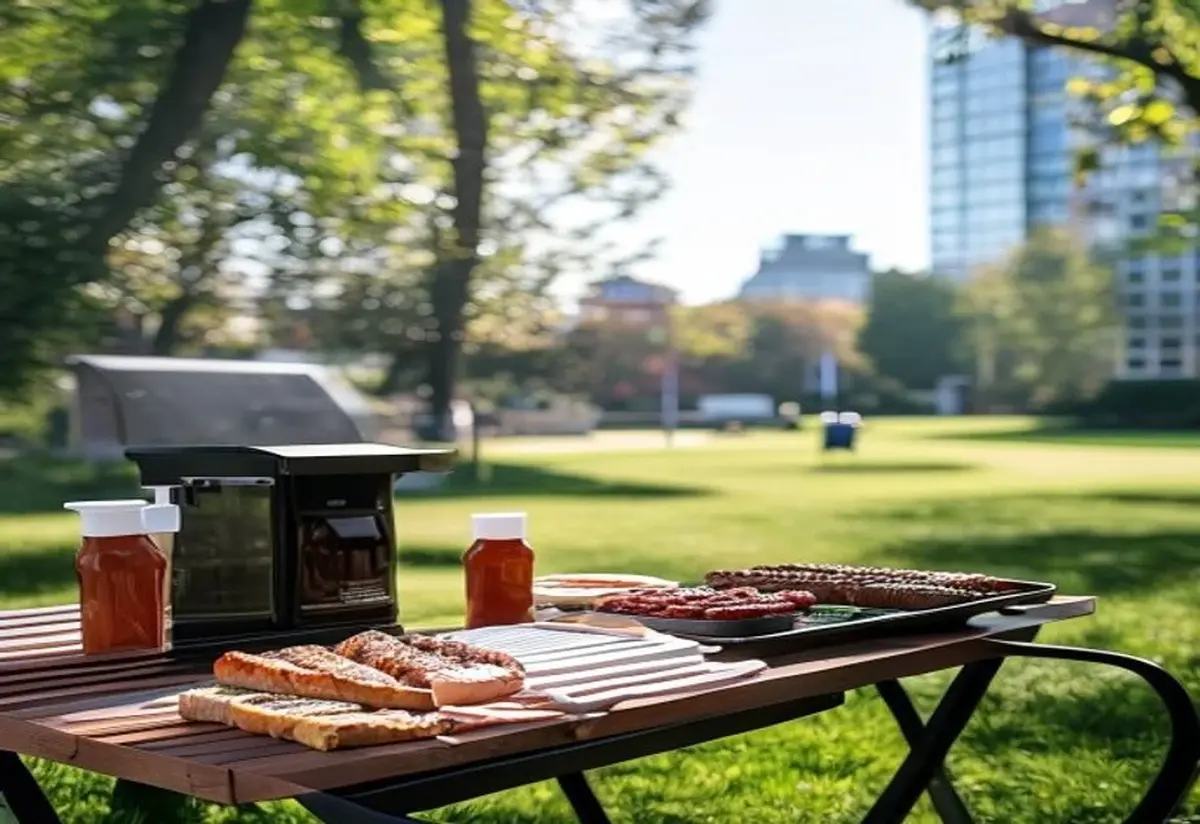
“Providing food or drink to students on a campus of the provider” is a named allowable use of SSAF under the Act. Free campus food isn’t incidental generosity — it is a legislated purpose of a fee you paid. Some of it is explicitly run by clubs:
- ANUSA’s Universal Lunch Hour, Thursdays 12:30–1:30, is run by different clubs and societies each week and “usually takes the form of a BBQ with omnivore and vego options”.
- Arc UNSW’s Clubs Takeover runs every Wednesday on the Quad — “from BBQs to boba to baklava, your favourite clubs are bringing you free food”.
- MSA Free Food Mondays at Monash, UQU’s Kampus Kitchen, and the UWA Food Pantry operate alongside club events.
- Demand is enormous where it exists: Sydney’s FoodHub recorded 25,268 users in Semester 1 2024, a tenfold increase year on year, and handed out 126,340 items.
Follow your union’s Instagram and your clubs’ pages. That is where the free lunches are announced, usually the day before.
Postgrad, online and TAFE students
O-Week is heavily built around 19-year-old undergraduates. If that isn’t you, the parallel structures are real but less advertised.
- Postgraduate associations run their own everything. Melbourne’s GSA has 160+ student-run Grad Groups and a Graduate Art Prize worth up to $3,000. Sydney’s SUPRA is independent and unusually well resourced — caseworkers plus in-house solicitors covering visa and migration, employment and intellectual property, a food pantry open Monday to Thursday, and an HDR hub. Monash’s MGA runs graduate lounges, free lunches and explicit support for online students. UWA’s PSA enrols every postgraduate automatically and runs its own grants. UQ has no separate postgraduate association — UQU covers everyone.
- ANU is a special case. The postgraduate association PARSA lost its funding agreement in 2022 and ANUSA now represents postgraduates directly, with a Postgraduate Coursework Officer, an HDR Officer, postgraduate representatives in each college and a postgraduate member on ANU Council.
- Online and distance students have a legal lever. The rule is explicit: a provider may charge different SSAF amounts by study mode, including nothing at all — but if it charges online students the fee, it must have services available for them online. If you’re paying SSAF as an online student and there’s nothing for you, that’s worth raising. Deakin’s DUSA runs 100+ clubs with online events, Monash’s MGA explicitly includes online students, and Charles Sturt lists “Online” as a campus category for clubs and invites students to start one. Open Universities Australia has no student association of its own — you use your partner university’s.
- TAFE and private colleges have very little of this, and pretending otherwise wastes your time. There is no national TAFE student union; the National Union of Students represents higher education students through 22 university-based member organisations. The sharpest illustration: TAFE SA has no clubs of its own and directs students to join UniSA’s USASA clubs instead. TAFE Queensland runs an institution-led Student Voice council. If that’s your situation, the community routes — parkrun, social sport, libraries, Meetup, community sheds — don’t care where you study.
- TAFE students at dual-sector universities still pay a fee. Victoria University charges VET students $0.33 per contact hour up to $261, payable upfront and not eligible for SA-HELP. Swinburne charges at Diploma level and above, exempting Certificate IV and below.
Frequently asked questions
This guide to O-Week and clubs is part of our complete Moving to Australia checklist – see the full four-phase roadmap for everything else you need to sort before and after you land.
You May Also Like

Moving to Australia: The Complete Checklist and Guide (2026)

NT Public Holidays 2026: Full Calendar, Dates and How Darwin and Alice Springs Celebrate