City & State Guides

Tasmania School Holidays 2026: Complete Term Dates Calendar


· · 20 min read
Tasmania School Holidays 2026: Complete Term Dates Calendar

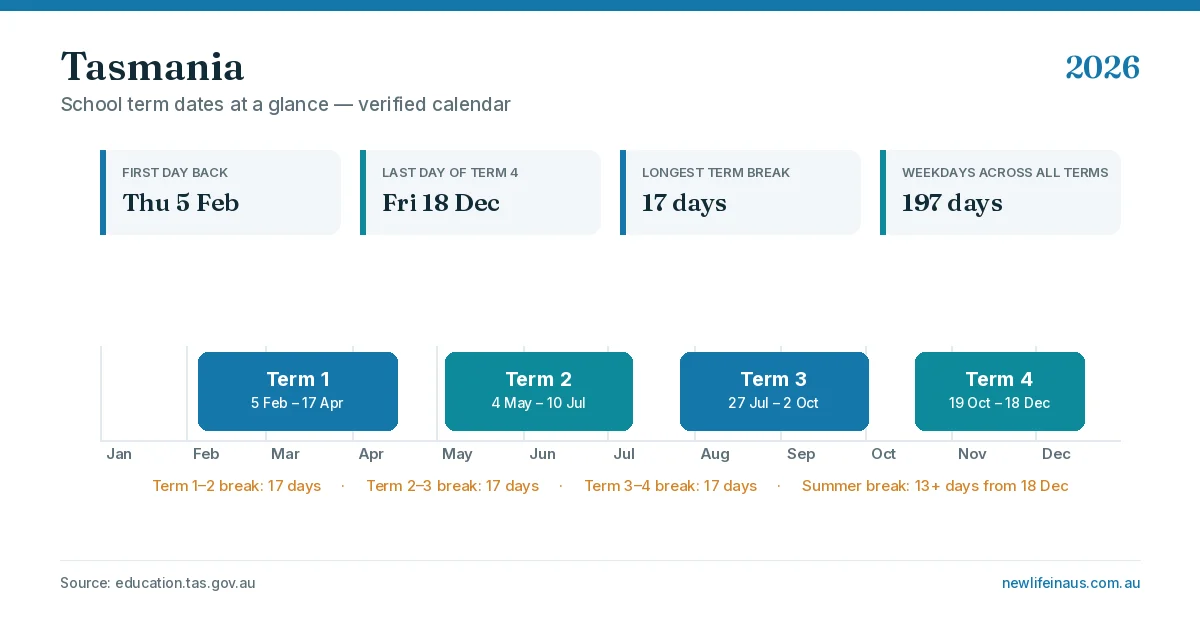
Tasmania School Holidays 2026 follow a unique 4-term structure that differs from mainland Australia’s school calendar. The Apple Isle operates on its own schedule with Term 1 holidays in mid-April, winter break in July, spring holidays in late September, and the longest summer break from mid-December to early February 2027.

Unlike NSW or Victoria, Tasmania’s Department of Education sets distinct dates that often vary from other states. Additionally, Catholic Education Tasmania and Independent Schools Tasmania may have slight variations in their holiday calendars.

This comprehensive guide covers all government and private school holiday dates, pupil-free days, and planning tips for Tasmanian families throughout 2026.

TL;DR

  • Term 1 holidays: Mid-April 2026 (includes Easter overlap)
  • Winter break: Early to mid-July 2026
  • Spring holidays: Late September/early October 2026
  • Summer break: Mid-December 2026 to early February 2027 (longest period)
  • Government and private schools may have different dates – check your specific school calendar

Tasmania School Holiday Dates 2026 – Complete Calendar

Tasmania's 4-Term School Year Structure

Tasmania operates a four-term academic calendar that divides the school year into distinct learning periods separated by holiday breaks. Each term typically runs for 9-11 weeks, creating a balanced educational rhythm throughout the year. Furthermore, this structure provides regular rest periods for students and teachers while maintaining consistent learning momentum.

The Tasmanian Department of Education designs this system to align with seasonal changes and family needs. Moreover, the four-term approach allows schools to plan curriculum delivery more effectively across shorter, manageable periods.

Key Differences from Mainland Australia

Tasmania’s school calendar differs significantly from NSW school holidays and Victoria’s term dates. While mainland states often start Term 1 in late January, Tasmanian schools commence in early February. Additionally, the Apple Isle’s holiday periods rarely align with other Australian states, creating unique travel and planning considerations for families.

These scheduling differences mean Tasmanian families cannot easily coordinate holidays with mainland relatives. Consequently, accommodation prices and travel availability may vary when Tasmania’s breaks don’t match peak holiday periods in other states.

Term 1 Holiday Period 2026

Term 1 holidays begin on Friday, April 11, 2026 and conclude on Monday, April 28, 2026. This 18-day break includes the Easter long weekend, providing families with extended time for autumn activities and travel. Schools resume classes on Tuesday, April 29, 2026 for Term 2.

The timing coincides with Tasmania’s beautiful autumn weather, making it ideal for exploring the island’s natural attractions. However, this period overlaps with Easter school holidays in some mainland states, potentially affecting accommodation availability.

Winter Break – Term 2 Holidays

Tasmania’s winter holidays commence on Friday, July 4, 2026 and extend until Monday, July 21, 2026. This 18-day winter break allows families to enjoy Tasmania’s crisp winter atmosphere and unique seasonal activities. Term 3 begins on Tuesday, July 22, 2026.

During this period, many Tasmanian families travel to warmer mainland destinations or embrace winter sports activities. The timing provides a mid-year break that helps students recharge for the second half of the academic year.

Spring Holiday Period

The spring holidays start on Friday, September 26, 2026 and finish on Monday, October 13, 2026. This 18-day spring break captures Tasmania’s stunning spring season when wildflowers bloom across the island. Students return to school on Tuesday, October 14, 2026 for the final term.

Spring represents an excellent time for outdoor education excursions and family camping trips. Additionally, the weather becomes more predictable, making it perfect for exploring Tasmania’s national parks and coastal regions.

Summer Break – The Longest Holiday Period

Tasmania’s summer holidays begin on Friday, December 18, 2026 and continue until Monday, February 2, 2027. This 46-day summer break represents the longest holiday period of the year, encompassing Christmas, New Year, and Australia Day celebrations.

The extended summer break allows families to enjoy Tasmania’s peak tourist season and warmest weather. Many students participate in summer camps, family vacations, and outdoor activities during this period. Schools across Tasmania prepare for the new academic year while students enjoy their longest rest period.

Government vs Private School Comparison

Holiday PeriodGovernment SchoolsCatholic SchoolsIndependent Schools
Term 1 BreakApril 11 – April 28April 11 – April 28April 10 – April 29
Winter BreakJuly 4 – July 21July 4 – July 21July 3 – July 22
Spring BreakSeptember 26 – October 13September 26 – October 13September 25 – October 14
Summer BreakDecember 18 – February 2December 18 – February 2December 17 – February 3

Most Catholic Education Tasmania schools follow the government school calendar exactly. However, some independent schools may start holidays one day earlier and return one day later, providing slightly extended breaks. Parents should always verify specific dates with their individual school, as variations can occur.

These minor differences reflect each school system’s autonomy in setting their academic calendar within Department of Education guidelines. Consequently, families with children in different school systems need to coordinate carefully when planning holidays or activities.

Term 1 Holidays 2026 (Autumn Break)

Tasmania’s Term 1 holidays commence on Friday, April 10, 2026 and conclude on Monday, April 27, 2026. This 18-day autumn break provides students and families with an extended period to enjoy Tasmania’s pleasant autumn weather and participate in holiday activities.

The break duration spans two weeks and four days, including two weekends within the holiday period. Furthermore, this timeframe incorporates Anzac Day on April 25, creating an additional public holiday opportunity for family gatherings and commemorative events.

Easter Holiday Overlap Considerations

Easter 2026 falls on April 20, positioning it perfectly within Tasmania’s Term 1 school holidays. This alignment means families can celebrate Good Friday (April 17), Easter Saturday (April 18), Easter Sunday (April 19), and Easter Monday (April 20) without school attendance concerns.

The Easter overlap creates an ideal opportunity for extended family holidays and interstate travel. Additionally, many tourism operators offer special Easter packages during this period, making it an excellent time for Tasmanian families to explore other states or welcome mainland visitors.

Similar to Victoria’s school holiday calendar, Tasmania’s autumn break timing accommodates Easter celebrations seamlessly. This coordination benefits families with relatives in different states, as NSW schools also align their Term 1 breaks with Easter weekend.

Return to School for Term 2

Students return to school on Tuesday, April 28, 2026, marking the commencement of Term 2. This return date applies to all government schools across Tasmania, ensuring consistency for families and educational planning.

Term 2 begins with cooler autumn weather, making it an ideal time for focused learning as students settle back into their academic routines. Moreover, the post-Easter return helps students transition smoothly from holiday mode to classroom engagement.

Parents should prepare for the term transition by organizing school supplies, uniforms, and establishing regular sleep schedules during the final week of holidays. Consequently, this preparation ensures students feel ready and motivated for the new term ahead.

Term 2 Holidays 2026 (Winter Break)

Tasmania’s Term 2 holidays commence on Friday, July 3, 2026, marking the beginning of the winter school break period. Government schools across Tasmania conclude Term 2 on this date, providing students and families with a well-deserved mid-year break from academic activities.

The winter holidays extend for two weeks, concluding on Sunday, July 19, 2026. This duration aligns perfectly with mainland states’ winter break schedules, facilitating interstate family visits and coordinated holiday planning. Furthermore, the timing coincides with Australia’s peak winter season, offering unique seasonal experiences for Tasmanian families.

Winter Holiday Activities in Tasmania

Tasmania’s winter holidays present exceptional opportunities for snow activities and mountain adventures. Mount Wellington frequently receives snowfall during July, creating perfect conditions for snow play and winter photography. Additionally, Cradle Mountain-Lake St Clair National Park offers spectacular winter hiking experiences with fewer crowds than summer months.

Indoor cultural activities flourish during Tasmania’s winter break period. MONA (Museum of Old and New Art) provides engaging exhibitions perfect for family visits, while Hobart’s Salamanca Market continues operating every Saturday throughout the holidays. Moreover, many families use this time to explore Tasmania’s rich colonial history through heritage sites and museums.

Winter sports enthusiasts can access Ben Lomond National Park for skiing and snowboarding activities. The park typically receives adequate snowfall during July, making it Tasmania’s premier winter sports destination. Consequently, many mainland families visit Tasmania specifically for these unique winter recreation opportunities.

Tasmania receives an average of 15-20 snow days during July, creating ideal conditions for winter activities

Cozy indoor activities become popular choices during Tasmania’s winter holidays. Local libraries host special winter reading programs and craft workshops for children, while community centers organize indoor sports competitions and art classes. These activities provide excellent alternatives when outdoor weather conditions become challenging.

Term 3 Commencement

Students return to school on Monday, July 20, 2026, beginning Term 3 of the academic year. This return date applies uniformly across all Tasmanian government schools, ensuring consistent scheduling for educational planning and family coordination.

Term 3 represents the longest academic term of the school year, extending through winter and into early spring. Students benefit from this extended learning period as it provides continuity for major projects and assessment tasks. Similarly, Victoria’s school holiday calendar follows comparable timing, facilitating interstate educational coordination.

Parents should prepare students for the winter term transition by establishing consistent morning routines and ensuring adequate warm clothing for school attendance. The cooler weather requires additional preparation compared to other terms, particularly for outdoor activities and sports participation.

Term 3 Holidays 2026 (Spring Break)

Tasmania’s Term 3 holidays commence on Friday, September 25, 2026, marking the transition from winter into the vibrant spring season. This spring break period extends for two weeks, providing students and families with ample time to enjoy the warmer weather and emerging seasonal activities across the island state.

The holiday period concludes on Sunday, October 11, 2026, with students returning to school the following Monday for Term 4. Consequently, this timing aligns closely with Victoria’s school holiday calendar, facilitating interstate travel and family visits during the spring break period.

Spring Activities and Events

Tasmania’s spring holidays offer exceptional opportunities for outdoor exploration as temperatures rise and daylight hours extend significantly. Cradle Mountain-Lake St Clair National Park becomes particularly accessible during this period, with hiking trails reopening after winter closures and wildflowers beginning their spectacular spring display.

Furthermore, the Royal Tasmanian Botanical Gardens in Hobart hosts special spring festivals during the holiday period. These events showcase Tasmania’s unique flora as native plants burst into bloom, creating educational opportunities for families while celebrating the island’s biodiversity.

Coastal activities resume prominence during the spring break as weather conditions improve dramatically. Wineglass Bay and Bay of Fires experience increased visitor numbers, with families taking advantage of milder temperatures for camping, bushwalking, and photography expeditions.

Additionally, Tasmania’s Museum of Old and New Art (MONA) typically schedules special exhibitions and family programs during the spring holidays. These cultural events provide indoor alternatives when spring weather remains unpredictable, ensuring entertainment options regardless of conditions.

Term 4 Commencement

Students return to school on Monday, October 12, 2026, beginning the final term of the academic year. This return date ensures consistency across all Tasmanian government schools while providing adequate preparation time for end-of-year assessments and graduation ceremonies.

Term 4 represents a crucial period for senior students, particularly those completing Year 12 studies. The term encompasses final examinations, project submissions, and university application deadlines, making the spring holiday break essential for academic preparation and stress management.

Parents should utilize the spring holiday period to establish effective study routines and organizational systems for the demanding final term. Early preparation during these holidays significantly impacts student performance during the critical Term 4 assessment period.

Term 4 Holidays 2026 (Summer Break)

Tasmania’s Term 4 holidays 2026 commence on Friday, December 18, 2026, marking the beginning of the state’s longest school break period. This summer holiday period extends through early February 2027, providing students with approximately seven weeks of vacation time to recharge after completing their academic year.

The Christmas and New Year period falls within these extended holidays, creating opportunities for family celebrations, travel, and recreational activities. Furthermore, Tasmania’s summer weather during December and January offers ideal conditions for outdoor adventures, beach visits, and exploration of the island’s natural attractions.

Holiday Duration and Key Dates

These summer school holidays represent the most extensive break in Tasmania’s academic calendar, significantly longer than the two-week breaks between other terms. Students enjoy this prolonged period while teachers utilize the time for professional development, curriculum planning, and classroom preparation activities.

The holiday period encompasses both Christmas Day (December 25) and New Year’s Day (January 1), along with associated public holidays. Additionally, Australia Day (January 26) falls within this break, providing families with multiple celebration opportunities and long weekend experiences.

New School Year Preparation Timeline

Parents should begin 2027 school year preparations during mid-January to ensure smooth transitions for students. This preparation timeline includes purchasing school supplies, organizing uniforms, and confirming enrollment details with respective educational institutions.

Most Tasmanian schools distribute supply lists and uniform requirements during December, allowing families adequate time for shopping and preparation. Moreover, many retailers offer back-to-school sales during January, providing cost-effective opportunities for essential purchases.

Students transitioning between year levels or changing schools should complete administrative requirements well before the holiday period ends. This proactive approach prevents last-minute complications and ensures all documentation remains current for the new academic year.

2027 School Year Commencement

The 2027 school year begins on Tuesday, February 3, 2027, across all Tasmanian government schools. This start date provides students with sufficient holiday time while ensuring adequate teaching weeks for curriculum delivery throughout the year.

Teachers return to schools approximately one week earlier for professional development sessions, staff meetings, and classroom preparation activities. Consequently, school facilities become active during late January as educators prepare learning environments and finalize term planning.

Families planning interstate travel should note that other Australian states may commence their school years on different dates. For reference, NSW school holidays 2026 and Victoria school holidays 2026 follow slightly different calendars, which affects travel planning and accommodation availability during peak periods.

Government vs Private School Holiday Differences

Tasmania operates three distinct educational systems that follow different holiday schedules, creating variations in Tasmania school holidays 2026 dates across institutions. Understanding these differences helps families plan effectively and avoid scheduling conflicts throughout the academic year.

Department of Education Tasmania Official Calendar

The Department of Education Tasmania sets standardized holiday dates for all government schools across the state. These dates remain consistent from Hobart to Launceston, ensuring uniformity for approximately 80% of Tasmanian students. Government schools must adhere strictly to these official dates without variation.

Furthermore, government schools coordinate their calendars with public transport schedules and community services. This coordination ensures students receive consistent support services throughout term periods while maintaining predictable holiday patterns for working families.

Catholic Education Tasmania Variations

Catholic Education Tasmania typically aligns closely with government school dates but maintains flexibility for religious observances and diocesan requirements. Most Catholic schools follow the official calendar with minor adjustments for significant religious holidays or school-specific events.

However, some Catholic institutions may extend certain holiday periods by one or two days to accommodate retreat programs or staff development activities. These variations rarely exceed a week’s difference from government school schedules, maintaining consistency for families with children in different sectors.

Independent Schools Tasmania Flexibility

Independent Schools Tasmania enjoys the greatest scheduling flexibility, with individual institutions setting their own holiday calendars within broad educational guidelines. Consequently, independent schools may commence terms earlier or extend holidays longer than government counterparts.

Elite independent schools often align their calendars with interstate boarding school networks or international exchange programs. Additionally, some independent institutions offer extended holiday programs or optional summer schools that blur traditional holiday boundaries for participating students.

How to Check Your Specific School's Calendar

Parents should verify exact holiday dates directly through their school’s official communication channels rather than relying on general state calendars. Most schools publish detailed calendars on their websites by October each year for the following academic period.

  • Visit your school’s official website for downloadable calendar PDFs
  • Subscribe to school newsletters for calendar updates and changes
  • Contact school administration offices directly for clarification
  • Check parent portal systems for personalized calendar information

Moreover, families with children across different school sectors should create consolidated calendars highlighting overlapping and divergent holiday periods. This approach prevents scheduling conflicts and maximizes family time during shared holiday periods throughout 2026.

Additional Non-Attendance Days 2026

Beyond scheduled school holidays, Tasmanian students experience several additional non-attendance days throughout 2026 that affect the academic calendar. These days serve various educational and administrative purposes while providing teachers with essential professional development opportunities.

Pupil-Free Days Throughout the Year

Pupil-free days occur regularly across all Tasmanian schools, typically scheduled at the beginning of each term or strategically placed mid-term. Government schools generally observe four to six pupil-free days annually, while independent schools may schedule additional days based on their specific needs.

These days allow teachers to prepare classrooms, review curriculum materials, and conduct student assessments without classroom responsibilities. Furthermore, schools use pupil-free days for administrative tasks, parent-teacher conferences, and facility maintenance that requires student absence.

Professional Development Days for Teachers

Professional development represents a crucial component of Tasmania’s educational framework, with teachers participating in mandatory training sessions throughout 2026. These development days focus on curriculum updates, teaching methodologies, technology integration, and student welfare strategies.

Schools coordinate professional development schedules to minimize disruption to family routines while ensuring teachers receive essential training. Additionally, some development activities occur during school holidays, reducing the number of pupil-free days during term periods.

Public Holidays Affecting School Attendance

Several public holidays throughout 2026 create additional non-attendance days when they fall during school terms. Tasmania observes Australia Day, Easter Monday, Anzac Day, Queen’s Birthday, and other national celebrations that impact school schedules.

  • Australia Day – January 26 (falls during summer holidays)
  • Easter Monday – April 21 (typically within Term 1)
  • Anzac Day – April 25 (observed on nearest Monday if weekend)
  • Queen’s Birthday – June 8 (mid-Term 2)
  • Eight Hours Day – March 10 (Tasmania-specific holiday)

When public holidays fall on weekends, schools observe them on the following Monday, creating long weekends that families can utilize for short trips. Similar to other states like NSW and Victoria, Tasmania’s holiday calendar accommodates these national observances.

School Closure Days and Their Purposes

Occasionally, schools close for emergency situations or planned maintenance activities that require complete facility evacuation. These closures include extreme weather events, infrastructure repairs, or health and safety concerns that make school attendance unsafe.

Planned closure days serve specific operational purposes such as major building renovations, technology system upgrades, or comprehensive facility cleaning. Schools provide advance notice for scheduled closures, while emergency closures receive immediate communication through official channels and local media.

Parents should maintain flexible arrangements for unexpected closure days, particularly during winter months when severe weather may impact school operations. Moreover, schools often coordinate closure schedules with neighboring institutions to minimize community disruption and support shared transportation services.

Planning Your Family Holidays Around School Terms

Strategic planning transforms Tasmania school holidays 2026 into memorable family experiences while managing costs and availability. Furthermore, understanding peak travel periods helps families secure better accommodation rates and avoid overcrowded attractions throughout the island state.

Best Times to Book Family Holidays in Tasmania

Early booking delivers significant savings for Tasmanian family holidays, particularly during the summer break from December to February. Additionally, families should secure accommodation at least 3-4 months ahead for popular destinations like Cradle Mountain-Lake St Clair and Freycinet National Park.

Mid-year holidays in July present excellent opportunities for winter activities and lower accommodation costs. However, families must book winter experiences like Dark Mofo festival events and Museum of Old and New Art (MONA) visits well in advance due to limited capacity during colder months.

Term break periods offer different advantages depending on timing and destination preferences. Consequently, April autumn holidays provide ideal weather conditions for hiking and outdoor exploration before winter temperatures arrive.

Peak vs Off-Peak Travel Considerations

Peak season travel during summer holidays increases accommodation costs by 40-60% compared to off-peak periods. Nevertheless, families gain access to extended operating hours at attractions and complete availability of seasonal activities like Salamanca Market and beach-based adventures.

Off-peak travel during Term 2 and Term 3 breaks offers substantial cost savings and fewer crowds at major tourist destinations. Meanwhile, some seasonal attractions may operate reduced schedules or close entirely during winter months, requiring careful itinerary planning.

Travel PeriodCost LevelCrowdsWeather
Summer HolidaysHighPeakWarm, Ideal
Autumn BreakMediumModerateCool, Pleasant
Winter BreakLowLightCold, Indoor Focus
Spring BreakMediumModerateVariable, Scenic

Shoulder seasons provide the optimal balance between cost and experience quality for most Tasmanian family holidays. Similarly, other Australian states like NSW and Victoria experience comparable seasonal pricing patterns for family travel.

School Holiday Programs and Vacation Care Options

Vacation care programs operate throughout all Tasmania school holiday periods, providing structured activities for children aged 5-12 years. Moreover, these programs typically run from 7:30 AM to 6:00 PM on weekdays, accommodating working parent schedules during extended breaks.

Before and after school care providers expand their services during holidays, offering excursions to local attractions and specialized activity programs. Additionally, many providers include transportation to venues like Bonorong Wildlife Sanctuary and Tasmanian Museum and Art Gallery as part of their holiday programming.

  • Community centers host drop-in programs and workshops
  • Sports clubs organize intensive coaching clinics
  • Arts organizations provide creative workshops and performances
  • Libraries offer reading programs and educational activities

Registration for popular vacation care programs typically opens 4-6 weeks before each holiday period begins. Furthermore, families should confirm availability and book preferred dates early, as programs often reach capacity during peak demand periods.

Tips for Working Parents During School Breaks

Working parents benefit from coordinating leave requests with Tasmania school holiday dates to maximize family time while minimizing childcare costs. Subsequently, many employers accommodate flexible working arrangements during school holidays, including compressed work weeks and remote work options.

Childcare cost planning becomes essential as vacation care programs charge daily rates ranging from $45-$85 per child. Therefore, families should budget approximately $200-$400 per week for full-time vacation care during extended holiday periods.

Reciprocal childcare arrangements with other families create cost-effective solutions while building community connections. Additionally, grandparents and extended family members often provide valuable support during school holidays, particularly for families with multiple children requiring care.

Workplace planning involves submitting leave requests 2-3 months in advance for popular holiday periods, especially summer breaks when colleague availability may be limited. Consequently, early planning ensures adequate coverage and reduces workplace stress during extended absences.

Frequently Asked Questions

When do Tasmania school holidays start and end in 2026?

Tasmania follows a 4-term structure with holidays in mid-April (Term 1), early to mid-July (winter break), late September/early October (spring holidays), and mid-December 2026 to early February 2027 (summer break). Each holiday period typically lasts 18 days.

How do Tasmania school holidays differ from mainland Australia?

Tasmania’s school calendar operates independently from NSW and Victoria. Tasmanian schools start in early February rather than late January, and holiday periods rarely align with other Australian states. This creates unique travel considerations as peak periods don’t match mainland school breaks.

Do Catholic and independent schools in Tasmania have the same holiday dates?

While most schools follow the Department of Education calendar, Catholic Education Tasmania and Independent Schools Tasmania may have slight variations in their holiday dates. It’s essential to check your specific school’s calendar as private schools can set their own term dates within guidelines.

What are the exact dates for Term 1 holidays in 2026?

Term 1 holidays run from Friday, April 11, 2026 to Monday, April 28, 2026. This 18-day break includes the Easter long weekend, and schools resume on Tuesday, April 29, 2026 for Term 2.

When is the winter break in Tasmania for 2026?

Tasmania’s winter holidays commence on Friday, July 4, 2026 and extend until Monday, July 21, 2026. Term 3 begins on Tuesday, July 22, 2026. This timing allows families to travel to warmer destinations or enjoy winter activities.

How long is Tasmania's summer school holiday break?

The summer break is the longest holiday period, running from mid-December 2026 to early February 2027. This extended break allows families ample time for summer activities and travel during Tasmania’s warmest months.

Why does Tasmania have a 4-term school year structure?

The 4-term structure divides the academic year into manageable 9-11 week periods with regular rest breaks. This system aligns with seasonal changes, provides consistent learning momentum, and allows schools to plan curriculum delivery more effectively across shorter periods.

Should I book accommodation early for Tasmania school holidays?

Yes, especially during Term 1 holidays which overlap with Easter, and summer breaks. Since Tasmania’s holidays don’t always align with mainland states, accommodation availability and pricing can vary significantly. Early booking ensures better rates and availability for family holidays.

Leave a Comment

Your email address will not be published. Required fields are marked *