Solar Panel Cost in Australia 2026: Real Prices by Size, City and Rebate

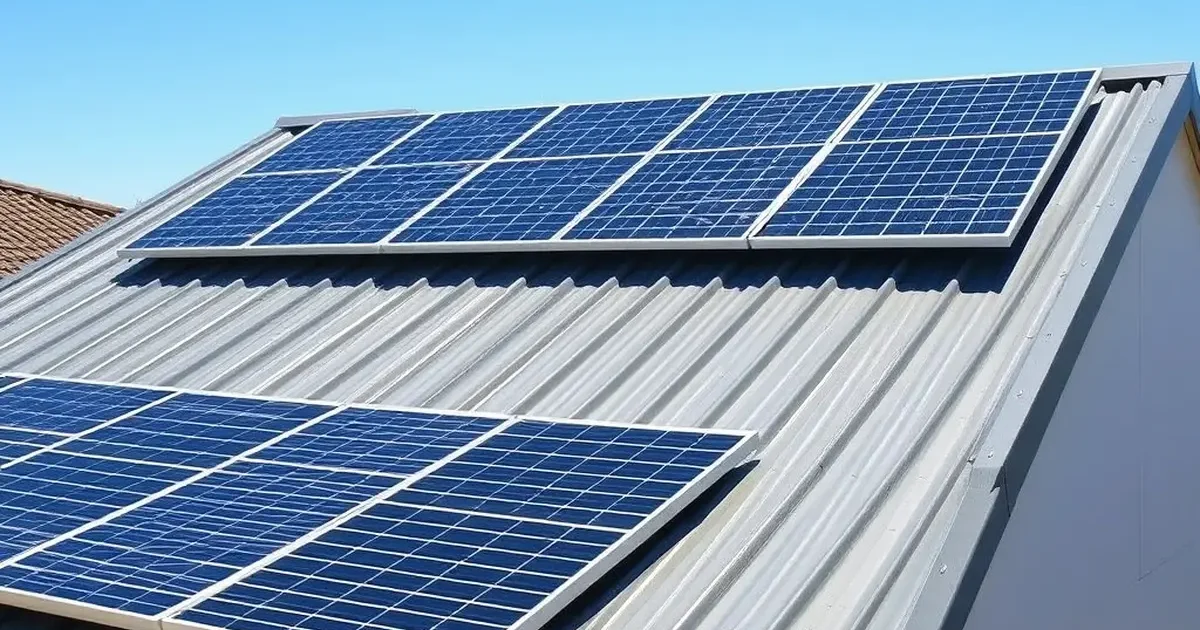
A 6.6kW solar system — the size most Australian homes settle on — costs roughly $5,000 to $6,500 fully installed in 2026, with the federal rebate already taken off the price. A 10kW system runs about $8,100 to $9,700 in most capitals. Perth is the cheapest city in the country to put panels on your roof. Darwin is the dearest by a wide margin — the same 10kW system there is closer to $14,900.
Those are the prices you actually pay, not the sticker price. Every quote you receive in Australia already has the federal rebate deducted at the point of sale, which is why the discount feels invisible. On a 6.6kW system in Sydney it is worth about $1,665 right now.
The catch, and it is the thing almost nobody tells you up front: that rebate is shrinking every January. It fell by about a sixth on 1 January 2026 and it will fall again on 1 January 2027, on its way to zero in 2030. Solar has not become more expensive — the subsidy is being wound down on a published timetable.
The short answer, 2026 prices
Work out what solar will cost on your roof
Pick your city, the system size you are considering and how much of the day someone is home. The calculator uses the July 2026 installed prices from the Solar Choice Price Index, the current federal rebate settings, and typical sun hours and electricity rates for each capital.
Solar panel cost in Australia at a glance
| System size | Typical installed price (after rebate) | Roughly generates | Suits |
|---|---|---|---|
| 3kW | $3,200 – $4,500 | 11–16 kWh a day | A unit, a couple, or a very small bill |
| 5kW | $4,250 – $6,250 | 18–26 kWh a day | Two to three people, no aircon habit |
| 6.6kW | $5,000 – $6,500 | 24–35 kWh a day | The default Australian family home |
| 10kW | $8,100 – $9,700 | 36–53 kWh a day | Ducted aircon, pool, or a battery later |
| 13.3kW | $10,500 – $13,000 | 48–70 kWh a day | Large home plus an electric car |
How much do solar panels cost in Australia in 2026?
The table below is the closest thing Australia has to an official price list. Solar Choice collects real quotes from installers across the country every month and publishes the average. These are installed prices including GST, with the federal rebate already deducted — the number that lands on your invoice.
| City | 3kW | 5kW | 6kW | 7kW | 10kW |
|---|---|---|---|---|---|
| Perth, WA | $3,210 | $4,250 | $5,070 | $5,570 | $8,460 |
| Adelaide, SA | $3,610 | $4,660 | $5,350 | $6,180 | $8,130 |
| Sydney, NSW | $3,710 | $4,900 | $5,570 | $6,230 | $8,480 |
| Melbourne, VIC | $4,040 | $5,170 | $5,810 | $6,490 | $8,890 |
| Canberra, ACT | $4,050 | $5,040 | $5,490 | $6,340 | $8,140 |
| Brisbane, QLD | $4,080 | $5,450 | $6,170 | $7,060 | $9,320 |
| Hobart, TAS | $4,490 | $6,240 | $7,280 | $8,110 | $11,430 |
| Darwin, NT | $6,250 | $8,470 | $9,890 | $10,490 | $14,930 |
| National average | $4,180 | $5,520 | $6,330 | $7,060 | $9,720 |
Ask for tier-one panels and a European inverter and you move to the premium column. It is not a small step — expect to pay 20 to 30 per cent more.
| City | 3kW | 5kW | 6kW | 7kW | 10kW |
|---|---|---|---|---|---|
| Perth, WA | $4,140 | $5,460 | $6,360 | $7,100 | $10,380 |
| Adelaide, SA | $4,390 | $5,780 | $6,460 | $7,460 | $9,850 |
| Sydney, NSW | $4,500 | $5,920 | $6,610 | $7,460 | $10,270 |
| Melbourne, VIC | $4,660 | $6,030 | $6,750 | $7,560 | $10,400 |
| Canberra, ACT | $4,680 | $5,910 | $6,440 | $7,520 | $9,760 |
| Brisbane, QLD | $4,910 | $6,580 | $7,310 | $8,310 | $11,090 |
| Hobart, TAS | $5,250 | $7,320 | $8,340 | $9,150 | $13,250 |
| Darwin, NT | $7,050 | $9,950 | $11,630 | $12,680 | $18,250 |
The number installers actually think in: dollars per watt
Quotes are easier to compare once you convert them to dollars per watt. Divide the total price by the system size in watts — a 6.6kW system is 6,600 watts. The national average in 2026 is $0.88 to $0.95 per watt installed. Anything much under $0.70/W should make you look hard at the components; anything over $1.20/W in a capital city needs a reason, such as a tricky roof, a switchboard upgrade or genuinely premium gear.
Dollars per watt also explains why bigger systems look like better value. The scaffolding, the electrician, the paperwork and the trip to your house cost roughly the same whether the installer hangs 12 panels or 24. A 3kW system in Sydney works out at about $1.24/W; a 10kW system at the same house is about $0.85/W. The panels are the cheap part.
Why Perth is cheap and Darwin is dear
Perth has the most competitive solar market in the country: high uptake, dense suburbs, lots of installers fighting for work and short travel times. Darwin has the opposite — a small market, freight from the southern states, cyclone-rated mounting requirements that add engineering and hardware, and far fewer companies to quote against each other. Hobart sits in between, with fewer installers, colder-weather roof work and lower sun hours that make each system take longer to pay for itself.
What you are actually paying for
A solar quote covers far more than panels. Roughly speaking, a mid-range 6.6kW job breaks down like this.
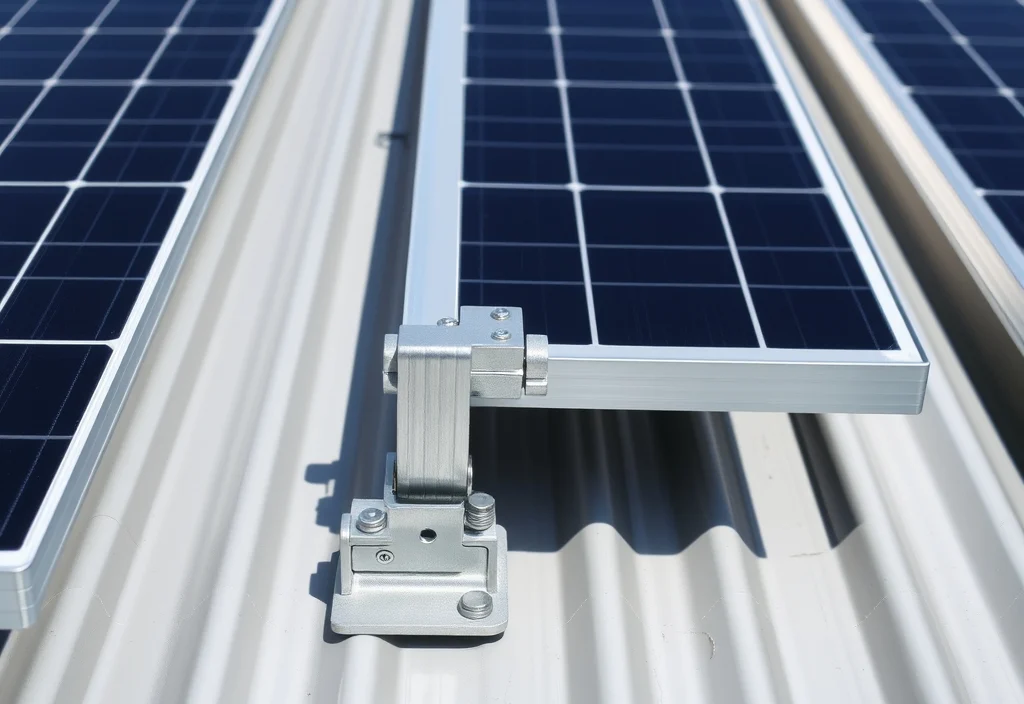
| Component | Share of the price | What to watch |
|---|---|---|
| Panels | 25–35% | Tier-one brands cost more but come with real 25-year performance warranties and a local office to honour them |
| Inverter | 15–25% | The part most likely to fail first. A 10-year warranty is the benchmark; 5 years is a warning sign |
| Racking and mounting | 8–12% | Must be rated for your wind region — this is why Darwin and coastal Queensland cost more |
| Labour and installation | 20–30% | Two-storey, steep or tiled roofs add time and risk |
| Electrical work and compliance | 8–15% | Isolators, cabling, grid application, Certificate of Electrical Safety, network sign-off |
The extras that blow a quote out
These are the line items that turn a $5,500 job into an $8,000 one. A good installer flags them before you sign; a cheap one finds them on installation day.
- Switchboard upgrade — $800 to $2,500. Older boards without a main switch, without RCDs, or with ceramic rewireable fuses have to be brought up to current standards before solar can be connected. Common in anything built before the 1990s.
- Meter change — $0 to $500. You need a bi-directional smart meter to export. Some retailers swap it free, others charge, and the wait can run to weeks.
- Two-storey or steep roof — $300 to $1,500. Scaffolding, harness points and slower work.
- Tile roof — $200 to $600. Slower than corrugated tin and some tiles will crack and need replacing.
- Three-phase inverter — $600 to $1,500 more than the single-phase equivalent.
- Long cable runs — $200 to $800. If the switchboard is a long way from the roof, or on a separate garage.
- Asbestos roof or eaves. Many installers will simply refuse the job. Those who take it need a licensed removalist and the price moves into the thousands.
- Tree removal or trimming. Shade on even one panel drags down a whole string on a basic system, which is when optimisers or microinverters get suggested — add $800 to $2,000.
A quote that seems too cheap usually is
The federal solar rebate, explained properly
Australia does not have a solar rebate in the ordinary sense. There is no form to fill in and no cheque in the post. What exists is the Small-scale Renewable Energy Scheme, run by the Clean Energy Regulator, and it works by creating tradeable certificates called STCs — small-scale technology certificates.
When your system is installed you sign your right to those certificates over to the installer, and they take the value off your invoice. That is the whole mechanism. It is why every advertised price already says after rebate, and why you never see the money.
The formula
Your certificate count is set by three numbers, multiplied together and rounded down:
The zone rating reflects how much sun your postcode gets. There are four zones, and most Australians live in Zone 3.
| Zone | Rating | Where |
|---|---|---|
| Zone 1 | 1.622 | Darwin, most of the NT, northern WA and far north QLD |
| Zone 2 | 1.536 | Alice Springs and the inland arid belt |
| Zone 3 | 1.382 | Sydney, Brisbane, Perth, Adelaide, Canberra and most of NSW and QLD |
| Zone 4 | 1.185 | Melbourne, Hobart, southern Victoria and Tasmania |
The deeming period is the part that matters in 2026
The deeming period is how many years of future generation the scheme pays you for up front. It drops by one year every 1 January until the scheme ends in 2030. This is legislated and published — it is not a sales tactic.
| Install year | Deeming period | Rebate on a 6.6kW system in Zone 3 |
|---|---|---|
| 2024 | 7 years | $2,331 |
| 2025 | 6 years | $1,998 |
| 2026 | 5 years | $1,665 |
| 2027 | 4 years | $1,332 |
| 2028 | 3 years | $999 |
| 2029 | 2 years | $666 |
| 2030 | 1 year | $333 |
So the pressure you will feel from salespeople — install before the end of the year or you lose money — is, unusually, true. Waiting from December to January costs about $333 on a 6.6kW system in Sydney. It is not the emergency it gets dressed up as, but it is real, and it is a genuine reason not to sit on a quote for six months.
What a certificate is worth
STCs trade on an open market, generally between $37 and $40. There is also a government clearing house with a fixed $40 price, but it has a queue, so most installers sell on the open market and price your quote at the lower figure. A swing of a few dollars per certificate moves a 6.6kW rebate by around $100 — enough to notice, not enough to plan around.
A worked example
A 6.6kW system in Parramatta, Sydney, installed in 2026:
6.6 kW × 1.382 (Zone 3) × 5 years = 45.6, rounded down to 45 certificates
45 × $37 = $1,665 off the invoice
Sticker price about $7,630, so you pay roughly $5,965.
Eligibility is stricter than most people realise
The federal battery rebate: Cheaper Home Batteries
Since 1 July 2025 batteries have had their own federal discount, delivered the same way — as certificates taken off the invoice. It is worth roughly 30 per cent of the installed cost of an eligible battery between 5 kWh and 100 kWh, with no means test and no application form.
Like the panel rebate, it steps down over time, but faster: it changes twice a year rather than annually. The rate dropped on 1 May 2026, from 8.4 certificates per usable kWh to 6.8.
| Period | Certificates per usable kWh | Worth on a 10 kWh battery |
|---|---|---|
| 2025 (full year) | 9.3 | $3,441 |
| 2026, January to April | 8.4 | $3,108 |
| 2026, May to December | 6.8 | $2,516 |
| 2027, January to June | 5.7 | $2,109 |
| 2027, July to December | 5.2 | $1,924 |
| 2028, January to June | 4.6 | $1,702 |
| 2029, January to June | 3.6 | $1,332 |
| 2030, July to December | 2.1 | $777 |
One quirk worth knowing before you size a battery: the rebate tapers on larger systems. The first 14 kWh of usable capacity earns the full rate, capacity between 14 and 28 kWh earns 60 per cent of it, and anything from 28 to 50 kWh earns just 15 per cent. Above 50 kWh there is nothing.
A 20 kWh battery installed in July 2026:
First 14 kWh × 6.8 = 95.2 certificates
Remaining 6 kWh × 6.8 × 60% = 24.5 certificates
Total 119 certificates × $37 = $4,403 off the price
A battery still does not pay for itself as fast as panels do
State and territory solar rebates in 2026
On top of the federal scheme, some states add their own help. Most of it has now shifted from panels to batteries — governments consider rooftop solar a solved problem and are spending on storage instead. Only Victoria still pays a meaningful cash rebate on panels themselves.
| State | Panel rebate | Battery help | Loans |
|---|---|---|---|
| VIC | Up to $1,400 (Solar Homes) | Federal only | Interest-free loan matching the rebate |
| NSW | None | Up to $1,100 for joining a virtual power plant | Interest-free to $15,000, income under $210,000 |
| WA | None | Up to $1,300 (Synergy) or $3,800 (Horizon) | Interest-free to about $10,000 |
| ACT | None | Federal only | Sustainable Household Scheme, up to $20,000 from 1 July 2026 |
| TAS | None | Federal only | Energy Saver Loan, interest-free to $10,000 |
| QLD | None | Federal only (Battery Booster closed in 2024) | — |
| SA | None | Federal only | — |
| NT | None | Federal only (territory scheme fully subscribed) | — |
Victoria: the rules changed on 1 July 2026
Solar Victoria still offers up to $1,400 towards panels, plus an optional interest-free loan of the same amount repaid over four years at $29.17 a month. But the eligibility rules tightened at the start of this financial year, and a lot of households that qualified last year no longer do.
- Combined household taxable income of all owners must now be under $150,000 a year. That threshold was $210,000 until 30 June 2026.
- The property must be worth under $3 million.
- You must be the owner-occupier, or the owner of a home under construction. Rental properties have their own stream.
- The address must not have had a solar panel or battery rebate under the program before, and must not have had solar installed in the past 10 years.
- The rebate is capped at 50 per cent of the purchase cost, and it is calculated after the federal STC discount has come off.
- You must use an authorised solar retailer and products from Solar Victoria approved lists.
- Get approved before you install. If the system goes on the roof before your eligibility is confirmed, you get nothing.
Victorians building a new home should read this now
Feed-in tariffs have collapsed, and it changes everything
Ten years ago people put solar on the roof to sell power back to the grid. Some early adopters in NSW and Queensland were locked into 44 to 60 cents per kilowatt hour. Those schemes are closed and the economics have completely inverted: so much rooftop solar now floods the grid in the middle of the day that exported power is worth very little, and in some states almost nothing.
| State | What you get paid for exports in 2026 | Set by |
|---|---|---|
| NSW | 3.4 to 6.5 c/kWh benchmark; retail offers around 5c | IPART benchmark, not binding on retailers |
| VIC | No minimum at all since 1 July 2025. Average around 1.1c | Retailer discretion |
| QLD (regional) | 6.006c, down from 8.66c on 1 July 2026 | Regulated, Ergon customers |
| QLD (south-east) | Roughly 3 to 10c, often with a daily export cap | Retailer discretion |
| SA | Around 2 to 5c | Retailer discretion |
| WA | 2c before 3pm, 10c between 3pm and 9pm | DEBS, regulated |
| TAS | 9.276c from 1 July 2026, up 5.6 per cent | Regulated minimum |
| NT | 9.33c standard, 18.66c between 3pm and 9pm | Regulated, Jacana Energy |
Look at Western Australia and the Northern Territory and you can see where the whole country is heading: exports in the middle of the day are worth almost nothing, and exports in the evening are worth five times as much. Time-of-export pricing is the future, and it is the single strongest argument for a battery or for shifting your big loads.
The practical takeaway: use it, do not sell it
Is solar still worth it in 2026?
Yes, and it is not close. Even with the shrinking rebate and the collapsed feed-in tariff, a standard 6.6kW system pays for itself in about four to six years and then keeps working for another 15 to 20. The reason is not the rebate — it is that grid electricity has become expensive. When you are buying power at 38 cents in Sydney or 45 cents in Adelaide, generating your own is worth a great deal.
Adelaide comes out on top for one blunt reason: South Australians pay the highest electricity prices in the country, so every unit of self-generated power is worth more there. Hobart and Melbourne sit at the other end because they get the least sun and pay less for grid power. Darwin has fantastic sun but the most expensive installs in Australia, which cancels much of the advantage out.
A worked example: 6.6kW in western Sydney, family home, someone home part of the week
Installed price after the federal rebate: about $5,970
Generation: around 8,300 kWh a year
40 per cent used at home at 38c = $1,260 · 60 per cent exported at 5c = $249
Total saving: about $1,510 a year
Payback: just under four years. Over a 25-year panel warranty, well past $30,000 in avoided bills.
Two things move that number more than anything else. The first is how much of your own power you use — a household with someone home during the day can be two years quicker to break even than an identical house that is empty from 8 to 6. The second is what happens to electricity prices, and the direction of travel there has been one way for a decade.
What size system do you actually need?
Most Australian households land on 6.6kW, and it is not an accident. It is the largest array you can put behind a 5kW inverter under the Clean Energy Council oversizing rules, and 5kW is the largest single-phase inverter most distributors will approve without extra paperwork. That combination has quietly become the national default.
| Household | Typical daily use | System size |
|---|---|---|
| One or two people, unit or small home, no aircon | 8–12 kWh | 3–5kW |
| Two to three people, house, some aircon | 15–20 kWh | 5–6.6kW |
| Family of four, ducted or multiple split systems | 20–30 kWh | 6.6–10kW |
| Large family, pool, all-electric, or an EV | 30–50 kWh | 10–13.3kW |
Is 6.6kW enough for a four-bedroom house? Usually yes, if the house still uses gas for cooking and hot water and the aircon is used in bursts. It is usually not enough for an all-electric four-bedroom house with ducted reverse-cycle, and it is definitely not enough once an electric car turns up in the driveway. A car adds roughly 8 to 12 kWh a day to a typical household — about as much as a small home uses in total.
Size for the house you will have in five years
Renting or living in an apartment?
This is the part almost every solar guide skips, and for a lot of newer arrivals it is the whole question. You do not need to own a freestanding house to get something out of solar — but the path is different.
If you rent
You cannot install solar on a property you do not own, but you are not out of options. Victoria runs a dedicated rebate stream for rental properties, where the landlord applies and the tenant benefits from the lower bills. It is a genuinely good pitch to a landlord: the property value rises, the rebate covers a chunk of the cost, and the improvement stays with the house. Approach it as a written proposal rather than a passing request, and expect it to take a couple of months.
In the meantime, the fastest saving available to a renter is switching electricity plans, which costs nothing and takes 15 minutes. See our guide to bills in Australia and who pays for what if you are still working out how the system fits together.
If you own an apartment
Individual apartments almost never get their own rooftop system — the roof is common property and belongs to the owners corporation, not to you. What is increasingly happening instead is a building-wide system that offsets common-area power (lifts, lighting, car park, pumps), which lowers everyone’s strata levies. Victoria funds this directly through its Solar for Apartments program. Elsewhere it is a matter of getting it onto the agenda at the annual general meeting, which needs a majority of owners and considerably more patience than a house install.
How not to get ripped off
Solar is a competitive market with a long tail of operators who sell hard, install fast and are difficult to find in five years when the inverter fails. The system is on your roof for two decades; the salesperson may not be around for two years.
- Get three quotes, and insist they are for comparable systems. Ask each for the panel model, the inverter model, the total kW and the price per watt. Without those four numbers you are not comparing anything.
- Check the installer is accredited. Only a Solar Accreditation Australia accredited installer can create STCs. No accreditation means no rebate, and you will discover it after paying.
- Look up the warranty terms, not the warranty length. A 25-year panel warranty from a company with no Australian office is a piece of paper. Ask who honours it and where they are.
- Be suspicious of a same-day discount. Legitimate installers hold their price for a week or two. A price that only exists if you sign tonight is a sales technique, not a deal.
- Refuse a quote given without a site assessment — whether by satellite photo or over the phone. Your switchboard, meter, roof and shade all need eyes on them.
- Ask about export limits before you sign. Some networks will approve the system but cap what you can export, which changes the payback maths. Your installer should get pre-approval from the distributor in writing.
- Do not pay the full amount up front. A deposit of 10 to 20 per cent is normal. Paying 100 per cent before installation removes every bit of leverage you have.
- Keep the Certificate of Electrical Safety and the compliance paperwork. You will need it when you sell the house, and for any warranty claim.
The cheapest quote is almost never the cheapest system
Grid-connected or off-grid?
Everything above assumes you are connected to the mains and using solar to cut a bill. Going fully off-grid is a different project with a different budget — you are buying enough battery storage and generator backup to survive a week of rain, and the cost typically starts around three to four times a standard rooftop system. It makes sense when a grid connection would cost $30,000 or more to run in, which is common on rural blocks, and rarely otherwise. We cover the numbers in detail in our off-grid solar systems guide.
If you are weighing solar against other ways to cut a summer power bill, it is worth comparing the alternatives directly: a ceiling fan costs $150 to $400 to install and runs for cents an hour, while a split system costs $600 to $1,500 to install and is the single biggest driver of summer bills in most Australian homes. Solar changes the maths on running the aircon; a fan changes how often you need to.
For the wider picture on what things cost here, see our cost of living in Australia price guide.
Solar panel cost: frequently asked questions
You May Also Like
Buying a Used Car in Australia 2026: The Complete Checklist
Car Registration Cost in Australia 2026: Rego and Stamp Duty by State