Ceiling Fan Installation Cost in Australia (2026): Prices + Calculator

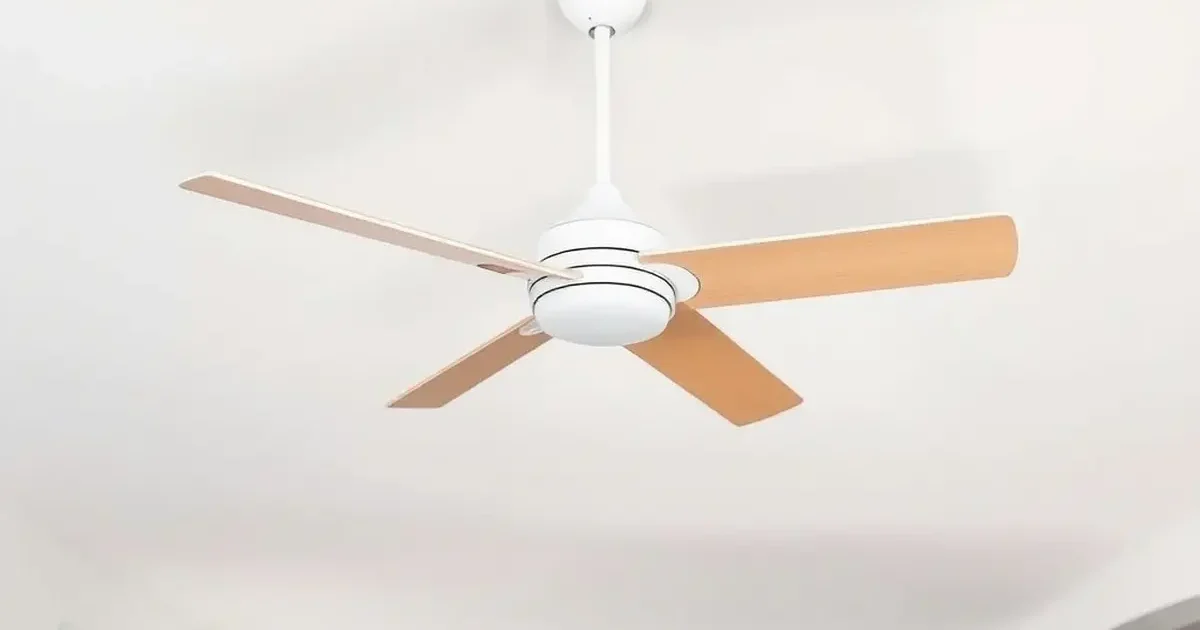
Ceiling fan installation costs $150 to $400 per fan in Australia in 2026. Swapping an old fan for a new one in the same spot is cheapest at $100 to $250; installing where a light fitting already exists runs $150 to $300; and a brand-new location needing fresh wiring costs $300 to $550. Electricians charge $75 to $150 an hour and a straightforward install takes one to two hours.
Two things are worth knowing before you buy. First, you cannot legally do this yourself — connecting a ceiling fan is electrical work under AS/NZS 3000, and unlicensed work carries penalties from $1,000 to $40,000 depending on your state and can void your home insurance. Second, a ceiling fan is astonishingly cheap to run: roughly $5 a month against $125 for air conditioning, or 10 to 20 times less. This guide covers the real install costs, what drives them, the legal requirements, and how to choose between AC and DC motors.
Ceiling fan installation cost calculator (2026)
Pick your scenario and how many fans. Installing several at once is meaningfully cheaper per fan, because the electrician’s call-out and set-up is spread across the job.
Indicative 2026 estimates based on published Australian electrician pricing. Your quote depends on ceiling access, existing wiring and whether the mounting point is fan-rated. All electrical work must be done by a licensed electrician. Not a quote or financial advice.
Ceiling fan installation costs at a glance
| Scenario | Typical cost | Why |
|---|---|---|
| Replacing an existing fan | $100 – $250 | Wiring and a fan-rated mount are already there |
| Installing where a light fitting is | $150 – $300 | Power is present, but the mount usually needs upgrading |
| New location, new wiring | $300 – $550 | 3+ hours; new cabling, possible switch work |
| Extra wiring or switchboard work | +$50 – $500 | Older homes, no spare circuit capacity |
| High, raked or difficult ceiling | +$50 – $150 | Scaffold, ladders, two-person work |
| Regional travel | +$50 – $150 | Call-out and travel time |
You cannot legally install a ceiling fan yourself
This is worth being blunt about, because plenty of online guides imply otherwise. Under AS/NZS 3000 — the Wiring Rules — connecting a ceiling fan to your home’s electrical supply is electrical work, and electrical work must be performed by a licensed electrician. That applies even when the wiring is already there and you are simply swapping an old fan for a new one.
Handymen are not exempt. In some states a handyman may assist with mechanical assembly — putting the blades on — but the electrical connection must always be made by a licensed electrician.
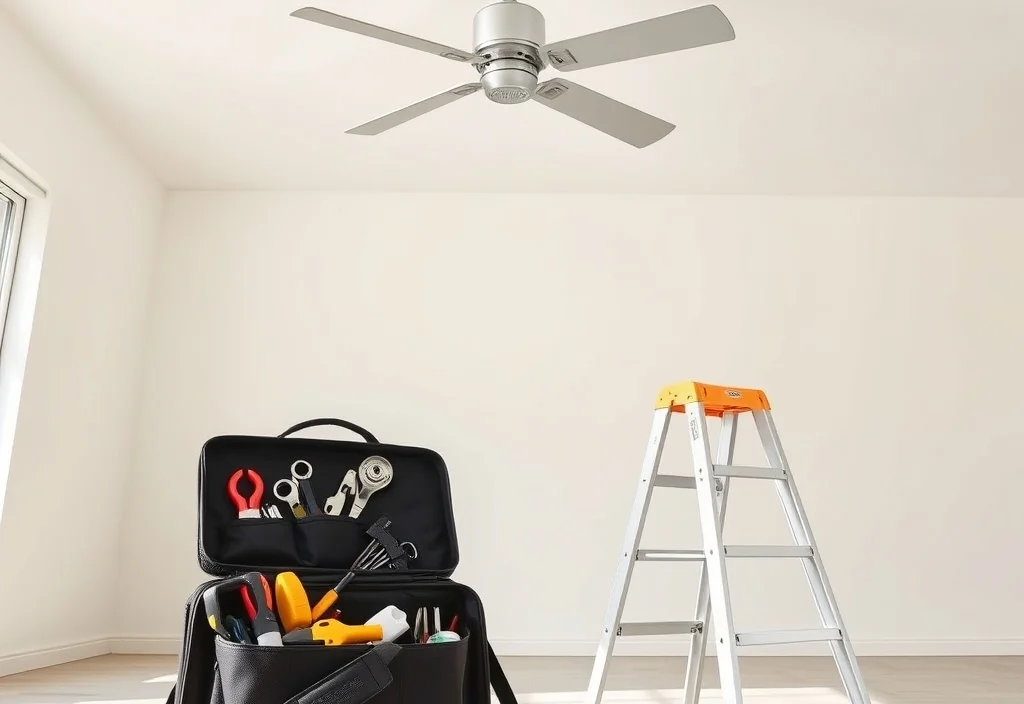
Penalties run from $1,000 to $40,000 — and your insurance
When a licensed electrician does the work they issue a Certificate of Testing and Compliance, confirming the installation meets Australian safety standards. Keep it — it matters at sale and at claim time. If a quote is suspiciously cheap, ask for the licence number and confirm you will receive the certificate.
The mounting point: why a light bracket is not enough
Here is the detail that catches people who assume swapping a light for a fan is trivial. A ceiling fan is heavy and it moves — it needs a fan-rated mounting point fixed to structural timber, not the standard bracket that holds up a light fitting. A light fitting weighs a kilo and sits still; a fan weighs several kilos and vibrates for years.
Part of what your electrician is doing is checking the ceiling structure can carry the fan and installing or upgrading that mount. It is also why “install where a light already is” costs more than “replace an existing fan” — the power is there, but the mount usually is not.
What drives the price
- Whether wiring already exists. The single biggest factor. Existing fan point is cheapest, existing light point is next, and a new location needing cabling roughly doubles the job.
- Switch configuration. Separate control for fan and light, or adding a wall control, means more wiring and sometimes a new switch plate.
- Ceiling height and type. High or raked ceilings need ladders or scaffold and sometimes two people. Concrete ceilings in apartments are harder than timber-framed.
- Switchboard capacity. Older homes may not have a spare circuit or may need a safety switch upgrade — this is where the $50 to $500 extra wiring allowance goes.
- Outdoor or damp areas. Alfresco and bathroom fans must be rated for the location, and the wiring rules for wet areas are stricter.
- How many fans. The call-out and set-up is a fixed cost, so fans two, three and four are meaningfully cheaper than the first.
The fan itself: AC vs DC motors
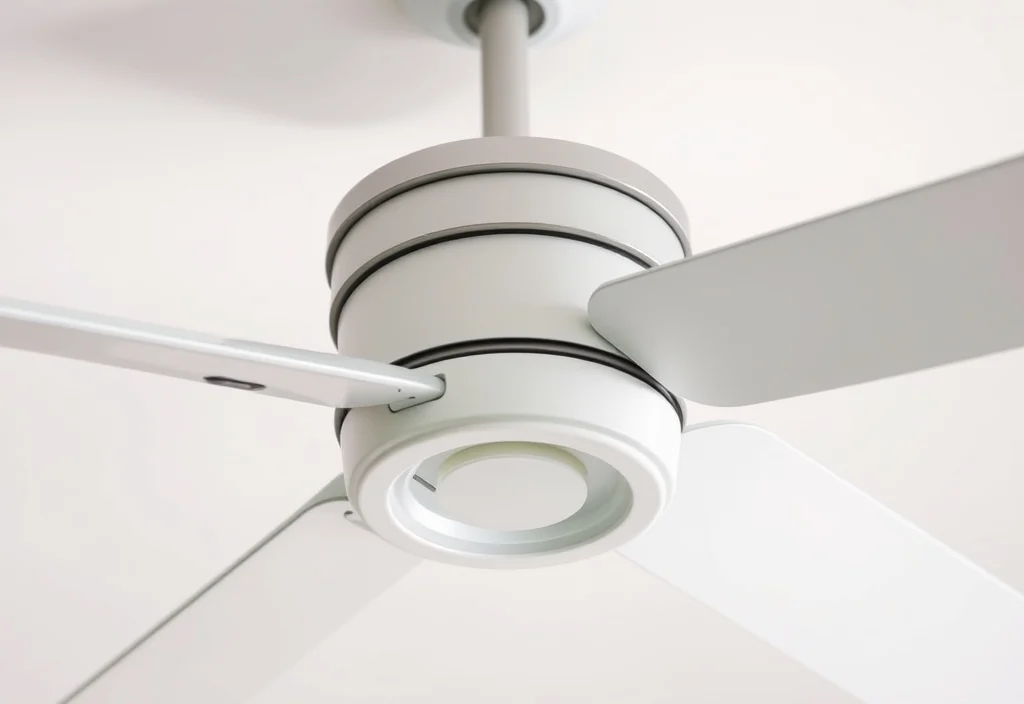
Installation is only half the spend. Fans themselves run from about $80 for a basic AC model to $600+ for a premium DC fan, and the motor type is the decision that matters most.
| AC motor | DC motor | |
|---|---|---|
| Typical price | $80 – $300 | $150 – $600+ |
| Power draw | 60 – 100 W | 25 – 40 W |
| Running cost | 0.57 – 1.9 c/hour | 0.17 – 0.9 c/hour |
| Energy use | Baseline | 50 – 70% less |
| Speeds | Usually 3 | Often 6, plus reverse |
| Noise | Slight hum at low speed | Generally quieter |
The short version: if the fan will run a lot, buy DC. The payback is quick, it is quieter, and the extra speed settings genuinely help on mild nights. For a spare room used a few weeks a year, an AC fan is perfectly sensible.
Running cost: a fan against air conditioning
This is the number that makes ceiling fans worth installing even in a home that already has air conditioning. A ceiling fan costs somewhere between 0.17 and 1.9 cents an hour to run. Over an entire summer that is roughly $1.22 for a low-speed DC fan and $13.68 for a high-speed AC fan.
Compare that with a split system air conditioner, which costs 25 to 95 cents an hour depending on size. Run over a month, a fan comes in under $5 while air conditioning runs past $125 — roughly 10 to 20 times cheaper.
The practical strategy most Australian households land on is to use both. A fan does not cool the air — it moves it, which makes you feel several degrees cooler through evaporation. That means you can set the air conditioner a couple of degrees higher and let the fan do the rest, or skip the aircon entirely on mild days. Given a fan costs $150 to $400 to install and pennies to run, it usually pays for itself within a summer or two of reduced air conditioning.
Fans cool people, not rooms
Retailer installation: Bunnings, Beacon and the rest
Most big retailers offer an installation service, arranged through licensed electricians they subcontract. It is convenient and the pricing is competitive for a straightforward job, with the usual caveat: the advertised price covers a standard installation. Anything beyond that — new wiring, a fan-rated mount that has to be added, high ceilings, switchboard work — is quoted on the day.
Worth checking before you commit: whether the quoted price includes removing and disposing of your old fan, whether the electrician will supply the Certificate of Compliance, and what happens if they arrive and find the mounting point is not fan-rated. For a simple like-for-like swap, retailer installation is usually fine. For anything involving new cabling, an independent local electrician is often cheaper and will give you a firmer price up front.
How to keep the cost down
- Do all your fans in one visit. The call-out is a fixed cost — three fans in one appointment is far cheaper than three separate jobs.
- Use existing wiring where you can. Putting the fan where the light already is costs a fraction of running new cable to a fresh location.
- Buy the fan yourself during a sale, but confirm with your electrician that it suits the mount and ceiling height before it is installed.
- Combine it with other electrical work. If you need power points, downlights or a safety switch, having it all done in one visit spreads the call-out.
- Book outside the summer rush. Electricians are flat out in the first heatwave; autumn and winter bookings are easier and often keener priced.
- Buy DC if the fan will run a lot — the higher purchase price pays back in 12 to 18 months.
- Get the licence number and the compliance certificate. Not a saving as such, but it is what stands between you and a declined insurance claim.
Sorting out cooling more broadly? Compare the numbers in our split system air conditioner installation cost guide — fans and air conditioning work best together rather than as either/or. Other household project costs are collected in our cost of living and services price guide, including roof replacement and bathroom renovation.
Frequently asked questions
Prices are indicative 2026 figures from published Australian electrician pricing and vary by state, ceiling access and existing wiring. All electrical work in Australia must be carried out by a licensed electrician under AS/NZS 3000, and penalties for unlicensed work differ by state. Always confirm your electrician’s licence and obtain the Certificate of Testing and Compliance. General information only, not electrical or financial advice.
You May Also Like
Buying a Used Car in Australia 2026: The Complete Checklist
Car Registration Cost in Australia 2026: Rego and Stamp Duty by State