Car Detailing Jobs in Australia: Pay, Skills and How to Get Hired (2026)

Car detailing is a step up from a basic car wash job – more skill, more responsibility, and generally better pay. It’s also one of the more overlooked entry points into the automotive trade: dealerships, rental companies, smash repair shops and dedicated detailing businesses all hire detailers regularly, and a lot of listings don’t ask for a formal qualification to start. This guide covers what the work involves, what it actually pays, and how people get hired.
If a straightforward car wash or petrol station role is more your speed for now, our petrol station and car wash jobs guide covers those roles and award pay rates. And if you ever consider going out on your own with a mobile detailing side hustle, our ABN and tax obligations guide is worth reading first.
TL;DR
- It pays more than a basic car wash job – SEEK’s August 2026 data puts the average Car Detailer salary in Australia at $60,000-$70,000 a year, and most listings are full-time or casual roles at dealerships, rental companies and smash repair shops.
- Same award coverage as car wash jobs – detailers at fixed or mobile car wash and detailing businesses are covered by the Vehicle Repair, Services and Retail Award; detailers working for a car rental company fall under the General Retail Industry Award instead.
- Most entry-level roles don’t require a qualification – many listings specify “will train” or “junior” positions, though a driver’s licence is commonly required since you’ll be moving vehicles around a yard or lot.
What car detailing work actually involves
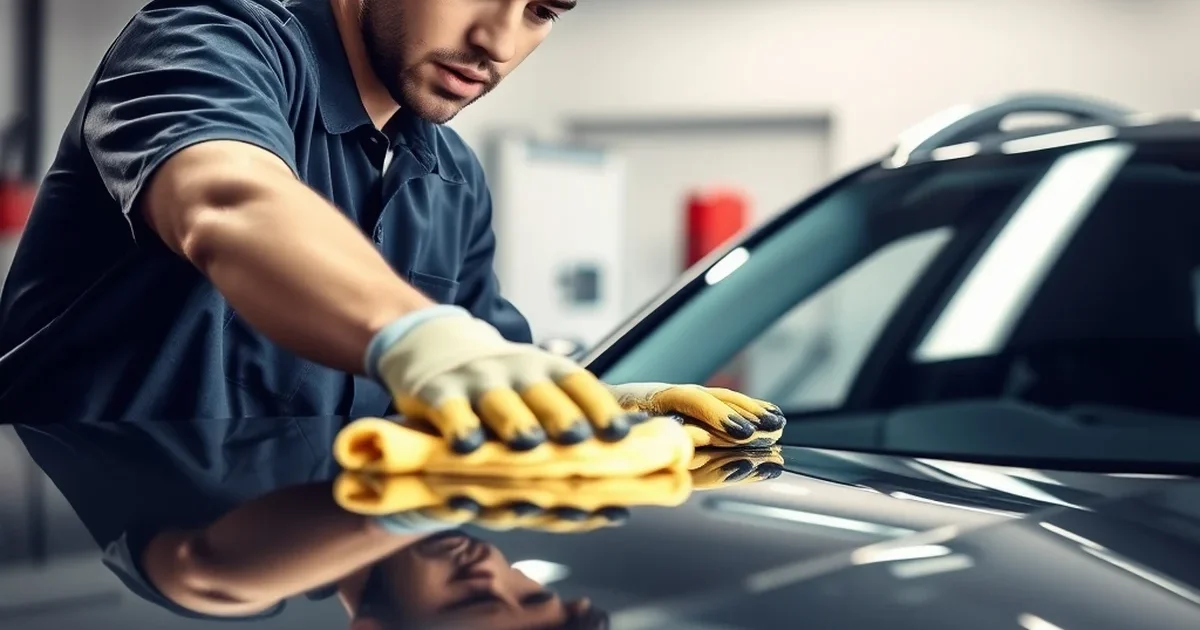
Detailing goes beyond a hose-and-sponge car wash. Typical tasks include:
- Full interior cleaning – vacuuming, shampooing seats and carpets, wiping down dashboards and surfaces, cleaning windows inside and out
- Exterior washing, clay bar treatment, polishing and waxing or applying sealant/ceramic coating
- Engine bay cleaning on some jobs
- Paint touch-ups or minor paint correction at more advanced roles
- Moving and parking vehicles around a dealership yard or rental lot, which is why a current driver’s licence is commonly listed as a requirement
- Preparing new or used vehicles for sale (common at car dealerships) or preparing rental cars for the next customer (common at rental companies)
Where you work changes the day-to-day mix. At a dealership, you’re mostly prepping vehicles for sale or delivery – polish, vacuum, tyre shine, making a car look showroom-ready. At a rental company, it’s faster-turnaround cleaning between one renter and the next. At a dedicated detailing business or a mobile operator, you’re more likely doing the higher-skill work – paint correction, ceramic coating, interior deep cleans – and pay tends to reflect that.
What it actually pays
According to SEEK’s career advice data (refreshed August 2026), the average annual salary for Car Detailer roles in Australia sits between $60,000 and $70,000, with a similar figure for the related “Detailer” role. This is a market-rate figure drawn from job listings and reported salaries, not a legally guaranteed minimum – what you’re actually paid depends on the specific employer, your experience, and which award applies.
On award coverage specifically, Fair Work Ombudsman has confirmed:
- Fixed or mobile car wash and detailing businesses – covered by the Vehicle Repair, Services and Retail Award (the “Vehicle Award”)
- Car rental businesses – covered by the General Retail Industry Award instead
Dealership-based detailers are also generally covered by the Vehicle Award, since dealerships fall within its scope. Whichever award applies, your actual classification level (and therefore your exact minimum rate) depends on your specific duties and experience – use Fair Work’s Pay and Conditions Tool to check the figure for your situation rather than assuming a flat number applies to every detailing role.
Ask which award applies before you accept a role
Do you need a qualification?
Most entry-level detailing jobs don’t require a formal qualification – plenty of listings are explicitly junior or “will train” roles, since the core skills (attention to detail, following a consistent process, working efficiently under time pressure) are taught on the job. A current driver’s licence is commonly required, since you’ll be moving customer or dealership vehicles. Some employers prefer previous car wash or cleaning experience but don’t make it a hard requirement.
If you want to move toward the higher-paying end of detailing – paint correction, ceramic coating, ceramic and paint protection film work – short courses and manufacturer-specific product training (run by companies that make coating and polishing products) are the more common route than a formal government-accredited qualification, since detailing itself isn’t a licensed trade in Australia the way panel beating or spray painting is.
Where these jobs are actually advertised
Car dealerships (new and used), rental car companies (Avis, Budget, Hertz, Bargain Car Rentals and similar), smash repair shops, and dedicated mobile or fixed-site detailing businesses are the main employers, and most of them list openings directly on Seek and Indeed under titles like “Car Detailer,” “Vehicle Detailer,” “Detailer,” or occasionally “Yard Hand/Car Detailer” at dealerships (where detailing is combined with general yard duties). Searching multiple title variations turns up more listings than any single search term, since employers use slightly different job titles for what’s essentially the same role.
Starting your own mobile detailing side hustle
Some people use detailing experience as a stepping stone into running their own mobile detailing business – bringing your own equipment to a customer’s home or workplace rather than working from a fixed site. If you’re considering this, you’d typically operate as a sole trader with an ABN rather than as an employee, which changes your tax obligations significantly – you’re responsible for your own tax and don’t get the award protections covered above, since you’re not an employee of anyone. Read our ABN work and tax guide before going this route, and factor in equipment costs (pressure washer, vacuum, polishing gear, quality products) against realistic customer volume before assuming it’s more profitable than employed detailing work.
Frequently Asked Questions
You May Also Like

National Police Check in Australia (2026): How to Apply, Cost and Which Type You Need

Working with Children Check in Australia (2026): State-by-State Guide