Christmas in Australia (2026): Traditions, Food, Weather and What to Expect

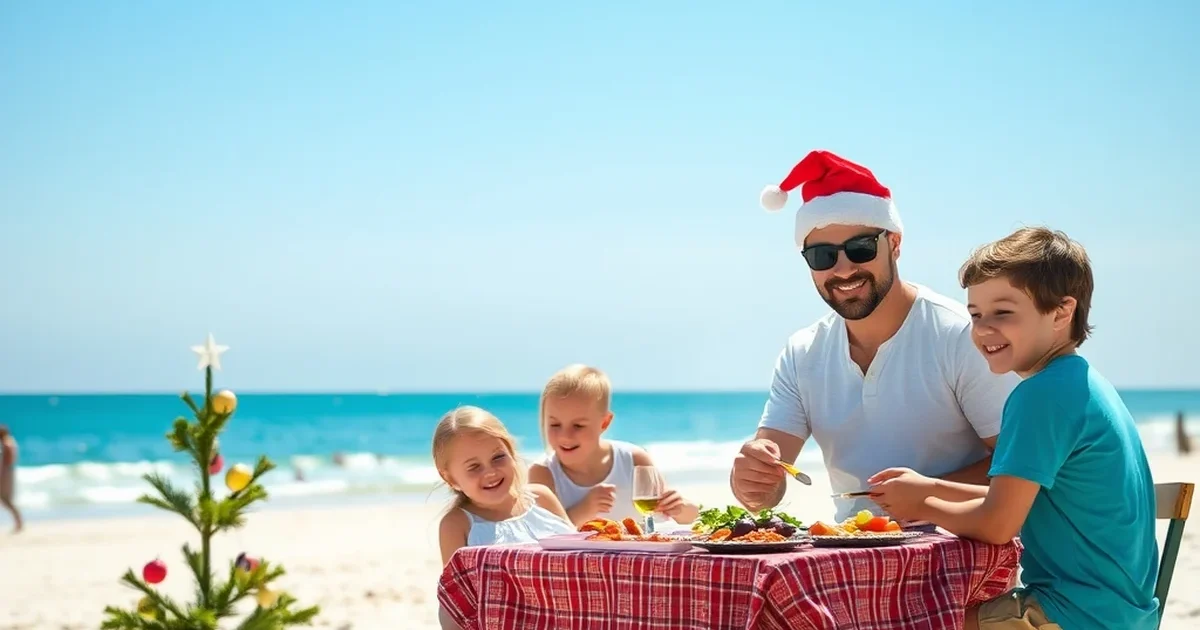
If everything you know about Christmas comes from movies, Australia is going to throw you off within the first five minutes. There is no snow, no bare trees, no reason to own a coat. Christmas Day here lands in the middle of summer – the school year is finishing, the beaches are packed, and the air conditioning gets more use than the oven. It is still unmistakably Christmas, just rearranged around sunshine instead of frost. Here is what actually happens.
It's summer, not winter – and that changes everything
Because Australia is in the Southern Hemisphere, the seasons run opposite to the Northern Hemisphere. December is early summer, not early winter, so the entire visual language of a “traditional” Christmas – fireplaces, snow, thick jumpers – simply does not apply here. School holidays start in mid-to-late December and run through most of January, so Christmas Day sits at the very start of what Australians call “the silly season”: six or so weeks where the whole country is on some version of summer holiday mode.
How hot it actually gets depends a lot on where you are – Australia is a big country, and “Australian summer” looks quite different in Perth than it does in Hobart.
Perth, Brisbane and Adelaide run genuinely hot – sunscreen and shade are not optional. Sydney and Canberra sit in comfortable warm territory. Melbourne is famous for doing its own thing (a 40-degree day and an 18-degree day, four days apart, are both completely normal in December). Hobart is the outlier – Tasmania’s December is closer to a mild spring than a “hot” summer, which is part of why the cooler-climate “Christmas in July” tradition (more on that below) has such a natural home there.
How Australians actually spend the day
The heat pushes Christmas Day outdoors. A huge number of Australian families spend at least part of the morning or afternoon at the beach – Bondi in Sydney is the most famous example, drawing thousands of locals, backpackers and international visitors for a swim and a Christmas Day picnic on the sand, but the same scene plays out at beaches and rivers around the country. Backyard cricket is close to a national cliché for a reason: it is genuinely one of the most common ways families fill the hours between opening presents and sitting down to eat.
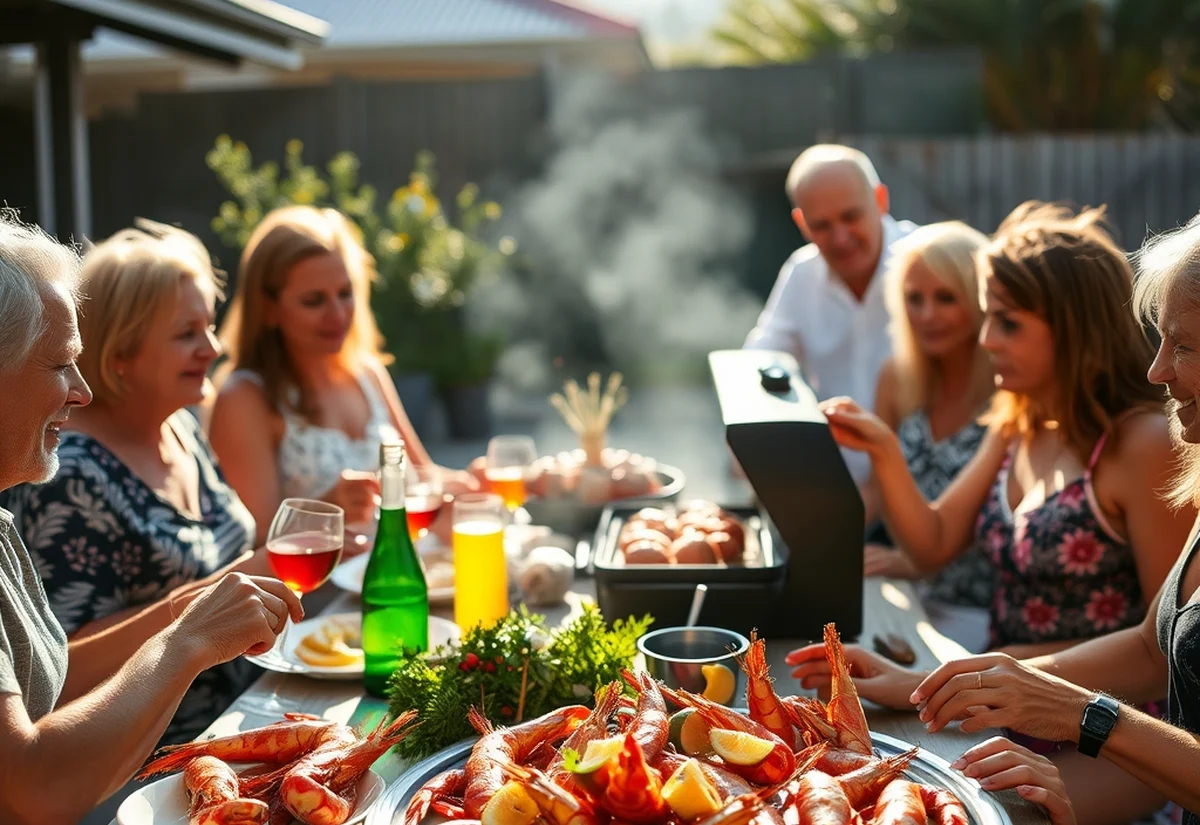
The other defining feature of an Australian Christmas is the barbecue. Where a Northern Hemisphere Christmas centres on an indoor roast dinner, plenty of Australian households move some or all of the cooking outside – snags and skewers on the barbecue, seafood on ice, and long, unhurried lunches that often drift into the evening. It is common for the “formal” hot meal (ham, turkey or roast) to still make an appearance, just alongside a much more casual, outdoor, help-yourself spread than the Christmas dinners most international students picture.
It's not universal – and that's normal
The food: familiar dishes, rearranged for the heat
Australian Christmas food is best described as European Christmas classics adapted for a 25-30 degree day rather than a completely different menu. You will still see glazed ham, roast turkey and Christmas pudding with brandy custard on plenty of tables – but seafood is the real signature of the day. Cooked prawns, Moreton Bay bugs, oysters and other fresh seafood, usually served cold with nothing more than lemon and a dipping sauce, are a Christmas Day staple precisely because they need no oven time on a hot day and pair naturally with an outdoor lunch.
Pavlova – a meringue base piled with whipped cream and fresh summer fruit like strawberries, passionfruit and kiwifruit – is the other dish you will see everywhere. Fair warning if the topic comes up at a Christmas table: whether pavlova was invented in Australia or New Zealand is a genuinely unresolved, good-naturedly contested piece of trans-Tasman trivia, and either answer will get you a reaction. Christmas crackers (paper “bon bons” that snap open to reveal a small toy, a joke and a paper crown) are also standard at most tables, regardless of what else is being served.
Carols by Candlelight
One tradition survives the switch to summer almost untouched: singing carols outdoors on Christmas Eve. The story behind it is very Melbourne. On Christmas Eve 1937, radio broadcaster Norman Banks passed a window and noticed an elderly woman singing along to “Away in a Manger” on the radio by candlelight, alone. Wondering how many others were spending Christmas by themselves, he set out to organise a mass outdoor singalong instead. The first Carols by Candlelight was held the following year, in 1938, at Alexandra Gardens in Melbourne, drawing a crowd of around 10,000 people. It moved to its now-permanent home, the Sidney Myer Music Bowl, in 1959, and Vision Australia (then the Royal Victorian Institute for the Blind) has been its principal beneficiary since 1949.
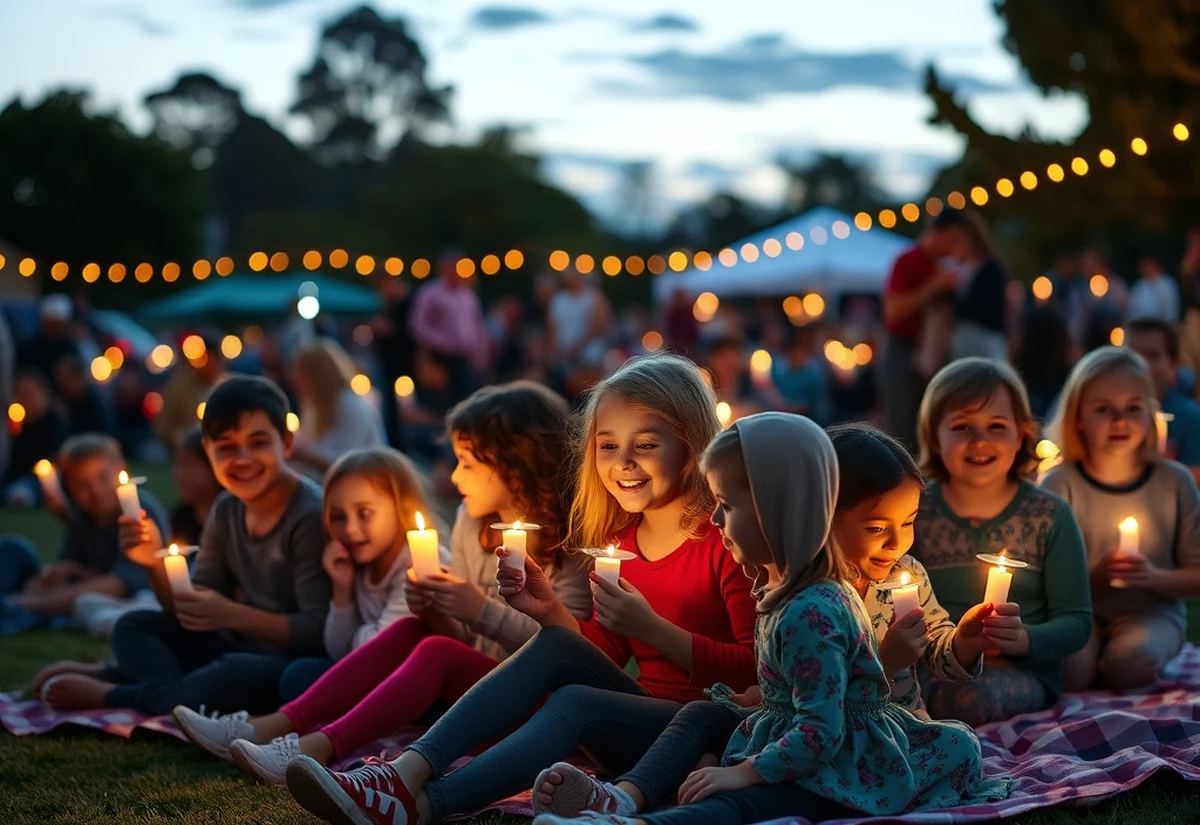
Today, versions of Carols by Candlelight run in cities and towns across every state in the lead-up to Christmas, not just Melbourne – typically an outdoor evening event where people bring a picnic blanket, light a candle, and sing along to a mix of traditional carols and contemporary songs, often with local performers or television broadcast. It is one of the lowest-cost, most genuinely community-feeling ways to experience an Australian Christmas if you are new here, and most capital cities run their own version, usually free to attend.
Public holidays and what's actually open
Christmas Day falls on Friday 25 December in 2026, and it is a public holiday in every state and territory. Because Boxing Day (26 December) falls on a Saturday in 2026, most states add an extra public holiday on Monday 28 December so the day off is not lost to the weekend – Tasmania handles this slightly differently, observing its Boxing Day public holiday directly on the Monday instead of the Saturday. South Australia calls its 26 December holiday “Proclamation Day” rather than Boxing Day, though the effect is the same.
| Date (2026) | Day | Holiday |
|---|---|---|
| 25 December | Friday | Christmas Day (all states) |
| 26 December | Saturday | Boxing Day / Proclamation Day (all states except Tasmania) |
| 28 December | Monday | Additional public holiday for Boxing Day (NSW, VIC, QLD, WA, SA, ACT, NT) – or Boxing Day itself, observed, in Tasmania |
Christmas Eve is a part-day holiday in some states
In practice, almost everything closes on Christmas Day itself – major supermarkets (Coles, Woolworths), hardware chains like Bunnings, and most retail and hospitality outlets shut nationwide, with only a small number of exceptions in Victoria and Tasmania. Boxing Day is the opposite: it is one of the biggest retail trading and sales days of the year almost everywhere, with the notable exception of Adelaide’s metropolitan area, where Coles and some other major retailers stay closed on Boxing Day itself under South Australia’s separate trading rules. If discounted shopping and the Boxing Day Test cricket are what you are actually after, our Boxing Day in Australia guide covers the sales, the cricket and the Sydney to Hobart yacht race in full.
Christmas vs Christmas in July
You will also hear Australians talk about “Christmas in July” – a second, unofficial mini-celebration held partway through the year, when it actually is winter. The exact origin is genuinely debated rather than settled fact: one of the earliest documented references is a colonial-era journal entry from 1827 suggesting the “eating and drinking” side of Christmas be moved to a cooler month, and a popular modern theory traces the trend to holidaymakers in the Blue Mountains west of Sydney, where July temperatures are cold enough to feel like a proper Northern Hemisphere Christmas. Whatever its true origin, “Christmas in July” (sometimes called Yulefest) is now a genuine, low-key tradition – pubs, cafes and social groups host a second Christmas dinner, complete with roast and pudding, purely because it finally feels like the right weather for it. It does not replace the real Christmas Day; it is an extra excuse for one, mostly enjoyed in the cooler states and regions like Tasmania and the Victorian and NSW highlands.
"Traditional" Christmas vs Aussie Christmas
| Feature | Northern Hemisphere Christmas Cold, often snow | Australian Christmas Hot, peak summer |
|---|---|---|
| Typical weather | — | — |
| Where people celebrate | — | — |
| What's on the table | — | — |
Uniquely Australian Christmas touches
What makes an Aussie Christmas different
Carols by Candlelight
An outdoor, candlelit singalong on Christmas Eve, running in cities and towns nationwide since 1938.Christmas Day at the beach
Bondi and beaches around the country fill with locals and travellers for a swim and a picnic before or after lunch.Seafood over snow
Cold prawns, oysters and other fresh seafood are as central to the day as ham or turkey – no oven required.Backyard cricket
An almost automatic way to fill the gap between presents and lunch, played on lawns and driveways nationwide.Boxing Day sales and the Boxing Day Test
26 December shifts straight into major retail sales and the start of the annual cricket Test at the MCG.Christmas in July
A second, unofficial winter celebration for anyone missing a cold-weather Christmas, most popular in the cooler states.
If this is your first Australian Christmas
For international students and recent migrants, the run-up to Christmas is worth planning around rather than being surprised by. Universities and most workplaces wind down for a genuine multi-week break – campuses can feel noticeably quiet from mid-December through late January, and it is common for entire industries to slow down or partially shut over this period, so anything time-sensitive (enrolment tasks, appointments, deliveries) is worth sorting out earlier in December rather than the week of Christmas itself. If gift-giving is part of your plans, our guide to where to shop for festivals in Australia and our Christmas gift ideas guide are both good starting points.
A summer Christmas away from home: the honest trade-off
What tends to be great
- A genuinely relaxed, low-pressure holiday atmosphere – outdoors, casual, no snow to deal with
- Long daylight hours and warm weather most of the country
- A public holiday stretch that's easy to combine with annual leave for a longer break
- Community events like Carols by Candlelight are free and welcoming to newcomers
What can catch people out
- Missing family and familiar cold-weather traditions can hit harder than expected in the heat
- Shops, transport and services run reduced hours across the whole late-December to mid-January period, not just on the day
- Flights and accommodation get expensive and book out early if you're travelling
- Sun exposure is a real risk if you're not used to Australian summer strength
None of this needs to be intimidating – it is simply a different rhythm to plan around rather than assume. Plenty of international students and new arrivals end up finding their first Australian Christmas one of the more memorable versions of the holiday they have had, precisely because so much of it happens outdoors, in public, alongside people who are often happy to include newcomers in their own family traditions. It is also just one stop on Australia’s calendar of distinctly local celebrations – our Australia Day guide covers the country’s other major public holiday, for whenever you want to keep exploring.
Want the Boxing Day details too?
Boxing Day is its own event in Australia – major sales, the Boxing Day Test at the MCG, and the start of the Sydney to Hobart yacht race. Our dedicated guide covers all three.
Frequently asked questions
You May Also Like
Mother’s Day Gifts Australia 2027: Gift Ideas for Mum by Budget and Interest

Christmas Gift Ideas for Wife Australia 2026: What to Buy by Interest and Budget