
Australia Day: Date, History, Meaning and the Ongoing Debate


Australia Day falls on 26 January every year, marking the anniversary of the 1788 landing of the First Fleet at Sydney Cove. It is a public holiday nationwide, and unlike some other Australian holidays it always shifts to the following Monday when the date lands on a weekend – in 2026, 26 January is already a Monday, so there is no shift to think about. Australia Day is also one of the most debated dates on the calendar: many Aboriginal and Torres Strait Islander people and their supporters mark the same date as Invasion Day, Survival Day or the Day of Mourning, and a genuine national conversation about whether the date should change has been running for decades.
If you have recently moved to Australia, this is one of the more complicated dates to get a feel for – it is a public holiday with barbecues, fireworks and citizenship ceremonies on one hand, and a day of genuine grief and protest for many First Nations Australians on the other. This guide covers exactly when it falls, the real history behind the date (including the parts many shorter guides leave out), why it is controversial, how people actually spend the day, and how to navigate it respectfully as a newcomer without either ignoring the debate or assuming you have to take a side.
Quick answer
When is Australia Day?
Australia Day is always 26 January. In 2026 it falls on a Monday, so there is nothing extra to work out this year. But the rule for what happens when 26 January lands on a weekend is worth knowing, because it is genuinely different from how some other Australian public holidays behave.
| Year | 26 January falls on | Public holiday observed |
|---|---|---|
| 2025 | Sunday | Monday 27 January 2025 (substitute day, every state and territory) |
| 2026 | Monday | Monday 26 January 2026 (no substitute needed) |
| 2027 | Tuesday | Tuesday 26 January 2027 |
| 2028 | Wednesday | Wednesday 26 January 2028 |
| 2029 | Friday | Friday 26 January 2029 |
| 2030 | Saturday | Monday 28 January 2030 (substitute day expected, every state and territory) |
Unlike ANZAC Day, where only New South Wales, the ACT and Western Australia currently add a substitute public holiday when the date falls on a weekend, Australia Day gets a uniform treatment: every state and territory shifts the public holiday to the following Monday whenever 26 January falls on a Saturday or Sunday, according to the Fair Work Ombudsman. That was the case across the board in 2025, when 26 January fell on a Sunday and Monday 27 January was declared a substitute public holiday everywhere.
Check before you rely on this
What actually happened on 26 January 1788?
On 26 January 1788, Captain Arthur Phillip and the crews of the First Fleet – eleven ships that had sailed from Portsmouth, England, carrying convicts, marines and officials – raised the Union Jack at Sydney Cove (known to the local Gadigal people as Warrane) and formally proclaimed British sovereignty over the eastern part of the Australian continent, according to the Art Gallery of South Australia’s account of the date. The fleet had actually arrived a few days earlier at Botany Bay, found the site unsuitable for a settlement, and moved north to Sydney Cove, where the flag-raising and the formal founding of the colony of New South Wales took place on 26 January.
For the British colonists, this was the founding moment of European settlement in Australia. For the Aboriginal peoples who had lived on and cared for the continent for at least 65,000 years before 1788, it marked the beginning of dispossession, disease, violence and the loss of land, language and law that followed colonisation – a history that is central to why the same date is remembered so differently by different Australians today, and is covered in detail later in this guide.
The date was not celebrated the same way everywhere, straight away
26 January was originally marked (by colonists) as “First Landing Day” or “Foundation Day”, and for much of the 19th and early 20th centuries different Australian colonies, and later states, observed it inconsistently or not at all – some states held their major public holiday on a different day entirely. It took well over a century for the date and its name to become standard nationwide, which is covered in the next section.
From "Foundation Day" to a national public holiday: 1935 and 1994
Two dates matter for understanding how Australia Day became what it is today, and they are further apart than most people assume.
1935: the name "Australia Day" is adopted nationwide
According to the History Trust of South Australia, 1935 was the first year every Australian state agreed to mark 26 January under the same name, “Australia Day” – the result of a sustained campaign by the Australian Natives’ Association (a organisation of Australian-born colonists) to unify the various state observances into a single national day.
1994: it becomes a uniform public holiday on the fixed date
Agreeing on a name in 1935 did not mean every state gave workers the day off on 26 January itself – for decades afterwards, several states continued the practice of observing the public holiday on the nearest Monday, to create a long weekend, rather than on the actual date. It was not until 1994 that all Australian states and territories agreed to make 26 January itself the public holiday nationwide, according to the National Library of Australia and multiple contemporary news accounts. This is the arrangement still in place today, which is why the substitute-Monday rule covered earlier in this guide only kicks in when 26 January itself happens to fall on a weekend.
The 1938 Day of Mourning: why 26 January has been contested since before it was even a national holiday
It is a common misconception that the debate over 26 January is a recent development. In fact, organised Aboriginal opposition to the date predates Australia Day becoming a uniform national public holiday by more than half a century.
On 26 January 1938 – the sesquicentenary (150th anniversary) of the First Fleet’s landing, and a date marked with large official re-enactments and celebrations across the country – a group of Aboriginal leaders gathered at the Australian Hall on Elizabeth Street in Sydney for what they called a Day of Mourning. According to the National Museum of Australia, the gathering was organised by Jack Patten, William Ferguson and William Cooper, each of whom had already spent years building Aboriginal political and civil rights organisations in New South Wales and Victoria. It was open only to Aboriginal people, with a small number of police and journalists permitted inside.
The gathering issued a formal protest against 150 years of dispossession and mistreatment, and called on the Australian government to grant Aboriginal people full citizen status and equal rights. Prime Minister Joseph Lyons met with the organisers afterwards, but the meeting produced no practical policy change at the time. The National Museum of Australia describes the 1938 Day of Mourning as the first national gathering of Indigenous political organisations from different states working together, and as the clearest starting point of the modern Aboriginal political movement – it is formally recognised by the Australian Government as one of the nation’s “defining moments”.
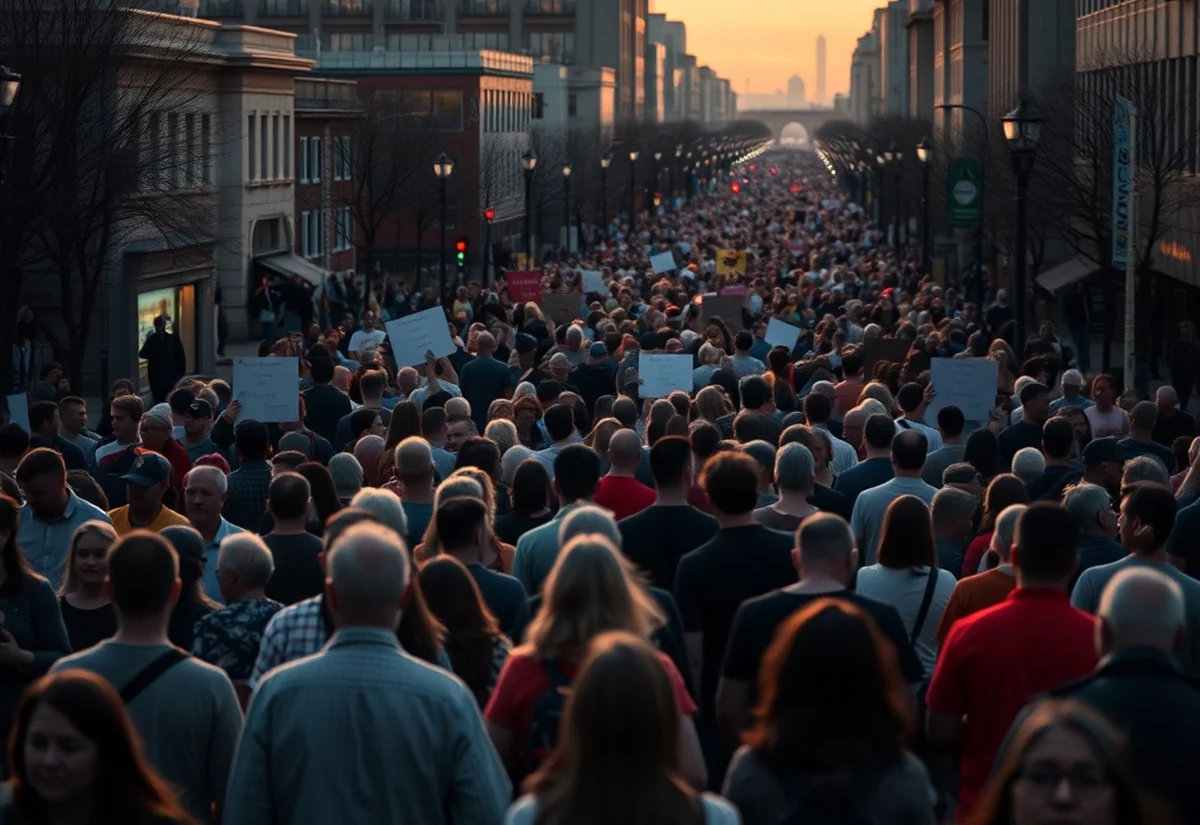
Marking a Day of Mourning on or around 26 January became an annual event afterwards. Over the following decades the observance shifted to July, and eventually grew into what is now NAIDOC Week – meaning today’s NAIDOC Week celebrations of Aboriginal and Torres Strait Islander culture trace a direct historical line back to this 1938 protest.
Australia Day, Invasion Day or Survival Day: what the different names mean
The same date, 26 January, is genuinely known by several different names in Australia today, and none of them is “wrong” – they reflect real, different, and equally sincere relationships with what the date represents.
What each name emphasises
| Feature | |||
|---|---|---|---|
| Emphasis | National identity and achievement | Colonisation and its harms | Aboriginal resilience and culture |
| Used by | The Australian Government; most public holiday and media references | Many Aboriginal and Torres Strait Islander people and allies, especially at protest marches | Many Aboriginal and Torres Strait Islander people and community organisations, especially at cultural events |
| Typical marking | Citizenship ceremonies, honours, barbecues, fireworks | Marches and rallies in capital cities | Festivals celebrating Aboriginal and Torres Strait Islander culture, such as Sydney’s Yabun Festival |
“Invasion Day” foregrounds 26 January 1788 as the start of an invasion and colonisation of land that was never ceded by its First Nations custodians. “Survival Day” foregrounds the fact that, despite colonisation, massacres, disease and forced removal policies, Aboriginal and Torres Strait Islander peoples and cultures have survived and endured – and it is often used specifically at community festivals and cultural celebrations rather than protest marches. Many people and organisations use “Invasion Day”, “Survival Day” and “Day of Mourning” interchangeably or alongside each other; others use only one.
Sydney’s Yabun Festival is the largest annual example: run by the Gadigal Information Service since the early 2000s as a continuation of Survival Day events held through the 1990s, it describes itself as Australia’s largest single-day gathering celebrating Aboriginal and Torres Strait Islander cultures, held every 26 January in Victoria Park, Sydney, and its own organisers trace its roots directly back to the 1938 Day of Mourning.
The "change the date" movement, and how it has actually played out
“Change the date” is shorthand for the position that Australia’s national day should not be held on 26 January, since that date specifically marks the start of colonisation and causes genuine, ongoing pain for many Aboriginal and Torres Strait Islander people, while a different date could celebrate the nation without that association. It is one of the most visible and long-running public debates in Australia, and it is not purely symbolic – it has led to real, concrete changes by some organisations, even though the national public holiday date itself has not changed.
The clearest mainstream example is triple j’s Hottest 100, one of the country’s biggest annual music events. From 2018 onward, the national youth broadcaster moved the countdown off 26 January entirely, shifting it to the fourth Saturday of January instead, explicitly citing the significance of the date for Indigenous Australians. A number of local councils around the country have also stopped holding their official citizenship ceremonies and civic celebrations on 26 January, instead holding them on a different date while still recognising the national public holiday, or have changed the name or framing of their local events. These decisions have themselves been debated and, in a few cases, reversed by later councils.
The Australian Government’s official position, reflected in the date remaining a fixed 26 January public holiday, is that Australia Day should stay on this date. Advocates for changing the date argue the country’s national day could be moved to one that unites rather than divides. Both positions are held sincerely and in large numbers, and the debate resurfaces prominently in Australian media and public life every January.
How Australia Day is officially marked

Citizenship ceremonies
Australia Day is the single biggest day of the year for citizenship ceremonies. In 2026, more than 19,000 people became Australian citizens at over 325 ceremonies held across the country on 26 January, according to the Department of Home Affairs and ABC News reporting. For many recent migrants, becoming a citizen on Australia Day itself is a deliberate and meaningful choice, though citizenship ceremonies are held on other dates throughout the year too and choosing 26 January is entirely optional.
Australia Day Honours and the Australian of the Year Awards
The Australia Day Honours List, announced on 26 January each year, is one of two major rounds of the Order of Australia honours system (the other being the King’s Birthday Honours in June), recognising Australians for achievement and service. Separately, the Australian of the Year Awards – including Australian of the Year, Senior Australian of the Year, Young Australian of the Year and Australia’s Local Hero – are announced at a ceremony on the evening of 25 January, the eve of Australia Day, run by the National Australia Day Council. Katherine Bennell-Pegg, the first person to qualify as an astronaut under Australia’s own space program, was named the 2026 Australian of the Year at a ceremony at the National Arboretum in Canberra.
How most Australians actually spend the day
For most Australians, 26 January falls in the middle of summer, and the day is spent much like any other summer public holiday: backyard barbecues, a day at the beach, backyard cricket, and local community events. Many capital cities hold official Australia Day celebrations, including harbour events (Sydney’s Australia Day activities on the harbour are among the largest), fireworks, live music and free family activities, alongside the citizenship ceremonies and awards covered above. Because the day is also part of the ongoing public debate covered earlier in this guide, some Australians choose to spend it differently, for example by attending an Invasion Day or Survival Day event instead of, or as well as, a celebratory one.

Not to be confused with: Clean Up Australia Day
A different event, a different date
Navigating Australia Day respectfully as a newcomer or international student
If you have recently arrived in Australia, it is completely normal to feel unsure how to approach 26 January, given everything covered in this guide. A few practical points can help.
- It is fine to enjoy the public holiday itself, a barbecue, the beach, or a local community event – most Australians do exactly that, and there is no requirement to take a public position on the date debate to take part.
- It is equally normal, and increasingly common, to be aware of and respectful toward the Invasion Day and Survival Day perspective, even if you are simply enjoying the day off. You will likely see or hear about protest marches and cultural events in most capital cities; both are a normal part of how modern Australia marks the date.
- You are not expected to “pick a side” as a newcomer. This is an ongoing conversation within Australian society itself, and thoughtful Australians hold genuinely different views.
- If you are eligible for and interested in Australian citizenship, attending a citizenship ceremony (on 26 January or another date) is a meaningful and common way to mark the milestone, covered in more detail above.
- Workplaces, universities and RTOs vary in how, or whether, they mark the day beyond the public holiday itself – if you are unsure whether an event or acknowledgement is planned, it is fine to simply ask.
Related public holidays and observances
For the full list of 2026 public holidays across every state and territory, see our Australian public holidays guide. If you are also looking into ANZAC Day, another major national day of observance later in the year, see our ANZAC Day Australia guide. And for the country’s other big calendar fixture, our Christmas in Australia guide covers what to expect from a summer Christmas.
Frequently Asked Questions
You May Also Like

Christmas in Australia (2026): Traditions, Food, Weather and What to Expect

Mother’s Day Gifts Australia 2027: Gift Ideas for Mum by Budget and Interest









4 Comments
[…] For the full background on Australia Day’s history and the ongoing debate around the date, see our Australia Day guide. […]
[…] Melbourne marks Australia Day with official flag-raising ceremonies, fireworks and family-friendly cultural events across the city, alongside citizenship ceremonies welcoming new Australians. Note that not every Victorian council holds an official Australia Day citizenship ceremony on 26 January itself – some inner-Melbourne councils have moved away from doing so, reflecting the broader national conversation about the date. For the full background on Australia Day’s history and that debate, see our Australia Day guide. […]
[…] Canberra’s main Australia Day events are centred on the shores of Lake Burley Griffin, with citizenship ceremonies, live music and family activities. For the full national history and debate around the date, see our Australia Day guide. […]
[…] Adelaide’s main Australia Day gathering is at Elder Park (Tarntanya Wama) on the River Torrens, where the First Nations-led “Mourning in the Morning” ceremony begins at 7.30am with a Kaurna welcome to country, a smoking ceremony, and speakers, musicians and dancers. The City of Adelaide also holds citizenship ceremonies at Adelaide Town Hall on the day, officiated by the Lord Mayor as Presiding Officer. For the full national history and debate around the date, see our Australia Day guide. […]