Easy Butter Chicken Recipe (Restaurant-Style at Home)


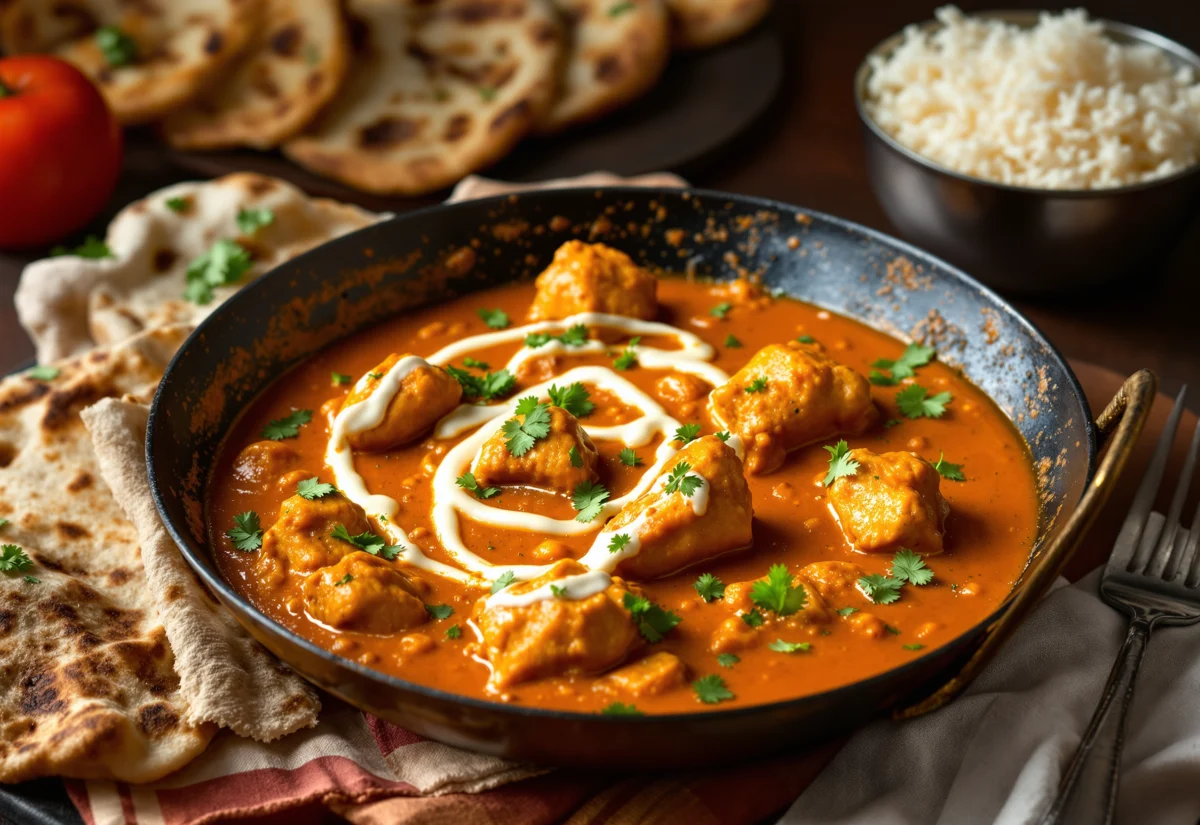
Butter chicken – murgh makhani – is the dish most Australians mean when they say “let’s get Indian tonight”: tender chicken in a creamy, mildly spiced tomato-and-butter gravy, mopped up with naan or spooned over rice. It’s usually the first Indian dish people order because it’s rarely too spicy, always feels indulgent, and works for kids and chilli-lovers at the same table.
This version skips nothing that matters – the chicken is properly marinated and charred, not just simmered in a jar of sauce – but it’s built around ingredients you can actually find at Coles or Woolworths, with notes on the couple of things worth a trip to an Indian grocer for. If you like homemade curry night, this pairs well with our Japanese curry recipe and our one-pot chicken and rice for a rotating weeknight lineup, and our guide to Asian, Indian and African grocery stores in Australia if you want to track down proper garam masala and kasuri methi.
TL;DR
- About 20 minutes of active prep, but the chicken needs a minimum of 3 hours in the marinade – ideally overnight – so this isn’t a same-hour dinner unless you marinate in the morning.
- Around 40 minutes of active cooking once the chicken has marinated: charring the chicken, then building and simmering the gravy.
- Makes 4 generous servings with rice or naan, and it freezes well, so it’s worth doubling for a meal-prep batch.
- No kasuri methi (dried fenugreek leaves) in the cupboard? The gravy will still taste good without it, but that one ingredient is the closest thing to a “secret” behind the restaurant flavour – see the tip below on where to find it.
Why restaurant butter chicken tastes different from a one-pot version
Butter chicken traces back to Moti Mahal, a restaurant that opened in Delhi in 1947 after its founders, Kundan Lal Gujral and Kundan Lal Jaggi, relocated from Peshawar around Partition. Exactly when and where the dish itself was invented is genuinely disputed between the two founding families – the Gujrals say it was created back in Peshawar in the 1920s, while the Jaggis say it was invented in Delhi to handle a late-night rush, and the disagreement has ended up in Indian courts as recently as 2024. What both sides agree on is the mechanism: leftover tandoori chicken was drying out before it could be served, so the kitchen started finishing it in a gravy of butter, tomato and cream to keep it moist – and the combination became more popular than the plain tandoori chicken it was invented to rescue.
That origin story is also the biggest clue to getting it right at home. Restaurant butter chicken is built in two separate stages – the chicken is marinated and charred on its own first, then simmered in a gravy that’s made separately and combined at the end – rather than everything going into one pot from raw. Skipping the separate charring step (searing the marinated chicken hard and fast before it ever meets the gravy) is the single biggest reason homemade butter chicken tastes like “chicken in tomato sauce” instead of the real thing; that char adds a smokiness no amount of extra spice in the gravy can replace.
Ingredients (serves 4)
For the chicken marinade
- 700g boneless, skinless chicken thighs, cut into bite-sized pieces
- 3/4 cup (200g) plain full-fat yoghurt
- 2 tbsp lemon juice
- 1 tbsp ginger-garlic paste (or 2 tsp grated ginger plus 2 tsp crushed garlic)
- 1 1/2 tsp ground cumin
- 1 1/2 tsp Kashmiri chilli powder or smoked paprika (for colour and mild heat)
- 1 tsp ground turmeric
- 1 tsp garam masala
- 1/2 tsp salt
For the gravy
- 40g butter
- 1 tbsp neutral oil (helps stop the butter burning)
- 1 small brown onion, finely diced
- 4 cloves garlic, crushed
- 1 tbsp fresh ginger, grated
- 700g tomato passata
- 1-2 tsp Kashmiri chilli powder, to taste
- 1 tsp garam masala
- 1/2 cup (125ml) pouring or thickened cream, plus extra to serve
- 1 tbsp honey or brown sugar (balances the tomato’s acidity)
- 1 tbsp kasuri methi (dried fenugreek leaves), crushed between your fingers
- Salt, to taste
- Fresh coriander, to serve
The one ingredient worth seeking out
Method

- Combine the yoghurt, lemon juice, ginger-garlic paste, cumin, chilli powder, turmeric, garam masala and salt in a bowl. Add the chicken and turn to coat well. Cover and refrigerate for a minimum of 3 hours, or ideally overnight (up to 24 hours).
- Heat a splash of oil in a large frypan or griddle pan over high heat. Working in batches so you don’t crowd the pan, sear the marinated chicken for 2-3 minutes per side until charred in spots but not fully cooked through – it will finish cooking in the gravy. Set aside. (No griddle pan? A hot BBQ grill plate, or 12 minutes under a hot grill/broiler, both work.)
- In the same pan, melt the butter with the oil over medium heat. Add the onion and cook for 4-5 minutes until soft. Add the garlic and ginger and cook for a further minute until fragrant.
- Stir in the tomato passata, chilli powder, garam masala and a generous pinch of salt. Simmer for 12-15 minutes, stirring occasionally, until the sauce has thickened and no longer smells of raw tomato.
- For a silky, restaurant-style texture, blend the sauce smooth with a stick blender (optional – it also tastes fine left rustic).
- Stir in the cream and honey, then return the charred chicken and any resting juices to the pan. Simmer for 8-10 minutes, until the chicken is cooked through and the sauce coats the back of a spoon.
- Take the pan off the heat and crush the kasuri methi between your fingers as you sprinkle it in – this wakes up its aroma and is the step most home versions skip. Taste and adjust salt.
- Serve hot with a swirl of extra cream, scattered coriander, naan and steamed basmati rice.
Swaps and adjustments
Storage and reheating
Cool leftovers to room temperature within 2 hours of cooking and refrigerate in an airtight container, following Food Standards Australia New Zealand‘s guidance on cooling and storing cooked food, and eat within 3-4 days – the flavour is, if anything, better the next day once the spices have settled. It freezes well for up to 3 months; freeze in a flat, sealed container or bag so it thaws faster, then thaw overnight in the fridge. Reheat gently in a covered pan on the stovetop with a small splash of water or extra cream to loosen the sauce, or in the microwave in 30-second bursts, stirring in between, until piping hot all the way through.
Nutrition (approximate)
Per serving (of 4), this works out to roughly 520 kcal, 34g protein, 36g fat, and 12g carbohydrate, most of the fat coming from the butter, cream and chicken thigh. These are estimates based on standard ingredient values, not a lab-tested analysis, and don’t include rice or naan – using a lower-fat cream, trimming the chicken thighs, or cutting the butter back slightly are the simplest ways to bring it down further.
Frequently asked questions
You May Also Like
Slow Cooker Honey Soy Chicken (Easy, Budget Recipe)
Baked Feta Pasta Recipe (The Viral Lazy Dinner)