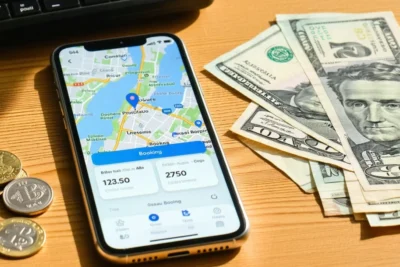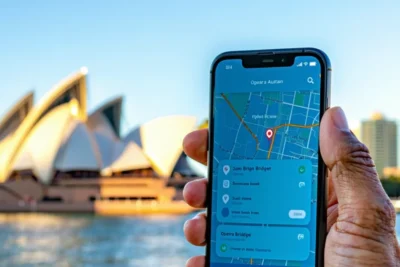
First Week Australia Checklist: Bank, TFN, SIM & Housing Guide

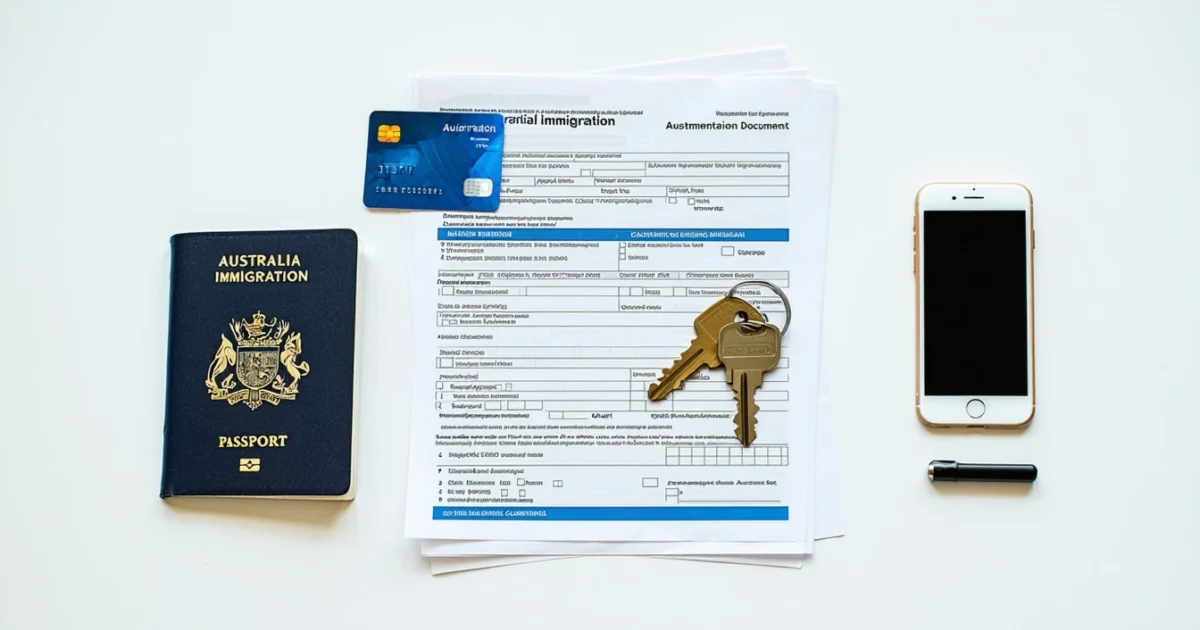
Checklists for Your First Week in Australia require completing four essential tasks: opening a bank account, applying for your Tax File Number (TFN), getting an Australian SIM card, and securing accommodation. These critical steps form the foundation of your new life in Australia and must be prioritized to avoid delays in employment, banking, and daily activities.
Furthermore, arriving in Australia without proper preparation can lead to unnecessary stress and complications. Most new arrivals struggle with the 100-point identification system for banking, TFN application delays, and finding suitable temporary accommodation while searching for permanent housing.
Additionally, understanding the priority order of these tasks saves valuable time and money. While some processes like bank account opening and TFN applications can run simultaneously, others like securing accommodation should happen immediately upon arrival to provide stability for completing remaining administrative tasks.
TL;DR
- Day 1-2 priorities: Get Australian SIM card and secure temporary accommodation immediately
- Day 3-5 tasks: Open bank account with Big Four banks using 100-point ID system and apply for TFN online through ATO
- Week 1 completion: Begin permanent accommodation search, activate Medicare (if eligible), and set up essential services
- Parallel processing: Complete TFN and bank applications simultaneously to maximize efficiency
- Essential documents: Prepare passport, visa, certified translations, and digital copies before arrival
Essential Documents to Prepare Before Starting
Proper document preparation forms the cornerstone of a successful first week in Australia. However, many newcomers arrive unprepared, causing significant delays in opening bank accounts, applying for their Tax File Number (TFN), and securing essential services. Moreover, understanding Australia’s 100-point identification system requires specific document combinations that must be ready before attempting any administrative tasks.
Passport and Visa Documentation Requirements
Your passport serves as the primary identification document for all Australian administrative processes. Additionally, your visa grant notice provides crucial information about work rights, Medicare eligibility, and residency status that banks and government agencies require. Furthermore, keeping both documents easily accessible prevents delays during account opening and TFN applications.
Student visa holders must carry their Confirmation of Enrolment (CoE) alongside passport documentation. Similarly, working holiday visa holders need their visa grant letter showing work authorization details. Consequently, these documents prove your legal right to work and access certain services during your first week.
Certified Copies and Translations Needed
Certified copies of all identification documents prevent damage to originals during multiple administrative visits. Therefore, obtain certified copies from authorized personnel like Justice of the Peace, pharmacists, or police officers before arriving. Additionally, banks specifically require certified copies for account opening under the 100-point identification system.
Non-English documents require NAATI-certified translations for official recognition in Australia. Meanwhile, birth certificates, marriage certificates, and academic transcripts must include both original language versions and certified English translations. Subsequently, this dual documentation satisfies government agency requirements and banking compliance standards.
| Document Type | Certification Required | Translation Needed | Points Value |
|---|---|---|---|
| Passport | Certified copy recommended | No (if English) | 70 points |
| Birth Certificate | Must be certified | Yes (if non-English) | 70 points |
| Driver’s License | Certified copy required | Yes (if non-English) | 40 points |
| Academic Transcripts | Institution certified | NAATI required | 35 points |
Digital Copies and Cloud Storage Setup
Creating digital copies of all essential documents provides backup access during emergencies or document loss. Moreover, storing high-resolution scans in secure cloud storage enables quick retrieval when completing online applications for TFN, Medicare, or banking services. Furthermore, mobile access to documents speeds up verification processes during your first week.
Organize digital files using clear naming conventions like “Passport_Certified_Copy_2024” for easy identification. Additionally, separate folders for visa documents, academic credentials, and financial records streamline application processes. Consequently, this systematic approach reduces stress when multiple agencies request the same documentation simultaneously.
Emergency Contact Information Compilation
Compiling emergency contact information ensures continuity during your transition period when local networks haven’t been established yet. Therefore, maintain updated contact details for family members, previous employers, and educational institutions that may require verification calls. Additionally, banks often contact previous financial institutions for reference checks during account opening procedures.
Include contact information for your home country’s embassy or consulate in Australia for urgent assistance. Similarly, research local emergency services numbers and climate-specific preparation resources relevant to your destination city. Subsequently, this preparation provides peace of mind and practical support during challenging first-week adjustments.
85% of banking delays occur due to insufficient documentation preparation, making proper document organization critical for first-week success.
Opening Your First Australian Bank Account
Opening an Australian bank account represents a crucial milestone during your first week, as financial institutions require substantial documentation verification before account activation. Therefore, understanding the banking landscape helps streamline this essential process while avoiding common pitfalls that delay account establishment.
Big Four Banks vs Smaller Institutions
Australia’s Big Four banks – Commonwealth Bank, ANZ, Westpac, and NAB – dominate the financial sector with extensive branch networks nationwide. However, smaller institutions like ING Direct, Bendigo Bank, and credit unions often provide better fee structures for new arrivals. Consequently, comparing account features across different bank types ensures optimal financial arrangements.
Major banks offer comprehensive services including international transfers, extensive ATM networks, and dedicated migrant banking specialists. Conversely, online-only banks typically waive monthly account fees and provide higher interest rates on savings accounts. Additionally, credit unions focus on community banking with personalized customer service approaches.
Required Documentation: 100-Point Check System
Australian banks operate under the 100-point identification system, requiring specific documentation combinations to verify customer identity. Therefore, your passport provides 70 points as primary identification, while additional documents must accumulate the remaining 30 points for account approval.
| Document Type | Points Value | Examples |
|---|---|---|
| Primary Photo ID | 70 points | Passport, Driver’s License |
| Secondary ID | 40 points | Birth Certificate, Citizenship Certificate |
| Financial Documents | 25 points | Credit Card, Bank Statement |
| Utility/Address Proof | 25 points | Phone Bill, Lease Agreement |
Furthermore, temporary residents must provide visa documentation alongside identification documents for verification purposes. Similarly, banks require proof of Australian address, which creates challenges for new arrivals staying in temporary accommodation initially.
Account Types for New Arrivals
Everyday transaction accounts suit immediate banking needs with debit card access and unlimited electronic transactions. Meanwhile, high-interest savings accounts maximize earning potential on emergency funds and settlement money. Additionally, some banks offer specialized migrant packages combining multiple account types with reduced fees.
Student accounts provide fee-free banking for international students with valid enrollment documentation. Alternatively, online savings accounts offer competitive interest rates exceeding 4.5% per annum for new customers meeting deposit requirements. Consequently, selecting appropriate account combinations supports both daily expenses and financial growth objectives.
Online vs In-Branch Applications
Online applications expedite the account opening process, allowing document uploads and identity verification through digital platforms. However, complex visa situations or insufficient address history often require in-person consultations with banking specialists. Therefore, hybrid approaches combining online applications with branch visits optimize efficiency while ensuring compliance.
Branch applications provide immediate problem-solving when documentation issues arise during the verification process. Similarly, banking staff assist with Tax File Number applications and explain Australian banking regulations relevant to new residents. Additionally, in-person meetings establish relationships with local banking representatives for future financial needs.
Initial Deposits and Fee Structures
Most Australian banks require minimum opening deposits ranging from $1 to $500, depending on account types and promotional offers. Furthermore, monthly account keeping fees vary between $0-$15, with many institutions waiving fees for students or customers maintaining minimum balances.
78% of new arrivals choose accounts with no monthly fees during their first year in Australia
International transfer fees significantly impact new arrivals moving funds from overseas accounts, with charges ranging from $15-$30 per transaction. Conversely, domestic transfers between Australian banks typically occur without fees through the New Payments Platform. Additionally, ATM withdrawal fees apply when using competitor bank machines, making network accessibility crucial for account selection.
Debit Card and Internet Banking Activation
Debit cards arrive within 5-10 business days at your registered address, requiring activation through phone calls or online banking platforms. Meanwhile, internet banking credentials enable immediate account access for balance checking and transaction monitoring. Subsequently, mobile banking apps provide convenient financial management tools for daily banking activities.
PIN selection occurs during card activation, with most banks allowing online PIN changes for security purposes. Additionally, contactless payment limits default to $100 per transaction, though customers can request increases through banking channels. Therefore, understanding these activation processes ensures seamless transition to Australian banking systems during your crucial first week.
Applying for Your Tax File Number (TFN)
A Tax File Number (TFN) serves as your unique identifier within Australia’s taxation system, enabling legal employment and financial transactions. Moreover, the Australian Taxation Office requires all residents and temporary visa holders to obtain a TFN before commencing work or opening interest-bearing bank accounts. Therefore, applying for your TFN immediately upon arrival prevents delays in employment opportunities and banking services.
Without a valid TFN, employers must withhold tax at the highest marginal rate of 47% from your earnings. Additionally, banks cannot pay interest on savings accounts or term deposits without proper tax identification. Consequently, securing your TFN becomes essential for maximising your take-home pay and accessing full banking benefits during your first week in Australia.
Online Application Process Through ATO Website
The Australian Taxation Office provides a streamlined online application system accessible 24/7 through their official website. Furthermore, the digital application process takes approximately 10-15 minutes to complete, requiring basic personal information and visa documentation. Subsequently, applicants receive immediate confirmation of their submission via email notification.
Navigate to the ATO’s “Apply for a TFN” section and select your visa category from the dropdown menu. Next, complete all mandatory fields including full name, date of birth, and current Australian address. Finally, review your application thoroughly before submission, as incorrect information delays processing timeframes significantly.
Required Documentation for TFN Application
Valid passport documentation forms the primary identification requirement for TFN applications, with clear scanned copies necessary for online submissions. Additionally, current visa grant notification letters or visa labels demonstrate your legal status in Australia. Therefore, gathering these documents before starting your application ensures smooth processing without interruptions.
- Passport with photo page and entry stamp
- Visa documentation showing grant number and conditions
- Australian address for TFN delivery (temporary accommodation acceptable)
- Previous TFN if you’ve worked in Australia before
Temporary residents must provide evidence of their right to work in Australia through visa conditions or work permits. Conversely, permanent residents require proof of their migration status through citizenship certificates or permanent visa documentation. Subsequently, the ATO verifies all submitted documents against government databases during processing.
Processing Timeframes and Delivery Methods
Standard TFN processing takes 10-28 business days from application submission, with postal delivery to your registered address. However, peak migration periods during February-March and July-August extend processing times due to increased application volumes. Therefore, applying immediately upon arrival ensures your TFN arrives before employment commences.
89% of TFN applications process within 21 business days during standard periods
The ATO delivers TFNs exclusively through Australia Post to prevent identity theft and maintain security protocols. Additionally, applicants cannot collect TFNs from ATO offices or receive them via email for privacy protection. Consequently, providing accurate postal addresses becomes crucial for timely TFN receipt during your settlement period.
Using TFN for Employment and Banking
Employers require your TFN within 28 days of employment commencement through the Tax File Number Declaration form. Meanwhile, banks need TFN details for interest-bearing accounts, investment products, and superannuation fund establishment. Subsequently, providing your TFN ensures correct tax withholding and maximises your financial benefits.
Superannuation funds mandate TFN provision to avoid additional 15% contributions tax on employer contributions. Furthermore, investment platforms require TFN details for dividend payments and capital gains tax calculations. Therefore, your TFN becomes integral to Australia’s comprehensive taxation and retirement savings systems.
Protecting Your TFN from Identity Theft
TFN security requires treating your number like sensitive financial information, sharing it only with authorised entities including employers, banks, and government agencies. Additionally, legitimate organisations never request TFN details through unsolicited phone calls or emails. Consequently, verifying requester identity prevents fraudulent access to your tax and financial records.
Store your TFN documentation securely and avoid carrying the physical notice in wallets or purses. Moreover, memorise your number rather than writing it on easily accessible documents or digital devices. Subsequently, report suspected TFN misuse immediately to the ATO’s fraud reporting hotline to prevent financial damage and identity complications.
Getting Connected: Australian SIM Cards and Mobile Plans
Establishing mobile connectivity ranks as a critical first-week priority for new Australian arrivals. Subsequently, understanding network coverage, plan options, and activation procedures ensures seamless communication with employers, banks, and essential services during your settlement period.
Major Network Providers Coverage Comparison
Telstra dominates Australia’s mobile landscape with 99.5% population coverage and superior regional connectivity. Furthermore, their network reaches remote areas where competitors struggle, making Telstra ideal for travellers exploring Australia’s vast interior regions.
Optus provides excellent metropolitan coverage reaching 98.5% of the population while offering competitive pricing structures. Additionally, their network performs strongly in major cities including Sydney, Melbourne, Brisbane, and Perth, though rural coverage remains limited compared to Telstra.
Vodafone covers approximately 96% of Australia’s population with robust urban performance and improving regional reach. Moreover, their network excels in data speeds within metropolitan areas, though coverage gaps exist in remote locations and some rural communities.
Prepaid vs Postpaid Options for New Arrivals
Prepaid plans suit new arrivals perfectly since they require no credit history checks or lengthy contract commitments. Additionally, prepaid options provide immediate activation, flexible recharge amounts, and complete cost control without bill shock risks.
Postpaid plans offer better value for heavy users but require Australian credit history and bank account establishment. However, these plans include device payment options, higher data allowances, and premium network priority during peak usage periods.
| Plan Type | Credit Check | Contract | Best For |
|---|---|---|---|
| Prepaid | None required | No commitment | New arrivals, budget control |
| Postpaid | Required | 12-24 months | Established residents, heavy users |
SIM Card Purchase Locations and Activation Process
Major retailers including Woolworths, Coles, and 7-Eleven stock prepaid SIM cards from all network providers. Meanwhile, dedicated mobile stores offer personalised service, plan comparisons, and immediate activation assistance for complex requirements.
Airport kiosks provide convenient SIM card purchases upon arrival, though prices typically exceed retail store rates. Furthermore, online ordering enables home delivery or store pickup, particularly beneficial when comparing multiple provider options and promotional deals.
- Purchase SIM card with valid identification (passport required)
- Insert SIM into unlocked mobile device
- Call activation number or visit provider website
- Complete identity verification process
- Select plan and payment method
- Receive confirmation SMS with new number details
International Roaming vs Local Australian Number
International roaming costs escalate rapidly with $3-15 per day charges plus premium call and data rates. Consequently, maintaining home country numbers becomes expensive for extended Australian stays exceeding two weeks.
Local Australian numbers provide significant cost savings and enable seamless communication with banks, employers, and government agencies. Additionally, Australian numbers facilitate easier integration with local services, delivery notifications, and emergency contact requirements.
International roaming can cost $100-400 per month compared to $20-60 for local Australian prepaid plans
Budget-Friendly MVNO Alternatives
Mobile Virtual Network Operators (MVNOs) utilise major carrier infrastructure while offering 30-50% cheaper rates than parent networks. Subsequently, providers like Boost Mobile, Amaysim, and Belong deliver excellent value without compromising coverage quality.
Boost Mobile operates on Telstra’s network providing premium coverage at reduced costs, making it ideal for budget-conscious users requiring extensive reach. Meanwhile, Amaysim uses Optus infrastructure offering competitive metropolitan plans with generous data inclusions.
Additionally, Belong leverages Telstra’s network with simplified plan structures and no excess usage charges. Furthermore, these MVNO providers often include international calling credits and flexible contract terms appealing to temporary residents and students.
Data Allowances and Call Inclusions to Consider
Modern Australian mobile plans typically include unlimited standard calls and SMS within Australia, eliminating traditional per-minute charging concerns. However, data allowances vary significantly from 1GB to unlimited depending on plan pricing and provider positioning.
Light users consuming primarily messaging and email require 2-5GB monthly data allowances for comfortable usage. Conversely, heavy streaming and social media users need 20GB or unlimited plans to avoid speed throttling or excess charges during peak consumption periods.
International calling inclusions become valuable for maintaining home country connections, with many plans offering specific country credits or discounted international rates. Therefore, comparing international calling rates helps determine optimal plan selection based on your communication patterns and family contact requirements.
Securing Temporary and Permanent Accommodation
Finding suitable accommodation represents one of your most critical first-week priorities in Australia. Consequently, understanding both temporary and permanent housing options helps secure comfortable living arrangements while you establish your new life.
Short-Term Accommodation Solutions
Hostels provide budget-friendly temporary accommodation ranging from $25-50 per night in major cities. Additionally, many hostels offer weekly rates and kitchen facilities, making them ideal for new arrivals requiring flexible booking terms.
Airbnb properties deliver home-like comfort with weekly discounts often reducing nightly rates by 15-30%. Furthermore, serviced apartments combine hotel amenities with apartment functionality, typically costing $100-200 per night but including utilities and internet connectivity.
Extended stay hotels and corporate housing offer month-to-month flexibility without long-term lease commitments. Therefore, these options work well for professionals and students requiring temporary accommodation while searching for permanent rentals.
Understanding Australia's Rental Market
Australian rental markets require bond payments equivalent to four weeks’ rent plus two weeks’ rent in advance before lease commencement. Moreover, rental inspections occur weekly with scheduled viewing times requiring advance booking through real estate agents.
Rental applications demand comprehensive documentation including employment verification, bank statements, and personal references. Subsequently, competitive markets like Sydney and Melbourne often receive multiple applications for desirable properties within hours of listing.
- Bond payment: 4 weeks’ rent held by state rental authority
- Rent in advance: 2 weeks’ payment before moving in
- Application fees: $20-50 processing charges per application
- Reference checks: Previous landlords and employment verification
Essential Property Search Platforms
Domain.com.au and Realestate.com.au dominate Australia’s rental market with comprehensive property listings and advanced search filters. Additionally, these platforms provide suburb profiles, price history data, and direct agent contact information.
Flatmates.com.au specializes in share accommodation connecting tenants with existing households seeking additional roommates. Meanwhile, Facebook Marketplace and local community groups offer alternative rental opportunities often bypassing traditional real estate agents.
Mobile apps including Domain and Realestate.com.au enable property alerts and instant notifications when suitable rentals become available. Consequently, quick response times increase application success rates in competitive rental markets.
Lease Agreements and Tenant Rights
Australian residential tenancy agreements establish legal obligations between landlords and tenants with state-specific regulations governing rental relationships. Furthermore, tenant rights include peaceful enjoyment, property maintenance standards, and bond protection through government authorities.
Standard lease terms span 6-12 months with break clauses requiring specific notice periods and potential penalty payments. Additionally, rent increases follow regulated procedures with advance notice requirements varying between states from 60-90 days.
Each state maintains residential tenancy tribunals providing dispute resolution services for rental disagreements. Therefore, understanding your jurisdiction’s specific tenant protection laws helps navigate rental relationships effectively.
Utilities and Internet Connection Setup
Electricity and gas connections require account establishment with retailers like Origin Energy, AGL, or EnergyAustralia before lease commencement. Moreover, utility connection fees range from $30-100 depending on property requirements and service provider policies.
Internet installation through NBN providers like Telstra, Optus, or TPG typically requires 5-10 business days for activation. Additionally, many rental properties include existing internet infrastructure reducing connection timeframes and setup complexity.
Water services usually transfer automatically with property management handling account transitions between tenants. However, confirming utility connection responsibilities prevents service interruptions during your first week of occupancy.
Neighbourhood Research and Transport Planning
Researching neighbourhood demographics, safety statistics, and amenity accessibility helps identify suitable residential areas matching your lifestyle preferences. Consequently, proximity to employment, education, and healthcare facilities influences long-term satisfaction with accommodation choices.
Public transport connectivity varies significantly between Australian cities with Melbourne and Sydney offering comprehensive rail networks while other capitals rely heavily on bus services. Additionally, transport costs represent significant monthly expenses requiring budget consideration during accommodation selection.
School catchment areas affect rental demand and pricing in family-oriented suburbs, with highly-rated schools creating premium rental markets. Furthermore, weekend lifestyle factors including shopping centres, restaurants, and recreational facilities contribute to neighbourhood appeal and rental stability.
Priority Order: What to Do First, Second, and Third
Establishing clear priorities prevents overwhelming yourself during your first week in Australia. Moreover, completing tasks in the correct sequence eliminates delays and reduces administrative complications that commonly affect new arrivals.
Day 1-2 Priorities: SIM Card and Temporary Accommodation
Your SIM card activation becomes the foundation for all subsequent tasks requiring phone verification and communication. Therefore, visit Telstra, Optus, or Vodafone stores immediately upon arrival to establish mobile connectivity before attempting other applications.
Securing temporary accommodation through Airbnb, hostels, or short-term rentals provides stability while you complete essential registrations. Additionally, having a confirmed address enables bank account applications and government service registrations that require residential verification.
Day 3-5 Tasks: Bank Account and TFN Application
Opening your Australian bank account requires valid identification, proof of address, and active phone number from your previous steps. Furthermore, major banks like Commonwealth Bank, ANZ, and Westpac offer streamlined processes for new migrants with appropriate documentation.
Your Tax File Number (TFN) application through the Australian Taxation Office website takes 10-15 business days for processing. Consequently, submitting this application early prevents employment delays and ensures proper tax withholding when you start working.
TFN applications submitted within the first week typically process faster than those submitted during peak migration periods
Week 1 Completion: Permanent Accommodation Search
Beginning your permanent accommodation search during week one allows sufficient time for property inspections and application processing. Additionally, established banking relationships and local references strengthen rental applications in competitive markets.
Rental applications typically require employment verification, bank statements, and character references which become available after completing your initial setup tasks. Therefore, timing your accommodation search after establishing these foundations increases approval likelihood significantly.
Parallel Tasks You Can Complete Simultaneously
- Medicare enrollment while waiting for TFN processing
- Public transport card registration during bank account opening
- Driver’s license conversion research alongside accommodation hunting
- Internet provider comparisons while viewing rental properties
- Local area exploration between administrative appointments
Combining location-based tasks maximizes efficiency and reduces travel time between appointments. Similarly, online applications can progress simultaneously with in-person requirements, accelerating your overall settlement timeline.
Common Mistakes That Delay the Process
Many newcomers attempt bank account opening without proper documentation, resulting in application rejections and extended processing times. Therefore, confirming specific bank requirements before visiting branches prevents unnecessary delays and repeat appointments.
Starting accommodation searches without established banking relationships or employment verification weakens rental applications significantly. Additionally, rushing TFN applications with incorrect information causes processing delays that affect employment start dates.
Overlooking utility connection timeframes creates service gaps in new accommodation, while inadequate neighbourhood research leads to unsuitable housing choices requiring costly relocations within months of arrival.
Additional First Week Essentials
Beyond the core administrative tasks, several additional essentials require attention during your first week in Australia. These supplementary requirements ensure comprehensive settlement while establishing important safety nets and daily conveniences.
Medicare Enrollment for Eligible Visa Holders
Medicare enrollment provides access to Australia’s public healthcare system for eligible temporary and permanent residents. Consequently, visa holders from reciprocal healthcare agreement countries can access subsidised medical services immediately upon enrollment.
Visit your nearest Services Australia office with your passport, visa documentation, and proof of Australian address. Furthermore, the enrollment process typically completes within 30 minutes, providing immediate access to bulk-billed medical consultations and prescription subsidies.
Public Transport Cards and Navigation Apps
Each Australian city operates distinct public transport systems requiring specific travel cards. For instance, Sydney uses Opal cards, while Melbourne operates Myki cards, and Brisbane utilises go cards for comprehensive network access.
- Sydney: Opal card from stations, retailers, or online
- Melbourne: Myki card from stations, 7-Eleven stores, or online
- Brisbane: go card from stations, newsagents, or online
- Perth: SmartRider from stations or authorised retailers
- Adelaide: Metrocard from stations or selected outlets
Download essential navigation apps including Google Maps, Citymapper (available in major cities), and your city’s official transport app. Additionally, these applications provide real-time scheduling, service disruptions, and optimal route planning for efficient daily travel.
Emergency Services Numbers and Local Contacts
Australia’s universal emergency number 000 connects callers to police, fire, and ambulance services nationwide. Meanwhile, the non-emergency police assistance line 131 444 handles routine inquiries and minor incidents requiring police attention.
| Service | Number | Purpose |
|---|---|---|
| Emergency Services | 000 | Police, Fire, Ambulance |
| Police Assistance | 131 444 | Non-emergency police matters |
| Lifeline Crisis Support | 13 11 14 | 24/7 crisis counselling |
| Poison Information | 13 11 26 | Poison emergencies and advice |
Store your nearest hospital’s direct number and your local council’s contact information for municipal services. Moreover, establishing relationships with nearby medical centres ensures accessible healthcare when non-emergency medical attention becomes necessary.
Currency Exchange and Payment Methods
Australia operates a predominantly cashless economy, with contactless payments accepted virtually everywhere. However, exchanging some foreign currency to Australian dollars provides immediate spending capacity while banking arrangements finalise.
Major banks typically offer competitive exchange rates compared to airport currency exchanges or independent money changers. Additionally, international transfer services like Wise or Remitly provide cost-effective currency conversion with transparent fee structures.
Most Australian retailers accept Apple Pay, Google Pay, and Samsung Pay alongside traditional card payments. Furthermore, the widespread adoption of tap-and-go technology eliminates the need for cash in most daily transactions.
Basic Grocery Shopping and Local Services Location
Australia’s major supermarket chains include Woolworths, Coles, IGA, and ALDI, each offering comprehensive grocery selections with varying price points. Subsequently, exploring multiple chains helps identify preferred products and competitive pricing for regular shopping needs.
Download supermarket apps for digital catalogues, weekly specials, and loyalty program access. For example, Woolworths Rewards and flybuys (Coles) provide points accumulation and exclusive member discounts on regular purchases.
Locate essential local services including pharmacies (chemists), post offices, dry cleaners, and hardware stores within your neighbourhood. Additionally, identifying 24-hour services ensures access to necessities outside standard business hours during your initial settlement period.
Completing these additional essentials within your first week establishes comprehensive support systems and daily conveniences that significantly ease your Australian settlement experience.
Frequently Asked Questions
What is the 100-point identification system for opening a bank account in Australia?
The 100-point identification system is Australia’s standard verification process for opening bank accounts. You need to provide documents that total 100 points or more from approved categories. For example, a passport provides 70 points, so you’d need an additional 30+ points from documents like a driver’s license (40 points) or birth certificate (70 points). All documents must be originals or certified copies.
How long does it take to get a Tax File Number (TFN) in Australia?
TFN applications typically take 10-28 business days to process when applied online through the Australian Taxation Office (ATO). You can apply immediately upon arrival if you have a valid visa. The TFN is essential for employment, so apply as early as possible during your first week. You’ll receive your TFN via post to your Australian address.
Which are the best banks in Australia for new arrivals?
The Big Four banks are recommended for new arrivals: Commonwealth Bank, ANZ, Westpac, and NAB. These banks have extensive branch networks, ATM coverage, and specific products for new migrants. Commonwealth Bank and ANZ offer dedicated new arrival packages with reduced documentation requirements for the first few months.
Can I apply for Medicare immediately upon arriving in Australia?
Medicare eligibility depends on your visa type and country of origin. Permanent residents and citizens from reciprocal healthcare countries (UK, Ireland, New Zealand, etc.) can apply immediately. Student visa holders may have limited Medicare access. Visit a Medicare office with your passport, visa grant notice, and proof of Australian address during your first week.
What documents need NAATI-certified translations in Australia?
Any non-English official documents require NAATI-certified translations for government and banking purposes. This includes birth certificates, marriage certificates, academic transcripts, and driver’s licenses. The translation must be completed by a NAATI-certified translator and include both the original document and certified English translation.
Should I get an Australian SIM card immediately upon arrival?
Yes, getting an Australian SIM card should be your first priority upon arrival. You’ll need local phone connectivity for accommodation bookings, bank appointments, job applications, and emergency contacts. Major providers like Telstra, Optus, and Vodafone offer prepaid options available at airports, and you can upgrade to postpaid plans once you have a bank account.
How do I find temporary accommodation for my first week in Australia?
Book temporary accommodation before arrival through reputable platforms like Booking.com, Airbnb, or hostels. Consider locations near city centers with good public transport links. Budget $50-150 per night depending on the city and accommodation type. Having a confirmed address is essential for bank account opening and TFN applications.
Can I complete my TFN application and bank account opening simultaneously?
Yes, you can and should process these applications in parallel during days 3-5 of your first week. Both require similar documentation (passport, visa, Australian address), and completing them simultaneously maximizes efficiency. However, secure your accommodation and SIM card first, as you’ll need an Australian address and phone number for both applications.
This guide to your first week is part of our complete Moving to Australia checklist – see the full four-phase roadmap for everything else you need to sort before and after you land.
You May Also Like

National Police Check in Australia (2026): How to Apply, Cost and Which Type You Need

PR Pathway for Trade and TAFE Graduates in Australia (2026)