How to Read Australian Food Labels (2026): Dates, Nutrition & Allergens


Australian food labels are legally standardised, which means once you can read one, you can read all of them. Four things matter most: “use by” is a safety deadline and “best before” is only about quality (food sold after a best before date is perfectly legal and usually fine); the Nutrition Information Panel always has a per 100g column, which is the only fair way to compare two products; allergens must be in bold in the ingredients list and repeated in a “Contains” statement; and the ingredients list is ordered by weight, so whatever is listed first is what you’re mostly buying. This guide walks through a real panel line by line.
Everything here follows the Australia New Zealand Food Standards Code, administered by Food Standards Australia New Zealand (FSANZ). Rules change occasionally — foodstandards.gov.au is the authoritative source.
Date marking: the one that matters most
This single distinction saves both money and stomach aches, and most new arrivals get it wrong in one direction or the other.
Do not eat it after this date. It is used when a food becomes unsafe after a certain point, not just lower quality.
It is illegal to sell food past its use by date. If you see it on a shelf, tell the store.
Typically on: fresh meat, poultry, seafood, dairy, and ready-to-eat chilled foods.
Looking and smelling fine is not a reliable test. Throw it out.
Still safe to eat after this date – it may just lose some flavour, texture or colour.
Shops can legally sell it after the date, which is why it often turns up heavily discounted.
Typically on: tinned food, biscuits, pasta, rice, frozen food, snacks.
Use your judgement, but a tin of tomatoes a month past its best before date is fine.
Two practical consequences. First, a shop can legally sell food past its “best before” date — and often discounts it heavily. That’s not dodgy; it’s how markdown bins and discount grocers work, and the food is still safe. Second, “use by” is a hard stop. It’s illegal to sell food past its use by date, and you shouldn’t eat it either, regardless of how it looks or smells. Use by appears on things like fresh meat, seafood, dairy and ready-to-eat chilled foods.
You’ll also see “Baked on” or “Baked for” on bread, which is used instead of a date mark for products with a short shelf life. And note: packaged food with a shelf life of two years or less must carry a date mark — so if there’s no date at all, the product is designed to last longer than two years.
The Nutrition Information Panel, line by line
Every packaged food must carry one, and the format is fixed by law — same rows, same order, every time. Here’s a typical panel with each part explained.
Serving size: 45g
| Per serve | Per 100g | |
|---|---|---|
| Energy | 735 kJ | 1630 kJ |
| Protein | 4.8 g | 10.7 g |
| Fat, total | 1.2 g | 2.7 g |
| – saturated | 0.3 g | 0.7 g |
| Carbohydrate | 30.4 g | 67.6 g |
| – sugars | 6.1 g | 13.6 g |
| Sodium | 125 mg | 278 mg |
- 1Servings per package & serving size. The manufacturer picks these. A small stated serve makes every number below look better, which is exactly why you should not compare products on the per-serve column.
- 2Per serve vs per 100g. Both columns are required. Always compare products using per 100g – it is the only measure that is the same across brands.
- 3Energy in kilojoules. Australia uses kJ, not calories. Divide by roughly 4.2 for calories. An average adult day is about 8,700 kJ.
- 4Saturated fat is indented under total fat because it is part of it, not additional. Saturated is the one to keep low.
- 5Sugars are indented under carbohydrate for the same reason. This figure includes natural sugars, so milk and fruit read higher without being a concern.
- 6Sodium, not salt. This is where most hidden salt sits. Under about 120mg per 100g is low; over about 600mg is high.
- 7These seven rows are mandatory and always appear in this order. Extra rows such as fibre or calcium appear only if the maker adds them or makes a claim about them.
The single most useful habit: ignore the “per serve” column when comparing products and read per 100g instead. Manufacturers choose their own serving size, so one cereal might claim a 30g serve and another 45g, making the smaller one look healthier when it isn’t. Per 100g is the same measure for everyone.
Rough guides for reading the per 100g column on packaged foods:
- Sugars: under about 5g per 100g is low; over about 15g per 100g is high. Remember this includes naturally occurring sugars, so plain milk and fruit will read higher without being a problem.
- Saturated fat: under about 1.5g per 100g is low; over about 5g is high.
- Sodium: under about 120mg per 100g is low; over about 600mg is high. Sodium is the number to watch — it’s where most people’s salt intake hides.
- Fibre: more is better; over about 6g per 100g is a good cereal or bread.
Note that energy is shown in kilojoules (kJ) in Australia, not calories. If you’re used to calories, divide kJ by about 4.2. An average adult’s daily intake is around 8,700 kJ, which is the figure the % Daily Intake labels are based on.
Allergens: what the law now requires
Australia’s allergen labelling changed under Plain English Allergen Labelling (PEAL), which applied to food produced from 25 February 2024, with older stock allowed to be sold until 25 February 2026. That transition has now passed, so packaged food on shelves should carry the plain-English format.
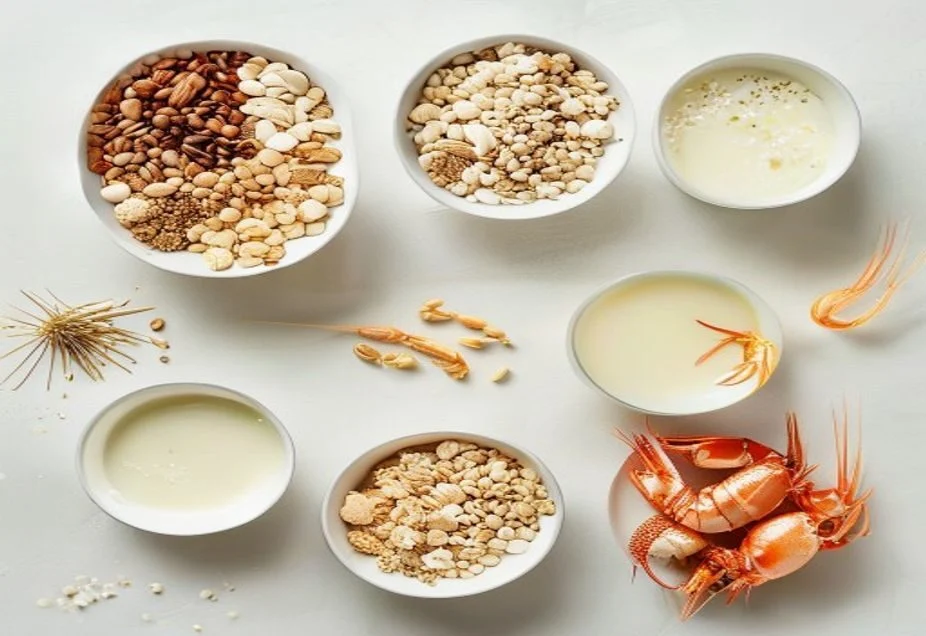
Under the rules, declarations must appear in two places:
- In the statement of ingredients, in bold font, at a size no smaller than the other ingredients — for example “maltodextrin (wheat)” or “milk powder”.
- In a separate summary statement in bold beginning with the word “Contains”, located in the same field of view and directly next to the ingredients list.
INGREDIENTS: Wheat flour, sugar, vegetable oil, milk solids, cocoa, maltodextrin (wheat), soy lecithin, salt, raising agent (500), natural flavour, hazelnut paste (2%).
What to notice: every allergen appears in bold within the ingredients at the same size as the other ingredients, and again in a bold summary statement beginning with “Contains”, placed right next to the ingredients list. The tree nut is named specifically as hazelnut rather than the vague “tree nuts”, and because the wheat contains gluten, gluten is also named in the summary.
The foods that must be declared
These are the required names under the Food Standards Code. A key change is that individual tree nuts, molluscs and individual cereals must now be named separately — a label must say “cashew”, not just “tree nuts”.
| Group | Required names |
|---|---|
| Cereals | wheat, barley*, oats*, rye* |
| Nuts | peanut, almond, Brazil nut, cashew, hazelnut, macadamia, pecan, pistachio, pine nut, walnut |
| Seafood | fish, crustacean, mollusc |
| Other | egg, milk, soy (soya, soybean), sesame, lupin, sulphites** |
On gluten: wheat must always be declared by name. If gluten is present, “gluten” must also appear in the summary statement. Barley, oats and rye are only required to be declared when they contain gluten — if they’re present in a gluten-free form, they don’t need declaring.
The important limitation: "may contain"
Statements like “may contain traces of nuts” or “may be present” are voluntary precautionary allergen labelling, and FSANZ is explicit that these are not regulated by the Food Standards Code. There’s no legal standard behind the wording and no required threshold, so the absence of a “may contain” warning is not a guarantee.
If you have a diagnosed allergy this matters a great deal: the “Contains” statement is legally controlled and reliable, while “may contain” is the manufacturer’s own risk assessment. Anyone managing a serious allergy or coeliac disease should get advice from a doctor or dietitian rather than relying on a general guide like this one.
One more thing worth knowing: for food that doesn’t carry a label — a café or takeaway meal — allergen information must still be displayed with the food or provided when you ask. You’re entitled to ask, and staff are required to be able to tell you.
The ingredients list is ranked by weight
Ingredients are listed in descending order by weight, which makes the first three ingredients the most informative thing on the whole package. If sugar appears first or second, the product is mostly sugar, regardless of what the front of the pack claims.
Two things to watch:
- Sugar has many names. Glucose, fructose, sucrose, maltose, dextrose, golden syrup, rice malt syrup, fruit juice concentrate, molasses, honey and agave are all sugars. Splitting them across several entries can push each one further down the list while the total stays high — check the sugars figure in the panel instead.
- Numbers are additives. Australia uses code numbers for food additives (for example 621 for a flavour enhancer, 100 for a colour). They’re not automatically bad — 300 is simply vitamin C — but the label must also state the additive’s purpose, such as “preservative (202)”.
You’ll also often see a percentage next to a characterising ingredient, such as “strawberries (12%)”. If the product’s name highlights an ingredient, its proportion generally has to be declared — a useful reality check on a “strawberry” yoghurt.
Health Star Ratings and country of origin
The Health Star Rating is a voluntary front-of-pack system rating packaged food from half a star to 5 stars in half-star steps. It awards points for fibre, protein and fruit, nut, vegetable and legume content, and deducts them for energy, saturated fat, sodium and sugar, all calculated per 100g or 100ml.
Use it to compare like with like — two breakfast cereals, or two yoghurts. It’s less meaningful across categories, and because it’s voluntary, manufacturers tend to display it when the score flatters the product. A missing star rating tells you something in itself.
Country of origin labelling is mandatory on most packaged food sold in Australia and is unusually informative. Look for the kangaroo-in-a-triangle symbol, which indicates the product is Australian grown, produced or made, and the bar chart with a percentage, which shows what proportion of the ingredients are Australian. “Made in Australia from at least 60% Australian ingredients” means exactly that. Watch the wording carefully: “Packed in Australia” tells you where it went into the box, not where the food came from.
Marketing words that mean less than you think
- “No added sugar” — means none was added, not that it’s low in sugar. Fruit juice concentrate is still sugar.
- “Light” or “lite” — may refer to colour, flavour or texture rather than fat or energy. Check the panel.
- “Natural” and “farm fresh” — largely marketing language with little regulated meaning.
- “Baked not fried” — says nothing about the total fat or salt content.
- “Multigrain” — means several grains, not wholegrain. Look for “wholegrain” or “wholemeal” as the first ingredient.
- “X% fat free” — “97% fat free” is the same as saying it contains 3% fat, framed more attractively.
Some claims are regulated: nutrition content claims like “good source of fibre” and health claims linking a nutrient to a health effect must meet criteria in the Food Standards Code. The vague lifestyle words are the ones to discount.
A 20-second label check
- Check the date — is it “use by” (hard stop) or “best before” (quality only)?
- Read the first three ingredients — that’s most of what’s in the package.
- Look at the “Contains” statement if allergens matter to you.
- Compare the per 100g column, never per serve, against the sugar, saturated fat and sodium guides above.
- Check the unit price on the shelf label while you’re there — price per 100g tells you which pack is genuinely cheaper.
More on shopping well in our guides to budget shopping in Australia, weekly meal plans from $50 and ethnic grocery precincts. If you’re managing a specific dietary requirement, our halal food guides may also help.
The bottom line
Australian labels are standardised, so learning them once pays off on every shop. “Use by” is a legal safety deadline; “best before” is about quality and food sold after it is both legal and usually fine — often discounted. Compare products using the per 100g column, not per serve. Allergens must be bold in the ingredients and repeated in a bold “Contains” statement, but “may contain” warnings are voluntary and unregulated. Read the first three ingredients, remember sugar has a dozen names, and treat “natural”, “light” and “97% fat free” as marketing rather than information.
You May Also Like

Moving to Australia: The Complete Checklist and Guide (2026)

NT Public Holidays 2026: Full Calendar, Dates and How Darwin and Alice Springs Celebrate