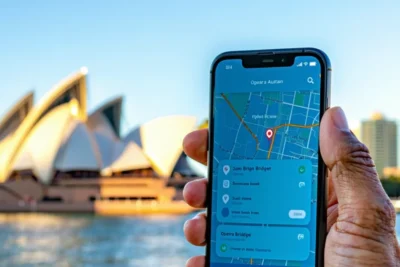
Networking in Australia for International Students: Events and Groups


In Australia, most good jobs are never advertised — they are filled through people. For an international student that sounds like bad news, because you arrive with no local network at all. But it is actually the opposite: networking is the one part of the job hunt where you can build an advantage from scratch, and Australia makes it unusually easy, with university career fairs, free professional-association memberships, government-run international-student events and a busy calendar of public meetups. This guide maps every type of networking event open to you, how to get into them, and — most importantly — how to use them so they actually lead to jobs.
I am an international student finishing my Master’s at the University of Melbourne, and the events on this list are the ones that genuinely moved my career forward — not the ones that just handed out free pens. Let’s start with why this matters so much, then get practical.
The fast version
Why Networking Is an International Student's Secret Weapon
A large share of roles in Australia are filled through referrals and connections before they are ever posted — the so-called hidden job market. When you hear about a job through someone who can vouch for you, you skip the anonymous pile of hundreds of applicants and land on the “worth a look” desk. That is what networking buys you: not a favour, but a warm introduction and a name the employer already recognises.
For newcomers this levels the playing field in a way nothing else does. You cannot change that you studied overseas or that your first referees are back home — but you can walk into a career fair, join a professional association, and turn strangers into contacts over a single semester. Australian professional culture genuinely supports this: the “coffee chat,” the informational conversation and the polite introduction are all normal and welcomed, not pushy. The students who understand that get a months-long head start.
- It opens the hidden job market — the roles filled through people, not ads.
- It builds a local network from zero — exactly what you lack when you arrive.
- It teaches you the market — what employers want, which skills matter, how hiring really works here.
- It builds confidence — every conversation makes the next interview easier.
Networking works hand in hand with your online presence, so set up your LinkedIn profile before you start — every person you meet will look you up, and every event is a reason to send a connection request afterward. Now, the events themselves, starting with the most accessible: your own university.
University Events: Your Best (and Easiest) Starting Point
Your university is the single richest source of networking, and most of it is free, on campus, and built specifically for students. This is where you should begin — the events are lower-pressure, the employers who attend are actively looking to hire students and graduates, and you are surrounded by people in exactly your situation. Here are the types of university events to look for.
Careers fairs and expos
The flagship event. Dozens of employers set up booths in a hall and you move between them, talking to recruiters, collecting information and sometimes landing an on-the-spot chat that leads to an interview. Most universities run at least one or two a year, some general and some faculty-specific (engineering, business, IT, science). Beyond your own campus, national fairs like THE BIG MEET bring leading graduate employers together in every major city, and events like the University of Melbourne Graduate Student Association’s Future Careers Expo are run for and by students. Go to every one you can — even outside your field, because the practice is worth it.
International-student career fairs
These are gold, because every employer in the room has specifically chosen to meet international students — so your visa status is not a barrier, it is the reason you were invited. The Study Melbourne International Student Careers Fair, run by the Victorian Government, connects international students and recent graduates with employers who value global talent (past participants have included names like Bupa, L’Oréal and Marriott). The International Student Career Expo (ISCE) bills itself as the largest in-person recruitment event for international students in Australia. Other states run their equivalents through their study bodies. If there is one of these near you, it should be at the top of your calendar.
Employer info sessions and "employer months"
Individual companies — especially big graduate-program employers like the major banks, consulting firms and engineering companies — come to campus to present about their work and their graduate intake, then mingle over pizza afterward. The mingling is the point: it is a low-key way to meet a real person from a company you want to join. Some universities cluster these into a season, such as DeakinTALENT’s Employer Month, which runs twice a year (around March and July) with workshops, industry panels and networking.
Mentoring programs, networking nights and clubs
- Industry mentoring programs — many careers services pair you with an industry mentor for a semester. This is the warmest connection of all: one committed professional who gets to know you and often opens doors. If your university offers one, apply.
- Networking evenings and industry panels — smaller, mingling-focused events, sometimes with speed networking, where you meet several professionals in one night.
- Student clubs and societies — course and faculty societies (finance, computing, engineering, marketing) and international student associations run their own industry nights, sponsor mixers and socials. Join a few at O-Week or the clubs day; they are one of the best ongoing sources of contacts and events.
- Alumni events and guest lectures — meet graduates now working in your field, and stay back to talk to industry guest speakers after class.
How to actually find and join them
Almost every Australian university runs its events through an online careers portal that you access with your student login — you will see it branded as CareerHub, Careers Online, Career Connect, DeakinTALENT or similar. That portal is your command centre: it lists every fair, info session, workshop and mentoring program, and lets you register in a click. Here is the routine that works:
- Log into your careers portal in your first week and browse the events calendar; bookmark it and check weekly.
- Book a free appointment with a careers adviser. They will point you to the right events, review your resume, and tell you about mentoring programs — and it is all included in your fees.
- Watch your student email and the careers newsletter; many invitations and registration links come that way.
- Register early. Popular fairs and employer sessions have limited places and do fill up, so book as soon as they open.
- Join clubs and societies at O-Week and follow them (and your careers service) on social media for event announcements.
Use your careers service — you already paid for it
Professional Associations: Free Student Membership, Real Events
This is the tip most students miss. Almost every profession in Australia has a peak body, and nearly all of them offer free or heavily discounted student membership — which unlocks dedicated networking events, early-career workshops, industry mentoring, job boards and, quietly, a lot of credibility. Joining your field’s association is one of the highest-return moves you can make, and it costs little or nothing while you study.
Engineers Australia
The country’s largest engineering body, with a community of around 140,000. Student membership is free and comes with a dedicated job board and the EA OnDemand learning library. For networking, its Young Engineers Australia (YEA) groups run a steady stream of quiz nights, executive roundtables, panel discussions and resume-building workshops — for example the regular YEAV Coffee Club in Melbourne. Browse the Engineers Australia Events Hub for upcoming seminars and early-career sessions, and look at its Early Career series once you graduate.
ACS (Australian Computer Society)
The professional association for Australia’s tech and ICT sector. Complimentary student membership is often available if you study at an affiliated university, giving you digital learning libraries and the Career Toolkit webinar series. ACS hosts over 600 professional development and networking events a year — hackathons, industry insight series and branch forums — and runs Technology and Innovation Hubs in major cities that members can drop into to work and meet other tech people. If you are eyeing a job in IT after study, its ACS Professional Year in IT is a well-known job-readiness program too.
CPA Australia
Essential if you study accounting or finance. The CPA Student Network is free to join and includes virtual job-hunting tools and interview simulators. On the events side, CPA runs student career evenings — including sessions specifically tailored for international students — plus “Become a CPA” information sessions and tech-focused accounting events like hackathons. It is a direct line into the accounting profession before you have even graduated.
Find your field's association
Whatever you study, there is almost certainly a body for it. A few of the main ones:
| Field | Association | Student offer |
|---|---|---|
| Engineering | Engineers Australia | Free membership, YEA events, job board |
| IT / tech | ACS (Australian Computer Society) | Complimentary membership, 600+ events, hubs |
| Accounting / finance | CPA Australia; CA ANZ | Free student network, career evenings |
| Marketing | Australian Marketing Institute (AMI) | Student membership, events |
| Human resources | AHRI | Student membership, networking |
| Project management | AIPM; PMI | Student rates, chapters and events |
| Law | State law societies / student associations | Student membership, seminars |
| Nursing / health | Relevant colleges & associations | Student membership, CPD events |
How to join and use them
- Search “[your field] association Australia student membership” and go to the official site.
- Verify your enrolment and sign up for the free or discounted student tier — it usually takes minutes.
- Get on the events list and set your city so you receive invitations to local sessions.
- Actually attend — a membership you never use does nothing. Put one or two events a month in your calendar.
- Add it to your resume and LinkedIn — “Student Member, Engineers Australia” signals commitment to your profession.
Join before you think you're ready
Beyond Campus: Meetups, Community and Government Events
Once you are comfortable, step off campus. The wider city is full of professional events, many free, where you meet people already working in your field rather than fellow students. Here is where to look.
Event platforms: Eventbrite, Meetup and LinkedIn Events
These three are where most public professional events are listed, and searching them takes minutes:
- Eventbrite (eventbrite.com.au) — search your city plus a keyword like “networking,” “business,” “tech” or your industry. You will find everything from free business-networking mornings to pitch nights and investor mixers. Filter by “free” and by date.
- Meetup (meetup.com) — organised around ongoing groups rather than one-off events. Join professional-networking, tech, founder or industry groups in your city and you will get regular invitations to their meetups. Great for building familiar faces over time.
- LinkedIn Events — many companies and communities host events on LinkedIn; you will see them in your feed and can register in a click, then connect with other attendees afterward.
- Humanitix — an Australian ticketing platform that lists plenty of local professional and community events too.
The startup and tech scene
If you are in tech, business or anything entrepreneurial, the startup community is welcoming and busy with pitch nights, founder meetups, hackathons, demo days and mixers. In Victoria, LaunchVic lists startup events across the state — founder meetups, pitch nights, workshops and investor sessions — and every other state has an equivalent ecosystem. These events are informal, energetic and full of people who love talking about what they are building, which makes them an easy place to start conversations.
Chambers of commerce and business networking
State chambers of commerce run business events, and some actively connect international students with employers — the Victorian Chamber of Commerce, for example, has hosted employers to meet skilled global talent through the Study Melbourne fair. There are also countless general business-networking groups (breakfast clubs, young-professional mixers) listed on Eventbrite and Meetup, many of them free or cheap for students.
Government and study-body programs
This is a channel many students overlook. Each state government runs a dedicated body to support international students, and they put on employability events, networking sessions, workshops and sometimes mentoring and internship programs — all free and aimed squarely at you:
- Study Melbourne (Victoria) — runs the International Student Careers Fair and a range of employability and connection events.
- Study NSW, Study Queensland, StudyAdelaide, StudyPerth, Study Canberra — the equivalents in each state and territory, each with their own student events and support.
Register on your state study-body’s website and follow them on social media. They also run cultural and social events, which are a gentle, low-pressure way to meet people if formal networking feels intimidating at first.
Community and multicultural events
Do not underestimate local council events, library talks, volunteering, and multicultural or community groups. Volunteering in particular builds both local experience and a network, and community networks often lead to that first casual job or a personal referral. For newcomers, these warm, informal settings are frequently where the most genuine connections start.
Set up an events radar in 15 minutes
How to Use Any Event Effectively: Before, During and After
Turning up is only a third of the job. The students who get real value from events prepare beforehand, work the room deliberately, and — the part almost everyone skips — follow up afterward. Do all three and a single career fair can generate months of opportunities. Here is the full playbook.
Before: prepare so you don't freeze
- Research who will be there. Check the attending employers or speakers and pick three to five priority targets. Learn a little about each so you can ask something specific.
- Set a realistic goal. Not “get a job” — aim for, say, three genuine conversations and three new LinkedIn connections. Goals you control keep you motivated.
- Prepare your 30-second intro (below) and rehearse it until it feels natural.
- Prepare two or three good questions so you never stall.
- Pack the essentials: a few printed resumes for career fairs, your phone charged with your LinkedIn ready (a profile QR code is handy), and a notebook.
- Dress the part — business or smart-casual for a career fair, a notch above what you would wear to class.
- Update your LinkedIn first — everyone you meet will look you up that night.
Your 30-second introduction is the most useful thing you can prepare. A simple structure:
“Hi, I’m Priya. I’m doing my Master’s in Business Analytics at the University of Melbourne, and I’m building skills in SQL and Power BI. I’m really interested in data analyst roles, and I’d love to hear about how your team uses analytics.”
During: work the room like a human
Arrive early, while it is quieter and recruiters are fresh. Warm up on a lower-priority booth or a friendly-looking person first, so you are relaxed by the time you reach your top targets. Then it is simply: smile, introduce yourself, give your 30-second intro, and ask a question. The golden rule is to ask, don’t pitch — people remember a good conversation far more than a sales monologue. Avoid the dead-end “Are you hiring?” and ask something they enjoy answering:
- “What do you look for in graduates who join your team?”
- “What does a typical day look like in this role?”
- “How did you get into this field?”
- “What skills are most valuable on your team right now?”
- “What is the best way for someone like me to apply or get involved?”
Listen more than you talk, be genuinely curious, and keep it brief so you do not monopolise them. Before you leave each conversation, secure a way to follow up: “I’ve really enjoyed this — would it be okay to connect with you on LinkedIn?” Almost everyone says yes. Then step aside and jot a quick note — their name, company, what you talked about, and any next step — because after ten conversations they all blur together.
For introverts and the nervous
After: the follow-up that seals it
This is where most people fall down and where you can shine. Within 24 to 48 hours, send a personalised LinkedIn request to everyone you spoke with, referencing your conversation so they remember you:
“Hi Alex, it was great chatting at the [University] careers fair about your analytics team. I really appreciated your advice on building SQL skills — thank you. I’d love to stay connected and follow your work.”
If someone gave you real time or offered to help, send a short thank-you email too. Apply to any roles they mentioned and reference the meeting in your cover note (“I enjoyed speaking with your colleague at the fair”). Then nurture the connection over time — react to their posts, check in occasionally, and treat it as a relationship, not a transaction. The magic of follow-up is that it makes you the one candidate they actually remember when a role opens up.
A Networking Game Plan for Your First Semester
The best time to start networking is your first semester, not your final one — because these relationships take time to pay off. Here is a simple plan to build momentum from day one.
| When | Do this |
|---|---|
| Week 1–2 | Set up your LinkedIn, log into your careers portal, and book a careers-adviser appointment |
| O-Week | Join two or three clubs and societies, plus your international student association |
| Month 1 | Join your field’s professional association (free student membership), register on your Study [State] site, and set up an Eventbrite/Meetup radar |
| Month 1–2 | Attend your first, low-stakes event — a club social, an info session or a workshop |
| Month 2–3 | Go to a careers fair or employer info session, and apply for an industry mentoring program |
| Ongoing | One or two events a month, follow up within 48 hours every time, and nurture your growing network |
| Before graduating | Hit the international-student careers fair and association events, and turn your warm contacts into referrals |
Common Networking Mistakes to Avoid
- Starting too late. Leaving networking until you are job-hunting in final year means the relationships have not had time to grow.
- Never following up. Meeting someone once and never connecting is the most common and costly mistake — the follow-up is where the value is.
- Treating it as transactional. Leading with “can you get me a job” pushes people away; lead with genuine curiosity instead.
- Being too pushy. Build the relationship first; the opportunities follow.
- Ignoring free resources. Skipping the careers service, professional associations and international-student fairs leaves your best, cheapest options on the table.
- Only networking when you need something. Show up consistently, not just in a panic before a deadline.
- Turning up unprepared. No intro and no questions means a wasted conversation; a little preparation changes everything.
Frequently Asked Questions
Related Guides
Pair this with our guides on using LinkedIn to find jobs, the Australian-style resume guide, finding graduate roles, and landing your first professional IT job.
Final Thoughts
Networking is not a talent you are born with — it is a habit anyone can build. Start where it is easiest and free (your university and a student association), show up regularly, ask genuine questions, and follow up every single time. Over a semester or two, a room full of strangers becomes a network of people who think of you when a role appears. For an international student building a career in Australia from nothing, that network is the most valuable thing you will graduate with.
You May Also Like

National Police Check in Australia (2026): How to Apply, Cost and Which Type You Need

Working with Children Check in Australia (2026): State-by-State Guide