NSW School Holidays 2026: Complete Calendar & Term Dates

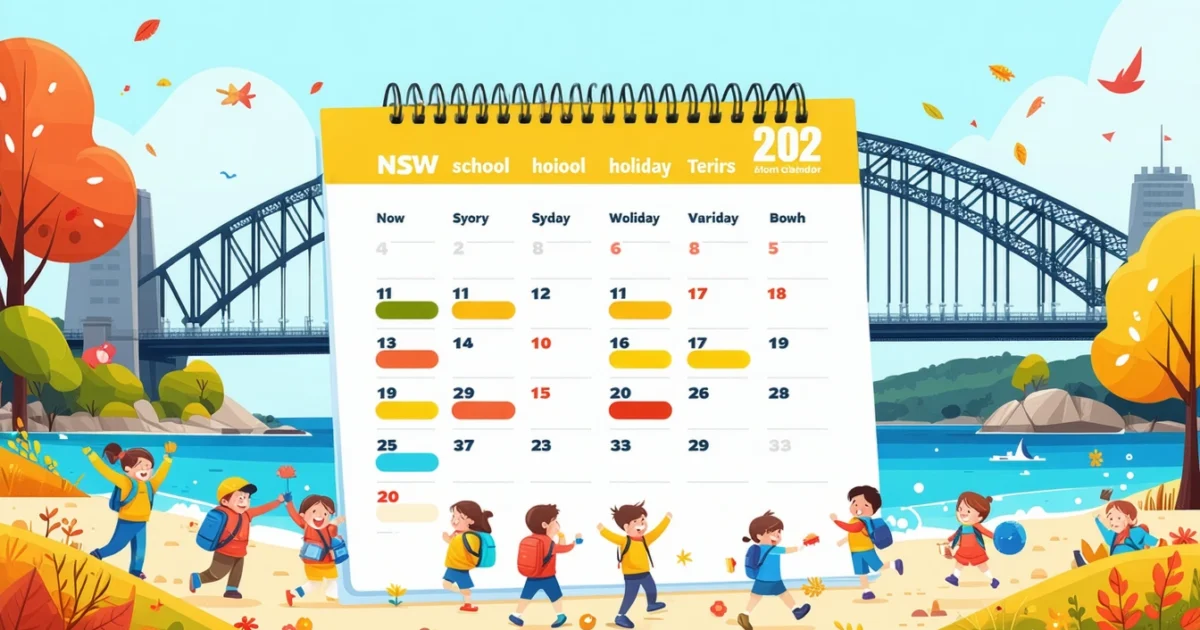
New South Wales School Holidays 2026 are scheduled across four distinct terms, with breaks ranging from two to six weeks throughout the year. NSW students will enjoy Term 1 holidays from April 10-27, Term 2 holidays from July 3-19, Term 3 holidays from September 25 to October 12, and the extended Term 4 summer holidays from December 18, 2026 to January 29, 2027.
The NSW Department of Education sets these official dates for all public schools, though private and Catholic schools may have slight variations. Additionally, families should plan around pupil free days and staff development days scheduled throughout each term.
Understanding these holiday periods helps Australian families book accommodations early, arrange childcare, and coordinate with other states like Victoria or Queensland for interstate travel plans.
TL;DR
- Term 1: April 10-27, 2026 (2.5 weeks)
- Term 2: July 3-19, 2026 (2.5 weeks)
- Term 3: September 25 – October 12, 2026 (2.5 weeks)
- Term 4: December 18, 2026 – January 29, 2027 (6 weeks)
- Private and Catholic schools may have different dates
NSW School Holiday Dates 2026 – Complete Calendar
New South Wales operates a four-term academic year with holiday periods strategically placed to provide students and teachers with regular breaks. Furthermore, the NSW Department of Education structures these holidays to align with seasonal patterns and family travel preferences across Australia.
| Term Break | Start Date | End Date | Duration | Total Days |
|---|---|---|---|---|
| Term 1 Holidays | April 10, 2026 | April 27, 2026 | 2.5 weeks | 18 days |
| Term 2 Holidays | July 3, 2026 | July 19, 2026 | 2.5 weeks | 17 days |
| Term 3 Holidays | September 25, 2026 | October 12, 2026 | 2.5 weeks | 18 days |
| Term 4 Holidays | December 18, 2026 | January 29, 2027 | 6 weeks | 43 days |
Term 1 Autumn Holidays (April 2026)
The first term break spans from Friday, April 10 to Monday, April 27, 2026. Students return to school on Tuesday, April 28 for Term 2 commencement. Additionally, this autumn holiday period coincides with Easter celebrations and Anzac Day, creating extended opportunities for family gatherings.
Many NSW families use these 18 consecutive days for domestic travel, particularly to warmer Queensland destinations. Moreover, accommodation prices remain moderate compared to peak summer periods, making this an economical choice for budget-conscious families.
Term 2 Winter Holidays (July 2026)
Winter holidays commence on Friday, July 3 and conclude on Sunday, July 19, 2026. Term 3 begins on Monday, July 20, providing students with a 17-day winter break. Consequently, this mid-year holiday period aligns perfectly with ski season across Australian alpine regions.
Families often plan interstate travel during these holidays, particularly to Victoria’s ski resorts or tropical Queensland destinations. However, winter holidays represent the shortest break outside of Term 4, requiring careful planning for extended trips.
Term 3 Spring Holidays (September-October 2026)
The spring holiday period extends from Friday, September 25 to Monday, October 12, 2026. Students resume classes on Tuesday, October 13 for the final term. This 18-day break occurs during Australia’s most pleasant weather conditions, making it ideal for outdoor activities and camping.
Spring holidays offer excellent opportunities for interstate coordination with Queensland school holidays, enabling extended family visits and shared accommodation costs. Furthermore, many NSW attractions offer spring promotions during this period.
Term 4 Summer Holidays (December 2026-January 2027)
The extended summer break begins on Friday, December 18, 2026 and continues until Friday, January 29, 2027. Term 1 of 2027 commences on Monday, February 1, providing students with a substantial 43-day holiday period. Therefore, this represents the longest break in the NSW academic calendar.
NSW students enjoy 96 total holiday days across 2026, with 45% occurring during the summer break
Summer holidays encompass Christmas, New Year, and Australia Day, creating multiple opportunities for family celebrations and travel. Additionally, this extended period allows for international travel, summer camps, and major family relocations without disrupting academic progress.
Total Holiday Allocation by Term
NSW students receive approximately 14 weeks of holidays throughout 2026, distributed across four distinct periods. Each of the first three terms provides 2.5 weeks of break time, while Term 4 delivers an extended 6-week summer holiday. Consequently, this structure balances regular rest periods with an extended year-end break for major travel and family time.
- Term 1-3 holidays: 7.5 weeks total (2.5 weeks each)
- Term 4 holidays: 6 weeks extended summer break
- Annual total: 96 holiday days across all terms
- Percentage: 26% of the year dedicated to school holidays
Term 1 Holidays 2026 (Autumn Break)
NSW Term 1 holidays commence on Friday, April 11, 2026 and conclude on Sunday, April 26, 2026. This autumn break spans 16 consecutive days, providing students with over two weeks of rest between the first and second academic terms. Subsequently, Term 2 begins on Monday, April 27, 2026, marking the return to regular classroom instruction.
The autumn holiday period delivers a strategic mid-year pause for NSW students and families. Additionally, this timing aligns with cooler weather patterns across New South Wales, making it ideal for outdoor activities and regional travel. Many families utilize this break for school holiday programs and interstate visits.
Term 1 holidays provide 16 days of autumn break across NSW schools
During this period, NSW families can enjoy Anzac Day on April 25, 2026, which falls on a Saturday within the holiday break. Therefore, this public holiday extends the recreational opportunities without affecting the school calendar. Furthermore, many tourism operators offer special autumn packages during these NSW school holidays.
Similar to other states, NSW autumn holidays create opportunities for educational travel and family bonding. For comparison, Victoria school holidays 2026 follow a comparable pattern, while QLD school holidays 2026 may vary slightly in timing. Consequently, interstate family coordination becomes essential for planning shared holiday experiences.
| Holiday Detail | Date/Information |
|---|---|
| Start Date | Friday, April 11, 2026 |
| End Date | Sunday, April 26, 2026 |
| Duration | 16 days |
| Term 2 Commences | Monday, April 27, 2026 |
| Public Holiday | Anzac Day (April 25) |
The autumn break timing supports various educational and recreational activities across NSW. Moreover, this period allows families to take advantage of shoulder season pricing for accommodation and travel. Many NSW attractions also offer special autumn programs designed specifically for school holiday periods.
Term 2 Holidays 2026 (Winter Break)
NSW Term 2 holidays commence on Friday, July 3, 2026 and conclude on Sunday, July 19, 2026. This winter break provides 17 days of continuous holiday time for students and families across New South Wales. Subsequently, Term 3 begins on Monday, July 20, 2026, marking the return to classroom learning.
The winter school break represents the longest mid-year holiday period in the NSW academic calendar. Moreover, this timing coincides with Australia’s coldest months, creating ideal conditions for snow sports and winter activities. Many families plan ski trips to the Snowy Mountains during this extended break period.
| Winter Holiday Detail | Date/Information |
|---|---|
| Start Date | Friday, July 3, 2026 |
| End Date | Sunday, July 19, 2026 |
| Duration | 17 days |
| Term 3 Commencement | Monday, July 20, 2026 |
| Season | Winter |
Winter holiday planning requires different considerations compared to other school break periods. Indoor activities become more popular due to cooler temperatures and shorter daylight hours. Additionally, many NSW families utilize this time for interstate travel to warmer climates or international winter destinations.
The 17-day duration allows sufficient time for both rest and recreational activities. Furthermore, this extended break enables families to plan multi-week holidays without rushing. Many tourism operators offer special winter packages specifically designed for NSW school holiday periods.
Similar winter break timing occurs across Australian states, though exact dates may vary. For instance, Victoria school holidays 2026 follow comparable patterns, while QLD school holidays 2026 may differ slightly. Therefore, interstate coordination becomes crucial for families planning shared winter experiences.
Winter activity planning should consider weather conditions and seasonal attractions. Popular options include museum visits, indoor entertainment centers, and winter sports facilities. Moreover, many NSW regions offer special winter festivals and events during the school holiday period.
The July timing positions these holidays during peak winter season across Australia. Consequently, families can access winter sports opportunities in alpine regions or escape to tropical destinations. Early booking becomes essential due to high demand during this popular holiday period.
Term 3 Holidays 2026 (Spring Break)
The Term 3 holidays in 2026 represent NSW’s spring break period, offering families a refreshing transition from winter into warmer weather. These holidays typically commence in late September and extend into early October, providing students with approximately two weeks of vacation time. Unlike winter holidays, spring break timing aligns perfectly with Australia’s seasonal shift toward outdoor activities and pleasant temperatures.
NSW Education Department schedules Term 3 holidays to begin on Saturday, September 26, 2026, following the completion of the third academic term. Students enjoy a 14-day break before returning to school for Term 4. This duration provides sufficient time for family vacations while maintaining educational momentum for the final term of the academic year.
Term 4 commences on Monday, October 12, 2026, marking the beginning of the final school term. This timing ensures students return refreshed and ready for end-of-year assessments and activities. Additionally, the October start date allows families to take advantage of spring weather conditions for outdoor excursions and recreational activities.
Spring holiday timing considerations differ significantly from winter break planning requirements. Warmer temperatures encourage camping trips, beach holidays, and outdoor adventure activities. Furthermore, many tourist destinations offer spring-specific packages that capitalize on favorable weather conditions and blooming landscapes across NSW regions.
The September-October timing coincides with school holidays across other Australian states, though exact dates may vary. Consequently, interstate travel becomes popular during this period, with families coordinating visits between states. Similar to Victoria school holidays 2026 and QLD school holidays 2026, NSW spring break enables cross-border family gatherings and shared vacation experiences.
Popular spring holiday activities include national park visits, coastal camping, and outdoor festivals throughout NSW. Moreover, the timing allows families to witness spring wildflower displays and participate in seasonal agricultural events. Many regional areas host spring festivals specifically timed to coincide with school holiday periods, maximizing family participation opportunities.
Term 4 Holidays 2026 (Summer Break)
Term 4 holidays commence on Friday, December 18, 2026, beginning the highly anticipated summer break period. This extended holiday period spans approximately six weeks, providing families with ample time for summer vacation planning and relaxation. Consequently, students enjoy the longest break of the academic year, allowing for comprehensive rest and recreational activities.
The summer holiday duration extends until late January 2027, when the new academic year begins. During this period, families typically plan extended vacations, interstate travel, and overseas trips. Furthermore, the lengthy break accommodates Christmas celebrations, New Year festivities, and Australia Day commemorations within the holiday schedule.
School year 2027 commences on Monday, January 26, 2027, marking the end of summer holidays. This Australia Day start date provides students with maximum holiday enjoyment while ensuring adequate preparation time for the new academic year. Additionally, the late January commencement allows families to complete summer vacation plans without academic pressure.
Christmas and New Year period coverage spans the entire festive season within the summer break timeframe. Christmas Day falls on Friday, December 25, 2026, while New Year’s Day occurs on Friday, January 1, 2027. Therefore, students enjoy uninterrupted holiday celebrations without academic commitments or early return requirements.
Summer break timing aligns with peak tourist season across Australia, creating optimal conditions for family travel. Beach destinations, theme parks, and holiday resorts experience maximum demand during this period. Similarly, interstate coordination with Victoria school holidays 2026 and QLD school holidays 2026 enables extended family gatherings and shared vacation experiences.
Popular summer activities include coastal holidays, camping adventures, and outdoor festivals throughout NSW regions. Moreover, the extended break duration accommodates international travel, with many families visiting overseas destinations during the southern hemisphere summer. Planning ahead becomes essential due to increased demand for accommodation and transportation services during peak season.
Pupil Free Days and Staff Development Days 2026
NSW schools schedule pupil free days throughout 2026 to facilitate essential staff development activities. These designated days allow teachers and administrators to engage in professional learning opportunities while students remain at home. Furthermore, pupil free days enable schools to conduct curriculum planning, assessment moderation, and educational technology training sessions.
Staff development days typically occur at strategic points during the school calendar year. Most commonly, schools schedule these professional development sessions during the first week of each term or immediately following school holiday periods. Additionally, some institutions arrange staff training days on selected Fridays to create extended weekend learning opportunities.
| Term | Typical Pupil Free Days | Purpose |
|---|---|---|
| Term 1 | First 2 days of term | Year planning and preparation |
| Term 2 | Mid-term Friday | Curriculum development |
| Term 3 | First day back | Assessment training |
| Term 4 | Strategic planning day | Next year preparation |
Professional development activities significantly impact regular school operations and family planning requirements. Parents must arrange alternative childcare arrangements for their children during these scheduled pupil free days. Consequently, many working families coordinate leave arrangements or engage extended family members to provide supervision during staff development periods.
School calendar coordination becomes crucial when multiple educational institutions schedule concurrent pupil free days. This coordination particularly affects families with children attending different schools within the same district. Moreover, before and after school care programs often extend their operating hours to accommodate working parents during these professional development days.
Planning around staff development days requires advance notification from school administrations to parent communities. Schools typically publish their pupil free day schedules at the beginning of each academic year alongside regular term dates. Similarly, coordination with Victoria school holidays 2026 and QLD school holidays 2026 helps families plan interstate visits during extended break periods.
Educational outcomes improve when teachers participate in targeted professional learning experiences during pupil free days. These development sessions focus on contemporary teaching methodologies, digital literacy skills, and student wellbeing strategies. Additionally, collaborative planning sessions enable teaching teams to align curriculum delivery across year levels and subject areas.
Individual schools maintain flexibility in scheduling their specific pupil free days within NSW Department of Education guidelines. However, most institutions coordinate with their local school networks to minimize community disruption. Therefore, parents should confirm exact dates with their child’s school administration rather than relying on general calendar information.
Public vs Private vs Catholic School Holiday Differences
Different school sectors in New South Wales follow varying holiday schedules, creating important distinctions for families navigating the education system. NSW Department of Education public schools adhere to standardized term dates published annually by the state government. However, independent and Catholic schools maintain greater flexibility in setting their specific holiday periods.
NSW Department of Education Public School Dates
Public schools across NSW follow uniform term dates established by the Department of Education for consistency across the state system. These standardized schedules ensure coordination between approximately 2,200 government schools serving over 800,000 students. Furthermore, public school holidays align with state-wide planning for transport services, community programs, and government initiatives.
Government school term dates receive official publication through the NSW Department of Education website typically 12-18 months in advance. Additionally, these dates coordinate with other Australian states to facilitate family travel and interstate educational planning. Consequently, public school families can rely on consistent scheduling year after year with minimal variations.
Independent School Holiday Variations
Independent schools possess autonomy to modify their term dates within reasonable parameters, often extending or shortening specific holiday periods. Many prestigious independent institutions schedule longer winter breaks or additional study weeks before major examination periods. Similarly, some schools adjust their calendar to accommodate international exchange programs or specialized educational tours.
Elite independent schools frequently coordinate their holidays with similar institutions to maintain competitive sporting fixtures and inter-school events. Moreover, these schools often publish their unique calendars 18-24 months ahead to assist families with international travel planning. Therefore, independent school families should expect potential variations of 1-2 weeks from standard NSW public school dates.
Catholic School System Differences
Catholic Education Diocese schools typically follow a hybrid approach, maintaining close alignment with public school dates while incorporating religious observances and diocesan requirements. These schools often schedule additional retreat days or religious celebration periods that may extend certain holiday breaks. Additionally, Catholic schools coordinate across their diocesan networks to ensure consistency within their educational communities.
Diocesan Catholic schools usually publish their calendars through their respective Catholic Education Office rather than individual school websites. Furthermore, these institutions may schedule professional development days differently to accommodate religious education training and pastoral care workshops. Consequently, Catholic school families should consult their diocesan calendar alongside individual school communications.
How to Check Your Specific School's Calendar
Parents should verify their child’s exact school holiday dates through multiple official channels to avoid scheduling conflicts. School websites typically feature downloadable calendar PDFs in their news or parent portal sections. Additionally, most schools distribute printed calendars during enrollment or at the beginning of each academic year.
- Visit your school’s official website and locate the “Calendar” or “Important Dates” section
- Download the school’s annual calendar PDF or subscribe to their digital calendar feeds
- Contact the school office directly for clarification on specific dates or pupil free days
- Check your school’s parent portal or communication app for calendar updates
- Confirm dates with your child’s classroom teacher, particularly for year-specific variations
School communication apps like Compass, Sentral, or ClassDojo often feature integrated calendar functions that sync with parents’ personal devices. Moreover, many schools send automated SMS or email reminders about upcoming holiday periods and term commencement dates. Therefore, maintaining current contact details with your school administration ensures you receive timely calendar updates and any last-minute changes to scheduled dates.
Planning Your 2026 School Holidays
Effective holiday planning requires strategic preparation, particularly during New South Wales school holidays 2026 when demand peaks across accommodation, activities, and childcare services. Furthermore, families benefit from booking arrangements at least 3-6 months in advance to secure preferred dates and avoid premium pricing during peak periods.
Holiday Planning Tips for Families
Smart holiday planning begins with creating a comprehensive family calendar that incorporates all school term dates and public holidays. Additionally, consider coordinating with families from other states if you’re planning interstate travel, as Victoria school holidays 2026 and QLD school holidays 2026 may differ from NSW dates.
- Book accommodation and flights during off-peak periods to reduce costs by 30-50%
- Create backup plans for weather-dependent activities, especially during winter holidays
- Budget for increased holiday expenses, as prices typically rise 15-25% during school breaks
- Research free community events and activities to balance expensive commercial attractions
- Plan shorter local trips during term breaks and longer holidays for major destinations
Booking Considerations for Peak Periods
Peak period bookings require careful timing and flexibility to secure the best deals and availability. Consequently, popular destinations like the Gold Coast, Blue Mountains, and Central Coast experience highest demand during April, July, and December-January school holidays.
Airlines typically release their schedules 11 months in advance, while accommodation providers often open bookings 12-18 months ahead. Moreover, booking midweek departures rather than weekends can reduce costs significantly, even during holiday periods.
| Booking Timeline | Accommodation | Flights | Activities |
|---|---|---|---|
| 6+ months ahead | Best rates, full availability | Early bird discounts | Popular attractions open |
| 3-6 months ahead | Good selection, moderate rates | Standard pricing | Most activities available |
| 1-3 months ahead | Limited options, higher rates | Premium pricing | Popular venues may be full |
| Last minute | Very limited, expensive | Highest fares | Cancellations only |
School Holiday Activities and Programs
NSW councils and community organizations offer extensive school holiday programs designed to engage children across different age groups and interests. Similarly, libraries, museums, and sports centers expand their programming during holiday periods to accommodate increased demand.
Popular program categories include STEM workshops, creative arts sessions, outdoor adventures, and sports clinics. Additionally, many programs offer early bird discounts for bookings made before the previous term ends, providing savings of 10-20% on regular fees.
- Council programs: Multi-day camps, day trips, and skill-building workshops
- Sports clubs: Holiday clinics, intensive training camps, and multi-sport programs
- Cultural institutions: Museum workshops, art classes, and educational tours
- Private providers: Specialized camps for coding, drama, music, and outdoor education
- Community centers: Local activities, craft sessions, and social programs
Childcare and Vacation Care Options
Working parents require reliable vacation care services during school holidays, as regular before and after school care programs typically operate reduced hours or close entirely. Therefore, researching and booking vacation care becomes essential for maintaining work schedules during holiday periods.
Most Outside School Hours Care (OSHC) providers offer vacation care programs that combine structured activities with free play opportunities. Furthermore, these programs often include excursions to local attractions, providing educational and recreational experiences for participating children.
Vacation care programs typically cost $45-85 per day, with additional fees for excursions and special activities
Booking vacation care requires advance planning, as popular programs reach capacity quickly. Additionally, many providers offer sibling discounts and reduced rates for multiple day bookings, making extended care more affordable for families with several children.
- Contact your current OSHC provider about vacation care availability and pricing
- Research alternative providers if your regular service doesn’t offer holiday programs
- Book care for the entire holiday period rather than individual days for better rates
- Confirm pickup and drop-off times, as they may differ from regular school care
- Prepare children for different routines and activities during vacation care programs
Frequently Asked Questions
When do NSW school holidays start and end in 2026?
NSW school holidays in 2026 are divided into four terms: Term 1 holidays run from April 10-27, Term 2 holidays from July 3-19, Term 3 holidays from September 25 to October 12, and the extended Term 4 summer holidays from December 18, 2026 to January 29, 2027.
Do private and Catholic schools follow the same holiday dates as public schools?
While the NSW Department of Education sets official dates for all public schools, private and Catholic schools may have slight variations in their holiday schedules. It’s recommended to check directly with your child’s school for their specific holiday calendar.
Which NSW school holiday period is the longest in 2026?
The Term 4 summer holidays are the longest, spanning 6 weeks (43 days) from December 18, 2026 to January 29, 2027. This extended break encompasses Christmas and New Year celebrations, making it ideal for family travel and extended holidays.
How many total holiday days do NSW students get in 2026?
NSW students enjoy 96 total holiday days across 2026, with 45% of these occurring during the summer break. This includes Term 1 (18 days), Term 2 (17 days), Term 3 (18 days), and Term 4 (43 days).
What should families consider when planning around NSW school holidays?
Families should plan around several factors:
- Pupil free days and staff development days scheduled throughout each term
- Early booking for accommodations due to increased demand
- Childcare arrangements during holiday periods
- Interstate coordination with other states like Victoria or Queensland for family travel
When is the best time to book accommodation for NSW school holidays?
It’s recommended to book accommodations as early as possible, particularly for the summer holidays and popular destinations. The Term 1 autumn holidays offer moderate pricing compared to peak summer periods, making them an economical choice for budget-conscious families.
Which NSW holiday period is best for interstate travel?
The Term 2 winter holidays (July 3-19) align perfectly with ski season in Victoria, while the Term 3 spring holidays (September 25 – October 12) offer excellent opportunities for interstate coordination with Queensland school holidays and pleasant weather conditions across Australia.
What special events coincide with NSW school holidays in 2026?
The Term 1 autumn holidays coincide with Easter celebrations and Anzac Day, creating extended opportunities for family gatherings. The Term 4 summer holidays encompass Christmas and New Year, making it the most popular time for family celebrations and travel.
You May Also Like
Victoria School Holidays 2026: Complete Term Dates Calendar
QLD School Holidays 2026: Complete Calendar & Dates
Living in Bundoora: Complete Guide for La Trobe & RMIT Students
Considering Bundoora? Real guide for La Trobe and RMIT students from a Melbourne student.