Valentine’s Day in Australia: Date, History and How It’s Celebrated

Valentine’s Day is not an Australian invention and it is not a public holiday anywhere in the country, but it is still a genuinely popular date on the calendar – Australians are forecast to spend around $550 million on gifts for it in 2026. This guide covers when it falls, where the day actually comes from (including a myth that is usually repeated as fact but is not quite true), how big a deal it really is in Australia based on current retail spending data, and what makes an Australian Valentine’s Day feel different from the version shown in northern-hemisphere movies and TV.
Quick summary
When is Valentine's Day, and is it a public holiday?
Valentine’s Day always falls on 14 February, the same date as everywhere else in the world. It is not a gazetted public holiday in any Australian state or territory – workplaces, schools and government offices all operate as normal, and shops keep their usual trading hours (unless 14 February happens to fall on a Sunday or public holiday for an unrelated reason).
| Year | Date |
|---|---|
| 2025 | Friday 14 February |
| 2026 | Saturday 14 February |
| 2027 | Sunday 14 February |
| 2028 | Monday 14 February |
| 2029 | Wednesday 14 February |
No penalty rates or special trading rules apply
Where Valentine's Day actually comes from
Valentine’s Day’s origins are murkier than most gift-shop displays suggest, and they are not Australian at all – the day arrived here as an import, layered on top of a European history that stretches back roughly 1,700 years.
A Roman martyr named Valentine
The most common legend holds that Valentine was a Christian priest in Rome during the reign of Emperor Claudius II, who ruled from 268 to 270 AD. According to the story, Claudius believed unmarried men made better soldiers and banned young men from marrying. Valentine defied the ban, secretly performing marriage ceremonies for young Christian couples, and was eventually caught, imprisoned and executed – historical accounts place his death around 269 or 270 AD, though the details are not well documented and have almost certainly been embellished over the centuries. Later legend adds that, while awaiting execution, he sent a farewell note signed “from your Valentine,” which is often cited as the origin of the phrase. Pope Gelasius I formally established 14 February as a feast day honouring Valentine in 496 AD.
The Lupercalia connection is probably a myth
How it became about romance
For roughly 900 years after Gelasius’s decree, 14 February had no particular association with romantic love. That connection is usually traced to English poet Geoffrey Chaucer, whose 1382 poem “Parliament of Fowls” contains the line “For this was seynt Valentynes day, Whan every foul cometh there to chese his make” (on Saint Valentine’s Day, every bird comes to choose its mate). Chaucer is thought to have written the poem to mark the betrothal of the 15-year-old King Richard II to Anne of Bohemia, and it is widely regarded by scholars as the first text to link Valentine’s Day with courtship. Within a few decades, European nobility had adopted the idea of choosing a “Valentine” and writing romantic verses for the occasion, and by the 1400s the custom of Valentine poems and love notes was well established among the European elite.
From handmade notes to a global industry
By the mid-1800s, sending decorated Valentine’s cards – typically featuring hearts, cupids, lace and ribbon – had become common in England, particularly once cheaper postage made mailing them practical. The shift to a mass-market industry happened in the United States: in 1847, Massachusetts stationer Esther Howland began hand-assembling elaborate lace Valentine’s cards after being impressed by an imported English one, and built the practice into a business grossing over $100,000 a year before selling it in 1881. She became known as the “Mother of the American Valentine,” and her success helped establish Valentine’s Day cards as a mainstream commercial product – a pattern that, decades later, expanded into flowers, chocolates and jewellery as the day’s signature gifts worldwide, including in Australia.
Is Valentine's Day actually a big deal in Australia?
Valentine’s Day is real but modest in Australia – a widely acknowledged occasion rather than a major cultural event, and current retail research shows participation has actually softened slightly in recent years as households watch discretionary spending more closely.
According to Australian Retail Council (ARC) and Roy Morgan research, Australians were forecast to spend around $550 million on Valentine’s Day gifts in 2026, a modest 2.8% increase on the $535 million spent in 2025 (itself the first time Valentine’s Day spending had surpassed $500 million). Around 12% of Australians aged 18 and over – roughly 3 million people – planned to buy a gift in 2026, down four percentage points on 2025 as cost-of-living pressures affected discretionary spending, with about 800,000 fewer people participating year-on-year. Among those who did buy a gift, the average spend was $152 per person.
| Metric (2026, ARC-Roy Morgan) | Figure |
|---|---|
| Total forecast Valentine’s Day spend | $550 million (+2.8% on 2025) |
| Adults planning to buy a gift | 12% (approx. 3 million people) |
| Average spend per gift-buyer | $152 |
| Most popular gift categories | Flowers (40%), chocolate/alcohol (33%), jewellery (16%) |
| Highest-participation states | Western Australia (15%), Tasmania (14%) |
| Men vs women buying a gift | Men 16% (avg. $171) vs women 8% (avg. $123) |
| Capital city vs regional participation | 13% vs 11% |
| Planning a Valentine’s Day meal | 66% (dining out most popular in QLD 58%, SA 49%) |
A few patterns stand out. Younger adults are considerably more likely to book a restaurant table than older age groups – 62% of 18-34 year-olds planned to dine out in 2026, compared with roughly 39-40% of Australians aged 35 and over. Men are about twice as likely as women to buy a Valentine’s Day gift, and tend to spend more when they do. And while flowers, chocolate and jewellery remain the classic gifts, ARC noted that experiences such as dinners or short trips away, along with smaller and less expensive items, featured strongly in 2026 as households looked for meaningful ways to mark the day without a large price tag.
How an Australian Valentine's Day differs from the northern hemisphere version
Most Valentine’s Day imagery – roaring fireplaces, snow outside the restaurant window, heavy comfort food, dark evenings by 5pm – comes from a northern-hemisphere winter. In Australia, 14 February falls in the middle of summer, and that single seasonal flip changes the practical experience of the day more than almost anything else.
- It’s warm, often hot. Mid-February is typically one of the hottest stretches of the Australian year, with many capital cities regularly seeing days in the low-to-mid 30s Celsius. Heavy winter-style set menus are less common; restaurants lean into lighter, seasonal dishes, and outdoor dining is the norm rather than a special treat.
- Daylight lasts much longer. With sunset often not until 7:30-8pm in mid-February, there’s time for an early-evening picnic, a sunset beach walk or rooftop drinks before a dinner booking, rather than everything happening after dark from late afternoon.
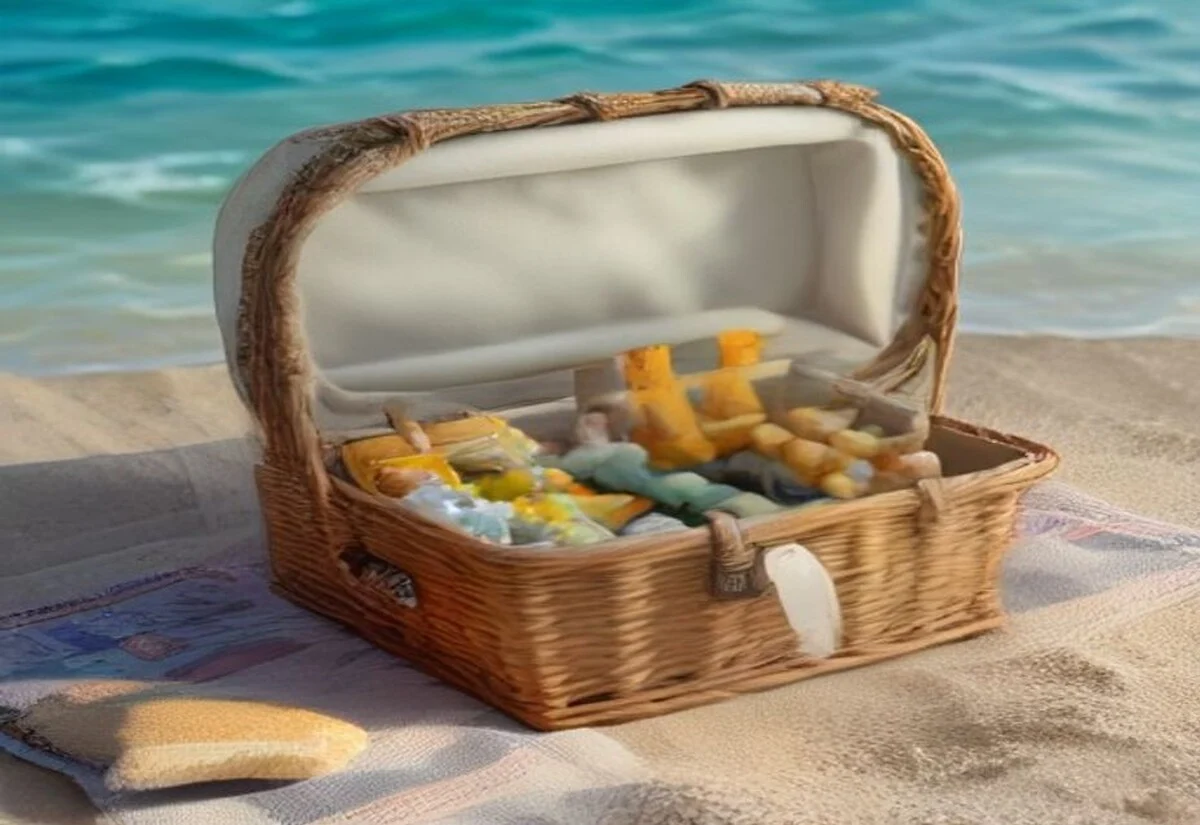
- Beaches and outdoor venues feature heavily. Coastal picnics, beach sunsets, alfresco wine bars and outdoor cinema nights are common Valentine’s Day date formats in Australia in a way they simply aren’t in a European or North American February.
- Seasonal produce is different. Stone fruit, mangoes and other summer produce are in season, which shows up on restaurant menus and in home-cooked Valentine’s dinners instead of the root vegetables and slow-cooked dishes typical of a northern winter.
The core traditions – flowers, chocolates, cards, a nice dinner – are the same ones celebrated worldwide. What changes in Australia is the setting: less candlelit-cabin, more balmy evening outdoors.
Budget-friendly ways to celebrate as a newcomer
There’s no obligation attached to Valentine’s Day in Australia the way there can be around some other cultures’ gift-giving occasions – plenty of Australians (partnered and single) simply let the day pass unmarked, and nobody will think it strange if you do too. If you do want to take part, it doesn’t need to be expensive; the ARC-Roy Morgan data above shows the average spend is a modest $152, and most people scale their gift to their own budget rather than following a script.
- A home-cooked dinner. Two-thirds of Australians celebrating the day plan a meal rather than a big-ticket gift, and many of those meals happen at home. Cooking together is a genuinely popular, low-cost option.
- A sunset picnic or beach walk. Free, makes the most of the long summer daylight hours, and needs nothing more than a rug, some snacks and good timing.
- A simple card or handwritten note. The tradition traces directly back to the handmade Valentine’s cards of the 1800s – a genuine, low-cost way to mark the day that doesn’t rely on flowers or jewellery.
- A local Australian flower. Native flowers (native roses, waratahs, kangaroo paw) from a local florist or farmers’ market are often cheaper than imported roses in mid-February, when rose prices tend to spike due to demand.
- Off-peak dining. Restaurants are typically fully booked for dinner on 14 February itself; a lunch booking, or dinner a day either side, often gets the same experience without the peak-night price premium or the need to book weeks in advance.
Book ahead if dining out
Date and getaway ideas by state
Because Valentine’s Day falls in the middle of the Australian summer, many of the country’s best-known scenic drives and coastal getaways make for a natural (if sometimes busier and pricier than usual) Valentine’s Day escape. A few well-known options in each state:
| State | Idea |
|---|---|
| Victoria | Great Ocean Road day trip from Melbourne via Torquay, Lorne and Apollo Bay |
| New South Wales | Blue Mountains day trip, or the coastal Grand Pacific Drive south of Sydney |
| Queensland | Gold Coast to Byron Bay drive along the Pacific Highway |
| South Australia | Barossa Valley wine region, about an hour from Adelaide |
| Western Australia | Margaret River wine region, or the Pinnacles Desert north of Perth |
| Tasmania | East coast drive taking in Freycinet National Park and Wineglass Bay |
None of these need to be a full weekend away – most work perfectly well as a day trip, and a sunset picnic or a scenic lookout costs nothing beyond fuel. For those staying closer to home, a local botanic garden, a favourite beach at sunset or a short harbour or river cruise are all popular lower-cost alternatives that still make use of the summer evening light.
Related observances
Valentine’s Day is one of several imported or newer observances that Australians celebrate without them being public holidays. Our guides to Mother’s Day and Father’s Day cover two more dates where Australia’s version differs from other countries, and our Halloween in Australia guide looks at a rapidly-growing newer tradition that also isn’t a public holiday. For the full list of Australia’s actual public holidays, see our Australian public holidays guide.
Frequently Asked Questions
You May Also Like
Christmas in Australia (2026): Traditions, Food, Weather and What to Expect

Mother’s Day Gifts Australia 2027: Gift Ideas for Mum by Budget and Interest