Where to Live in Melbourne (2026): Cheapest, Safest and Best Suburbs

The cheapest places to rent in Melbourne are the outer west and north — suburbs like Melton, Broadmeadows and Werribee, where a two-bedroom home can go for around $340 to $400 a week, well below Melbourne’s record median of roughly $590 for a house and $600 for a unit (Domain, March 2026 quarter). The trade-off is a longer commute. The “safest” suburbs are less about a magic postcode than most lists pretend, and the best all-round areas for a new arrival balance rent, a short trip to the city or your university, and everyday convenience. This guide works through all three — cheapest, safest and best — using current Australian data rather than guesswork.
Choosing a suburb sight unseen from another country is one of the hardest parts of moving to Melbourne, and the advice online is mostly written to sell you a home loan or a removalist van. This guide is not. It lays out what rent actually costs across the city right now, which areas are genuinely cheaper and why, how to read the “safest suburb” question sensibly instead of fearfully, and which suburbs give students and new arrivals the best balance of price, transport and lifestyle.
Melbourne’s rental market is tight — the vacancy rate sat at just 1.0% in early 2026, the lowest in almost two years — so good places move fast and you will often be choosing quickly. Knowing the map before you arrive is the single best way to avoid signing a year-long lease on a suburb that turns out to be wrong for you. All the figures here are indicative and move over time, so treat them as a planning guide and confirm current rents on the listings themselves before you commit.
How rent works across Melbourne: the inner–outer gradient
Melbourne prices its suburbs in rough rings. The closer you are to the CBD and the bay, the more you pay and the shorter your commute; the further out, the cheaper the rent and the longer the trip. Understanding this gradient is the whole game, because every suburb decision is really a trade between money and time. Against a citywide median of about $590 a week for a house and $600 for a unit (Domain, March 2026), here is roughly how the rings compare:
| Ring | Example suburbs | Indicative 2-bed rent / week | Commute to CBD |
|---|---|---|---|
| Inner (0–5 km) | Carlton, Fitzroy, Richmond, Southbank | $550 – $700+ | 10–20 min by tram/train |
| Inner-middle (5–12 km) | Brunswick, Footscray, Preston, Coburg | $450 – $560 | 20–35 min |
| Middle (12–20 km) | Box Hill, Clayton, Sunshine, Reservoir | $420 – $520 | 30–45 min |
| Outer (20 km+) | Werribee, Dandenong, Craigieburn, Frankston | $340 – $420 | 45–70 min |
The pattern is clear: moving from the outer ring to the inner ring can roughly double your rent, but it can also halve your commute. For a student who will be on campus most days, or anyone without a car, a slightly dearer place close to a train line often works out better value once you count the time, transport fares and sanity saved. For a family or a couple who can share a bigger place further out, the outer ring’s lower rent stretches much further. There is no single right answer — only the trade that fits your life.
The cheapest suburbs to rent in Melbourne
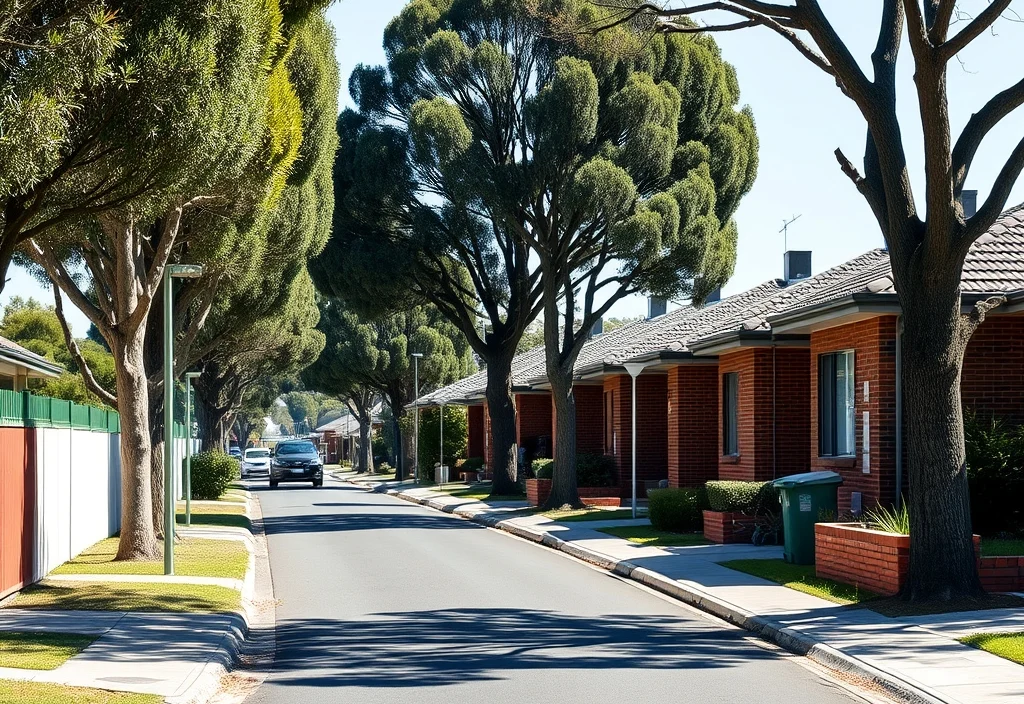
If your priority is the lowest possible rent, the answer is consistent: the outer west and outer north. These areas combine distance from the city with newer housing estates and more available supply, which keeps prices down. As a rough guide to the cheapest end of the market for a two-bedroom home:
- Melton (outer west) — around the cheapest in metropolitan Melbourne, roughly $340–$360 a week
- Broadmeadows (outer north) — around $350, and on the Craigieburn train line into the city
- Dandenong (outer south-east) — around $355, a major transport hub with its own train line and station
- Werribee, Craigieburn, Frankston and St Albans — other reliably cheaper outer options, each with a train station, typically in the high-$300s to low-$400s
- Sunshine and Reservoir — a step closer in, a little dearer, but shorter commutes and strong transport links
These figures move with the market and vary by property, so always check current listings — but the ranking is stable: the outer west and north are where Melbourne’s cheapest rents live. Each of the suburbs above has a train station, which matters enormously, because a cheap suburb with no rail link can cost you far more in time and transfers than you saved on rent.
Count the whole cost, not just the rent
Who do the cheap outer suburbs suit? Families and couples who can share a larger place and split the rent; anyone with a car or a hybrid working pattern who does not commute five days a week; and people who value space and a quieter setting over being close to the action. They suit a single student who will be on campus daily far less well — for them, the money saved on rent often disappears into a longer, dearer commute, which is exactly what the next section is about.
Best-value suburbs near each major university
If you are studying, the smartest question is not “where is cheapest” but “where is cheapest near my campus, or near a direct line to it”. Living within a short trip of your university saves money and time every single day, and campus-adjacent suburbs often have a ready supply of share houses tuned to student budgets. Here is where students typically look for each of Melbourne’s big universities:
| University (main campus) | Where students live | Why it works |
|---|---|---|
| University of Melbourne (Parkville) | Carlton, North Melbourne, Brunswick, Parkville | Walk or a short tram; the classic inner-north student belt (dearer, but no commute) |
| RMIT (City campus) | CBD, Carlton, North Melbourne, Brunswick, Footscray | In or beside the city; every train and tram line converges here |
| Monash University (Clayton) | Clayton, Oakleigh, Huntingdale, Notting Hill, Mount Waverley | Cheaper south-east suburbs right by campus; big student community |
| Deakin University (Burwood) | Burwood, Box Hill, Glen Waverley, Mount Waverley | Tram down Burwood Highway; Box Hill is a well-connected hub |
| La Trobe University (Bundoora) | Bundoora, Reservoir, Preston, Thomastown | Affordable northern suburbs; tram and bus links to campus |
Two patterns are worth noticing. For the inner-city universities — Melbourne and RMIT — the trade is that living close means paying inner-suburb rent, so many students instead pick a slightly cheaper spot on a direct train or tram line (Brunswick, Footscray, Coburg) and accept a 20-minute trip. For the suburban campuses — Monash, Deakin and La Trobe — the suburbs right around campus are already among the more affordable parts of the city, so living close and living cheap point in the same direction. Whichever applies to you, prioritise a direct public-transport link over raw distance: a suburb one train line away can beat one that is closer as the crow flies but needs two buses.
Before you commit to a campus-area share house, it is worth weighing the wider trade-offs between a share house, a studio and a homestay — our guide to student housing options covers those in full, and our student rent guide shows what share of your income rent should take.
The "safest suburbs" question, answered honestly
“Which suburbs are safe?” is the question new arrivals ask most, and it is the one most poorly answered online — usually with a fear-driven list of suburbs to “avoid”. The honest answer is more useful and less alarming: Melbourne is, overall, a safe city, crime is broadly flat, and the suburbs that top the “crime rate” tables are mostly not places that are dangerous to live in at all. Here is how to read the data properly.
The official source is the Crime Statistics Agency Victoria, which publishes recorded offences by local government area (LGA). In the year ending March 2026, Victoria Police recorded 625,426 offences — down 0.2% on the year before, so crime statewide was essentially flat, not surging as headlines sometimes suggest.
Why the "highest crime" suburbs are not the dangerous ones
The LGAs with the highest recorded rate of offences per 100,000 residents in the year ending March 2026 were the City of Melbourne (about 17,110 per 100,000), Yarra (about 12,312) and Port Phillip (about 10,987). Read carelessly, that makes the CBD, Fitzroy and St Kilda sound frightening. They are not. The reason those numbers are high is a statistical quirk: the rate is calculated against the number of residents, but these are entertainment and business districts where hundreds of thousands of non-residents pour in every day and night. Offences committed against that huge visiting crowd are divided by a small resident population, which inflates the per-resident rate enormously.
In other words, a high “crime rate” in a nightlife or CBD suburb reflects lots of people passing through, not a dangerous place to rent a flat. These are some of Melbourne’s most desirable, liveable inner suburbs. The lesson is that a raw crime-rate ranking is a poor guide to how safe a suburb feels to live in — which is why we will not hand you a list of suburbs to “avoid”. Doing so would be both inaccurate and unfair to the communities named.
Crime rate vs personal safety — not the same thing
How to actually judge a suburb's safety
Rather than trusting a listicle, judge it yourself with a mix of the data and your own senses:
- Check the official tool. The Crime Statistics Agency’s free “Crime by Location” tool lets you look up recorded offences for any suburb or LGA and see the trend over time — far more reliable than any blog’s opinion.
- Visit at night if you can. Walk from the train station to the property after dark. Is it well lit? Are there people about? Does it feel comfortable? Your own impression of the specific street matters more than a suburb-wide average.
- Look at the specific street, not just the suburb. Safety varies block to block. A quiet residential street near a busy station can feel very different from an isolated one ten minutes’ walk away.
- Prioritise good transport and lighting. A suburb with a staffed station, frequent services and lit streets is practically safer for someone who travels at night than a “low-crime” suburb where you would be walking alone in the dark.
Wherever you live, ordinary precautions apply and go a long way: keep an eye on your belongings on public transport, use the well-lit and busier routes at night, and know that 000 is the emergency number for Police, Fire and Ambulance, while 131 444 reaches Victoria Police for non-urgent matters. Melbourne is a safe city to live in by world standards; a calm, informed approach serves you far better than a fearful one.
The best all-round suburbs for new arrivals
“Best” depends on what you value, so rather than crown a single winner, here are the areas that repeatedly work well for new arrivals and students, grouped by the kind of life they suit. All sit in the mid-price band — dearer than the cheap outer suburbs, cheaper than the inner core — and all have strong public transport, which is the common thread in every good first-suburb choice.
- The inner north — Brunswick, Coburg, Northcote, Preston. Melbourne’s classic young-and-new-arrival belt: tram and train into the city, endless cafes and grocers, a genuinely multicultural feel, and rents below the inner core. Brunswick and Northcote are livelier and a little dearer; Coburg and Preston are quieter and better value.
- The inner west — Footscray, Yarraville, West Footscray, Sunshine. Some of the best value close to the city, superb and affordable food from Vietnamese to East African, and a direct train line. Footscray is busy and diverse; Yarraville is a leafier village pocket.
- The south-east — Clayton, Oakleigh, Box Hill, Glen Waverley. Excellent for Monash and Deakin students, with large and welcoming Asian communities, outstanding food, big shopping hubs and reliable transport. Often the best pick if you want value plus a strong sense of community.
- Bayside and the beach — Elwood, St Kilda, Brighton. If being near the water matters and your budget stretches, the bay suburbs are lovely, though rents climb quickly the closer you get to the beach.
A simple way to choose: pick the two things that matter most to you — say, “close to campus” and “good, cheap food” — and let those narrow the map, rather than trying to optimise everything at once. For most new arrivals, an inner-north or inner-west suburb on a train line, or a south-east suburb near their university, lands the best balance of rent, convenience and community. And remember you are not marrying the suburb: a first lease is usually twelve months, and plenty of people move once they know the city better.
How to actually secure a place in a tight market
Knowing the right suburb is only half the job; in a market with a 1.0% vacancy rate you also have to win the property against other applicants. Two things make the difference. First, have your rental application ready to submit the moment you inspect — identity documents, proof of income or funds, and references, all prepared in advance. New arrivals with no Australian rental history are at a disadvantage here, but a manageable one: our guide to rental ledgers and applications with no local history shows exactly what to hand over instead and includes a cover-letter template that helps you stand out.
Second, protect yourself from scams, which spike in tight markets. Never pay a bond or “holding deposit” for a place you have not inspected, and be wary of any listing that pressures you to transfer money before you have seen it — our guide to avoiding rental scams in Australia covers the warning signs. Do both of those things and you turn a stressful, competitive process into a manageable one.
The short version
Cheapest: the outer west and north (Melton, Broadmeadows, Werribee) at roughly $340–$400 a week, if you can accept the commute. Safest: most of Melbourne, once you understand that crime-rate rankings mislead — check the official tool and judge the street yourself. Best all-round: an inner-north or inner-west suburb on a train line, or a south-east suburb near your university. Match the choice to your two biggest priorities, get your application ready, and you will find a good first home in Melbourne. For the wider cost picture, see our cost of living in Australia guide.
Frequently asked questions
You May Also Like

Moving to Australia: The Complete Checklist and Guide (2026)

NT Public Holidays 2026: Full Calendar, Dates and How Darwin and Alice Springs Celebrate