Tax Return for Working Holiday Makers (417/462) in Australia 2026

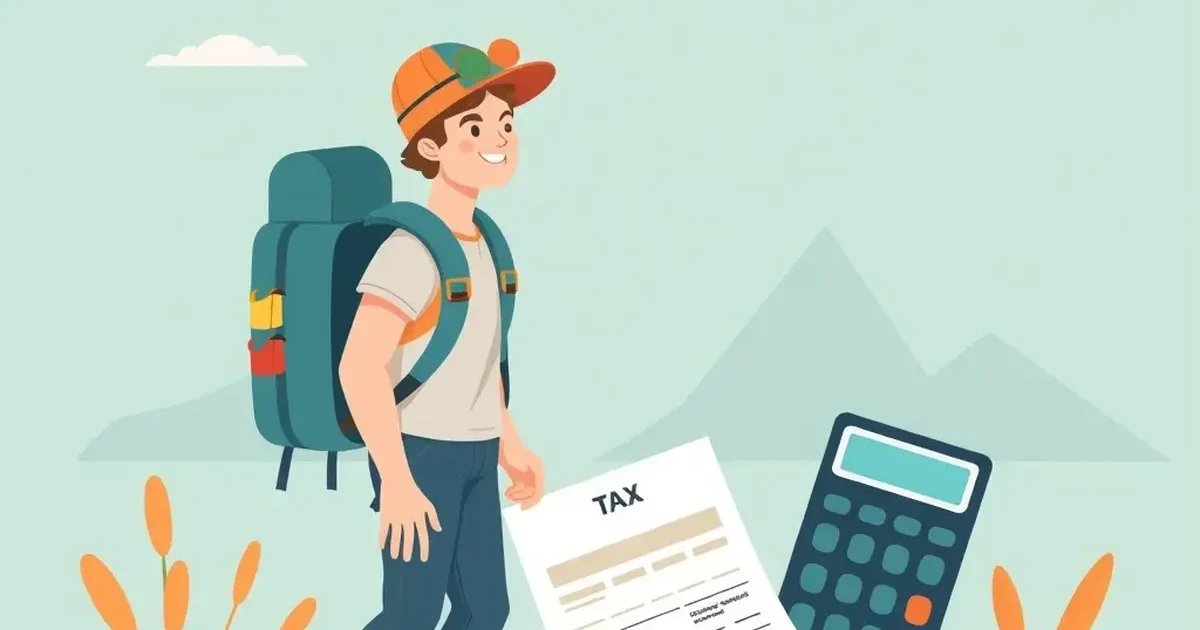
If you have been working in Australia on a Working Holiday visa, your tax works differently from almost everyone else. As a Working Holiday Maker (WHM) on a 417 or 462 visa, you pay the so-called “backpacker tax”, a flat 15% on your first $45,000 of earnings, with no tax-free threshold. But many backpackers are still owed a refund, and some, depending on their nationality, may be entitled to resident tax rates instead. This is the complete 2026 guide to the working holiday maker tax return in Australia: how the backpacker tax works, the treaty-country exception, how to lodge, what you can claim, and your super.
Get it right and you will claim back any over-withheld tax and your superannuation when you leave. Get it wrong and you could overpay by thousands.
This is general information, not personal tax advice. Working-holiday tax can be complex, so consider a registered tax agent for your situation.
TL;DR: Working Holiday Maker Tax
On a 417 or 462 visa you are a Working Holiday Maker, taxed at 15% on your first $45,000 of Australian earnings (then ordinary rates above that), with no tax-free threshold. You still need a TFN, must lodge a tax return if you earned income, and can claim work-related deductions. Nationals of certain treaty countries (such as the UK, US, Germany, Japan and others) who are also Australian residents may instead get resident rates and the tax-free threshold. You earn 12% super, which you can claim as a DASP when you leave Australia for good.
Who Is a Working Holiday Maker?
You are a Working Holiday Maker for tax if you earned income while holding a subclass 417 (Working Holiday) or subclass 462 (Work and Holiday) visa. Your income earned on those visas is “working holiday maker net income” and is taxed under a special schedule, separately from any income you earn on a different visa in the same year.
The backpacker tax in one line
Why You Might Still Get a Refund
Plenty of backpackers are owed money back. The most common reasons are that your employer was not registered as a Working Holiday Maker employer and withheld tax at the higher foreign-resident rate (up to 45%) instead of 15%, or that you are from a treaty country and qualify for resident rates. Lodging your return is how you claim any over-withheld tax back, plus any deductions.
What This Guide Covers
- The backpacker tax rates, and the treaty-country exception explained
- How to lodge your WHM tax return, step by step
- The deductions backpackers can claim
- Your superannuation and claiming it as a DASP when you leave
- Deadlines, common mistakes and getting help
The Backpacker Tax Rates in Detail
Working holiday maker income is taxed on a special scale. The headline is the flat 15% on your first $45,000, then ordinary rates above that.
| WHM income (2025-26) | Tax rate |
|---|---|
| $0 – $45,000 | 15% |
| $45,001 – $135,000 | 30% |
| $135,001 – $190,000 | 37% |
| $190,001 and over | 45% |
So a backpacker earning $30,000 on a working holiday visa pays about $4,500 in tax (15%), with no tax-free threshold to reduce it. Your employer should withhold 15% as you go if they are registered for the scheme, so at tax time you are mostly squaring up rather than facing a big bill.
The Treaty-Country Exception (You Could Pay Less)
Here is the part many backpackers miss. Following a High Court decision (the Addy case), nationals of certain countries that have a non-discrimination clause in their tax treaty with Australia cannot be charged the backpacker tax if they are also Australian residents for tax purposes. Those backpackers are taxed at resident rates, which means they get the $18,200 tax-free threshold, often a much better outcome.
- Chile
- Finland
- Germany
- Israel
- Japan
- Norway
- Türkiye (Turkey)
- United Kingdom
- United States
Two conditions must both be met
Worked example: a UK backpacker who is an Australian resident and earns $30,000 would pay roughly $1,900 at resident rates instead of $4,500 under the backpacker tax, a difference of about $2,600 back in their pocket. Because this area is complex and fact-specific, it is well worth checking with the ATO or a tax agent if you are from a treaty country.
How to Lodge Your WHM Tax Return
The process is the same free online method everyone uses, with one extra step: you must complete the working holiday maker section so your income is taxed at the right rates.
- Have your TFN ready. You need it to lodge. If you do not have one, apply free with the ATO.
- Create a myGov account and link it to the ATO. You can link using your TFN plus details the ATO already holds, such as a bank account or an employer from your payslip.
- Wait until late July. Your employers report your pay after 30 June, and it pre-fills in myTax within a few weeks, so waiting means most of your income fills in automatically.
- Open myTax and complete the working holiday maker section. Declare your WHM net income, the income you earned while on a 417 or 462 visa. This is what triggers the correct 15% scale (or resident rates if you qualify).
- Add all your income. Backpackers often have several jobs, including farm, hospitality and regional work. Include every employer, plus any cash work, tips or ABN income, and bank interest.
- Enter your deductions. Add work-related expenses such as tools, protective gear and travel between jobs (covered next).
- Check your estimate and bank details. myTax shows your refund or amount owing. Confirm your bank account so the refund reaches you, even after you leave Australia.
- Lodge and keep your records for five years.
Check what your employer actually withheld
For a closer look at the general online process, see our step-by-step guide to lodging your first tax return, and if you are unsure about your TFN, our guide to the TFN.
Deductions Backpackers Can Claim
Deductions reduce your taxable income, so they cut your 15% tax and grow any refund. You can claim work-related costs you paid yourself, were not reimbursed for, and can prove. Common backpacker deductions include:
- Protective gear: steel-cap boots, hi-vis, gloves, hats and sunscreen for outdoor and farm work
- Tools and equipment you buy for work (under $300 in full; over $300 depreciated)
- Compulsory uniforms and laundering them
- Travel between two jobs or work sites on the same day
- The work-related portion of your phone and internet
- Work-related licences, tickets and white card renewals
- Union or industry membership fees
The $300 rule, and what you cannot claim
Your Super and Claiming It When You Leave
On top of your wages, your employer must pay 12% superannuation for 2025-26 into a super fund, from your very first dollar. Backpackers often work several jobs and end up with multiple super accounts, so check your pay slips to confirm super is being paid and keep your fund details together.
Claim your super as a DASP when you leave
Our guides explain how superannuation works and how to claim back your super when you leave Australia.
Deadlines, Mistakes and Getting Help
The Australian financial year runs 1 July to 30 June, and if you lodge yourself your return is due by 31 October. Using a registered tax agent usually gives you more time. You can lodge from overseas after you leave, so keep your myGov account and bank account open until your refund and any DASP come through.
Common backpacker tax mistakes
It is worth using a registered tax agent if you are from a treaty country and want to check whether resident rates apply, if you had ABN or contract income, or if you simply want it handled, their fee is deductible the following year, and they can lodge after the October deadline. Always confirm the agent is registered with the Tax Practitioners Board.
That is the full picture. Get your TFN, make sure your WHM income is declared correctly, claim any over-withheld tax and your deductions, check the treaty-country rules if they apply to you, and claim your super on the way out. For more, see our guides to student tax returns, how super works, and the Australian tax calculator.
Frequently Asked Questions
Final Thoughts
The backpacker tax means you pay 15% from your first dollar, but it does not mean you should overpay. Get your TFN, make sure your employer treats you correctly, lodge your return to claim back any extra tax and your deductions, and claim your super as a DASP when you head home. If you are from a treaty country, check whether resident rates apply, it could be worth thousands.
You May Also Like

PR Pathway for Trade and TAFE Graduates in Australia (2026)

PR Pathway for Teaching and Education Graduates in Australia (2026)