Uber Cost Australia 2026: 20-Min from $25, 40-Min from $34

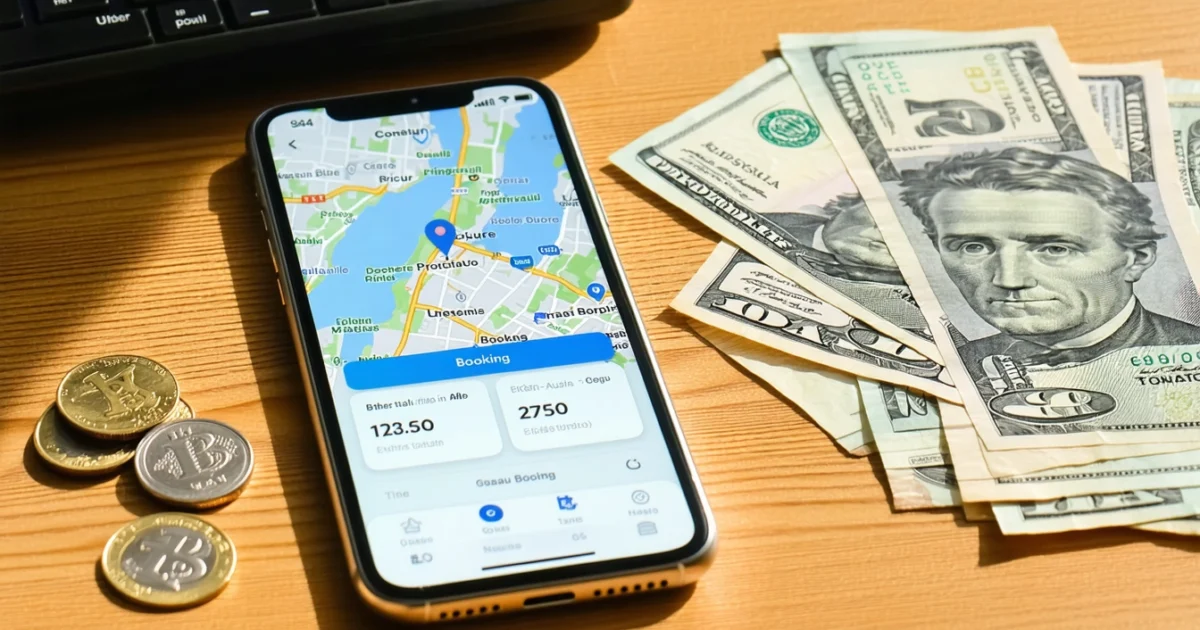
You open the Uber app, type in your destination, and that little price pops up. Sometimes it feels right. Sometimes it feels like the app is having a laugh at your expense.
If you’ve ever wondered whether that quote is normal, why your Friday night ride costs double what it did on Tuesday afternoon, or how much a 20-minute Uber should actually cost in Sydney versus Melbourne — you’re in the right place.
This guide breaks down exactly how Uber pricing works in Australia in 2026, with real figures in Australian dollars, city-by-city breakdowns, ride type comparisons, and the latest changes to Uber One that affect every Australian subscriber right now.
No fluff. Just the numbers you need.
TL;DR — Quick Uber Cost Summary (Australia, 2026)
- A 20-minute UberX typically costs $18–$28 AUD in major cities
- A 30-minute UberX typically costs $26–$40 AUD
- A 40-minute UberX typically costs $34–$52 AUD
- Sydney is the most expensive city; Adelaide and Perth are the most affordable
- Surge pricing can push fares 1.2x to 3x higher on Friday nights, during events, and in bad weather
- Uber One costs $9.99/month — but as of March/April 2026, the service fee discount has been removed for new and existing members. The value has dropped significantly unless you’re a heavy Eats user
- Becoming an Uber driver costs roughly $200–$600 upfront depending on your state
- Always check the in-app fare estimate before confirming — Uber shows you the price before you book
How Uber Pricing Works in Australia
Before you can make sense of any specific fare, it helps to understand what actually goes into your Uber quote.
Uber uses upfront pricing in Australia. This means when you enter your destination and tap “Get Prices,” the app shows you a fixed fare estimate before you confirm the ride. That number is calculated in real time based on four main components:
1. Base fare — A flat amount charged at the start of every trip, regardless of distance. This varies by city. Sydney has the highest base fare at around $2.50; Melbourne sits around $2.20; Brisbane, Perth, and Adelaide are generally around $2.00.
2. Per-kilometre rate — The distance component. UberX rates range from roughly $1.45/km in Adelaide up to $1.85/km in Sydney.
3. Per-minute rate — The time component. This applies throughout the trip, not just in traffic. It typically ranges from $0.40–$0.55 per minute depending on city and ride type.
4. Booking fee — A small flat fee added to every trip, usually around $0.55.
Then there are additional charges that can apply:
- Surge pricing — When more people want rides than there are drivers available, Uber multiplies the base fare by a surge factor. This typically ranges from 1.2x to 3x, but can go higher during extreme demand (New Year’s Eve, major concerts, AFL Grand Final night in Melbourne). The app always shows you the surge before you confirm — so you can always wait it out or walk a few blocks away from the hotspot.
- Toll roads — Passed on directly to you. If your driver uses a toll road (which is common on routes through Sydney and Melbourne), you’ll see it on your receipt.
- Airport surcharges — Airports like Sydney (SYD), Melbourne (MEL), and Brisbane (BNE) add a pickup fee of roughly $3–$5 per trip.
- Waiting time — If your driver arrives and you’re not ready, a waiting fee of around $0.55 per minute kicks in after a grace period of 2 minutes. Be ready when the car arrives — it adds up fast.
- Cleaning fee — If you make a mess in the car, Uber charges a cleaning fee that typically ranges from $80 to $150 depending on severity. Yes, this includes vomiting. No, it’s not negotiable.
One thing worth knowing: Uber does not publish its exact fare rates publicly on a per-city basis for Australia, and rates do change over time. The figures in this guide are community-reported averages based on early 2026 data. For your specific trip, always use the in-app estimate as your source of truth.
How Much Does a [X]-Minute Uber Cost in Australia?
This is the question most people actually want answered. The table below gives typical UberX costs based on trip duration, assuming normal traffic conditions and no surge pricing. These figures reflect Australian conditions in 2026.
| Trip Duration | Est. Distance | Typical UberX Cost (AUD) | With 1.5x Surge |
|---|---|---|---|
| 5 minutes | ~2–3 km | $8–$12 | $12–$18 |
| 10 minutes | ~5 km | $12–$18 | $18–$27 |
| 15 minutes | ~7–8 km | $15–$22 | $22–$33 |
| 20 minutes | ~10–12 km | $18–$28 | $27–$42 |
| 25 minutes | ~13–15 km | $22–$34 | $33–$51 |
| 30 minutes | ~15–18 km | $26–$40 | $39–$60 |
| 40 minutes | ~22–25 km | $34–$52 | $51–$78 |
| 45 minutes | ~25–28 km | $38–$58 | $57–$87 |
| 60 minutes | ~35–40 km | $50–$75 | $75–$112 |
| 90 minutes | ~55–65 km | $75–$110 | — |
| 2 hours | ~70–85 km | $90–$135 | — |
A few important notes about these estimates:
Traffic conditions matter enormously. A 20-minute trip during Sydney’s morning peak on the M4 will cost considerably more than the same 20-minute trip through Adelaide at 11am on a Sunday. The per-minute charge accumulates whether you’re moving or sitting still in traffic, so CBD peak-hour trips with heavy stop-start driving will cost more than the table suggests.
Distance and time don’t always scale evenly. A 20-minute airport highway run might cover 25 km, while a 20-minute inner-city crawl might only cover 8 km. The highway trip will actually be cheaper because the per-km rate dominates and the per-minute charge applies for less cumulative slow time.
The minimum fare also applies. Uber has a minimum fare in each city — typically around $7–$10 — so very short trips won’t cost less than that floor.
How Much Does Uber Cost in Each Australian City?
Uber pricing is not consistent across Australia. Sydney consistently charges more than any other major city. Adelaide and Perth are generally the most affordable. Here’s how the approximate UberX base rates compare across cities in early 2026:
| City | Base Fare | Per km | Per minute | Booking Fee |
|---|---|---|---|---|
| Sydney | ~$2.50 | ~$1.85 | ~$0.55 | ~$0.55 |
| Melbourne | ~$2.20 | ~$1.65 | ~$0.50 | ~$0.55 |
| Brisbane | ~$2.00 | ~$1.55 | ~$0.45 | ~$0.55 |
| Perth | ~$2.00 | ~$1.50 | ~$0.45 | ~$0.55 |
| Adelaide | ~$2.00 | ~$1.45 | ~$0.40 | ~$0.55 |
| Gold Coast | ~$2.00 | ~$1.50 | ~$0.45 | ~$0.55 |
| Canberra | ~$2.00 | ~$1.50 | ~$0.45 | ~$0.55 |
Sydney is the priciest Uber city in Australia. Airport trips from SYD carry an extra surcharge, and surge pricing around the CBD is common on Thursday to Saturday nights. Major events at Allianz Stadium, Accor Stadium, and the SCG regularly spike prices.
Melbourne is the second most expensive and arguably has the most volatile surge pricing in the country. AFL finals season, Grand Prix weekend (March), and major concerts at Melbourne Park are notorious for 2x–3x surges. The airport (MEL) also carries a surcharge on pickups.
Brisbane has seen increased demand and pricing since major infrastructure investment accelerated ahead of the 2032 Olympics. Airport (BNE) pickups carry a surcharge.
Perth and Adelaide are generally the best value for Uber rides in Australia. Fewer drivers can mean longer wait times in some areas, but base rates remain lower than the east coast cities.
If you’re in Melbourne and want to compare alternatives, it’s worth knowing that DiDi and other rideshare apps often undercut Uber by 10–20% on standard trips, particularly outside surge periods.
Uber Ride Types and What They Cost
Not all Ubers are the same. Australia has several service tiers, each with different vehicle standards, passenger capacity, and pricing. Here’s a comparison:
| Service | Best For | Seats | Cost vs UberX |
|---|---|---|---|
| UberX | Everyday rides, 1–4 passengers | 4 | Baseline |
| UberX Share | Solo riders, budget-conscious | 3 (shared) | 20–30% cheaper |
| Uber Comfort | More legroom, newer cars | 4 | 20–30% more |
| UberXL | Groups of 5–6, extra luggage | 6 | 40–60% more |
| Uber Premier | Luxury sedan, top-rated driver | 4 | 80–100% more |
| Uber Black | Commercial-licensed luxury | 4 | 100–120% more |
| Uber WAV | Wheelchair accessible vehicle | 4 | Same as UberX |
| Uber Pet | Travel with a pet | 4 | Small surcharge |
UberX Share is the cheapest option available in most major Australian cities. You might share the car with another passenger going in a similar direction, which means a slightly longer trip — but you pay noticeably less. Good for solo commuters who aren’t in a rush.
Uber Comfort is worth considering if you’re doing a longer trip and want a guarantee of a newer vehicle with more legroom. The premium is modest.
UberXL is the go-to for groups or anyone travelling with a lot of luggage. Airport trips with large bags often work out better in an XL than trying to squeeze everyone into a standard UberX.
Uber Premier has largely replaced Uber Black in several Australian cities. It offers luxury vehicles and top-rated drivers without requiring the full commercial livery licencing that Uber Black mandates. If you’re travelling to a business meeting or a special event, this is the step up to consider.
Uber Black still operates in some markets but is being phased out in others. It requires drivers to hold commercial insurance and city-specific permits. Fares are significantly higher than UberX.
For a full breakdown of Uber service types available in Australia, that page goes into vehicle-specific requirements and availability by city.
How Much Does Uber One Cost in Australia? (2026 Update — Changes You Need to Know)
Uber One is Uber’s subscription membership. In Australia, it costs $9.99 per month or $99.99 per year.
What you get with Uber One (as of March 2026):
- $0 delivery fee on eligible Uber Eats orders over $15 at participating restaurants
- 5% Uber One credits on eligible rides (credits can be used on future trips or meals)
- Priority support — faster resolution when something goes wrong
- Exclusive Dine Out tables at select restaurants in Sydney and Melbourne
- Periodic member-only promos and special items
- Family sharing — new as of early 2026 — you can now add one family member to your Uber One at no extra cost, and they receive the same core benefits
What changed in 2026 — and why it matters:
This is important. From 9 March 2026, new Uber One members no longer receive the service fee discount on Uber Eats orders. And from 7 April 2026, existing members also lose this benefit — so everyone is affected.
The service fee discount used to help offset the percentage charge Uber adds on top of delivery orders. Its removal is a meaningful reduction in the subscription’s value, particularly for people who primarily use Uber One for food delivery.
In practical terms: if you were saving $3–$5 per order on service fees and ordering 4–5 times a month, that saving is gone. The $0 delivery fee on eligible orders still applies, but the overall value calculation has shifted.
Is Uber One worth it in 2026?
It depends entirely on how often you use it.
It’s worth it if you: order Uber Eats 4+ times a month (the $0 delivery fee alone can save $8–$20/month depending on what you order and where from), AND use rideshare a couple of times a week where the 5% credit accumulates.
It’s not worth it if you: only order food occasionally, rarely use rideshare, or live in a smaller city where fewer restaurants participate. In that case, the $9.99/month membership costs more than you’ll save.
The break-even point in 2026 is roughly 3–4 Uber Eats deliveries per month, assuming average delivery fees of $3–$5 each. If you’re under that, skip the subscription.
For a more detailed comparison including how it stacks up against DiDi Pass, check out Uber One vs DiDi Pass for Australian students.
How Much Does Uber Eats Cost in Australia?
Uber Eats and the Uber rideshare app are different products under the same roof. If you’re ordering food rather than catching a ride, here’s what goes into the cost you pay:
Delivery fee: Typically $2–$6, depending on how far the restaurant is from your location and how busy the platform is at the time. Some restaurants offer $0 delivery as a promotion.
Service fee: A percentage of your cart total, applied by Uber. This is separate from the delivery fee and is the charge that Uber One used to discount — but no longer does for any members from April 2026 onwards.
Small order fee: If your cart is under the minimum order threshold, an additional small order fee applies. The minimum threshold varies by restaurant.
Menu prices: This is often overlooked. Many restaurants charge slightly higher prices on Uber Eats compared to ordering directly or dining in. This reflects the commission Uber charges restaurants (reportedly up to 30%), which many restaurants pass on to the customer. It’s worth checking a restaurant’s direct website or calling in if you’re making a large order — you might save more than the delivery fee.
Tipping: Tipping on Uber Eats is optional in Australia (unlike in the US). The option appears in the app after your order is delivered. It goes entirely to the delivery driver, not Uber.
How Much Does It Cost to Become an Uber Driver in Australia?
This section is for anyone considering driving — not riding. The costs to get started as an Uber driver in Australia vary by state, but here’s a realistic breakdown.
Startup Costs
| Cost | Amount | Notes |
|---|---|---|
| Background check | ~$43.05 | Required for all drivers (price as of late 2025) |
| Vehicle inspection | $50–$150 | Required if your car hasn’t been verified |
| ABN registration | Free | Apply at abr.gov.au — takes 10 minutes |
| GST registration | Free | Mandatory from your first dollar of income (no threshold exemption for rideshare) |
| Rideshare insurance add-on | $300–$600/year | Required on top of standard comprehensive car insurance |
| State accreditation fee | $50–$120/year | Required in NSW, VIC, QLD, and WA |
Total estimated startup cost: $200–$600, assuming you already have a compliant vehicle. If you need to rent or purchase a vehicle that meets Uber’s requirements, that’s a separate and significant additional cost.
Licence Requirements by State (2026)
Each state has its own minimum licence tenure requirements:
- NSW: 12 months on an unrestricted Australian licence within the last 48 months — note: this requirement reverts to a 24-month window after 1 April 2026
- VIC: Held a full/unrestricted Australian or New Zealand licence for at least 6 months
- QLD: Held an Australian driver’s licence for at least 12 months
- SA: Held a full Australian driver’s licence for at least 6 months
- TAS: Held a full Australian licence for at least 12 months
- NT: Held a driver’s licence (Australian or overseas) for at least 12 months in the last 3 years
The tax situation — what most new drivers get wrong
Once you start driving, you’re classified as a sole trader by the ATO. Two things apply from your very first fare:
You must have an ABN. This is free and fast. Without it, you can’t legally operate.
You must register for GST. This is the part that catches people out. Normally, businesses only need GST registration once turnover exceeds $75,000/year. Rideshare is a specific exception — the ATO requires all ride-sourcing drivers to register for GST from dollar one, regardless of income. Failing to do this means you’ll owe GST you never collected, which is a painful situation to find yourself in.
You’ll need to lodge a BAS (Business Activity Statement) quarterly to report and pay GST. You can claim back GST on business-related expenses including fuel, car washes, phone costs, and tolls paid during trips.
For international students specifically, there are additional visa-related considerations covered in driving for Uber and DiDi as an international student in Australia.
The 2026 pay update for delivery drivers
If you’re considering Uber Eats delivery rather than rideshare driving — this is significant news. From July 2026, Uber Eats and DoorDash delivery drivers in Australia will receive a guaranteed minimum earnings rate of $32 per hour, following an agreement between the platforms and the Transport Workers’ Union (TWU). This is a major improvement from the previous unguaranteed per-delivery model and makes food delivery a more viable and predictable income stream than it has been previously.
Tips to Save Money on Uber in Australia
You can meaningfully reduce what you spend on Uber without much effort. Here’s what actually works:
Book during off-peak hours. The cheapest window is generally 10am–3pm on weekdays. Morning and afternoon peak hours, Friday and Saturday nights, and times immediately after major events are the most expensive periods. If you can shift your trip even 30 minutes, you’ll often avoid surge pricing entirely.
Walk away from the surge zone. Surge pricing is hyperlocal. If there’s a concert or football game and surge is active, walking two or three blocks away from the venue can put you outside the surge boundary entirely. The app shows you the current price before you confirm — check it from a different location.
Compare with DiDi. DiDi operates in Sydney, Melbourne, Brisbane, Perth, Adelaide, and several regional cities. Its standard rates are typically 10–20% lower than Uber for equivalent trips. DiDi vs Uber in Australia breaks down exactly where the savings come from. It’s worth having both apps on your phone.
Use UberX Share for solo trips. If you’re travelling alone and you’re not in a hurry, UberX Share can reduce your fare by 20–30%. The trade-off is a potentially longer trip if you’re matched with another passenger.
Use Uber Reserve for airport trips. Scheduled rides through Uber Reserve lock in a fare in advance, which means no surge pricing surprises when you’re heading to the airport at 5am. It’s available in most major Australian cities and generally costs a flat fee slightly above the standard rate — but that certainty is worth it for time-sensitive travel.
Split the fare. If you’re travelling with others, Uber’s fare split feature lets you divide the cost among multiple people directly in the app. No awkward “I’ll transfer you later” conversations.
Check for promo codes. Uber periodically offers promotional credits in the app, particularly for new users and during special campaigns. Worth checking before you book if you haven’t opened the app in a while.
For a broader look at getting around Australian cities cheaply, cutting transport costs as a student in Australia has practical options that go beyond rideshare.
Is Uber Cheaper Than a Taxi in Australia?
For most trips in most Australian cities, Uber is roughly comparable to a metered taxi — and sometimes cheaper, sometimes more expensive depending on conditions.
Uber tends to be cheaper when: you’re travelling during normal hours with no surge pricing, you’re going a medium-to-long distance on relatively clear roads, and you’ve checked the upfront fare before confirming.
Taxis tend to be cheaper when: Uber surge pricing is active, the trip involves heavy stop-start traffic (taxi meters and Uber both charge per minute, but some taxi meters cap out more predictably), and for very short inner-city trips where Uber’s minimum fare applies.
The biggest practical difference is transparency. With Uber’s upfront pricing, you know exactly what you’re paying before you get in. With a metered taxi, you’re estimating. For most Australians in major cities, that certainty alone is worth something — particularly late at night when you want no surprises.
For a full comparison including when each option makes sense, Uber, DiDi, Ola, and taxis in Australia — when they make sense covers the practical trade-offs in detail.
Frequently Asked Questions About Uber Costs in Australia
Does Uber show you the price before you book?
Yes. Uber uses upfront pricing in Australia, which means you’ll see a fixed fare estimate the moment you enter your destination. That price is locked in when you confirm the ride. The only exceptions are if you significantly change your route mid-trip, add stops, or if toll roads apply that weren’t accounted for in the original estimate. Always check the price before tapping confirm — you’re under no obligation to book if the fare looks too high.
How much does Uber charge per km in Australia?
It varies by city. As a rough guide for UberX in 2026: Sydney charges around $1.85 per km, Melbourne around $1.65 per km, and Brisbane, Perth, and Adelaide are generally in the $1.45–$1.55 per km range. Keep in mind the per-km rate is only one part of your fare — you’re also paying a base fare, a per-minute charge, and a booking fee on every single trip.
Why is my Uber more expensive at night?
Surge pricing. When more people are requesting rides than there are drivers available — which is exactly what happens on Friday and Saturday nights, after concerts, after football games, and around closing time in entertainment areas — Uber multiplies the standard fare by a surge factor. This can range from 1.2x up to 3x or higher during extreme demand. The app always shows you the current surge multiplier before you confirm, so you can choose to wait it out. In most cases, waiting 15–20 minutes is enough for the surge to settle down.
How much does Uber cost on Christmas and public holidays in Australia?
Expect higher fares. Public holidays — particularly Christmas Day, New Year’s Eve, Australia Day, and Easter — consistently trigger surge pricing across all major Australian cities because demand is high and fewer drivers are on the road. New Year’s Eve is typically the worst night of the year for surge pricing. If you know you’ll need a ride on a public holiday, booking in advance using Uber Reserve to lock in a fare is the smartest move.
How much does it cost if you vomit in an Uber?
Uber charges a cleaning fee that typically ranges from $80 to $150 depending on the severity. This is charged to your payment method on file and goes directly to the driver to cover cleaning time and lost earnings. The driver submits a report with photos, and Uber reviews it before applying the charge. It is not negotiable once approved. Plan accordingly on big nights out.
How do I get an Uber fare estimate without the app?
You can use Uber’s official fare estimator at uber.com/global/en/price-estimate — no account or login required. Enter your pickup and drop-off locations and it gives you a price range for available ride types. The in-app estimate is more accurate because it accounts for real-time demand and local conditions, but the web estimator is a reasonable starting point for budgeting a trip before you’ve downloaded the app.
Is UberX cheaper than UberXL?
Yes, considerably. UberXL typically costs 40–60% more than UberX for the same trip. UberXL is designed for groups of up to 6 people or passengers with large amounts of luggage — it’s a higher rate, not just a bigger car. If you’re travelling solo or in a pair without bulky bags, stick with UberX. If you’re in a group of 4–6, splitting an UberXL often works out cheaper per person than booking two separate UberX rides.
Can I book an Uber in advance in Australia?
Yes. Uber Reserve lets you schedule a ride up to 30 days ahead. It’s available in Sydney, Melbourne, Brisbane, Perth, Adelaide, and several other Australian cities. The fare is locked in at the time of booking, which means no surge pricing surprises. A small scheduling fee is added on top of the standard fare. It’s particularly useful for early morning airport trips, important appointments, or any time you genuinely cannot afford to wait for a driver on the day.
Why does my Uber cost more than my friend's for the exact same route?
A few possible reasons. First, you may have booked at a slightly different time — even a 10-minute gap can mean a different surge level was active. Second, Uber’s upfront pricing factors in real-time demand, estimated traffic, and historical patterns at that exact moment, so two requests minutes apart can return different quotes. Third, if one of you had a different ride type selected — Comfort versus UberX, for example — that alone explains the difference. Check the ride type first before assuming the pricing is inconsistent.
How much does Uber cost from the airport in major Australian cities?
Airport pickups carry a surcharge on top of the standard fare. Here are rough UberX estimates for a trip from the airport to the CBD in each city, based on typical off-peak fares in 2026:
- Sydney Airport to CBD: approximately $35–$55
- Melbourne Airport to CBD: approximately $45–$65
- Brisbane Airport to CBD: approximately $30–$45
- Perth Airport to CBD: approximately $35–$50
- Adelaide Airport to CBD: approximately $20–$35
Surge pricing during busy arrival periods can push these figures higher. The airport surcharge appears clearly on your fare breakdown before you confirm.
How much would it cost to use Uber every day in Australia?
It adds up fast. If you take a 20-minute UberX commute each way, five days a week, at roughly $20–$25 per trip — that’s around $40–$50 per day, or $800–$1,000 per month in transport costs alone. Daily Uber use is genuinely expensive for most Australians on a regular income. For regular commuters, combining public transport for most trips with Uber only when it’s actually necessary is almost always the smarter financial decision. If you’re trying to manage transport costs, cutting transport costs as a student in Australia has practical alternatives worth considering.
What happens if my Uber driver takes a longer route than expected?
With upfront pricing, your fare is fixed at the time of booking based on the expected route. If your driver takes a significantly longer route that wasn’t part of the original quote, Uber’s policy is that you should not pay more than the upfront price shown to you. If you notice you were charged more than quoted, go to Help in the app, find the relevant trip, and request a fare review. Uber’s support team will compare the actual route against the quoted route and issue a correction if the difference is material.
Is Uber available in regional Australia?
Uber operates in all Australian capital cities and a growing number of regional cities and larger towns. Coverage is strongest in Sydney, Melbourne, Brisbane, Perth, Adelaide, Gold Coast, Canberra, and Newcastle. In smaller regional areas, driver availability can be limited — particularly late at night or very early in the morning. If you’re in a regional area, it’s worth having a local taxi number saved as a backup. You can check availability instantly by opening the app and entering your pickup location — if no drivers appear, the service isn’t active in that area.
Does Uber cost more if you open the app and look desperate?
No. Uber’s pricing algorithm does not adjust based on your individual browsing behaviour, how many times you’ve opened the app, or any personal urgency signals from your device. The fare is calculated based on your route, estimated distance, estimated travel time, current demand in your area, and ride type. Surge pricing affects everyone in a given geographic area equally — it is not targeted at individual users. If the price looks high, it’s because demand in your area is genuinely elevated at that moment, not because the app has decided to charge you personally more.
You May Also Like

Moving to Australia: The Complete Checklist and Guide (2026)

NT Public Holidays 2026: Full Calendar, Dates and How Darwin and Alice Springs Celebrate