Newcastle School Holidays 2026: Complete NSW Term Dates
School holidays Newcastle 2026 follow the official NSW Department of Education calendar, with four main holiday periods spanning summer, autumn, winter, and spring breaks. Newcastle families can expect the standard NSW government school structure, though Catholic and independent schools may have slight variations in their term dates and development days.
The 2026 school calendar aligns Newcastle with the broader Hunter region and NSW school system. However, families should note that school development days and pupil-free days can vary between individual schools, affecting childcare planning throughout the year.
Understanding these holiday dates helps Newcastle parents plan family activities, arrange childcare, and budget for extended holiday periods. Additionally, public holidays like Australia Day, Easter, and Anzac Day will impact term lengths and create long weekends for families. For comparison with other NSW regions, check our School Holidays Parramatta 2026 guide.
TL;DR
- Newcastle schools follow the standard NSW Department of Education calendar with four main holiday periods in 2026
- Catholic and independent schools may have slight variations from government school dates
- School development days and pupil-free days vary by individual school, requiring separate childcare arrangements
- Public holidays like Easter and Anzac Day affect term lengths and create extended break opportunities
Newcastle School Holidays 2026: Complete Calendar Overview
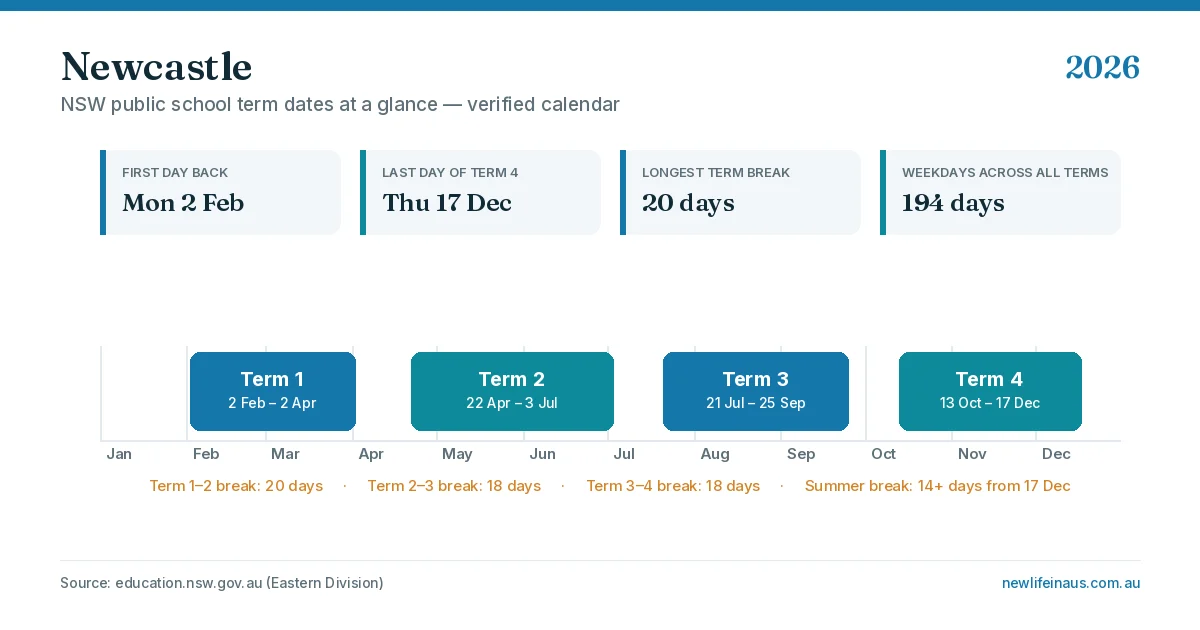
Newcastle schools operate under the NSW Department of Education calendar for 2026, establishing consistent holiday periods across the Hunter region. The official calendar divides the academic year into four distinct terms, separated by summer holidays (December-January), autumn break (April), winter holidays (July), and spring break (September-October).
Government schools throughout Newcastle follow identical term dates, ensuring families can coordinate activities across multiple schools. However, Catholic schools and independent schools maintain flexibility to adjust their calendars slightly, particularly around religious observances and school-specific development days.
Four Main Holiday Periods Structure
The 2026 academic calendar establishes four primary holiday periods that align with seasonal breaks across Australia. Summer holidays provide the longest break, typically spanning six to seven weeks from mid-December through late January. Meanwhile, autumn, winter, and spring breaks each offer approximately two weeks of holiday time.
Term lengths remain consistent with previous years, ensuring students receive adequate instruction time while providing regular breaks for rest and family activities. Each holiday period serves specific purposes: summer allows for extended family travel, autumn coincides with Easter celebrations, winter provides mid-year recuperation, and spring offers preparation for final term assessments.
Hunter Region and NSW System Alignment
Newcastle’s calendar synchronizes perfectly with the broader Hunter region school system, including Maitland, Port Stephens, and Lake Macquarie areas. This alignment facilitates regional sporting competitions, inter-school activities, and coordinated professional development for teachers across the Hunter Valley.
Furthermore, the calendar matches the NSW state-wide system, enabling seamless transitions for families relocating within the state. Students moving from Newcastle to Sydney, Wollongong, or regional NSW centers experience no disruption to their academic calendar, maintaining educational continuity throughout the year.
Government vs Catholic vs Independent School Differences
Government schools in Newcastle strictly adhere to the NSW Department of Education calendar without variation. These schools commence and conclude terms on identical dates, ensuring consistency for families with children attending different government institutions across the city.
Conversely, Catholic schools may adjust their calendars to accommodate religious celebrations, patron saint feast days, or diocesan requirements. For detailed Catholic school dates, families should consult our Catholic School Holidays 2026 guide. These variations typically involve minor adjustments to term commencement or conclusion dates rather than complete calendar restructuring.
Independent schools exercise the greatest flexibility in calendar planning, often incorporating unique traditions, international exchange programs, or specialized academic schedules. Some prestigious Newcastle independent schools may extend terms slightly or adjust development day scheduling to accommodate their specific educational philosophies and community needs.
Important Planning Note
Term 1 2026: Summer to Autumn Break
Term 1 2026 commences on Tuesday, January 28, 2026 and concludes on Friday, April 10, 2026, spanning 11 weeks of instruction. This opening term establishes the academic foundation for Newcastle students, transitioning them from summer holidays into structured learning environments across government, Catholic, and independent schools.
The term duration provides sufficient time for curriculum establishment, assessment baseline setting, and student adjustment to new academic year expectations. Additionally, teachers utilize early weeks for relationship building, classroom routine establishment, and learning objective introduction that guide student progress throughout 2026.
Autumn School Holiday Period
Following Term 1 conclusion, students enjoy a two-week autumn break from Monday, April 13 to Friday, April 24, 2026. This mid-year pause allows families to plan Easter celebrations, school holiday activities, and educational excursions throughout the Hunter Valley region.
The autumn holidays coincide with perfect weather conditions for outdoor adventures, camping trips, and cultural experiences. Furthermore, many Newcastle attractions offer special school holiday programs during this period, providing enriching experiences for students of all ages.
Public Holidays Impacting Term Length
Australia Day falls on Monday, January 26, 2026, occurring before Term 1 commencement and therefore not affecting instructional days. However, this positioning allows families to conclude summer holiday celebrations before academic responsibilities resume.
Conversely, Easter holidays significantly influence Term 1 structure, with Good Friday on April 18, 2026 and Easter Monday on April 21, 2026 falling within the autumn break period. This alignment ensures uninterrupted classroom instruction while preserving important religious observances for Newcastle’s diverse community.
ANZAC Day occurs on Friday, April 25, 2026, immediately following the autumn break conclusion. Since this date precedes Term 2 commencement, students experience no disruption to their learning schedule while maintaining opportunities for commemorative activities and community participation.
Key Term 1 Events and Milestones
Term 1 encompasses several critical educational milestones that shape student academic trajectories. School development days typically occur during the first week, allowing teachers to finalize curriculum planning, resource preparation, and assessment strategy development before student arrival.
Swimming carnivals traditionally take place during February and March, capitalizing on warm weather conditions and student fitness levels following summer activities. These events foster house spirit, competitive excellence, and community engagement across Newcastle schools.
Moreover, parent-teacher interviews commonly occur during late March, providing early academic progress feedback and collaborative goal setting for the remainder of 2026. This timing enables prompt intervention strategies for students requiring additional support or extension opportunities.
Year 12 students face particular significance during Term 1, with HSC subject selection finalization and preliminary assessment task commencement establishing foundations for their final academic year. Additionally, university preparation programs and career counseling sessions intensify during this period, supporting post-graduation planning processes.
Term 2 2026: Autumn to Winter Break
Term 2 2026 commences on Tuesday, April 29 following the autumn holiday break, establishing the academic rhythm for Newcastle schools through the cooler months. This term spans approximately 10 weeks until the winter holidays begin, encompassing crucial assessment periods and public holiday observances that shape the educational calendar.
Students return refreshed from their two-week autumn break that concluded on April 28, ready to tackle mid-year curriculum objectives and assessment milestones. Furthermore, the term structure accommodates various public holidays while maintaining consistent learning progression across Newcastle’s educational institutions.
Winter Holiday Period Overview
The winter holidays 2026 commence on Friday, July 3 and extend through Sunday, July 19, providing students with a substantial 17-day break during the coldest months. This extended period allows families to plan winter activities, interstate travel, or international holidays while students recharge for Term 3 challenges.
Additionally, the winter break timing aligns strategically with mid-year academic cycles, enabling teachers to complete assessment marking, report preparation, and curriculum planning for the second semester. Schools typically utilize several days within this break for professional development and facility maintenance activities.
Public Holiday Impacts During Term 2
Anzac Day 2026 falls on Saturday, April 25, occurring during the autumn holidays and therefore creating no disruption to Term 2 learning schedules. However, schools often incorporate Anzac commemorative activities during the first week of term, honoring this significant national observance through assemblies, wreath-laying ceremonies, and educational programs.
The Queen’s Birthday public holiday occurs on Monday, June 8, 2026, providing students and staff with a long weekend mid-term. This timing offers welcome respite during intensive assessment periods while maintaining educational momentum throughout the term.
Holiday Planning Tip
Mid-Year Assessment Periods
Term 2 encompasses critical mid-year assessment periods that determine student academic progress and inform semester reporting. Most Newcastle schools schedule major examinations during weeks 8-9 of the term, typically occurring in mid-to-late June before winter holidays commence.
Year 12 students face particularly intensive assessment schedules during this period, with HSC trial examinations and major assessment tasks contributing significantly to their final academic outcomes. Meanwhile, junior secondary students complete semester examinations that inform subject selection processes for the following year.
Primary school assessment focuses on literacy and numeracy benchmarking, with NAPLAN results typically released during Term 2, providing valuable feedback on student achievement levels. Teachers utilize this data to adjust instructional strategies and identify students requiring additional support or extension opportunities.
Parent-teacher interviews commonly occur during the final weeks of Term 2, enabling comprehensive discussion of mid-year progress reports and collaborative goal setting for Term 3. This timing allows families to address any academic concerns before the winter break and plan appropriate support strategies for continued success.
Term 3 2026: Winter to Spring Break
Term 3 2026 commences on Monday, July 21, 2026, marking the return to classrooms after winter holidays across Newcastle’s educational institutions. This term extends until Friday, September 25, 2026, creating the longest academic period of the school year with approximately 10 weeks of instruction time.
The extended duration of Term 3 presents unique challenges and opportunities for Newcastle families. Students experience sustained learning without major interruptions, while teachers implement comprehensive curriculum units that benefit from uninterrupted delivery. However, families must plan carefully for the lengthy period between holidays, particularly when managing childcare arrangements and maintaining student motivation.
Spring Holiday Timing and Duration
Spring holidays in Newcastle begin immediately after Term 3 concludes, running from Saturday, September 26 through Sunday, October 11, 2026. This two-week break provides essential respite before the final term of the academic year commences.
The spring break timing aligns perfectly with seasonal transitions, offering families opportunities to enjoy warmer weather and outdoor activities. Many Newcastle schools organize spring carnival events during the first week back, capitalizing on improved weather conditions and renewed student energy levels.
Managing the Longest Term
Term 3’s extended duration requires strategic planning from Newcastle families to maintain student wellbeing and academic performance. The absence of public holidays during most of this period means students experience continuous school attendance for nearly 50 consecutive school days.
Successful navigation of this lengthy term involves establishing consistent routines, monitoring student stress levels, and planning weekend activities that provide adequate rest and recreation. Furthermore, families often schedule medical appointments, extracurricular activities, and social events strategically to break up the extended school period.
Teachers typically structure Term 3 with varied learning activities, incorporating hands-on projects, excursions, and collaborative work to maintain student engagement throughout the extended period. Additionally, many schools introduce wellbeing programs specifically designed to support students during this marathon term.
School Development Days and Pupil-Free Days
Newcastle schools schedule pupil-free days strategically throughout Term 3 to provide professional development opportunities for staff while offering brief respites for students. Most schools allocate 1-2 pupil-free days during this term, commonly occurring around week 5 or 6 to break up the extended period.
These development days focus on curriculum planning, assessment moderation, and professional learning that directly benefits student outcomes. Meanwhile, families receive advance notice of pupil-free days, typically 4-6 weeks prior, enabling adequate childcare arrangements and work schedule adjustments.
School development activities during Term 3 often emphasize data analysis from mid-year assessments, informing teaching strategies for the remainder of the academic year. Consequently, students benefit from refined instructional approaches when they return to regular classes following these professional development sessions.
Parents can access specific pupil-free day schedules through school newsletters, websites, and the official Catholic School Holidays 2026 calendar for comprehensive term planning across different educational sectors in Newcastle.
Term 4 2026: Spring to Summer Break
Term 4 2026 commences on Monday, October 5th for Newcastle public schools, marking the final academic quarter before summer holidays. This term typically runs for 10 weeks, concluding with staggered end dates across different year levels to accommodate examination periods and administrative requirements.
Primary school students complete their academic year on Friday, December 18th, 2026, while secondary students finish earlier to allow for HSC examination periods. Year 12 students typically conclude regular classes by mid-November, transitioning into their final assessment phase before graduation ceremonies.
End of School Year Schedule
| Year Level | Last Day of Classes | Final Activities |
|---|---|---|
| Years K-6 | December 18, 2026 | Graduation ceremonies, awards |
| Years 7-11 | December 16, 2026 | Final assessments, reports |
| Year 12 | November 15, 2026 | HSC exams, formal events |
Newcastle schools coordinate their conclusion dates with NSW Department of Education guidelines, ensuring consistent scheduling across the Hunter region. Subsequently, teachers utilize the additional days for report writing, assessment compilation, and preparation for the following academic year.
Summer Holiday Period
Summer holidays commence immediately following the last day of Term 4, extending for approximately 6-7 weeks until Term 1 2027 begins. Primary school students enjoy their break from December 19, 2026, while secondary students start holidays slightly earlier depending on their year level completion dates.
The extended summer break provides families with opportunities for travel, recreational activities, and quality time together during the warmer months. Moreover, many Newcastle schools offer vacation care programs and summer learning activities to support working parents and maintain student engagement during the extended break.
HSC and Final Assessment Timeline
Year 12 students face their Higher School Certificate examinations throughout November 2026, with the examination period typically spanning 3-4 weeks. Trial HSC examinations occur during Term 3, while the official HSC exam period commences in early November following the conclusion of regular classes.
Final assessment submission deadlines fall in mid-October 2026 for major works and practical examinations. Additionally, Year 11 students complete their preliminary course assessments by early December, preparing for their transition into HSC coursework the following year.
Newcastle secondary schools coordinate closely with NESA (NSW Education Standards Authority) to ensure all assessment requirements meet state standards. Furthermore, schools provide extensive support services including study groups, examination preparation workshops, and counseling services throughout the final assessment period.
Parents and students can access detailed examination timetables through school portals and the official NSW school holidays 2026 calendar, enabling comprehensive planning for this crucial academic milestone.
School Development Days and Pupil-Free Days
Newcastle schools schedule five pupil-free days throughout 2026 for mandatory staff development and professional learning activities. These development days typically fall on strategic dates adjacent to school holidays or term breaks, maximizing educational benefits while minimizing disruption to family schedules.
Most Newcastle primary and secondary schools implement their first development day during the week preceding Term 1 commencement in late January 2026. Subsequently, schools distribute the remaining four days across Terms 2, 3, and 4, with many institutions clustering two days around mid-year breaks or professional learning conferences.
Professional Learning Schedule
Staff development activities focus on curriculum implementation, assessment strategies, and educational technology integration throughout 2026. Teachers participate in workshops covering new syllabus requirements, differentiated learning approaches, and student wellbeing initiatives during these dedicated professional learning days.
Newcastle schools coordinate their development schedules with the Hunter Regional Office to ensure consistent professional learning opportunities across the district. Additionally, many schools align their pupil-free days with Catholic school systems to facilitate shared professional development programs and resource allocation.
Impact on Working Families
Pupil-free days create significant childcare challenges for working parents, particularly when schools provide minimal advance notice of development day scheduling. Consequently, many Newcastle families rely on vacation care programs, extended family support, or flexible work arrangements to manage these unexpected school closures.
Planning Alert
Several Newcastle schools offer supervised activities or study programs during development days, though these services typically require advance booking and additional fees. Furthermore, local community centers and childcare providers often expand their programs on known development days to support working families.
School-Specific Variations
Individual Newcastle schools maintain flexibility in scheduling their five allocated development days, leading to variations across the region. While government schools follow NSW Department of Education guidelines, independent and Catholic schools may align their development days with different professional learning calendars.
- Government schools: Typically schedule development days on Fridays before long weekends
- Independent schools: Often cluster development days around major conferences or training events
- Catholic schools: Coordinate with diocesan professional learning programs
- Specialist schools: May require additional development days for specialized training
Parents should check their specific school’s website or contact the administration office for confirmed development day dates, as these schedules finalize closer to each term commencement. Moreover, schools typically communicate development day schedules through newsletters, parent portals, and community notices to ensure adequate planning time for families.
Newcastle Area School Variations
Newcastle’s diverse educational landscape creates variations in school holidays newcastle 2026 schedules across different school sectors. While government schools maintain strict adherence to NSW Department of Education calendars, Catholic systemic schools and independent institutions exercise greater flexibility in their term arrangements.
Government School Standard Calendar Adherence
Public schools throughout Newcastle follow the standardized NSW school calendar without deviation. These institutions commence and conclude each term on identical dates, ensuring consistency across the Hunter region. Additionally, government schools coordinate their development days according to departmental guidelines, creating predictable patterns for families.
Newcastle’s primary schools and high schools within the public system observe the same holiday periods, facilitating easier planning for families with children across multiple year levels. Furthermore, specialized government schools, including selective high schools and support units, maintain alignment with mainstream public school calendars.
Catholic Systemic School Differences
Catholic schools in Newcastle may vary their term dates by up to one week from government school schedules. The Catholic Schools Office coordinates these variations to align with diocesan professional development programs and religious observances. Consequently, families should verify specific dates with their Catholic school calendar rather than assuming alignment with public holidays.
Most Catholic primary and secondary schools in Newcastle begin terms slightly earlier or later than their government counterparts. However, these institutions typically maintain similar holiday durations, ensuring adequate rest periods for students and staff.
Independent School Calendar Variations
Independent schools demonstrate the greatest flexibility in their 2026 calendar arrangements. These institutions often extend holiday periods or adjust term commencement dates to accommodate international exchange programs, specialized curricula, or boarding arrangements.
| School Type | Calendar Flexibility | Typical Variations |
|---|---|---|
| Government Schools | None | Standard NSW dates |
| Catholic Schools | Limited | ±1 week adjustment |
| Independent Schools | High | ±2 weeks adjustment |
Several Newcastle independent schools schedule longer winter holidays or extended Christmas breaks. Moreover, these institutions may cluster development days differently, creating unique patterns that require careful family coordination.
Regional Considerations for Hunter Valley and Lake Macquarie
Schools throughout the broader Hunter Valley and Lake Macquarie regions generally align with Newcastle’s calendar patterns. However, rural and remote schools may implement slight variations to accommodate agricultural cycles, local events, or transportation challenges.
Mining communities within the Hunter Valley sometimes coordinate school holidays with major industry shutdown periods. Similarly, coastal schools around Lake Macquarie may adjust development days to avoid peak tourism periods when traffic congestion affects student transportation.
Important Planning Note
Holiday Planning for Newcastle Families
Planning family activities during school holidays Newcastle 2026 requires strategic coordination across multiple dimensions. Newcastle families face unique challenges when managing extended holiday periods, particularly during the summer Christmas break and winter holidays. Successful holiday planning involves balancing childcare arrangements, activity scheduling, travel coordination, and budget management.
Childcare Options During School Holidays
Vacation care programs provide essential support for working parents throughout Newcastle’s school holiday periods. Most childcare centers expand their capacity during holidays, offering full-day programs that combine recreational activities with educational components. Additionally, many centers provide specialized holiday themes, excursions, and skill-building workshops.
Family day care providers often offer flexible arrangements during school breaks. These services typically accommodate irregular schedules and provide personalized attention in home-based environments. Furthermore, nanny sharing arrangements between neighboring families create cost-effective solutions while maintaining familiar care relationships.
Extended family networks play crucial roles in Newcastle’s holiday childcare landscape. Grandparents, aunts, uncles, and family friends frequently coordinate schedules to provide supervised care during peak holiday periods. However, families should establish clear expectations and backup plans when relying on informal care arrangements.
Local Holiday Programs and Activities
Newcastle City Council operates comprehensive holiday programs across multiple venues throughout the city. These programs typically include sports activities, arts and crafts, educational workshops, and supervised playground access. Moreover, council programs maintain affordable pricing structures to ensure broad community accessibility.
Sports clubs throughout Newcastle expand their offerings during school holidays. Swimming centers, tennis clubs, basketball associations, and football clubs provide intensive coaching programs, holiday camps, and recreational activities. These programs combine skill development with social interaction opportunities for children across various age groups.
Cultural institutions enhance their programming during holiday periods. The Newcastle Museum, Newcastle Art Gallery, and local libraries coordinate special exhibitions, workshops, and educational activities designed specifically for school-aged participants. Additionally, these venues often provide air-conditioned environments during hot summer holidays.
- Outdoor adventure programs utilizing Newcastle’s coastal and bushland environments
- Technology workshops covering coding, robotics, and digital media creation
- Performing arts intensives including drama, music, and dance programs
- Environmental education programs focusing on local ecosystems and conservation
Travel Planning Around School Calendar
Newcastle families coordinate travel plans with NSW school holidays 2026 to maximize vacation opportunities while managing costs. Peak travel periods coincide with major school breaks, resulting in higher accommodation rates and increased booking competition. Therefore, early planning becomes essential for securing preferred destinations and reasonable pricing.
Domestic travel patterns show Newcastle families frequently choosing destinations within driving distance during shorter holiday periods. The Central Coast, Port Stephens, and Blue Mountains provide accessible options that minimize travel time and costs. Conversely, longer summer holidays enable interstate and international travel planning.
Flight booking strategies require careful timing considerations. Airlines typically release holiday period schedules approximately 11 months in advance, allowing families to secure seats before peak demand periods. Furthermore, flexible travel dates during school holidays can yield significant savings, particularly for mid-week departures and returns.
Accommodation booking requires strategic timing and flexibility. Holiday rental properties often implement minimum stay requirements during school holidays, while hotels may offer family packages that include meals and activities. Additionally, camping and caravan parks provide budget-friendly alternatives that appeal to families seeking outdoor experiences.
Budget Considerations for Extended Holiday Periods
Holiday budgeting requires comprehensive planning that accounts for multiple expense categories. Childcare costs often increase during school holidays due to extended hours and specialized programming. Meanwhile, activity expenses accumulate rapidly when families participate in multiple programs, excursions, and entertainment options.
Holiday Budget Planning
Food expenses increase significantly when children remain home during holidays. Families typically spend 30-40% more on groceries during school holiday periods due to increased meal frequency, snack consumption, and special occasion dining. Additionally, eating out becomes more frequent when families engage in day-long activities and excursions.
Transportation costs escalate during holiday periods, particularly for families accessing multiple activity venues. Fuel expenses, parking fees, and public transport costs accumulate quickly when coordinating daily activities across Newcastle’s suburban landscape. Consequently, many families invest in activity programs within walking distance or organize carpooling arrangements with neighboring families.
Entertainment and activity expenses vary significantly based on family choices and children’s ages. Movie tickets, theme park entries, sporting event attendance, and recreational facility access create substantial budget impacts. However, Newcastle offers numerous free activities including beach access, park facilities, and community events that help balance holiday entertainment costs.
For families managing multiple school systems, coordinating with Catholic school holiday dates ensures comprehensive planning across different educational institutions. This coordination becomes particularly important for families with children attending various school types throughout Newcastle’s diverse educational landscape.
Frequently Asked Questions
What are the NSW school term dates for 2026?
NSW school term dates for 2026 follow the standard four-term structure with summer holidays from mid-December to late January, autumn break in April, winter holidays in July, and spring break in September-October. Each term break lasts approximately two weeks, except for the extended summer holiday period of 6-7 weeks.
What date is the end of school year 2026?
The school year 2026 typically ends in mid-December for NSW government schools, including Newcastle schools. The exact date varies slightly between primary and secondary schools, with Year 12 students finishing earlier for HSC examinations and younger students continuing until the official term end date.
Will Anzac Day be a public holiday in 2026?
Yes, Anzac Day will be a public holiday in 2026 on April 25th. This public holiday affects term lengths and may create extended break opportunities for Newcastle families, particularly if it falls adjacent to existing school holidays or weekends.
How to maximise holiday 2026 in NSW?
To maximise holidays in 2026, Newcastle families should plan around public holidays like Australia Day, Easter, and Anzac Day which create long weekends. Consider taking annual leave adjacent to school holidays, particularly during autumn and spring breaks, to extend family vacation time without impacting children’s education.
Do Catholic and independent schools in Newcastle follow the same holiday dates?
Catholic and independent schools in Newcastle may have slight variations from government school dates. While they generally align with the four main holiday periods, these schools maintain flexibility to adjust calendars around religious observances and school-specific development days.
What are school development days and how do they affect Newcastle families?
School development days are pupil-free days when teachers engage in professional development. These days vary between individual Newcastle schools and require separate childcare arrangements, as students don’t attend classes but the days aren’t considered official holidays.
Are Newcastle school holidays the same as other Hunter region areas?
Yes, Newcastle school holidays synchronize perfectly with the broader Hunter region, including Maitland, Port Stephens, and Lake Macquarie areas. This alignment facilitates regional sporting competitions, inter-school activities, and coordinated family planning across the Hunter Valley.
Where can I find the official NSW school holidays 2026 PDF?
The official NSW school holidays 2026 PDF is available from the NSW Department of Education website. This document provides comprehensive term dates, public holidays, and important calendar information for all government schools across NSW, including Newcastle.
How do Newcastle primary school holidays differ from secondary schools?
Primary school holidays in Newcastle generally follow identical dates to secondary schools for the four main holiday periods. However, Year 12 students typically finish earlier in December due to HSC examinations, while primary students continue until the official term end date.
What should Newcastle parents consider when planning around school holidays?
- Childcare arrangements during development days and pupil-free days
- Budget planning for extended holiday periods and family activities
- Public holiday impacts on term lengths and long weekend opportunities
- School-specific variations between government, Catholic, and independent institutions
How do Newcastle school holidays compare to other Australian states?
Newcastle follows the NSW calendar structure which differs from Victoria and Queensland school holidays. While all states have four main holiday periods, the exact dates and term lengths vary. Families traveling interstate should check specific state calendars for accurate planning.
When should Newcastle families book holiday accommodation for 2026?
Newcastle families should book holiday accommodation well in advance for peak periods like summer holidays and winter breaks. Popular destinations fill quickly during school holiday periods, so booking 6-12 months ahead ensures better availability and pricing for family vacations.
Do Newcastle schools have additional pupil-free days beyond standard holidays?
Yes, Newcastle schools typically have additional pupil-free days throughout the year for staff development, parent-teacher interviews, and administrative purposes. These days vary by individual school and aren’t part of the standard holiday calendar, requiring separate childcare planning.