Air Fryer Times and Temperatures (2026): The Complete Australian Chart

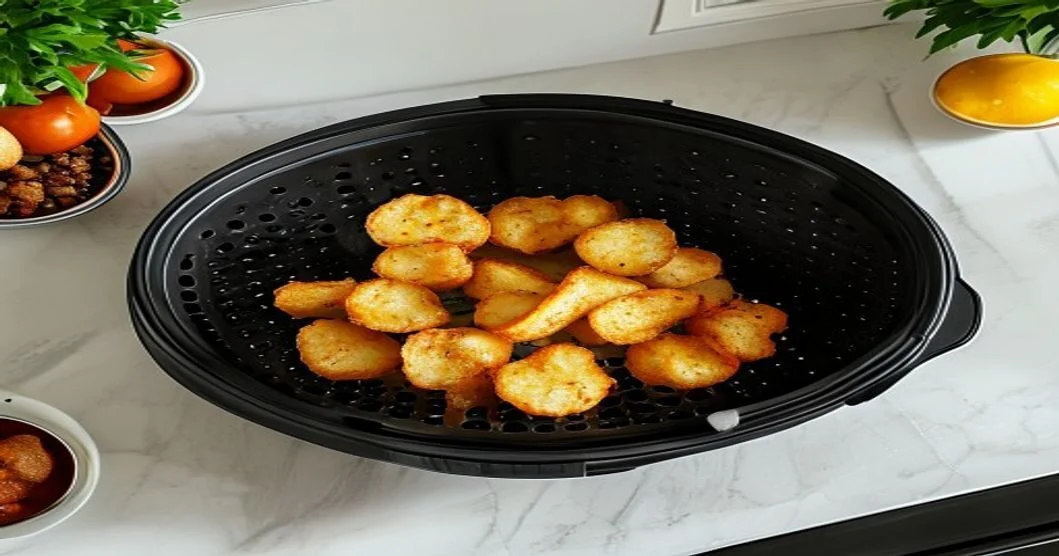
The air fryer is the most-owned kitchen appliance in Australia that nobody was given instructions for. Most come with a one-page leaflet, a few presets, and no real chart — so people guess, burn things, and end up using it for frozen chips and nothing else.
This is the chart. Times and temperatures for around fifty foods in Celsius, drawn from the Philips and Ninja manuals and Kmart’s own presets, with the disagreements between manufacturers shown rather than averaged away. Plus the answers to the questions people actually search — can you put foil in it, do you need to preheat, what does it cost to run, and how do you convert an oven recipe — and ten recipes worth cooking.
The short version
- Most things: 180–200°C for 10–25 minutes, shaken or turned once. That covers 80% of what you’ll cook.
- Converting an oven recipe: drop the temperature about 15–20°C and check 20% early. Ninja’s manual says reduce by 25°F, which is roughly 15°C.
- Preheating: manufacturers disagree. Philips says it isn’t necessary; Ninja recommends 3 minutes. CHOICE splits it — preheat for fresh food, skip it for frozen.
- Foil: also disputed. Ninja’s own recipes use it. Philips says don’t, because loose foil can be sucked into the element and burn.
- Don’t cook fresh potato above 180°C. That’s an FSANZ acrylamide recommendation, not a preference. Golden, not brown.
- Running cost: CHOICE measured about a third of an oven. Sausages and veg came out at 9c in an air fryer against 31c in an oven.
- Buy on measured capacity, not the number on the box. CHOICE found a “6L” model that fits 4L.
The complete time and temperature chart
Every air fryer is slightly different, so treat these as a starting point and check a few minutes early the first time you cook something. Times assume a standard basket air fryer with food in a single layer — the most common reason food comes out pale and soggy is that the basket was overloaded.
Where a row is marked consensus, no manufacturer publishes a figure for that food and the time comes from general practice — check those ones especially carefully.
| Food | Temp | Time | Notes |
|---|---|---|---|
| Potatoes and chips | |||
| Frozen chips (thin), 200–500g | 180°C | 16–22 min | Shake 2–3 times. No oil — they’re already oiled |
| Frozen chips, large 900g load | 180°C | 28–32 min | Bigger load needs longer, not hotter |
| Hand-cut chips, fresh | 180°C | 18–26 min | Soak 30 min in cold water, dry thoroughly, 1 tbsp oil. Don’t exceed 180°C |
| Potato wedges | 200°C | 18–20 min | 1 tbsp oil, shake once |
| Whole / baby potatoes | 200°C | 30–35 min | Pierce with a fork three times, turn once |
| Sweet potato chunks | 200°C | 15–20 min | 2.5cm cubes, 1 tbsp oil |
| Hash browns (frozen) | 180°C | 18–22 min | Shake once, single layer |
| Chicken — cook to 75°C internal | |||
| Chicken breast, boneless | 180–190°C | 18–25 min | Turn halfway, brush with oil. Philips 180°C, Ninja 190°C |
| Chicken breast, bone-in | 190°C | 25–35 min | Turn halfway |
| Chicken thigh, boneless | 200°C | 18–22 min | Turn halfway |
| Chicken thigh, bone-in | 200°C | 22–28 min | Turn halfway |
| Drumsticks | 180°C | 18–25 min | Turn halfway. Kmart’s preset is 180°C / 25 min |
| Wings, ~900g | 200°C | 22–26 min | 1 tbsp oil, shake twice |
| Frozen crumbed chicken | 200°C | 18–21 min | Turn halfway, no oil |
| Nuggets (frozen) | 200°C | 10–15 min | Shake halfway |
| Beef, pork and lamb | |||
| Thick snags (beef or pork) | 180°C | 15–20 min | Consensus. Turn 2–3 times. Must reach 75°C inside |
| Thin sausages | 200°C | 9–13 min | Turn halfway |
| Bacon | 175°C | 8–10 min | Separate the rashers, single layer, no oil |
| Steak, 2.5cm — medium rare | 200°C | 10–12 min | Pat dry, turn halfway, pull at 63°C, rest 3–5 min |
| Steak, 2.5cm — medium | 200°C | 13–15 min | Pull at 71°C, rest 3–5 min |
| Pork chops, boneless | 200°C | 11–15 min | Turn halfway, target 70°C |
| Lamb chops | 200°C | 8–14 min | Consensus. Turn halfway. 63°C medium rare, 71°C medium |
| Fish and seafood | |||
| Salmon fillet | 200°C | 10–13 min | Skin down, brush with oil, no turn |
| White fish fillet, ~2cm | 180–190°C | 8–12 min | Sources vary widely here — cook until it flakes, about 63°C |
| Crumbed fish (frozen) | 200°C | 14–16 min | Turn halfway, no oil |
| Fish fingers | 200°C | 10–13 min | Shake halfway |
| Prawns, large peeled | 200°C | 7–10 min | 1 tbsp oil, shake once |
| Vegetables — toss in about 1 tbsp oil per kilo | |||
| Mixed chopped vegetables | 180°C | 10–20 min | Shake halfway, to taste |
| Broccoli florets | 200°C | 10–12 min | 2.5cm florets |
| Cauliflower florets | 200°C | 15–20 min | Needs more oil than broccoli |
| Carrots, 1cm pieces | 200°C | 13–16 min | Shake halfway |
| Pumpkin, 2.5–5cm chunks | 200°C | 20–25 min | Consensus — based on the butternut squash figure |
| Mushrooms, quartered | 200°C | 7–9 min | Shake once |
| Brussels sprouts, halved | 200°C | 15–20 min | Cut side down first |
| Capsicum, whole (to roast) | 205°C | 25–30 min | Turn, no oil |
| Green beans | 200°C | 8–10 min | Shake once |
| Zucchini | 200°C | 15–18 min | Shake once |
| Corn on the cob | 200°C | 12–15 min | Husks off, turn once |
| Eggs, cheese and tofu — all consensus figures | |||
| Hard “boiled” eggs | 120°C | 14–15 min | Straight into ice water after. Jammy: 130°C / 11 min |
| Halloumi, 1cm slices | 200°C | 4–6 min | Never directly on a bare basket — use a lined tray |
| Tofu, firm, 2cm cubes | 200°C | 12–15 min | Press 20 min, dry, toss in oil and cornflour, shake halfway |
| Frozen party food | |||
| Spring rolls | 200°C | 10–15 min | Shake halfway |
| Dim sims | 200°C | ~12 min | Consensus. Turn halfway |
| Party pies | 180°C | 12–18 min | Consensus. Turn once |
| Sausage rolls | 180–190°C | 12–20 min | Consensus. Turn once |
| Mozzarella sticks | 190°C | 8–10 min | Single layer, don’t overcook or they burst |
| Reheating — all consensus. Reheat to 75°C in the centre | |||
| Pizza slice | 175°C | 3–4 min | Better than a microwave by a wide margin |
| Roast potatoes and chips | 190–200°C | 4–6 min | Shake once |
| Fried chicken | 190°C | 5–8 min | Skin crisps back up properly |
| Pastry — pies, sausage rolls, samosas | 160–165°C | 4–8 min | Lower and slower so the filling heats through |
A meat thermometer is about $15 and turns most of this from guesswork into certainty. The Food Safety Information Council’s targets: poultry and sausages 75°C, pork 70°C, fish 63°C, beef and lamb 63°C for medium rare and 71°C for medium.
Converting an oven recipe
An air fryer is a small fan-forced oven with the fan very close to the food. That means it runs hotter than the dial suggests and cooks faster.
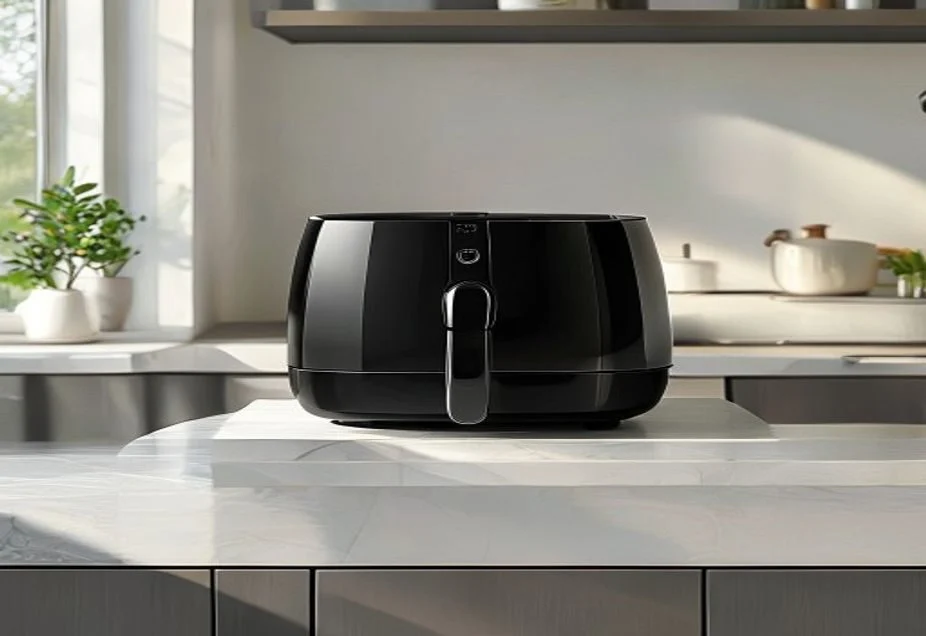
- Drop the temperature. Ninja’s manual says reduce by 25°F, which is about 15°C. In practice 20°C is a safer starting point for anything that browns quickly.
- Cut the time by roughly a fifth, then check early. Ninja doesn’t publish a time reduction; Tefal just says “reduce the cooking times and temperature”. Twenty per cent is the working rule most people land on.
- Halve the quantity or cook in batches. This is the real constraint — a tray of vegetables that fits an oven will need two or three rounds in a basket.
Do you need to preheat? The manufacturers disagree
This is the most confidently-stated wrong answer on the internet, in both directions. Here is what the manufacturers actually say:
Philips — no
“Preheating of the appliance is not necessary.”Straight from the HD920X manual. Tefal takes the same line on its Dual Easy Fry: “no preheat needed”.
Ninja — yes, 3 minutes
“We recommend 3 minutes of preheating”, repeated throughout the AF100 manual, and its support site says to add an extra 3 minutes for best results.Ninja’s own recipe times assume you preheated.
CHOICE’s kitchen expert Fiona Mair gives the most useful version, which is that it depends on what you’re cooking. Not preheating is the number one mistake she sees with fresh food — meat, fish, vegetables, potatoes — because they need to hit a hot surface at the start. For frozen and pre-cooked items it makes no real difference.
The practical rule: preheat 3 minutes for anything fresh, skip it for anything frozen. And follow whichever your own manual says, since the published times are built around it.
Can you put foil in an air fryer?
This is one of the most-searched air fryer questions in Australia, and the honest answer is that the two biggest manufacturers give opposite advice. Anyone telling you it’s simply fine, or simply forbidden, is quoting one brand and ignoring the other.
Philips — don’t
Philips’ official Australian FAQ says foil and baking paper are not recommended, for three reasons: covering the basket base reduces airflow; lining the drip pan disrupts airflow; and “if you put baking paper or tin foil in your Philips Airfryer without placing food on it, [it] could be sucked into the heating element and start to burn.”The manual goes further: “Never use light ingredients or baking paper in the appliance.”
Ninja — yes, with care
SharkNinja states foil and baking paper are safe in the air-fry drawer, and Ninja’s own printed recipes call for it — the Baked Apples recipe says “place aluminum foil into the basket, over crisper plate”.Its only caveat is to keep paper clear of the side walls and heating elements.
The rules that are safe under either brand
- Only ever with food on top holding it down. This is the single rule that matters. Loose foil or paper gets lifted by the fan into the element.
- Never during preheating, and never in an empty basket.
- Never covering the whole base or the perforations — the airflow through those holes is the entire cooking mechanism. Leave the edges clear.
- Keep it well away from the heating element above.
- Avoid foil with acidic foods — tomato, citrus, vinegar-based marinades — since acid corrodes aluminium. (This one is general practice rather than a manufacturer instruction.)
- Pre-cut perforated liners are the better answer than either. They’re a few dollars, designed for the airflow, and available anywhere.
- If you own a Philips, follow Philips. Its instruction is simply not to.
What should never go in
- Wet batter. Tempura, beer batter, anything that drips. As CHOICE puts it, “the coating will simply slip through the basket and you’ll end up with a disappointing mess”. Use flour, then egg, then breadcrumbs, and press the crumbs on firmly.
- Loose light food. Bare leafy greens and unweighted paper get blown into the element. Philips is blunt: “never use light ingredients”.
- Oil in the pan. Both Philips and Ninja are explicit — do not fill the pan with oil, it is a fire hazard. An air fryer is not a deep fryer.
- Too much oil generally. About one tablespoon per kilo of fresh food. Frozen food needs none, because it’s already been oiled.
- An overfilled basket. The most common mistake of all. CHOICE: overfilling “causes uneven cooking and browning, as well as uncooked soggy areas”. Cook two batches instead.
- Cheese straight on the basket. It melts through the holes, bakes onto the element tray and ruins the coating. Use a lined tray with food on it.
- Liquid dishes. Tefal: “the air fryer is not suitable for liquid based dishes.”
- Salt during cooking. Tefal specifically warns that salting mid-cook scratches and pits the coating. Salt at the end.
- Metal utensils and steel wool. Both wreck the non-stick.
On aerosol oil sprays: they’re widely blamed for stripping non-stick coatings, and it’s plausible, but no manufacturer or Australian consumer body says so — and CHOICE actively recommends using an oil spray for light, even coverage. Treat it as a caution rather than a rule, and if you’re worried, use a refillable pump bottle with plain oil.
Where to put it, and how to clean it
Philips gives a hard number: at least 10cm clear at the back, the sides and above, and nothing on top. CHOICE puts it more memorably — an air fryer is a small fan-forced oven, so “always allow airflow around your appliance, never put it into a cavity.”
Do not run it under a closed overhead cupboard. The exhaust is superheated, moist air; it damages cabinetry, leaves condensation on the wall behind, and recirculating it back into the intake makes the unit overheat.
Clean it after every single use — all three of Philips, Ninja and Tefal say so. CHOICE explains why: leftover residue burns next time, old oil smokes, “it could even pose a fire hazard”. It’s easiest while still warm.
- Dishwasher? Philips and Ninja say yes for the basket and crisper plate. Tefal says hand-wash to prolong its life. Check your own manual.
- Baked-on grease: soak in hot soapy water for 10–15 minutes, then a non-abrasive sponge. Never a scourer.
- The heating element gets greasy and is the bit everyone forgets. Unplug, let it cool, and use a soft brush — never steel wire, which strips its coating.
- Never immerse the main unit. Damp cloth only.
- Lingering smells: Tefal suggests rubbing the basket with a cut lemon, then rinsing.
- Lower the basket in straight, not at an angle — angling it is what chips the coating near the rim.
If your coating does chip, Philips says the materials are food-safe and small spots are not harmful. On the broader question, CHOICE’s position on the PFAS/PTFE coatings used in most baskets is honest and worth quoting rather than paraphrasing: “it is unclear if migration of PFAS chemicals in non-stick cookware into food causes harm to human health.” The science is still developing. If it bothers you, glass, ceramic and stainless baskets now exist and CHOICE tests them.
Are air fryers actually healthier?
Partly, and the claim is narrower than the marketing suggests. Philips advertises “up to 90% less fat” and Tefal “99% less added fat” — but read the footnotes. Tefal’s is 700g of chips cooked in 8ml of oil versus deep frying in two litres. These are claims about added oil compared to deep frying, not claims that air-fried food is healthier than oven-baked food.
So: an air fryer is a genuine improvement on a deep fryer, and roughly a wash against an oven. If you cook frozen chips and nuggets in it, you are eating frozen chips and nuggets — the oil is already in the coating. Where it does help is that it makes cooking fresh vegetables, fish and chicken fast and easy enough that you actually do it.
The real health point: acrylamide
Acrylamide is a chemical that forms when starchy foods are cooked at high temperatures. FSANZ’s position: there is no direct evidence it causes cancer in humans, but it does in laboratory animals, “therefore FSANZ believes that it is prudent to reduce our exposure”. It forms mainly in fried and roasted potato, cereal products and toast — exactly what air fryers are used for.
FSANZ’s actual advice:
- Cook potato products at 180–190°C to a light golden colour only. Not brown.
- Soak cut potatoes in water for 15–30 minutes, or blanch them, before frying or roasting.
- Chunkier chips are preferable — less surface area means less acrylamide.
- Don’t store potatoes in the fridge or in the light; cold storage increases the sugars that form acrylamide.
- Toast bread to the lightest colour you find acceptable.
Philips builds this into its own manual: “do not fry fresh potatoes at a temperature above 180°C”, and food should come out “golden-yellow instead of dark or brown. Remove burnt remnants.” That is why the fresh-chip row in the chart above is capped at 180°C while the frozen row isn’t — and it’s the single most useful thing on this page.
What does an air fryer cost to run?
A typical benchtop air fryer draws 1300 to 1800 watts — Kmart’s 4L is 1300W, its 7L is 1500W. That sounds like a lot, and it is roughly two-thirds of an oven element. The saving comes from the fact that it heats a tiny cavity and finishes much sooner.
CHOICE measured this properly with a smart meter, cooking the same meals in both at 170°C:
| Meal | Oven | Air fryer | Saving |
|---|---|---|---|
| Sausages and roast vegetables | 36 min — 31c | 20 min — 9c | 71% |
| Frozen snacks | 40 min — 34c | 18 min — 8c | 76% |
| Family-size frozen apple pie | 50 min — 43c | 35 min — 15c | 65% |
CHOICE’s summary: an air fryer uses about half the electricity per hour of an oven at the same temperature, and finishes faster on top of that — so about a third of the cost overall. Over a year, CHOICE puts air fryers at $9 to $51 and ovens at $31 to $65.
For context on the rate: the Victorian Default Offer for 2026–27 sets residential usage between about 26c and 32c per kWh depending on your distributor, and time-of-use peak rates between 4pm and 9pm run 38c to 48c. Cooking dinner at 7pm on a time-of-use plan is the most expensive hour of the day — which is a small extra argument for the appliance that finishes in twenty minutes. If you want to see where cooking sits in your whole bill, our guide to electricity bills in Australia has an estimator.
The one caveat, and CHOICE makes it themselves: if your meal needs three batches in the air fryer, the oven wins. The saving is real for one or two people and evaporates for a household of five.
Buying one in Australia
Kmart dominates this category in Australia, and its prices as at July 2026 are genuinely low:
| Model | Price | Power | Real capacity |
|---|---|---|---|
| Kmart 4L space-saving | $49 | 1300W | 2.2kg max food load |
| Kmart 5L | $59 | 1350–1550W | 3.8L of food |
| Kmart 7L window | $59 | 1500W | 5.8L of food — best value of the three |
| Aldi Ambiano 6.5L (Special Buys) | ~$60 | — | Intermittent stock, model changes each run |
| Ninja AF100 3.8L | ~$150 | 1550W | — |
| Philips / Ninja larger and dual-basket | $170–$300 | — | Heavily discounted — rarely pay RRP |
The capacity trap
The litre figure on the box is often the whole cavity, not the space you can put food in. CHOICE measures both, and found a model claiming 6L that fits 4L, and another claiming 8.3L that fits 5L.
Kmart is actually honest about this in its own listings — the “7L” model states 5.8L of food capacity, and the “5L” states 3.8L. Buy on the food capacity figure, and if it isn’t published, assume you’re getting about two-thirds of the headline number.
- One or two people: 3.5–5L is plenty. CHOICE: a large-capacity air fryer is overkill for one.
- Share house of four or five: 5L minimum, and CHOICE specifically recommends a drawer model of 5L or more — enough for a kilo of chips or a 2kg roast.
- Don’t buy on price alone. CHOICE is direct about this: “many models we recommend cost less than a third of the price of the most expensive model we tested.” They’ve also found $300 models that underperformed $60 ones.
- Performance varies by food. CHOICE found models that produced perfect chips but scored poorly on chicken wings. There is no single best.
- Second-hand is fine for the unit, but check the basket coating carefully — a scratched, flaking basket is the one part you can’t easily replace.
Worth knowing about recalls: air fryers have been recalled in large numbers overseas, and while we couldn’t confirm a current Australian air fryer recall, the sensible habit is to check productsafety.gov.au and sign up for its recall alerts. It takes a minute and covers everything else in your kitchen too.
Ten recipes worth owning one for
Costs are per serve at Australian supermarket prices as at July 2026 and assume you own basic spices. Every one of these fits a 5L basket.
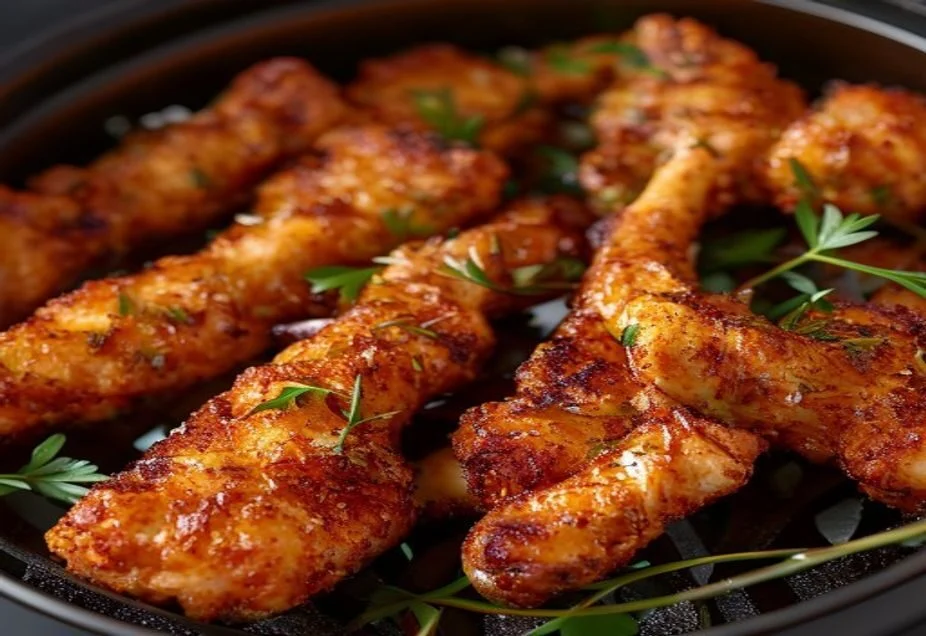
Crispy Chicken Drumsticks
Ingredients
- 8 chicken drumsticks (about 1kg)
- 1 tbsp oil
- 2 tsp paprika, 1 tsp garlic powder
- 1 tsp salt, pepper
Method
- Pat the drumsticks completely dry — this is what makes the skin crisp.
- Toss with the oil and spices until coated.
- Arrange in a single layer, not touching. Cook at 180°C for 22 minutes, turning once.
- Check the thickest part reads 75°C and the juices run clear.
Roast Vegetable Tray
Ingredients
- 500g pumpkin, 2.5cm chunks
- 2 carrots, 1cm slices · 1 red onion, wedges
- 1 capsicum, chunks · 200g broccoli florets
- 1 tbsp oil · 1 tsp cumin · salt
Method
- Toss the pumpkin and carrot with half the oil and spices. Cook at 200°C for 12 minutes.
- Add the onion, capsicum and broccoli with the rest of the oil. Shake.
- Cook another 8–10 minutes until the edges char.
Chicken Schnitzel
Ingredients
- 4 chicken breast fillets, halved horizontally
- ½ cup flour · 2 eggs, beaten
- 1½ cups breadcrumbs
- Oil spray · salt, pepper, paprika
Method
- Flour, then egg, then breadcrumbs. Press the crumbs on hard — loose crumbs blow off in the fan.
- Spray both sides lightly with oil. This is what browns them.
- Cook at 190°C for 14–16 minutes, turning once, until 75°C inside.
Crispy Spiced Chickpeas
Ingredients
- 2 cans chickpeas, drained
- 1 tbsp oil
- 1 tsp each paprika and cumin
- Salt, chilli to taste
Method
- Drain and dry the chickpeas thoroughly on a tea towel. Wet chickpeas steam instead of crisping.
- Toss with oil and spices.
- Cook at 200°C for 14–16 minutes, shaking every 5 minutes, until they rattle.
Proper Roast Potatoes
Ingredients
- 800g potatoes, 3cm chunks
- 1½ tbsp oil
- Salt, pepper, rosemary or garlic powder
Method
- Soak the cut potato in cold water 20–30 minutes, then dry completely.
- Parboil 6 minutes if you want the fluffy interior. Drain and shake the colander to rough up the edges.
- Toss in oil and cook at 180°C for 22–25 minutes, shaking twice, to light golden.
Snags and Veg, One Basket
Ingredients
- 8 thick sausages
- 3 potatoes, 2cm chunks
- 2 carrots · 1 onion, wedges
- 1 tbsp oil for the vegetables only
Method
- Toss the vegetables in oil. Put them in first and cook 8 minutes at 180°C.
- Add the sausages on top. Cook a further 15–18 minutes, turning the snags twice.
- Sausages must reach 75°C inside — they’re a higher-risk food, so don’t judge by colour.
Crispy Tofu
Ingredients
- 450g firm tofu, 2cm cubes
- 1 tbsp cornflour
- 1 tbsp oil · 2 tbsp soy sauce
- 1 tsp garlic powder
Method
- Press the tofu 20–30 minutes under something heavy, wrapped in a tea towel. Skip this and it will never crisp.
- Toss with soy, then with cornflour and oil until each cube is coated.
- Cook at 200°C for 12–15 minutes, shaking twice.
Salmon and Greens
Ingredients
- 2 salmon fillets (about 115g each)
- 200g green beans or broccolini
- 1 tbsp oil · half a lemon
- Salt, pepper
Method
- Brush the salmon with oil, season, place skin side down. Don’t turn it.
- Cook at 200°C for 8 minutes.
- Add the oiled greens alongside and cook a further 4 minutes.
- Squeeze lemon over. The salmon is done at about 63°C, when it flakes.
Halloumi and Roast Veg Bowl
Ingredients
- 180g halloumi, 1cm slices
- 1 capsicum, 1 zucchini, 1 red onion
- 1 can chickpeas, drained and dried
- 1 tbsp oil · 1 tsp oregano · lemon
Method
- Cook the oiled vegetables and chickpeas at 200°C for 14 minutes, shaking once.
- Lay the halloumi on a piece of baking paper on top of the vegetables so it can’t fall through or stick.
- Cook 4–5 minutes more until the cheese is golden at the edges. Lemon over the lot.
Cauliflower "Wings"
Ingredients
- 1 head cauliflower, 2.5cm florets
- 2 tbsp cornflour · 1½ tbsp oil
- 1 tsp smoked paprika, ½ tsp garlic powder
- 2 tbsp barbecue or hot sauce, to finish
Method
- Toss the florets with cornflour, spices and oil until evenly dusted.
- Cook at 200°C for 15–18 minutes, shaking twice.
- Toss in the sauce after cooking, not before — sauce burns in there.
Getting more out of it
- It is the best reheater you own. Pizza, chips, roast potatoes, fried chicken, pastry — all come back crisp instead of the soggy result a microwave gives. This alone justifies the bench space.
- Dry the food. Moisture is the enemy of browning. Pat everything dry: chicken skin, chickpeas, potatoes, tofu.
- Single layer, always. If it doesn’t fit in one layer, do two batches. The second batch cooks faster because the machine is already hot.
- Shake more than you think. Every 5 minutes for small items.
- Sauce and salt at the end. Sugar burns; salt pits the coating.
- Cook once, crisp later. Batch-cook in the oven or a pot, then use the air fryer to crisp individual portions through the week. That’s the pattern that pairs best with meal prep — our guide to cheap healthy meals covers the batch-cooking side.
- Toast, in a pinch. 180°C for 3–4 minutes. Lighter is better, for the acrylamide reason above.
And one honest limitation. An air fryer is excellent at anything that wants a dry, crisp surface, and useless at anything wet — curries, soups, stews, rice, pasta. For a student kitchen, the appliance that handles those is a rice cooker or a slow cooker, and if you’re choosing your first one, a $24 slow cooker does more for batch cooking than an air fryer does. The ideal is one of each.
Frequently asked questions
You May Also Like

Moving to Australia: The Complete Checklist and Guide (2026)

NT Public Holidays 2026: Full Calendar, Dates and How Darwin and Alice Springs Celebrate