Average Bills in Australia (2026): Electricity, Gas, Water & Internet

The average Australian household pays roughly $470 to $585 a quarter for electricity, plus around $230 a quarter for gas (if the home uses it), a water usage bill of about $150 to $300 a quarter, and about $85 a month for internet. Add a mobile plan and you are looking at somewhere near $4,000 to $6,000 a year in household bills for a typical share house or small family — split between the people who live there. This guide breaks down what each bill actually costs in 2026, who pays what when you are renting, and how to bring every one of them down.
It is written for people who are new to the Australian system — international students, new migrants and first-time renters — but the numbers and the rules apply to anyone. All figures are current for 2026 and sourced from the Australian Energy Regulator (AER), Canstar and state water and energy bodies; we flag the ones that change so you know what to re-check.
The four household bills at a glance
Here is the quick version — a typical spread for a two to three person household in a capital city in 2026. Your actual bills depend on your state, the size of your home, the season, and whether the place runs on gas or is all-electric.
| Bill | Typical amount | How it is billed | Who usually pays (renting) |
|---|---|---|---|
| Electricity | $470–$585 / quarter | Quarterly (every ~91 days) | Tenant |
| Gas (if connected) | ~$230 / quarter | Quarterly | Tenant |
| Water usage | $150–$300 / quarter | Quarterly | Tenant (usage only, if eligible) |
| Water & sewerage service | ~$230 / quarter | Quarterly | Landlord / owner |
| Internet (NBN) | ~$85 / month | Monthly | Tenant |
| Mobile phone | $30–$45 / month | Monthly | Individual |
Notice the two water rows. This is the one that catches new renters out: the fixed water and sewerage service charge is almost always the owner’s cost, while the usage portion can be passed to the tenant — but only under strict conditions we cover below. Let’s take each bill in turn, starting with the big one.
Electricity: the biggest and most variable bill
Electricity is the household bill people ask about most, because it is the largest and the one that swings hardest with the weather and your habits. Based on Canstar’s May 2026 Pulse survey of thousands of households, here is what Australians actually reported paying per quarter, by state.
| State | Average quarterly electricity bill | Roughly per year |
|---|---|---|
| Tasmania | $584 | ~$2,336 |
| Queensland | $518 | ~$2,072 |
| New South Wales | $497 | ~$1,988 |
| South Australia | $477 | ~$1,908 |
| Victoria | $470 | ~$1,880 |
| ACT | $433 | ~$1,732 |
The ACT and South Australia reported the lowest bills; Tasmania, Queensland and NSW the highest. South Australia is interesting — it has some of the highest per-unit prices in the country, but also the highest rooftop solar take-up, which pulls the average bill back down.
How much you pay depends heavily on household size
More people in the home means more showers, more cooking, more devices and more heating or cooling — so the bill climbs with household size. Canstar’s 2026 data shows the annual average by number of residents:
A one-person household averages about $1,252 a year; two people about $1,548; three people $1,910; four people $2,015; five people $2,127; and six-plus around $2,447. The jump from one to two people is the steepest, because a lot of usage (fridge, standby power, heating a shared living room) is fixed regardless of how many people share it. That is exactly why a share house is cheaper per person than living alone.
What actually makes up an electricity bill
Every electricity bill in Australia has two core charges, and understanding them is the key to reading — and reducing — your bill:
- Supply charge — a fixed daily fee (in cents per day) just to stay connected to the grid. It is typically around 90c to $1.20 a day, so roughly $80–$110 a quarter before you use a single kilowatt. You pay it even if you go away for a month.
- Usage charge — what you pay for the electricity you actually use, measured in cents per kilowatt-hour (c/kWh). Across the country this sits in a wide band, commonly 25c to 45c per kWh, with South Australia at the top end and the ACT near the bottom.
The usage rate also depends on your tariff — the way your retailer charges you:
- Single-rate (flat): the same price per kWh no matter when you use it. Simple and predictable.
- Time-of-use: higher prices at peak times (usually late afternoon and evening), cheaper off-peak (overnight) and a middle “shoulder” rate. Good if you can shift washing, dishwashing and EV charging to off-peak.
- Controlled load: a separate cheaper rate for a big appliance like an electric hot-water system, metered on its own.
- Demand tariff: adds a charge based on your single highest burst of usage in a period. Easy to get stung on if you run several big appliances at once.
If you are on a standing offer in New South Wales, South Australia or south-east Queensland, the maximum your retailer can charge is capped by the AER’s Default Market Offer (DMO). Victoria has its own version, the Victorian Default Offer, set by the Essential Services Commission. The good news for 2026: in its final DMO determination (26 May 2026), the AER set flat-rate residential prices to fall by between 3.4% and 7.2% across NSW and south-east Queensland from 1 July 2026, with South Australia the exception at a 1.4% rise. Time-of-use offers fell further, by up to 10.7%. So most households on default plans saw prices ease slightly this year — the first fall in a while.
Estimate your own electricity bill
Use the estimator below to get a rough quarterly and annual figure. Pick your state and household size, or — for a sharper number — enter your average daily usage in kWh from a recent bill (it is usually printed on the bill next to a bar graph). The estimate covers grid usage plus the supply charge; it does not subtract solar exports or rebates, so treat it as a ceiling.
Electricity bill estimator
Estimate your quarterly and annual electricity cost. Enter your daily kWh from a bill for a sharper figure.
If the number looks high, that is your cue to shop around — Canstar’s data shows the cheapest single-rate plans in 2026 run from about $1,155 a year in Melbourne and $1,229 in Hobart, up to around $1,933 in Adelaide and $2,032 in Canberra, so the gap between an average plan and the cheapest one is real money.
Gas: only if your home has it
Not every home has gas, and this is changing fast. Many new apartments and houses — especially in Victoria, where new-build gas connections are being phased out — are now all-electric, meaning no gas bill at all. If your place has gas, it usually powers the cooktop, hot water, and sometimes central heating.
The average Australian gas bill is around $230 to $240 a quarter, but the range is enormous — from roughly $124 a quarter in Western Australia to about $300 in New South Wales. The single biggest driver is heating: a Victorian household with gas central heating can pay $200-plus a month across winter, while a Perth household using gas only for hot water and cooking might pay $40 a month. Like electricity, a gas bill combines a fixed daily supply charge with a usage charge (billed in cents per megajoule).
The practical takeaway for renters: before you sign a lease, ask whether the property is all-electric or has gas, and if it has gas heating, budget for a serious winter spike. An all-electric home with reverse-cycle (heat-pump) air conditioning is often cheaper to run overall than gas heating, and it is one less account to set up.
Water: the bill where "who pays" actually matters
Water is where new renters most often get confused or, occasionally, overcharged. Here is the rule that applies across Australia, with state variations underneath it.
A water bill has two parts: fixed service charges (for water supply and sewerage — the cost of being connected) and usage charges (for the litres you actually use). The fixed service charges are almost always the owner’s responsibility. In Sydney, for example, the quarterly water and sewerage service charge is around $233 — and in a rental, that is the landlord’s, not yours.
You, the tenant, can only be charged for water usage, and only if all three of these are true:
- the property is separately (individually) metered, so your usage can be measured;
- the property meets the relevant water-efficiency standard (for example, compliant taps, toilets and no serious leaks); and
- your tenancy agreement states that you pay for water usage.
If any one of those is missing — the place isn’t separately metered, or the taps aren’t water-efficient, or the lease is silent on it — you generally cannot be charged for usage. This is set by each state’s tenancy law, so the detail differs:
- NSW: a tenant pays water usage only if the property is separately metered and meets the water-efficiency measures; the landlord pays all fixed charges.
- Queensland: similar — individually metered, water-efficient, and the agreement must say so.
- Victoria: water corporations bill usage; whether it can be passed to a tenant depends on the meter set-up and the lease. Council rates (a separate property tax) are always the owner’s.
Where you are billed for usage, a typical tenant water bill runs about $150 to $300 a quarter depending on household size and garden. If you receive a water bill that includes service or sewerage charges, query it — those are the owner’s to pay.
Internet and phone: the monthly bills
Unlike the utilities above, internet and mobile are billed monthly, and they are essential — you will want the internet connected on day one for study, banking and job-hunting. Most homes connect through the NBN (National Broadband Network), and plans are sold by speed tier.

| NBN speed tier | Typical monthly cost (2026) | Good for |
|---|---|---|
| NBN 25 (Basic) | ~$55–$70 | One or two people, light use |
| NBN 50 (Standard) | ~$70–$100 | Most share houses and families |
| NBN 100 (Fast) | ~$80–$110 | Heavy streaming, gaming, big households |
The average internet bill in Australia is about $85 a month — roughly $1,020 a year. Watch two traps: most cheap plans quote a six-month promotional price that jumps afterwards (for example ~$65 for six months, then ~$88 ongoing), and providers raised NBN prices by up to $10 a month ($120 a year) from 1 July 2026. In a share house, one NBN plan is shared across everyone, so the per-person cost is small — often $20–$30 each.
For your mobile, a SIM-only plan (no phone included) costs about $30 to $45 a month for a generous data allowance, and prepaid options can be cheaper if you use less. You do not need a locked-in contract — month-to-month SIM plans are the norm and easy to switch. New arrivals can pick up a prepaid SIM at the airport or any supermarket to get started, then move to a better-value plan once settled.
Who pays which bill when you are renting?
Pulling it together, here is the standard division of responsibility in a private rental. It holds in most cases, but your lease is the final word — always read it.
| Cost | Tenant pays | Landlord / owner pays |
|---|---|---|
| Electricity usage & supply | Yes | – |
| Gas usage & supply | Yes | – |
| Water usage | Yes, if eligible (metered, efficient, in lease) | Otherwise |
| Water & sewerage service charge | – | Yes |
| Council rates | – | Yes |
| Internet & phone | Yes | – |
| Connection / new-account fees | Usually | – |
Two situations change this picture:
- Bills-included rooms. Some share-house rooms and student accommodation advertise “all bills included” — the rent covers electricity, water and internet. Convenient, but often priced with a buffer, so it can work out dearer than paying your share directly. Check whether there is a “fair use” cap on electricity.
- Embedded networks. Some apartment buildings buy energy in bulk and on-sell it to residents through an “embedded network”. You may not be able to choose your own retailer, and the rate can be higher than the open market. Ask before signing, and check whether you are allowed to switch.
How to split bills fairly in a share house
In a share house, the accounts are usually in one or two housemates’ names, and everyone chips in. The arguments almost always come from a lack of a system, not a lack of money. Set this up in week one:

- Agree the split up front. The simplest fair method is equal shares per person. If one person clearly uses far more (runs a heater all day, or the house has very different room sizes), agree an adjustment before the bill arrives, not after.
- Put every account in writing. Note whose name each bill is in, so responsibility is clear if someone moves out.
- Use a splitting app or a shared spreadsheet. Free tools let everyone log a bill, see who owes what, and settle up. It removes the awkward chase.
- Pay on time. Late electricity or gas payments can incur fees and, eventually, disconnection — and the person whose name is on the account wears the credit consequences. Set the due dates as calendar reminders.
- Keep a small buffer. Bills land quarterly, so a $500 electricity bill can arrive all at once. Everyone putting aside a little each week avoids the scramble.
Setting up your utilities when you arrive
If you are moving into a place where the accounts aren’t already set up, here is the order of operations:
- Electricity (and gas): pick a retailer and open an account before or on move-in day. You will need your address, move-in date, and ID. Compare plans on the free government site Energy Made Easy (energymadeeasy.gov.au) for NSW, SA, QLD, ACT and Tasmania, or Victorian Energy Compare in Victoria — both show you the cheapest plans for your actual address.
- Water: in most rentals you do nothing — the account stays with the property and the owner. You just pay the usage portion the agent passes on.
- Internet: order early. An NBN connection can take a few days to activate, so arrange it before you move if you can. A mobile hotspot or prepaid data SIM covers the gap.
One warning for new arrivals: because you have no Australian credit history yet, a retailer may ask for a small bond or upfront deposit on an energy account, or you may be offered a plan with a security deposit. This is normal and refundable; it is not a scam.
Concessions and rebates in 2026
The federal government’s universal Energy Bill Relief Fund — the rebates that gave most households automatic credits on their electricity bills — ended on 31 December 2025. The final round paid up to $150, applied automatically in two $75 quarterly instalments across the second half of 2025. There is no universal replacement running in 2026.
What remains is a patchwork of targeted state and territory concessions for eligible groups — typically pensioners, holders of a Health Care Card or Pensioner Concession Card, low-income households, and people with certain medical needs. These are worth hundreds of dollars a year to those who qualify, and you generally have to apply through your energy retailer or state government.
An important note for the audience of this site: most international students on a temporary visa are not eligible for these concessions, because they usually require an Australian concession card that student visa holders don’t hold. Don’t budget assuming a rebate will arrive — treat any concession as a bonus, not a given, and check your specific state’s rules.
How to cut every bill
The average bill is not a fixed cost — these moves genuinely lower it:
- Compare and switch every year. This is the single biggest lever. Retailers quietly move you onto worse rates over time; the government comparison sites above show whether a cheaper plan exists for your address. Switching is free and takes minutes.
- Shift usage off-peak if you are on a time-of-use tariff — run the dishwasher, washing machine and any charging overnight.
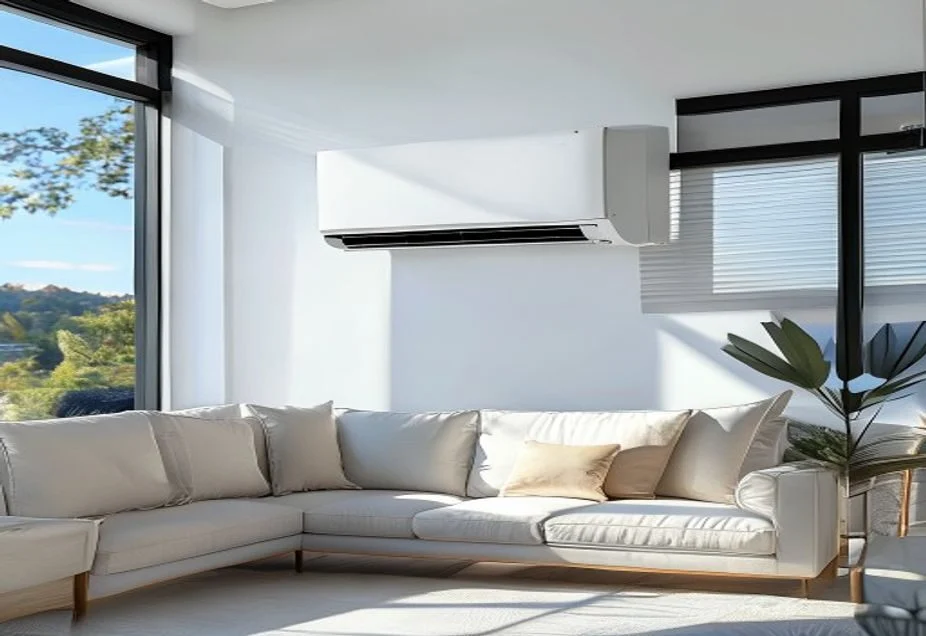
- Heating and cooling is most of the bill. Each degree matters. Aim for around 18–20°C in winter and 24–26°C in summer, and only heat or cool the room you are in. A reverse-cycle air conditioner on the right setting is one of the cheapest ways to heat.
- Kill standby power and switch off the second fridge — small constant draws add up over a quarter.
- Shorter showers cut both water usage and the electricity or gas that heats it.
- If you own the home, rooftop solar is the biggest single lever on an electricity bill — it is why South Australian bills come in low despite high rates. See what it costs in our solar panel price guide.
Bills are a big slice of the cost of living here. For the full picture — rent, food, transport and more — see our cost of living in Australia guide, our breakdown of how much money you need per month as a student, and our guide to how much rent you should pay. Tracking it all is easier with one of the free budgeting apps we cover here.
The bottom line
Household bills in Australia in 2026 come to roughly $4,000–$6,000 a year for a small household, with electricity the biggest and most controllable piece at $470–$585 a quarter. When you rent, you pay for the electricity, gas, internet and phone you use, plus water usage if the place is separately metered and water-efficient and your lease says so — while the owner covers the fixed water and sewerage service charges and council rates. Set up a clear system for splitting bills on day one, compare your energy plan once a year, and treat any rebate as a bonus rather than a certainty. Do those three things and you will keep these bills firmly under control.
You May Also Like

Moving to Australia: The Complete Checklist and Guide (2026)

NT Public Holidays 2026: Full Calendar, Dates and How Darwin and Alice Springs Celebrate