Cheap Healthy Meals in Australia (2026): 10 Recipes, Meal Prep & Costs

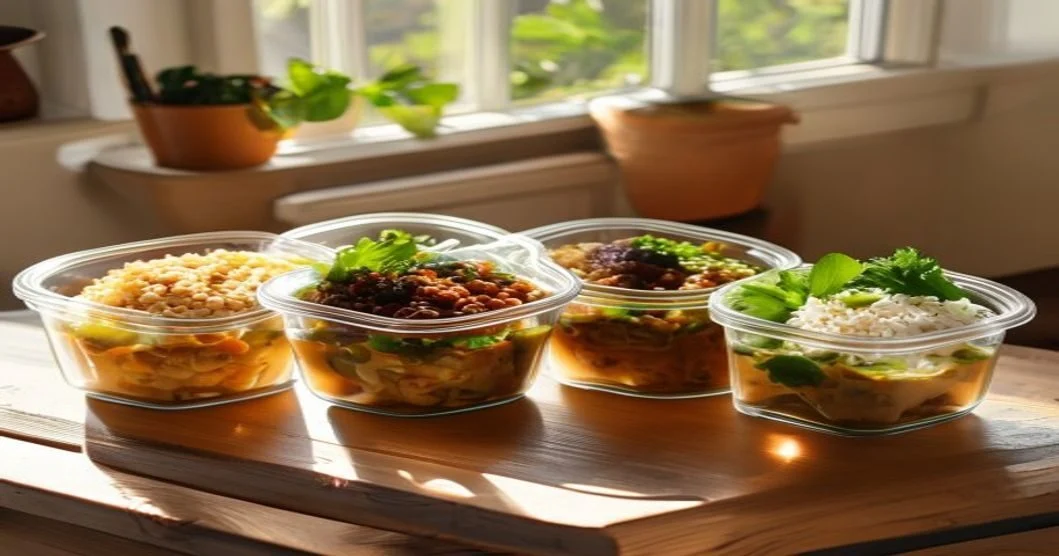
Eating well on a student budget in Australia is not about willpower or expensive “health food”. It is about a handful of cheap staples, one shopping rule, and about six recipes you can cook without thinking. Done properly, a filling, genuinely healthy dinner costs $1 to $2 a serve — less than the delivery fee on a takeaway order.
This guide is the practical cooking half of eating in Australia: what to buy, what it costs, how to cook it safely, and ten costed recipes built around ingredients you can get at any Coles, Woolworths or Aldi. If you want the shopping side — which supermarket, which suburb, which week — start with our guides to Coles vs Woolworths vs Aldi and what groceries actually cost.
The short version
- Legumes are the cheapest real protein in Australia — dried lentils work out around $1.90 per 100g of protein, against $8.35 for beef mince.
- Buy the biggest pack of anything that won’t spoil. A 1kg block of cheese is $10.50/kg; the 250g block is $24/kg. Same cheese.
- Read the unit price, not the special. In May 2026 the Federal Court found Coles misled customers with “Down Down” tickets on 245 products.
- Cook once, eat four times. Every recipe here makes 4–6 serves and freezes.
- Cooked rice is the one genuine danger in meal prep. Cool it fast and refrigerate it — reheating will not fix rice that sat out.
- “Use by” is safety, “best before” is quality. Food past its best-before date is legal to sell and generally safe to eat.
Prices are indicative Australian supermarket shelf prices as at July 2026, taken without specials. They move constantly and vary by state — use them for the ratios, not as a quote.
The problem, in one statistic
According to the Australian Bureau of Statistics, only 6.5% of Australian adults eat enough vegetables — fewer than one in fifteen. Among 18 to 24 year olds it is 3.0%. Fruit does better at 44.1% of adults, but only 4.2% of adults meet both.
So if you have moved here and feel like your diet has quietly collapsed, you are not failing at something everyone else has worked out. Almost nobody has. The difference is that a bad diet costs a student twice — once in health, and again in money, because the cheapest-feeling foods are usually the most expensive per serve.
What the guidelines actually ask for
The Australian Dietary Guidelines set daily serves for adults aged 19–50. It is worth seeing the real numbers, because “five serves of veg” is smaller than most people assume.
| Food group | Men | Women | What one serve looks like |
|---|---|---|---|
| Vegetables & legumes | 6 | 5 | 75g — half a cup cooked veg, one cup salad, half a cup cooked beans or lentils, half a medium potato, one medium tomato |
| Fruit | 2 | 2 | 150g — one medium apple, banana or orange; one cup diced or canned fruit |
| Grains (mostly wholegrain) | 6 | 6 | One slice of bread, half a cup cooked rice or pasta, half a cup porridge, two thirds of a cup of cereal flakes |
| Meat, fish, eggs, legumes, nuts | 3 | 2½ | 65g cooked red meat, 80g cooked chicken, 100g fish or one small can, 2 large eggs, 1 cup cooked legumes, 170g tofu |
| Dairy or alternatives | 2½ | 2½ | One cup milk, ¾ cup (200g) yoghurt, two slices (40g) hard cheese, or a fortified soy drink with 100mg+ calcium per 100ml |
| Discretionary (“sometimes”) | 0–3 | 0–2½ | 600kJ each — a can of soft drink, half a small chocolate bar, two or three sweet biscuits, 12 hot chips |
Three things worth noticing, because they make budget cooking much easier:
- Legumes count twice. Beans, lentils and chickpeas are listed in both the vegetable group and the meat-alternatives group. Half a cup counts as a vegetable serve; a full cup counts as a protein serve. This is why a lentil dhal is nutritionally serious food and not just cheap filler.
- Frozen and canned count. A serve of canned beans or frozen peas is a serve. There is no nutritional penalty for buying frozen vegetables, and they are usually cheaper and never go off in the back of the fridge.
- Hot chips do not count as vegetables. The guidelines say this explicitly — potatoes eaten as chips or crisps are a discretionary food.
On salt: the suggested target is 2,000mg of sodium a day, about 5g of salt. Australians average around 3,600mg, and most of it comes from packaged food rather than the salt shaker — which is another quiet argument for cooking from raw ingredients.
Setting up a kitchen for about $100
You need far less equipment than you think. This is a complete, functional kitchen at Kmart prices as at July 2026.
| Item | Price | Notes |
|---|---|---|
| 4-piece cookware set (2 saucepans, 2 frypans) | $29 | Cheaper than buying a single pan separately. Buy this new |
| Knife set with block | $20 | ⚠️ Knives have age restrictions — you must buy in store with ID, not online |
| Two chopping boards | $5.50 | Two so you can keep raw meat separate. Buy new |
| 13-piece food storage set | $10 | The single most important meal-prep purchase |
| Utensils — colander, bowl, spoon, tongs, grater, peeler, can opener, measuring cups | ~$25–45 | Most sit in Kmart’s $2–$5 tiers |
| Minimum functional kitchen | ~$95 | Everything above |
| Slow cooker (5L) | $24 | Best value appliance for a student. Cooks five portions unattended |
| Rice cooker (7 cup) | $49 | Worth it if rice is a daily staple for you |
| Air fryer (5L) | $59 | Popular, but the least useful of the three for batch cooking |
| Microwave (20L) | $49 new | Buy this second-hand — $20–50 used and they either work or they don’t |
What to buy new, and what to buy used
- Always new: anything non-stick (frypans, air fryer baskets, rice cooker bowls), plastic storage containers, and chopping boards. You cannot assess a used non-stick coating’s history, and a scored second-hand plastic board holds bacteria in the knife cuts. At $29 for four pans, a used pan saves nothing.
- Buy used without hesitation: microwaves, slow cookers, and anything stainless steel — pots, colanders, bowls, graters, tongs. Non-porous, sterilisable, effectively indestructible.
- Knives: buy new. A blunt knife slips and is a genuine injury risk, and most students won’t own a sharpener. One good chef’s knife and one paring knife beat a six-piece block.
- End of semester is the moment. Departing students dump entire kitchens on Facebook Marketplace and Gumtree in November and June, often free.
The cheapest protein in the supermarket
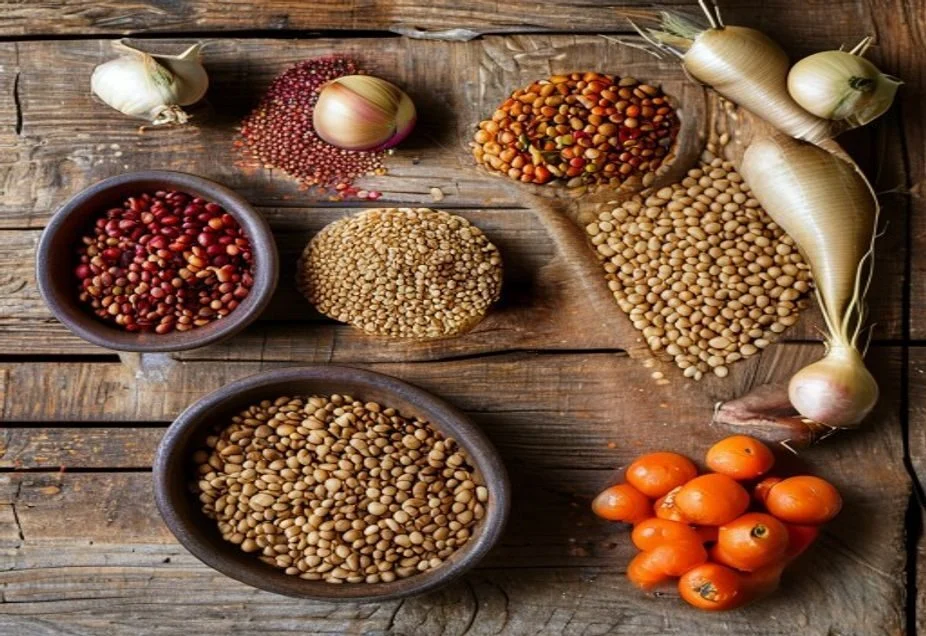
Protein is where a food budget is won or lost, because it is the most expensive part of a meal and the part people most often skimp on. Comparing by cost per 100 grams of actual protein rather than per kilo of product changes the picture completely.
| Food | Typical price | Cost per 100g protein |
|---|---|---|
| Dried red lentils | $4.80/kg | ~$1.90 |
| Dried chickpeas | $4.80/kg | ~$2.40 |
| Peanut butter | $3.40 / 500g | ~$2.45 |
| Chicken drumsticks | $4.00/kg | ~$3.40 — cheapest meat by a wide margin |
| Block cheese (1kg block) | $10.50/kg | ~$4.20 |
| Canned tuna (425g can) | $3.30 | ~$4.60 |
| Tofu | $5.00 / 900g | ~$4.60 |
| Chicken breast (bulk pack) | $11.00/kg | ~$5.00 |
| Milk | $1.72/L | ~$5.05 |
| Canned chickpeas / kidney beans | $0.95 / 420g | ~$5.60 |
| Sardines | $1.10 / 125g | ~$5.80 — also the cheapest omega-3 |
| Pork mince | $11.88/kg | ~$6.25 |
| Eggs | $5.70/dozen | ~$7.40 |
| Chicken thigh fillets | $15.50/kg | ~$8.20 |
| Beef mince | $15.00/kg | ~$8.35 — the most expensive common protein |
The headline: dried lentils deliver protein at roughly a quarter the cost of beef mince, and come with fibre and iron attached. Among meats, drumsticks beat breast by half and mince by three-quarters — the only cost is that you have to eat around a bone.
You do not have to become vegetarian to use this. The single most effective trick in this whole guide is to stretch mince with lentils: replace a third of the mince in any bolognese, chilli or shepherd’s pie with red lentils. They dissolve into the sauce, nobody notices, and the dish costs a third less and has more fibre.
The pantry that makes everything else cheap
Buy these once and almost any recipe becomes a matter of adding one fresh thing. Total is roughly $45–55 and most of it lasts months.
- Base carbs: rice (5kg, $8.50 — the 5kg bag beats the 1kg every time), dry pasta ($0.90 / 500g), rolled oats (1.5kg, $3.00)
- Legumes: dried red lentils ($4.80/kg), canned chickpeas and kidney beans ($0.95 a can — buy six)
- Tins: diced tomatoes ($0.95), tuna in the 425g can ($3.30)
- Aromatics: brown onions (1kg bag, $2.50), garlic, cooking oil, salt, pepper
- Spices: cumin, coriander, paprika, curry powder, chilli flakes, mixed herbs. Buy these at an Asian, Indian or Middle Eastern grocer, where they cost a fraction of supermarket prices — see our suburb guide to ethnic grocery stores
- Freezer: mixed vegetables ($2.80/kg), peas ($2.50/kg). These are the reason you can always add vegetables to anything
- Fridge: eggs, a 1kg block of cheese, milk, carrots, potatoes, a cabbage
Three buying rules that beat any coupon
- Read the unit price. Every Australian shelf ticket shows a price per kg, per 100g or per litre in small print. That number is the only honest comparison. The 425g tuna is $7.76/kg; the 95g tins are $11.58/kg for the same fish.
- Buy the biggest pack of anything that won’t spoil. Cheese: $10.50/kg for the 1kg block, $24/kg for the 250g. Rice: $1.70/kg for the 5kg bag. This one habit is worth more than every discount app combined.
- Switch to home brand on staples where the product is identical. Canned chickpeas $0.95 vs $2.20. Diced tomatoes $0.95 vs $2.30. Spaghetti $0.90 vs $2.95. Peanut butter $3.40 vs $7.40. These are the same commodity in a different label.
Be sceptical of “specials”
In May 2026 the Federal Court found that Coles misled customers over its “Down Down” claims. The ACCC case covered 245 common products sold between February 2022 and May 2023, alleging Coles raised prices by at least 15% for a short period before advertising a “Down Down” price that was still the same as or higher than the original. The Court found misleading representations in 13 of the 14 tickets it considered. Penalties have not yet been set, and separate proceedings against Woolworths remain reserved.
The ACCC’s 2025 supermarkets inquiry also found that more than half of all products at Coles and Woolworths are on promotion at any time, and that these practices “can make it difficult for consumers to assess value for money”.
The defence is simple and it always works: compare the unit price, not the special.
On where to shop: CHOICE’s June 2026 basket survey, run undercover across 104 supermarkets, put a like-for-like basket at Aldi $68.60, Woolworths $77.53, Coles $78.58 and IGA $91.65 — Aldi roughly 11–13% cheaper, and specials at the big two barely closed the gap.
Use by vs best before
These are legally different things in Australia and confusing them either wastes money or makes you sick.
- Use by = safety. It is illegal to sell food after its use-by date, and you should not eat it — even if it looks and smells fine. This is the one hard line.
- Best before = quality. It is legal to sell food after this date provided it is still fit to eat, and it is generally safe. Manufacturers set it well before the food would actually deteriorate. Canned and frozen food in particular keeps well past it.
That distinction is exactly why discount bins, clearance shelves and food-rescue outlets are a legitimate way to eat cheaply rather than a risk. Food with a shelf life of two years or more — most canned goods — does not need a best-before date at all. Our guide to reading Australian food labels covers the rest, including the Health Star Rating and allergen declarations.
Meal prep: cook once, eat four times
Meal prep is not a fitness trend. It is the only realistic way to eat properly when you have classes, a job and a commute. The principle: you are not cooking dinner, you are cooking four dinners, and the extra effort of quadrupling a recipe is close to zero.
The system that survives a real semester:
- Pick two recipes a week, not seven. Four serves each gives you eight meals. Eat one fresh, refrigerate two, freeze the rest.
- Cook them both in one session — typically 90 minutes on a Sunday. One goes in the slow cooker while you cook the other on the stove.
- Portion straight away, into containers, while it is still hot. Not into one big tub. Small portions cool faster, which is the safety point below.
- Label with the date. A strip of masking tape and a pen. Everyone skips this and everyone regrets it.
- Cook the carbs separately. Rice, pasta and potatoes go soggy if frozen in sauce. Keep a container of plain rice and combine when you reheat.
- Keep two “emergency” meals in the freezer permanently. The point of meal prep is not perfection, it is having something when the plan fails.
Food safety: the rules that actually matter for meal prep
The 2-hour / 4-hour rule. This is Food Standards Australia New Zealand’s rule for food sitting between 5°C and 60°C:
- Under 2 hours — use it, or put it back in the fridge for later.
- 2 to 4 hours — you can still eat it, but it cannot go back in the fridge.
- Over 4 hours — throw it out.
The part everyone misses: the time is cumulative. It adds up across preparation, storage, transport and sitting on the bench — not just the last time it was out.
Cooked rice is the specific hazard. Rice carries Bacillus cereus spores that survive cooking. If cooked rice cools slowly at room temperature, the spores germinate and produce a toxin — and that toxin is heat-resistant, so reheating will not destroy it. Symptoms can start within 30 minutes. Cool rice fast, refrigerate it immediately, eat it within two days, and never reheat it more than once.
The rest, briefly: fridge at 5°C or below, freezer below −15°C. Leftovers keep 3 days in the fridge, but cooked rice and pasta only 2. Get food into the fridge within 2 hours — but let the steam stop first, and split it into shallow containers to speed cooling. Reheat until steaming hot right through, aiming for 75°C. Defrost in the fridge, not on the bench, and use within 24 hours. Never refreeze raw food that has thawed — though cooking thawed raw meat and then freezing the finished dish is fine. Store raw meat on the bottom shelf so it cannot drip onto anything.
This is not fussiness. FSANZ estimates 4.67 million cases of foodborne illness in Australia each year, with 47,900 hospitalisations.
The formula: how to cook without a recipe
Before the recipes, the thing that actually makes you independent in a kitchen. Almost every cheap, healthy meal is the same four-part structure. Learn the structure and you stop needing recipes at all — you start cooking whatever is cheap that week.
Base + Protein + Vegetables + Flavour
Every recipe below is this formula. Swap any column and it still works: lentil dhal becomes chickpea curry becomes tuna pasta becomes fried rice. Once you see it, the supermarket stops being a list of recipes you can’t afford and becomes four columns you pick from.
Ten costed recipes
All of these use the pantry above, need nothing more than a saucepan or frypan, and are built to be scaled and frozen. Costs are per serve at July 2026 supermarket prices and assume you already own the spices.
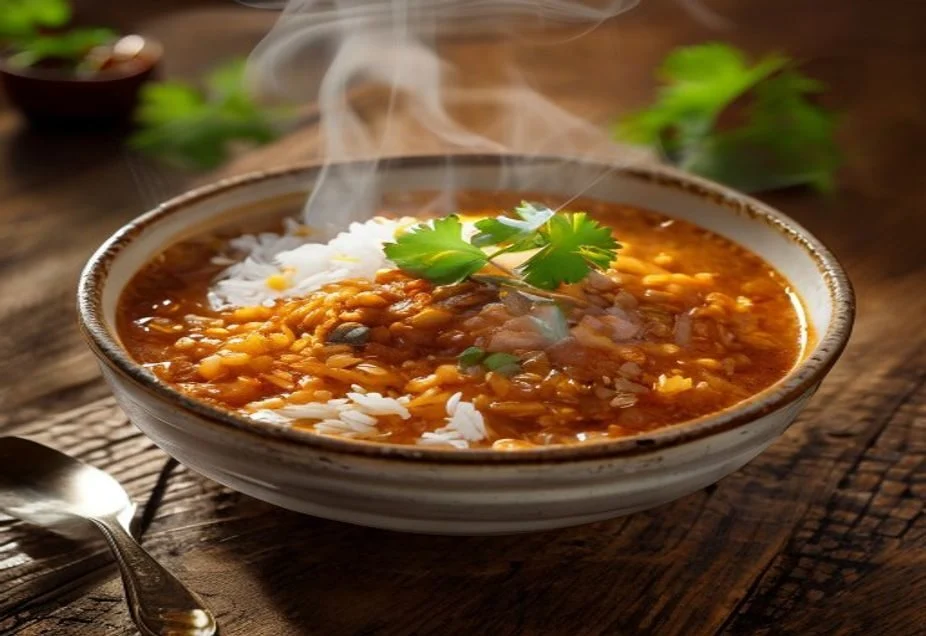
Red Lentil Dhal
Ingredients
- 1½ cups (300g) dried red lentils, rinsed
- 1 onion, diced · 2 cloves garlic
- 1 can diced tomatoes
- 2 tsp cumin, 2 tsp coriander, 1 tsp turmeric, chilli to taste
- 4 cups water · oil, salt
- Rice to serve
Method
- Fry the onion in oil until soft, about 5 minutes. Add garlic and spices, stir for 1 minute until fragrant.
- Add lentils, tomatoes and water. Bring to the boil.
- Simmer 20–25 minutes, stirring now and then, until the lentils collapse into a thick soup. Add water if it gets too thick.
- Salt to taste. Serve over rice.
Chickpea & Vegetable Curry
Ingredients
- 2 cans chickpeas, drained
- 1 can diced tomatoes · 1 onion · 2 cloves garlic
- 400g frozen mixed vegetables
- 2 tbsp curry powder · oil, salt
- Rice to serve
Method
- Fry the onion until soft, add garlic and curry powder, stir 1 minute.
- Add tomatoes and chickpeas. Simmer 10 minutes.
- Stir in the frozen vegetables straight from the freezer. Simmer another 8 minutes.
- Season and serve with rice.
Chicken Drumstick Tray Bake
Ingredients
- 1kg chicken drumsticks
- 800g potatoes, cut into chunks
- 3 carrots, thick sliced · 1 onion, quartered
- 2 tbsp oil · 2 tsp paprika · salt, pepper
Method
- Heat the oven to 200°C.
- Toss everything together on a large baking tray with the oil, paprika, salt and pepper. Spread it out — crowding steams it instead of roasting it.
- Bake 45–50 minutes, turning once, until the chicken juices run clear and the potatoes are golden.
Tuna Pasta
Ingredients
- 500g pasta
- 1 large (425g) can tuna, drained
- 1 can diced tomatoes · 1 onion · 2 cloves garlic
- 1 cup frozen peas · grated cheese
- Mixed herbs, chilli flakes, oil
Method
- Boil the pasta. Add the frozen peas for the last 2 minutes.
- Meanwhile fry the onion and garlic, add the tomatoes and herbs, simmer 10 minutes.
- Stir the tuna through the sauce, then toss with the drained pasta.
- Top with cheese.
Egg Fried Rice
Ingredients
- 4 cups cold cooked rice (from ~1½ cups raw)
- 3 eggs, beaten
- 1 onion · 2 cloves garlic
- 300g frozen peas and corn
- 3 tbsp soy sauce · oil
Method
- Heat oil in the biggest pan you have. Scramble the eggs, then set them aside.
- Fry the onion and garlic, add the frozen vegetables, cook 3 minutes.
- Add the cold rice, breaking up clumps. Fry hard for 4–5 minutes.
- Return the egg, add soy sauce, toss and serve.
Lentil-Stretched Bolognese
Ingredients
- 500g beef mince
- ¾ cup (150g) dried red lentils
- 1 can diced tomatoes · 1 onion · 2 carrots, grated · garlic
- 2 cups water · mixed herbs
- 500g pasta to serve
Method
- Brown the mince, breaking it up. Add onion, grated carrot and garlic; cook 5 minutes.
- Add tomatoes, lentils, water and herbs.
- Simmer 25–30 minutes until the lentils have dissolved and the sauce is thick.
- Serve over pasta.
Slow Cooker Chicken Stew
Ingredients
- 1kg chicken drumsticks
- 600g potatoes, chunked · 4 carrots · 1 onion
- 1 can diced tomatoes · ½ cup red lentils
- 2 cups water · paprika, herbs, salt
Method
- Put everything in the slow cooker. Genuinely everything, at once.
- Cook on low 6–8 hours, or high 4 hours.
- Lift out the drumsticks, pull the meat off the bones with two forks, return the meat and stir.
Vegetable & Lentil Soup
Ingredients
- 1¼ cups (250g) dried red or brown lentils
- 1 onion · 4 carrots · 400g potato · half a cabbage
- 1 can diced tomatoes · garlic
- 6 cups water or stock · cumin, paprika, bay leaf
Method
- Fry the onion and garlic. Add the chopped carrot and potato, cook 5 minutes.
- Add lentils, tomatoes, water and spices. Bring to the boil.
- Simmer 25 minutes, adding the shredded cabbage for the last 8.
- Season well. It thickens overnight — loosen with water when reheating.
Eggs in Tomato Sauce
Ingredients
- 4 eggs
- 1 can diced tomatoes · 1 onion · 2 cloves garlic
- 1 tsp cumin, 1 tsp paprika, chilli
- Bread to serve · feta or cheese if you have it
Method
- Fry the onion, garlic and spices in a frypan until soft.
- Add the tomatoes, simmer 8 minutes until thickened.
- Make four wells in the sauce and crack an egg into each.
- Cover and cook 5–7 minutes until the whites set. Serve with bread.
Overnight Oats
Ingredients
- ½ cup (60g) rolled oats
- ¾ cup milk (or yoghurt, or both)
- 1 tbsp peanut butter
- 1 banana, or any fruit
- Cinnamon
Method
- Put everything except the fruit in a jar or container. Stir.
- Refrigerate overnight.
- Add the fruit in the morning and eat cold, straight from the container.
Cooking two of these a week — say the dhal and the tray bake — gives you eight or nine dinners for around $12 to $14 total. For comparison, one delivered meal in an Australian capital lands between $25 and $35 once fees and tip are counted.
Breakfast, lunch and snacks
Dinner is the part people plan. Breakfast and lunch are where the money quietly leaks — a bought coffee and a bought lunch five days a week is $80 to $120, which is most of a weekly grocery budget.
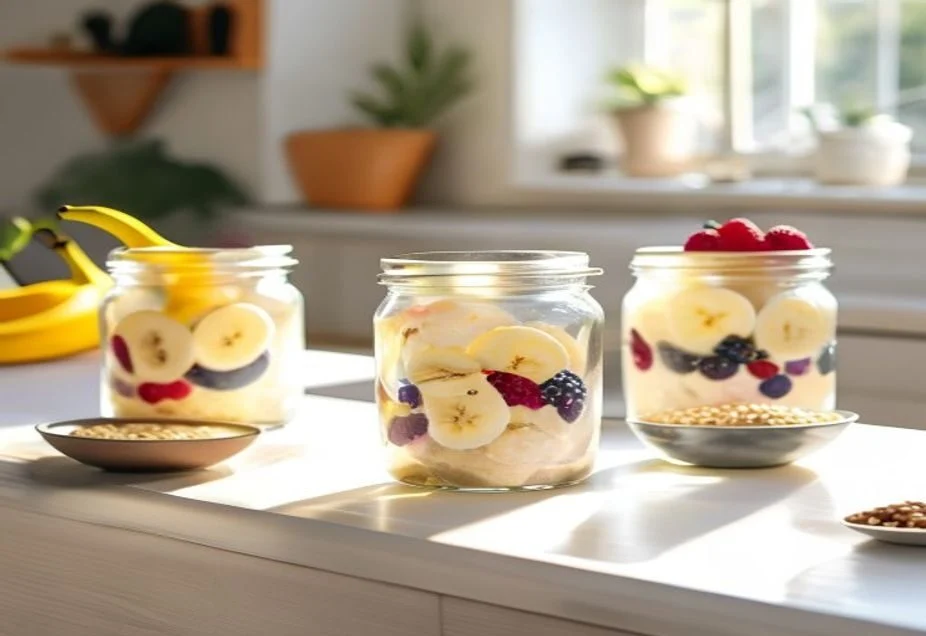
Breakfast under $1.50
- Porridge — 60g oats with milk, about $0.45. Add banana and cinnamon. Three minutes in a microwave.
- Overnight oats — the recipe above, about $1.05, and made five at a time.
- Eggs on toast — two eggs and two slices, about $1.30.
- Yoghurt, oats and fruit — a 1kg tub of home-brand Greek-style yoghurt is $4.20 and gives five serves. Check the label though: “Greek style” varies enormously in protein, from about 5g to 9g per 100g.
- Baked beans on toast — about $1.20, and genuinely well balanced.
The instant-coffee point is worth making plainly: a jar of instant plus a $1.72 litre of milk gives you roughly 40 coffees for the price of two bought ones. If you want the cafe habit, keep it as a social thing rather than a caffeine delivery system.
Lunch you actually take with you
The best packed lunch is last night’s dinner. Every recipe above works cold or reheated in a campus microwave. Beyond that:
- Rice or pasta salad — cooked base, a can of chickpeas or tuna, chopped raw vegetables, oil and lemon. Made in bulk on Sunday, about $1.50 a serve, and it does not need reheating.
- Sandwiches with actual filling — cheese and salad, egg, tuna. Around $1.50–2.00 each.
- Soup in a thermos — ideal in Melbourne, Canberra or Hobart winters.
- The “assembly” lunch — a container of hummus, carrot and cucumber sticks, crackers, boiled eggs, fruit. No cooking at all.
Two practical notes for Australia. Campus buildings almost always have microwaves, though the queue at 12:30 is long — go at 12:00 or 1:15. And in a Sydney, Brisbane, Perth or Darwin summer, an unrefrigerated lunch in a backpack can pass through the 2-hour window before you eat it. A cheap freezer brick in the bag solves it.
Snacks that aren't a trap
Packaged “health” snacks — protein bars, muesli bars, snack packs — are among the worst value in the supermarket, often $2 to $4 for something with the nutritional profile of a biscuit. The cheap options are better on both counts:
- Bananas — the cheapest fruit in Australia most of the year, and one counts as a full fruit serve.
- Carrot and cucumber sticks with hummus — make hummus from a $0.95 can of chickpeas.
- Boiled eggs — boil six on Sunday. About $0.48 each.
- Popcorn from kernels — a bag of kernels costs a couple of dollars and makes many litres. Microwave popcorn is many times the price.
- Peanut butter on wholemeal toast, plain yoghurt with fruit, or a handful of nuts bought from an ethnic grocer rather than the supermarket snack aisle.
- Cheese and crackers — cut from the 1kg block, not the pre-sliced packet.
The Health Star Rating on the front of packs is a reasonable quick filter, but only within a category — it is designed to compare one muesli bar with another muesli bar, not a muesli bar with an apple. It is currently voluntary, though in February 2026 Food Ministers asked FSANZ to begin work on making it mandatory.
If your kitchen is bad or shared
Plenty of student housing has one hotplate, a shared fridge shelf, or a microwave and nothing else. This is solvable.
- Microwave only. You can cook porridge, scrambled eggs, jacket potatoes, steamed frozen vegetables, canned soup, rice in a microwave rice cooker, and reheat everything above. A jacket potato with a can of beans and grated cheese is a complete meal for about $1.60.
- One hotplate. Every one-pot recipe here works. Cook the base and the sauce in the same pot in sequence.
- A rice cooker does more than rice. It will steam vegetables in the basket while the rice cooks, and many will cook a lentil dhal or a soup on the standard setting.
- A slow cooker needs no stove at all — just a power point. In a room with no kitchen access, this is the single most useful thing you can own.
- Shared fridge politics. Label your food, use one clearly-marked shelf or a crate, and keep a few tins in your room as backup. Store raw meat on the bottom shelf regardless of whose shelf it is.
The three appliances, ranked for a student
- Slow cooker ($24) — buy this first. Cheapest of the three, cooks five portions unattended while you are at class, and it is specifically good at making cheap tough cuts and dried legumes taste like effort.
- Rice cooker ($49) — buy if rice is daily. Removes the most common cooking failure, and steams vegetables at the same time. If you eat rice five nights a week this pays for itself in not-ruined dinners.
- Air fryer ($59) — the most over-bought. Genuinely good for roasting vegetables, chicken pieces and reheating leftovers crisply, and it uses far less power than an oven. But it cooks small batches, which is the opposite of what meal prep needs. Buy it third, not first.
All three are frequently available second-hand for half price at the end of semester, and slow cookers in particular have nothing to wear out.
Common mistakes
- Shopping without a list, hungry, after 6pm. The most expensive shop you will ever do.
- Buying fresh vegetables you have no plan for. The cheapest food in the world is worthless if it rots. Buy frozen for the things you use occasionally and fresh only for what you’ll cook in the next three days.
- Cooking for one. Single portions cost more per serve and take almost the same time. Always cook four.
- Chasing specials instead of unit prices. See the ACCC finding above.
- Buying “student” or “convenience” versions. Pre-cut vegetables, pre-cooked rice pouches, sauce sachets and single-serve tins carry enormous markups.
- Treating delivery apps as occasional. Two orders a week is $50–70, which is an entire grocery budget. Delete the apps or turn off notifications during exam periods, when the temptation peaks.
- Ignoring the food safety rules because nothing has gone wrong yet. Cooked rice left on the bench is the classic one.
- Skipping meals to save money. This is where food budgets do real damage. If you are genuinely short, every Australian university has a food pantry, free breakfast program or hardship grant — student services or the student union will point you at it, and using it is normal.
Where this fits
Food usually runs $80 to $150 a week for one person in Australia depending on the city and how much you cook. If you want to see it against rent, transport, health cover and everything else, our full student budget breakdown has a calculator that will build the whole picture.
Cooking guides
- Slow cooker recipes — twelve costed meals from 65c a serve, the rules that stop watery results, and the kidney bean safety warning most sites miss
- Dinner ideas — thirty dinners sorted by how much time, energy and money you have, plus what is cheap each season in Australia
- One pot meals — twenty recipes sorted by what you cook them in, from a saucepan to a slow cooker, and almost no washing up
- Healthy breakfast ideas — 25 breakfasts sorted by how much time you have, six overnight oats recipes, and how to actually eat Vegemite
- How to cook rice — water ratios for 16 grains, why the cup that came with your rice cooker is 180ml and not 250ml, troubleshooting, and eight things a rice cooker will cook besides rice
- Air fryer times and temperatures — a full Celsius chart for 50+ foods, the foil and preheating answers manufacturers disagree on, and what it actually costs to run
The rest of the food cluster:
- Cheap weekly meal plans — five complete week-long plans if you want the decisions made for you
- Coles vs Woolworths vs Aldi — where to actually shop
- What groceries cost — realistic weekly and monthly figures
- Asian, Indian and African grocery stores — suburb by suburb, and much cheaper for spices, rice and legumes
- Saving money on food without eating junk
- How to read Australian food labels — dates, nutrition panels and allergens
- Halal food in Australia — certification, supermarket options and restaurants by city
If you cook nothing else from this page, cook the dhal once. It costs about four dollars to make, it takes half an hour, it feeds you four times, and it is the meal that proves the rest of this is achievable.
Frequently asked questions
You May Also Like

Moving to Australia: The Complete Checklist and Guide (2026)

NT Public Holidays 2026: Full Calendar, Dates and How Darwin and Alice Springs Celebrate