
ANZAC Day Australia 2026: Date, History, Meaning and Traditions


ANZAC Day falls on 25 April every year – a fixed date, never a moveable one. In 2026 it lands on a Saturday, and it is a public holiday in every state and territory, with New South Wales, the ACT and Western Australia also observing an additional public holiday on Monday 27 April. ANZAC Day commemorates the 1915 Gallipoli landing by the Australian and New Zealand Army Corps and now honours everyone who has served and died for Australia in every war, conflict and peacekeeping operation since.
For a lot of people who have moved to Australia recently, ANZAC Day is one of the more confusing dates on the calendar – it is not a festive holiday, shops close early, and the tone is deliberately solemn rather than celebratory. This guide covers exactly when it falls (this year and the next few), why New South Wales, the ACT and WA get an extra day off and the rest of the country does not, the real history behind the date, the traditions you will see and hear (dawn services, the Ode, rosemary, two-up, ANZAC biscuits), trading hours, and how to take part respectfully as a newcomer.
Quick answer
When is ANZAC Day?
ANZAC Day is always 25 April. Unlike Easter, it does not move around the calendar, and unlike Christmas or New Year’s Day it does not automatically shift to the following Monday everywhere when it lands on a weekend – what happens next depends entirely on which state or territory you are in (covered in the next section).
| Year | Date | Day of the week |
|---|---|---|
| 2025 | 25 April 2025 | Friday |
| 2026 | 25 April 2026 | Saturday |
| 2027 | 25 April 2027 | Sunday |
| 2028 | 25 April 2028 | Tuesday |
| 2029 | 25 April 2029 | Wednesday |
| 2030 | 25 April 2030 | Thursday |
Because 25 April sits between Easter and the King’s Birthday long weekend on most state calendars, it can be easy to lose track of exactly when it falls each year – bookmark this page or check the Fair Work Ombudsman’s public holidays list if you need to confirm a future date before booking leave or travel.
Is ANZAC Day a public holiday in every state? The 2026 exception explained
Yes, ANZAC Day (25 April) is a public holiday in every Australian state and territory, every year. What changes in 2026 is what happens because it falls on a Saturday. According to the Fair Work Ombudsman’s official 2026 public holidays list, three jurisdictions – New South Wales, the Australian Capital Territory and Western Australia – are also observing an additional public holiday on Monday 27 April 2026. The other five (Victoria, Queensland, South Australia, Tasmania and the Northern Territory) are not adding a substitute day; for them, the public holiday sits only on the Saturday itself.
| State/territory | Saturday 25 April 2026 | Monday 27 April 2026 |
|---|---|---|
| New South Wales | Anzac Day (public holiday) | Additional public holiday for Anzac Day |
| Australian Capital Territory | Anzac Day (public holiday) | Additional public holiday for Anzac Day |
| Western Australia | Anzac Day (public holiday) | Additional public holiday for Anzac Day |
| Victoria | Anzac Day (public holiday) | Ordinary working day |
| Queensland | Anzac Day (public holiday) | Ordinary working day |
| South Australia | Anzac Day (public holiday) | Ordinary working day |
| Tasmania | Anzac Day (public holiday) | Ordinary working day |
| Northern Territory | Anzac Day (public holiday) | Ordinary working day |
This is a genuinely state-by-state decision rather than a fixed national rule. NSW’s additional day comes from the Public Holidays Order made under the Public Holidays Act 2010 (NSW); the ACT government confirmed it would align with NSW; and WA has its own Anzac Day Act arrangements for a substitute holiday. If you work across state lines, or your employer is based interstate, do not assume your public holiday entitlement matches a colleague’s – check which jurisdiction’s list actually applies to your employment.
Check before you rely on this
What does ANZAC stand for, and what happened on 25 April 1915?
ANZAC stands for the Australian and New Zealand Army Corps. The name was coined by clerks on the staff of General William Birdwood at his headquarters in Shepheard’s Hotel in Cairo, Egypt, in early 1915, as a convenient abbreviation for the joint force. According to the Returned and Services League of Australia (RSL), the word was proposed by a Major C.M. Wagstaff (possibly on the suggestion of a Lieutenant A.T. White) and approved by Birdwood as the Corps’ code name – though the official history records that “it was some time before the code word came into general use”, and many soldiers had not even heard the term on the day of the landing itself.
At dawn on 25 April 1915, around 16,000 Australian and New Zealand troops – alongside British, French and Indian forces – landed on the Gallipoli Peninsula in what was then the Ottoman Empire (present-day Turkiye), according to the Department of Veterans’ Affairs’ Anzac Portal. The objective was to help Allied navies force a passage through the Dardanelles Strait to Constantinople (Istanbul) and knock the Ottoman Empire out of the war. The landing did not go to plan – troops came ashore at the wrong beach, in the wrong place, under heavy fire from Ottoman forces defending their homeland – and what followed was an eight-month campaign fought across a brutal landscape of ridges and gullies. Around 2,000 Australians were killed or wounded on the first day alone.
The Gallipoli campaign was, by most military measures, a costly failure – Allied forces withdrew in December 1915 without achieving their objective. But for the young nation of Australia, only 14 years past Federation, it became a defining story: the qualities shown at Gallipoli – endurance, courage, mateship and a refusal to be daunted – are still described as the foundation of the “Anzac legend” or “Anzac spirit” that shapes how many Australians see their national character.
From a wartime anniversary to a day for every conflict
The first anniversary of the landing was marked on 25 April 1916 – in Australia, New Zealand, England, and by Australian troops serving in Egypt, according to DVA’s Anzac Portal. Ceremonies and marches by returning veterans became an annual fixture through the 1920s and 1930s, and by the end of the Second World War the day had broadened well beyond Gallipoli to honour Australians who served in that war too. Today, ANZAC Day is formally gazetted under the Anzac Day Act 1995 (Cwlth) as a national day of commemoration for everyone who has served, and died, for Australia in war and war-like operations – from the two World Wars through Korea, Malaya, Vietnam, and more recent deployments to places like East Timor, Iraq and Afghanistan, as well as peacekeeping missions dating back to 1947.
The dawn service: why it happens at first light
The dawn service is the tradition most visitors and newcomers notice first: crowds gathering in the dark, well before sunrise, at war memorials in every city and country town. The timing is deliberate. Dawn was historically the most dangerous time for soldiers on active service – the “stand-to” period when troops were roused before first light and stood ready at their posts, since dawn was the most likely time for an enemy attack. The Gallipoli landing itself began in the dark hours before dawn on 25 April 1915. Holding the service at that hour is a way of placing the audience, briefly, in the same quiet, tense moment soldiers would have known.
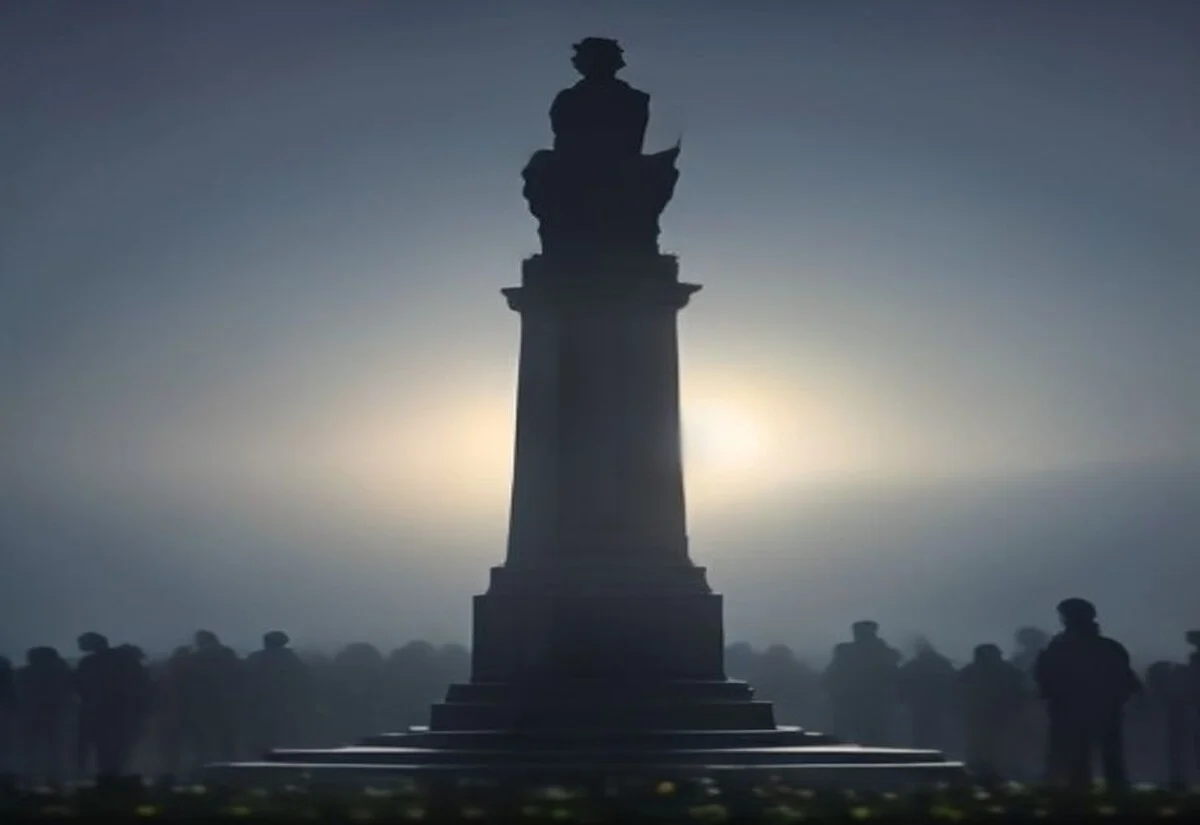
According to the RSL’s own history of the tradition, the first recorded dawn service was held not at a major city memorial but in Albany, Western Australia, on 25 April 1923. The Reverend Arthur Ernest White – a Church of England chaplain who had served with the 44th Battalion of the First AIF, and who had led a dawn service for departing troops on the convoy ships gathered in Albany’s King George Sound back in 1914 – gathered a small group of about 20 people on Mount Clarence at first light. As the sun rose, a wreath was cast into the harbour from a small boat while White recited the words “As the sun rises and goeth down, we will remember them”. News of the service spread, and RSL sub-branches around the country gradually adopted it, until the dawn service became the standard opening event of ANZAC Day nationwide.
Attending as a newcomer
The Ode, the Last Post and the minute's silence
Most ANZAC Day services, whether a dawn service or the later mid-morning commemorative service and march, follow a similar structure built around a few fixed elements.
The Ode of Remembrance
The Ode is the fourth stanza of “For the Fallen”, a poem written by the English poet Laurence Binyon and first published in September 1914, according to the Australian War Memorial. The most recited lines are: “They shall grow not old, as we that are left grow old / Age shall not weary them, nor the years condemn / At the going down of the sun and in the morning / We will remember them.” A reader recites the Ode, and the crowd responds with “We will remember them” (sometimes followed by “Lest we forget”).
The Last Post, the silence, and Reveille
The Last Post is a military bugle call that traditionally signalled the end of a soldier’s day – part of an older British Army routine (called “tattoo”) of bugle calls marking the phases of the day, according to the Australian War Memorial. Over time it was adopted into funeral and memorial services as a farewell to the dead. At an ANZAC Day service, the Last Post is followed by a minute’s silence (stand quietly, remove hats, stop talking and stop taking photos with flash), and then Reveille – the bugle call that traditionally woke soldiers at the start of the day – is sounded to close the silence and, symbolically, “wake” the day again.
Marches
Later in the morning, most capital cities and many regional towns hold a march – veterans, serving Australian Defence Force personnel, and increasingly the children and grandchildren of veterans marching in their place, walk a set route (often ending at the local war memorial or a Shrine of Remembrance) while the public lines the streets. Marches are open to watch for free and are a good option if a dawn start does not suit.
Rosemary, not poppies: the correct ANZAC Day symbol
This trips up a lot of people, including plenty of Australians: the flower most associated with wartime remembrance worldwide is the red poppy, but the poppy belongs to Remembrance Day (11 November), not ANZAC Day. On ANZAC Day, the traditional symbol worn on the lapel is a small sprig of rosemary.
According to the Australian War Memorial, rosemary has been associated with memory and fidelity since ancient times, and sprigs are traditionally worn on ANZAC Day (and sometimes on Remembrance Day too), usually handed out by Legacy and RSL volunteers. The plant has a specific and literal connection to the ANZAC story: rosemary grows wild on the Gallipoli Peninsula, which is why NSW Veterans’ Affairs and other state bodies describe wearing a sprig on ANZAC Day as a direct, physical link to the soldiers who fought and died there.
ANZAC Day vs Remembrance Day symbols
| Feature | ||
|---|---|---|
| Symbol | Rosemary sprig | Red poppy |
| Origin of symbol | Grows wild on the Gallipoli Peninsula | From the WWI poem ‘In Flanders Fields’ |
| Marks | The 1915 Gallipoli landing; all Australians who served | The 1918 Armistice ending WWI |
| Public holiday? | Yes, nationwide | No (11am silence observed, but not a day off) |
Poppies are not wrong to wear generally as a mark of remembrance, and you will occasionally see them around ANZAC Day too – but if you want to get the detail right (or you are asked to help organise a workplace or school commemoration), rosemary is the specifically correct choice for 25 April.
Gunfire breakfast, two-up and ANZAC biscuits

Gunfire breakfast
After a dawn service, it is common for RSL clubs, pubs and community groups to host a “gunfire breakfast” – traditionally tea or coffee laced with rum, plus a simple hot breakfast, echoing the drink of hot tea (sometimes with a rum ration) soldiers were given before dawn “stand-to” on active service. Most gunfire breakfasts today are alcohol-optional and family-friendly; check the specific event if you are bringing children.
Two-up: legal in Australia on one day a year
Two-up is a simple gambling game – two coins are tossed together, and players bet on whether they land heads or tails – that Australian soldiers played to pass time in the trenches and training camps of the First World War. It is illegal in most of Australia for the rest of the year, but state gambling laws carve out a specific exception for ANZAC Day (in some states, for one or two other commemorative dates too, such as 15 August/Victory in the Pacific Day). On 25 April, RSL clubs, pubs and dedicated public two-up rings run games legally, usually from early afternoon once the day’s formal services and marches are done. If you want to try it, look for a local RSL sub-branch’s ANZAC Day event listing – most explain the simple rules of “spinner”, “heads” and “tails” on the day for newcomers.
ANZAC biscuits: a real story, slightly simplified in the retelling
The sweet oat-and-golden-syrup biscuit sold in supermarkets every April is genuinely called an ANZAC biscuit and is genuinely tied to the war – but the popular story (“wives and mothers baked them because the ingredients would survive the long journey to the front”) simplifies a more complicated history. The Australian War Memorial’s own records distinguish between two related but different things: the hard, long-life “army biscuit” (also called an Anzac wafer or Anzac tile) that was standard-issue ration hardtack – genuinely tough enough that some soldiers ground it into porridge rather than try to bite it – and the softer, sweeter “Anzac biscuit” recipe familiar today, built around rolled oats, sugar, coconut, golden syrup and bicarbonate of soda rather than egg (which does not travel or store well), which became popular as a home-front fundraising and care-package item.
The Australian War Memorial's own ANZAC biscuit recipe
Why does footy get played on ANZAC Day?
If you have Australian friends or housemates, expect ANZAC Day afternoons to revolve around football as much as remembrance. The best-known fixture is the AFL’s ANZAC Day clash between Collingwood and Essendon at the Melbourne Cricket Ground, first played on 25 April 1995 – a dramatic draw, 111 points each, in front of a crowd that convinced both clubs and the League to make it an annual fixture. It has been played every year since, drawing some of the biggest single-game crowds of the AFL season and opening with its own dawn-service-style commemoration on the ground before the first bounce. The NRL runs an equivalent ANZAC Day rugby league fixture between the Sydney Roosters and St George Illawarra, also with a pre-match commemorative ceremony.
The pairing is not accidental marketing – both games open with a formal commemorative ceremony (a minute’s silence, the Ode, sometimes a Catafalque Party of servicemembers around the centre circle) before kicking off, and the tone deliberately mirrors the solemnity of the morning’s services before shifting into the celebration of sport in the afternoon.
Are shops open on ANZAC Day?
Partly, and later than usual. ANZAC Day is treated as a restricted trading day in several states, out of respect for dawn services and morning marches, and this is a genuinely different rule from an ordinary Sunday or most other public holidays.
In Victoria, for example, the Shop Trading Reform Act 1996 (Vic) restricts general retail trading between 12:01am and 1:00pm on ANZAC Day – only “exempt” shops (think pharmacies, petrol stations, small independent grocers under a set floor area, cafes and restaurants) can open before 1pm; larger, non-exempt retailers must wait until 1pm to open their doors. New South Wales and Queensland apply similar restricted-trading frameworks under their own retail trading legislation, again centred on a before-1pm closure for non-exempt stores, and in recent years NSW has extended restrictions further – major bottle shops, for instance, are increasingly required to stay closed for the whole day rather than just the morning. South Australia and Western Australia have their own, separately legislated trading-hours rules for ANZAC Day.
What this means in practice for most capital cities:
- Before 1pm: supermarkets, department stores and most shopping centres are closed. Pharmacies, petrol stations, cafes, small food stores and some independent retailers can usually open.
- From 1pm: most major retailers (Coles, Woolworths, Bunnings, shopping centres generally) reopen for the rest of the day, though hours can be shorter than a normal Saturday.
- All day: some bottle shops and licensed venues in certain states now stay closed entirely, rather than just restricting the morning – check locally if you are planning to buy alcohol.
Always check the specific store
ANZAC Day vs Remembrance Day: what's the difference?
Australia has two major days of military remembrance each year, and people new to the country (and plenty of locals) often mix them up.
ANZAC Day (25 April) commemorates the 1915 Gallipoli landing specifically, and more broadly honours everyone who has served and died for Australia in any war, conflict or peacekeeping role. It is a full public holiday nationwide, marked by dawn services, marches, two-up, football, and the rosemary sprig.
Remembrance Day (11 November) marks the exact anniversary of the Armistice that ended the First World War at 11am on 11 November 1918 – “the eleventh hour of the eleventh day of the eleventh month”. It is observed with a minute’s silence at 11am (many workplaces and schools pause for it) and the red poppy, but it is not a public holiday in Australia.
A simple way to remember the split: ANZAC Day is about a specific Australian and New Zealand story (Gallipoli) and covers all conflicts since; Remembrance Day is a specific moment (the WWI Armistice) observed internationally, including in the UK, Canada and other Commonwealth countries, where it is more commonly the bigger of the two.
New Zealand and international observance
ANZAC Day is a shared national day for New Zealand as much as Australia – the “NZ” in ANZAC is not a formality. New Zealand observes 25 April as a public holiday with its own dawn services, and the two countries’ defence forces and veterans’ organisations coordinate joint ceremonies, including at Gallipoli itself.
Gallipoli, in modern Turkiye, holds a complicated but respectful place in ANZAC Day tradition. Thousands of Australians and New Zealanders travel to the Gallipoli Peninsula each year to attend a dawn service at Anzac Cove itself, and a monument in Canberra carries words attributed to Mustafa Kemal Ataturk, the Ottoman commander at Gallipoli and later the founder of the modern Turkish republic, expressing that Turkish soil now holds “Johnnies and Mehmets” (Allied and Turkish soldiers) side by side “as our own sons”. It is worth noting, in the interest of accuracy, that historians have raised genuine questions about the exact origin of these words – the earliest documented source is a 1953 account by a Turkish official, decades after the words were supposedly spoken in 1934, and the original text has never been located. The sentiment is consistent with other things Ataturk is reliably recorded as saying about the Gallipoli dead, and the words remain widely inscribed and cited in both countries – but if you are looking for a rigorously sourced primary quotation rather than a widely repeated one, this is a case where the paper trail is thinner than the popular story suggests.
Taking part respectfully as a newcomer or international student
You do not need any personal or family connection to Australian military history to attend an ANZAC Day service, and organisers genuinely welcome newcomers – it is one of the more accessible ways to understand a piece of what shapes Australian identity. A few practical pointers:

- It is solemn, not festive. Dress reasonably neatly, keep conversation quiet near the memorial, and follow the crowd’s lead on standing, removing hats and falling silent.
- The minute’s silence is genuinely silent. No talking, no phone calls, and ideally no photos with flash or shutter sound during that minute.
- “Lest we forget” is a response, not small talk. When a reader finishes the Ode with “Lest we forget”, the crowd repeats it back – you can join in or simply stay respectfully quiet.
- Poppies are for November, rosemary is for April – if you want to wear a symbol on 25 April, a small rosemary sprig (often handed out free near memorials by Legacy or RSL volunteers) is the correct one.
- If you are rostered to work, ANZAC Day counts as a public holiday for pay purposes under the Fair Work system, which usually means penalty rates or a substitute day off apply – see our full guide to public holiday pay and penalty rates in Australia for how that actually works out in your pay.
Many universities and student associations also run their own small ANZAC Day acknowledgements or encourage students to attend a local dawn service as a way of engaging with Australian civic life – worth checking your student union or international student office for organised group attendance if going alone feels daunting.
Related days of commemoration
ANZAC Day is the largest of Australia’s commemorative dates but not the only one. The Department of Veterans’ Affairs’ official commemorative calendar for 2026 also lists 19 February (Bombing of Darwin Day), 8 May (Victory in Europe Day), 27 July (Korean Veterans’ Day), 15 August (Victory in the Pacific Day), 18 August (Vietnam Veterans’ Day), 31 August (Malaya and Borneo Veterans’ Day), the first Wednesday of September (Battle for Australia Day), 14 September (National Peacekeepers’ Day) and 11 November (Remembrance Day). None of these carry a public holiday the way ANZAC Day does, but each has its own smaller ceremonies around the country.
For the full picture of how ANZAC Day sits alongside every other public holiday in your state, see our Australian public holidays calendar by state. If you are weighing up the year’s other major calendar dates, we also cover Father’s Day and Mother’s Day in Australia.
Frequently asked questions
You May Also Like

Christmas in Australia (2026): Traditions, Food, Weather and What to Expect

Mother’s Day Gifts Australia 2027: Gift Ideas for Mum by Budget and Interest









2 Comments
[…] Remember: unlike NSW, the ACT and WA, Queensland does not add an extra public holiday because Anzac Day falls on a Saturday in 2026. For the full history of Anzac Day and the dawn service tradition, see our Anzac Day guide. […]
[…] Because Anzac Day falls on a Saturday in 2026, WA adds a separate Additional Day public holiday on Monday 27 April – one of only three jurisdictions (with NSW and the ACT) to do this. For the full history of Anzac Day, see our Anzac Day guide. […]