
Best Schools in Canberra 2026: Complete Guide & Rankings

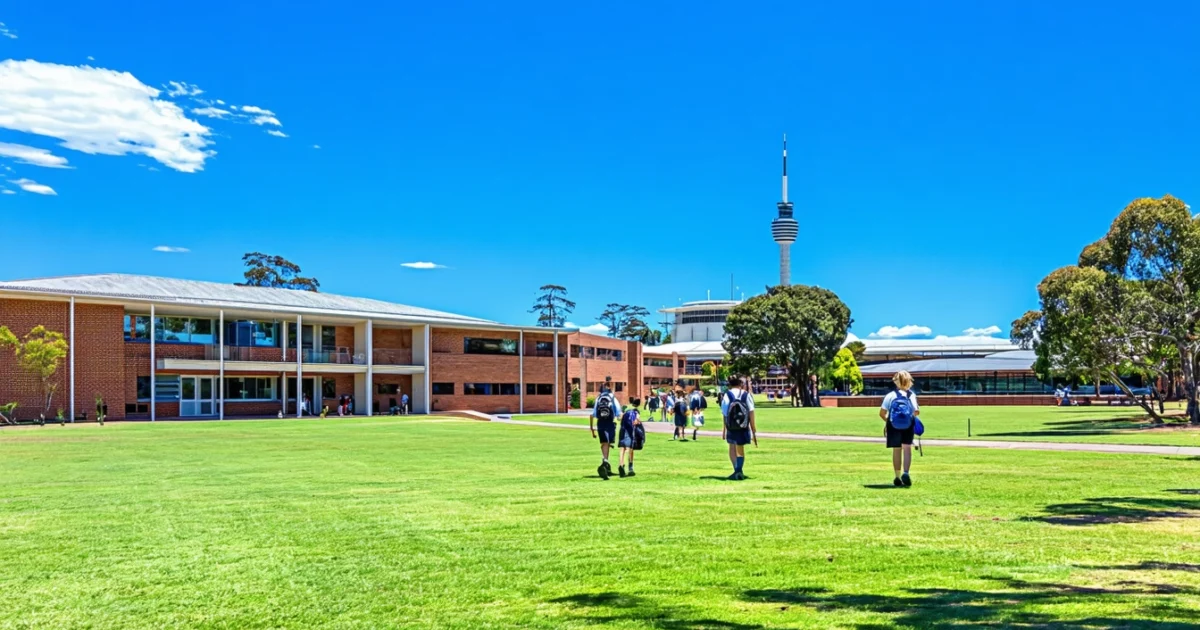
The best schools in Canberra include top-performing institutions like Canberra Grammar School, Radford College, and standout public options such as Telopea Park School and Narrabundah College. Australia’s capital offers exceptional educational opportunities across both public and private sectors, with many schools consistently ranking among the nation’s finest for academic performance and university pathways.
Canberra’s education landscape stands out for its innovative programs and strong NAPLAN results. Furthermore, the ACT’s unique college system provides students with specialized pathways in International Baccalaureate (IB), STEM, and arts programs.
Whether you’re seeking public excellence or premium private education, this comprehensive guide examines the top-performing schools across primary and secondary levels. Additionally, we’ll explore key factors like catchment areas, ATAR performance, and enrollment processes to help you make an informed decision. For families planning ahead, check our ACT School Holidays 2026 calendar for important term dates.
TL;DR
- Top public schools: Telopea Park School, Forrest Primary, Narrabundah College lead NAPLAN and ATAR rankings
- Premier private institutions: Canberra Grammar School and Radford College offer exceptional university pathways
- Unique ACT features: College system, strong IB programs, and specialized STEM academies set Canberra apart
- Key considerations: Catchment zones for public schools, early applications for private schools, and diverse specialist programs available
Overview of Canberra's Education Landscape
The Australian Capital Territory (ACT) operates under a unified education system that distinguishes itself from other Australian states through innovative governance structures. Moreover, the ACT Education Directorate oversees all public schools, implementing consistent policies across primary, secondary, and college levels. This centralized approach enables rapid deployment of educational reforms and maintains high standards throughout the territory.
Canberra’s education system features a distinctive college model for Years 11-12, separating senior secondary education from traditional high schools. Consequently, students transition to specialized colleges that offer focused pathways including the International Baccalaureate, vocational education, and university preparation programs. Additionally, this structure allows for smaller class sizes and more personalized learning experiences during crucial final years.
Public vs Private School Options
Public schools in Canberra demonstrate exceptional performance, with many institutions achieving NAPLAN scores above national averages. Furthermore, the ACT government invests significantly in public education infrastructure, technology, and teacher professional development. Families choosing public education benefit from no tuition fees, diverse programs, and strong community connections within designated catchment areas.
Private schools offer alternative educational philosophies, smaller class sizes, and extensive extracurricular programs. However, these institutions charge substantial fees ranging from $15,000 to $35,000 annually depending on the school level and specific programs offered. Independent schools like Canberra Grammar School and Radford College provide premium facilities, specialized teaching approaches, and strong alumni networks that enhance university admission prospects.
Performance Indicators and Rankings
School performance evaluation relies on multiple key performance indicators including NAPLAN results, ATAR scores, university admission rates, and student wellbeing measures. Additionally, the Australian Curriculum Assessment and Reporting Authority (ACARA) publishes comprehensive data through the My School website, enabling transparent comparisons between institutions. These rankings consider socio-economic factors, ensuring fair assessment across diverse school communities.
ATAR performance serves as a crucial metric for secondary school evaluation, with top Canberra schools consistently producing median ATAR scores above 85. Moreover, schools track university pathway success, measuring not just admission rates but also student retention and academic achievement in tertiary education. International Baccalaureate programs add another dimension, with IB scores converted to ATAR equivalents for comprehensive comparison purposes.
Recent Educational Reforms and 2025-2026 Initiatives
The ACT government launched significant educational reforms in 2025 focusing on digital literacy, mental health support, and environmental sustainability education. Furthermore, new funding allocations prioritize STEM infrastructure upgrades, teacher recruitment incentives, and expanded specialist programs across public schools. These initiatives position Canberra schools to meet evolving workforce demands and global educational standards.
Innovative programs introduced for the 2025-2026 academic year include artificial intelligence integration in curriculum delivery, expanded vocational education partnerships with local industries, and enhanced Indigenous cultural education components. Additionally, the territory implements new assessment methodologies that reduce standardized testing pressure while maintaining academic rigor. These reforms reflect Canberra’s commitment to progressive education that balances traditional academic excellence with contemporary learning needs.
Top Public Primary Schools in Canberra
Canberra’s public primary schools consistently deliver exceptional educational outcomes, with several institutions ranking among Australia’s finest based on NAPLAN results and academic performance metrics. These schools demonstrate excellence across literacy, numeracy, and critical thinking assessments while fostering well-rounded student development. Furthermore, the ACT’s commitment to educational innovation ensures these institutions maintain cutting-edge facilities and progressive teaching methodologies.
Standout Academic Performers
Telopea Park School stands as Canberra’s premier bilingual institution, offering French immersion programs from kindergarten through Year 12. Additionally, this school achieves consistently high NAPLAN scores while providing students with international perspectives and cultural competency. The school’s unique position as both primary and secondary institution creates seamless educational pathways for families seeking comprehensive French-English education.
Forrest Primary School maintains its reputation as one of the capital’s most sought-after educational institutions, with students regularly achieving above-average results across all NAPLAN domains. Moreover, the school’s location in the prestigious inner-south provides access to cultural institutions, parliamentary resources, and extensive community partnerships. Consequently, families often relocate specifically to access this school’s catchment area.
Red Hill Primary School delivers outstanding academic outcomes while emphasizing environmental education and sustainability practices. The institution’s students consistently outperform national averages in reading, writing, and mathematics assessments. Furthermore, the school’s innovative outdoor learning programs and garden-to-table initiatives create engaging, hands-on educational experiences that enhance traditional curriculum delivery.
Specialist Programs and Educational Innovation
Several Canberra public primary schools offer specialist programs that distinguish them from traditional educational models. For instance, some institutions provide intensive STEM education, incorporating robotics, coding, and advanced mathematics from early years. These programs prepare students for secondary school success while developing critical thinking and problem-solving capabilities essential for future careers.
Language immersion programs represent another significant offering across select public primary schools, with options including French, Japanese, and Italian instruction. Additionally, performing arts specializations allow students to develop musical, dramatic, and creative skills alongside core academic subjects. These diverse programs ensure families can find educational approaches that align with their children’s interests and learning styles.
Indigenous education programs feature prominently in many top-performing schools, providing all students with cultural awareness and understanding of Australia’s First Nations heritage. Similarly, gifted and talented programs offer accelerated learning opportunities for high-achieving students through enrichment activities and advanced curriculum options. These specialized offerings demonstrate the ACT’s commitment to inclusive, comprehensive education that serves diverse student populations.
Catchment Areas and Enrollment Strategies
Catchment area considerations play a crucial role in accessing Canberra’s most desirable public primary schools, as enrollment priority typically follows geographical boundaries. However, the ACT Education Directorate allows some flexibility through school choice applications, enabling families to request enrollment outside their designated catchment. Nevertheless, popular schools often reach capacity, making catchment area residence the most reliable enrollment pathway.
Property values in sought-after school catchments reflect the premium families place on educational quality, with homes near top-performing schools commanding higher prices. Consequently, many families research school catchment maps before purchasing or renting properties to ensure access to preferred educational institutions. Real estate agents frequently highlight school catchment information as a key selling point for family-oriented properties.
Enrollment timing proves critical for securing places in competitive schools, with applications typically opening in May for the following year’s kindergarten intake. Additionally, families should prepare required documentation including proof of residence, immunization records, and birth certificates well in advance of application deadlines. Early preparation increases the likelihood of successful enrollment in preferred schools, particularly for those with limited capacity or high demand.
Leading Public High Schools and Colleges
Canberra’s public secondary education system showcases exceptional academic performance through its unique college model and traditional high schools. Moreover, these institutions consistently deliver outstanding ATAR results that rival Australia’s top private schools while maintaining accessibility for all students.
Top-Performing Public Secondary Schools
Narrabundah College stands as Canberra’s premier public secondary institution, consistently achieving median ATAR scores above 85 and producing numerous students with scores exceeding 95. Furthermore, this college specializes in years 11-12 education, allowing students to focus intensively on their final academic years. The institution offers over 50 subjects including advanced mathematics, sciences, and humanities programs.
Campbell High School demonstrates excellence across both junior and senior years, with students regularly achieving top-tier university entrance scores. Additionally, the school’s comprehensive approach combines strong academic foundations with diverse extracurricular opportunities. Their gifted and talented program nurtures high-achieving students while maintaining inclusive educational practices.
Other standout institutions include Telopea Park School, which offers the prestigious International Baccalaureate program alongside Australian curriculum options. Similarly, Melrose High School and Hawker College maintain strong academic reputations with specialized programs in STEM and creative arts respectively.
Specialist Programs and Educational Innovation
The International Baccalaureate (IB) program operates at select Canberra public schools, providing globally recognized qualifications that facilitate international university admission. Consequently, IB students develop critical thinking skills through interdisciplinary learning approaches that emphasize global perspectives and community service. IB scores convert directly to ATAR equivalents, ensuring seamless Australian university applications.
STEM programs flourish across Canberra’s public secondary schools, with dedicated facilities for robotics, coding, and advanced scientific research. These programs prepare students for emerging technology careers while fostering innovation and problem-solving capabilities. Many schools partner with local universities and research institutions to provide authentic learning experiences.
Creative arts specializations encompass visual arts, performing arts, and digital media production across multiple institutions. Therefore, students can pursue intensive artistic training while maintaining strong academic foundations in core subjects. These programs often culminate in public exhibitions and performances that showcase student achievements.
College System vs Traditional High School Model
Canberra’s unique college system separates years 11-12 education into specialized institutions that focus exclusively on senior secondary studies. This model allows students to experience university-style learning environments with greater autonomy and subject flexibility. Colleges typically offer broader subject choices and more flexible timetabling compared to traditional high schools.
Traditional high schools provide continuity from years 7-12, enabling students to build long-term relationships with teachers and peers throughout their secondary education. However, these schools often maintain smaller senior cohorts, which can limit subject offerings but provide more personalized attention. The choice between college and high school models depends on individual student preferences and learning styles.
Both educational models demonstrate strong academic outcomes, with college students often appreciating increased independence while high school students benefit from familiar environments and established support networks. Ultimately, Canberra’s diverse secondary education options ensure families can select institutions that best match their children’s educational needs and career aspirations.
Premier Private and Independent Schools
Canberra’s private and independent schools consistently rank among Australia’s top educational institutions, delivering exceptional academic outcomes and comprehensive student development programs. These schools combine rigorous academic standards with extensive co-curricular opportunities, preparing students for university success and leadership roles. Furthermore, many private schools in Canberra achieve outstanding ATAR scores that exceed national averages.
Leading Independent Institutions
Canberra Grammar School stands as one of Australia’s most prestigious independent boys’ schools, offering education from kindergarten through year 12. The school maintains exceptional university entrance rates, with over 95% of graduates receiving first-round university offers annually. Additionally, Canberra Grammar’s extensive campus facilities include state-of-the-art science laboratories, performing arts centers, and sporting complexes.
Radford College provides co-educational excellence from early learning through senior secondary, emphasizing both academic achievement and character development. The college’s innovative programs integrate technology seamlessly into learning experiences while maintaining strong foundations in traditional subjects. Moreover, Radford consistently produces high-achieving graduates who secure places at leading Australian universities.
Other distinguished independent schools include Burgmann Anglican School, which offers comprehensive education with strong pastoral care programs. St Edmund’s College provides Catholic education for boys with emphasis on academic excellence and community service. Meanwhile, Brindabella Christian College combines academic rigor with Christian values across all year levels.
Academic Performance and University Pathways
Private schools in Canberra demonstrate consistently superior academic performance, with median ATAR scores typically ranging from 85-95 across leading institutions. These schools achieve exceptional university entrance rates, often exceeding 98% first-round offers for graduating cohorts. Consequently, students gain access to competitive degree programs at prestigious universities including ANU, University of Sydney, and University of Melbourne.
Advanced academic programs enhance university preparation through specialized courses and enrichment opportunities. Many private schools offer International Baccalaureate (IB) programs alongside traditional ACT curriculum pathways, providing students with globally recognized qualifications. Furthermore, these institutions maintain strong partnerships with universities, facilitating smooth transitions for graduating students.
Extension programs and academic competitions allow high-achieving students to excel beyond standard curriculum requirements. Schools regularly participate in national mathematics, science, and humanities competitions, with students achieving outstanding results. Therefore, graduates enter university with advanced knowledge and critical thinking skills that contribute to their continued success.
Fee Structures and Scholarship Opportunities
Private school fees in Canberra vary significantly based on year level and institution prestige, typically ranging from $15,000 to $35,000 annually for day students. Boarding fees add substantial costs, often increasing total expenses to $45,000-$65,000 per year for residential students. However, many families consider these investments worthwhile given the comprehensive educational experiences and outcomes achieved.
| School Type | Annual Day Fees | Boarding Fees |
|---|---|---|
| Elite Independent | $25,000-$35,000 | $45,000-$65,000 |
| Mid-tier Private | $18,000-$28,000 | $38,000-$48,000 |
| Religious Schools | $15,000-$25,000 | $35,000-$45,000 |
Scholarship programs provide opportunities for academically gifted and financially deserving students to access premium education. Academic scholarships typically cover 25-100% of tuition fees based on entrance examination performance and ongoing academic achievement. Additionally, many schools offer music, arts, and sporting scholarships that recognize exceptional talent in specific areas.
Need-based bursaries assist families experiencing financial hardship while maintaining academic standards for recipients. These programs ensure talented students can access quality education regardless of family circumstances. Therefore, scholarship opportunities make elite private education more accessible across diverse socioeconomic backgrounds.
Co-educational vs Single-Sex Options
Canberra’s private school landscape offers both co-educational and single-sex educational models, each providing distinct advantages for student development. Co-educational schools like Radford College and Burgmann Anglican School create natural social environments that mirror real-world interactions. These institutions emphasize collaborative learning and balanced gender representation across all academic and co-curricular activities.
Single-sex schools such as Canberra Grammar School (boys) focus on tailored pedagogical approaches that address gender-specific learning preferences. Research indicates single-sex environments can reduce social pressures and encourage participation in non-traditional subject areas. Consequently, boys’ schools often see increased engagement in arts and languages, while girls’ schools promote STEM participation.
Both educational models demonstrate excellent academic outcomes, with school culture and teaching quality proving more significant than gender composition. Families should consider their children’s personalities, learning styles, and social preferences when choosing between co-educational and single-sex options. Ultimately, Canberra’s diverse private school offerings ensure families can find institutions that align with their educational philosophies and student needs.
Specialist and Alternative Education Options
Canberra’s educational landscape extends beyond traditional schooling models to encompass specialized programs and alternative pathways that cater to diverse learning needs and interests. These innovative educational options provide students with targeted skill development, flexible learning arrangements, and internationally recognized qualifications.
Schools with Specialized Programs
STEM-focused institutions in Canberra prioritize science, technology, engineering, and mathematics education through hands-on learning experiences. The Australian Science and Mathematics School (ASMS) satellite program operates within select ACT schools, offering advanced research opportunities and university partnerships. Additionally, several schools integrate robotics programs, coding curricula, and maker spaces to develop technological literacy.
Arts-specialized schools nurture creative talents through comprehensive performing and visual arts programs. Narrabundah College offers an acclaimed performing arts program with professional-standard facilities and industry connections. Furthermore, many schools provide specialized music conservatoriums, drama academies, and visual arts studios that prepare students for creative careers.
Language immersion programs create multilingual learning environments that develop global citizenship skills. Several Canberra schools offer bilingual education in languages including French, German, Japanese, and Mandarin Chinese. These programs combine academic content delivery in target languages with cultural exchange opportunities.
International Schools and IB Programs
The International Baccalaureate (IB) program provides globally recognized qualifications through rigorous academic frameworks that emphasize critical thinking and international-mindedness. Canberra Grammar School, Radford College, and several other institutions offer comprehensive IB curricula from primary through diploma levels. IB scores convert directly to ATAR equivalents, ensuring university admission pathways remain accessible.
International schools serve expatriate families and globally mobile students through culturally diverse learning environments. These institutions typically follow international curricula while maintaining connections to students’ home countries. Moreover, they often provide multilingual instruction and facilitate smooth transitions between educational systems.
Special Needs and Inclusive Education
Inclusive education providers ensure students with diverse learning needs access quality educational opportunities within mainstream and specialized settings. The ACT Education Directorate operates dedicated special schools including Malkara School for students with intellectual disabilities and Cranleigh School for students requiring intensive support.
Mainstream schools throughout Canberra implement inclusive practices through learning support units, modified curricula, and assistive technologies. Specialized staff including speech pathologists, occupational therapists, and learning support teachers collaborate to create individualized education plans. Consequently, students with autism spectrum disorders, learning difficulties, and physical disabilities receive appropriate educational support.
Alternative Education Pathways
Flexible learning options accommodate students whose educational needs extend beyond traditional classroom structures. The Canberra Institute of Technology (CIT) offers school-based apprenticeships and vocational education programs that combine academic study with practical skill development. These pathways enable students to earn qualifications while gaining industry experience.
Distance education programs serve students in remote locations, those with health challenges, or families preferring home-based learning. The ACT Distance Education Centre provides comprehensive online curricula with teacher support and assessment frameworks. Similarly, several private providers offer accredited distance learning programs with flexible scheduling options.
Alternative schools address students who struggle in conventional educational environments through modified approaches and smaller class sizes. These institutions focus on re-engagement strategies, practical learning experiences, and individualized support systems. Therefore, students who have experienced educational disruption can successfully complete their schooling and transition to further education or employment.
Key Factors in School Selection
Choosing among the best schools in Canberra requires careful evaluation of multiple criteria that directly impact your child’s educational experience. Furthermore, understanding these key factors enables parents to make informed decisions that align with their family’s values and educational goals.
Academic Performance Metrics and How to Interpret Them
NAPLAN results provide standardized benchmarks for literacy and numeracy achievement across Australian schools. However, these scores represent only one dimension of academic excellence and should be interpreted alongside other performance indicators. Additionally, schools with higher socioeconomic demographics often achieve better NAPLAN outcomes due to external factors beyond teaching quality.
ATAR scores from Year 12 graduates offer insights into university preparation effectiveness, particularly for academic pathways. Nevertheless, vocational education outcomes, creative arts achievements, and student engagement metrics provide equally valuable performance measures. Therefore, parents should examine multiple academic indicators rather than focusing solely on standardized test results.
Value-added measures compare student progress against expected outcomes based on starting points and demographics. These metrics reveal whether schools effectively support student growth regardless of initial achievement levels. Consequently, a school showing strong value-added results demonstrates quality teaching and learning practices that benefit all students.
School Culture, Values, and Educational Philosophy
Educational philosophy shapes how schools approach teaching, learning, and student development throughout their programs. Traditional academic approaches emphasize structured curricula and formal assessment methods, while progressive philosophies prioritize student-centered learning and holistic development. Meanwhile, schools following specific pedagogical frameworks like Montessori or Steiner offer alternative educational experiences.
School culture encompasses the shared beliefs, traditions, and behavioral expectations that define the learning environment. Positive school cultures promote respect, inclusion, and high expectations for all community members. Furthermore, strong pastoral care systems ensure students receive emotional and social support alongside academic instruction.
Values alignment between families and schools creates consistency in expectations and reinforces positive behaviors. Schools emphasizing creativity and innovation suit families prioritizing artistic expression and critical thinking. Conversely, institutions focusing on discipline and academic rigor appeal to parents seeking structured learning environments.
Facilities, Resources, and Extracurricular Opportunities
Modern learning facilities include well-equipped science laboratories, technology centers, libraries, and specialized spaces for arts and music programs. These resources directly impact the quality of educational experiences and enable schools to deliver comprehensive curricula effectively. Additionally, outdoor learning spaces, sports facilities, and recreational areas support physical development and wellbeing initiatives.
Technology integration varies significantly across Canberra schools, with some institutions providing one-to-one device programs while others maintain traditional approaches. Digital learning platforms, interactive whiteboards, and coding programs prepare students for future workforce requirements. However, balanced technology use ensures students develop both digital literacy and fundamental learning skills.
Extracurricular programs extend learning beyond classroom boundaries through sports, performing arts, academic competitions, and community service opportunities. These activities develop leadership skills, teamwork abilities, and personal interests that contribute to well-rounded education. Moreover, diverse program offerings accommodate different student talents and provide pathways for personal growth and achievement.
Location, Transport, and Practical Considerations
Geographic proximity affects daily routines, family logistics, and student participation in school activities and friendships. Schools within walking or cycling distance promote independence and reduce transportation costs and time commitments. However, families often choose more distant schools when educational quality or specialized programs justify the additional travel requirements.
Public transport accessibility connects students to schools across Canberra through ACTION bus services and dedicated school routes. Many schools provide bus services for students living in specific catchment areas, particularly in outer suburbs. Therefore, transportation options significantly influence school choice feasibility for families without private vehicle access.
Financial considerations include school fees, uniform costs, excursion expenses, and technology requirements that vary substantially between public and private institutions. Public schools charge voluntary contributions and activity fees, while private schools impose substantial annual fees plus additional costs for specialized programs. Consequently, budget planning ensures families can sustain their chosen educational investment throughout their child’s schooling years.
Enrollment Process and Practical Considerations
Understanding enrollment procedures ensures families secure places at their preferred schools while meeting essential deadlines and requirements. Each school type follows distinct application processes, documentation needs, and timeline expectations that require careful planning and preparation.
Public School Catchment Zones and Priority Enrollment
Public schools in Canberra operate within designated catchment areas that determine automatic enrollment eligibility for local residents. Students living within these geographic boundaries receive priority placement, while families outside catchment zones must apply through the out-of-area enrollment process. Additionally, the ACT Education Directorate maintains detailed catchment maps that help families identify their designated schools based on residential addresses.
Priority enrollment categories include siblings of current students, children of school staff, and students with special circumstances requiring specific school placement. Furthermore, some high-demand schools implement waiting lists when applications exceed available positions, particularly for out-of-area applicants seeking specialized programs or facilities.
Private School Application Processes and Timelines
Private schools require comprehensive application packages submitted well in advance of intended enrollment dates, often 12-18 months before commencement. Application processes typically include detailed forms, academic records, character references, and entrance examinations or interviews that assess student suitability and potential contribution to school communities.
Many elite private schools maintain waiting lists from early childhood, with some families registering children at birth to secure future placement opportunities. Consequently, application deadlines vary significantly between institutions, with popular schools closing applications months or years before less competitive alternatives.
Required Documentation and Enrollment Procedures
Essential documentation includes birth certificates, proof of residence, immunization records, and previous school reports that verify student identity, eligibility, and academic history. International students require additional documentation such as visa status, English proficiency assessments, and translated academic transcripts from overseas institutions.
- Birth certificate or passport for age verification
- Proof of residence within catchment area (rates notice, lease agreement)
- Immunization records meeting Australian health requirements
- Previous school reports and academic transcripts
- Medical information for students with special needs or health conditions
Schools conduct enrollment interviews to assess student needs, discuss academic expectations, and ensure appropriate program placement. Therefore, families should prepare students for these meetings while gathering comprehensive documentation well before application deadlines.
Costs Associated with Different School Types
Public school costs remain relatively modest, with voluntary contributions ranging from $200-600 annually plus additional expenses for uniforms, excursions, and technology requirements. However, specialized programs such as International Baccalaureate or elite sports academies may incur supplementary fees for enhanced resources and facilities.
| School Type | Annual Fees | Additional Costs |
|---|---|---|
| Public Primary | $200-400 | Uniforms, excursions, technology |
| Public High School | $400-600 | Subject fees, camps, equipment |
| Catholic Schools | $2,000-8,000 | Building levies, activities |
| Independent Private | $15,000-35,000 | Boarding, extras, donations |
Private school fees vary dramatically based on school prestige, facilities, and boarding options, with day students paying $15,000-25,000 annually while boarding students face costs exceeding $35,000 per year. Moreover, many private schools request additional donations, building fund contributions, and activity fees that substantially increase total educational expenses beyond published tuition rates.
2026 School Performance Data and Rankings
The latest NAPLAN results for 2025 reveal significant improvements across Canberra’s educational landscape, with several schools achieving exceptional growth in literacy and numeracy benchmarks. Furthermore, ATAR scores from the 2025 cohort demonstrate that ACT students continue outperforming national averages, particularly in mathematics and science subjects.
Recent data shows that 85% of Canberra high schools exceeded national literacy standards, while 78% achieved above-average numeracy outcomes. Additionally, the territory’s median ATAR score of 82.4 represents a 2.1-point increase from the previous year, highlighting the effectiveness of targeted educational interventions.
Emerging Performance Trends
Several notable trends emerge from the 2025-2026 academic performance analysis across Canberra’s school system. Specifically, STEM subject participation increased by 15% among Year 11 and 12 students, while advanced mathematics enrollment grew substantially in both public and private institutions.
Moreover, schools implementing personalized learning approaches demonstrated measurably better outcomes in student engagement metrics. Consequently, many institutions now prioritize adaptive teaching methods that respond to individual learning styles and academic needs.
- Digital literacy scores improved by 12% across all year levels
- Student wellbeing indicators reached five-year highs in 2025
- Indigenous student achievement gaps narrowed significantly in core subjects
- International student integration programs yielded positive academic outcomes
Innovative Programs Launched in 2025-2026
Canberra schools introduced several groundbreaking initiatives during the 2025-2026 academic year, transforming educational delivery and student outcomes. Notably, the Future Skills Academy program launched across 15 high schools, integrating artificial intelligence, robotics, and sustainable technology into core curricula.
The Wellbeing First Initiative represents another significant development, providing comprehensive mental health support and resilience training for students. Similarly, the Community Connections Program strengthens partnerships between schools and local businesses, offering authentic learning experiences and career pathway opportunities.
Additionally, several schools piloted flexible learning environments that accommodate diverse learning preferences and schedules. These innovative spaces feature modular furniture, collaborative zones, and technology-enhanced learning areas that adapt to different pedagogical approaches.
Future Educational Outlook
The trajectory for Canberra’s education sector indicates continued excellence and innovation through 2026 and beyond. Specifically, investment in educational infrastructure will total $450 million over the next three years, supporting new school constructions and facility upgrades across the territory.
Furthermore, the Teacher Excellence Program aims to attract and retain high-quality educators through enhanced professional development opportunities and competitive remuneration packages. Consequently, this initiative should maintain Canberra’s reputation for delivering outstanding educational outcomes.
Looking ahead, sustainability education will become increasingly prominent in school curricula, preparing students for environmental challenges and green career opportunities. Meanwhile, international collaboration programs will expand, providing students with global perspectives and cross-cultural competencies essential for future success.
Frequently Asked Questions
What are the top schools in Canberra?
The top schools in Canberra include Canberra Grammar School and Radford College for private education, while outstanding public options include Telopea Park School, Forrest Primary, and Narrabundah College. These institutions consistently achieve excellent NAPLAN results and high ATAR scores, with many ranking among Australia’s finest schools for academic performance and university pathways.
What is the best public primary school in Canberra?
Forrest Primary School is widely regarded as one of the best public primary schools in Canberra, consistently achieving NAPLAN scores above national averages. Other top-performing public primary schools include Telopea Park School (which offers French-English bilingual programs) and several schools in affluent catchment areas that demonstrate exceptional academic results and strong community engagement.
What is the best private school in Canberra?
Canberra Grammar School is often considered the premier private school in Canberra, offering exceptional university pathways and extensive facilities. Radford College is another top-tier private institution known for its innovative programs and strong academic performance. Both schools charge fees ranging from $15,000 to $35,000 annually and provide premium educational experiences with smaller class sizes.
How does Canberra's college system work for Years 11-12?
Canberra’s unique college system separates Years 11-12 from traditional high schools, with students transitioning to specialized colleges like Narrabundah College. These colleges offer focused pathways including the International Baccalaureate (IB), vocational education, and university preparation programs. This structure provides smaller class sizes, more personalized learning experiences, and specialized STEM and arts programs during crucial final years.
What are catchment areas and how do they affect school enrollment?
Catchment areas are designated geographical zones that determine which public school your child can attend based on your residential address. In Canberra, families living within a school’s catchment area have guaranteed enrollment rights for that school. Students from outside the catchment may apply but are only accepted if places remain available after all catchment students are enrolled.
Is Canberra a good place to raise kids and access quality education?
Yes, Canberra is an excellent place to raise children, offering some of Australia’s best educational opportunities. The ACT consistently ranks highly for educational outcomes, with both public and private schools achieving exceptional NAPLAN and ATAR results. The territory’s unified education system, innovative programs, strong government investment in education, and unique college model create an outstanding learning environment for students.
What makes ACT schools different from other Australian states?
ACT schools operate under a unified education system with centralized governance through the ACT Education Directorate. Key differences include:
- Unique college system for Years 11-12 with specialized pathways
- Strong focus on International Baccalaureate (IB) programs
- Rapid implementation of educational reforms
- Significant government investment in public education infrastructure
- Specialized STEM academies and arts programs
How much do private schools cost in Canberra?
Private school fees in Canberra range from $15,000 to $35,000 annually, depending on the school level and specific programs offered. Premium institutions like Canberra Grammar School and Radford College typically charge at the higher end of this range. These fees cover tuition, but families should budget for additional costs including uniforms, textbooks, excursions, and extracurricular activities.
You May Also Like

How to Become a Hairdresser in Australia (2026): Certificate III, TAFE Costs and Visa Pathway for International Students

Studying Accounting in Australia: Courses, Costs and Career Path