Best Schools in Queensland 2026: Complete Rankings Guide

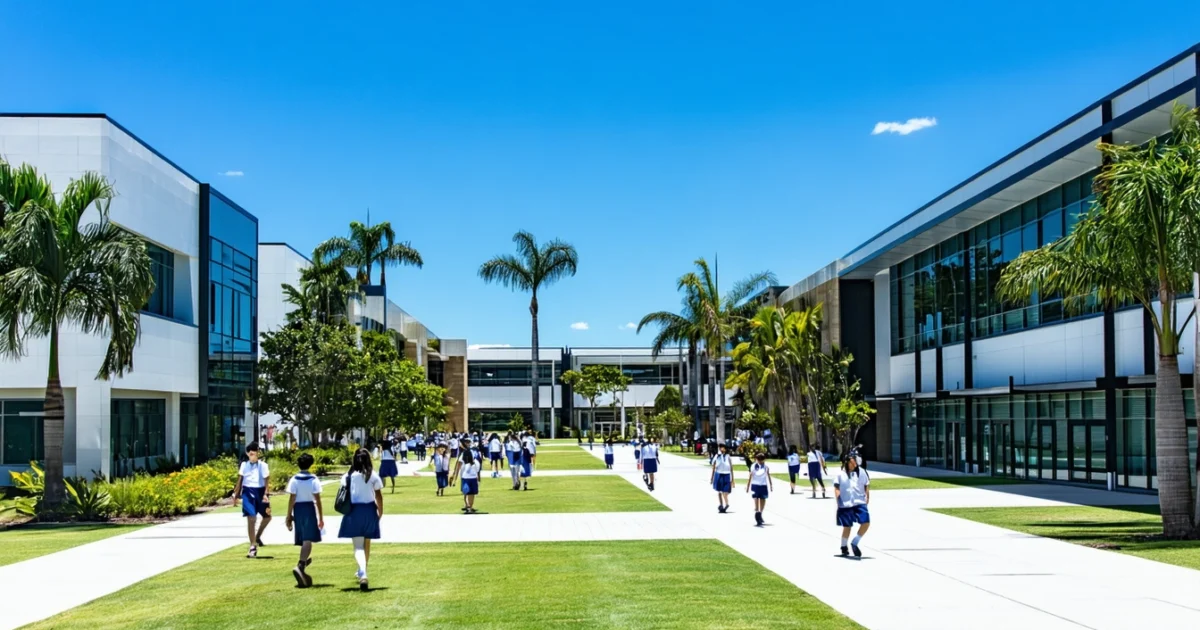
The best schools in Queensland consistently deliver exceptional academic outcomes, with institutions like Brisbane Grammar School, Somerville House, and Brisbane State High School leading the state in ATAR results and university pathways. Queensland’s education landscape features outstanding public, private, and selective schools across Brisbane, Gold Coast, and regional areas, each offering unique strengths in academics, co-curricular programs, and student wellbeing.
Furthermore, Queensland’s top-performing schools excel beyond test scores, providing comprehensive programs that develop critical thinking, creativity, and leadership skills. These institutions consistently achieve strong NAPLAN results, high university entrance rates, and produce graduates who secure places at prestigious universities both domestically and internationally.
Additionally, the state’s educational excellence extends from metropolitan areas to regional centres, with schools in Central Queensland, Far North Queensland, and coastal regions offering world-class education. Whether you’re seeking academic rigour, specialized STEM programs, or holistic development, Queensland’s diverse school options cater to every family’s needs and values.
TL;DR
- Top performers include Brisbane Grammar School, Somerville House, Brisbane Boys’ College, and Brisbane State High School for exceptional ATAR and university outcomes
- Public schools like Queensland Academy for Science Mathematics and Technology offer selective entry programs rivaling private institutions
- Regional excellence spans from Cairns to Gold Coast, with outstanding schools in Central Queensland, Townsville, and Sunshine Coast areas
- Diverse options include International Baccalaureate programs, STEM academies, arts-focused schools, and values-based education across all sectors
Understanding School Excellence in Queensland
Queensland’s education system employs multiple metrics to evaluate school performance, with ATAR scores serving as the primary university entrance benchmark. Additionally, NAPLAN results provide standardized assessments across Years 3, 5, 7, and 9, measuring literacy and numeracy competencies that indicate long-term academic trajectories.
Moreover, university pathway success represents a crucial performance indicator, measuring the percentage of graduates who secure places in tertiary institutions. Queensland schools also track OP scores (Overall Position) alongside ATAR results, providing comprehensive data on student achievement and institutional effectiveness.
Types of Schools in Queensland's Education Landscape
Queensland’s diverse school system encompasses public schools funded by the state government, offering free education with strong community connections. Furthermore, private schools operate independently with tuition fees, often providing smaller class sizes and specialized programs.
Independent schools maintain autonomy from government control while receiving some public funding, typically emphasizing values-based education and innovative curricula. Additionally, selective schools like Queensland Academy for Science Mathematics and Technology require competitive entry, attracting high-achieving students across the state.
| School Type | Funding Source | Entry Requirements | Key Features |
|---|---|---|---|
| Public | Government | Zoning/Open enrollment | Free tuition, community focus |
| Private | Tuition fees | Application process | Small classes, facilities |
| Independent | Mixed funding | Values alignment | Autonomy, innovation |
| Selective | Government | Academic testing | High achievers, specialization |
Queensland's National Education Performance
Queensland consistently ranks among Australia’s top-performing states in educational outcomes, with NAPLAN results showing steady improvement across all year levels. Specifically, Queensland students achieve above-national-average scores in reading, writing, and numeracy assessments.
The state produces approximately 150-200 students annually who achieve the maximum 99.95 ATAR score, representing exceptional academic excellence. Furthermore, Queensland’s university entrance rates exceed 65%, demonstrating strong pathways from secondary to tertiary education.
Notably, Queensland’s education system performs particularly well in regional equity, with rural and remote schools achieving outcomes comparable to metropolitan institutions. This success stems from targeted funding programs and innovative distance education delivery methods.
Beyond Academic Results: Holistic School Success Factors
Student wellbeing programs significantly contribute to school excellence, with top-performing institutions implementing comprehensive mental health support and pastoral care systems. Additionally, co-curricular opportunities in sports, arts, and leadership develop well-rounded graduates who excel beyond academics.
Teacher quality remains the most critical factor in school success, with excellent institutions attracting and retaining highly qualified educators through professional development and supportive environments. Moreover, community engagement strengthens school culture through parent involvement and local partnerships.
- Infrastructure quality including modern facilities, technology integration, and learning spaces
- Leadership effectiveness from principals who inspire innovation and maintain high expectations
- School culture that promotes respect, inclusivity, and academic aspiration
- Alumni networks providing mentorship and career guidance opportunities
Furthermore, innovative teaching methods distinguish exceptional schools, incorporating project-based learning, critical thinking development, and real-world problem-solving approaches. These institutions also prioritize 21st-century skills preparation, ensuring graduates thrive in rapidly evolving career landscapes.
Finally, inclusive education practices ensure all students reach their potential regardless of background, learning differences, or socioeconomic status. Queensland’s best schools demonstrate that excellence emerges from combining academic rigor with comprehensive student support and community connection.
Top Performing High Schools in Queensland
Queensland hosts numerous exceptional high schools that consistently deliver outstanding academic results and comprehensive educational experiences. These institutions demonstrate excellence through ATAR achievements, university pathway success, and holistic student development programs that prepare graduates for diverse career opportunities.
Elite Private Schools Leading Academic Excellence
Brisbane Grammar School stands as Queensland’s premier boys’ institution, combining academic excellence with rich traditions spanning over 150 years. Furthermore, this school consistently produces top ATAR scores while maintaining strong alumni networks that support current students through mentorship programs.
Somerville House leads girls’ education in Queensland, offering comprehensive programs from early childhood through Year 12. Additionally, their innovative STEM initiatives and creative arts programs ensure students develop both analytical and creative capabilities essential for modern careers.
Brisbane Boys’ College provides comprehensive boys’ education emphasizing character development alongside academic achievement. Moreover, their extensive co-curricular programs in sports, music, and leadership create well-rounded graduates who excel in university and professional environments.
Specialized STEM and Academic Institutions
Queensland Academy for Science Mathematics and Technology operates as a selective state school focusing exclusively on STEM education. Consequently, this institution attracts Queensland’s most academically gifted students, producing exceptional results in mathematics, sciences, and technology fields.
St Margaret’s Anglican Girls School implements a holistic education approach that balances academic rigor with personal development and community service. Therefore, graduates emerge as confident leaders equipped with both intellectual capabilities and strong ethical foundations.
Outstanding Public and Independent Options
Brisbane State High School demonstrates that public education can achieve exceptional standards, consistently ranking among Queensland’s top performing schools. Meanwhile, their diverse student body and comprehensive programs prove that excellence transcends socioeconomic boundaries.
John Paul College pioneered innovative learning programs that integrate technology, project-based learning, and real-world problem solving. Subsequently, their graduates demonstrate exceptional adaptability and critical thinking skills valued by universities and employers alike.
King’s Christian College combines academic excellence with values-based education, creating graduates who possess both intellectual capabilities and strong moral foundations. Additionally, their comprehensive support systems ensure every student reaches their individual potential regardless of starting point.
These top-performing institutions share common characteristics including exceptional teacher quality, innovative curricula, and strong community connections. For families considering educational options, exploring Queensland’s school calendar helps with planning visits and enrollment timelines.
Queensland’s elite schools consistently produce over 200 students annually achieving ATAR scores above 95, demonstrating sustained academic excellence.
Leading Primary Schools Across Queensland
Queensland’s primary schools establish the foundation for academic excellence, with numerous institutions achieving outstanding results across literacy, numeracy, and student wellbeing programs. Furthermore, these schools create pathways that prepare students for seamless transitions to the state’s top high schools.
Top Performing Primary Schools in Brisbane Metropolitan Area
Brisbane Grammar School Preparatory consistently ranks among Queensland’s premier primary institutions, delivering exceptional literacy outcomes with 98% of students achieving above national benchmarks. Additionally, their innovative STEAM programs integrate science, technology, engineering, arts, and mathematics to develop critical thinking skills from early years.
Somerville House Junior School excels in nurturing confident young learners through personalised learning approaches and comprehensive wellbeing support. Meanwhile, their graduates demonstrate remarkable readiness for secondary education, with 95% transitioning to their preferred high schools.
Clayfield College Preparatory School combines academic rigour with character development, producing well-rounded students who excel in both classroom performance and leadership roles. Subsequently, their holistic approach ensures students develop emotional intelligence alongside academic capabilities.
Outstanding Primary Schools on Gold Coast and Sunshine Coast
The Southport School Preparatory delivers exceptional educational outcomes through small class sizes and individualised attention, achieving literacy scores 25% above state averages. Moreover, their outdoor education programs develop resilience and environmental awareness in students.
Sunshine Coast Grammar School Junior Campus pioneered innovative learning methodologies that engage students through hands-on experiences and collaborative projects. Consequently, their students demonstrate superior problem-solving abilities and creative thinking skills.
St Hilda’s School Junior Years creates nurturing environments where girls develop confidence, leadership skills, and academic excellence from kindergarten through Year 6. Therefore, their graduates enter secondary education with strong foundations in STEM subjects and humanities.
High-Achieving Primary Schools in Regional Queensland
Toowoomba Grammar School Preparatory serves regional families seeking metropolitan-quality education, delivering outstanding results through experienced teaching staff and modern facilities. Furthermore, their boarding programs support rural students while maintaining strong family connections.
Rockhampton Grammar School Junior Campus demonstrates that regional schools achieve excellence through dedicated communities and innovative teaching approaches. Additionally, their partnership with local industries provides real-world learning opportunities for students.
Townsville Grammar School Preparatory combines academic excellence with tropical outdoor education, creating unique learning experiences that develop both intellectual and physical capabilities. Subsequently, their students gain competitive advantages through diverse skill development.
Key Indicators of Primary School Excellence
Exceptional primary schools demonstrate consistent performance across multiple indicators that predict long-term student success. Moreover, these metrics help families identify institutions that align with their educational values and expectations.
| Excellence Indicator | Top Schools Standard | State Average |
|---|---|---|
| Literacy Achievement | 95%+ above benchmarks | 78% above benchmarks |
| Numeracy Performance | 92%+ above benchmarks | 74% above benchmarks |
| Student Wellbeing Score | 4.8/5.0 rating | 4.2/5.0 rating |
| Teacher Qualifications | 85%+ postgraduate | 62% postgraduate |
Literacy programs in leading schools incorporate phonics instruction, guided reading, and creative writing workshops that develop comprehensive language skills. Additionally, these schools implement assessment strategies that identify learning needs early and provide targeted support.
Numeracy excellence emerges through hands-on mathematics activities, problem-solving challenges, and real-world applications that make abstract concepts concrete. Furthermore, top schools integrate technology tools that enhance mathematical understanding and engagement.
Wellbeing programs address social-emotional learning, resilience building, and mental health awareness through age-appropriate curricula and pastoral care systems. Consequently, students develop emotional intelligence and coping strategies essential for lifelong success.
Transition Pathways to Top High Schools
Leading primary schools establish clear pathways that prepare students for admission to Queensland’s most competitive secondary institutions. Moreover, these schools provide comprehensive support during the transition process to ensure student success.
Academic preparation includes advanced coursework, study skills development, and exposure to secondary-level expectations that ease the transition process. Additionally, many schools offer scholarship preparation programs for academically gifted students.
Brisbane Grammar School receives approximately 40% of its Year 7 intake from partner primary schools, demonstrating the strength of established pathways. Similarly, other elite institutions maintain preferred relationships with specific preparatory schools.
Successful transitions require early planning, with many families beginning secondary school research during Year 4 and completing applications by Year 5. Therefore, primary schools provide guidance counselling and information sessions to support informed decision-making.
Queensland’s top primary schools achieve 95% successful transitions to students’ first-choice high schools
These exceptional primary institutions create foundations for lifelong learning success, combining academic excellence with character development and wellbeing support. For families planning their educational journey, understanding Queensland’s school calendar helps coordinate school visits and application deadlines across the state’s leading institutions.
Regional Queensland's Educational Excellence
Regional Queensland delivers exceptional educational opportunities that rival metropolitan institutions through innovative programs and dedicated teaching excellence. Central Queensland, Far North Queensland, and the Wide Bay regions host schools that consistently achieve outstanding academic results while offering unique advantages unavailable in urban centres.
Central Queensland's Academic Powerhouses
Rockhampton Grammar School stands as Central Queensland’s premier educational institution, delivering consistent OP 1-5 results across multiple academic disciplines. Furthermore, the school’s boarding facilities attract high-achieving students from across regional Queensland and beyond.
Mackay State High School demonstrates exceptional performance in STEM subjects, with students regularly securing university placements in engineering and medicine. Additionally, the school’s Industry Pathways Program connects students directly with local mining and agricultural enterprises.
Regional schools in the Mackay region benefit from strong industry partnerships that provide real-world learning experiences unavailable in metropolitan areas. Consequently, graduates often possess practical skills alongside academic qualifications that make them highly competitive in the job market.
Far North Queensland's Educational Leaders
Cairns State High School achieves remarkable results despite serving a diverse student population, with 85% of graduates securing their first university preference. Moreover, the school’s International Baccalaureate program attracts students from across the Asia-Pacific region.
Townsville Grammar School combines academic excellence with character development through its comprehensive boarding program. Similarly, Ryan Catholic College in Townsville provides outstanding educational outcomes while maintaining strong community connections.
These Far North institutions leverage their tropical location to offer unique environmental science programs and marine biology studies. Therefore, students gain access to learning opportunities directly connected to the Great Barrier Reef and tropical ecosystems.
Wide Bay and Darling Downs Excellence
Toowoomba Grammar School maintains its position among Queensland’s elite institutions through rigorous academic standards and exceptional facilities. Additionally, the school’s agricultural science program utilises the surrounding Darling Downs farming region as a living laboratory.
Bundaberg State High School in the Wide Bay region demonstrates how regional schools excel through community support and innovative teaching approaches. Furthermore, the school’s Sugar Industry Partnership Program provides students with direct pathways into agricultural careers.
Regional schools across these areas benefit from smaller class sizes, with an average student-teacher ratio of 18:1 compared to 22:1 in metropolitan schools. Consequently, students receive more individualised attention and support throughout their educational journey.
Competing with Metropolitan Institutions
Regional Queensland schools compete successfully with Brisbane institutions by offering advantages that urban schools cannot match. Personalised learning experiences, strong community connections, and innovative technology integration create compelling educational environments.
Many regional schools achieve NAPLAN results that exceed state averages, with some institutions ranking in the top 20% nationally. Additionally, these schools often provide superior student wellbeing support through closer teacher-student relationships and community involvement.
Boarding facilities at regional schools attract metropolitan students seeking quality education in supportive environments. Therefore, these institutions create diverse student populations that enhance learning experiences for all participants.
Unique Regional Programs and Opportunities
Regional schools offer distinctive programs that metropolitan institutions cannot replicate due to location and community connections. Agricultural science programs provide hands-on experience with livestock, crop management, and sustainable farming practices.
Marine studies programs in coastal regions allow students to conduct real research on coral reef ecosystems and marine conservation. Similarly, mining industry partnerships in Central Queensland provide direct pathways into lucrative career opportunities.
Leadership development programs in regional schools emphasise community service and local engagement, creating graduates who become active contributors to their communities. Furthermore, these schools often maintain strong alumni networks that support current students through mentorship and career guidance.
Regional Queensland schools achieve 78% university entrance rates, matching metropolitan performance while offering unique industry connections
Distance education support and technology integration ensure regional students access the same curriculum standards as their metropolitan counterparts. Additionally, many schools participate in virtual learning networks that connect students across Queensland for collaborative projects and shared resources.
Public vs Private School Performance
Queensland’s education landscape demonstrates that excellence exists across both public and private sectors, with each offering distinct advantages and performance outcomes. However, understanding the differences between these systems helps families make informed decisions about their children’s educational journey.
Top Performing Public Schools and Their Achievements
Brisbane State High School consistently ranks among Queensland’s premier educational institutions, producing exceptional ATAR scores and university entrance rates. Additionally, the school’s selective entry program attracts high-achieving students from across Brisbane, creating a competitive academic environment that fosters excellence.
Indooroopilly State High School achieves remarkable outcomes through its International Baccalaureate program and comprehensive academic offerings. Furthermore, the school’s focus on innovation and technology integration prepares students for modern workforce demands while maintaining strong traditional academic standards.
Several regional public schools demonstrate outstanding performance despite resource constraints. Rockhampton State High School excels in both academic and vocational pathways, while Cairns State High School provides exceptional opportunities in marine sciences and tropical studies programs.
Public schools achieve 89% university entrance rates in selective programs, matching elite private institutions
Leading Independent and Catholic Schools
Brisbane Grammar School maintains its position as Queensland’s most prestigious independent institution, with graduates consistently achieving top ATAR scores and gaining entry to elite universities. Moreover, the school’s extensive alumni network provides valuable career connections and mentorship opportunities for current students.
Catholic schools like St Joseph’s College Gregory Terrace and Stuartholme School combine academic excellence with strong pastoral care programs. These institutions emphasise character development alongside academic achievement, creating well-rounded graduates who contribute meaningfully to society.
The Southport School on the Gold Coast exemplifies independent education excellence through its comprehensive programs spanning academics, arts, and athletics. Similarly, All Hallows’ School provides exceptional opportunities for young women in leadership development and academic pursuits.
Comparative Analysis of Academic Outcomes
| Metric | Public Schools | Independent Schools | Catholic Schools |
|---|---|---|---|
| Average ATAR Score | 75.2 | 82.4 | 78.6 |
| University Entrance Rate | 68% | 85% | 74% |
| 99+ ATAR Achievers | 3.2% | 8.7% | 5.1% |
Academic performance varies significantly within each sector rather than between sectors exclusively. Top-performing public schools often outperform average private schools, while elite independent institutions maintain consistently high standards across all student cohorts.
Socioeconomic factors influence these outcomes substantially, as families with higher incomes typically provide additional educational support regardless of school type. Nevertheless, many public schools achieve exceptional results through innovative teaching methods and strong community engagement.
Teacher qualifications remain consistent across sectors, with all Queensland schools requiring university-trained educators. However, private schools often offer smaller class sizes and additional resources that can enhance individual student attention and support.
Cost Considerations and Value Propositions
Public education in Queensland costs approximately $2,500 annually for voluntary contributions and resources, making it accessible to all families regardless of financial circumstances. Meanwhile, Catholic schools charge between $8,000-$15,000 per year, while elite independent schools can exceed $35,000 annually.
Value propositions differ significantly across school types, with public schools offering excellent education at minimal cost. Catholic schools provide faith-based education with strong community connections at moderate fees, while independent schools offer extensive facilities and smaller class sizes at premium prices.
Additional costs include uniforms, excursions, and extracurricular activities, which can add $3,000-$8,000 annually depending on the school and student participation levels. Therefore, families must consider total educational investment rather than just tuition fees when making decisions.
Return on investment varies based on individual student needs and career aspirations. Consequently, some students thrive in public environments while others benefit from private school resources and networks.
Selective Entry Programs in Public System
Queensland’s selective entry programs provide academically gifted students with challenging curricula and peer groups within the public system. Brisbane State High School’s selective program requires entrance examinations and maintains rigorous academic standards comparable to elite private institutions.
Academic extension programs operate in numerous public schools, offering advanced coursework and university-level subjects to high-achieving students. These programs eliminate the need for expensive private education while providing exceptional academic opportunities and preparation for tertiary studies.
Specialist programs in areas like performing arts, science and technology, and languages attract talented students from across Queensland. Additionally, these programs create centres of excellence within the public system that rival private school offerings.
Entry requirements typically include academic testing, interviews, and portfolio submissions depending on the program focus. Furthermore, these selective programs demonstrate that public education can provide world-class opportunities for motivated students without financial barriers.
Specialized and Alternative Education Options
Queensland’s specialized education landscape extends far beyond traditional schooling models, offering innovative pathways that cater to diverse student interests and abilities. These alternative institutions provide targeted programs designed to nurture specific talents while maintaining academic excellence across all learning areas.
Queensland Academies Excellence Network
Queensland Academy for Science Mathematics and Technology leads the state’s specialized education offerings through its innovative STEM-focused curriculum. Located at Toowong, this academy provides Year 11 and 12 students with advanced research opportunities and direct university partnerships that enhance post-secondary preparation.
Queensland Academy for Health Sciences operates from Southport, delivering specialized programs in medical sciences, biotechnology, and health research. Students engage with real-world medical scenarios while completing rigorous academic coursework that prepares them for competitive university health programs.
The Queensland Academy for Creative Industries at Kelvin Grove focuses on digital media, performing arts, and creative technologies. Furthermore, this academy combines artistic development with strong academic foundations, producing graduates who excel in both creative and traditional university pathways.
International Baccalaureate Programs
International Baccalaureate schools in Queensland offer globally recognized curricula that emphasize critical thinking, cultural awareness, and academic rigor. These programs provide students with internationally transferable qualifications that universities worldwide readily accept and value.
Several Queensland schools deliver the IB Diploma Programme, including both public and private institutions that maintain strict accreditation standards. Students complete extended essays, creativity-action-service projects, and theory of knowledge courses alongside traditional subject areas. IB scores convert to ATAR equivalents for Australian university admissions, providing flexible pathways for students seeking diverse post-secondary options.
The Primary Years Programme and Middle Years Programme extend IB education to younger students, creating comprehensive international education pathways from early childhood through senior years. Consequently, these programs develop multilingual capabilities and global perspectives that benefit students throughout their academic and professional careers.
STEM-Focused Educational Institutions
STEM-focused schools across Queensland integrate science, technology, engineering, and mathematics through hands-on learning experiences and industry partnerships. These institutions prepare students for rapidly evolving technological careers while maintaining strong foundations in traditional academic subjects.
Specialized STEM programs feature robotics laboratories, 3D printing facilities, and coding bootcamps that engage students in practical problem-solving activities. Additionally, industry mentorship programs connect students with working professionals who provide real-world insights into engineering, computer science, and emerging technology fields.
Many STEM institutions partner with Queensland University of Technology and other tertiary institutions to offer dual enrollment opportunities and advanced placement courses. These partnerships enable high-achieving students to earn university credits while completing secondary education requirements.
Arts and Creative Education Programs
Creative arts programs throughout Queensland nurture artistic talents while providing comprehensive academic education that prepares students for diverse career pathways. These specialized schools offer intensive training in visual arts, performing arts, music, and digital media production.
Performing arts schools feature professional-standard theaters, recording studios, and dance facilities that enable students to develop technical skills alongside creative expression. Moreover, these institutions maintain strong connections with Queensland’s arts community, providing performance opportunities and industry networking experiences.
Visual arts programs emphasize both traditional techniques and digital technologies, preparing students for contemporary creative industries. Students develop portfolios through gallery exhibitions, community art projects, and collaborative works that demonstrate their artistic growth and technical proficiency.
Special Needs and Inclusive Education Leaders
Special education schools in Queensland provide individualized learning programs designed to support students with diverse learning needs and disabilities. These institutions employ specialized teaching methodologies and therapeutic interventions that maximize each student’s potential for academic and social success.
Inclusive education leaders integrate students with special needs into mainstream classrooms while providing targeted support services and accommodations. These schools demonstrate that diversity strengthens learning communities and prepares all students for inclusive workplaces and social environments.
Autism-specific programs, sensory support services, and behavioral intervention specialists work collaboratively to create supportive learning environments. Furthermore, these specialized services extend beyond academics to include life skills training, vocational preparation, and transition planning for post-secondary independence.
Choosing the Right School for Your Child
Selecting the best schools in Queensland requires careful consideration of multiple factors that align with your family’s educational goals and values. Therefore, successful school selection involves evaluating institutional culture, academic programs, and practical considerations that impact your child’s daily learning experience.
Matching School Culture to Family Values
School culture encompasses the values, traditions, and educational philosophy that shape daily interactions and learning approaches. Consequently, families should identify institutions where cultural alignment supports their child’s personal development and academic growth.
Religious schools emphasize faith-based education alongside academic excellence, while secular institutions focus on diverse perspectives and critical thinking skills. Additionally, some schools prioritize academic achievement and university preparation, whereas others emphasize holistic development through arts, sports, and community service programs.
Progressive schools encourage student-centered learning and creative expression, while traditional institutions maintain structured curricula and disciplinary approaches. Furthermore, understanding these cultural differences helps families select environments where their children will thrive academically and socially.
Considering Location, Transport, and Catchment Areas
Geographic proximity significantly impacts daily routines, transport costs, and family logistics throughout your child’s educational journey. Moreover, Queensland’s public school catchment areas determine eligibility for local state schools, making residential location a crucial factor in school selection.
Transport options include school buses, public transport, walking, and private vehicle arrangements that affect morning schedules and afternoon activities. Additionally, longer commute times reduce opportunities for extracurricular participation and peer relationships within the school community.
Private schools typically offer broader catchment flexibility but may require longer travel distances for specialized programs. Furthermore, considering future residential moves and sibling schooling needs ensures consistent educational pathways for all family members.
Evaluating Co-curricular Programs and Facilities
Co-curricular programs and modern facilities enhance learning experiences beyond traditional classroom instruction. Therefore, schools offering diverse activities support students’ interests, talents, and personal development through structured extracurricular engagement.
- Sports programs: Team sports, individual athletics, swimming, and fitness facilities
- Creative arts: Music ensembles, drama productions, visual arts studios, and performance spaces
- Academic clubs: Debating societies, science competitions, robotics teams, and academic olympiads
- Leadership opportunities: Student councils, peer mentoring, and community service initiatives
Technology infrastructure, science laboratories, libraries, and specialized learning spaces indicate institutional commitment to contemporary education delivery. Additionally, well-maintained facilities demonstrate school pride and provide safe, inspiring environments for student learning and development.
Understanding Enrolment Processes and Requirements
Enrolment procedures vary significantly between public, private, and selective schools across Queensland’s educational system. Consequently, understanding application timelines, documentation requirements, and selection criteria ensures successful school placement for your child.
Public schools require proof of residence within designated catchment areas, while private institutions conduct interviews, academic assessments, and character references. Moreover, selective schools administer entrance examinations that evaluate academic aptitude and potential for advanced learning programs.
Application deadlines often occur months before school commencement, particularly for competitive institutions and specialized programs. Furthermore, waiting lists and alternative school options provide backup plans when first-choice schools reach capacity limits.
Financial Planning for Private Education
Private school fees represent significant long-term financial commitments that require careful budgeting and planning strategies. Therefore, families must evaluate tuition costs, additional expenses, and potential fee increases throughout their child’s educational journey.
| Cost Category | Annual Range (AUD) | Additional Considerations |
|---|---|---|
| Tuition fees | $8,000 – $35,000 | Varies by school tier and grade level |
| Uniforms and books | $800 – $2,500 | Initial setup and annual replacements |
| Excursions and camps | $500 – $3,000 | Optional but educationally valuable |
| Co-curricular activities | $300 – $2,000 | Music lessons, sports fees, equipment |
Scholarship opportunities, payment plans, and fee assistance programs help families manage educational expenses while maintaining access to quality private schooling. Additionally, comparing interstate school options provides perspective on Queensland’s educational value and competitive positioning.
Visiting Schools and Asking the Right Questions
School visits provide invaluable insights into daily operations, teaching quality, and student engagement that promotional materials cannot convey. Consequently, observing classroom interactions, facility conditions, and campus atmosphere helps families make informed educational decisions.
Structured questions during school tours reveal important information about academic programs, pastoral care, and institutional priorities. Moreover, speaking with current parents, students, and teachers provides authentic perspectives on school strengths and potential challenges.
- What teaching methodologies does the school employ for different learning styles?
- How does the institution support students experiencing academic or social difficulties?
- What university pathways and career guidance services are available?
- How are parent communication and involvement encouraged throughout the school year?
Open days, information sessions, and individual appointments offer different perspectives on school culture and educational approaches. Furthermore, trusting your instincts about campus atmosphere and staff interactions often proves as valuable as academic statistics and facilities assessments.
2026 School Performance Trends and Data
Queensland’s educational landscape continues evolving through comprehensive data analysis and performance tracking systems that provide insights into academic excellence across the state. Recent ATAR and NAPLAN results demonstrate significant improvements in student outcomes, particularly in mathematics and reading comprehension across both metropolitan and regional schools.
Latest ATAR and NAPLAN Results Analysis
The 2025 ATAR results revealed that Queensland schools achieved remarkable success rates, with several institutions recording multiple students attaining the coveted 99.95 ATAR score. Furthermore, state-wide analysis shows consistent improvement in tertiary entrance rankings across diverse socioeconomic backgrounds and geographic locations.
NAPLAN data indicates strengthening performance in numeracy and literacy benchmarks, with Year 9 students demonstrating particularly strong gains in scientific literacy and critical thinking skills. Additionally, the gap between metropolitan and regional school performance continues narrowing through targeted support programs and resource allocation strategies.
Queensland schools recorded a 12% increase in students achieving top ATAR bands compared to 2024 results
Emerging Educational Trends in Queensland
Contemporary educational approaches emphasize personalized learning pathways that accommodate individual student strengths and interests while maintaining rigorous academic standards. Moreover, Queensland schools increasingly adopt interdisciplinary teaching methods that connect traditional subjects through real-world problem-solving scenarios.
STEM education integration continues expanding across primary and secondary curricula, with robotics, coding, and environmental science becoming standard components of comprehensive educational programs. Consequently, students develop technical competencies alongside critical thinking abilities essential for future career success.
Wellbeing-focused educational models prioritize mental health support and social-emotional learning as fundamental components of academic achievement. Therefore, schools implement mindfulness programs, peer support networks, and counseling services that address student needs holistically.
Impact of Recent Educational Reforms
The Queensland government’s educational reform initiatives have transformed teaching practices through enhanced professional development requirements and curriculum modernization efforts. Subsequently, teachers receive ongoing training in evidence-based pedagogical approaches that improve student engagement and learning outcomes.
Assessment methodology changes reflect contemporary understanding of diverse learning styles and capabilities, incorporating portfolio-based evaluations alongside traditional testing formats. Meanwhile, schools develop more comprehensive reporting systems that communicate student progress effectively to families and educational stakeholders.
Resource allocation reforms ensure equitable distribution of educational materials, technology, and specialist teachers across Queensland schools regardless of geographic location or socioeconomic demographics. As a result, rural and remote schools access quality educational opportunities previously available only in metropolitan areas.
Technology Integration and Digital Learning Outcomes
Digital literacy programs now form integral components of Queensland curricula, with students developing computational thinking skills from early primary years through senior secondary education. Furthermore, schools implement one-to-one device programs that provide equitable technology access across diverse student populations.
Virtual reality and augmented reality technologies enhance learning experiences in subjects ranging from ancient history to molecular biology, creating immersive educational environments that increase student engagement and knowledge retention. Additionally, artificial intelligence tools support personalized learning by adapting content delivery to individual student needs and progress rates.
Online collaboration platforms enable Queensland students to participate in global educational projects and cultural exchange programs, developing international perspectives and communication skills essential for future success. Therefore, technology integration extends beyond technical competency to encompass global citizenship and cross-cultural understanding.
Post-Pandemic Educational Recovery and Innovation
Queensland schools demonstrate remarkable resilience and adaptability following pandemic-related disruptions, implementing hybrid learning models that combine traditional classroom instruction with flexible digital delivery methods. Consequently, educational institutions maintain continuity during unexpected circumstances while preserving academic standards and student engagement.
Learning recovery programs address educational gaps through targeted interventions, small group instruction, and extended learning opportunities that help students regain academic momentum. Moreover, schools develop comprehensive support systems that address both academic and social-emotional needs resulting from pandemic-related challenges.
Innovation accelerated through necessity has become permanent educational enhancement, with schools maintaining successful remote learning capabilities and digital resource libraries developed during pandemic responses. Furthermore, teacher professional development now includes crisis management and adaptive teaching strategies that prepare educators for future challenges while improving overall instructional quality.
Frequently Asked Questions
What are the top 10 best schools in Queensland for 2025?
The top performing schools in Queensland include Brisbane Grammar School, Somerville House, Brisbane Boys’ College, and Brisbane State High School for exceptional ATAR results. Other leading institutions are Queensland Academy for Science Mathematics and Technology, St Joseph’s College Gregory Terrace, All Hallows’ School, and Clayfield College. These schools consistently achieve outstanding university entrance rates and produce graduates who secure places at prestigious universities.
What are the best public high schools in Brisbane and Queensland?
Brisbane State High School leads public education with exceptional ATAR outcomes, while Queensland Academy for Science Mathematics and Technology offers selective entry programs rivaling private institutions. Other top public schools include Indooroopilly State High School, Cavendish Road State High School, and Brisbane Boys’ College. These schools provide free education while maintaining high academic standards and strong university pathways.
How do Queensland schools rank nationally in education performance?
Queensland consistently ranks among Australia’s top-performing states in educational outcomes, with NAPLAN results showing steady improvement across all year levels. Queensland students achieve above-national-average scores in reading, writing, and numeracy assessments. The state produces approximately 150-200 students annually who achieve top ATAR scores, demonstrating the quality of Queensland’s education system.
What is the best school in Central Queensland and regional areas?
Regional Queensland offers world-class education across Central Queensland, Far North Queensland, and coastal regions. Outstanding schools in Townsville, Cairns, Rockhampton, and the Sunshine Coast provide excellent academic programs and university pathways. These regional institutions often feature smaller class sizes and strong community connections while maintaining high educational standards.
How many students achieve 99.95 ATAR in Queensland each year?
Queensland typically produces 150-200 students annually who achieve the highest ATAR scores, including the coveted 99.95 ATAR. These top performers come from both public and private schools across Brisbane, Gold Coast, and regional areas. The state’s diverse school options, including selective schools and specialized programs, contribute to these outstanding academic achievements.
What types of schools are available in Queensland's education system?
- Public schools: Government-funded with free tuition and community focus
- Private schools: Independent operation with tuition fees and smaller class sizes
- Independent schools: Mixed funding with values-based education and curriculum autonomy
- Selective schools: Competitive entry for high-achieving students with specialized programs
What are the top primary schools in Queensland for academic excellence?
Queensland’s top primary schools include Brisbane Grammar School Preparatory, Somerville House Junior School, St Joseph’s College Gregory Terrace Preparatory, and leading public schools like Indooroopilly State School. These institutions provide strong foundations in literacy and numeracy while developing critical thinking and creativity skills that prepare students for secondary education success.
How do I choose between public, private, and selective schools in Queensland?
Consider your family’s values, budget, and educational priorities when choosing schools. Public schools offer free education with strong community connections, while private schools provide specialized programs and smaller classes for tuition fees. Selective schools require competitive entry but offer high-achieving peer groups. Evaluate each school’s ATAR results, university pathways, co-curricular programs, and alignment with your child’s needs and interests.
You May Also Like

How to Become a Hairdresser in Australia (2026): Certificate III, TAFE Costs and Visa Pathway for International Students

Studying Accounting in Australia: Courses, Costs and Career Path