Breast Implants Cost in Australia (2026): Full Price Breakdown

Breast augmentation costs $9,000 to $15,000 all-inclusive in Australia in 2026 — that figure should cover the surgeon, the specialist anaesthetist, private hospital theatre fees, the implants themselves, your surgical garment and routine follow-ups. Simple cases with a less experienced surgeon start nearer $7,000; complex work with a highly sought-after specialist runs past $17,000. Adding a breast lift pushes it to $22,000–$30,000, and Medicare pays nothing when the surgery is purely cosmetic.
There is one number that matters more than the quote, and most price pages skip it: breast implants are not permanent. The Therapeutic Goods Administration treats them as having a limited lifespan of roughly 10 to 15 years, after which the risk of rupture, hardening and shape change climbs. So the honest way to think about this is not “what does a boob job cost” but “what does it cost over 30 years” — because a replacement later runs $19,000–$28,500. This guide breaks down every fee, the Medicare and health-fund rules (including the exact MBS item numbers that do apply), the strict new rules that have governed cosmetic surgery in Australia since July 2023, and how to compare quotes without being sold to.
Breast augmentation cost calculator (2026)
Pick the procedure and the tier of surgeon for an indicative all-inclusive range. Your real quote comes from a consultation — this is a budgeting starting point.
Indicative 2026 estimates based on published Australian surgeon and clinic pricing. Not a quote, and not medical advice. Cosmetic surgery carries real risks — see the safety section below and discuss them with a qualified specialist.
Breast surgery costs at a glance (2026)
Australian surgeons usually quote one all-inclusive figure rather than itemising, which makes comparing quotes easier — as long as you confirm what each one actually covers.
| Procedure | Typical all-inclusive cost | Notes |
|---|---|---|
| Breast augmentation (implants) | $9,000 – $15,000 | The standard “boob job”; from ~$7,000 to $17,000+ at the extremes |
| Hybrid (implants + fat grafting) | $15,000 – $20,000 | Implants plus your own fat for a softer contour |
| Fat transfer only | $10,000 – $16,000 | No implants; modest size increase only |
| Augmentation + breast lift | $22,000 – $30,000 | Two procedures in one operation |
| Implant replacement / revision | $19,000 – $28,500 | What you will likely face in 10–15 years |
| Replacement + lift | $25,000 – $32,000 | Common at the second-round stage |
| Implant removal (explant) | $11,500 – $15,000 | Removal without a lift |
Since July 2023, the rules changed — and they protect you
What you are actually paying for
A single all-inclusive number hides five separate bills. Understanding the split is how you tell a genuinely competitive quote from one that has quietly cut something important.
- Surgeon fee — the biggest slice, and the one that varies most. You are paying for training, judgement and revision rates, not just operating time.
- Private hospital / day-surgery theatre fee — theatre time, nursing staff, and an overnight stay if your surgeon requires one. An accredited private hospital costs more than an office-based facility, and it is the safer setting.
- Specialist anaesthetist — a fellow of the Australian and New Zealand College of Anaesthetists (FANZCA) costs more than a GP anaesthetist, and for a general anaesthetic that is exactly what you want administering it.
- The implants — brand, generation and warranty differ, and premium implants carry a real price difference.
- Garment and aftercare — the post-surgical support garment plus your routine follow-up appointments, usually for 12 months.
Here is roughly how a $12,000 augmentation divides up. Treat it as indicative — every practice structures fees differently — but if a quote is thousands cheaper than the rest, one of these slices has shrunk, and it is worth asking which.
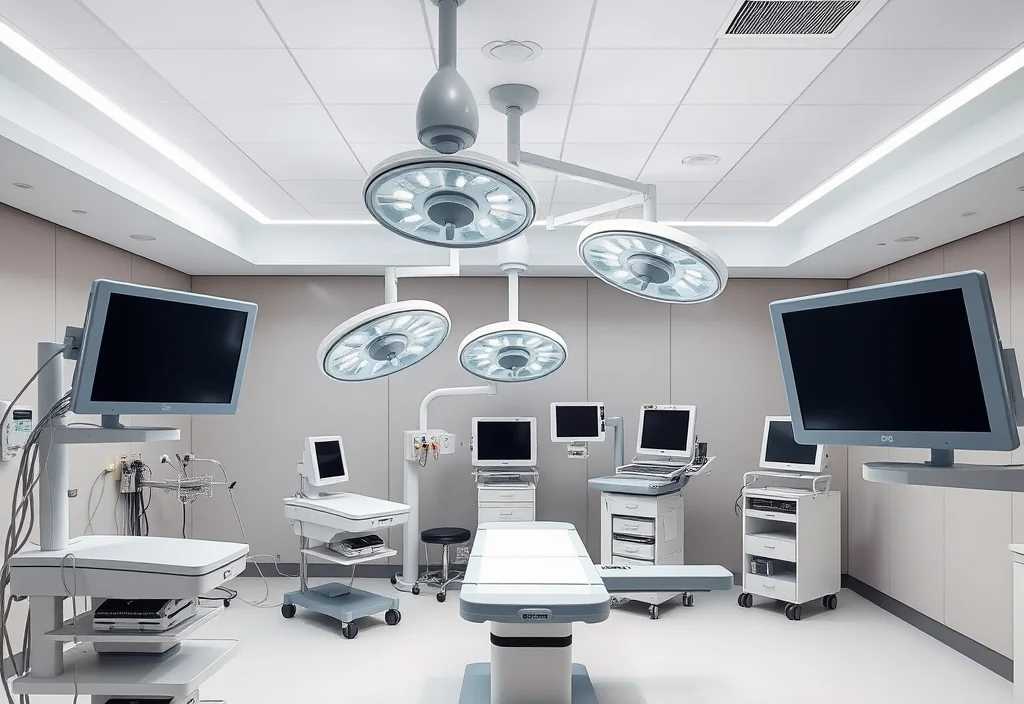
Where a typical $12,000 breast augmentation goes
Ask for the quote in writing, itemised
The cost nobody quotes you: implants are not permanent
This is the single most important thing to understand before you compare prices. The Therapeutic Goods Administration is explicit that all breast implants have a limited lifespan — around 10 to 15 years — and that the risk of complications such as rupture, hardening (capsular contracture), loss of shape or change in position increases with time. Implants are a device, not a one-off purchase.
That reframes the whole question. If you have augmentation at 30, you are realistically signing up for at least one more operation in your lifetime — and revision surgery costs more than the original, because removing an old implant and its capsule is more technical work than placing a new one. Here is what that looks like across a few decades.
| Stage | Roughly when | Cost |
|---|---|---|
| Initial augmentation | Year 0 | $9,000 – $15,000 |
| First replacement or revision | 10–15 years later | $19,000 – $28,500 |
| Or: removal without replacement (explant) | Whenever you choose | $11,500 – $15,000 |
| Realistic lifetime total (one replacement) | — | $28,000 – $43,500 |
None of this is a reason not to have the surgery — it is a reason to budget honestly. Three practical consequences: don’t stretch to the absolute limit of what you can afford for round one; ask your surgeon what a revision with them would cost today; and if you are in your early twenties, understand you may be facing two or three rounds across your life, not one.
Removal is a legitimate endpoint
Cost by procedure: augmentation, lift, revision and fat transfer
“Breast surgery” covers several quite different operations, and the price gap between them is large. Here is what each one involves and why it costs what it does.
Augmentation with implants — $9,000 to $15,000
The standard procedure: implants placed either under the breast tissue or under the chest muscle, usually as day surgery or one overnight stay. Most Australians land in this band. The spread comes down to the surgeon’s fee and the hospital, not the implants themselves.
Fat transfer — $10,000 to $16,000
Counter-intuitively, using your own fat is often dearer than implants, because it is effectively two operations: liposuction to harvest the fat, then careful grafting. It suits people wanting a modest, natural increase — typically around one cup size — and it avoids implants entirely, so there is no 10-to-15-year replacement clock. The trade-off is that some of the grafted fat is reabsorbed, and results are less predictable.
Hybrid (implants + fat grafting) — $15,000 to $20,000
An implant for volume plus a layer of your own fat over the top to soften the edges and make the result look and feel more natural. You pay for both techniques, and you still have implants, so the replacement timeline still applies.
Augmentation with a lift — $22,000 to $30,000
If there is significant sag — common after pregnancy, breastfeeding or major weight loss — implants alone will not fix it, and a lift (mastopexy) is combined with the augmentation. It is a longer, more complex operation with more scarring, which is why it costs roughly double a straightforward augmentation.
Replacement and revision — $19,000 to $28,500
Removing existing implants and their capsule, then placing new ones. More technically demanding than the original surgery, hence the higher price. Add a lift at the same time — very common second time round, since tissue has changed — and you are looking at $25,000 to $32,000. This is also the category where Medicare occasionally helps, if you meet strict medical criteria (covered next).
Does Medicare or private health insurance cover breast implants?
Not for cosmetic surgery. If you are having augmentation to change your appearance, Medicare pays nothing and your private health fund pays nothing — the all-inclusive quote is genuinely what you pay. There is no item number for wanting bigger breasts, and any clinic implying otherwise is misleading you.
Where it changes is when surgery becomes medically indicated. Reconstruction after mastectomy is covered, and so are some revision procedures — but only if you meet strict criteria. The relevant Medicare Benefits Schedule item numbers are worth knowing by name, because they are what your surgeon will be assessing you against:
| MBS item | What it covers |
|---|---|
| 45551 | Removal of each breast implant and its capsule |
| 45553 | Removal and replacement with another prosthesis, following a medical complication — rupture, migration of prosthetic material, or symptomatic capsular contracture |
| 45554 | Removal and replacement including excision of at least half the fibrous capsule, or formation of a new pocket, following the same complications |
| 63547 | MRI investigation where breast implant-associated cancer (BIA-ALCL) has been diagnosed |
In plain terms: if an implant has ruptured, has migrated, or you have symptomatic capsular contracture — and removing it would leave an unacceptable deformity — a rebate may apply to parts of the surgery. If you simply want a different size or shape, it will not. Private health funds broadly follow Medicare here: they may contribute toward the hospital side when a valid MBS item applies and you hold the right level of cover and have served your waiting periods, but they will not fund cosmetic work.
Paying for it
Most people fund cosmetic surgery from savings or a payment plan. Clinics commonly offer medical finance, and some allow you to pay the surgeon’s fee in instalments before the operation date. Two cautions worth stating plainly: look at the total repayable and any establishment fees rather than the monthly figure, and never let a finance deadline or a “book this month” discount rush a decision that now legally requires a cooling-off period anyway. Early release of superannuation is occasionally raised for medical procedures — it is very rarely approved for cosmetic surgery, and the tax consequences are significant. Get independent advice before going near it.
The rules that changed in 2023 (and why they matter to you)
Australia tightened cosmetic surgery regulation substantially from July 2023, after a string of patient-safety scandals. These rules exist for your protection, and knowing them is the single best defence against a clinic that is selling rather than advising. Before you can have breast augmentation, the law now requires:

- A GP referral. You can no longer walk in off the street and book surgery.
- Two consultations on separate days, so no one decides on the spot under sales pressure.
- Psychological screening, including assessment for body dysmorphic disorder — a condition that surgery does not fix and can worsen.
- A cooling-off period of at least seven days for adults, after you decide to proceed and before the operation.
- For under-18s: a three-month cooling-off period plus a mandatory assessment by a GP, psychologist or psychiatrist.
"Cosmetic surgeon" does not mean what people assume
This is the detail that catches the most people out. Under Australian law, only a doctor with specialist registration in surgery, obstetrics and gynaecology, or ophthalmology may lawfully use the title “surgeon”. Historically, any registered doctor could call themselves a “cosmetic surgeon” without specialist surgical training — which is exactly the gap the reforms closed.
A further protection is rolling out: a formal cosmetic surgery endorsement, approved across 2025 and 2026, which appears on the public register and shows which doctors have met the training standards set by the Australian Medical Council and the Medical Board of Australia. Until that is fully populated, the practical check is the one below.
Check your surgeon on the AHPRA register before you pay a deposit
Two red flags worth naming. First, any pressure to decide quickly, “today only” pricing, or an offer to shorten the process — that is now at odds with the law, not just poor practice. Second, before-and-after galleries and testimonials are heavily restricted in advertising for good reason; treat a feed full of them as marketing rather than evidence, and ask instead about the surgeon’s own revision and complication rates.
Implant types, risks and what the TGA says
Implants differ by filling (silicone gel or saline), shape (round or teardrop) and — most importantly for safety — surface texture. Smooth implants are the most widely used in Australia today. Textured surfaces were designed to reduce movement and capsular contracture, but they carry a specific risk that changed practice worldwide.
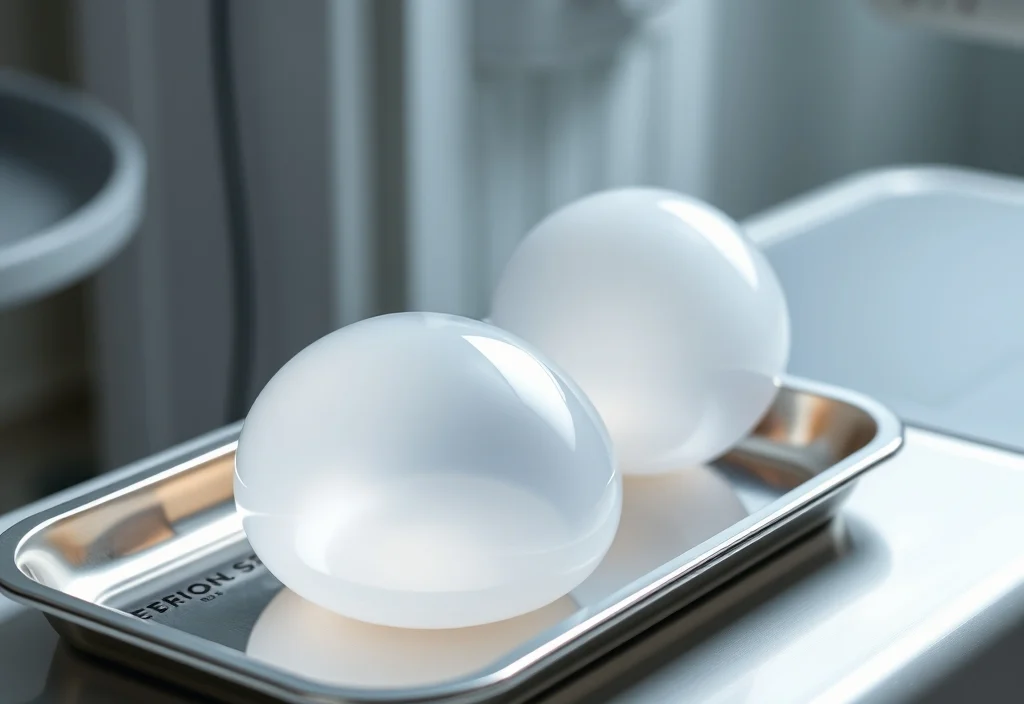
BIA-ALCL: rare, but you should know the numbers
Breast implant-associated anaplastic large cell lymphoma (BIA-ALCL) is a rare cancer of the immune system that develops in the scar capsule around an implant. It is not breast cancer, and it is usually treatable when caught early — typically by removing the implant and capsule. The link is to textured implants, and the TGA publishes estimated risk by surface type:
| Implant surface | Estimated BIA-ALCL risk |
|---|---|
| Polyurethane-coated | About 1 in 1,800 |
| Macro-textured | About 1 in 2,400 |
| Micro-textured | About 1 in 18,000 |
The practical takeaway: ask your surgeon exactly which implant they intend to use, including the surface type and brand, and why. Keep the implant card and paperwork they give you — you will want it years later. Report any new swelling, lump or pain around an implant to a doctor promptly rather than waiting, since early detection is what makes BIA-ALCL treatable.
The other risks worth pricing in
- Capsular contracture — scar tissue tightening around the implant, causing firmness, distortion and sometimes pain. The most common reason for revision surgery.
- Rupture or leak — more likely the older the implant, and not always obvious with silicone, which is why monitoring matters.
- Changes in nipple or breast sensation, which can be temporary or permanent.
- Effects on breastfeeding — many people breastfeed successfully after augmentation, but it cannot be guaranteed. Raise it before surgery if it matters to you.
- Standard surgical risks — infection, bleeding, poor scarring, and the risks of general anaesthesia.
- Revision — needing further surgery for an aesthetic result you are unhappy with, which is rarely free.
A good surgeon will walk you through all of this unprompted and give you written information. If risks are glossed over in your consultation, that tells you something important about the practice.
Breast augmentation cost by city
Prices are broadly similar across the capitals, in the $9,000 to $15,000 band for a straightforward augmentation. The variation you will find is driven far more by the individual surgeon and what the quote includes than by the city you are in — two surgeons in the same suburb can be $5,000 apart.
| City | Typical all-inclusive | Notes |
|---|---|---|
| Sydney | $11,000 – $16,000 | Largest choice of specialists; premium end sits highest |
| Melbourne | $9,500 – $15,000 | Deep pool of plastic surgeons; competitive |
| Brisbane | $9,000 – $14,500 | Competitive market |
| Gold Coast | $9,000 – $14,000 | High volume of cosmetic practices |
| Perth | $9,500 – $15,000 | Fewer specialists, prices hold firm |
| Adelaide / Canberra / Hobart | $9,500 – $15,000 | Smaller markets; some travel interstate for a specific surgeon |
Should you go overseas for cheaper surgery?
Thailand, Turkey and Mexico advertise breast augmentation for $1,500 to $5,000 — a fraction of Australian prices — and it is a genuinely tempting gap. Be clear-eyed about what the discount buys and what it costs.
The core problem is not the surgery, it is everything after it. Research on medical tourism found that only about 26% of patients ever see their original surgeon again. If you develop a complication back in Australia, you are presenting to a local surgeon who did not perform the operation, has no records of what was implanted, and is under no obligation to fix someone else’s work for free. Revision here costs $19,000 to $28,500 — which can wipe out the saving several times over.
There are physical risks too. Infection is the most common complication reported in patients who travel for cosmetic surgery, and combining major surgery with long-haul flights meaningfully raises the risk of blood clots and pulmonary embolism. You also lose the protections described above — the GP referral, the two consultations, the cooling-off period, the AHPRA register — none of which apply overseas.
If you do go overseas, plan the aftercare before you fly
How to compare quotes properly
Once you have two or three consultations behind you, compare on these — not on price alone:
- Is the surgeon a specialist, and can you see it on the AHPRA register? Check registration type and any conditions.
- What exactly does the quote include? Surgeon, anaesthetist, hospital, implants, garment, and how many follow-up appointments.
- Which implant, and why that one? Brand, surface type, size, and the warranty.
- Where will you be operated on? An accredited private hospital or day surgery, not an office room.
- What happens if something goes wrong? Who pays for a revision in the first year, and what does a revision cost later.
- What are their complication and revision rates? A confident specialist will answer this directly.
Budgeting for other big personal costs at the same time? Our cost of living and services price guide pulls them together, and if you are weighing up other elective procedures, see our breakdowns of laser eye surgery costs and dental implant costs in Australia.
Frequently asked questions
This guide is general information, not medical or financial advice. Prices are indicative 2026 figures from published Australian surgeon and clinic pricing and will vary by surgeon, hospital and your individual circumstances. Safety information is drawn from the Therapeutic Goods Administration and regulatory information from AHPRA and the Medical Board of Australia. Cosmetic surgery carries real risks, including rare but serious ones. Only a qualified specialist can assess whether a procedure is appropriate for you — always start with your GP, verify any practitioner on the AHPRA public register, and confirm current prices and risks directly with the practice.
You May Also Like
Buying a Used Car in Australia 2026: The Complete Checklist
Car Registration Cost in Australia 2026: Rego and Stamp Duty by State