Laser Eye Surgery Cost in Australia (2026): LASIK, SMILE & PRK

Laser eye surgery costs about $2,500 to $4,500 per eye in Australia in 2026 — so roughly $5,000 to $9,000 for both eyes. The type of procedure drives the price: PRK is the cheapest (from around $1,500 an eye), LASIK sits in the middle (about $2,000–$3,500 an eye), and SMILE is the dearest (around $2,500–$4,500 an eye). Medicare pays nothing because it’s classed as elective, though some private health funds refund a few hundred dollars per eye.
Because it’s almost entirely out-of-pocket, the “price per eye” you see advertised is only half the story — what really matters is what’s included (assessments, follow-ups and any touch-up surgery), which procedure suits your eyes, and whether you’re even a candidate. This guide breaks down every figure by procedure, what you actually get for the money, the Medicare and health-fund reality, who’s suitable, and how to choose a clinic on more than just the sticker price. Most reputable clinics offer a free suitability assessment first, so you’ll know your real number before you commit.
Laser eye surgery cost calculator (2026)
Choose your procedure, one eye or both, and a clinic tier for an indicative all-in price and a rough monthly figure on an interest-free plan. It’s a starting point — your assessment gives the exact quote.
Indicative 2026 estimate based on Australian clinic pricing (Canstar, Vision Eye Institute, personalEYES and published clinic fees). Your real price depends on your eyes, the technology used and what’s included. Not medical or financial advice.
Laser eye surgery cost at a glance (2026)
Clinics quote per eye, so double it for both. Here’s the typical 2026 range for each procedure, plus ICL lens surgery — the main alternative for people whose eyes aren’t suitable for laser.
| Procedure | Per eye | Both eyes | Best known for |
|---|---|---|---|
| PRK / ASLA | $1,500 – $3,000 | $3,000 – $6,000 | Thin corneas; contact-sport or high-trauma jobs |
| LASIK | $2,000 – $3,500 | $4,000 – $7,000 | Fast recovery; the most common choice |
| SMILE | $2,500 – $4,500 | $5,000 – $9,000 | Dry eyes and athletes; keyhole, no flap |
| ICL (lens implant) | $4,000 – $7,000 | $8,000 – $14,000 | Severe short-sightedness or not laser-suitable |
Start with the free suitability assessment
LASIK, PRK and SMILE: what's the difference?
All three procedures use a laser to reshape the cornea (the clear front of your eye) so it focuses light correctly, fixing short-sightedness, long-sightedness and astigmatism. What separates them — and what changes the price and recovery — is how the surgeon reaches the corneal tissue. Here’s each one in plain English.
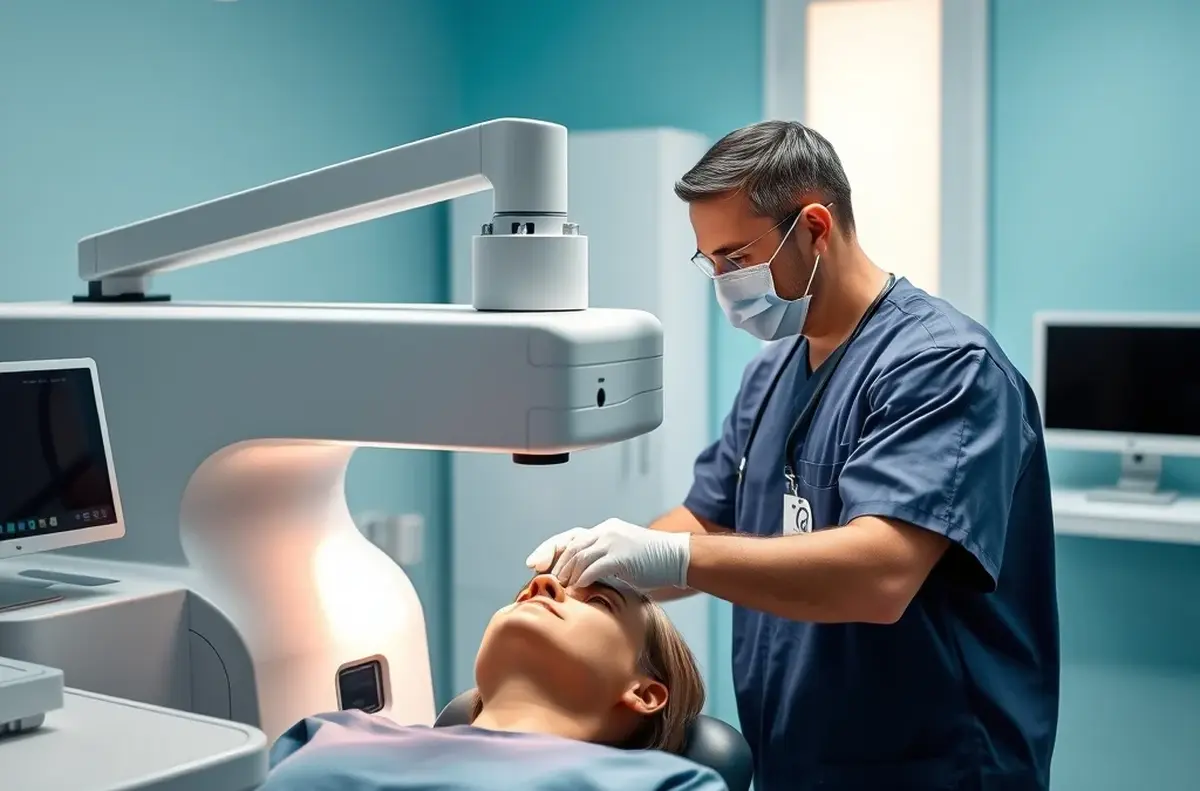
LASIK — the flap method ($2,000–$3,500 per eye)
The most common procedure worldwide. A femtosecond laser creates a thin hinged flap in the cornea, which the surgeon lifts to reshape the tissue underneath with a second (excimer) laser, then folds back into place. There are no stitches, and it heals fast — most people see clearly within 24 to 48 hours and are back to normal within days. It needs a reasonable corneal thickness (roughly 500–550 microns), and because the flap is a permanent feature, it’s slightly less ideal for people in high-impact jobs where a knock to the eye is likely.
PRK / ASLA — the surface method ($1,500–$3,000 per eye)
The original laser technique, and often the cheapest. Instead of a flap, the surgeon gently removes the cornea’s thin outer layer (the epithelium) and reshapes the surface directly; the outer layer then grows back over a few days. The trade-off is recovery: expect blurry, gritty vision for about a week and full sharpness over four to twelve weeks. Because there’s no flap to dislodge, PRK is the go-to for people with thinner corneas and for boxers, footballers, police and defence-force applicants.
SMILE — the keyhole method ($2,500–$4,500 per eye)
The newest of the three (you’ll also see it branded LALEX or SMILE Pro on Zeiss lasers). A femtosecond laser shapes a small disc of tissue — a lenticule — inside the intact cornea, which the surgeon slips out through a tiny 3 mm keyhole incision. No flap, no surface removal. Recovery is quick (24 to 72 hours), and because it disturbs the fewest corneal nerves, it’s the most dry-eye-friendly option — which is why it suits athletes and anyone prone to dry eyes. It’s typically the dearest because of the technology involved.
| Procedure | How it works | Recovery | Best for | Per eye |
|---|---|---|---|---|
| LASIK | Thin corneal flap, reshape underneath | 24–48 hours | Fast recovery; most people | $2,000–$3,500 |
| PRK / ASLA | Outer layer removed, reshape surface | 1 week (stable 4–12 wks) | Thin corneas; contact sport | $1,500–$3,000 |
| SMILE | Keyhole lenticule removed, no flap | 24–72 hours | Dry eyes; athletes | $2,500–$4,500 |
What's actually included in the price?
This is where two clinics quoting the same “$2,900 per eye” can be thousands of dollars apart in reality. A genuinely all-inclusive price should cover everything from your first measurement to your last check-up. A bare “surgery only” price leaves you paying for the extras one by one. Before you compare quotes, make sure each one includes:
- All pre-operative assessments and eye scans (corneal mapping, thickness, prescription checks)
- The surgery itself, plus theatre and day-hospital fees
- Any anaesthetist fee (laser usually only needs numbing drops, but lens surgery can involve one)
- All post-operative eye drops and medications
- All follow-up appointments for 12 months — you’ll typically have several in the first year
- Any enhancement (touch-up) surgery you might need, and for how long it’s covered (often 1–2 years)
If a clinic itemises instead, budget for the extras: follow-up appointments elsewhere run $70–$150 each, and you may have five or more in year one. A small percentage of patients need an enhancement — a minor re-treatment to fine-tune the result — so it’s worth knowing whether that’s free within a set window or an out-of-pocket extra. Some clinics also charge for the initial suitability assessment while others do it free, so ask upfront.
Compare the all-in total, not the per-eye headline
Does Medicare or health insurance cover laser eye surgery?
Medicare does not cover laser eye surgery. Because LASIK, PRK, SMILE and similar procedures correct a refractive error rather than treat a disease, they sit outside the Medicare Benefits Schedule (MBS) and are classed as elective. That means there’s no Medicare rebate and you pay the full cost yourself. (This is different from cataract surgery, which treats a medical condition and is covered by Medicare and private health — don’t confuse the two.)
Private health funds
Most private health insurers also treat laser vision correction as elective, so many policies pay nothing. Some top-tier Extras or optical policies do offer a partial rebate — typically $200 to $500 per eye — but usually only on the highest cover, with a waiting period and annual limits. Check your specific policy before you count on it, and don’t take out cover purely to claim laser surgery: the extra premiums and waiting period usually cancel out the rebate.
Is it tax-deductible?
Generally, no. The Net Medical Expenses Tax Offset was phased out and is no longer available, so laser eye surgery can’t be claimed as a medical tax deduction by most people. It’s a personal, out-of-pocket health cost. If your situation is unusual, check with a registered tax agent or the ATO rather than assuming.
Payment plans
Because it’s a big one-off cost, most clinics offer interest-free payment plans — commonly around $100 to $150 a month over one to two years, often without a credit check. That turns a $6,000 both-eyes procedure into a manageable monthly figure. Just look at the total you’ll repay and any establishment or account fees, not only the headline monthly amount, and make sure the plan is genuinely interest-free for its whole term.
Budget for the full out-of-pocket cost
Am I a candidate for laser eye surgery?
Not everyone qualifies, and a good clinic will turn you away rather than operate on unsuitable eyes. As a general guide, you’re more likely to be a candidate if you:
- Are at least 18 (many surgeons prefer 21+, once your eyes have stopped changing)
- Have had a stable prescription for about 12 months
- Have healthy eyes — no keratoconus, significant dry eye, cataracts or other conditions
- Have enough corneal thickness for the procedure (this is measured at your assessment)
- Are within the treatable range of short-sightedness, long-sightedness or astigmatism
- Are not pregnant or breastfeeding (hormones temporarily shift your prescription)
The only way to know for sure is a suitability assessment, where the clinic maps your cornea and measures its thickness. If laser isn’t right for you — usually because your corneas are too thin or your prescription is very high — you’re not out of options.
The main alternative: ICL (implantable lens)
An implantable collamer lens (ICL) is a tiny lens placed inside the eye, in front of your natural lens — think of it as a permanent contact lens that lives inside your eye. It’s the leading option for people with thin corneas or very high short-sightedness who can’t have laser. It costs more — around $4,000 to $7,000 per eye, sometimes including an anaesthetist fee — but it’s removable and delivers excellent results for strong prescriptions. For people over about 45 whose reading vision has changed, surgeons may instead discuss a lens-based procedure (refractive lens exchange) or monovision, which the assessment will cover.
You won't know your real price — or procedure — until the assessment
Laser eye surgery cost by city
Prices are broadly similar across the capital cities — the range is roughly $2,500 to $4,500 per eye almost everywhere. The real difference comes from the surgeon, the laser technology and what’s included, far more than from your postcode. Sydney and Melbourne have the most clinics (and a little more price spread), while smaller markets have fewer providers but comparable prices.
| City | Typical per eye | Notes |
|---|---|---|
| Sydney | $2,500 – $4,500 | Largest choice of clinics and technology |
| Melbourne | $2,500 – $4,500 | Competitive; many surgeons |
| Brisbane | $2,500 – $4,300 | Good availability |
| Perth | $2,500 – $4,300 | Fewer clinics, still competitive |
| Adelaide | $2,400 – $4,200 | Smaller market |
| Canberra / Hobart | $2,600 – $4,500 | Fewer providers; some travel interstate for specific tech |
How to choose a clinic (not just on price)
This is surgery on your eyes, so the cheapest “from $2,000” ad is the wrong thing to chase. Weigh price against the things that actually affect your result and safety. Before you book, ask:
- Who is the surgeon, and what are their credentials? Look for an ophthalmologist (an eye surgeon, FRANZCO) with a high volume of refractive procedures — not just a clinic brand.
- What laser technology do they use, and which procedures do they offer? A clinic that offers LASIK, PRK and SMILE can match the procedure to your eyes rather than sell you the one they have.
- Is the price all-inclusive? Assessments, surgery, drops, a year of follow-ups and any enhancement — get it in writing.
- What’s the enhancement policy? If you need a touch-up, is it free, and for how long?
- Who does your follow-up care, and where? Interstate or overseas surgery can mean travelling back, or paying a local optometrist for check-ups.
- What do independent reviews say? Look beyond the clinic’s own testimonials.
A quick note for anyone tempted by cheap surgery overseas (a common search): the up-front price can look great, but factor in flights, accommodation, and — most importantly — that your follow-up care and any enhancement are thousands of kilometres away if something needs attention. For most people the peace of mind of local aftercare is worth it.
Is laser eye surgery safe? Risks and recovery
Laser eye surgery is one of the most common and successful elective procedures performed today — the large majority of patients achieve driving-standard vision (around 20/20) without glasses, and serious complications are rare. But it is still surgery, and being clear-eyed about the risks is part of an informed decision.
- Common and usually temporary: dry eyes for a few weeks to months, and halos or glare around lights at night that typically settle as your eyes heal.
- Less common: slight under- or over-correction that may need an enhancement (touch-up), and the fact that laser doesn’t stop age-related reading changes — you may still need reading glasses in your 40s and beyond.
- Rare: flap-related problems (LASIK only), infection, or a lasting reduction in your best vision. A thorough assessment and an experienced surgeon are your best protection against these.
Recovery depends on the procedure: LASIK and SMILE patients are usually functional within one to three days, while PRK takes about a week of blurry, gritty vision before it clears and several weeks to fully sharpen. Whichever you have, plan a few days off, use your drops as directed, and avoid rubbing your eyes, swimming and dusty environments while you heal.
Is laser eye surgery worth it?
Financially, it can pay for itself. Glasses and contact lenses (plus solutions and replacements) run roughly $400 to $800 a year for many people, so a $5,000–$6,000 both-eyes procedure often breaks even in about eight to twelve years — and over a 20-to-30-year horizon most come out well ahead, before you even count the convenience of waking up able to see. It suits people who are tired of contacts, intolerant of them, active or sporty, or simply want the freedom. Here’s how it plays out for different people:

The contacts-tired professional — both eyes LASIK, around $5,000–$6,000. Spending ~$600 a year on lenses and solutions, they break even in roughly a decade, then it’s money saved for life.
The dry-eyed screen worker — both eyes SMILE, around $5,000–$7,000. The flapless, nerve-sparing method is the gentlest on already-dry eyes.
The apprentice or footballer — both eyes PRK, around $3,000–$6,000. No flap to dislodge on the worksite or the field, and it’s cheaper — the trade-off is a longer recovery.
Not suitable for laser — an ICL lens implant, around $8,000–$14,000 for both eyes, is the premium route for very high prescriptions or thin corneas.
Weighing up other big personal costs as you plan? Our cost of living and services price guide pulls them together, and if you’re budgeting for health and body costs, see our breakdowns of dental implant costs and braces costs in Australia.
Frequently asked questions
This guide is general information, not medical or financial advice. Prices are indicative 2026 figures from Australian clinic pricing and sources including Canstar, Vision Eye Institute and personalEYES, and vary by clinic, technology and your individual eyes. Whether you’re suitable — and which procedure is right — can only be determined by a qualified ophthalmologist at a proper assessment. Always confirm current prices, inclusions and risks with the clinic before you proceed.
You May Also Like
Buying a Used Car in Australia 2026: The Complete Checklist
Car Registration Cost in Australia 2026: Rego and Stamp Duty by State