How to Make Friends in Australia (2026): Where People Actually Meet

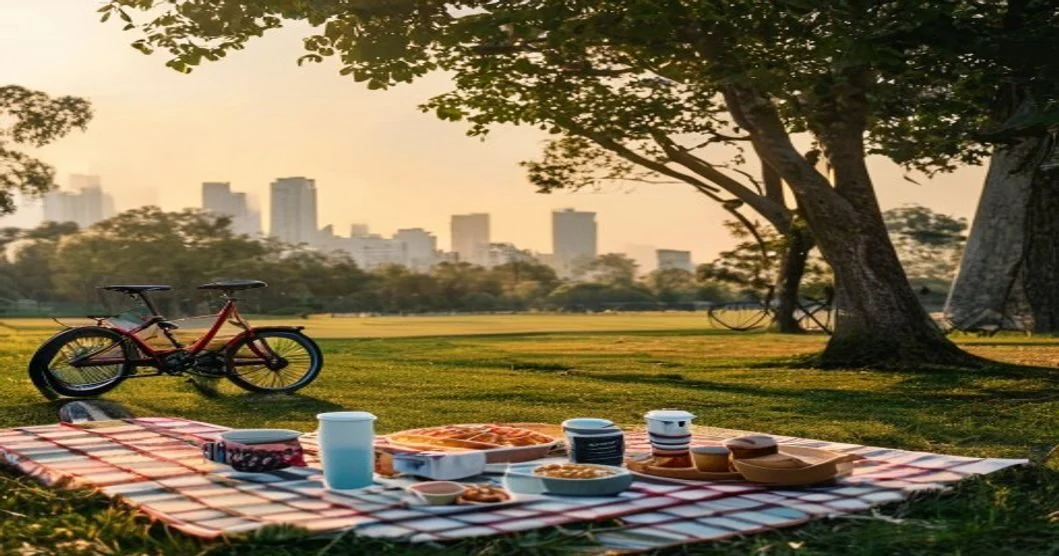
Almost every article about making friends in a new country gives you attitude advice: be open, put yourself out there, smile more. That advice isn’t wrong, it’s just useless — because the problem isn’t your attitude. It’s that you don’t yet know where people are.
So this is a directory rather than a pep talk. Below are the actual places people meet each other in Australia — university clubs, social sport, libraries, community sheds, choirs, pubs, dance classes, run clubs, apps — with what each one costs, how much social courage it demands, and how quickly it turns strangers into people who know your name. Plus the two pieces of research that explain why some of these work and others waste your time.
The short version
- One rule beats everything else: pick something that repeats. A weekly thing you’re mildly interested in will out-perform a brilliant one-off event, every time. The research is unambiguous on this.
- It takes about 50 hours together to make a casual friend and around 200 to make a close one. That’s not a character flaw — that’s the going rate.
- You are not the only one struggling. In a survey of 2,038 international students in Australia, 77% reported feeling lonely and more than one in five had considered going home because of it.
- The single best-value option in the country is free: parkrun, 5km, Saturday morning, 500+ locations, walkers welcome.
- “Join as an individual” is the magic phrase in Australian social sport. You do not need a team — they will put you in one.
- Nightclubs are a bad tool for this and Australians increasingly agree: a quarter of the country’s nightclubs closed between 2020 and 2025. Go if you enjoy it; don’t go expecting friendships.
- Bring your passport if you’re going to a pub. A student ID is not accepted as proof of age anywhere in Australia.
Why this is genuinely hard (and not your fault)
Two things are true at once in Australia. Australians are famously easy to talk to — and Australians are surprisingly hard to become friends with. Both are real, and the gap between them is where new arrivals get discouraged.
The numbers back up the feeling. In the Allianz Partners State of Student Health(care) Report, a survey of 2,038 international students from 114 countries studying in Australia:
- 77% reported experiencing loneliness, and 18.7% said they felt lonely “always”.
- More than 20% said isolation had made them consider withdrawing from their course and going home.
- 17.5% found making new friends “difficult or extremely difficult” — and that difficulty was sharpest when trying to befriend domestic students specifically.
It isn’t only international students. Ending Loneliness Together, the national body on this, surveyed over 4,000 Australian adults for its State of the Nation report and found almost one in three (32%) were lonely and one in six (17%) severely so — with 18 to 24 year olds among the loneliest age groups in the country. HILDA, the long-running national household survey, shows the same trend: loneliness among Australians aged 15–24 rose from roughly 18.5% in 2001 to 26.6% by 2020, while it fell for most other age groups.
The practical takeaway is not “everyone’s sad”. It’s that the person next to you in the class or the queue is far more likely to be looking for people than you assume. You are not intruding on a full social life. You are usually approaching someone in exactly the same position.
The two findings that should shape your whole strategy
1. Friendship costs hours, and the exchange rate is fixed
Professor Jeffrey Hall (University of Kansas) tried to actually measure it, publishing the results in the Journal of Social and Personal Relationships in 2019. One arm of the study surveyed 355 adults who had moved to a new city within the previous six months and were actively trying to make friends — which is almost exactly your situation.
| To go from | To | Hours together |
|---|---|---|
| Acquaintance | Casual friend | ~50 |
| Casual friend | Friend | ~90 |
| Friend | Close friend | 200+ |
Two details from that study matter more than the headline numbers:
- Not all hours count equally. Time spent “hanging out and joking around” moved the relationship forward. Time merely spent working or studying alongside someone counted for much less. Sitting in the same lecture for a semester is not 40 hours of friendship — going for coffee afterwards is.
- The clock only runs when you’re together. Which means the format that gets you the most hours per unit of effort wins — and that is almost always a recurring, scheduled activity you don’t have to re-decide each week.
Treat the numbers as an order of magnitude, not a law. It’s self-reported data from people estimating hours after the fact. But even loosely, it reframes the problem usefully: if you’re two months in and don’t have close friends yet, nothing has gone wrong. You’ve simply not accumulated the hours yet.
2. Proximity and repetition beat charisma
The classic study here is Festinger, Schachter and Back’s 1950 research in a housing complex for married students, which found friendships clustered overwhelmingly among people who lived close to each other — and specifically among people whose front doors, stairwells and mailboxes forced them to bump into each other. Not the most charming residents. The most frequently encountered ones.
This is why the advice that follows is skewed the way it is. Anything that produces repeated, low-effort, slightly unavoidable contact with the same faces will out-perform something more exciting that you attend once.
The one-sentence strategy
Choose two recurring things and go to both for eight weeks without judging whether they’re “working”.
Eight weeks is roughly when the fourth or fifth face becomes familiar enough that someone says “oh hey, you’re back” — and that sentence is the actual beginning of a friendship. Most people quit at week three, which is exactly the point where nothing has visibly happened yet.
Pick one thing that involves doing something (sport, dance, a craft, a choir) and one that involves talking (a language exchange, a book club, Toastmasters, trivia). The doing-thing carries you through the awkward early weeks without needing conversation; the talking-thing gets you to depth faster once you’re comfortable.
Pick your route
Everything below is expanded in its own section. Use this to shortlist two.
| Route | Cost | Courage needed | Best for |
|---|---|---|---|
| If you’re at university | |||
| Clubs & societies | $0–20/yr | Low | Everyone. The highest-density option you will ever have access to |
| Faculty / course society | Usually $0 | Low | Meeting people you’ll keep seeing in class anyway |
| Postgrad association | $0 | Low | Mature-age and postgrad students, who find O-Week too undergrad |
| If you’d rather do something than talk | |||
| parkrun | Free | Very low | Almost anyone. Walkers welcome. Best value in the country |
| Social sport (join as an individual) | ~$10–100/season | Medium | People who want a fixed weekly commitment and instant teammates |
| Run club | Usually free | Low | Under-35s especially — the fastest-growing social format in Australia |
| Bouldering / climbing gym | ~$20–32/visit or week | Medium | Naturally conversational; strangers spot and advise each other |
| Surf lifesaving club | Membership + course | Medium | A distinctively Australian route with a built-in training cohort |
| Free, and nobody tells you about them | |||
| Your local library | Free | Very low | Conversation clubs, board games, book clubs, craft. Genuinely underrated |
| Neighbourhood house / community centre | Free–low | Low | Cheap classes, all ages, deliberately welcoming to newcomers |
| Men’s / Women’s / Community Shed | Small annual fee | Low | Making things beside people, with no obligation to be interesting |
| Community garden, Landcare, bushcare | Free | Very low | Outdoors, purposeful, zero small-talk pressure |
| Interest groups | |||
| Meetup | Usually free to attend | Medium | Cities. Quality varies wildly — try three before judging |
| Toastmasters | ~$15–25/month | Medium | Shy people, oddly. Everyone is guaranteed to speak, so nobody has to break in |
| Community choir (no audition) | Free–low | Low | People who “can’t sing”. That is explicitly fine at these |
| Board game cafe / games night | $0–22 | Low | Structured conversation with strangers, which is much easier than open mingling |
| Language exchange | Usually free | Medium | Everyone there is a stranger by design. No existing cliques |
| Going out | |||
| Pub trivia | Usually free entry | Medium | Turning up solo is normal; teams recruit spare players |
| Sports bar on game night | Price of a drink | Low | The crowd does the talking for you |
| Live music | Free–$40 | Low | Shared taste is a real shortcut. Small venues, not arenas |
| Partner dance class | Often free first class | Medium | The best-designed social format in this table — and here’s why, below |
| Nightclub | $0–30 + drinks | High | A night out. Realistically, not friendships |
| Online | |||
| Facebook / WhatsApp / Discord groups | Free | Low | Finding the offline thing. Treat online as the door, not the room |
| Friendship apps | Free tier exists | Medium | Cities. Read the section below first — the products keep changing |
| Dating apps | Free–$36/mo | Medium | Dating, not friendship. Safety section below is not optional reading |
University clubs and societies
If you’re studying at an Australian university, this is the densest concentration of potential friends you will ever have easy access to, and it is close to free. Most people underuse it badly.
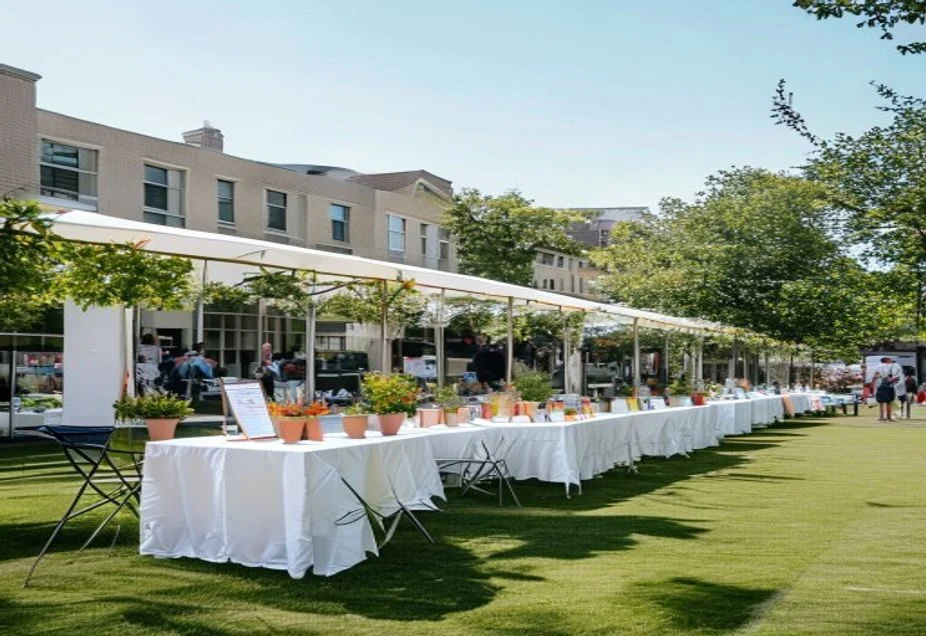
Australian universities don’t run clubs themselves. A separate student union, association or guild does — UMSU at Melbourne, the USU at Sydney, UQU at Queensland, the Guild at UWA and Curtin. That body affiliates the clubs, runs O-Week, and usually runs the campus bars and food outlets too.
| University | Body | Clubs |
|---|---|---|
| University of Melbourne | UMSU | 251 affiliated |
| University of Sydney | USU | 300+ |
| University of Queensland | UQU | 220+ |
| UWA | Student Guild | 150+ |
| Curtin | Student Guild | 100+ |
Union membership itself is free at most of these — UMSU and the USU both explicitly so. Individual clubs then charge their own small fee, typically somewhere between nothing and about $20 a year, to cover events and equipment. Some are free. UQU’s Collectives (special-interest and minority groups) are free to join.
O-Week, and the mid-year one nobody mentions
Orientation Week includes a club expo or Market Day where every affiliated club sets up a stall and you sign up on the spot, usually by scanning a QR code. UQ runs its Market Day 10am–2pm across the Great Court at St Lucia; Curtin hands out $5 club vouchers at Guild O-Day to get people over the first hurdle.
There is a second O-Week in July. Melbourne and Monash both ran a Semester 2 orientation from 20–24 July 2026, alongside the bigger February one. If you started mid-year, you have not missed anything — and if you started in February and did nothing, you get a second run at it. You can also just join most clubs any time through their own page or Instagram.
Which clubs to actually join
Your national or cultural society
- The easiest possible entry. Shared language, shared food, instant common ground, no explaining yourself.
- Genuinely valuable in your first weeks, and often the source of your most practical help — housing leads, second-hand furniture, which supermarket is cheaper.
- The Allianz survey found students who first connected with other international students often built the confidence to approach domestic students later. It can be a stepping stone, not a trap.
An interest or faculty club
- Slower start, better long-term outcome. Hiking, debating, film, board games, anime, your engineering or commerce society.
- These are where you meet domestic students, which is the thing international students most consistently report struggling with.
- Look for the ones that meet weekly, not the ones that run three big events a year. Frequency is the whole game.
The honest advice is to join one of each and be aware of the trade-off. Research on international students consistently finds that socialising almost entirely within your own national group slows both your English and your integration — but nobody makes friends by forcing themselves into rooms where they feel unwelcome, either. Use the cultural society as a base and the interest club as the stretch.
If you're a postgrad, mature-age, or at TAFE
- Postgraduate associations run their own separate social calendar, which is far less 19-year-old than main O-Week. Melbourne’s GSA has 160+ “Grad Groups” plus orientation events, an annual ball, and “Shut Up & Write” sessions. Sydney has SUPRA. Every major university has an equivalent — search “[your university] postgraduate association”.
- TAFE and private colleges have far less of this, and pretending otherwise wastes your time. Some TAFEs piggyback on a partner university’s club system (TAFE SA students can access UniSA clubs via USASA), but most don’t. If that’s you, skip straight to the sections below — parkrun, social sport, libraries and Meetup don’t care where you study.
Sport, movement and the magic phrase
Australia’s social infrastructure is disproportionately built around sport, and crucially, around bad sport. Social and casual leagues exist specifically for people with no skill and no team. You do not need to be good at anything.
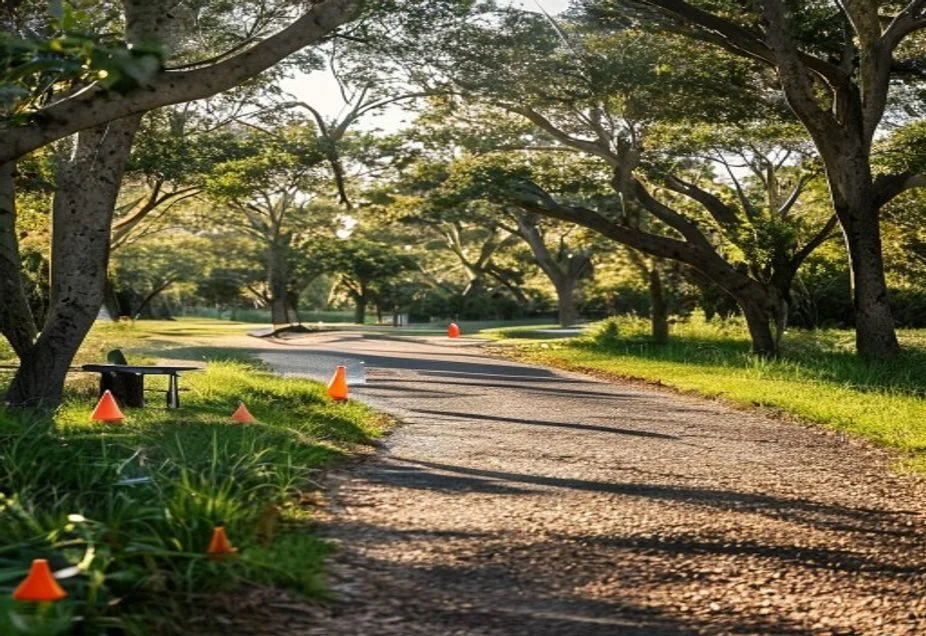
parkrun — start here if you're only going to do one thing
Free, 5km, Saturday morning, around 520 locations across Australia, and it will never cost you a cent.
- Register once at parkrun.com.au and you get a personal barcode. That barcode works at every parkrun on earth, forever. There’s no per-event booking and no fee.
- Start times vary by state: generally 7am in Queensland and the NT, 8am in NSW, Victoria, WA and SA, and 9am in Tasmania. Check your specific event page — a few vary by season or council permit.
- It is explicitly not a race. Walking the whole thing is completely normal and there is always a “tail walker” at the back so nobody finishes last alone.
- The volunteering route is the social cheat code. Marshalling or scanning barcodes means you greet several hundred people and talk to the other volunteers for an hour, without needing to run or to be interesting. Then everyone goes to the coffee afterwards, which is the actual event.
Social sport: "join as an individual"
This is the phrase to search for, and it solves the obvious problem. Australian social leagues routinely place solo players into teams of strangers — that is a normal, expected, advertised part of the product, not a favour.
- Urban Rec (Sydney, Melbourne, Canberra) runs eight mixed-gender recreational sports and tells you plainly to “sign up on your own” when registration opens. Membership is free; a season runs roughly $100 a player.
- Melbourne Social Netball and Play Netball Melbourne both take individual registrations into mixed and women’s grades.
- Intrinsic Sports runs lunchtime and evening netball, futsal, six-a-side soccer and touch football in the Sydney CBD and explicitly helps individuals join teams.
- Princes Park Touch in Melbourne runs Victoria’s largest midweek social touch competition, around 60 teams over summer.
- Your local council and your university sport department both run social comps that almost nobody outside the mailing list knows about. Search “[your council] social sport”.
The sports that work best for a beginner are the ones where being bad is invisible: touch football, indoor soccer or futsal, mixed netball, volleyball, dodgeball and ultimate frisbee. A season is 8–12 weeks of the same faces at the same time each week, followed by a drink. In Hall’s terms, that’s roughly 30 hours with the same group before Christmas, most of it the joking-around kind that actually counts.
Run clubs, climbing and the beach
- Run clubs are the fastest-growing social format in Australia right now. Strava’s own data shows running club participation grew 59% in 2024 and kept accelerating, driven heavily by under-30s treating it as a social scene rather than training. Most are free, meet at a fixed time and place, and end at a cafe or pub. Find them on Instagram — that’s where they organise. There are even singles-oriented ones: Sydney’s The Singles Run Club runs a monthly event where participants note each other’s wristband numbers and contact details are exchanged only on mutual interest.
- Bouldering and climbing gyms are unusually conversational, because strangers naturally advise each other on problems and there’s a lot of sitting between attempts. Melbourne casual entry runs about $20–25 (The Crux offers $20 casual, $49 all-day, or no-lock-in membership at $32 a week); Canberra’s Mountain Strong is $22 casual with student discounts. Many gyms run beginner and women’s nights specifically to make this less intimidating.
- Surf lifesaving is a genuinely distinctive Australian option. You join a local club, then do the Bronze Medallion course — resuscitation, first aid, surf awareness and rescue technique — as part of a cohort that trains together over several weeks. It’s structured, it has a shared goal, and it produces exactly the kind of repeated contact the research says works.
The free stuff nobody tells new arrivals about
Australia has a dense layer of publicly funded community infrastructure that is free, deliberately welcoming, and almost invisible unless someone points at it. This section is the highest value-per-dollar part of this article.
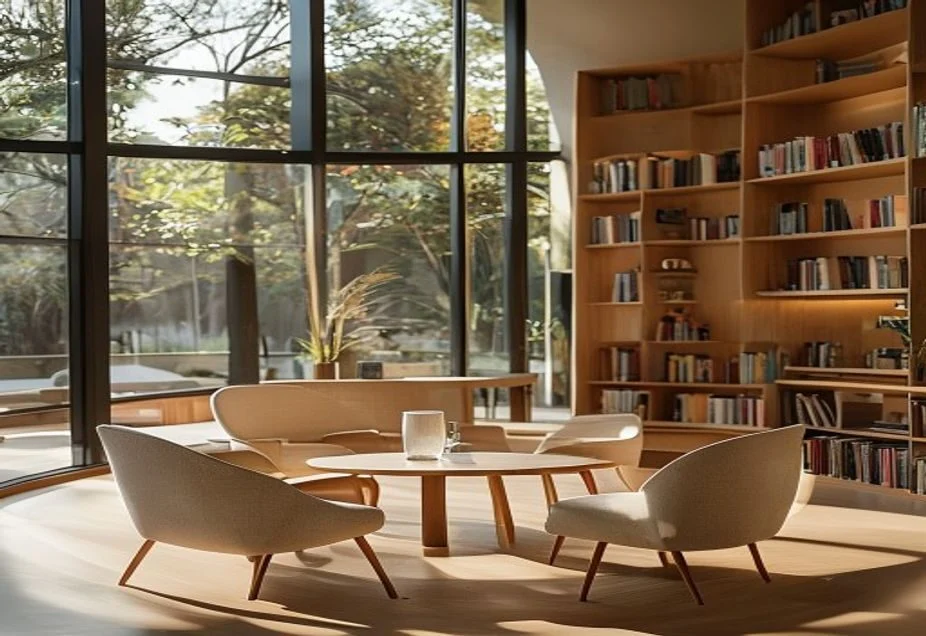
Your local library
Membership is free at every Australian public library and takes about five minutes with proof of address. But borrowing books is the least interesting thing they do. A typical council library runs some combination of:
- English conversation classes and conversation clubs — free, informal, specifically for people whose first language isn’t English. Inner West libraries in Sydney list English classes among their standard adult programs.
- Book clubs — the State Library of NSW runs one; Wollongong runs both a digital and an audiobook club with an online discussion group.
- Board game and tabletop nights — Stanton Library in North Sydney runs a monthly Sunday session; Inner West libraries run regular social board games.
- Craft groups, tech help sessions, author talks and free lunchtime conversations — City of Sydney libraries run these regularly and free.
How to find yours: search “[your suburb] library what’s on” or go to your council’s library page. The programs are almost never advertised anywhere else.
Neighbourhood houses and community centres
The name changes by state — Neighbourhood Houses in Victoria, Community Centres or Neighbourhood Centres in NSW and elsewhere — but the model is the same: a local, council- or community-run building offering cheap classes and activities to whoever turns up.
Victoria alone has over 400. They run gentle exercise, yoga, craft, literacy and English classes, community gardens, playgroups, sheds and social groups, generally at low or no cost — historically many classes ran at around $2 a session. They exist precisely to include people who aren’t otherwise connected to anything, which makes them one of the least awkward places in the country to arrive alone.
Men's Sheds — and the ones that aren't just for men
The Australian Men’s Shed Association, founded in 2007, now supports well over 1,200 sheds nationally — and despite the name, that number explicitly includes Women’s Sheds and Community Sheds. A shed is a workshop where members build, fix and make things together, usually for a small annual membership.
The reason it belongs on this list is the underlying design principle, which the movement states openly: some people find it much easier to talk shoulder to shoulder while doing something with their hands than face to face over a coffee. If open-ended social conversation exhausts you, this format removes the requirement entirely.
Free English classes and migrant services
- AMEP (the Adult Migrant English Program) is free English tuition for eligible migrants and humanitarian entrants, delivered at around 300 locations nationally, with free childcare available at face-to-face classes. It has two streams, and the one people overlook is Social English — explicitly designed for migrants who “lack confidence in social interaction”, covering ordering coffee, asking directions and dealing with services while building relationships. The old 510-hour cap was removed in 2021. Note this is for migrants and humanitarian entrants; student visa holders should check eligibility, and use their university’s free language and learning support instead.
- Migrant Resource Centres exist in every state under different names — Spectrum in Victoria, the AMRC in South Australia, MRC Tasmania, MARSS in the ACT, and a network of 15 coordinated by Settlement Services International in NSW. They run social groups, orientation programs and community events, and they are used to people walking in with no idea what they need.
Outdoors and purposeful
Landcare Australia runs a national directory of local groups, and local bushcare groups hold regular working bees — planting, weeding, litter removal, building walkways — often on a fixed monthly Sunday. Community gardens work the same way. These are the lowest-pressure social settings in the country: you’re outdoors, side by side, with an obvious shared task and a legitimate reason to say nothing for twenty minutes.
Formal volunteering deserves its own treatment, so this article won’t duplicate it — but briefly: GoVolunteer and SEEK Volunteer are the two main national platforms, every state has a peak body, and some roles require a Working with Children Check (free for volunteers in NSW) or a police check.
Interest groups
Meetup — useful, with one honest warning
Most Meetup events are free to attend, and in Sydney and Melbourne the strongest categories are hiking and walking groups, language exchanges, board games, running and volleyball, photography, and general “new to the city” socials.
Why good Meetup groups keep disappearing
Attending is free. Organising is not. Meetup raised organiser pricing in June 2024 — from around US$14.99 a month on the basic plan up to US$30+ for Pro — and after the platform was acquired by Bending Spoons, Australian organisers reported costs rising sharply, with some describing bills over $500 a year.
The practical effect for you: groups die for financial reasons that have nothing to do with how good they were, and many organisers quietly migrate their group to a free Facebook, WhatsApp or Discord group instead. If you find a group you like, get into their off-platform chat early.
The other honest warning: quality is wildly uneven, no-shows are common, and some “social” meetups function informally as dating events, which can be an unwelcome surprise. Try three different groups before you decide Meetup doesn’t work.
Toastmasters — counter-intuitively good if you're shy
Roughly 600 clubs and 10,000 members across Australia. It’s a public speaking and leadership club, which sounds like the last thing an anxious newcomer needs, and is in fact one of the best options on this list. Here’s why:
- You are guaranteed to speak. The meeting structure assigns everyone a role. There is no moment where you have to insert yourself into an existing conversation, which is the hardest part of every other social setting.
- Everyone there is also working on being uncomfortable. That’s the stated purpose of the room, so nobody is judging your nerves or your accent.
- Visiting is free. Go to two or three clubs as a guest before joining anything.
- Cost: Toastmasters International charges US$60 half-yearly plus a US$25 one-off new member fee, and individual clubs add local dues on top. A real Australian example — Chatswood Early Risers — charges $32 once-off plus $150 half-yearly. Budget roughly $15–25 a month.
Choirs, games and language exchange
- Non-audition community choirs are everywhere and they mean it. With One Voice runs a national network of inclusive, non-auditioned choirs across dozens of suburbs. Pop Choir‘s stated position is “if you can speak you can sing”. Sydney Street Choir says plainly “you don’t need to be able to sing… there are no auditions”. Melbourne’s Beyond the Bathroom Choir requires no vocal or musical experience and lets you attend casually. Singing in a group is also unusually good at producing the feeling of belonging fast, which is why it keeps appearing in loneliness research.
- Board game cafes and games nights. Melbourne’s Marché runs three-hour weekday sessions at about $22 including a drink. Fortress in Melbourne and Sydney has free entry with a weekly rotation — trivia Mondays, music bingo Tuesdays, board game social Wednesdays, Magic: The Gathering Fridays. Games are ideal for newcomers because the rules do the talking: you never have to invent a conversation topic.
- Language exchange nights are the only format on this list where everyone in the room arrived not knowing anyone, by design. Sydney Language Exchange runs a Tuesday social with 20–60 attendees. Melbourne’s LINGUAS Australia has run weekly Tuesday nights for over a decade with 100–150 people; Fluent Fast is free and draws 150+ people from 23+ countries. You’re there to help someone with your language while they help you with theirs, which gives every conversation a job to do.
- Religious congregations — churches, mosques, temples, gurdwaras — remain among the most consistent recurring social infrastructure in Australia for migrant communities, usually with free community meals, festival events and newcomer welcomes attached. If you have a faith, this is often the fastest route to a local network, and worth finding in your first fortnight.
Pubs, bars and going out
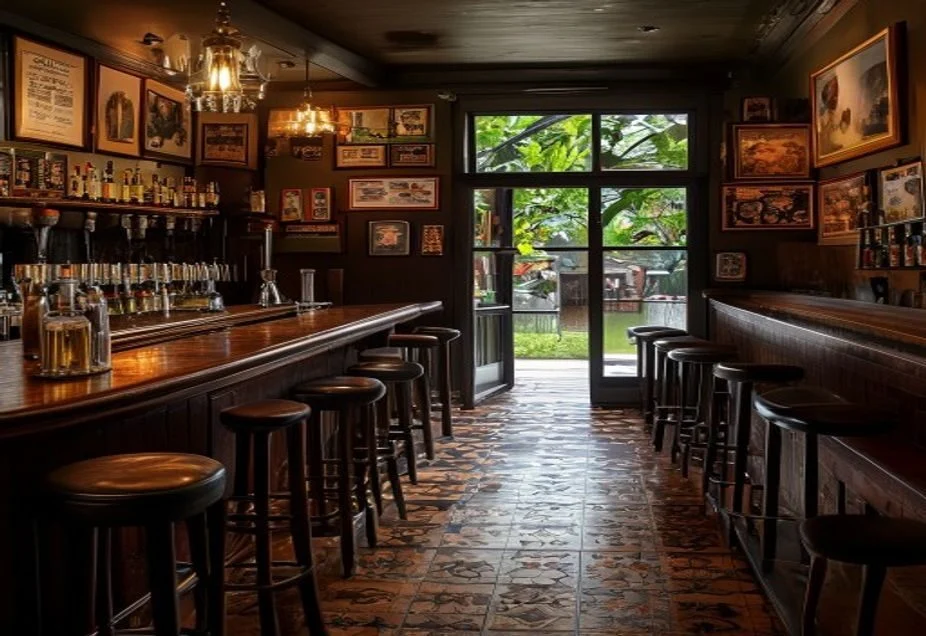
The pub is Australia’s default meeting place, and it comes with its own unwritten rules — shouting a round, not tipping, and what “bring a plate” means. Not because Australians drink more than everyone else — they increasingly don’t — but because the pub is the neutral ground where everything else ends up. Social sport finishes at the pub. Trivia is at the pub. The footy is at the pub. You can spend an entire evening in one without drinking alcohol, and nobody will care.
⚠️ Bring your passport. Your student card will not work.
The legal drinking age is 18 everywhere in Australia, and in NSW and Victoria venues are legally required to check ID for anyone who looks under 25 — not under 18. Being refused entry is common and not personal.
Accepted (NSW, Victoria and Queensland all list these):
- An Australian or foreign passport — always accepted, everywhere. This is the safe option.
- An Australian driver licence, including digital licences.
- A foreign driver licence, but only if it’s in English. If it isn’t, you must also carry an official English translation or an International Driving Permit.
- A state proof-of-age card, or a Keypass card from Australia Post.
Not accepted: your university or student ID card. It does not appear on any state’s list of acceptable evidence-of-age documents, and it will not get you into a pub, a club or a bottle shop.
Rules were checked for NSW, Victoria and Queensland; other states follow a similar pattern but check your own state regulator if you’re unsure.
Two things worth knowing before you walk in
- RSA is a law, not a policy. Under Responsible Service of Alcohol rules it is illegal for a venue to serve someone who is intoxicated, and staff who do it can be personally penalised. So if you are refused service, arguing will get you removed rather than served. It is not a judgement about you — the bartender is protecting their licence.
- Free water is your right. In Victoria every licensed venue must provide free drinking water, with fines up to $3,500 for failing to; NSW requires the same of all licensed venues serving on-premises. Asking for tap water at the bar is completely normal and costs nothing.
What it actually costs in 2026
| Item | Typical price | Notes |
|---|---|---|
| Schooner of tap beer | $8–14 | Cheapest at suburban and RSL clubs, dearest in CBD craft bars |
| Pint | $12–18 | Upper end on weekends and at premium venues |
| House wine, glass | $8–10 | Happy hour brings it to around $10–12 at nicer venues |
| Cocktail | $15–16+ | Happy hour specials around $13–16 |
| Chicken parma / counter meal | $19–27.50 | The $10 parma is now a myth in most metro pubs. Specials land around $20 |
How to spend less: university and campus bars are consistently the cheapest option available to students. Weeknight specials — parma nights, steak nights, $15 pizza — are a real thing and widely advertised on venue Instagram accounts. Happy hour is usually early evening on weekdays. And BeerSpy is a live, community-updated map of pub beer prices across Melbourne, Sydney, Brisbane, Perth, Adelaide, Canberra, Hobart and Darwin, which is more useful than any fixed price list.
The two pub formats that actually make friends
- Trivia night. Weekly, usually free to enter, prizes are bar tabs and vouchers. Melbourne alone has dozens of venues running it on rotation. Turning up alone is normal and short-handed teams routinely adopt spare players — just ask the host, whose job includes placing people. It’s the single most reliable way to end an evening on a first-name basis with five strangers.
- The footy, at a sports bar. A crowd watching the same thing does the social work for you: you’re not making conversation, you’re reacting to the same event at the same time, which is much easier. AFL dominates Victoria, SA, WA and Tasmania; rugby league dominates NSW and Queensland. Ask a colleague which team they support and whether you can come along — that request lands very well here.
Nightclubs: the honest assessment
Australian nightclub culture is in genuine decline, and the numbers are stark. Industry data cited by Broadsheet in late 2025 found that a quarter of Australia’s nightclubs closed between 2020 and 2025. Annual nightclub attendance roughly halved — to about 1.6 million from more than 2.8 million in 2019.
It isn’t only that young people go out less. Operators point to rents up 44% in five years, alcohol excise rising twice a year, and insurance that has become punishing: one 320-capacity Melbourne club saw public liability premiums jump from $40,000 to $100,000 a year, while Sydney’s Club 77 reports around $130,000. As Onesixone co-owner Andy Sumpter put it: “We have drinking and we have dancing. They’re two just no-no areas for the insurance industry.”
Drinking patterns have shifted underneath all this too. In the national household survey, risky drinking among 14 to 17 year olds fell from 9.5% to 5.5% between 2019 and 2022–23 — though note that 42% of 18 to 24 year olds still drink at risky levels, so “young Australians have stopped drinking” is an overstatement.
So should you go?
Go if you like dancing and loud music. Don’t go expecting to make friends — the format is actively hostile to it. You cannot hear each other, everyone arrives in a sealed group, and the contact is one-off rather than recurring, which is exactly what the friendship research says doesn’t work.
There is a counter-argument worth registering. Freda’s co-owner Dave Abram makes the case that a club is one of the last places you encounter people outside your own bubble: “At a club you actually meet people you wouldn’t have otherwise met. A warehouse party is very cliquey.” That’s true. It’s just a low-yield way to spend $80.
The useful version: go with people you already half-know from your club, team or class. The night out is what converts acquaintances into friends. It’s a poor way to acquire them in the first place.
Practical details for a night out
- Dress codes are venue-specific and enforced. There’s no national rule, but the recurring bans across Australian club dress codes are thongs, singlets and tank tops, sportswear and hoodies, work boots, and beachwear — some venues also exclude sneakers entirely. Check the venue’s own page before you queue.
- ID scanners. In Queensland, networked ID scanning has been mandatory since July 2017 in licensed venues inside designated Safe Night Precincts, with patrons scanned after 10pm and the system checking banning notices. In NSW, scanning is voluntary. Worth knowing: privacy regulators have flagged concerns, and because the federal Privacy Act generally only binds businesses turning over more than $3 million, many small venues running scanners aren’t covered by it at all.
- Sydney’s lockout laws are gone. Introduced in January 2014 for the CBD and Kings Cross (1:30am lockout, 3am last drinks), they were wound back from January 2020, with Kings Cross following in 2021 and the last remaining restrictions reported removed in January 2026. NSW has since moved the other way — the 24-Hour Economy Legislation Amendment (Vibrancy Reforms) Act passed in November 2025, and Special Entertainment Precincts are rolling out across Sydney, Parramatta, Eastwood, Canada Bay, Waverley and the Central Coast.
Staying safe on a night out
None of this is meant to frighten you. It’s the stuff locals learned at 18 and assume everyone knows.
Music and dance
Live music — go small
Australia has a deep pub-rock tradition and it is under real pressure. APRA AMCOS chief executive Dean Ormston has said Australia “has lost more than a quarter of its live music venues and stages across the nation since the pandemic”, with an industry report counting more than 1,300 venues and stages lost — about a third fewer places where small and medium gigs happen. A 2024 survey of roughly 3,000 venues found more than 70% had stopped presenting live music because of financial pressure. APRA AMCOS is even winding up its long-running Live Music Office on 1 July 2026 to redirect effort into pushing for a federal live-music tax incentive.
That’s the bad news. The good news for you is that the venues that survive are small, cheap and unusually friendly, and a $20 ticket to see a band nobody has heard of is one of the better social investments available.
- Go to small rooms, not arenas. Melbourne’s band-room tradition runs through venues like the Northcote Social Club, The Corner Hotel and 170 Russell. A pub band room holds a hundred people and you will end up talking to someone at the bar; Rod Laver Arena holds 15,000 and you will not.
- Where to find gigs: venue Instagram accounts are now the primary listing channel. Beyond that, triple j Unearthed — the ABC’s platform for unsigned Australian artists, running as a radio station since 2011 — is the best way to find local acts before they’re expensive, and community radio (FBi in Sydney, Triple R in Melbourne) is how locals actually discover things.
- Free and cheap: the big city festivals all run substantial free programs. RISING in Melbourne returns 27 May – 8 June 2026 with 100+ events and 376 artists, a chunk of it free public installations. Sydney Fringe runs August to October 2026 with 350+ events across 64 venues, opening with a free street party, Fringe Ignite!, on Saturday 29 August. Sydney Festival maintains a dedicated free-and-affordable events page. Free summer outdoor cinema and council concert programs are everywhere between November and March.
Dance classes — the best-designed social format on this list
If you read only one recommendation in this article, read this one. Partner dance classes are structurally better at introducing strangers than anything else here, and almost nobody who needs them thinks to try.
Why it works: the rotation
In a beginner salsa, bachata or swing class, partners rotate around the room every minute or two. That’s the standard format at every studio, and it quietly solves every problem a newcomer has:
- You never have to ask anyone to dance. The teacher moves the circle. Rejection is structurally impossible.
- You meet twenty people in one hour, briefly, with a built-in reason to laugh at yourself.
- Nobody is watching you, because everyone is counting their own steps.
- Coming alone is the norm, not the exception — the whole model depends on unpartnered people turning up.
- And because classes run in weekly blocks, you see the same faces repeatedly — which is exactly what the friendship research says actually matters.
Better still, the scene runs on free trials:
- Melbourne — The Salsa Foundation runs a free beginner salsa class that has drawn over 60,000 attendees since 2008, and a free beginner bachata class with more than 10,000 since 2010, both in the CBD. Alma Salsa runs free bachata classes Wednesday and Thursday at 6pm, also CBD.
- Sydney — Dance With Me Sydney (Waterloo) gives your first class free; Sydney Salsa Classes runs free beginner salsa and bachata.
- Swing and lindy hop. Sydney’s The Jitterbug Club runs a 7pm beginner class followed by an 8pm social practice in the same night, first class free, across Marrickville, Lane Cove and Baulkham Hills. Swing Patrol operates in both Sydney and Melbourne with weekly beginner levels and monthly socials that include an intro class. Sydney Swing Katz starts new beginner blocks every six to eight weeks. Melbourne’s Rusty’s Swing Dancing teaches lindy hop, Charleston and Balboa with monthly social nights.
- Cultural dance — Bollywood, K-pop, Afrobeats, folk and traditional dance groups run in every major city, often through community centres and university clubs, and are usually delighted to have beginners.
Etiquette, briefly: no experience and no partner are needed and saying so is fine. Anyone may ask anyone to dance and anyone may decline without explanation — “not this one, thanks” is complete and normal. Bring a spare shirt and deodorant; nobody minds sweat but everyone notices the alternative. And you are allowed to be terrible for the first month. Everyone in that room was.
Online: the door, not the room
Use the internet to find the offline thing. Every route below is only useful to the extent it ends with you standing somewhere in person.
- Facebook groups remain the workhorse in Australia, in four genres worth joining: your nationality’s group for your city, your suburb’s community noticeboard, your course or university cohort group, and hobby groups. Buy Nothing groups are a genuinely lovely one — strictly local, gift-only, no selling or swapping — and they get you talking to actual neighbours over a chair you didn’t need. ⚠️ Treat housing and marketplace groups with real caution: scams are common, and the standard advice applies — inspect in person, never pay in advance, use traceable payment.
- Discord and WhatsApp cohort groups are how Australian university life actually organises now. Many universities run official ones — UNSW, for example, runs an official International Student Discord open to students anywhere in the world. Ask your international student office, and ask in your first tutorial whether there’s a course group chat. There almost always is.
- Instagram is where run clubs, climbing gyms, dance studios and social groups publish their schedules in 2026 — often only there. If a group has no website, that’s not a red flag, it just means you need to check their stories.
- Strava clubs are how running and cycling groups coordinate; Strava’s own 2026 community reporting shows running club participation grew 59% in 2024 and kept climbing, driven by people using it as a social outlet rather than training.
- Reddit city subreddits (r/melbourne, r/sydney, r/brisbane, r/perth) run periodic meetup and “new to the city” threads and are useful for local knowledge. Read each subreddit’s rules before posting — they vary and moderators are strict about self-promotion.
- Nextdoor does operate in Australia (au.nextdoor.com) — it’s neighbourhood-based, you verify your address, and it skews practical: lost cats, tradie recommendations, local events. Not a friendship engine, but a reasonable way to learn who lives around you.
- Meetup, covered above, with its caveats.
One habit worth building: when a group has both an online and an in-person presence, get to the in-person one within two weeks. Online-only membership feels like participation and produces none of the hours that friendship actually requires.
Friendship apps and dating apps
Two different things, often confused, with very different risk profiles. Both are legitimate ways to meet people in Australia. The dating half of this section carries safety information that is not optional reading — migrants are explicitly among the groups Australian authorities identify as most targeted by romance scams.
Apps for finding friends
- Bumble’s friendship product — check before you download. This has been reshuffled repeatedly and the advice online is mostly out of date. Bumble ran BFF Mode inside its main app from 2016, launched a separate Bumble For Friends app in 2023, then in September 2025 consolidated both into a standalone app simply called BFF, built on Geneva (a community platform Bumble had acquired) and redesigned around group chats and events rather than one-to-one swiping. Bumble For Friends was discontinued in the United States but remained available in other markets. Look at the Australian App Store or Play Store listing to see which version is currently live here rather than trusting any article, including this one.
- Timeleft operates in Australia and is worth knowing about because the format is unusually well designed: it seats six compatible strangers together for dinner on a Wednesday at a chosen local restaurant. Sydney dinners are documented and regularly mix Australians with new arrivals. It runs in 200+ cities across 52 countries. You pay the platform a booking fee plus your own meal.
- Peanut is for mothers and has launched in Australia — over 5,000 women signed up in Sydney alone in the first two weeks. Location-based matching around shared stage of parenting.
- Meetup is still the largest genuine friendship platform in Australian cities, with the organiser-cost caveat noted earlier.
- Skip these: Hey! VINA appears to be largely inactive and isn’t worth your time. Yubo became an 18+ platform and Australian minors’ accounts were removed around 17 November 2025, so ignore any older article describing it as a teen app.
One piece of context if you’re helping a younger sibling or your own children settle in: since 10 December 2025, under-16s in Australia cannot hold accounts on designated age-restricted social media platforms — Instagram, TikTok, Snapchat, Facebook, X, YouTube and others — with penalties for non-compliant platforms. Discord, WhatsApp, Messenger, Roblox, Steam and YouTube Kids are exempt, so the university cohort chats described above are unaffected. Dating apps already enforced 18+ and nothing changes there.
Dating apps in Australia
Some people want more than friendship, and online dating is now completely mainstream here — our guide to dating and relationships in Australia covers the cultural side — then-Communications Minister Michelle Rowland described it in 2024 as “the most common way to meet a partner in Australia”. Tinder, Hinge, Bumble, Grindr and Feeld all operate in Australia, alongside RSVP, which is a genuinely homegrown brand, launched in 1997.
Paid tiers cost roughly $22 to $36 a month depending on app and subscription length — Hinge X was listed around $29.99 monthly or $99.99 for six months, Tinder Platinum up to about $35.99, Bumble Premium averaging around $22. Check the Australian store listing before subscribing; app pricing moves constantly and comparison sites frequently quote US dollars by mistake. The free tiers are perfectly usable.
Australia has a specific safety framework for this — use it
This is worth knowing because most newcomers don’t, and it changes what you can do when something goes wrong.
In 2023 the Australian Institute of Criminology surveyed 9,987 dating app and website users in Australia and found that three quarters had experienced some form of dating-app-facilitated sexual violence, and a third had experienced it in person from someone they met through an app. Victimisation was particularly common among LGB+ users. That study triggered a national roundtable and, in turn, a formal industry code.
The Online Dating Industry Code of Practice
- Announced 5 July 2024 by Ministers Michelle Rowland and Amanda Rishworth; commenced 1 October 2024, with signatories required to be fully compliant by 1 April 2025.
- Signatories are Match Group (Tinder, Hinge, OkCupid, Plenty of Fish), Bumble, Grindr, Spark Networks and ParshipMeet — covering roughly 75% of the Australian industry.
- What it requires: systems to detect online-enabled harm · banning violating users across every service that company operates, not just the one · prominent, clear complaint and reporting mechanisms · published safety resources · regular public transparency reports on accounts terminated · and improved proactive engagement with Australian law enforcement where there’s an imminent safety threat.
- A Code Compliance Committee of three independent members can issue warnings, order remediation, or suspend and remove a signatory.
- ⚠️ It is voluntary. The Code’s own site states that “the Australian Government has no statutory powers to enforce compliance with the Code or seek the imposition of civil penalties on non-compliant dating services”. The eSafety Commissioner was tasked with assessing its effectiveness and advising government on whether more is needed. Minister Rowland’s warning at the time: “If the code is not delivered, or does not deliver the improvements that are being sought… I will not hesitate to take further action – including regulatory and legislative measures.”
- What this means for you practically: reporting a user inside the app is not a dead end. Under the Code, signatory platforms must have a working complaints process, must act across their whole portfolio, and must publish what they did. Report it.
Romance scams: the numbers, and why migrants are targeted
Australians reported $28.6 million in romance scam losses to Scamwatch between January and December 2025 — a 21.8% increase on the year before, from 1,330 people. Counting all reporting channels together, the National Anti-Scam Centre puts romance scam losses at $139.9 million for 2025, making it the third largest loss category in the country behind investment scams and phishing. More than 80% of those losses began with online contact — social media, dating platforms and online forums.
Australian authorities explicitly name migrants among the groups most vulnerable to these scams, alongside older Australians and people with disability. The reasons are structural rather than personal: you’re away from the people who would normally say “that sounds off”, you may be unsure what’s normal here, and you may be financially stretched enough that an investment opportunity from someone who seems to care about you is genuinely tempting.
⚠️ Red flags — the eSafety Commissioner’s own list
- Their camera “doesn’t work”, or they never look like their photos. The single most reliable catfish indicator.
- Pressure to move off the app quickly to WhatsApp, Telegram or Instagram. This is the key one — it strips away every safety feature the platform has, and it is the standard opening move of a scam.
- Love bombing — overwhelming affection and intensity within days. It’s a grooming pattern, not a compliment.
- Pressure to send nudes or get sexual on video, which is often a setup for sextortion.
- Requests for personal details — birth date, mother’s maiden name, workplace, family — used for identity theft.
- Any conversation that eventually reaches money: an emergency, a customs fee, a crypto or trading platform “I use, you should try it”. Investment-flavoured romance scams are now the dominant form.
- Continued contact after you’ve said you’re not interested.
Two Australia-specific ones for international students: scammers posing as government or embassy officials demanding payment under threat of deportation or arrest — no Australian government agency will ever do this. And “job” or “internship” offers that involve receiving and forwarding money, or letting someone use your bank account. That is money laundering, and it is your name on the account.
Meeting someone from an app, safely
- Video call before you meet. Bumble and Grindr both have in-app video and voice calling, which lets you verify a person without giving out your phone number. Use the in-app version, not WhatsApp.
- Use verification. Tinder piloted ID Verification in Australia and New Zealand — a video selfie checked against a passport or driver licence — and photo verification is available on Tinder and Bumble. Filter for verified profiles.
- First meeting: public, daytime, your own transport. A cafe, not their place, and not a lift from them.
- Tell someone. Send a friend the person’s name, profile and where you’re going, and agree a check-in time.
- Keep your address, workplace and campus off the conversation until you’ve met a few times.
- If something goes wrong, there are real avenues. Report the user in-app, report image-based abuse or sextortion to the eSafety Commissioner (who can help get content removed), report scams to Scamwatch, and call 000 in an emergency. Your visa status does not prevent you from reporting a crime in Australia.
Sexual health, if this part of your life gets going
Practical and non-judgemental, because international students often assume they can’t access this and go without.
- STI testing costs roughly $50–200 without cover, and is free with a Medicare card. On OSHC (Overseas Student Health Cover), your insurer covers 100% of the Medicare Benefits Schedule amount for the relevant service — but you may need to pay upfront and claim it back, and waiting periods and exclusions vary by provider, so check your policy.
- Public sexual health clinics often test for free regardless of Medicare status. The Melbourne Sexual Health Centre explicitly offers free STI testing and treatment to international visitors without a Medicare card, including HIV post-exposure prophylaxis (PEP) after a recent potential exposure. Ask your state’s sexual health service — don’t assume you’ll be charged.
- Your university health service is usually the cheapest starting point; many bulk-bill or claim directly against OSHC.
- 1800 My Options provides free navigation help for sexual and reproductive health services, including specifically for international students.
- Free condoms are available at university health services, sexual health clinics and many student unions.
A realistic 90-day plan
If the list above is overwhelming, ignore all of it and do this instead.
- Week 1 — Two free registrationsRegister for parkrun (takes three minutes, gives you a barcode for life) and join your local library. Neither costs anything and both take a single afternoon. Also join your course or cohort chat group.
- Week 2 — Pick your twoOne doing thing and one talking thing from the table above. Book or turn up to both once. Do not evaluate them yet.
- Weeks 3–4 — Go back, twiceThis is the part almost everyone skips. The second and third visits are where you stop being a new face. Nothing will feel like it’s working. That’s normal and expected.
- Week 5 — Say one specific thingTo someone you’ve now seen three times: “a few of us are getting coffee after — want to come?” or “do you want to grab lunch sometime this week?” A specific invitation, not “we should hang out”. This single sentence is the entire bottleneck.
- Weeks 6–8 — Add one social thingTrivia night, a gig, a dance class, a Meetup. Something with a scheduled time so you can’t quietly not go.
- Week 9 — Be the organiser onceSuggest the thing rather than waiting to be invited. Pick a date, a place, and message four people. Two will come. That’s a success, not a failure — that is how every group in Australia was formed.
- Weeks 10–12 — Now evaluateDrop whichever of your two things you dread, keep the other, and add a replacement. By now you’ve accumulated real hours with real people and you’ll notice you have someone to text about something small. That’s it. That’s the thing.
If it’s heavier than “I haven’t met people yet”
Loneliness that lasts, or that comes with not sleeping, not eating, or not wanting to leave the house, is worth talking to someone about — see our guides to homesickness and loneliness and mental health support — and doing so does not affect your visa, your enrolment, or anything else.
If you are at an Australian university, start with our guide to university clubs and O-Week — it covers the $373 SSAF you have already been charged, what it legally must fund, real club fees, and the visa rules on unpaid and paid committee roles.
Frequently asked questions
This guide to making friends is part of our complete Moving to Australia checklist – see the full four-phase roadmap for everything else you need to sort before and after you land.
You May Also Like

Moving to Australia: The Complete Checklist and Guide (2026)

NT Public Holidays 2026: Full Calendar, Dates and How Darwin and Alice Springs Celebrate