Student Transport Concessions in Australia (2026): Every State Compared


Whether you get cheap public transport as a student in Australia depends almost entirely on which state you study in — and the gap is enormous. In Queensland every journey costs 50 cents for everyone, no application needed. In Victoria, full-time international undergraduate students can get 50% off a myki pass through the International Student Travel Pass, saving over $550 a year — but postgraduates get nothing. In New South Wales, most international students get no concession at all and pay full adult fares. Western Australia, South Australia, the ACT, Tasmania and the NT all offer concessions to international students. This guide covers every state, exactly who qualifies, how to apply, and the university perks people forget to claim.
This is money you either save or lose every single week, so it’s worth ten minutes. All details were checked against the official transport authorities in July 2026 — but concession rules and fares change, so always confirm with your state’s transport authority and your university before you budget.
Student transport concessions by state: the quick answer
The single most important table on this page. “International students” here means full-fee-paying students on a student visa.
| State / Territory | Card | Do international students get a discount? | What you get |
|---|---|---|---|
| Queensland | go card | Yes — everyone | 50c flat fare per journey for all passengers; no concession application needed |
| Victoria | myki | Undergraduates only | 50% off 90/180/365-day myki pass via the International Student Travel Pass. Postgrad and part-time: no |
| New South Wales | Opal | Generally no | Full adult fares. Narrow exceptions for certain Australian Government scholarship holders |
| Western Australia | SmartRider | Yes | Tertiary SmartRider concession for full-time students; fare capped at $2.80 per trip from 1 Jan 2026 |
| South Australia | metroCARD | Generally yes | Concession fares for full-time tertiary students |
| ACT | MyWay+ | Yes | Concession fares for students at Australian institutions; carry student ID |
| Tasmania | Greencard | Yes | Up to 50% off, plus a further ~20% off using a Greencard smartcard |
| Northern Territory | Tap and Ride | Yes | Concession fares for tertiary/VET students with an NT-issued student ID |
If transport cost is a factor in where you study, that table is worth a second look. Over a three-year degree, the difference between Queensland’s 50c fares and Sydney’s full adult fares runs into thousands of dollars.
Queensland: 50 cent fares for everyone
Queensland has by far the best deal in the country, and it isn’t a student concession at all — it applies to everybody. Every journey on the Translink network costs a flat 50 cents, no matter how far you travel or how you pay: go card, contactless debit or credit card, or paper ticket.
The practical upshot for students is significant: you no longer need to apply for a tertiary concession in Queensland, because there’s nothing cheaper to apply for. A cross-city trip that would cost $6–$10 in Sydney or Melbourne costs 50 cents in Brisbane. For an international student commuting daily, that’s the difference between roughly $1,500 a year and around $250.
You should still get a go card (or just tap a debit card) for convenience. There’s more on getting around Brisbane in our Brisbane public transport guide.
Victoria: the International Student Travel Pass (undergraduates only)
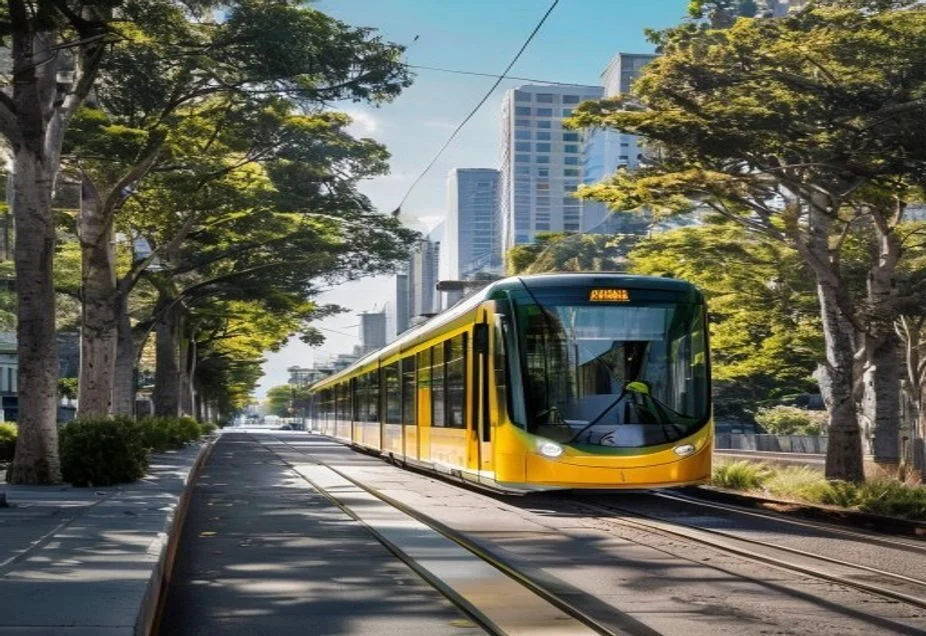
This is the pass most international students in Melbourne don’t know exists — and it’s specifically for undergraduates. Formerly called the iUSEpass, the International Student Travel Pass (ISTP) gives you 50% off the price of a 90-day, 180-day or 365-day myki pass. Transport Victoria states international undergraduates can save over $550 a year on travel.
Who is eligible
- You must be an international student enrolled full-time in an undergraduate course — a bachelor degree, associate degree, advanced diploma or diploma.
- New Zealand citizens studying in Victoria are eligible.
Who is NOT eligible
- Postgraduate students — masters and PhD students do not qualify. Transport Victoria is explicit that postgraduate and part-time students can’t get a student concession.
- Part-time students.
- International exchange students.
- Domestic students (they use the local tertiary concession instead).
- Students with refugee status and Australia Award scholarship holders (these groups may be covered by other concessions — check).
That undergraduate-only rule is the single most misunderstood thing about student travel in Melbourne. If you’re doing a masters in Victoria, budget for full adult fares — it’s a genuine and unpleasant surprise for a lot of postgrad students.
How to get it
- Apply online through the official portal at internationalstudent.ptv.vic.gov.au (also reachable at iusepass.vic.gov.au). Your institution verifies your enrolment.
- Choose your pass: a discounted statewide, Zone 2 only or regional myki pass, for 90, 180 or 365 days.
- Your pass covers unlimited travel on buses, trams, and metropolitan and V/Line trains in your chosen zones — including personal travel, not just trips to campus.
Two practical notes: mobile myki is not available for the International Student Travel Pass, so you’ll carry a physical card; and the longer the pass, the better the value, so a 365-day pass usually beats four 90-day ones if you’re staying the year. Melbourne’s network is covered in more detail in our Melbourne myki guide.
New South Wales: the bad news, and the exceptions
NSW is the outlier, and you should plan around it. International tertiary students in NSW are generally not entitled to transport concessions. If you’re a full-fee-paying international student on a temporary visa, you are not eligible for a Concession Opal card — you buy an Adult Opal card and pay full fares like everyone else. New Zealand citizens are generally in the same position.
There is a narrow exception: international students whose study is fully funded by certain Australian Government scholarships may be eligible for concession fares, including a Concession Opal card. These are:
- Australia Awards Scholarship
- Endeavour Scholarship
- Research Training Program (RTP) Scholarship — noting International Research students are treated separately
If that’s not you, the way to save money in Sydney is to use the fare caps and off-peak discounts rather than a concession — and they’re generous enough to matter. Our Opal card guide covers the daily and weekly caps, the 30% off-peak discount and the transfer discount in detail. Budget realistically: full adult fares in Sydney are one of the bigger hidden costs of studying there.
Western Australia: Tertiary SmartRider
Perth treats international and domestic students the same, which is refreshing. Any student studying full-time at an approved WA university or TAFE can apply for a Tertiary SmartRider concession card — the eligibility rules make no distinction between domestic and international students.
You are not eligible if you’re studying part-time, by distance education, or only visiting from overseas short-term. Apply through your institution, which verifies your enrolment.
On top of that, WA introduced a new fare structure from 1 January 2026 capping fares at no more than $2.80 per trip when paying with SmartRider — so even at the top end, Perth travel is cheap by east-coast standards. See our Perth transport guide for the network itself.
South Australia, ACT, Tasmania and the NT
All four are student-friendly, and all four include international students — but each has its own card and process.
- South Australia (metroCARD) — full-time tertiary students, including international students, can generally access concession fares on Adelaide Metro. Note that the “student metroCARD” product is aimed at school students; as a university student you’re looking for the concession fare. Carry your student ID as proof. Confirm your exact entitlement with Adelaide Metro.
- ACT (MyWay+) — students studying at an Australian institution are eligible for discounted travel in Canberra. You register your student details for concession validation on a MyWay+ account, and you must carry a valid student ID card when travelling.
- Tasmania (Greencard) — adult students enrolled full-time at a senior secondary college, university, TasTAFE or the Tasmanian College of English get concession fares on public buses and ferries — up to 50% off the full fare, with a further ~20% discount when you pay with a Greencard smartcard or a 10-trip ticket. Concession applies from the start of the year in which you turn 19.
- Northern Territory — tertiary and VET students holding a student ID issued in the NT may be entitled to concession fares.
University perks people forget to claim
Your concession card isn’t the only transport help available. Universities run their own services, and many students never use them:
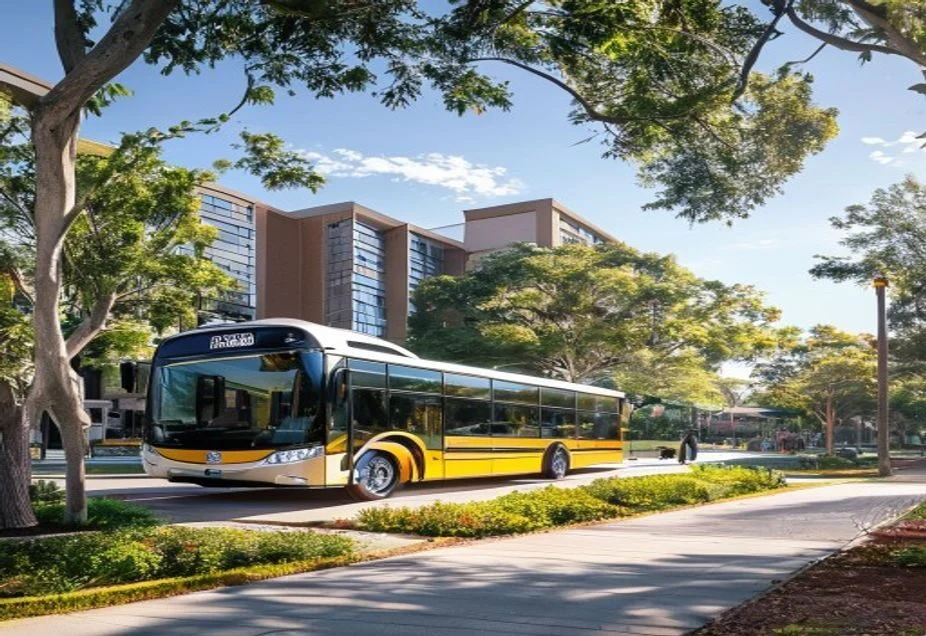
- Free intercampus shuttle buses. Several large universities run genuinely free shuttles between campuses. Monash operates a free shuttle with free wi-fi between its Melbourne campuses (Clayton, Caulfield, Peninsula), boarding by scanning your student ID, running roughly every 15 minutes. The University of Queensland runs a free intercampus bus Monday to Friday, restricted to UQ staff and students. UniSQ runs a year-round shuttle. Check your own university’s transport page — if you’re travelling between campuses or from a nearby station, this can replace a paid trip entirely.
- Campus-to-station shuttles at universities that sit away from a train line.
- Night safety shuttles and security escorts — many campuses run a free after-dark service that walks or drives you to your car, accommodation or the nearest stop. Worth knowing about before you need it.
- Bike schemes and free bike parking/repair stations on campus.
- Student association discounts — some student unions negotiate local transport or rideshare deals.
- Orientation transport packs — some universities hand new international students a pre-loaded travel card or help you apply for a concession during orientation. Ask at your international student office in week one.
The international student support office is the single best place to ask about all of this. It’s their job, it’s free, and they deal with these questions daily.
Other ways to cut your transport costs
Even with no concession — the NSW situation — these make a real difference:
- Use the daily and weekly fare caps. Most networks cap what you can be charged in a day and a week. Once you hit the cap, further travel that period is free, so cluster your errands into a day you’re already travelling.
- Travel off-peak. Sydney gives around 30% off outside peak hours; other networks have similar incentives. If you can schedule classes or shifts outside the crush, you pay less and travel more comfortably.
- Live near a direct line. Fewer transfers usually means a cheaper and much faster trip — see our guide to choosing a suburb.
- Walk or cycle short trips. Australian cities are flat and mild in most places; a 20-minute walk beats waiting 15 minutes for a bus.
- Always tap on and tap off. Forgetting to tap off usually charges you the maximum default fare for that trip — a silent, expensive leak.
- Never risk fare evasion. Fines are large (hundreds of dollars), inspectors are common, and being caught using a concession you’re not entitled to is treated seriously — it can be reported to your institution. The saving is never worth it.
More budgeting help in our cutting transport costs guide and our monthly student budget breakdown.
How to apply for a student concession
The process is broadly the same everywhere. Do it in your first week — concessions rarely backdate, so every week you delay is money gone.
- Confirm you’re eligible using the table above, then check your state transport authority’s own page. Eligibility usually depends on being enrolled full-time.
- Enrol and get your student ID — almost every application needs proof of enrolment or a student number.
- Apply through the right channel — in Victoria, the ISTP portal; in WA, through your institution; elsewhere, via the transport authority’s website or your university.
- Wait for verification. Your institution confirms your enrolment, which can take several days — buy an ordinary adult card to use meanwhile.
- Carry your student ID whenever you travel on a concession fare. Inspectors will ask, and a concession card without matching ID can mean a fine.
- Re-apply or re-validate each year — concessions are tied to your enrolment and expire.
The bottom line
Where you study decides what you pay. Queensland’s flat 50-cent fare is the best deal in Australia and needs no application at all. Victoria offers international undergraduates 50% off a myki pass through the International Student Travel Pass — worth over $550 a year, and worth knowing that postgraduates are excluded. NSW gives most international students nothing, so lean on fare caps and off-peak discounts instead. WA, SA, the ACT, Tasmania and the NT all extend concessions to international students. Apply in your first week, carry your student ID every time you travel, ask your international student office what shuttles and extras your university runs, and never risk a fare-evasion fine to save a few dollars.
New to Australian public transport? Our guide to reading bus and train timetables walks through two real timetables line by line — including what a dash means and why your stop might not be listed.
Transport is only one kind of concession — our guide to concession and student discount cards in Australia covers your student ID, UNiDAYS, Student Beans, ISIC and which government cards you can’t get.
Just landing? Our guide to airport to city transport in Australia compares the train, bus, taxi and rideshare from every major airport with real 2026 fares.
You May Also Like

Moving to Australia: The Complete Checklist and Guide (2026)

NT Public Holidays 2026: Full Calendar, Dates and How Darwin and Alice Springs Celebrate