Melbourne Cup Day: Date, Public Holiday Status and Traditions

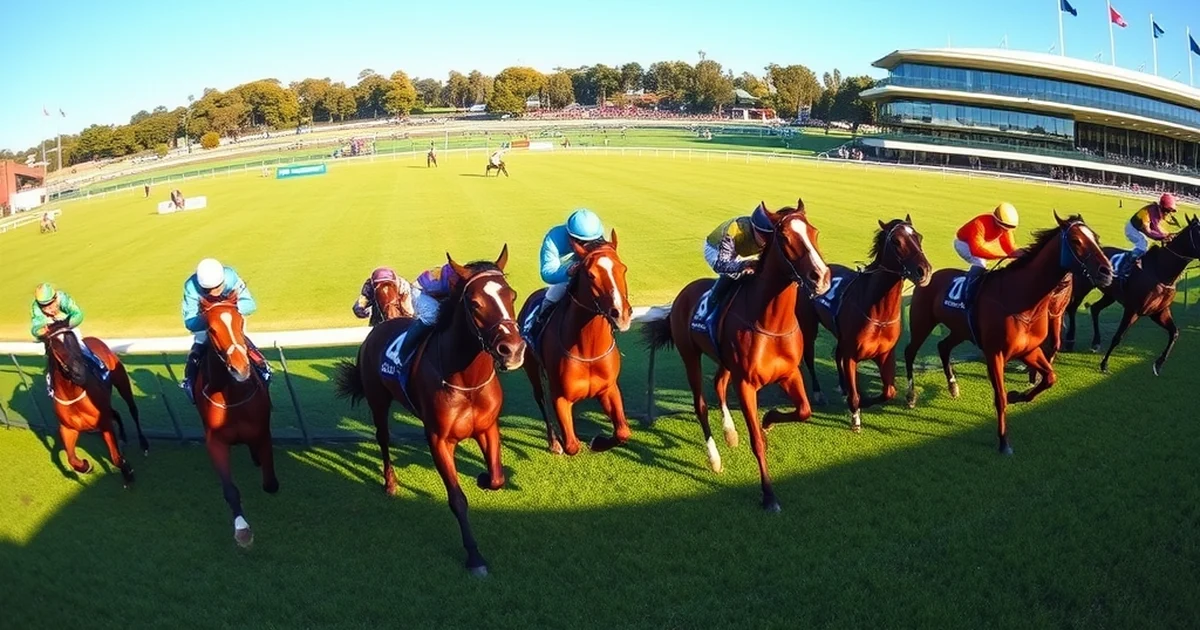
The Melbourne Cup is Australia’s most famous horse race and one of the country’s biggest annual events – a three-minute race that is genuinely known as “the race that stops a nation.” In Victoria, Melbourne Cup Day is also a public holiday, which surprises a lot of newcomers who assume a horse race would never shut down offices, schools and half the state’s workplaces for the day. This guide covers exactly when Melbourne Cup Day falls, which state actually gets the day off (and the regional Victorian exceptions to that), the surprisingly political history of both the race and the holiday, and how the rest of Australia marks the day even without a day off work.
Quick summary
When is Melbourne Cup Day?
The Melbourne Cup is always run on the first Tuesday in November, at Flemington Racecourse in Melbourne. The race itself starts at 3pm AEDT, though the wider Cup Day public holiday runs the whole day.
| Year | Date |
|---|---|
| 2025 | Tuesday 4 November |
| 2026 | Tuesday 3 November |
| 2027 | Tuesday 2 November |
| 2028 | Tuesday 7 November |
Because the date is tied to the calendar rather than a fixed day of the month, it moves around a little from year to year – but it is always the first Tuesday of November, so it is easy to work out well in advance.
Is Melbourne Cup Day a public holiday?
Yes, but only in Victoria. Melbourne Cup Day is a statewide public holiday across all of Victoria, unless a non-metropolitan council has arranged an alternate local holiday instead, according to Business Victoria. It is not a public holiday in New South Wales, Queensland, Western Australia, South Australia, Tasmania, the Northern Territory or the ACT – in every other state and territory, the first Tuesday of November is an ordinary working day.
Not a restricted trading day
Regional Victoria: some towns swap Melbourne Cup Day for their own race day
A number of regional Victorian councils hold their own major race meeting and are granted a local public holiday on that day instead of – or as well as – the statewide Melbourne Cup public holiday. These substitutions are confirmed year by year by Business Victoria and can change, so it is worth checking with your specific local council if you live outside metropolitan Melbourne. For 2026, confirmed regional substitutions include:
| 2026 date | Council / area | Reason |
|---|---|---|
| Thursday 7 May | Warrnambool City Council and Moyne Shire | Warrnambool May Racing Carnival |
| Wednesday 7 October | Mildura Rural City Council (part) | Local race day |
| Thursday 8 October | Yarriambiack Shire (Warracknabeal, half day) | Local race day |
| Tuesday 13 and Thursday 15 October | Hindmarsh Shire (various localities) | Local race days |
| Wednesday 21 October | Greater Geelong City Council | Geelong Cup |
| Wednesday 21 October | Moira Shire (Numurkah district) | Local race day |
| Wednesday 28 October | Greater Bendigo City Council (part) | Bendigo Cup |
| Wednesday 4 November | Macedon Ranges Shire (parts of Kyneton, Trentham, Woodend) | Kyneton Cup |
| Friday 27 November | Wodonga City Council | Wodonga Gold Cup |
In each of the areas above, the local race-day holiday replaces the standard Melbourne Cup public holiday rather than adding an extra day off – so Greater Geelong, for example, takes its public holiday on Geelong Cup day (21 October 2026) instead of on Melbourne Cup Day itself. Everywhere else in Victoria, including metropolitan Melbourne and Ballarat, the standard first-Tuesday-of-November Melbourne Cup public holiday applies as normal.
The history of the Melbourne Cup
The first Melbourne Cup was run on 7 November 1861 at Flemington Racecourse, organised by the Victoria Turf Club (a forerunner of today’s Victoria Racing Club) largely on the initiative of its secretary, Frederick Standish. Seventeen horses started in front of a crowd of around 4,000 people. The race was won by a New South Wales horse named Archer, who went on to win the Cup again the following year – the only horse to win the first two runnings. The original prize was a gold watch and 710 pounds, a considerable sum in 1861.
One persistent piece of Cup folklore is that Archer was walked more than 700 kilometres from Nowra to Melbourne because there was no rail link at the time. It makes a great story, but racing historian Andrew Lemon has shown from newspaper shipping records that Archer actually travelled to Melbourne by sea, aboard the steamer SS City of Sydney – a reminder that a lot of the mythology around the Cup has grown well beyond the documented facts.
The race quickly became the centrepiece of Victorian racing and, within a couple of decades, of the entire Australian sporting and social calendar. Today it is a Group 1 handicap thoroughbred race run over 3,200 metres, and it remains one of the richest handicap races in the world.
Why is Melbourne Cup Day a public holiday? A stranger history than you would expect
The race and the public holiday actually have separate origin stories, and the holiday’s history is oddly bureaucratic. According to Public Record Office Victoria (PROV), the state’s official archive, the first attempt to create a public holiday for Cup Day was made in 1873. At the time, special one-off public holidays could be proclaimed under the Bank Holidays Act and the Civil Service Act. On 30 October 1873, a Chief Secretary’s Department official preparing paperwork for a holiday marking the Prince of Wales’ birthday (9 November) scribbled a margin note suggesting the “Cup” Day be added to the same proclamation – and it was approved.
That holiday was not repeated the following year, partly after a group called the Society for Promoting Morality complained in writing that a Cup Day holiday would encourage young men into the “habit of gambling.” In 1875, the Victoria Racing Club moved the Cup meeting itself to the second Tuesday of November, which happened to fall on the Prince of Wales’ birthday – meaning the existing royal-birthday holiday effectively covered the race as well. From 1876 onwards, following direct correspondence between the VRC and the Victorian Chief Secretary, a special public holiday for the Cup was proclaimed annually as a matter of course.
This informal, year-by-year arrangement continued for well over a century. It was not until the Public Holidays Act 1993 that Victoria formally legislated a permanent public holiday on the first Tuesday of November, finally putting the Cup Day holiday on the same legal footing as Christmas Day or the King’s Birthday, rather than relying on an annual proclamation.
Cup Week: the Melbourne Cup Carnival
Melbourne Cup Day is just one day of a four-day race meeting at Flemington known as the Melbourne Cup Carnival, part of the broader Spring Racing Carnival that runs across Victoria from September through November. The four Carnival days each have their own identity, and locals often talk about attending “Derby Day” or “Oaks Day” specifically rather than just “the Cup.”
| Day | 2026 date | Known for |
|---|---|---|
| Victoria Derby Day | Saturday 31 October | The Victoria Derby race; traditionally a black-and-white fashion dress code |
| Melbourne Cup Day | Tuesday 3 November | The Melbourne Cup itself, plus the Victorian public holiday |
| Oaks Day (Ladies’ Day) | Thursday 5 November | The Victoria Oaks for three-year-old fillies; the Carnival’s biggest fashion day |
| Stakes Day | Saturday 7 November | A more relaxed, family-friendly final day of the Carnival |
The race meeting is run by the Victoria Racing Club (VRC), which formed in 1864 from an earlier amalgamation of racing clubs and has organised the Cup ever since. The current naming rights sponsor is Lexus, whose partnership with the VRC began in 2018 and has since been extended through to 2027, replacing the airline Emirates, which held naming rights from 2004 to 2017. You will still commonly see the race referred to simply as “the Melbourne Cup” outside of official VRC branding.
Famous Melbourne Cup moments
More than 160 runnings in, a handful of horses and moments have become genuinely part of Australian folklore, well beyond racing circles.
- Phar Lap (1930). Perhaps Australia’s most famous racehorse, Phar Lap won the 1930 Melbourne Cup as favourite during the depths of the Great Depression, becoming a genuine national folk hero at a time the country badly needed one. Phar Lap’s mounted hide has been on permanent public display at the Melbourne Museum since 1933 and remains one of its most visited exhibits.
- Makybe Diva (2003-2005). The only horse in the race’s history to win three Melbourne Cups, and the only horse to win it in three consecutive years. Her achievement is considered untouchable in modern handicap racing, given the significant weight penalty a horse carries after each win. Makybe Diva died in February 2026 at the age of 27, prompting a wave of tributes across Australian media on the twentieth anniversary of her third and final Cup win.
- Michelle Payne (2015). Payne became the first female jockey to win the Melbourne Cup, riding Prince of Penzance to victory at 100-1 odds – one of the biggest upsets in the race’s history – and remains one of the sport’s best-known figures in Australia.
- Jamie Melham (2025). Jockey Jamie Melham won the 2025 Melbourne Cup aboard Half Yours, becoming only the second female jockey in the race’s history to win it, ten years after Payne’s breakthrough win.
How Australians celebrate, even outside Victoria
The phrase “the race that stops a nation” is not really an exaggeration, even in states that do not get the day off. Because the race is broadcast live and starts at exactly 3pm AEDT, workplaces, schools and pubs right across the country – including in states with no public holiday at all – routinely pause for the few minutes it takes to run. It is common for Australian offices to run an informal sweepstake in the days beforehand, where colleagues draw a horse’s name at random and the person who drew the winner takes a small prize pool, regardless of whether anyone has any real interest in horse racing.

In Victoria, where the day is a genuine public holiday, it is also a major fashion and social event. “Fashions on the Field,” a long-running style competition judged at Flemington across all four Carnival days, is a significant part of the culture, and Oaks Day in particular has developed into the Carnival’s biggest fashion day. Betting on the race, whether informally in an office sweep or through the TAB and other bookmakers, is a normal part of the day for many Australians who otherwise show little interest in horse racing the rest of the year.
A day that is not without its critics
What's open on Melbourne Cup Day
Because Melbourne Cup Day is not a restricted trading day in Victoria, most supermarkets, shopping centres, cafes, restaurants and petrol stations open as usual, though individual opening hours can be reduced. Banks, government offices, Victorian schools, universities and many corporate workplaces close for the public holiday. If you work in an essential service, retail or hospitality, you may be entitled to public holiday penalty rates for hours worked on the day – check your award or enterprise agreement, or the Fair Work Ombudsman, for the exact entitlement that applies to your job.
Related public holidays and observances
Melbourne Cup Day is one of several Victoria-specific quirks in the Australian public holiday calendar, alongside the Friday before the AFL Grand Final. For the full list of 2026 public holidays across every state and territory, including which ones are shared nationally and which are state-specific like this one, see our Australian public holidays guide. If you are trying to work out how Australia’s holiday calendar compares across other major dates, our guides to Australia Day and ANZAC Day cover two of the other days where the rules genuinely vary by state.
Frequently Asked Questions
You May Also Like

Christmas in Australia (2026): Traditions, Food, Weather and What to Expect

Mother’s Day Gifts Australia 2027: Gift Ideas for Mum by Budget and Interest