Average Wedding Cost in Australia 2026: Full Budget Breakdown

How much does a wedding cost in Australia? The average Australian wedding costs about $38,252 in 2026, according to the Easy Weddings Annual Wedding Industry Report, with most couples spending between $30,000 and $40,000. But the real range is enormous — an intimate 40-guest wedding can be done for $18,000, while a 150-guest celebration with the full vendor line-up runs $80,000+. Your guest count is the single biggest lever, because the reception venue and catering alone eat up almost half the budget. Use the calculator below to estimate your own, then read the full category-by-category breakdown.
One number worth knowing up front: couples start planning with an average budget of $29,471 but end up spending around 23% more than they intended. Building a buffer into your plan from day one is the most useful thing you can do.
Wedding budget calculator (2026)
Enter your guest count, the style of wedding you’re planning and your state for an indicative total budget and a per-guest figure. It’s a starting point — the detailed breakdowns further down show exactly where the money goes.
Average wedding cost in Australia (2026)
The headline figure — an average of $38,252 — hides a huge spread, because “a wedding” means very different things to different couples. The most useful way to think about it is by tier. Where you land depends mostly on your guest list and how much you outsource to vendors versus doing yourself.
| Wedding tier | Typical total spend | What it looks like |
|---|---|---|
| Elopement / legal-only | $1,500 – $10,000 | Just the couple and witnesses; registry or a celebrant and a small meal |
| Micro wedding | $10,000 – $25,000 | ~20–50 guests, intimate venue, a trimmed vendor list |
| Classic wedding | $30,000 – $45,000 | ~80–120 guests, full reception, photographer, flowers and the works |
| Premium / luxury | $45,000 – $80,000+ | 150+ guests, top-tier venue and vendors, live band, high-end styling |
Because the average is pulled up by big-city, big-guest-list weddings, plenty of couples spend far less and still have a beautiful day. The sections below break the cost down by category, by guest count and by state, so you can build a realistic budget for the wedding you actually want.
Full wedding cost breakdown by category
This is where a budget really takes shape. The table below shows the typical 2026 Australian cost for each part of a wedding, drawn from the Easy Weddings industry report and current vendor pricing. The reception dominates everything else — most couples spend close to half their entire budget on the venue, food and drinks — so that’s the first number to lock in.
| Category | Typical 2026 cost | What it covers |
|---|---|---|
| Reception (venue + catering + drinks) | $180–$300 per guest | The single biggest cost — around 45–50% of the budget |
| Engagement ring | $6,842 (avg) | Bought before the wedding; up 14.5% year on year |
| Photography | $3,567 (avg) | Full-day coverage, edited gallery, often an engagement shoot |
| Videography | $3,125 (avg) | Highlights reel plus full ceremony footage |
| Wedding dress | $2,591 (avg) | Gown plus alterations |
| Entertainment (DJ or band) | $2,142 (avg) | Reception music; a live band costs more than a DJ |
| Flowers & styling | $2,000–$6,000+ | Bouquets, ceremony and reception florals, installations |
| Celebrant | $1,031 (avg) | Conducts the ceremony and lodges the paperwork |
| Hair & makeup | $992 (avg) | Bride plus trials; bridal party extra |
| Wedding rings (pair) | $1,500–$4,000 | The bands worn on the day |
| Bridesmaid dresses | $645 (total avg) | Often shared with or paid by the bridal party |
| Wedding cake | ~$600 | For around 100 guests |
| Stationery | $500–$1,000 | Invitations, RSVPs, menus, signage |
| Transport | $500–$1,000 | One car for the couple |
Seen as a share of a typical $40,000 “classic” wedding, the split looks like this — and it’s why cutting your guest list does more for your budget than trimming any other single item.
Where a typical wedding budget goes
Wedding cost by number of guests
Because the reception is charged largely per head — typically $180–$300 per guest once you add venue hire, a sit-down or cocktail menu and a drinks package — your guest list drives the total more than anything else. Cut 20 guests and you can save $4,000–$6,000 without touching the rest of your plans. The table shows roughly what a classic-style wedding costs at different sizes.
| Guests | Typical total (classic style) | Feel |
|---|---|---|
| 40 | $18,000 – $28,000 | Intimate; close family and friends |
| 80 | $28,000 – $40,000 | Mid-size; the sweet spot for many |
| 100 | $35,000 – $48,000 | The Australian “average” wedding |
| 150 | $50,000 – $70,000 | Large; full reception venue |
| 200 | $65,000 – $90,000 | Big celebration; premium territory |
Wedding cost by state
Where you marry matters. New South Wales is the most expensive state to get married in, averaging $42,322, followed by Victoria at $39,502. At the other end, Tasmania is the most budget-friendly capital-state at $25,423 — a difference of nearly $17,000 for essentially the same wedding, driven mostly by venue and vendor pricing in the big cities.
| State | Average wedding cost |
|---|---|
| New South Wales | $42,322 |
| Victoria | $39,502 |
| ACT | ≈ $40,000 |
| Queensland | ≈ $37,000 |
| Western Australia | ≈ $36,000 |
| South Australia | ≈ $33,000 |
| Northern Territory | ≈ $34,000 |
| Tasmania | $25,423 |
Regional and country weddings are typically cheaper than city ones, which is one reason “destination” weddings within Australia — a winery in the Hunter, a barn in regional Victoria, a beach in Tassie — can actually save money as well as being memorable.
The reception: venue and catering (your biggest cost)
The reception — venue hire, food and drinks — is the heart of the budget, usually 45–50% of the total, with the average Australian couple spending around $17,518 on the venue alone. Most venues charge per head: expect $170–$220 a guest for food and beverage, or $180–$300 all-in once you add venue hire and a drinks package. For a 100-guest, three-course sit-down reception with a five-hour drinks package, that’s roughly $18,000–$30,000.
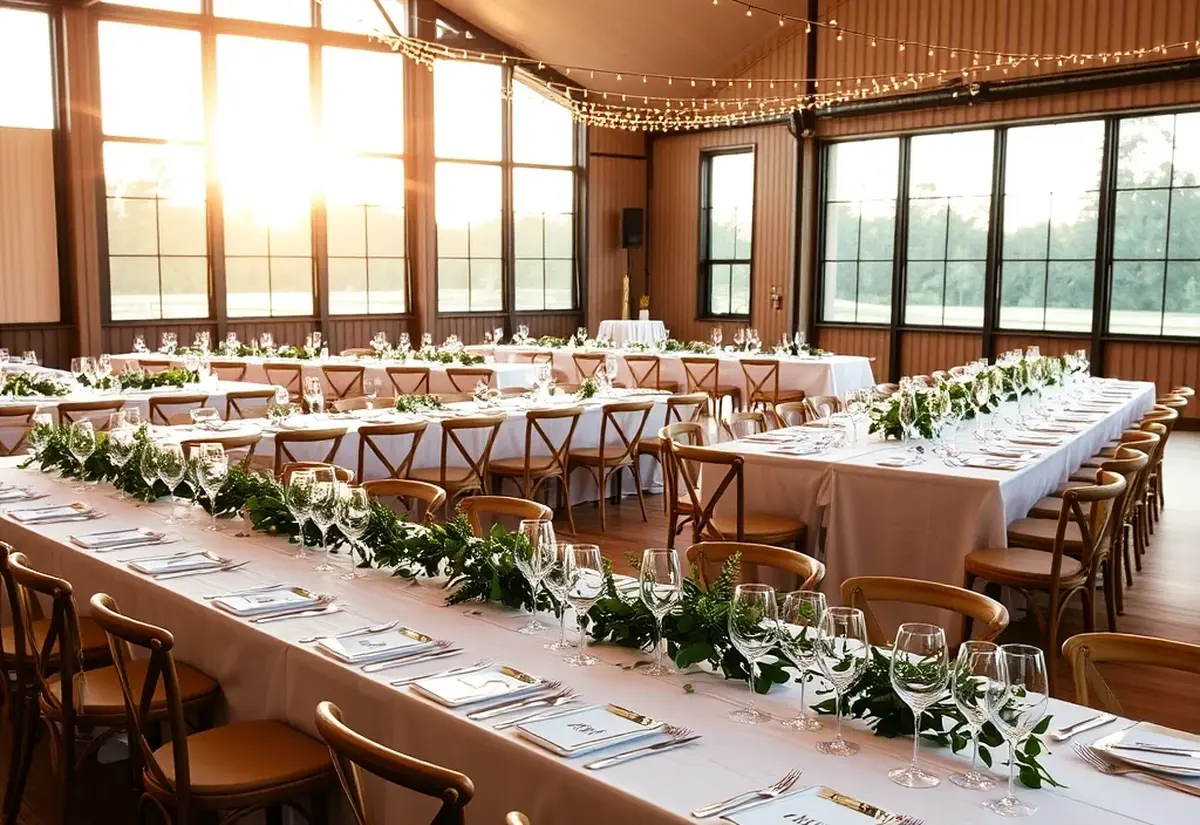
The venue style you choose sets the tone and the price. Some are fully catered and all-inclusive; others are “dry hire”, where you rent the space and bring in your own caterer, furniture and drinks — cheaper on paper, but more to organise.
| Venue style | Typical cost | Best for |
|---|---|---|
| Function / reception centre | $150–$250 per head | All-inclusive, low-stress planning |
| Winery or vineyard | $180–$300 per head | Scenic, relaxed, very popular |
| Hotel ballroom | $180–$280 per head | Polished city weddings |
| Restaurant | $120–$200 per head | Intimate, food-focused, smaller guest lists |
| Pub or brewery | $80–$150 per head | Relaxed, budget-friendly |
| Garden / marquee (dry hire) | Venue $3,000–$10,000 + catering | Full creative control; more DIY |
| Backyard / private property | Catering & hire only | Cheapest space; most logistics |
A few things to check before you sign: what’s actually included (tables, chairs, linen, glassware, staff, cleaning), the minimum spend (many venues require one, especially on Saturdays), the drinks model (a package per head vs a capped bar tab vs BYO with corkage), and whether you can bring your own suppliers or must use the venue’s preferred list. Also ask about the day and season — a Friday, Sunday or winter wedding is often 10–30% cheaper than a Saturday in spring, for the same venue.
Photography and videography
After the reception, photography and video are where most couples happily spend next, because they’re the only things you keep. The average photographer costs $3,567, with a solid full-day professional charging $3,000–$6,500 for 8–10 hours of coverage, an edited online gallery and often an engagement shoot. Videography averages $3,125, with a highlights reel plus full ceremony footage running $2,500–$5,000. Together, budget around $6,000–$8,000 if you want both done well.

Where you can flex: a half-day photography package (ceremony plus a few hours) costs less if you don’t need getting-ready and late-reception shots; a printed album is usually an add-on ($500–$1,500); and a second shooter costs extra but is worth it for larger weddings. What you shouldn’t do is book the cheapest option you can find — photos are the one thing you can’t re-shoot, so look at full real weddings from each photographer, not just their highlight reel.
The dress, suits and attire
The wedding dress averages $2,591, though you can spend anywhere from a few hundred dollars for an off-the-rack or pre-loved gown to $8,000+ for a designer piece — and remember to budget $300–$800 for alterations, which almost every dress needs. Suits are cheaper: expect $200–$400 to hire or $500–$1,500 to buy a good one. Bridesmaid dresses average $645 in total (often shared with or paid by the bridal party), and groomsmen’s outfits are similar.
Then there’s the polish: hair and makeup averages $992 for the bride including a trial, with the rest of the bridal party charged per person. Add accessories — shoes, veil, jewellery, cufflinks — and you’re realistically looking at $5,000–$6,000 all up for everyone to look their best on the day.
Flowers and styling
Flowers are one of the most elastic costs at a wedding. A simple, elegant setup — bouquets, buttonholes and a few arrangements — starts around $2,000, while elaborate floral arches, hanging installations and lavish centrepieces push well past $6,000. Styling and decor (signage, candles, table settings, hire items, a dance-floor or lighting) can add another $1,000–$5,000 depending on how designed you want the space to feel.
The easiest way to save here is to choose in-season, locally grown flowers, reuse ceremony arrangements at the reception, and focus the budget on a few high-impact pieces (a statement arch or long table runners) rather than spreading it thinly across every surface.
The cake and catering extras
A wedding cake for around 100 guests averages about $600, though a tiered, heavily decorated cake from a specialist can run $800–$1,500. Beyond the cake, catering “extras” are where budgets quietly creep up: grazing tables or canapés on arrival ($10–$25 per head), late-night snacks like sliders or a food truck ($8–$18 per head), and dessert tables. They’re lovely touches, but each one is another per-head cost, so decide early which are worth it.
Entertainment: DJ vs live band
Music sets the energy of the reception, and couples budget an average of $2,142 for it. A DJ is the most popular and affordable choice at $1,000–$2,500, while a live band costs more — typically $3,000–$8,000 depending on the number of musicians. Many couples go for a band-plus-DJ combo so there’s continuous music through the night. Don’t forget ceremony music (a soloist, acoustic duo or string ensemble is $400–$1,200) and a decent PA/microphone for the speeches.
The celebrant and the legal bits
A marriage celebrant averages $1,031 and does more than run the ceremony — they lodge the legal paperwork that actually marries you. The key legal step is the Notice of Intended Marriage (NOIM), which must be lodged with your celebrant at least one month (and no more than 18 months) before the wedding, so don’t leave it late. You’ll also want an official marriage certificate from your state’s registry (around $60–$90), which you’ll need to change names or prove you’re married.
The cheapest legal option of all is a registry-office wedding: a short ceremony at your state’s Births, Deaths and Marriages office for a few hundred dollars, which many couples use for the legal part before a separate celebration — or as the whole event when eloping.
Engagement and wedding rings
The engagement ring is usually the first big spend, and it’s a significant one: the Australian average is $6,842, up a sharp 14.5% on previous years as diamond and gold prices have risen. There’s no rule about how much to spend — the old “three months’ salary” line is a marketing invention. Many couples now choose lab-grown diamonds, which look identical to mined stones and cost 40–70% less, letting you get a bigger or better ring for the same money (or the same ring for far less). The wedding bands worn on the day are a separate cost, typically $1,500–$4,000 for the pair depending on metal and whether they’re set with stones.
Stationery, transport and the smaller costs
The little things add up. A printed stationery suite — save-the-dates, invitations, RSVP cards, menus and signage — runs $500–$1,000, though going digital for save-the-dates and RSVPs trims this. Transport (one car for the couple) is $500–$1,000; more if you’re shuttling the bridal party or guests. Then there’s the miscellany that surprises people: favours and gifts for the bridal party, hire items (extra chairs, a dance floor, heaters or a marquee), the marriage certificate ($60–$90), and tips and vendor meals. Individually small; collectively a few thousand dollars.
Should you hire a wedding planner?
A full wedding planner typically charges 10–15% of your total budget, or a flat $4,000–$10,000+, to manage everything from vendor bookings to the run-sheet. A lighter option, on-the-day coordination ($1,500–$3,000), just runs the wedding itself so you’re not managing suppliers while you’re meant to be getting married. Whether it’s worth it depends on you: for a large, complex or destination wedding — or if you simply don’t have the time — a planner can save money by negotiating with vendors and preventing costly mistakes. For a smaller, straightforward wedding, an on-the-day coordinator is often the sweet spot.
A real 100-guest wedding budget (worked example)
To pull it together, here’s what a comfortable — not lavish — 100-guest classic wedding realistically costs in 2026. Your own numbers will shift with the venue, state and choices, but this shows how the pieces add up.
| Item | Cost |
|---|---|
| Reception — venue, catering & drinks (100 @ $200) | $20,000 |
| Photography + videography | $6,500 |
| Attire (dress, suits, bridesmaids) | $4,500 |
| Flowers & styling | $3,500 |
| Wedding bands | $2,300 |
| Entertainment (DJ) | $2,000 |
| Celebrant & legal | $1,200 |
| Hair & makeup | $1,000 |
| Stationery | $700 |
| Transport | $700 |
| Cake | $600 |
| Subtotal | ≈ $43,000 |
| Buffer (about 5%) | $2,000 |
| Total | ≈ $45,000 |
How to save money on your wedding
You can have a beautiful wedding for far less than the average without it looking “budget”. The biggest savings come from a few structural decisions, not from skimping on everything:
- Trim the guest list — the single most powerful lever. At $180–$300 a head, cutting 20 guests saves $4,000–$6,000 and touches nothing else.
- Marry off-peak — a Friday, Sunday or winter date is often 10–30% cheaper than a Saturday in spring or autumn, for the exact same venue.
- Choose an all-inclusive venue — packages that bundle catering, furniture, staff and styling are usually cheaper (and far less stressful) than building it piece by piece.
- Go digital for stationery and RSVPs — save-the-dates and RSVPs online can cut hundreds of dollars and chase-up hassle.
- Use in-season, local flowers and reuse ceremony arrangements at the reception.
- Consider lab-grown diamonds for the ring — 40–70% cheaper for an identical look.
- Limit the bar — a beer/wine/soft-drink package instead of full spirits, or BYO with corkage, can save thousands.
- Book early — lock in 2026 prices before they rise, and negotiate; many vendors will move on price in the off-season.
- DIY the low-risk bits — favours, signage, table styling — but pay professionals for the things you can’t redo (photography, catering, the celebrant).
- Have a two-part wedding — a small legal ceremony at the registry plus a relaxed party later can cost a fraction of a traditional single event.
Hidden wedding costs people forget
These are the line items that push couples 23% over budget. Build them in from the start:
- Dress alterations — $300–$800, and nearly every dress needs them.
- Vendor meals — photographers, videographers and the band usually need feeding.
- Overtime — if the party runs late, the venue, photographer or band may charge extra per hour.
- Cakeage and corkage — some venues charge to cut your cake or open your BYO wine.
- Service charges and gratuities — check whether they’re included in the per-head quote.
- Delivery, setup and pack-down fees — for flowers, furniture and hire items.
- Trials — hair, makeup and even menu tastings can be extra.
- Weather backup — a wet-weather marquee or plan B for an outdoor wedding.
- Guest logistics — accommodation and transport if you’re marrying regionally or interstate.
- Postage, printing and the marriage certificate — small, but real.
Is wedding insurance worth it?
For a $40,000+ event with deposits paid months in advance, wedding insurance (typically $200–$600) can be worth it. It generally covers things like a vendor going out of business, a supplier no-show, damage or loss, and cancellation or postponement for covered reasons — the sort of risks that could otherwise cost you thousands in lost deposits. It doesn’t cover a change of heart. Read the product disclosure statement for exactly what’s included, and check whether your venue requires public liability cover (some do).
Planning the rest of your finances too? Our Cost of Living in Australia price guide covers what everything else costs, from rent and groceries to home and health.
Frequently asked questions
Common questions about the cost of a wedding in Australia in 2026.
This article is general information only, based on the Easy Weddings 2026 Australian Wedding Industry Report and published vendor pricing. Wedding costs vary widely by guest count, venue, season, state and personal choices, and this is not financial advice. Get written quotes from your own vendors before setting a budget.
You May Also Like

Mother’s Day Gifts Australia 2027: Gift Ideas for Mum by Budget and Interest

Christmas Gift Ideas for Wife Australia 2026: What to Buy by Interest and Budget