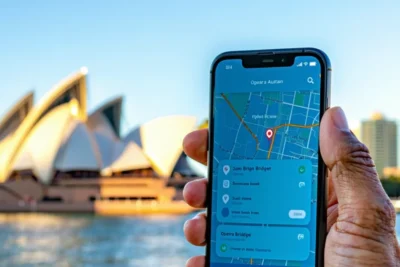
Best Public Transport Apps in Australia (2026): Compared & Reviewed


If you only install one public transport app in Australia, make it Google Maps — it works in every city, in every language, and needs no setup. But it isn’t the best tool for a daily commute. For that, most locals use either a fast departure-board app like TripView, NextThere or AnyTrip, or their state’s official app for fares and card top-ups. This guide compares the ten apps actually worth having in 2026, with real ratings and prices, what each one is good and bad at, and which combination to install on day one.
Ratings, prices and download counts below were checked on the app stores in July 2026. App store prices vary by country and change often — treat them as a guide and check before you buy.
The short answer: what to install
- Just arrived, don’t know the city yet? Google Maps. Nothing else to learn.
- Same commute every day? Add a departure-board app — TripView (Sydney, Melbourne, Brisbane) or NextThere (everywhere).
- Need to top up your card or check your balance? Your state’s official app — PTV in Victoria, Opal Travel in NSW, and so on.
- Want to see exactly where your bus is right now? AnyTrip.
Most people end up with two: Google Maps for anything unfamiliar, and one local app for the trip they do every day.
Quick comparison
| App | Price | Rating | Where it works | Best for |
|---|---|---|---|---|
| Google Maps | Free | — | Everywhere | Anything unfamiliar; walking directions |
| TripView | Paid (Lite is free) | 4.8★ | Sydney, Melbourne, Brisbane | Daily commuters; works offline |
| NextThere | Free | — | All capitals + regional towns | Fast “what’s next” departures anywhere |
| AnyTrip | Free (ads + IAP) | — | Most of Australia | Watching your vehicle live on a map |
| Transit | Free (optional sub) | 4.4★ | Major cities | Clean design; nearby departures |
| Citymapper | Free | 4.8★ | Sydney & Melbourne only | Smart routing in those two cities |
| Moovit | Free | 3.2★ | Very wide, incl. smaller towns | Backup where nothing else works |
| PTV app (VIC) | Free | 4.6★ | Victoria | Mobile myki, top-ups, alerts |
| Opal Travel (NSW) | Free | 3.9★ | NSW | Opal balance and top-ups |
The apps, compared in detail
Ratings shown are from Google Play (Australia) in July 2026. Where no rating is shown, the store didn’t display an aggregate score at the time of checking.
Google Maps
Where it works: every Australian city and most regional towns. Best for: anywhere you don’t already know.
Pros
- Works everywhere with zero setup
- Combines walking, transit, driving and rideshare in one result
- Available in many languages
- Offline area maps for walking
- Everyone already has it
Cons
- Slower than a departure board for a trip you do daily
- Sometimes routes you through long walks
- Doesn’t show your card balance or top up
- Live data quality varies by operator
Verdict: The default. If you install only one app, this is it — but pair it with something faster for your daily commute.
TripView
TripView Pty Ltd
Where it works: Sydney, Melbourne and Brisbane. Best for: the same commute every day. Timetables are stored on your phone, so it works offline.
Pros
- Outstanding 4.8-star rating from over 20,000 reviews
- Works offline — timetable data stored on the device
- Saved trips load with a single tap
- Trackwork and service interruption info
- Arrival and departure alarms
- Real-time delays and vehicle map where available
Cons
- The full version is a paid app
- Only three cities
- Free Lite version has ads and can’t save trips
- No fare payment or card top-up
Verdict: The commuter favourite in Sydney. The offline timetables alone justify the one-off price if you travel daily.
NextThere
Independent developer
Where it works: Sydney, Melbourne, Brisbane, Adelaide, Perth, Canberra, Hobart, Darwin, Alice Springs, the Gold Coast and many regional towns. Best for: a fast “what’s leaving near me” answer anywhere in the country.
Pros
- Broadest Australian coverage of the independent apps
- Free, and independently developed
- Version 4.1 added departure analytics and a real-time vehicle map
- Very fast to answer the only question that matters: what’s next
- Also covers New Zealand and some overseas regions
Cons
- Less of a full journey planner than Google Maps
- Small independent team, so support is not 24/7
- No fare payment or card top-up
Verdict: The best free pick if you travel outside the big three cities, or move between cities.
AnyTrip
jxeeno pty ltd
Where it works: most Australian networks. Best for: seeing exactly where your vehicle is, right now, on a live map.
Pros
- Live vehicle tracking — watch your actual bus or train move
- Works in a browser as well as an app
- Genuinely useful for deciding whether to run for it
- Deep real-time data, including which train is which
Cons
- Contains ads, with in-app purchases to remove them
- More a tracker than a trip planner
- Can be information-dense for a first-time user
Verdict: The answer to “is my bus actually coming?”. Pair it with a planner rather than using it alone.
Transit
Transit, Inc.
Where it works: the major Australian cities. Best for: a clean, glanceable list of what’s departing near you.
Pros
- Excellent, uncluttered interface
- Opens straight to nearby departures
- Good real-time accuracy in covered cities
- Free tier is genuinely usable
Cons
- Coverage thinner outside big cities
- Some features sit behind a subscription
- Less local knowledge than Australian-built apps
Verdict: A polished alternative if you dislike Google Maps’ cluttered transit view.
Citymapper
Citymapper Limited
Where it works in Australia: Sydney and Melbourne only. Best for: smart routing within those two cities.
Pros
- Superb routing where it operates
- Covers Sydney trains and buses, Melbourne trains, buses, V/Line and Yarra Trams
- Clear, well-designed directions
- Handy extras like rain-safe routes and calorie counts
Cons
- Only two Australian cities — useless elsewhere
- No use in regional areas
- No fare payment or top-up
Verdict: Brilliant in Sydney and Melbourne, irrelevant anywhere else in Australia.
Moovit
Moovit
Where it works: extremely wide, including smaller towns other apps ignore. Best for: a backup when nothing else covers where you are.
Pros
- Widest coverage — thousands of cities worldwide
- Often works in regional towns
- Useful when you travel interstate or overseas
- Free
Cons
- Lowest rating of the apps here at 3.2 stars
- Coverage is broad but shallow — data can be dated
- Ad-supported and busier interface
Verdict: Keep it as a fallback rather than a daily driver, especially if you travel to smaller towns.
PTV app
Transport Victoria (official)
Where it works: Victoria. Best for: mobile myki, top-ups and official alerts — the things third-party apps can’t do.
Pros
- Strong 4.6-star rating and over a million downloads
- Mobile myki — your phone becomes your ticket
- Instant top-ups and myki registration
- Saved routes with change alerts
- States that it supports accessibility requirements
Cons
- Reviews criticise real-time bus tracking accuracy
- Routing is weaker than Google Maps
- Victoria only
Verdict: Essential in Melbourne for the myki features, even if you plan your trips in another app.
Opal Travel
Transport for NSW (official)
Where it works: New South Wales. Best for: checking your Opal balance and topping up.
Pros
- Official Opal balance, top-ups and trip history
- Shows how close you are to the weekly fare cap
- Official service alerts
- Free
Cons
- Modest 3.9-star rating
- Most Sydneysiders prefer TripView or NextThere for departures
- NSW only
Verdict: Install it for the card management, then use something else to plan trips.
Don't skip your state's official app
Third-party apps are usually better at telling you when the next service leaves. Official apps are the only ones that handle your money and your card. You generally need one for:
- Checking your card balance before you get stuck at a gate.
- Topping up without finding a machine.
- Digital cards on your phone — the PTV app offers a mobile myki, so your phone becomes your ticket.
- Official disruption alerts for your saved routes.
- Fare and concession information straight from the source.
The main ones: PTV app (Victoria), Opal Travel (NSW), Translink (Queensland), Transperth (WA), Adelaide Metro (SA), Transport Canberra (ACT). Our city guides cover the cards themselves — Opal in Sydney, myki in Melbourne, go card in Brisbane and SmartRider in Perth.
Using Google Maps properly for public transport
Almost everyone uses Google Maps at surface level and misses the features that matter. Worth two minutes:

- Set “arrive by”, not “leave now”. Tap the time option and switch to Arrive by, then enter your class or shift start. It works backwards and tells you which service to catch — far more useful than guessing.
- Use the transit filter. Under transit options you can restrict to train only, avoid buses, or ask for fewer transfers or less walking. Fewer transfers is usually the more reliable trip even when it looks slower.
- Check the live status colour. Real-time services show live delay info; scheduled-only ones don’t. If a time looks suspiciously perfect, it may be timetable data rather than live.
- Save home and your campus. Two taps to your commute instead of retyping addresses.
- Download the offline area map for your city. Offline maps give you walking directions and street layout when you have no data — though live transit times still need a connection.
- Look at the walking legs. Google will happily route you through a 12-minute walk at each end. Check that before you commit, especially in summer heat or rain.
When you have no data or no battery
This is the situation that strands people, and it’s worth preparing for before it happens:

- TripView stores timetables on your phone, so it still shows scheduled times with no signal — the strongest argument for buying it if you’re in Sydney, Melbourne or Brisbane.
- Screenshot your route before you leave, especially the last services of the night.
- Download the offline map of your city in Google Maps.
- Learn your stop number — many networks let you check departures by SMS or a simple web page that works on a weak connection.
- Carry a power bank. If your phone is your ticket (mobile myki) and your timetable, a flat battery is a genuine problem.
And know how to read the paper timetable at the stop as a fallback — our guide to reading Australian bus and train timetables walks through two real ones.
Accessibility and other features worth knowing
- Wheelchair-accessible routing — Google Maps and several transit apps can filter for step-free journeys and accessible stations.
- Screen reader support — official apps generally state their accessibility support; the PTV app explicitly supports users with accessibility requirements.
- Departure alarms — TripView and others can alarm you before your stop, which is genuinely useful on a late train when you’re half asleep.
- Live vehicle maps — AnyTrip and NextThere let you watch the actual vehicle move, so you know whether to run or relax.
- Disruption alerts on saved routes — set these up once for your commute; they save more time than any routing feature.
Mistakes people make with transit apps
- Trusting scheduled times as live. If the operator doesn’t send real-time data for that service, the app shows the timetable — which may be nothing like reality.
- Not allowing for the walk. The app’s clock starts when you start walking, not when you leave the house.
- Ignoring the platform or stand number shown in the app at big interchanges.
- Assuming the app knows about trackwork. Planned weekend works are usually reflected, but check the official app or website before a weekend trip.
- Relying on one app. Have a backup, because apps go down, and so does phone signal underground.
- Forgetting the app doesn’t pay your fare. Except where a digital card is supported, you still need to tap on and off with your card.
On fares: check whether you’re entitled to a discount before you spend a cent — our state-by-state student concession guide covers who qualifies, and it varies a lot more than people expect.
The bottom line
Install Google Maps for anywhere you don’t know, add your state’s official app so you can top up and check your balance, and pick one fast departure-board app for your daily commute — TripView if you’re in Sydney, Melbourne or Brisbane and want offline timetables, NextThere if you want something free that works everywhere, or AnyTrip if you like watching your bus approach on a map. Set “arrive by” instead of “leave now”, turn on disruption alerts for your saved routes, and keep a screenshot and a power bank for the night everything goes wrong.
You May Also Like

Moving to Australia: The Complete Checklist and Guide (2026)

NT Public Holidays 2026: Full Calendar, Dates and How Darwin and Alice Springs Celebrate