
Complete Documents Checklist for Australian University Apps

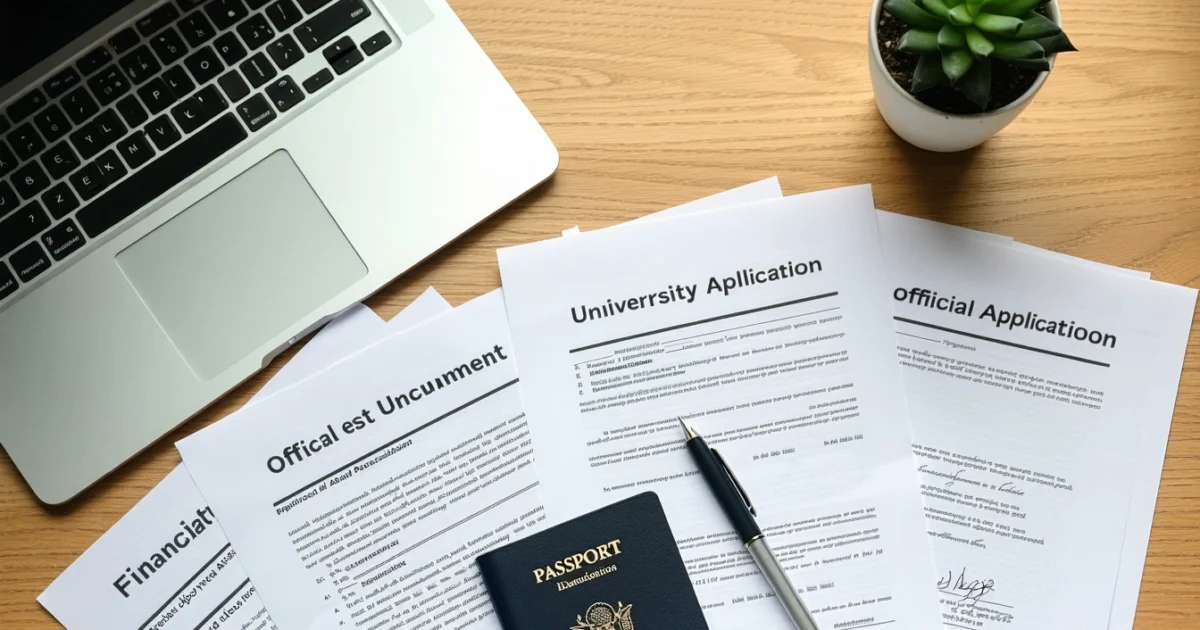
A comprehensive documents checklist for applying to Australian universities and colleges ensures international students submit all required paperwork for successful admission. Moreover, Australian universities require specific academic transcripts, English proficiency scores, personal statements, and financial documentation to evaluate applications. Additionally, proper document preparation significantly improves your chances of acceptance and streamlines the student visa application process.
International students must prepare essential academic documents including official transcripts, degree certificates, and GPA conversions. Furthermore, English language proficiency tests like IELTS, TOEFL, or PTE Academic demonstrate communication skills required for academic success.
Personal identification documents, statements of purpose, and financial proof complete the core application requirements. Subsequently, program-specific materials such as portfolios or research proposals may be necessary depending on your chosen field of study.
TL;DR
- Academic documents: Official transcripts, degree certificates, GPA conversions, and credential evaluations
- English proficiency: IELTS, TOEFL, or PTE Academic scores meeting minimum band requirements
- Personal documentation: Valid passport, statement of purpose, recommendation letters, and financial proof
- Additional requirements: Health insurance (OSHC), medical clearances, and program-specific materials like portfolios
- Authentication process: Certified translations, notarization, and proper document verification for international credentials
Essential Academic Documents for Australian University Applications
Australian universities require comprehensive academic documentation to assess international student applications effectively. Furthermore, proper preparation of these documents ensures smooth processing and reduces application delays. Additionally, understanding specific requirements for each document type helps applicants avoid common submission errors.
Official Academic Transcripts and Mark Sheets
Official transcripts serve as the primary evidence of your academic performance and course completion. Moreover, universities require these documents directly from your previous educational institutions, not photocopies or student-held versions. Subsequently, transcripts must display your complete academic history, including course names, credit hours, grades received, and graduation dates.
International applicants must obtain certified mark sheets that show semester-wise or year-wise performance records. Additionally, these documents should include the institution’s official letterhead, registrar’s signature, and institutional seal. Furthermore, incomplete transcripts or those missing crucial information often result in application rejections.
Important Note
Degree Certificates and Diploma Authentication
Degree certificates and diplomas provide official proof of your completed qualifications and academic achievements. Moreover, these documents must be original or certified copies bearing the institution’s official seal and authorized signatures. Additionally, provisional certificates may be acceptable for recent graduates awaiting final degree issuance.
Documents not issued in English require certified translations by NAATI-accredited translators or equivalent professional translation services. Furthermore, both the original document and its English translation must be submitted together. Subsequently, universities may request additional verification through credential evaluation services for international qualifications.
| Document Type | Requirements | Processing Time |
|---|---|---|
| Bachelor’s Degree | Original + certified translation | 2-4 weeks |
| Master’s Degree | Original + transcript + translation | 3-5 weeks |
| Professional Diplomas | Certified copy + credential evaluation | 4-6 weeks |
Academic Credential Evaluation and Recognition
Credential evaluation processes ensure international qualifications meet Australian education standards and requirements. Moreover, organizations like the Australian Education International (AEI) provide official assessment services for overseas qualifications. Additionally, this evaluation determines the Australian equivalent of your international degrees and certifications.
Recognition requirements vary significantly between universities and specific programs of study. Furthermore, some institutions accept direct applications with original documents, while others mandate formal credential evaluation reports. Subsequently, applicants should verify specific recognition requirements with their chosen universities before beginning the evaluation process.
Professional bodies may require additional skills assessment for certain fields like engineering, medicine, or teaching. Moreover, these assessments evaluate whether your qualifications align with Australian professional standards and industry requirements. Additionally, completing skills assessments early in the application process prevents delays in university admission decisions.
GPA Conversion and Minimum Academic Requirements
Grade Point Average conversion translates international grading systems into the Australian 7-point GPA scale used by most universities. Moreover, this conversion process ensures fair comparison between applicants from different educational backgrounds and countries. Additionally, accurate GPA calculation significantly impacts admission decisions and scholarship eligibility.
Most Australian universities require a minimum GPA of 4.0-5.0 on the 7-point scale for undergraduate programs, equivalent to approximately 2.5-3.0 on the 4-point scale. Furthermore, postgraduate programs typically demand higher GPAs ranging from 5.0-6.0 for competitive admission. Subsequently, applicants with lower GPAs may still gain admission through alternative pathways or foundation programs.
Universities often provide GPA conversion tools and calculators to help international students understand their academic standing. Moreover, these tools consider different grading systems, credit weighting, and institutional variations in assessment methods. Additionally, some universities accept ATAR scores or other standardized academic metrics as alternatives to GPA calculations.
Universities evaluate over 300,000 international applications annually, with academic documents being the primary assessment criteria for admission decisions.
Course Completion Certificates and Professional Qualifications
Course completion certificates demonstrate specialized training, professional development, and additional qualifications beyond formal degree programs. Moreover, these documents strengthen applications by showcasing relevant skills and industry-specific knowledge. Additionally, professional certifications often fulfill prerequisite requirements for certain university programs.
Professional qualifications from recognized industry bodies carry significant weight in university admission decisions. Furthermore, certifications in fields like project management, information technology, or healthcare demonstrate practical expertise and career readiness. Subsequently, applicants should include all relevant professional credentials to enhance their application competitiveness.
- Industry certifications: IT, project management, healthcare credentials
- Language certificates: Additional language proficiency beyond English requirements
- Continuing education: Professional development courses and workshops
- Vocational training: Trade qualifications and technical certifications
- Online courses: MOOCs and university-level online program completions
Universities increasingly value micro-credentials and digital badges from reputable educational platforms and institutions. Moreover, these modern qualifications demonstrate commitment to lifelong learning and adaptation to evolving industry requirements. Additionally, blockchain-verified certificates provide secure and verifiable proof of achievement that universities can easily authenticate.
English Language Proficiency Requirements and Test Scores
English language proficiency stands as one of the most critical requirements for international students applying to Australian universities and colleges. Furthermore, universities accept multiple standardized tests to demonstrate language competency, with each institution setting specific minimum score requirements. Additionally, understanding these requirements helps students prepare adequately and choose the most suitable test for their academic goals.
Accepted English Language Tests and Minimum Scores
Australian universities recognize four primary English proficiency tests: IELTS Academic, TOEFL iBT, PTE Academic, and Cambridge English qualifications. Moreover, each test measures different language skills through varied assessment methods and scoring systems. Subsequently, students should research which test aligns best with their strengths and university preferences.
| Test Type | Undergraduate Minimum | Postgraduate Minimum | Validity Period |
|---|---|---|---|
| IELTS Academic | 6.0-6.5 overall (5.5-6.0 bands) | 6.5-7.0 overall (6.0-6.5 bands) | 2 years |
| TOEFL iBT | 60-79 total (13-19 sections) | 79-94 total (19-23 sections) | 2 years |
| PTE Academic | 50-58 overall (42-50 skills) | 58-65 overall (50-58 skills) | 2 years |
| Cambridge English | 169-176 (B2 First/C1 Advanced) | 176-185 (C1 Advanced/C2 Proficiency) | No expiry |
Universities often require balanced scores across all language skills rather than just overall scores. Additionally, competitive programs like medicine, law, and education typically demand higher proficiency levels than standard requirements. Therefore, students should verify specific program requirements before selecting their target scores.
English Language Exemptions and Alternative Pathways
Native English speakers from Australia, Canada, Ireland, New Zealand, United Kingdom, and United States typically receive automatic exemptions from English proficiency testing. However, universities may still require proof of citizenship or passport documentation to confirm native speaker status. Furthermore, students who completed previous education in English-medium institutions may qualify for exemptions under specific conditions.
- Previous study completion in English-speaking countries within the last 2-5 years
- Secondary education completed entirely in English medium schools
- University degree obtained from recognized English-speaking institutions
- Professional qualifications earned through English-language programs
- Extended residence and work experience in English-speaking environments
Some universities accept alternative demonstrations of English proficiency through PTE score requirements for student visas or equivalent assessments. Moreover, institutions may offer conditional admission with English language pathway programs for students who fall slightly below minimum requirements. Additionally, these pathway programs provide intensive language training alongside academic preparation.
Test Validity Periods and Score Submission Requirements
Most English proficiency test scores remain valid for two years from the test date, except Cambridge English qualifications which have no expiry date. However, universities typically require test scores to be current at the time of application submission and course commencement. Subsequently, students should plan their testing timeline carefully to ensure scores remain valid throughout the application and enrollment process.
Important Timing Consideration
Universities require official score reports sent directly from testing organizations rather than student-provided copies. Furthermore, electronic score reporting systems like IELTS online results or TOEFL’s institutional score reporting ensure secure and verified transmission. Additionally, students should allow sufficient processing time for score delivery, particularly during peak application periods.
Test retake policies vary among testing organizations, with some allowing unlimited attempts while others impose waiting periods between tests. Moreover, students can typically send their best scores to universities, though some institutions may request all test attempts. Therefore, strategic test preparation and timing become crucial factors in achieving required proficiency levels for successful university admission.
Personal Identification and Passport Documentation
Your passport serves as the primary identification document for Australian university applications and subsequent student visa processing. Universities require valid passport documentation with minimum six-month validity from your intended course commencement date. Therefore, students must verify their passport expiration dates well before application deadlines to avoid processing delays.
Additionally, institutions mandate certified copies of passport biographical pages rather than standard photocopies. Consequently, students need authorized personnel such as justices of the peace, notaries public, or consular officers to certify these documents. Furthermore, certification ensures document authenticity and prevents fraudulent applications.
Birth Certificate and Nationality Verification
Birth certificates establish your legal identity and nationality for university enrollment purposes. Moreover, universities use these documents to verify student eligibility for domestic or international fee structures. Subsequently, students must provide original birth certificates or certified copies issued by relevant government authorities.
Nationality verification documents become particularly important for dual citizens or naturalized citizens applying to Australian institutions. Additionally, some universities offer preferential admission criteria or scholarship opportunities based on citizenship status. Therefore, students should include citizenship certificates or naturalization papers alongside birth documentation.
Name Change Documentation Requirements
Students whose current names differ from birth certificates must provide comprehensive name change documentation. Marriage certificates, divorce decrees, or legal name change orders establish the connection between different name variations. Furthermore, universities require this documentation to prevent identity discrepancies during enrollment and academic record management.
- Marriage certificates for name changes through marriage
- Divorce decrees showing name restoration
- Court-ordered legal name change documents
- Adoption papers for adopted students
- Religious or cultural name change certificates where applicable
Consequently, students should ensure all academic transcripts, test scores, and identification documents reflect consistent naming. Otherwise, universities may request additional verification or delay application processing until discrepancies resolve.
Emergency Contact and Next of Kin Information
Universities require comprehensive emergency contact details for student safety and welfare purposes. These contacts serve as primary communication points during medical emergencies, natural disasters, or other critical situations affecting student wellbeing. Additionally, institutions use this information for family notification protocols and emergency evacuation procedures.
Next of kin information must include full names, relationships, current addresses, and multiple contact numbers for designated individuals. Moreover, universities prefer emergency contacts residing in the same country as students for immediate accessibility. However, international students can designate local guardians or family friends as secondary emergency contacts.
Important Documentation Tip
Furthermore, students should update emergency contact information whenever changes occur during their studies. Universities maintain these records in student information systems for quick access during emergencies. Therefore, accurate and current emergency contacts become essential components of comprehensive student safety protocols.
Statement of Purpose and Personal Essays
Personal statements represent the most critical written components in your Australian university application documents checklist. These essays demonstrate your academic motivation, career aspirations, and unique qualifications beyond grades and test scores. Furthermore, admissions committees use personal statements to evaluate communication skills, critical thinking abilities, and cultural fit within their programs.
Personal Statement Requirements
Your personal statement must clearly articulate your academic goals and career objectives within the chosen field of study. Universities expect students to explain their motivation for pursuing specific programs while connecting past experiences to future aspirations. Additionally, successful personal statements demonstrate deep understanding of program requirements and institutional values.
Most Australian universities require personal statements between 500-1000 words for undergraduate programs and 1000-2000 words for postgraduate applications. However, specific word limits vary significantly across institutions and programs. Therefore, students should carefully review application guidelines before drafting their statements.
Writing Tip
Program-Specific Essays and Motivation Letters
Many programs require supplementary essays addressing specific questions about your interest in particular fields or specializations. These program-specific essays allow admissions committees to assess your knowledge of industry trends, research interests, and professional goals. Moreover, motivation letters for competitive programs often require detailed explanations of relevant experiences and achievements.
Business schools typically request essays about leadership experiences, ethical dilemmas, and career progression plans. Meanwhile, engineering programs focus on technical interests, problem-solving abilities, and innovation potential. Medical schools emphasize compassion, service commitment, and understanding of healthcare challenges.
- Leadership and teamwork experiences
- Challenges overcome and lessons learned
- Contribution to diversity and inclusion
- Long-term career vision and goals
- Understanding of program curriculum and opportunities
Research Proposal Requirements
Postgraduate research programs require comprehensive research proposals outlining intended study areas, methodologies, and expected outcomes. These proposals demonstrate your research capabilities, theoretical knowledge, and ability to conduct independent investigation. Additionally, research proposals help universities match students with appropriate supervisors and resources.
Research proposals typically include literature reviews, research questions, methodology sections, and timeline estimates. Students must demonstrate familiarity with current scholarship while identifying gaps their research will address. Furthermore, proposals should align with faculty expertise and departmental research priorities.
| Section | Length | Key Elements |
|---|---|---|
| Abstract | 250-300 words | Research overview, objectives, significance |
| Literature Review | 1000-1500 words | Current scholarship, theoretical framework |
| Methodology | 800-1200 words | Research design, data collection, analysis |
| Timeline | 200-300 words | Project phases, milestones, completion dates |
Formatting Guidelines and Word Limits
Universities enforce strict formatting requirements for personal statements and essays to ensure fair evaluation across all applications. Standard formatting includes 12-point Times New Roman or Arial fonts, double spacing, and one-inch margins on all sides. Additionally, some institutions require specific file formats such as PDF or Microsoft Word documents.
Word count limits serve as critical assessment criteria, with applications potentially rejected for exceeding specified lengths. Students should use word processing software to monitor counts while editing their essays. Moreover, effective essays utilize every word purposefully without unnecessary padding or repetition.
Pros
- Clear structure demonstrates organization skills
- Concise writing shows respect for reader's time
- Adherence to guidelines indicates attention to detail
Cons
- Strict limits may restrict comprehensive explanations
- Formatting errors can distract from content quality
- Technical requirements may disadvantage some applicants
Creating Compelling Personal Narratives
Authentic personal narratives distinguish exceptional applications from generic submissions by revealing genuine passion and unique perspectives. Successful essays tell stories that illustrate character development, resilience, and growth through specific experiences. Furthermore, compelling narratives connect personal background to academic interests while avoiding clichés and overused themes.
Students should focus on specific examples rather than broad generalizations when describing achievements and experiences. Detailed anecdotes provide concrete evidence of skills and qualities while engaging readers emotionally. Additionally, authentic voices emerge when students write honestly about their motivations and challenges.
Show, don’t tell. Use vivid examples and specific details to demonstrate your qualities rather than simply stating them.
Effective personal statements balance professional accomplishments with personal insights to create well-rounded portraits of applicants. Students should avoid repeating information available elsewhere in their applications while highlighting aspects not captured in transcripts or test scores. Therefore, personal essays become opportunities to showcase personality, values, and unique contributions to university communities.
Letters of Recommendation and Academic References
Academic references serve as critical validation tools that provide admissions committees with third-party assessments of student capabilities and potential. Universities require these letters to verify academic performance, research aptitude, and personal characteristics beyond what transcripts reveal. Furthermore, strong recommendation letters often distinguish competitive applicants in highly selective programs.
Academic References from Professors and Educational Supervisors
Professors who have taught students in relevant coursework provide the most valuable academic references for university applications. These educators assess student performance in classroom discussions, research projects, and analytical thinking skills. Additionally, supervisors from honors programs, research projects, or thesis work offer insights into independent learning capabilities and scholarly potential.
Students should approach referees who know their work intimately rather than seeking recommendations based solely on academic prestige. A lecturer who supervised your research project provides more meaningful insights than a famous professor who barely knows your name. Therefore, building relationships with faculty members throughout your academic journey becomes essential for securing strong references.
Reference Selection Strategy
Professional References for Work-Integrated Learning Programs
Work-integrated learning programs, including internships, co-operative education, and industry placements, require professional references from workplace supervisors. These references evaluate practical skills, professional conduct, and industry readiness that academic references cannot assess. Moreover, professional referees provide perspectives on teamwork, communication, and problem-solving abilities in real-world contexts.
Industry supervisors should detail specific projects, achievements, and professional growth observed during work placements. Effective professional references highlight technical competencies, workplace adaptability, and contributions to organizational goals. Consequently, students pursuing Australian student visas for professional programs benefit significantly from strong industry endorsements.
Reference Letter Format and Required Content Elements
Australian universities expect reference letters to follow specific formatting standards and include essential content elements. Letters must be written on official letterhead, include referee contact information, and bear original signatures or secure electronic authentication. Additionally, comprehensive references address academic performance, personal qualities, and specific examples supporting their assessments.
| Letter Component | Required Content |
|---|---|
| Header Information | Official letterhead, date, referee details |
| Student Identification | Full name, student ID, program applied for |
| Relationship Context | How referee knows student, duration, capacity |
| Academic Assessment | Grades, class rank, intellectual abilities |
| Personal Qualities | Character, motivation, leadership potential |
| Specific Examples | Concrete instances supporting claims |
| Recommendation Strength | Clear endorsement level and program suitability |
Reference letters should demonstrate genuine familiarity with student work through specific examples and detailed observations. Generic letters that could apply to any student provide minimal value to admissions committees. Therefore, students must provide referees with comprehensive information about their achievements, goals, and the specific programs they’re applying to.
Number of References Required Per Program Level
Reference requirements vary significantly between program levels, with graduate programs typically requiring more extensive referee support than undergraduate applications. Most undergraduate programs require two to three academic references, while master’s programs often demand three to four references. Furthermore, doctoral programs frequently require four to five references, including research supervisors and industry professionals where applicable.
- Undergraduate programs: 2-3 academic references from teachers or counselors
- Bachelor’s honors: 3 academic references including research supervisors
- Master’s coursework: 3-4 references mixing academic and professional
- Master’s research: 4 references emphasizing research capabilities
- Doctoral programs: 4-5 references including potential supervisors
Professional programs such as medicine, law, and engineering may specify particular referee qualifications or industry experience requirements. Students should verify exact requirements with each institution since reference policies can differ substantially between universities and faculties.
Contact Information and Verification Processes for Referees
Universities require complete contact information for all referees to enable verification of reference authenticity and follow-up inquiries. Essential contact details include institutional email addresses, direct phone numbers, official titles, and current institutional affiliations. Additionally, many universities conduct random verification calls to confirm referee legitimacy and letter authenticity.
Electronic reference systems have become standard practice, with universities sending secure links directly to referees for online submission. These systems track submission status, prevent unauthorized access, and maintain reference confidentiality throughout the admissions process. Moreover, digital platforms enable universities to verify referee credentials automatically through institutional databases.
Over 85% of Australian universities now use electronic reference systems for secure submission and verification
Students must ensure referees understand submission deadlines and technical requirements for electronic systems. Providing clear instructions, application details, and deadline reminders helps referees submit timely, comprehensive letters. Consequently, maintaining regular communication with referees throughout the application process prevents delays and ensures successful submissions.
Financial Documentation and Proof of Funds
Financial documentation serves as the cornerstone of Australian university applications, demonstrating your capacity to fund both tuition fees and living expenses throughout your studies. Universities require comprehensive financial evidence to assess your ability to complete your program without financial hardship. Furthermore, these documents form a critical component of student visa applications, where immigration authorities verify your financial capacity to support yourself during your stay in Australia.
Bank Statements and Financial Evidence Requirements
Bank statements must demonstrate sufficient funds covering tuition fees, living expenses, and additional costs for your entire program duration. Australian universities typically require statements spanning the most recent three to six months, showing consistent account balances and regular income sources. Additionally, statements must display your name, account numbers, and official bank letterheads to ensure authenticity and prevent fraudulent submissions.
Most institutions require funds equivalent to AUD $21,041 annually for living expenses, plus full tuition fees paid in advance or demonstrated through available funds. However, these amounts vary significantly between cities, with Melbourne and Sydney requiring higher financial thresholds than regional areas. Consequently, students planning to study in major metropolitan areas should prepare additional financial documentation to meet elevated cost-of-living requirements.
Universities require financial evidence covering tuition fees plus AUD $21,041 minimum annual living expenses
Scholarship Letters and Financial Aid Documentation
Scholarship award letters provide official confirmation of financial support, reducing the personal funds required for university admission and visa applications. These documents must specify award amounts, payment schedules, and coverage details including tuition, accommodation, or living allowances. Moreover, scholarship letters should indicate whether awards are renewable annually or cover the entire program duration.
Financial aid documentation includes government grants, institutional bursaries, and external funding commitments from educational foundations or employers. Each document requires official letterheads, authorized signatures, and detailed terms outlining payment methods and disbursement schedules. Subsequently, universities verify scholarship authenticity through direct contact with awarding institutions, ensuring accurate assessment of your total financial package.
Sponsor Affidavits and Financial Guarantee Letters
Sponsor affidavits legally commit third parties to provide financial support throughout your studies, requiring notarized documents with specific financial commitments and sponsor identification details. Sponsors must demonstrate their own financial capacity through bank statements, employment letters, and income tax returns covering recent financial years. Additionally, affidavits must specify exact support amounts, payment methods, and duration of financial responsibility.
Financial guarantee letters from banks or financial institutions provide alternative sponsorship arrangements, often requiring collateral or deposit commitments. These guarantees ensure fund availability when needed, offering universities and immigration authorities confidence in your financial security. Therefore, guarantee letters must include institution contact information, guarantee amounts, and terms governing fund release for educational expenses.
Important Note
Currency Conversion and Minimum Fund Requirements
Currency conversion calculations must reflect current exchange rates at the time of application submission, with universities often requiring professional conversion certificates for foreign currency amounts. Exchange rate fluctuations can significantly impact fund adequacy, particularly for students from countries with volatile currencies. Consequently, applicants should maintain fund buffers above minimum requirements to account for potential currency depreciation during application processing.
Minimum fund requirements vary between university programs, with undergraduate courses typically requiring lower amounts than postgraduate research programs. Professional programs such as medicine, dentistry, and veterinary science often demand higher financial thresholds due to extended study periods and specialized equipment costs. Furthermore, students planning to bring dependents must demonstrate additional funds covering family member expenses throughout their stay.
| Expense Category | Annual Amount (AUD) | Notes |
|---|---|---|
| Living Costs | $21,041 | Minimum government requirement |
| Partner/Spouse | $7,362 | Additional dependent cost |
| First Child | $3,152 | Under 18 years |
| Additional Children | $2,368 | Each subsequent child |
Financial Capacity Assessment for Student Visa Applications
Financial capacity assessments evaluate your ability to meet all expenses without relying on unauthorized employment or public assistance during your studies. Immigration authorities conduct thorough reviews of financial documentation, cross-referencing bank statements, sponsor commitments, and scholarship awards against program costs and living expenses. Additionally, assessments consider your financial history, including previous visa applications and any financial difficulties in other countries.
The assessment process includes verification of fund sources, ensuring money originates from legitimate income, savings, or approved loans rather than temporary deposits or borrowed funds. Authorities may request additional documentation explaining large deposits, fund transfers, or unusual account activity appearing in bank statements. Therefore, maintaining transparent financial records and providing comprehensive explanations for significant transactions strengthens your visa application and demonstrates financial integrity.
Students applying for student visas must ensure all financial documentation aligns with immigration requirements and university admission standards. Discrepancies between university applications and visa submissions can result in delays, additional document requests, or application rejections. Consequently, coordinating financial evidence across all application components ensures consistency and improves approval prospects for both university admission and visa authorization.
Health Insurance and Medical Requirements
International students must obtain Overseas Student Health Cover (OSHC) before arriving in Australia. This mandatory insurance policy covers medical expenses, hospital treatments, and emergency services throughout your study period. Furthermore, OSHC requirements form part of your student visa conditions and must remain active for the entire duration of your enrollment.
Australian immigration authorities require students to purchase OSHC from approved providers including Medibank, Bupa, Allianz Care Australia, or nib OSHC. Additionally, your chosen provider must offer coverage that meets government standards for medical benefits, hospital accommodation, and pharmaceutical allowances. Most universities recommend specific OSHC providers and may assist with policy arrangements during the enrollment process.
Medical Examinations and Health Clearance
Certain students must complete medical examinations conducted by panel physicians approved by the Australian Government. These health assessments typically include chest X-rays, physical examinations, and blood tests depending on your country of origin and study duration. Moreover, students from countries with higher tuberculosis rates or those pursuing programs exceeding 12 months often require comprehensive medical clearances.
The health clearance process involves scheduling appointments with designated medical practitioners who submit results directly to immigration authorities. Results remain valid for 12 months from the examination date, allowing sufficient time for visa processing and travel arrangements. However, delays in medical examinations can significantly impact visa processing timelines, making early scheduling essential for timely university commencement.
Medical Examination Requirements
Vaccination Records and Immunization Requirements
Vaccination documentation proves immunity against communicable diseases and may influence visa approval decisions. Australian health authorities require evidence of immunizations against diseases including measles, mumps, rubella, and polio for students from certain countries. Additionally, some universities mandate specific vaccinations for students enrolling in health sciences, veterinary medicine, or education programs involving children.
- Measles, Mumps, Rubella (MMR) – Two doses required for students born after 1966
- Polio vaccination – Complete series documentation for students from polio-endemic countries
- Hepatitis B immunization – Required for health sciences and medical students
- Tuberculosis screening – Chest X-ray and tuberculin skin test for high-risk countries
- COVID-19 vaccination – Current vaccination certificates as per government requirements
Immunization records must include vaccination dates, vaccine types, and healthcare provider details on official letterhead. Furthermore, translations into English by certified translators are necessary for documents issued in other languages. Students missing required vaccinations can complete immunizations in Australia, though this may delay enrollment or require quarantine periods.
Pre-existing Medical Condition Declarations
Students must declare all pre-existing medical conditions during visa applications and university enrollment processes. This includes chronic illnesses, mental health conditions, disabilities, and ongoing medical treatments requiring specialist care. Accurate declarations ensure appropriate support services and prevent visa complications arising from undisclosed health information.
Medical condition declarations require detailed reports from treating physicians outlining diagnoses, treatment plans, and prognoses. Additionally, students may need to demonstrate that their conditions will not pose public health risks or create excessive costs for Australian healthcare systems. Universities often provide disability support services and reasonable adjustments for students with documented medical needs.
Health Insurance Coverage Duration and Provider Selection
OSHC policies must cover the entire duration of your student visa, typically extending beyond course completion dates. Insurance coverage begins before arrival in Australia and continues until visa expiry, ensuring continuous protection throughout your academic journey. Moreover, policy extensions become necessary if students extend their studies or apply for additional qualifications.
| OSHC Provider | Coverage Features | Approximate Annual Cost |
|---|---|---|
| Medibank | Hospital, medical, pharmaceutical, ambulance | $594 – $2,090 |
| Bupa | Comprehensive medical, mental health support | $530 – $1,896 |
| Allianz Care | Global coverage, 24/7 helpline | $548 – $1,943 |
| nib OSHC | Digital claims, wellness programs | $594 – $2,090 |
Provider selection depends on coverage preferences, budget considerations, and university recommendations. Some institutions have partnerships with specific OSHC providers offering discounted rates or enhanced services for their students. Additionally, comparing policy benefits, claim processes, and provider networks helps students choose appropriate coverage for their healthcare needs and study locations.
Students can purchase OSHC directly from approved providers or through their chosen universities during enrollment. Early policy purchase ensures immediate coverage upon arrival and satisfies visa application requirements. Furthermore, maintaining continuous OSHC coverage remains essential for visa compliance and accessing affordable healthcare services throughout your Australian education journey.
Program-Specific and Supplementary Documents
Beyond standard academic credentials, program-specific documents demonstrate specialized skills and achievements required for particular fields of study. These supplementary materials provide admissions committees with comprehensive evidence of your qualifications and readiness for specialized programs.
Creative and Design Portfolio Requirements
Portfolio submissions serve as critical evaluation tools for creative and design programs across Australian universities. Art, architecture, graphic design, and multimedia programs require portfolios showcasing your creative abilities, technical skills, and artistic development. Furthermore, portfolio formats vary significantly between institutions, with some accepting digital submissions while others require physical presentations.
Creative portfolios typically include 10-20 original works demonstrating range, creativity, and technical proficiency. Additionally, artist statements explaining your creative process, inspiration, and artistic vision accompany portfolio pieces. Universities often provide specific guidelines regarding portfolio dimensions, file formats, and submission deadlines for prospective students.
Professional Experience Documentation
Work experience certificates validate practical skills and industry knowledge essential for professional programs. Business, engineering, and healthcare programs frequently require documented work experience demonstrating relevant competencies and career commitment. Moreover, professional development records showcase continuous learning and skill enhancement throughout your career journey.
Employment verification letters must include specific details about your role, responsibilities, duration of employment, and supervisor contact information. Professional development certificates from recognized training providers strengthen applications by demonstrating commitment to industry advancement and specialized skill acquisition.
Research Publications and Academic Achievements
Research publications significantly enhance applications for postgraduate research programs and competitive undergraduate scholarships. Published papers, conference presentations, and research project reports demonstrate academic rigor, analytical thinking, and contribution to knowledge advancement. Additionally, co-authored publications with established researchers indicate collaborative research capabilities and mentorship relationships.
Academic achievement documentation includes honor roll certificates, academic awards, competition results, and scholarly recognitions. These achievements provide evidence of academic excellence, intellectual curiosity, and competitive performance among peer groups. Furthermore, research experience letters from supervisors detail your research contributions, methodologies used, and outcomes achieved.
Standardized Test Score Requirements
Standardized test scores provide standardized benchmarks for academic readiness across diverse educational systems. SAT scores demonstrate undergraduate readiness for American-style liberal arts programs, while GRE scores indicate graduate-level analytical and quantitative reasoning abilities. Similarly, GMAT scores specifically assess business school readiness and management program suitability.
Test score validity periods typically range from 2-5 years, requiring recent examination completion for current applications. Additionally, minimum score thresholds vary significantly between universities and programs, with competitive programs requiring higher percentile rankings. Score reporting procedures involve direct transmission from testing organizations to universities, ensuring authenticity and preventing tampering.
Test Score Strategy
Course Prerequisite Completion Certificates
Course prerequisite completion certificates verify foundational knowledge required for advanced program entry. Science programs require specific chemistry, physics, or mathematics prerequisites, while business programs may mandate economics or statistics completion. Therefore, prerequisite documentation ensures students possess necessary background knowledge for academic success.
Prerequisite verification involves official transcripts showing completed courses, grades achieved, and credit hours earned. Alternative qualification pathways include professional certifications, online course completions, or bridging program certificates that demonstrate equivalent knowledge and skills. Moreover, some universities offer prerequisite assessment tests for students lacking formal prerequisite documentation.
Documentation authenticity requires official certification from recognized educational institutions or professional bodies. Prerequisite completion timing must align with application deadlines, ensuring all requirements are satisfied before program commencement. Additionally, international prerequisite qualifications may require credential evaluation services to establish Australian equivalency standards.
Document Authentication and Certification Process
Document authentication ensures your educational credentials meet Australian university standards through official verification processes. Universities require authenticated documents to confirm academic achievements and prevent fraudulent submissions. Therefore, proper authentication protects both institutions and students while maintaining educational integrity standards.
Notarization and Apostille Requirements
International documents require notarization and apostille certification for Australian university recognition. Notarization involves a certified notary public verifying document authenticity and signatory identity. Subsequently, apostille certification provides international legal recognition under the Hague Convention for participating countries.
Non-Hague Convention countries require embassy or consulate authentication instead of apostille certification. Authentication procedures involve document verification by the issuing country’s foreign affairs department, followed by Australian embassy or consulate endorsement. Moreover, some universities accept digitally verified documents through secure online platforms that eliminate traditional authentication requirements.
Authentication Timeline
Certified Translation Services
Certified translation services convert non-English documents into accurate Australian English versions for university assessment. Professional translators must hold NAATI (National Accreditation Authority for Translators and Interpreters) certification to ensure translation quality and legal acceptance. Additionally, certified translations include translator credentials, official stamps, and accuracy declarations.
Translation requirements apply to academic transcripts, diplomas, certificates, and supporting documentation issued in foreign languages. Universities accept only certified translations that maintain original document formatting, grades, and institutional details. Furthermore, some institutions require both original language documents and certified translations for comprehensive verification purposes.
| Document Type | Translation Required | NAATI Level | Processing Time |
|---|---|---|---|
| Academic Transcripts | Yes | Certified | 5-7 days |
| Degree Certificates | Yes | Certified | 3-5 days |
| Professional Licenses | Yes | Certified | 3-5 days |
| Identity Documents | Yes | Certified | 2-3 days |
Educational Credential Assessment
Educational credential assessment through recognized agencies evaluates international qualifications against Australian education standards. NOOSR (National Office of Overseas Skills Recognition) provides official credential assessment services for degree equivalency determination. Consequently, credential assessments establish academic standing and program eligibility for university admissions.
Assessment procedures involve detailed qualification analysis, institutional verification, and grading system conversion to Australian standards. Credential evaluation reports include degree equivalency statements, grade point average conversions, and academic standing recommendations. Moreover, specialized assessment services evaluate professional qualifications, vocational training, and non-traditional educational pathways.
Alternative assessment providers include VETASSESS for vocational qualifications and professional skills assessment organizations for specific industry requirements. Assessment timelines range from 15 to 45 business days depending on qualification complexity and documentation completeness. Therefore, early assessment submission ensures timely university application processing.
Document Verification Timelines
Document verification timelines vary significantly based on authentication requirements, translation needs, and institutional processing capacity. Standard verification procedures require 2-4 weeks for domestic documents and 6-12 weeks for international credentials requiring apostille certification. Additionally, peak application periods may extend processing times due to increased submission volumes.
- Domestic documents: 5-10 business days for notarization and verification
- International apostille: 3-6 weeks including postal delivery times
- Embassy authentication: 4-8 weeks for non-Hague Convention countries
- Certified translations: 3-7 business days for standard documents
- Credential assessments: 15-45 business days depending on complexity
Universities typically require verified documents 4-6 weeks before application deadlines to allow adequate processing time. Rush processing services are available for urgent applications but involve additional fees and may compromise verification thoroughness. Furthermore, incomplete documentation submissions result in processing delays and potential application deferrals.
Digital Submission Requirements
Digital submission formats require high-quality scanned documents that maintain original clarity and readability for university assessment. Acceptable formats include PDF files with 300 DPI resolution, ensuring text legibility and image sharpness. Moreover, color scanning preserves official seals, stamps, and security features essential for document authentication.
File size limitations typically range from 5-25 MB per document depending on university submission systems and internet infrastructure capabilities. Document compression must maintain quality standards while meeting size requirements for successful upload completion. Additionally, some institutions require specific naming conventions and folder organization for efficient document management.
Pros
- Faster submission and processing
- Reduced postal costs and delays
- Immediate confirmation of receipt
- Easy document updates if required
Cons
- Quality dependent on scanning equipment
- File size restrictions may compress important details
- Technical issues can prevent submission
- Some institutions still require original hard copies
Security measures include encrypted file transmission, password protection, and digital watermarking to prevent unauthorized access or document tampering. Universities verify digital document authenticity through secure verification systems that cross-reference submitted materials with issuing institutions. Therefore, proper digital submission procedures ensure document integrity while streamlining the application process for international students.
Application Timeline and Submission Deadlines
Strategic timing transforms university applications from stressful rushes into organized processes that maximize acceptance chances and scholarship opportunities. Australian universities operate on distinct intake periods with specific deadlines that international students must navigate carefully. Furthermore, coordinating document submission with visa applications requires precise planning to avoid costly delays.
University Application Deadlines for Different Intake Periods
Australian universities typically offer three main intake periods throughout the academic year, each with unique advantages and application deadlines. The primary intake occurs in February/March with applications closing between October and December of the previous year. Additionally, mid-year intakes commence in July/August with deadlines falling between March and May.
| Intake Period | Application Deadline | Document Submission | Visa Processing Time |
|---|---|---|---|
| Semester 1 (Feb/Mar) | Oct 31 – Dec 31 | 6-8 weeks prior | 4-6 weeks |
| Semester 2 (Jul/Aug) | Mar 31 – May 31 | 6-8 weeks prior | 4-6 weeks |
| Trimester 3 (Nov) | Aug 31 – Sep 30 | 4-6 weeks prior | 4-6 weeks |
Some universities extend deadlines for international students, particularly those requiring additional English language testing or document verification. However, popular programs reach capacity quickly, making early submission essential for securing placement. Therefore, students should target submission dates at least 2-3 months before official deadlines to ensure comprehensive review.
Early Application Advantages and Scholarship Consideration
Early applications provide significant advantages beyond simple admission consideration, particularly for competitive programs and scholarship opportunities. Universities allocate merit-based scholarships on a first-come, first-served basis, rewarding students who demonstrate organizational skills through timely submissions. Moreover, early applicants receive priority consideration for limited-enrollment courses and specialized programs.
Students applying 6-8 weeks before deadlines increase scholarship chances by 40% compared to last-minute submissions
Scholarship committees review applications in multiple rounds, with the most substantial awards typically distributed during initial assessment periods. Early submission allows universities to identify exceptional candidates and extend scholarship offers before budget allocations diminish. Additionally, students receive conditional offers sooner, providing more time for visa processing and accommodation arrangements.
International student scholarships often require separate applications with additional documentation beyond standard admission requirements. These scholarship applications frequently have earlier deadlines than general admissions, sometimes closing 3-4 months before semester commencement. Consequently, scholarship seekers must begin preparation significantly earlier than standard applicants.
Document Submission Sequences and Priority Processing
Document submission follows a strategic sequence that optimizes processing efficiency and reduces administrative delays. Universities prioritize applications with complete documentation packages, moving incomplete submissions to secondary review queues. Therefore, students should submit all required documents simultaneously rather than piecemeal submissions that fragment their application.
- Submit academic transcripts and certificates first
- Follow with English proficiency test scores
- Include personal statements and recommendation letters
- Add portfolio materials for creative programs
- Provide financial documentation and sponsor letters
- Submit passport copies and identity verification
Priority processing services expedite application review for students facing tight deadlines or urgent circumstances. These services typically cost $100-300 AUD depending on the institution and processing speed required. However, priority processing cannot overcome incomplete documentation or missing required materials.
Universities implement document tracking systems that allow students to monitor submission status and identify missing materials promptly. These systems send automated notifications when documents require attention or additional information becomes necessary. Furthermore, tracking systems prevent duplicate submissions that can confuse admissions officers and delay processing.
Student Visa Application Timing Coordination
Student visa applications require careful coordination with university admission timelines to ensure seamless transition from acceptance to enrollment. The Confirmation of Enrollment (CoE) document becomes available only after universities receive full tuition payment or deposit, creating a critical dependency in the visa application process. Therefore, students must plan financial arrangements well before visa submission deadlines.
Visa processing times vary significantly based on applicant nationality, document complexity, and seasonal demand fluctuations. Standard processing typically requires 4-6 weeks for straightforward applications, while complex cases involving health examinations or character assessments may extend to 8-12 weeks. Additionally, peak periods around semester commencement create processing backlogs that further extend waiting times.
Critical Timing Alert
Health examinations and police clearance certificates often require additional time beyond standard document preparation. These requirements vary by country of origin and intended study duration, with some examinations requiring appointments at specific medical facilities. Consequently, students should research health requirements early and schedule examinations before receiving university offers.
Genuine Temporary Entrant (GTE) statements require careful preparation and often benefit from professional guidance to address immigration officer concerns effectively. These statements must demonstrate clear study intentions, career goals, and home country ties that support temporary residence claims. Moreover, English proficiency requirements for student visas may differ from university admission standards, requiring additional testing or preparation.
Contingency Planning for Document Delays or Issues
Comprehensive contingency planning protects students from document-related delays that could jeopardize admission or visa approval. Common issues include transcript delays from previous institutions, apostille processing backlogs, and translation service bottlenecks during peak application periods. Therefore, students should identify potential delay sources and develop alternative strategies for each critical document.
Backup documentation strategies include obtaining multiple certified copies, identifying alternative translation services, and establishing relationships with multiple document verification agencies. Students should maintain digital and physical copies of all documents in secure, accessible locations. Additionally, communication channels with previous institutions should remain open throughout the application process.
- Academic transcripts: Request multiple certified copies early
- English test scores: Register for backup test dates
- Financial documents: Prepare alternative funding evidence
- Health examinations: Schedule appointments at multiple approved facilities
- Character certificates: Apply for police clearances from all relevant jurisdictions
Emergency application procedures exist for students facing exceptional circumstances or critical deadlines. Universities may accept provisional enrollment based on partial documentation while students complete remaining requirements. However, these arrangements typically require additional fees and formal agreements outlining completion timelines.
Professional assistance becomes valuable when document issues threaten application success or visa approval. Education agents, migration lawyers, and document preparation services can expedite resolution of complex problems. Nevertheless, students should verify professional credentials and understand service limitations before engaging assistance during critical application periods.
Frequently Asked Questions
What documents are required for applying to Australian universities?
International students need academic documents (official transcripts, degree certificates, GPA conversions), English proficiency scores (IELTS, TOEFL, or PTE Academic), personal identification (valid passport), statement of purpose, recommendation letters, and financial proof. Additional requirements may include health insurance (OSHC), medical clearances, and program-specific materials like portfolios.
Which university in Australia has a 100% acceptance rate?
No reputable Australian university has a 100% acceptance rate. All universities maintain admission standards and evaluate applications based on academic merit, English proficiency, and program-specific requirements. However, some universities may have higher acceptance rates for certain programs or may offer pathway programs for students who don’t initially meet direct entry requirements.
Is 2.5 GPA accepted in Australia?
A 2.5 GPA is generally below the minimum requirements for most Australian universities, which typically require a GPA equivalent to 65-70% or higher. However, some universities offer pathway programs or foundation courses for students with lower GPAs. Additionally, work experience, strong English proficiency, and other factors may be considered in holistic admissions processes.
Do I need certified translations for my documents?
Yes, all documents not issued in English require certified translations by NAATI-accredited translators or equivalent professional translation services. You must submit both the original document and its English translation together. Universities will not accept unofficial or student-prepared translations.
What English proficiency scores do Australian universities accept?
Australian universities accept IELTS, TOEFL, and PTE Academic scores. Minimum requirements vary by program, but typically range from IELTS 6.0-7.0, TOEFL 79-100, or PTE Academic 58-65. Some programs may require higher scores, particularly in medicine, law, or education fields.
How long does document processing take for Australian university applications?
Document processing times vary by qualification type: Bachelor’s degrees typically take 2-4 weeks, Master’s degrees require 3-5 weeks, and professional diplomas may take 4-6 weeks. Additional time is needed for credential evaluation and translation services. Start your document preparation at least 3-4 months before application deadlines.
What is OSHC and do I need it for my application?
Overseas Student Health Cover (OSHC) is mandatory health insurance for international students in Australia. While not always required for the initial university application, you’ll need OSHC for your student visa application. Many universities can arrange OSHC on your behalf or recommend approved providers.
Can I submit photocopies of my academic documents?
No, universities require original documents or certified copies bearing the institution’s official seal and authorized signatures. Photocopies or student-held versions are not acceptable. Documents must come directly from your previous educational institutions or be properly certified by authorized officials.
What should I include in my statement of purpose?
Your statement of purpose should include your academic background, career goals, reasons for choosing Australia and the specific program, relevant experience, and future plans. Keep it concise (typically 1-2 pages), well-structured, and tailored to each university and program you’re applying to.
Do I need a student visa document checklist for Australia?
Yes, the student visa application requires additional documents beyond university admission requirements. These include Confirmation of Enrolment (CoE), financial capacity evidence, health insurance (OSHC), health examinations, and character documents. The Department of Home Affairs provides official checklists for student visa applications.
What financial documents do I need to prove my ability to study in Australia?
Financial proof includes bank statements (typically 3-6 months), scholarship letters, loan approval documents, or sponsor declarations. You must demonstrate ability to cover tuition fees, living expenses (approximately AUD 21,041 per year), and return travel costs. Some universities accept financial guarantee letters from approved sponsors.
Are there program-specific document requirements I should know about?
Yes, many programs have additional requirements beyond standard documents. Creative programs may require portfolios, research degrees need research proposals, medical programs require specific prerequisite courses, and business programs may request work experience documentation. Always check specific program requirements on university websites.
How do I get my international credentials evaluated for Australian universities?
International credentials can be evaluated through services like NOOSR (National Office of Overseas Skills Recognition) or university-specific evaluation processes. Some universities accept credentials directly, while others require formal evaluation. The process typically takes 4-8 weeks and provides Australian equivalent qualifications for your international degrees.
This guide to university application documents is part of our complete Moving to Australia checklist – see the full four-phase roadmap for everything else you need to sort before and after you land.
You May Also Like

National Police Check in Australia (2026): How to Apply, Cost and Which Type You Need

PR Pathway for Trade and TAFE Graduates in Australia (2026)









1 Comment
[…] letters, academic transcripts, and anything your university’s own checklist asks for. See our complete documents checklist for Australian university applications if you have not finalised this […]