One Pot Meals (2026): 20 Recipes by Pot, Pan, Tray & Slow Cooker

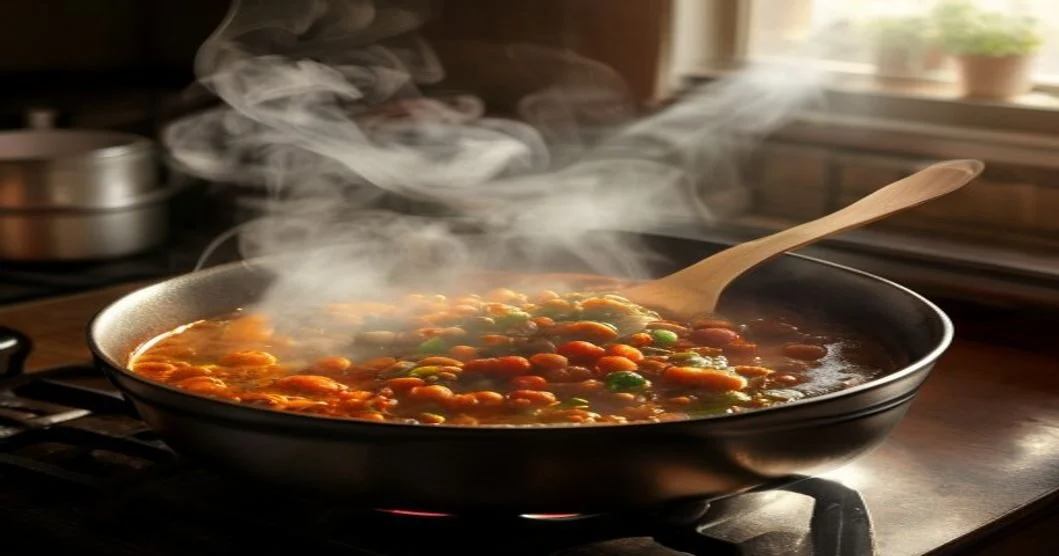
One-pot cooking isn’t a style of food. It’s a decision about washing up — and in a share house with one sink, a drying rack the size of a book and four other people, that decision is the whole reason you cook at all.
This is twenty dinners organised by what you cook them in: one saucepan, one frypan, one oven tray, a slow cooker, a rice cooker or an air fryer basket. Each with a real cost per serve. Plus the technique that makes one-pot cooking actually work, which is mostly about the order things go in.
The short version
- The order matters more than the recipe. Hard things first, soft things last, delicate things at the very end. Almost every one-pot failure is a timing failure.
- Brown first, then simmer. The two-stage move — get colour on the meat and onion, then add liquid — is what separates a good one-pot from a boiled one.
- Deglaze. The brown stuck to the pan is flavour. A splash of liquid and a wooden spoon reclaims it, and it’s free.
- One-pot pasta works, but you need roughly 3 cups of liquid per 250g of pasta and you have to stir.
- A $24 slow cooker is the best value appliance for this style of cooking — cheaper than an air fryer, and it cooks five portions unattended.
- Cheap cuts want long cooking. Chuck steak, drumsticks and lamb shanks get better over hours; a good steak gets worse.
Costs are indicative Australian supermarket prices as at July 2026 and assume basic spices. If you’re building a kitchen, our guide to cheap healthy meals covers the $95 starter kit these all assume.
The technique, in five rules
One-pot cooking has a bad reputation because done carelessly it produces grey, uniformly soft food. Done with a bit of order it produces the opposite. Five things account for nearly all of it.
1. Brown, then simmer
Get the pan hot, colour your meat and onion properly before any liquid goes in, and don’t crowd the pan while you do it. Browning creates flavour compounds that boiling simply cannot. This one step is the difference between a stew that tastes like something and a stew that tastes like wet vegetables.
If the pan is crowded the food steams instead of browning. Brown meat in two batches if you have to — it takes four extra minutes and it is the highest-return four minutes in cooking.
2. Deglaze the pan
After browning there’ll be dark stuck-on bits on the base. That is not burnt — that is concentrated flavour. Pour in a splash of stock, wine, tinned tomato or even water while the pan is hot and scrape it up with a wooden spoon. It lifts straight off and dissolves into the sauce.
Skipping this is the most common reason a home-cooked stew tastes thin.
3. Add things in order of how long they take
This is the entire skill. A rough guide for a simmering pot:
- 40–60 min: tough meat cuts, dried chickpeas and beans, whole potatoes
- 25–30 min: brown rice, lentils, chunked root vegetables, pumpkin
- 15–20 min: white rice, potato chunks, carrots, celery
- 10–12 min: pasta, chicken pieces, cauliflower
- 5–8 min: broccoli, beans, capsicum, zucchini, tinned legumes
- 2–3 min: frozen peas and corn, leafy greens, prawns, fresh herbs, garlic
Work backwards from the finish time. Everything that goes in together should come out together.
4. Get the liquid right
Too much and you have soup; too little and the base catches. Useful starting points:
- One-pot pasta: about 3 cups of liquid per 250g of dry pasta, and stir every few minutes — without a big pot of water, pasta will glue itself to the base.
- Rice in a pot: 1 cup rice to 2 cups liquid, lid on, lowest heat, don’t lift the lid.
- Stew or casserole: liquid just level with the ingredients, not covering them. It will loosen as the vegetables release water.
- Slow cooker: use about half what a stovetop recipe says. A sealed slow cooker loses almost no liquid, and this is the number one slow cooker mistake.
5. Season at the end, taste before serving
Salt early in small amounts, then adjust at the end — liquid reduces and concentrates, so a pot seasoned correctly at the start will be too salty by the finish. Acid at the end is the professional trick nobody at home does: a squeeze of lemon or a splash of vinegar into a finished stew makes it taste brighter and more like itself. Fresh herbs go in with the heat off.
One saucepan
Red Lentil Dhal
Ingredients
- 1½ cups red lentils, rinsed
- 1 onion, 2 cloves garlic
- 1 can diced tomatoes · 4 cups water
- Cumin, coriander, turmeric, chilli
Method
- Fry the onion until soft, add garlic and spices for one minute until they smell fragrant.
- Lentils, tomatoes and water. Bring to the boil.
- Simmer 20–25 minutes, stirring occasionally, until the lentils collapse.
One-Pot Pasta
Ingredients
- 250g pasta · 3 cups stock or water
- 1 can diced tomatoes · onion, garlic
- Handful of spinach · herbs, chilli
- Cheese to finish
Method
- Fry onion and garlic in the pot, add tomatoes and herbs.
- Add the dry pasta and the liquid together. Bring to a boil.
- Simmer 10–12 minutes, stirring every couple of minutes — this is not optional or it will stick.
- Spinach in at the end, cheese over the top.
Vegetable & Lentil Soup
Ingredients
- 1¼ cups lentils · 1 can tomatoes
- Onion, 4 carrots, 400g potato, half a cabbage
- 6 cups stock or water
- Cumin, paprika, bay leaf
Method
- Soften onion and garlic, add carrot and potato for 5 minutes.
- Lentils, tomatoes, liquid and spices. Boil, then simmer 25 minutes.
- Shredded cabbage for the last 8 minutes only.
Lentil-Stretched Bolognese
Ingredients
- 500g beef mince · ¾ cup red lentils
- 1 can tomatoes · 2 cups water
- Onion, 2 carrots grated, garlic
- Mixed herbs
Method
- Brown the mince hard before anything else goes in. Don’t stir it constantly — let it colour.
- Onion, grated carrot and garlic, 5 minutes.
- Tomatoes, lentils, water and herbs. Simmer 25–30 minutes.
One frypan, including stir fries
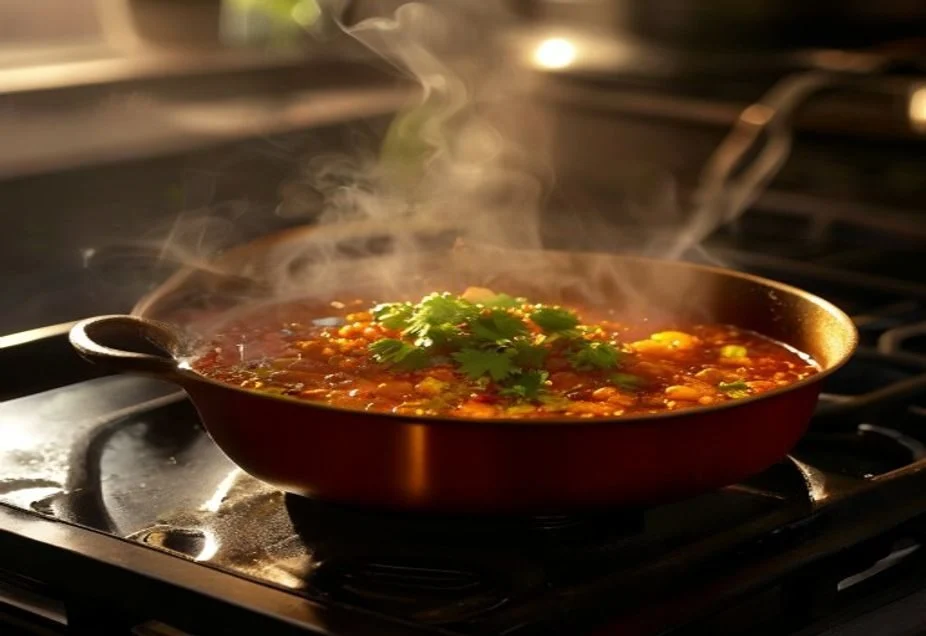
A stir fry is the fastest one-pan dinner there is, and the technique is genuinely different from other pan cooking: very high heat, everything prepped before you start, and constant movement. Once the pan is hot there is no time to chop anything.
Why home stir fries go soggy
Three causes, all fixable:
- The pan isn’t hot enough. It should be almost smoking before anything touches it. A domestic stove struggles, so give it longer than you think.
- Too much in the pan at once. Crowding drops the temperature and the food releases water and boils. Cook in two batches.
- Wet ingredients. Pat meat and tofu dry, and let washed vegetables drain properly.
Add the sauce at the very end and only for the last 30–60 seconds. Sauce added early boils the food instead of glazing it.
The Stir Fry Formula
Ingredients
- 300g chicken, beef or firm tofu, sliced thin
- 4–5 cups mixed vegetables, sliced thin
- Garlic and ginger, chopped
- 3 tbsp soy, 1 tbsp oyster sauce, 1 tsp sesame oil
- 1 tsp cornflour in 2 tbsp water
Method
- Prep everything first and line it up. Once you start there is no stopping.
- Pan very hot, oil in. Protein 3–4 minutes, then remove it.
- Hard vegetables 3 minutes, soft ones 1 minute, garlic and ginger last for 30 seconds.
- Protein back, sauce and cornflour slurry in, toss 30 seconds until glossy.
Egg Fried Rice
Ingredients
- 4 cups cold, refrigerated cooked rice
- 3 eggs · onion, garlic
- 300g frozen peas and corn
- 3 tbsp soy sauce
Method
- Scramble the eggs first, remove them.
- Onion, garlic, frozen vegetables — 3 minutes.
- Cold rice in, break up clumps, fry hard 4–5 minutes.
- Egg back, soy over, toss.
Eggs in Tomato Sauce
Ingredients
- 4 eggs · 1 can diced tomatoes
- Onion, garlic
- Cumin, paprika, chilli
- Bread to serve
Method
- Fry onion, garlic and spices until soft and fragrant.
- Tomatoes in, simmer 8 minutes until properly thick — thin sauce won’t hold the eggs.
- Make four wells, crack in the eggs, cover, 5–7 minutes until whites set.
Chicken & Vegetable Noodles
Ingredients
- 3 blocks noodles · 300g chicken thigh
- Carrot, capsicum, greens
- Garlic, ginger
- Soy, sesame oil
Method
- Cook the noodles, drain, toss in a little oil so they don’t fuse.
- Stir fry the chicken hot, then the vegetables.
- Noodles in, sauce over, toss for a minute.
One oven tray
The lowest-effort cooking there is: everything on a tray, into the oven, walk away. The only rules are spread it out — crowded food steams instead of roasting — and stagger the hard vegetables, because pumpkin takes twice as long as broccoli.
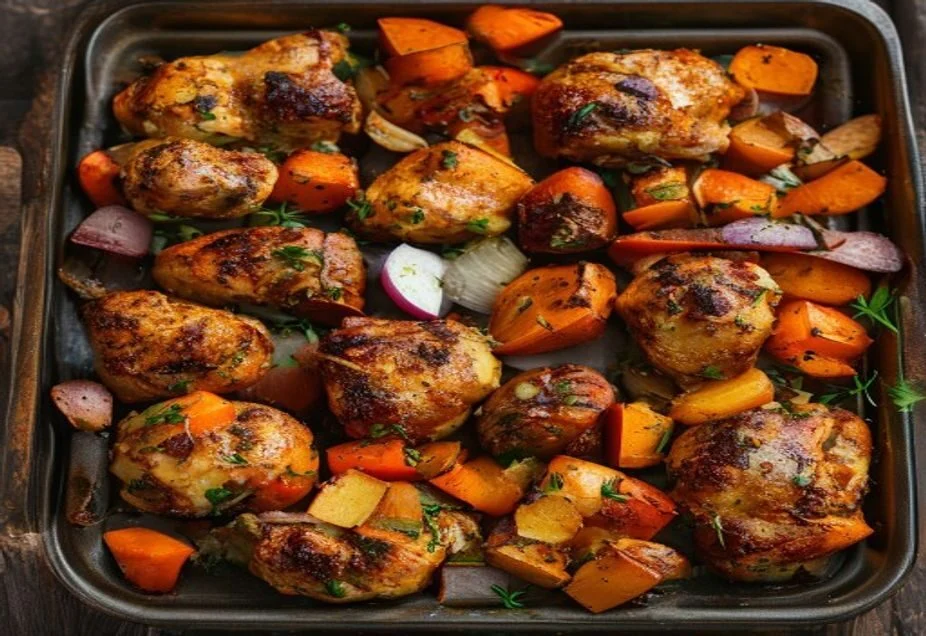
Chicken Drumstick Tray Bake
Ingredients
- 1kg chicken drumsticks
- 800g potatoes, 3 carrots, 1 onion
- 2 tbsp oil · 2 tsp paprika
- Salt, pepper
Method
- Toss everything on the largest tray you own with oil and spices.
- Spread it into a single layer with gaps.
- 45–50 minutes, turning once. Chicken must reach 75°C inside.
Roast Vegetable Tray
Ingredients
- 500g pumpkin, 2 carrots, 1 red onion
- 1 capsicum, 200g broccoli
- 1 can chickpeas, drained and dried
- 1 tbsp oil, cumin, salt
Method
- Pumpkin and carrot first — 15 minutes on their own.
- Add onion, capsicum, broccoli and chickpeas. Shake the tray.
- Another 12–15 minutes until the edges char.
Baked Pasta
Ingredients
- 500g pasta · 2 cans tomatoes
- 500g mince, or 2 cans lentils
- Onion, garlic, herbs
- 2 cups grated cheese
Method
- Make the sauce; boil the pasta two minutes short of the packet time.
- Combine, tip into a dish, cheese over.
- 25 minutes until browned and bubbling.
Sausage & Vegetable Bake
Ingredients
- 8 thick sausages
- 4 potatoes, 2 zucchini, 1 onion, 1 capsicum
- 1 tbsp oil, dried oregano
- Lemon to finish
Method
- Potatoes and onion first, oiled, 15 minutes.
- Add the sausages and remaining vegetables, turn everything.
- 20 minutes more, turning the sausages once. They must reach 75°C.
- Squeeze lemon over the whole tray before serving.
Slow cooker
For about $24 a slow cooker is the cheapest and most useful appliance in this guide — cheaper than an air fryer, and far better suited to batch cooking because it makes five portions unattended while you’re out. It also turns the cheapest cuts of meat into the best results, which is the opposite of how every other cooking method works.
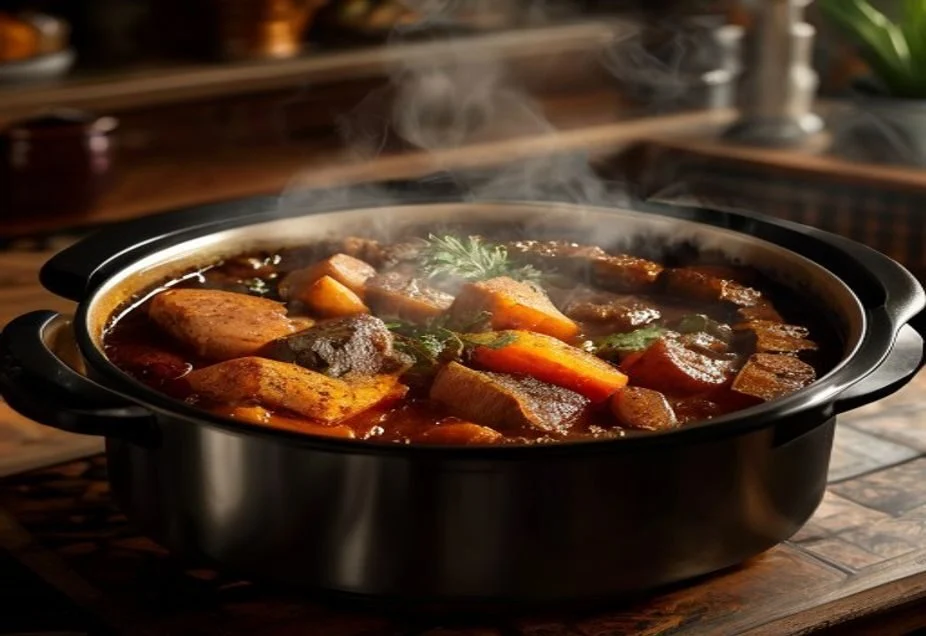
There is a lot more to this one — our full guide to slow cooker recipes has twelve costed meals, which cuts are actually cheap in Australia right now, and an important food safety warning about dried kidney beans.
The four slow cooker mistakes
- Too much liquid. Use about half what a stovetop recipe calls for. A sealed slow cooker loses almost no water, and the vegetables release more as they go. This is by far the most common mistake.
- Not browning first. Ten minutes browning the meat and onion in a pan before they go in is what stops the result tasting flat and grey.
- Lifting the lid. Every peek loses heat and adds roughly 20 minutes. There is nothing to see.
- Adding everything at once. Delicate vegetables, dairy, fresh herbs and frozen peas go in during the last 20–30 minutes, not at the start.
Chicken & Vegetable Stew
Ingredients
- 1kg chicken drumsticks
- 600g potatoes, 4 carrots, 1 onion
- 1 can tomatoes · ½ cup red lentils
- 2 cups water, paprika, herbs
Method
- Everything in at once — this is the one where you genuinely can skip browning.
- Low 6–8 hours, or high 4.
- Lift the drumsticks out, pull the meat off with two forks, stir it back through.
Beef & Vegetable Casserole
Ingredients
- 800g chuck or gravy beef, cubed
- 2 tbsp flour to coat · 1 onion, 4 carrots, 3 potatoes
- 2 cups stock only · 1 tbsp tomato paste
- Bay leaf, thyme
Method
- Toss the beef in seasoned flour and brown it hard in batches. Don’t skip this one.
- Deglaze the pan with a splash of the stock and scrape everything into the cooker.
- Everything else in. Low 8 hours.
Slow Cooker Chickpea Curry
Ingredients
- 2 cans chickpeas · 1 can tomatoes
- 1 can coconut milk · onion, garlic, ginger
- 3 tbsp curry powder or paste
- 400g pumpkin, cubed · spinach at the end
Method
- Fry the onion, garlic, ginger and curry powder for 3 minutes first — spices need heat and oil to bloom.
- Everything except the spinach into the cooker. Low 6 hours.
- Spinach stirred through in the last 10 minutes.
Pulled Chicken for the Week
Ingredients
- 1kg chicken thigh fillets or drumsticks
- 1 cup barbecue sauce or passata
- 1 onion, garlic, smoked paprika
- ½ cup stock only
Method
- Everything in. Low 5 hours.
- Shred with two forks in the cooker and stir back through the sauce.
- Use across the week: wraps, rice bowls, jacket potatoes, toasted sandwiches.
Rice cooker and air fryer
Two more single-vessel routes worth knowing, especially if your kitchen is limited. Between them they cover almost everything: a rice cooker handles anything wet, an air fryer anything crisp.
| Meal | Vessel | Cost/serve | How |
|---|---|---|---|
| One-pot chicken and rice | Rice cooker | $1.30 | Rice, stock, diced vegetables and spices in; chicken on top; white rice setting. Peas stirred through at the end |
| Steamed chicken and greens over rice | Rice cooker | $1.55 | Rice below, chicken in the basket after 5 minutes, greens for the last 8 only |
| Rice cooker dhal | Rice cooker | $1.00 | Soup setting, 40 min. Stay well under the max line — lentils foam |
| Chicken drumsticks | Air fryer | $1.60 | 180°C, 22 min, turned once. Pat dry first for crisp skin |
| Sausages and vegetables | Air fryer | $2.30 | Vegetables 8 min at 180°C, sausages added on top for 15–18 more |
| Roast vegetables and chickpeas | Air fryer | $1.20 | 200°C. Hard vegetables 12 min, everything else 8 more |
Both have their own full guides: how to cook rice covers ratios for every variety and the eight things a rice cooker will cook besides rice, and air fryer times and temperatures has a Celsius chart for over fifty foods.
When it goes wrong
| Problem | Cause | Fix |
|---|---|---|
| Catching and burning on the base | Heat too high, or not enough liquid, or a thin pan | Lowest heat, stir the base occasionally. A heavy-based pot solves it permanently. Don’t scrape the burnt part up — tip the good food into another pot and leave the burnt layer behind |
| Everything is mush | Everything went in at once | Stagger by cooking time. Frozen peas, greens and tinned legumes go in during the last few minutes |
| Tastes flat and watery | No browning, no deglazing, or too much liquid | Brown next time. To rescue it now: simmer with the lid off to reduce, then add salt, a squeeze of lemon, and something savoury — soy, tomato paste or stock powder |
| Meat is tough after hours | Usually not cooked long enough, or the wrong cut | Tough cuts need more time, not less. Give it another hour. Lean cuts like breast or rump won’t ever go tender this way — use chuck, thigh or drumsticks |
| One-pot pasta glued together | Not stirred, or not enough liquid | Roughly 3 cups liquid per 250g pasta, and stir every few minutes. There’s no big pot of water to keep it apart |
| Too salty | Seasoned early, then reduced | Add a peeled potato and simmer 15 minutes, then remove it. Or bulk it out with more liquid, tinned tomato or unsalted starch. Season at the end next time |
| Greasy on top | Fatty meat | Skim with a spoon, or chill it — the fat sets on top and lifts straight off. Stews are usually better the next day anyway |
The point of all this
Every recipe here makes four to six serves, which is the real argument for one-pot cooking. You are not making dinner, you are making four dinners, and the extra effort over cooking for one is close to zero. One pot, one wash-up, and three nights this week where the question doesn’t arise.
A few storage rules worth following, because batch cooking only works if the leftovers are safe. Cool food quickly and get it into the fridge within two hours, in shallow containers rather than one deep tub. Most leftovers keep three days, but cooked rice and pasta only two. Freeze anything you won’t eat by then — and freeze the sauce separately from rice and pasta, which go mushy. Reheat until steaming hot right through, once only.
- Cheap healthy meals in Australia — the kit, the pantry, protein costs compared, and the full food safety rules
- Dinner ideas — thirty dinners sorted by time, energy and budget, plus what’s cheap each season
- How to cook rice — ratios for every variety, and why yours keeps coming out hard
- Air fryer times and temperatures — a Celsius chart for 50+ foods
- Healthy breakfast ideas — 25 breakfasts sorted by how much time you have
If you’re starting tonight: the dhal. One pot, thirty minutes, about four dollars, and it feeds you four times.
Frequently asked questions
You May Also Like

Moving to Australia: The Complete Checklist and Guide (2026)

NT Public Holidays 2026: Full Calendar, Dates and How Darwin and Alice Springs Celebrate