Complete Guide to Myki in Melbourne: Cards, Top Ups and Daily Caps

The myki system in Melbourne confused me for my entire first month. I got fined twice for not touching off properly, once for having insufficient balance despite thinking I’d topped up, and spent probably two hours total standing at myki machines trying to figure out why they weren’t accepting my card. The system isn’t complicated once you understand it, but nobody explains it properly. Everyone just says “tap on, tap off” like that covers everything.
I’m finishing my Master’s at the University of Melbourne, and I’ve been using myki daily for over two years now. I’ve figured out the daily caps, the zone systems, when you need to touch off and when you don’t, and all the little tricks that save money. I’ve also made every possible mistake, which taught me what not to do.
So here’s everything you need to know about myki cards, top ups, and daily caps in Melbourne. Not the official Transport Victoria website version with corporate language, but the actual practical information that helps you get around without wasting money or getting fined.
What Myki Actually Is
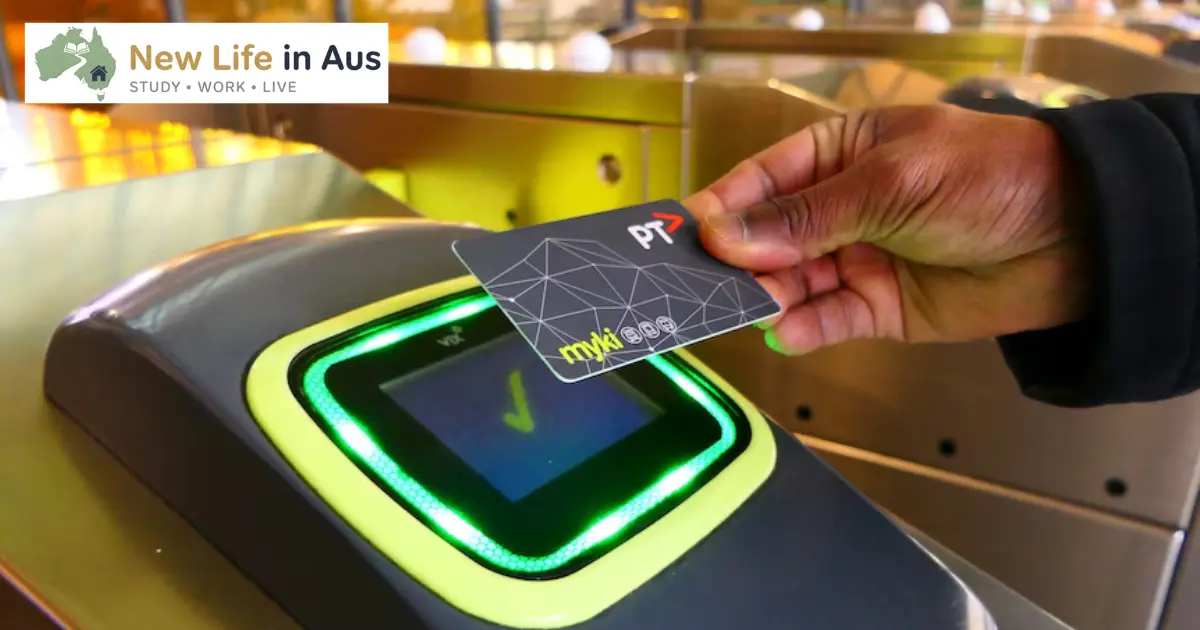
Myki is Melbourne’s public transport ticketing system. It’s the card you tap on buses, trams, and trains to pay for travel. Think of it like London’s Oyster card or Hong Kong’s Octopus card if you’re familiar with those systems. The card itself is just plastic with a chip inside. You load money onto it, then tap it on readers when you travel.
The system covers all of Melbourne’s metropolitan trains, trams, and buses, plus regional Victoria buses and V/Line trains. You can’t pay cash on public transport in Melbourne. No cash, no contactless bank cards (unlike Sydney where you can tap your credit card), just myki. This caught me off guard initially because I assumed I could just pay with my phone or card like in other cities.
Myki runs on a zone system. Melbourne metro has Zone 1 (inner city and inner suburbs) and Zone 2 (outer suburbs). Most students live and travel within Zone 1, or across both zones. The zones determine your fare, though there’s a daily cap regardless of zones which I’ll explain later.
The confusing part is that different transport types have different touch on/off requirements. Trains require touching on and off. Trams technically require touching on but not off within Zone 1. Buses require both. Nobody tells you this clearly, which is why new arrivals constantly get confused or fined. Melbourne’s public transport system has its quirks that you need to understand.
Physical Myki Card vs Mobile Myki
You have two options for myki: a physical plastic card or a digital card on your phone. I use both depending on the situation, but started with just the physical card.
Physical myki cards are the default that most people use. They’re plastic cards about the size of a credit card. You buy one for $6 (or $3 if you qualify for concession), load money onto it, and tap it on the yellow myki readers. The card lasts for years unless you lose it or it gets damaged. Mine has been through rain, heat, getting sat on, and nearly two years of daily use, and it still works fine.
The advantage of physical cards is reliability. They work everywhere, don’t depend on your phone battery or NFC settings, and customer service can help you if something goes wrong. The disadvantage is you need to carry another card in your wallet, and if you lose it, your balance is gone unless you’ve registered the card online.
Mobile myki is digital and only works on Android phones with NFC (Android 9 or newer). You set it up through Google Wallet, and your phone becomes your myki card. You tap your phone on readers the same way you’d tap a card. I tried this for a few weeks after it launched and found it convenient when I remembered my phone was my myki. The times I forgot and tried to tap my actual wallet (with my physical card somewhere else) got annoying.
The problem with mobile myki is compatibility and limitations. iPhones don’t support it at all. Some Android phones don’t have NFC or don’t support the app properly. And importantly, concession cards and the International Student Travel Pass aren’t available on mobile myki. If you need any special fare type, you’re stuck with a physical card.
My recommendation: start with a physical myki card. It’s simple, works for everyone, and you can always add mobile myki later if you want. Don’t make your first week in Melbourne harder by trying to troubleshoot mobile wallet compatibility issues.
Where and How to Buy a Myki Card
You can’t buy myki cards on trams or buses. This is important because plenty of new arrivals assume they can just pay or buy cards on board. You can’t. You need to buy the card before traveling, or at least at a train station before boarding.
Places to buy myki:
- 7-Eleven stores (this is probably the easiest option, they’re everywhere)
- Myki machines at train stations (yellow machines, usually near the platforms)
- Staffed train stations at customer service counters
- Selected newsagents and convenience stores (look for myki signs)
- Online from the PTV website (takes about 10 business days to arrive by post)
- PTV Hub at Southern Cross Station
I bought my first myki at the 7-Eleven near Melbourne Central Station about three hours after landing in Australia. The staff member knew exactly what I needed (they deal with this constantly), charged me $6 for the card, and explained I needed to load money onto it before using it. I put $30 on initially, which lasted about a week with daily travel.
The myki machines at stations are another option but have a learning curve. The interface isn’t intuitive, they don’t always accept all card types for payment, and I’ve had machines freeze or fail mid-transaction. If you’re buying at a machine for the first time, allow extra time in case something goes wrong. Don’t do this when you’re rushing to catch a train.
For mobile myki setup on Android: Open Google Wallet, add a new payment card, select myki, and follow the prompts. You’ll need to load money onto it immediately, just like a physical card. The setup takes maybe five minutes if your phone supports it. Test it at a station reader before relying on it for an important trip.
How to Actually Use Myki (Touch On/Off Rules)
This is where most confusion happens because the rules differ by transport type. I got fined $87 during my first month for not touching off on a train. The fare inspector didn’t care that I was new to Melbourne and didn’t understand. The fine was brutal, and I learned expensive lessons about touch on/off requirements.
On Trains
Touch on when you enter the station. Touch off when you exit the station. This is mandatory. Every time. No exceptions. The yellow myki readers are at the station entrances, near the barriers. You’ll hear a beep and see a green light when it works.
If you don’t touch off, myki assumes you traveled to the end of the line and charges you the maximum fare. You also risk getting fined by fare inspectors (called Authorised Officers) who check myki usage on trains and at stations. The fine is currently around $280 for fare evasion. Don’t risk it just because you’re in a rush or forgot.
Touching off matters even if you’re staying in Zone 1. The system needs to know where you exited to calculate the correct fare. I tested this once by not touching off on purpose (after getting fined, I wanted to understand exactly what happened). The system charged me $5.50 instead of the correct fare, and flagged my card for a potential fare evasion. Just touch off every single time.
On Trams
Touch on when you board. Use the yellow myki readers inside the tram, usually near the doors. You’ll hear a beep. In Zone 1 (which covers most of Melbourne’s inner city), you technically don’t need to touch off on trams. The system assumes you’re traveling within Zone 1 and charges the Zone 1 fare.
But here’s the catch: if your trip goes into Zone 2, or if you touch on in Zone 2, the rules change and you should touch off to avoid being charged the maximum fare. Since most international students live and travel within Zone 1, this rarely applies. But if you’re heading to outer suburbs like Bundoora or Footscray (which is Zone 1 but close to Zone 2), be aware.
Tram inspectors board randomly and check everyone’s myki. They’re aggressive about it. I’ve seen them fine people who genuinely touched on but didn’t hear the beep and assumed it failed. Always check for the green light and beep. If it doesn’t work the first time, tap again. If your card has insufficient balance, the reader shows red and beeps differently. Top up immediately at a 7-Eleven or station machine.
On Buses
Touch on when you board. Touch off when you get off. Both are required on buses, unlike trams. The myki reader is near the driver when you board. When you’re getting off, there are readers near the exit doors. Tap your card on the reader as you leave.
This always felt awkward to me initially because you’re moving toward the exit with other passengers while trying to tap off. The readers are sometimes positioned weirdly, and in crowded buses, it’s easy to forget. But forgetting to touch off on a bus charges you the maximum fare and potentially flags your card for inspection issues.
I’ve watched people argue with drivers about whether they need to touch off on buses. The answer is always yes. The driver doesn’t control this, it’s the system’s requirement. Just tap off every time and avoid drama.
Topping Up Your Myki
Your myki is useless without money loaded on it. I learned this the embarrassing way by trying to tap on a tram with $0.20 remaining on my card. The reader beeped angrily, showed red, and everyone behind me in line to board got annoyed while I fumbled with my phone trying to figure out how to add money instantly.
Ways to top up:
7-Eleven and other retail stores: Walk in, tell them you want to top up your myki, tell them how much ($10, $20, $50, whatever), pay by cash or card, they scan your myki, done. Takes about one minute. This is my default method because 7-Elevens are everywhere in Melbourne, open 24 hours, and the process is fast and reliable.
Myki machines at train stations: Insert or tap your myki card, select top up amount, pay by cash or card, wait for confirmation. These machines are functional but clunky. They sometimes reject cards, the interface is slow, and they occasionally run out of change. I use them when I’m already at a station and need to top up urgently, but I prefer 7-Eleven otherwise.
PTV app: Download the PTV (Public Transport Victoria) app, register your myki card by entering the number on the back, and you can top up through the app using a debit or credit card. The app is decent and convenient if you’re organized. The catch is that top ups done online or through the app can take up to 45 minutes to appear on your card, and you need to tap on/off once for the balance to update. This means you can’t do emergency top ups through the app when you’re standing at a tram stop with no money on your card.
Auto top up: You can set your myki to automatically top up when the balance drops below a certain amount. The app or website lets you configure this with your credit/debit card. Useful if you use myki daily and don’t want to think about topping up. I never bothered with this because I prefer manually controlling my spending, but organized people love it.
Online through PTV website: Similar to the app but through a browser. Same 45-minute delay applies. Good for planned top ups, useless for urgent ones.
The key is understanding the delay on digital top ups. If you’re standing at Southern Cross Station with $1 on your card and need to catch a train now, the app won’t help you. You need to find a machine or a retail store. Plan ahead and keep at least $10-15 buffer on your myki so you’re never stuck. For more transport cost tips, check cutting transport costs as a student.
Myki Money vs Myki Pass
Your myki card can hold two different payment types: myki Money (pay as you go) and myki Pass (unlimited travel for a set period). Most international students use myki Money because it’s more flexible, but myki Pass makes sense for some situations.
Myki Money is straightforward. You load money onto your card. Every trip deducts the fare from your balance. When your balance runs low, you top up again. The fares are based on your travel zones and time of travel, but there’s a daily cap (more on this shortly) that limits how much you can spend per day. This is what I use because my travel patterns vary day to day.
Myki Pass is an unlimited travel pass for a specific period: 7 days, 28 days, or longer periods up to 365 days. You pay upfront for unlimited travel within your chosen zones during that period. The pass makes financial sense if you’re traveling every single day or nearly every day. If you’re commuting to campus five days a week plus occasional weekend trips, a myki Pass saves money compared to daily caps on myki Money.
The math: A Zone 1+2 daily cap with myki Money is $11 on weekdays. If you travel five days a week, that’s $55 weekly. A 7-day Zone 1+2 myki Pass costs about $52 (check current prices as they adjust annually). Over a week, you save $3. Not huge, but it compounds. Over a 28-day pass, the savings become more significant.
The problem with myki Pass is inflexibility. If you’re traveling inconsistently (some weeks you’re on campus daily, other weeks you’re mostly studying from home), you waste money on days you don’t travel. I tried a 28-day pass during my first semester and regretted it because I had two weeks of mid-semester break where I barely left my suburb. I paid for unlimited travel and used maybe three days of it.
My recommendation: use myki Money initially. Track your actual travel patterns for a month. If you’re genuinely traveling every day or nearly every day, calculate whether a myki Pass saves money. If your schedule is inconsistent or you’re not sure how often you’ll travel, myki Money’s flexibility is worth more than potential small savings.
One interesting detail: if you buy a myki Pass for 325-365 days, you get 40 days of free travel included. This is actually decent value for people planning to stay in Melbourne long-term and commute daily. But most international students don’t commit to year-long passes because their schedules and living situations can change.
Understanding Fares and Daily Caps
Melbourne’s fare system is simpler than it first appears, but nobody explains it clearly. The fares increased from January 1, 2025, so any information older than that is outdated. Here’s how it actually works.
Two-hour fares are what you pay for a single trip or multiple trips within a two-hour window. Touch on for your first trip, and you can make unlimited trips for the next two hours on that single fare. This covers all trains, trams, and buses within your zones. The current two-hour fares for Zone 1+2 are $5.50 full fare or $2.75 concession.
This two-hour window is genuinely useful. If you’re going to campus for a class, then heading to the city for groceries, then back home, and it’s all within two hours, you only pay one two-hour fare. I use this constantly. Touch on for my morning trip to uni at 9am, make another trip at 10:30am, both covered by one $5.50 fare.
Daily caps limit how much you can spend in a single day (midnight to midnight). Once you hit the daily cap through multiple two-hour fares, you travel free for the rest of that day. The Zone 1+2 daily cap is $11 full fare or $5.50 concession on weekdays. Weekend and public holiday caps are cheaper: $7.60 full fare or $3.80 concession.
The daily cap is automatic. You don’t activate it or select it. Just use myki Money normally, and once you’ve paid enough two-hour fares to reach $11 (which is two full two-hour fares), the rest of your trips that day are free. I hit the cap most days because I make morning, afternoon, and evening trips. Once I know I’ve hit the cap, I don’t think about myki for the rest of the day.
Weekend/public holiday caps being cheaper ($7.60 instead of $11) means weekends are better value for travel. If you’re planning big travel days around Melbourne, doing them on weekends saves money. I intentionally schedule errands and exploration for weekends partly because of this. The cost of living in Melbourne is high enough without overspending on transport unnecessarily.
Zone 1 only vs Zone 1+2: If you’re only traveling within Zone 1, your fares are slightly cheaper. But most students live in areas that require Zone 1+2 fares at least occasionally, and the system defaults to charging Zone 1+2 if there’s any ambiguity. Unless you’re absolutely certain you never leave Zone 1, budget for Zone 1+2 fares.
The Free Tram Zone
Melbourne’s CBD has a Free Tram Zone where you can ride trams without touching on or paying. This covers a rectangular area in the city centre bounded roughly by Spring Street, Flinders Street, Spencer Street, and Victoria Street. There are maps at tram stops showing the zone boundaries.
If your entire tram trip starts and ends within the Free Tram Zone, you don’t touch on or off. Just board and ride. If your trip starts inside the zone but leaves it, or starts outside and enters it, you must touch on normally and pay the full fare. The system doesn’t pro-rate fares based on partial free zone travel.
I use the Free Tram Zone constantly when moving around the CBD for shopping, meetings, or just getting between different city areas. It’s genuinely free and useful. The catch is that fare inspectors still board trams in the Free Tram Zone and check whether passengers should have touched on based on where they boarded. If you boarded outside the zone and are riding through it without having touched on, you’ll get fined even though you’re currently in the free zone.
The rule is simple: if you start your trip outside the Free Tram Zone, touch on regardless of whether you’ll pass through the zone. If you start and end inside the zone, don’t touch on. If you’re not sure, touch on. Better to pay an unnecessary $2.75 than risk an $87 fine.
One annoying scenario: you’re in the Free Tram Zone waiting for a tram, but you’re planning to ride it beyond the zone boundaries. You must touch on when you board, but there’s no visual indicator of where exactly the zone ends until you’re past it. I’ve accidentally missed touching on a few times when distracted, realized mid-trip, and spent the rest of the ride anxiously hoping no inspectors boarded. Just touch on if you’re traveling beyond the CBD at all.
Money-Saving Tips That Actually Work
Myki has a few features designed to save money if you time your travel strategically. I use these when possible, though they’re not always practical depending on your schedule.
Early Bird trains: If you touch on and touch off for a train trip before 7am on a weekday, the trip is free. There’s a buffer allowing touch off until 7:15am. This requires you to be traveling very early, which most students aren’t naturally inclined to do, but it’s useful for morning shifts at work or if you’re a morning person who studies better on campus before crowds arrive.
I tested this once by deliberately taking an early train to campus at 6:40am. I touched on at 6:35am, reached campus, touched off at 6:55am, and the fare was $0. My myki balance didn’t change. The catch is you need to complete your entire trip before 7:15am touch off, not just start it before 7am. If you touch on at 6:50am but don’t touch off until 7:20am, you pay the normal fare.
This benefit only applies to trains, not trams or buses. And you still need sufficient balance on your myki to touch on (the system checks you could afford the fare even though it won’t charge you). Don’t try using Early Bird with a $0 balance.
After 6pm benefit: If you touch on after 6pm, your two-hour fare is extended until 3am the next day. Normally, two hours means exactly two hours. But evening travel gives you this extended window. Touch on at 6:30pm, and you can travel until 3am on that single $5.50 fare.
This is excellent for evening classes, night shifts at work, or social activities. I’ve used it when working evening shifts in the city then heading home late. One fare covers the entire evening instead of potentially needing multiple two-hour fares. The 6pm cutoff is exact though. Touch on at 5:58pm, you get the standard two-hour window. Touch on at 6:02pm, you get until 3am. If you’re timing is close to 6pm, wait those extra minutes.
Weekend caps being cheaper: I mentioned this earlier but it’s worth emphasizing. Traveling on weekends costs less than weekdays because the daily cap is $7.60 instead of $11. If you’re planning multiple trips around Melbourne for errands, tourism, or visiting friends, bunch them on weekends when possible. You hit the cheaper cap with fewer trips and save $3.40 per day. Over a month of weekends, that’s noticeable savings.
These tips matter more when you’re on a tight budget. If money isn’t a concern, the savings are marginal. But most international students are watching spending carefully, and understanding these features helps stretch your transport budget. More strategies in my guide on saving money on public transport.
International Student Travel Pass
If you’re a full-time international undergraduate student, you might qualify for the International Student Travel Pass (ISTP), which offers 50% savings on myki Pass fares. This is a genuine discount that can save significant money if your travel patterns suit a pass.
The ISTP is available for 90-day, 180-day, or 365-day periods. Melbourne-based students get a statewide pass covering Zone 1, Zone 2, and regional Victoria for the price of a standard Zone 1+2 pass. That’s better value than the regular myki Pass. The discount is substantial for students who commute daily.
The requirements are specific: you must be a full-time international undergraduate student at a participating Victorian institution. Check with your university’s student services to confirm if they participate and how to apply. The application process involves verification of your student status through your university. You can’t just buy an ISTP at 7-Eleven; it requires advance application.
Important limitation: ISTP is only available as a physical myki card, not mobile myki. If you want the international student discount, you’re using a plastic card. This wasn’t a problem for me since I prefer physical cards anyway, but it matters if you were planning to go fully digital.
I don’t qualify for ISTP because I’m a Master’s student, not an undergraduate, and the pass is specifically for undergraduates. This seemed unfair to me initially, but it’s how the system works. If you’re eligible, absolutely apply for it. Saving 50% on transport over a year adds up to hundreds of dollars. If you’re not eligible, you’re stuck with regular myki Money or myki Pass.
One practical consideration: if you’re unsure how long you’ll stay in Melbourne or what your travel patterns will be, even the 90-day ISTP requires commitment. If you buy a 90-day pass and then barely travel during that period, you’ve wasted money even with the 50% discount. Evaluate your actual anticipated travel before committing.
Common Mistakes That Cost Money
I made most of these mistakes myself before figuring out the system. Learn from my expensive errors.
Assuming you topped up when you didn’t. I’ve stood at myki machines several times, gone through the top up process, walked away, then discovered hours later my card still had the old balance. Machines malfunction, transactions fail, and if you don’t verify the balance updated on the screen or by tapping on a reader, you won’t know until you’re trying to board a tram with insufficient funds. Always confirm the new balance before leaving the machine or store.
Not touching off on trains. I paid probably $40 in overcharges during my first few months by forgetting to touch off when exiting stations. Every time you forget, you get charged the maximum fare. Do this multiple times per week, and it adds up fast. I eventually put a reminder note on my phone’s lock screen that said “TOUCH OFF” until it became automatic habit. Better to look paranoid by checking twice than to waste money.
Touching on inside the Free Tram Zone when you don’t need to. If you’re staying entirely within the CBD’s Free Tram Zone, touching on means you’re paying $2.75 unnecessarily. I did this many times initially because I was paranoid about fare inspectors and didn’t trust the free zone boundaries. Eventually I learned the boundaries and stopped wasting money on short CBD tram trips.
Not checking concession eligibility properly. Some students assume they qualify for concession fares because they’re students. International students generally don’t qualify for standard concession fares in Victoria unless they meet very specific criteria. Using a concession myki without being eligible is fare evasion and gets you fined if caught. The ISTP is the concession option for eligible international undergraduates. Everyone else pays full fare.
Letting your balance get too low. Running around Melbourne with $2 on your myki means you’re one trip away from being stuck. I’ve been stranded at train stations several times, needing to find a 7-Eleven to top up before I could travel. Keep at least $15-20 buffer on your card so you’re never scrambling. Top up when you hit $10-15, not when you hit $0.
Not registering your myki online. If you lose your unregistered myki card, your balance is gone forever. If you register it on the PTV website by creating an account and entering your card number, you can report it lost and transfer the balance to a new card. This costs $6 for the new card, but you keep your money. I didn’t register mine until after I lost my first card with $40 on it. Learn from my $46 mistake.
Forgetting myki entirely. I’ve left home without my myki card approximately 50 times over two years. You realize this as you’re about to board a tram or enter a train station. Your options are: go back home to get it (wastes time), buy a new card (wastes $6 plus you have two cards with split balances), or try to complete your trip illegally and hope you don’t encounter fare inspectors (risky and stupid). Keep your myki in the same place every day. Mine lives in my wallet, always. When I forget my wallet, I know immediately and turn back.
My Honest Take on Myki
After two years using the system daily, myki is… fine. Not great, not terrible, just functional. It works reliably once you understand the quirks. The complaints I have are mostly about poor explanation and confusing initial setup rather than actual system failures.
The daily cap structure is genuinely good. The worst-case transport cost per day is $11, which is reasonable for unlimited travel across a major city. Compare that to paying per trip with no cap, and you’d spend significantly more. The two-hour fare window is smart and user-friendly once you understand it. Free travel before 7am rewards early commuters in a way that feels fair.
The negative aspects are mainly communication and consistency. The different touch on/off rules for different transport types make no intuitive sense. Why do trams not require touch off in Zone 1 but buses do? Why can’t we just have consistent rules across all transport? The system seems designed to confuse newcomers deliberately. And the fines for innocent mistakes are brutal. $87 for forgetting to touch off when you’re genuinely not trying to evade fares feels punitive rather than corrective.
The myki machines at stations are clunky and outdated. The interface is slow, options are confusing, and they feel like technology from 2010. The PTV app is better but still has weird limitations and delays. Why can’t I add money to my card instantly through the app like I can at 7-Eleven? The 45-minute delay on digital top ups is absurd in an era where financial transactions happen in seconds.
But ultimately, myki gets me where I need to go affordably and mostly hassle-free. I no longer think about it consciously. Tap on, tap off (when required), ensure I have balance, done. It becomes automatic after the initial learning curve. The system works fine for daily use once you’re past the setup confusion.
Compared to public transport in other Australian cities, Melbourne’s system is middle-tier. Not as smooth as Sydney’s tap-and-go with bank cards, not as problematic as some smaller cities with limited infrastructure. It’s adequate public transport for a city of Melbourne’s size.
What I'd Tell My Past Self
If I could go back to my first week in Melbourne and give myself myki advice, here’s what I’d say:
Buy your physical myki card at 7-Eleven immediately after arriving. Put $30-40 on it initially. Register it online that same day through the PTV website. Download the PTV app and add your card to your account. Enable notifications for low balance if available. Keep the card in your wallet always, same pocket every time, so you never forget it.
Touch on for every single trip, even when you’re not completely sure if it’s required. Touch off on trains every single time, no exceptions. Check for the beep and green light every time you tap. If your card balance drops below $15, top up at the next 7-Eleven you pass. Don’t wait until you’re at $2 and scrambling.
Use myki Money initially, not myki Pass. Track your actual travel patterns for a month before committing to any longer-term pass. If you’re an international undergraduate, apply for the ISTP through your university because the 50% discount is worth the administrative effort.
Learn the Free Tram Zone boundaries quickly and use it aggressively for CBD travel. Take advantage of Early Bird trains if you’re awake that early. Plan errands and exploration trips for weekends when the daily cap is cheaper. Don’t stress about optimizing every single trip’s cost. The daily cap means you can’t overspend dramatically, and overthinking it wastes more mental energy than you save in dollars.
Accept that you’ll make mistakes, possibly get fined once, and feel confused for your first few weeks. This is normal for everyone. The system becomes automatic eventually. Melbourne’s public transport isn’t great, but it’s functional and affordable enough for student life. Focus on learning the system quickly, then stop thinking about it and use it as the tool it is.
Frequently Asked Questions
How much money should I keep on my myki card?
Keep at least $15-20 buffer on your myki at all times. This covers at least a full day of travel (one daily cap) plus buffer for unexpected extra trips. Top up when you hit $10-15 remaining, not when you’re nearly empty. Running around with $2 on your card means you’re constantly anxious about balance and one trip away from being stranded. I learned this after being stuck at train stations multiple times with insufficient funds. Now I maintain $20-30 on my card always and top up whenever I’m below $15.
Do international students get cheaper myki fares in Melbourne?
Most international students pay full fare. The exception is full-time international undergraduate students who can apply for the International Student Travel Pass (ISTP), which offers 50% savings on myki Pass fares for 90, 180, or 365-day periods. This is only for undergraduates at participating institutions. Postgraduate students (Master’s, PhD) don’t qualify for ISTP and pay full fare. International students don’t automatically qualify for standard concession fares in Victoria. Check with your university’s student services about ISTP eligibility if you’re an undergraduate.
What happens if I forget to touch off on a train?
You’ll be charged the maximum fare for that trip, which is the cost of traveling to the furthest point in the network from where you touched on. This typically means you pay $5.50 instead of maybe $2.75 if you’d touched off correctly. The system assumes you traveled the maximum distance possible. Additionally, your card gets flagged in the system, and repeated failures to touch off can result in your myki being blocked or you being fined if fare inspectors catch the pattern. Always touch off on trains, even if you’re in a rush. I lost probably $40 to overcharges during my first months by forgetting to touch off.
Can I use my credit card or phone to pay like in Sydney?
No. Melbourne’s myki system doesn’t accept contactless credit cards, debit cards, or generic phone payments. You must use a myki card (physical or mobile myki on Android). This is different from Sydney where you can tap your bank card directly on Opal readers. In Melbourne, you need to buy and load money onto a myki specifically. The only exception is mobile myki for Android phones, but that’s still technically a myki card, just digital instead of physical. iPhones can’t use myki at all except by carrying a physical card.
How do I know if I've hit the daily cap?
Your myki doesn’t explicitly notify you when you hit the daily cap. It happens automatically in the background. After you’ve paid enough in two-hour fares to reach $11 (typically two full two-hour fares), the rest of your trips that day are free. You won’t see a message or indication on myki readers. The best way to track this is keeping mental note of how many trips you’ve made. After two trips using myki Money, you’ve likely hit the cap and can travel free the rest of the day. Check your myki transaction history through the PTV app or website if you want to verify exactly when you hit the cap.
What should I do if my myki card stops working?
First, check your balance at a myki machine or through the PTV app to confirm the card is actually faulty and not just empty. If the card has balance but won’t tap on readers (no beep, no lights), the card might be damaged or demagnetized. Take it to a staffed train station or the PTV Hub at Southern Cross Station with your receipt if you have it. They can sometimes transfer your balance to a new card. If you registered your myki online, report it as faulty through your PTV account and request a replacement. This costs $6 for the new card, but your balance transfers. If you didn’t register the card, you might lose your balance entirely when getting a replacement.
Final Thoughts
The myki system in Melbourne is one of those things that seems needlessly complicated until you’ve used it for a month, then becomes completely automatic. The learning curve is real, the fines for mistakes are harsh, and the initial confusion is frustrating. But once you understand the touch on/off rules, keep your card topped up, and internalize the daily cap structure, it fades into background infrastructure that just works.
You’ll probably make mistakes. I made plenty and paid for them through overcharges and fines. Most new international students go through the same painful learning process. The key is making those mistakes once, understanding why they happened, and adjusting your habits so they don’t repeat. Within a semester, using myki becomes as automatic as unlocking your phone or checking your email.
Don’t overthink the system. Buy a physical myki card, load $30-40 on it, touch on when you board, touch off when you exit trains, keep at least $15 buffer balance, and you’ll be fine. If you’re an eligible undergraduate, apply for the ISTP discount. If you’re traveling every single day, consider a myki Pass. Otherwise, myki Money with the daily cap works perfectly well for typical student travel patterns.
Melbourne’s public transport isn’t world-class, but it’s functional and affordable enough to get you around the city reliably. For more Melbourne transport context, check out my guides on getting around Melbourne without a car and best suburbs for students. And if you’re trying to reduce overall transport costs, I’ve written about practical ways to cut transport spending.
The complete guide to myki cards, top ups, and daily caps really comes down to understanding three things: always have balance on your card, follow the touch on/off rules for each transport type, and let the daily cap work for you instead of overthinking individual fares. Get those basics right, and myki becomes just another part of Melbourne life that works well enough to forget about.