Living in Footscray Melbourne: Cost, Safety, Transport and Student Life

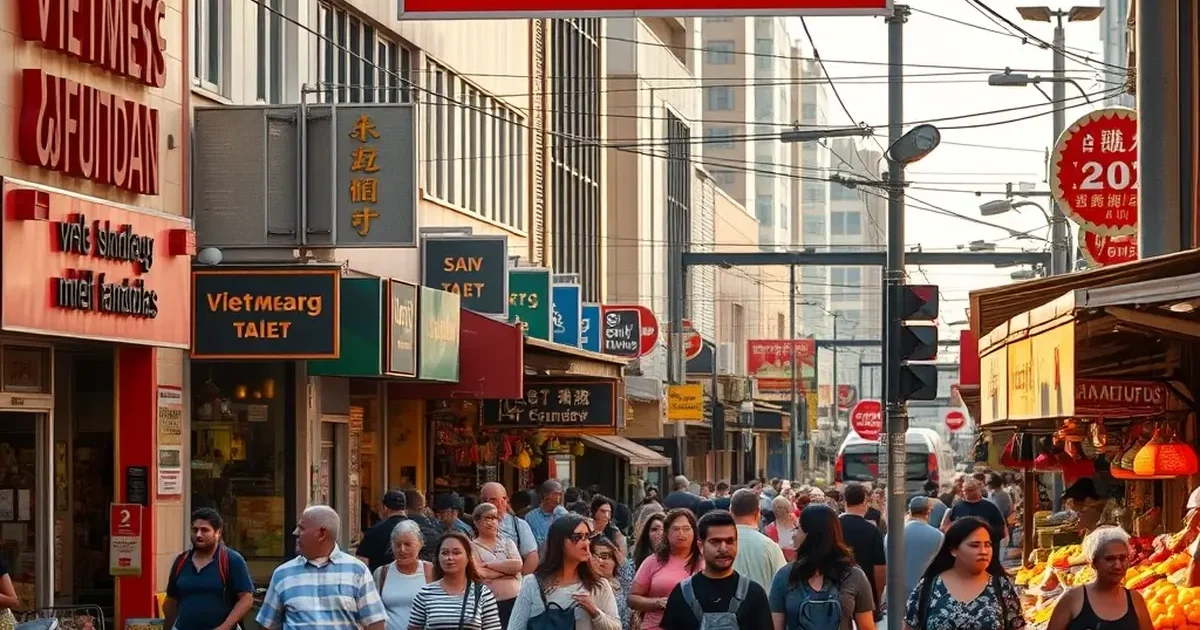
Footscray is the most misunderstood suburb in Melbourne — and, for a lot of international students and new arrivals, the smartest place to live. Five kilometres west of the CBD, it offers some of the cheapest rent of any well-connected inner suburb, one of the best-connected train stations in the city, and a food scene that lands it on “world’s coolest neighbourhoods” lists. It also carries an old reputation for being “rough” that the current reality no longer matches. This guide cuts through the noise with the honest detail you actually need: what it costs to live here in 2026, what the crime statistics really mean once you understand them, how good the transport is, and what daily student life in Footscray is genuinely like.
If you are weighing Footscray against other suburbs, the short version is this: you trade a slightly gritty, fast-gentrifying main strip for low rent, an unbeatable commute, and the most exciting multicultural food in Melbourne. For thousands of students — particularly those at Victoria University, whose campuses are here, and at the University of Melbourne, a short trip away — that is an excellent trade. Let’s break down exactly why, starting with the money.
TL;DR: Living in Footscray in 2026
Footscray is an affordable, intensely multicultural inner-western suburb about 5 km from the Melbourne CBD, popular with students for its low rent (rooms from $220–$280 a week), its outstanding transport (Footscray Station serves three train lines plus regional services, with citybound trains roughly every two minutes at peak after the 2026 Metro Tunnel upgrade), and its famous Vietnamese and East African food and markets. Its crime rate looks high on paper, but that figure is driven almost entirely by the commercial strip around the station; the residential streets where you would actually live are far safer, and violent crime has trended down for years. Footscray suits budget-focused students and food lovers who want to be close to the city; it suits you less if you want a quiet, polished, leafy suburb.
Footscray at a Glance
| Feature | The quick facts |
|---|---|
| Location | Inner west, about 5 km from the Melbourne CBD |
| Population | Around 17,000, very multicultural (about 57% of households have an overseas-born parent) |
| Train to CBD | 8–15 minutes (Werribee, Williamstown & Sunbury lines + regional V/Line) |
| Myki zone | Zone 1/2 overlap — charged at the cheaper Zone 1 fare |
| Room in a share house | $220–$280 per week |
| One-bedroom unit | $390–$460 per week |
| Vibe | Gritty-but-cool, foodie, fast-gentrifying, diverse |
| Best for | Budget-conscious students, food lovers, Victoria University and Unimelb students |
| Famous for | Footscray Market, Hopkins St Vietnamese food, Nicholson St East African food, the Maribyrnong River |
Cost of Living in Footscray
Cost is the number-one reason students choose Footscray, and it delivers on two fronts: rent that undercuts most inner suburbs, and a market culture that makes groceries genuinely cheap. Here is the full picture.
Rent by property type
Footscray sits well below the inner-north and inner-east for rent, especially for shared living. The figures below are realistic 2026 weekly guides — you will beat the room prices by sharing with more housemates or taking an older place, and pay more for a renovated apartment near the station.
| Property type | Typical weekly rent | Notes |
|---|---|---|
| Room in a share house | $220–$280 | The most common student setup; cheaper with more housemates |
| Studio apartment | $340–$400 | Your own space at the lowest solo price |
| One-bedroom unit | $390–$460 | Renting alone; newer builds near the station cost more |
| Two-bedroom unit | $500–$560 | Ideal to share between two for a low per-person cost |
| Three-bedroom house | $560–$640 | Best value per person split between three or four |
The cheapest way to live in Footscray
Groceries and the market advantage
This is Footscray’s secret weapon. The Footscray Market on Hopkins Street — directly opposite the station — and the nearby Little Saigon Market sell fresh produce, seafood, meat and Asian groceries at prices that put the big supermarkets to shame. Locals routinely say a $30 shop at the market goes as far as $50–$60 at Coles or Woolworths. For a student who cooks, living a short walk from these markets can cut your weekly food bill to $60–$80 while eating better and fresher than almost anywhere else in Melbourne. If you cook Vietnamese, Chinese, Indian, African or Middle Eastern food, the ingredients you need are all here and cheap.
A realistic weekly student budget
Here is what a typical week costs for a student sharing a room in Footscray and shopping at the market. Your numbers will vary, but this is a grounded mid-range example.
| Expense | Weekly cost | Detail |
|---|---|---|
| Rent (room in a share house) | $250 | Mid-range; cheaper in a larger share |
| Groceries (market + supermarket) | $70 | Cooking at home, market produce |
| Public transport (Myki) | $45 | Full adult fare, daily cap |
| Phone & internet | $15 | Prepaid SIM + share of home internet |
| Eating out & social | $50 | A few cheap pho or banh mi meals |
| Other (toiletries, misc) | $25 | Everyday extras |
| Total | ≈ $455 | Lower if you share a house and cook more |
Remember the upfront costs
Is Footscray Safe? An Honest Look at the Crime Data
This is the question everyone asks about Footscray, and it deserves a straight, data-based answer rather than either reassurance or scare-mongering. The honest version is this: Footscray’s headline crime rate looks high, but that number is badly misleading once you understand where the crime actually happens. Let’s unpack it properly, because getting this right is the difference between dismissing a great-value suburb on hearsay and making an informed decision.
What the numbers actually say
In the most recent full year, Footscray recorded roughly 4,510 criminal incidents. Because the resident population is only about 17,000, that produces an eye-watering “per 100,000” rate of around 26,000 — far above the Victorian average. But here is the catch that the raw rate hides: Footscray is a major regional centre with a busy commercial heart, a transport hub, hospitals and nightlife that serve hundreds of thousands of visitors who do not live there. The crime is divided by residents, but committed across a whole district. The composition of those offences tells the real story.
| Offence category (latest year) | Incidents | What it means for you |
|---|---|---|
| Property & deception offences | 2,881 | Theft (especially bikes and from cars), burglary, property damage — by far the biggest group |
| Crimes against the person | 616 | Assault and related — concentrated in the late-night commercial and nightlife strip |
| Justice procedures offences | 377 | Breaches of bail or orders — administrative, not street danger to residents |
| Drug & other offences | ≈640 | Drug, public-order and remaining categories combined |
| Total recorded incidents | ≈4,510 | Across the whole commercial district, not just residential streets |
Notice that property and deception offences — overwhelmingly theft — make up the clear majority. Violent crime against the person is a much smaller share, and it is concentrated in the late-night entertainment strip rather than the residential streets. For a student, this means the realistic risk is having a bike stolen or a car broken into, not personal violence.
The commercial-versus-residential divide
This single chart explains Footscray better than any reputation. Crime here is hyper-concentrated in the commercial corridors around the station and main strip; the quiet residential streets where you would actually rent a room are a completely different world, with crime rates broadly in line with ordinary Melbourne suburbs. The gap between the busiest blocks and the calmest streets is enormous.
In other words, the suburb’s scary average is produced by a small number of commercial blocks. Move two streets back from the strip — which is exactly where the share houses and units are — and you are in a normal, functional residential neighbourhood. This is why long-term residents are genuinely relaxed about safety while outsiders, reading only the headline rate, assume the worst.
Crime trends and safety at night
The longer trend is reassuring: violent crime in Footscray has broadly trended down over recent years, in line with wider Melbourne, even as the suburb has grown and gentrified. Theft remains the dominant and most persistent category. At night, the main strips along Barkly Street, Hopkins Street and around Footscray Station are well-lit and reasonably busy until late, thanks to the restaurants, bars and constant train traffic. As anywhere in a city, the sensible approach after dark is to stick to the lit, populated routes — the walk from the station or the tram 82 stops along Barkly Street is fine when you keep to the main roads rather than cutting through empty back lanes.
Safety for women and people living alone
Living alone in Footscray is common and generally a positive experience. Because the suburb is busy and social — people out at cafes, restaurants and on the street well into the evening — you rarely feel isolated, which many women say makes it feel safer than a deserted quiet suburb. The standard precautions apply and are enough: secure locks, know your building’s entry arrangements, stay aware walking home late, and trust the lit main routes. Plenty of female students live here happily; the suburb’s reputation is far worse than the lived reality.
Practical safety tips for Footscray
So is Footscray the "dodgiest suburb in Melbourne"?
No. It is one of the most talked-about suburbs because of its history and its visible, lively commercial centre, but the data does not support the “dodgiest suburb” label, and it is not even close to the most dangerous places in greater Melbourne. What Footscray has is a concentrated, gritty commercial strip set against very ordinary residential streets — a contrast that fuels the reputation. Judged as a place to actually live, with the simple precautions above, it is a normal, safe-enough inner suburb that happens to come with unusually low rent and unusually good food.
Getting Around: Footscray's Transport
If safety is Footscray’s most exaggerated weakness, transport is its most underrated strength. Footscray Station is one of the best-connected suburban stations in all of Melbourne, and the 2026 Metro Tunnel changes have only improved it. For a student without a car, this suburb is hard to beat.
Footscray Station: three lines plus regional
Footscray Station sits on three metropolitan train lines — the Werribee, Williamstown and Sunbury lines — and also serves regional V/Line trains to Geelong, Ballarat and Bendigo. That combination is rare: very few suburbs give you this many direct rail options, and it means fast, frequent trains into the CBD all day, plus easy weekend escapes to regional Victoria without changing in the city. The station sits right opposite the Footscray Market, so your transport hub and your cheap groceries are in the same spot.
The 2026 Metro Tunnel upgrade
Melbourne’s Metro Tunnel opened fully in February 2026, reshaping how the western suburbs reach the city. For Footscray and West Footscray, the upshot is more frequent, more direct services and faster trips through the centre, with citybound trains running roughly every few minutes in peak. A trip to Southern Cross in the CBD now takes about 8–12 minutes — genuinely faster than from many suburbs that sit physically closer to the city. This upgrade is the single biggest reason Footscray’s transport-for-money is now among the best in Melbourne.
Commute times from Footscray
| Destination | How | Typical time |
|---|---|---|
| Melbourne CBD (Southern Cross) | Train | 8–12 min |
| Flinders Street Station | Train | 10–15 min |
| Victoria University, Footscray Park | Walk / bus | 5–10 min |
| University of Melbourne (Parkville) | Train + tram | 20–25 min |
| Highpoint Shopping Centre | Tram 82 / bus | 15–20 min |
| Moonee Ponds | Tram 82 | 20–25 min |
| Geelong | V/Line regional | ≈50 min |
| Melbourne Airport | Bus + SkyBus via CBD | 40–55 min |
Trams, buses and cycling
Tram route 82 runs along Barkly Street, linking Footscray to Maribyrnong, Highpoint Shopping Centre and Moonee Ponds — your easiest car-free route to the big shopping centre and the northern suburbs, running every 8–12 minutes in peak. Buses fill in the gaps across the inner west, including services toward Highpoint and the surrounding suburbs. For cycling, Footscray is excellent: the scenic Maribyrnong River Trail and the Dynon Road route both reach the CBD in about 15–25 minutes over a flat 5 km, and the river trail doubles as a beautiful place to walk or run. Add the suburb’s genuine walkability — market, shops, station and restaurants all clustered together — and you have a place where you simply do not need a car. For the full picture on fares and zones, see our Melbourne public transport guide.
Food and Culture: Why People Love Footscray
If cost and transport are the practical reasons to live in Footscray, food and culture are the reasons people fall for it. This is one of the great eating suburbs of Melbourne — a place that earned a spot on Time Out‘s list of the world’s coolest neighbourhoods, where you can eat your way around the globe for the price of a CBD sandwich. For an international student, it can taste like a slice of home.
The markets
The heart of Footscray is its markets. The Footscray Market on Hopkins Street, directly opposite the station, is a large indoor fresh-produce and seafood market with dozens of food and general stalls catering to the suburb’s many cultures and its restaurants. Nearby, the Little Saigon Market adds another layer of Asian groceries and street food. Together they are why locals shop here religiously: the produce is fresh, the seafood and meat are cheap, and the Asian, African, Middle Eastern and Mediterranean ingredients you cannot easily find elsewhere are all here, side by side. For a student who cooks, this is a genuine cost-of-living superpower.
The food scene
Footscray’s restaurants tell the story of its migration history in layers. Hopkins Street has one of the densest concentrations of Vietnamese restaurants in Melbourne — steaming bowls of pho at long-running noodle houses, and gold-medal banh mi from bakeries that charge a fraction of city prices. Nicholson Street is the centre of the East African community, where you can eat Ethiopian injera and Somali dishes. Across the suburb you will also find Nepali momos, South Indian masala dosa, North African plates, and a nod to Footscray’s older Italian heritage at T. Cavallaro & Sons, famous for its cannoli. Layered on top is the new gentrified cafe wave — brunch spots like Rudimentary, Small Graces, Nan’s Bakehouse and the Footscray Milking Station — so you can have a third-wave flat white in the morning and a $12 feast of pho or injera at night.
Eat well for almost nothing
Things to do
Beyond food, Footscray has real character and plenty to fill a weekend. The Footscray Community Arts Centre, set on the banks of the Maribyrnong River, is the cultural anchor of Melbourne’s west — theatre, galleries, workshops, and a riverside bar and cafe. The Sun Theatre, a lovingly restored art-deco cinema, has been the heart of the west for some 80 years. Footscray Park offers ornamental gardens and riverside lawns for picnics and study breaks, and the Maribyrnong River Trail beside it is a beautiful flat path for walking, running or cycling all the way to the city. Sports fans can watch the AFL’s Western Bulldogs train at the historic Whitten Oval, and the Highpoint Shopping Centre — one of Melbourne’s largest, with over 500 stores — is a short tram or bus ride away. For a quieter day, the neighbouring village pockets of Seddon and Yarraville are a short stroll for cafes and a slower pace.
Student Life in Footscray
Footscray is, first and foremost, a student suburb — and specifically the home of Victoria University, whose flagship Footscray Park campus sits right by the river, about 10 minutes from the CBD by train. VU has thousands of international students across its Melbourne campuses, and the Footscray Park, City and St Albans campuses are the main ones, all well connected by public transport. That gives the suburb a strong, built-in student population and a genuinely supportive environment for new arrivals.
Housing is easy to find here as a result. UniLodge Victoria University sits directly across the road from the Footscray Park campus, with purpose-built student apartments, study zones, communal areas and a residential-life program of social events — cooking classes, movie nights, BBQs and more — and VU offers guaranteed accommodation to eligible full-time students. Beyond purpose-built housing, the share-house market is deep and affordable, and the university runs more than 50 clubs and societies plus sport and social programs, so there is no shortage of ways to meet people. Combine that with the suburb’s large migrant communities and you get a place where international students rarely feel alone: there is almost always someone nearby who shares your language, your food and your situation.
The gentrification question
It would be dishonest to describe Footscray in 2026 without mentioning gentrification. Over the past decade the suburb has changed fast: new apartment towers near the station, a wave of trendy cafes and bars, and a steady influx of young professionals drawn by the cheap-and-close combination. The upside for residents is more amenities, more nightlife and a safer, busier feel. The downside is rising rents and real pressure on the very communities — Vietnamese, Ethiopian, Italian — that gave Footscray its identity, some of whom are being priced out of the suburb they built. For a student arriving now, the practical takeaway is twofold: Footscray is still genuinely affordable today and remains one of the best-value inner suburbs, but that window is narrowing year by year, so its current pricing advantage is worth using while it lasts.
Living in Footscray: the honest balance
Why students love it
- Low rent for an inner suburb — rooms from $220–$280
- Outstanding transport: 3 train lines + Metro Tunnel, 8–12 min to the CBD
- World-class, cheap multicultural food and markets
- Large student and migrant community — easy to settle in
- Victoria University on the doorstep, Unimelb a short trip
- Walkable and car-free, with the river and parks nearby
What to weigh up
- Gritty, busy commercial strip — not polished or leafy
- Crime reputation (mostly bike/car theft to guard against)
- Gentrification is pushing rents up year on year
- Can be noisy and crowded near the station and markets
Who Footscray Is — and Isn't — For
No suburb is right for everyone, and Footscray is more polarising than most. After everything above, here is the honest summary of who thrives here and who would be happier elsewhere.
Footscray is a great fit if you…
- Want the lowest rent you can find in a well-connected inner suburb
- Study at Victoria University, or at the University of Melbourne or RMIT and want a fast, cheap commute
- Love multicultural food and cooking with fresh, affordable market ingredients
- Value a short, frequent train into the city over a quiet, leafy street
- Want a large, diverse community where it is easy to meet people and find share houses
- Are happy to live without a car and use trains, trams and a bike instead
Footscray may not suit you if you…
- Want a quiet, polished, leafy suburb with a manicured feel
- Are put off by a gritty, busy commercial strip and some visible disadvantage near the station
- Prefer a brand-new apartment and are willing to pay a premium for it
- Need to be in Melbourne’s east or south-east for your campus (Monash, Deakin, Swinburne)
- Place a very high priority on the lowest possible crime statistics on paper
Tips for Moving to Footscray
- Pick your street carefully. Aim a few streets back from the main commercial strip — these residential pockets are quieter, safer and still walking distance to the station and market. Quieter residential streets include those away from the busiest commercial corridors.
- Inspect in person, in the evening. Footscray varies street to street more than most suburbs, so see the actual place and walk the route to the station after dark before you commit. Never pay a deposit for a room you have not seen.
- Use the market from day one. Your biggest ongoing saving is groceries. Learn the Footscray and Little Saigon markets early and shop there weekly.
- Share to save more. The cheapest path is a room in a larger share house, or splitting a three-bedroom house between three or four people for as little as $150 each.
- Set up your transport. Get a Myki, learn the three train lines and the route 82 tram, and consider a cheap second-hand bike for the flat 15–25 minute ride into the city along the river.
- Budget the upfront costs. Have your bond (four weeks’ rent) and first month ready — around $2,000 for a typical room — before you start applying.
The bottom line on Footscray
Who Footscray Is — and Isn't — For
No suburb is right for everyone, and Footscray is more polarising than most. After everything above, here is the honest summary of who thrives here and who would be happier elsewhere.
Footscray is a great fit if you…
- Want the lowest rent you can find in a well-connected inner suburb
- Study at Victoria University, or at the University of Melbourne or RMIT and want a fast, cheap commute
- Love multicultural food and cooking with fresh, affordable market ingredients
- Value a short, frequent train into the city over a quiet, leafy street
- Want a large, diverse community where it is easy to meet people and find share houses
- Are happy to live without a car and use trains, trams and a bike instead
Footscray may not suit you if you…
- Want a quiet, polished, leafy suburb with a manicured feel
- Are put off by a gritty, busy commercial strip and some visible disadvantage near the station
- Prefer a brand-new apartment and are willing to pay a premium for it
- Need to be in Melbourne’s east or south-east for your campus (Monash, Deakin, Swinburne)
- Place a very high priority on the lowest possible crime statistics on paper
Tips for Moving to Footscray
- Pick your street carefully. Aim a few streets back from the main commercial strip — these residential pockets are quieter, safer and still walking distance to the station and market. Quieter residential streets include those away from the busiest commercial corridors.
- Inspect in person, in the evening. Footscray varies street to street more than most suburbs, so see the actual place and walk the route to the station after dark before you commit. Never pay a deposit for a room you have not seen.
- Use the market from day one. Your biggest ongoing saving is groceries. Learn the Footscray and Little Saigon markets early and shop there weekly.
- Share to save more. The cheapest path is a room in a larger share house, or splitting a three-bedroom house between three or four people for as little as $150 each.
- Set up your transport. Get a Myki, learn the three train lines and the route 82 tram, and consider a cheap second-hand bike for the flat 15–25 minute ride into the city along the river.
- Budget the upfront costs. Have your bond (four weeks’ rent) and first month ready — around $2,000 for a typical room — before you start applying.
The bottom line on Footscray
Footscray vs the Neighbouring Western Suburbs
Footscray does not exist in isolation — it sits at the centre of a cluster of inner-western suburbs, each with its own character and price point. If Footscray itself feels a little too busy or gritty, one of its neighbours may suit you better while keeping the same low rent and quick city access. Here is how the surrounding suburbs compare, so you can widen your search intelligently.
| Suburb | Feel | Room/wk | Best for |
|---|---|---|---|
| Footscray | Busy, multicultural, foodie, gritty-cool | $220–$280 | Food lovers, students wanting the cheapest well-connected base |
| West Footscray | Quieter, residential, gentrifying | $220–$280 | Students who want calmer streets but the same access |
| Yarraville | Village charm, cafes, family-friendly | $240–$300 | Families and those wanting a cute, calm, leafy vibe |
| Seddon | Small boutique village, quiet | $240–$300 | Couples and professionals wanting quiet and central |
| Kingsville | Calm residential pocket | $230–$290 | Quiet living between Footscray and Yarraville |
| Maidstone | Plain, residential, good value | $200–$250 | Budget renters who want to be near Highpoint |
| Maribyrnong | Riverside, newer apartments, Highpoint | $260–$320 | Those who want newer units and big-mall shopping |
| Sunshine | Diverse, working, the cheapest | $180–$230 | Lowest possible rent, a bit further west |
The pattern is easy to read. West Footscray and Kingsville give you a calmer version of Footscray at the same price, still minutes from the station. Yarraville and Seddon are the pretty, village-feel options that cost a little more and suit those who want charm over grit. Maidstone and Sunshine chase the lowest rents, with Sunshine the budget extreme a bit further out. Maribyrnong trades some transport convenience for riverside living, newer apartments and the giant Highpoint Shopping Centre on your doorstep. Whichever you choose, you stay in the affordable, well-connected inner west — Footscray is simply the liveliest, food-richest heart of it.
Amenities: Shops, Healthcare and Essentials
One reason Footscray works so well without a car is that almost everything you need for daily life is clustered within walking distance or a short tram ride. Here is the practical infrastructure that makes it livable.
Shopping and groceries
Day to day, you have the Footscray and Little Saigon markets for fresh produce, the major supermarkets (Coles and Woolworths) for everything else, and the Barkly Street and Hopkins Street shopping strips for specialty stores, pharmacies, phone shops and services. For bigger shopping — clothing, electronics, homewares — the enormous Highpoint Shopping Centre in nearby Maribyrnong has more than 500 stores and is a quick trip on the route 82 tram or a bus. Between the markets, the supermarkets and Highpoint, you are never short of options at any budget.
Healthcare
Footscray is well served for health. It is home to a major public hospital run by Western Health, alongside the Joan Kirner Women’s and Children’s Hospital, plus numerous medical clinics, bulk-billing GPs, dentists and pharmacies across the suburb. For international students, having a large hospital and plenty of clinics nearby is genuinely reassuring — you are never far from care, and many GPs in the area are used to treating students and new arrivals. Make sure your Overseas Student Health Cover (OSHC) is active, and keep your provider’s details handy.
Recreation, study spaces and green space
For downtime and study, Footscray has the riverside Footscray Park and the Maribyrnong River Trail for walking, running and cycling, the Footscray Library and Victoria University’s libraries and study spaces, several gyms and an aquatic centre nearby, and the arts and cinema venues covered earlier. The combination of green space along the river, free study spaces, and cheap places to eat and meet friends means a student can live a full, balanced life here without spending much — which, in the end, is the whole point of choosing Footscray.
Frequently Asked Questions
Final Thoughts
Footscray rewards students who look past its dated reputation and see what is actually there: low rent, a brilliant commute, cheap fresh food, and one of the most genuinely diverse, interesting communities in Melbourne. It is not polished, and it is not for everyone — but for budget-focused students who want to be close to the city and eat well, few suburbs offer more for the money. For the wider context on suburbs, transport and settling in, see our guide to the best Melbourne suburbs for international students and our complete guide to living in Melbourne.
You May Also Like

Moving to Australia: The Complete Checklist and Guide (2026)

NT Public Holidays 2026: Full Calendar, Dates and How Darwin and Alice Springs Celebrate