House vs Townhouse vs Unit vs Apartment: Australian Property Types Explained

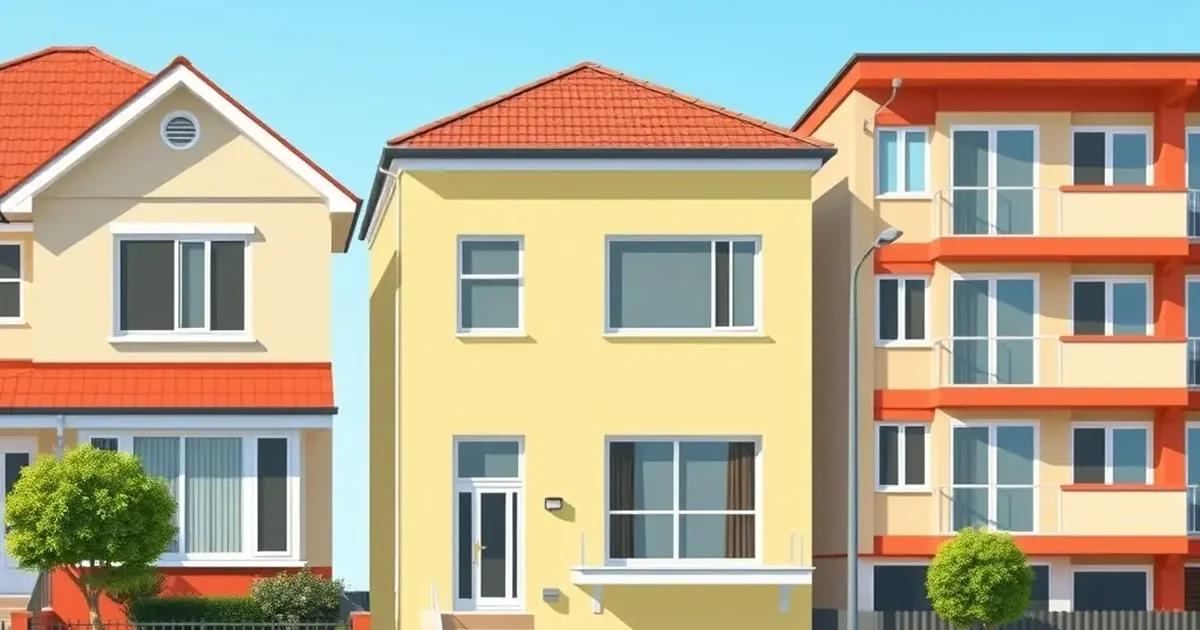
If you are renting, buying or investing in Australia, one of the first things that confuses newcomers — and plenty of locals — is the sheer number of property types and the jargon that comes with them. What exactly is the difference between a house, a townhouse, a unit and an apartment? Do you own the land in a townhouse? What is “strata”, and why are there “body corporate” fees? This guide explains every common Australian accommodation type in plain English, sets out exactly what you own with each, and compares them head-to-head on price, land, ongoing costs, capital growth and lifestyle — so you can work out which one actually suits you.
The key idea to hold onto is this: in Australia, the type of dwelling (house, townhouse, unit) and the type of legal title (who owns the land and the building) are two separate things — and together they determine what you own, what you pay, and how the property is likely to grow in value. Let’s untangle all of it.
TL;DR: The Key Differences
A house is free-standing on its own block and you own the land outright (Torrens title), with no body corporate — the most space and the strongest capital growth, but the highest price and most maintenance. A townhouse is a multi-level home that shares walls with neighbours, usually on strata title, so you own your lot and a share of common property and pay body-corporate fees — more space than a unit for less than a house. A unit or apartment is a dwelling within a larger block on strata title; you own the interior (“lot airspace”) and share everything else, with the lowest entry price but the smallest land share and weakest growth. Villas, duplexes and terraces sit in between. As a rule: the more land you own, the higher the price and the better the long-term capital growth — and the more land you share, the lower the cost but the more body-corporate involvement.
Every Property Type at a Glance
Here is the whole landscape in one table. We explain each type, the title and ownership, and the head-to-head comparisons in detail below.
| Type | What it is | Usual title / land | Body corporate? | Relative price | Best for |
|---|---|---|---|---|---|
| Detached house | Free-standing home on its own block | Torrens — you own the land | Usually no | Highest | Families, space, capital growth |
| Townhouse | Multi-level home sharing walls, small yard | Usually strata; sometimes Torrens | Usually yes | Mid | Space and value below a house |
| Villa | Single-level home in a small complex, courtyard | Usually strata | Usually yes | Mid–low | Downsizers, low maintenance |
| Duplex | Two dwellings on one block | Torrens (if subdivided) or strata | Sometimes | Mid | Investors, dual living |
| Terrace | Heritage row house, attached both sides | Often Torrens — own the land | Usually no | Mid–high | Inner-city character |
| Unit / apartment | Dwelling within a larger block | Strata — own the interior | Yes | Lower | First buyers, investors, location |
| Studio | Single-room apartment | Strata | Yes | Lowest | Singles, students, investors |
| Granny flat | Secondary dwelling on a house block | Part of the main title | No | n/a (added value) | Extra income or family |
Unit vs apartment: what's the difference?
Every Property Type Explained
Let’s define each type properly — what it physically is, what you own, and who it suits.
Detached house
The classic “Australian dream”: a free-standing home on its own block of land, not attached to any neighbour. You own both the building and the land it sits on under a single Torrens title, with no shared walls and (almost always) no body corporate. Houses offer the most space, privacy and freedom to renovate or extend, and because the land is yours and land is the part of a property that appreciates, they have historically delivered the strongest long-term capital growth. The trade-offs are the highest purchase price and the fact that all maintenance — roof, gardens, fences — is yours alone.
Detached house
Pros
- You own the land — strongest capital growth
- Most space, privacy and freedom to renovate
- No body corporate fees or by-laws
- Room for a yard, garden or extension
Cons
- Highest purchase price
- All maintenance is your responsibility
- Often further from the city centre for the same budget
Townhouse
A townhouse is a multi-level home (usually two or three storeys) that shares one or both side walls with neighbouring townhouses, typically with a small private courtyard or yard and its own entrance and garage. Most townhouses are strata-titled, meaning you own your individual lot and share ownership of common property (driveways, gardens, external walls) with the other owners, and pay body-corporate fees. Some townhouses are Torrens-titled, where you own your own parcel of land and pay no strata. Townhouses are the popular middle ground: more space and land feel than a unit, at a lower price than a detached house, with less maintenance because shared areas are looked after by the body corporate.
Townhouse
Pros
- More space than a unit for less than a house
- Often a small private yard or courtyard
- Lower maintenance — common areas managed for you
- Frequently closer to the city than houses
Cons
- Usually body-corporate fees and by-laws
- You share walls — less privacy than a house
- Less capital growth than a detached house
- Strata rules can limit pets or renovations
Villa
A villa is similar to a townhouse but single-level — usually one of several in a small complex, with its own garage and a private courtyard. Villas are typically strata-titled with body-corporate fees, and are popular with downsizers and older buyers who want a low-maintenance, single-storey home without stairs. They are often more affordable than a comparable apartment and offer a bit of private outdoor space, but like townhouses they involve shared common property and strata rules.
Duplex
A duplex is two separate dwellings built on a single block, side by side and sharing a common wall — a form of “dual occupancy”. Each half can be sold separately if the block is subdivided. If the land is subdivided under Torrens title, each owner owns their own parcel of land with no body corporate; if it is strata-titled, the two owners share common property and a (usually small) body corporate. Duplexes are popular with investors and families wanting two incomes or multi-generational living, and they often deliver good value because you get a decent land share at a lower price than a full house.
Terrace house
Terraces are the heritage row houses that line many inner-city streets in Sydney, Melbourne and beyond — typically narrow, two-storey homes attached on both sides in a continuous row. Most terraces are Torrens-titled, so despite sharing walls you usually own your own land, with no body corporate. They combine the land ownership and growth benefits of a house with an inner-city location and period character, which makes them sought-after and often expensive. The trade-offs are limited space, no off-street parking in many cases, and the upkeep that comes with older buildings.
Unit and apartment
A unit or apartment is a self-contained dwelling within a larger building or complex. These are almost always strata-titled: you own the interior of your dwelling — the “lot” or “lot airspace”, meaning everything within your walls, floors and ceiling, sometimes including a balcony, garage or storage cage — and you share ownership of the building’s structure and common areas (lifts, foyers, gardens, pools) with all the other owners, paying body-corporate fees. Units and apartments are the most affordable way into the market and put you close to the city, transport and amenities; the trade-offs are the smallest land share (and so the weakest capital growth), shared facilities, by-laws, and reliance on the body corporate for the building’s upkeep.
Unit / apartment
Pros
- Lowest entry price into the market
- Usually close to the city, transport and amenities
- Minimal personal maintenance
- Often includes facilities like a pool or gym
Cons
- Smallest land share — weakest capital growth
- Body-corporate fees can be high in facility-rich blocks
- By-laws and less privacy
- You depend on the body corporate for major repairs
Studio and granny flat
A studio is the smallest apartment type — a single open-plan room combining living and sleeping space with a separate bathroom — strata-titled like any apartment, and the cheapest entry point, popular with singles, students and investors chasing rental yield in central locations. A granny flat is a self-contained secondary dwelling built on the same block as a house (in the backyard or attached); it is not on a separate title and cannot usually be sold separately, but it adds value and rental income to the main property and is widely used for extra income or to house family members. Neither has its own body corporate in the way an apartment block does.
Do You Own the Land? Title Types Explained
This is the question at the heart of every “house vs townhouse vs unit” debate, and the answer comes down to the title — the legal form of ownership. There are four main types in Australia, and they decide exactly what you own.
| Title type | What you own | Own the land? | Body corporate? | Common for |
|---|---|---|---|---|
| Torrens (freehold) | The land and the building on it | Yes — your own parcel | No | Houses, terraces, some townhouses & duplexes |
| Strata | Your lot (interior) + a share of common property | Shared via the owners corporation | Yes | Apartments, units, townhouses, villas |
| Community | Your lot + a share of community property | Often your own lot + shared estate areas | Yes (community association) | Master-planned estates |
| Company | Shares in the company that owns the building | No — the company owns it | Company / board | Older apartment blocks |
Torrens (freehold) title
Torrens title — also called freehold — is the simplest and most complete form of ownership: you own the land and everything built on it, recorded on a single certificate of title. There is no owners corporation and no shared property, so you have full control (subject to council rules) and no body-corporate fees. Almost all detached houses are Torrens-titled, as are most terraces and some townhouses and duplexes where the land has been individually subdivided.
Strata title
Strata title is the system that makes apartments and most townhouses possible. You own your individual “lot” — generally the interior airspace of your dwelling, everything within the walls, floors and ceiling, and sometimes a balcony, garage or courtyard — while the land, the building’s structure and all the shared areas are owned collectively by everyone in the scheme through an owners corporation (called a body corporate in Queensland). So in a strata townhouse, you do not own the land outright: you own your lot and a share of the common property, and you help fund its upkeep through levies. Strata is the most common title for apartments, units, villas and townhouses.
Community and company title
Community title is used in larger master-planned estates: you typically own your own lot (often with your own land, like a house) but also share community property such as private roads, parks, pools and gyms, managed by a community association you pay into — think of it as strata-style shared facilities layered over individually owned homes. Company title is an older, less common form found mainly in some older apartment blocks: instead of owning real estate, you own shares in a company that owns the building, which entitle you to occupy a unit. Company title can be harder to finance and usually requires board approval to sell or rent, so it is worth extra caution.
So, do you own the land in a townhouse?
Strata and Body Corporate Fees Explained
If a property is strata-titled — most townhouses, villas, units and apartments — you will pay strata levies, also called body-corporate fees. Understanding them is essential, because they are a significant ongoing cost that houses on Torrens title simply do not have.
What the fees cover and how they're structured
Levies are usually billed quarterly and split into two main funds: an administrative fund for day-to-day running costs (building insurance, cleaning, gardening, shared electricity and water, management fees) and a capital works or sinking fund that saves up for major future repairs like roofing, painting or lift replacement. Occasionally a special levy is raised for an unexpected big-ticket repair. What you pay depends on the size of your lot, the size and age of the complex, and especially its facilities — a simple townhouse block with just shared gardens and a driveway costs far less to run than a high-rise with a pool, gym, lifts and a concierge.
| Property | Typical quarterly strata levy (indicative) |
|---|---|
| Townhouse or villa (basic shared areas) | ~$500–$1,200 |
| Standard apartment (lift, gardens) | ~$800–$1,800 |
| Apartment with pool, gym and facilities | ~$1,500–$3,500+ |
| Torrens-title house or terrace | $0 (no strata) |
These figures are broad guides only — actual levies vary widely by building, so always ask for the exact amount. The body corporate also makes and enforces by-laws, the rules of the scheme, which can cover pets, renovations, parking, noise and short-stay letting. Before buying any strata property, get a strata report (a strata search): it reveals the scheme’s financial health, the size of its sinking fund, any planned special levies, and any disputes or building defects — the single best protection against an expensive surprise.
Factor strata into the true cost
Head-to-Head: The Comparisons That Matter
Now the questions everyone actually asks. Each comes down to the same trade-off: more land means more space and growth but a higher price, while less land means a lower price and less maintenance but weaker growth.
House vs townhouse
| Factor | House | Townhouse |
|---|---|---|
| Land | Own your full block | Usually a share (strata) |
| Space & privacy | Most — no shared walls | Less — shares walls, small yard |
| Price | Highest | Lower |
| Maintenance | All yours | Common areas managed for you |
| Body corporate | Usually none | Usually yes |
| Capital growth | Strongest | Moderate — better than units |
Choose a house for maximum space, privacy, freedom to renovate and the strongest long-term growth, if you can afford the price and the upkeep. Choose a townhouse for a balance of decent space and a small yard at a lower price, with someone else maintaining the common areas — accepting body-corporate fees and a little less growth.
Unit vs townhouse
Both are usually strata-titled with body-corporate fees, so the difference is space, land and feel. A townhouse is a multi-level home with its own street entrance and usually a private courtyard, giving you a house-like feel and a bigger land share — which tends to mean better capital growth. A unit (or apartment) is a single-level dwelling within a larger block, typically cheaper and more central, with shared facilities but the smallest land share and less privacy. If you want space and a yard, go townhouse; if you want the lowest price and a central location, go unit.
Townhouse vs apartment
A townhouse gives you more space, more privacy, your own entrance and a courtyard, plus a larger land share and usually stronger growth than an apartment — at a higher price and with stairs. An apartment is cheaper to buy, usually more central, has no stairs and often includes facilities like a pool or gym, but comes with the smallest land share, higher potential strata fees in facility-rich buildings, and weaker long-term growth. Townhouses suit families and owner-occupiers wanting space; apartments suit those prioritising location, lock-up-and-leave convenience and price.
Capital Growth: Why Land Is King
Over the long run, it is the land under a property that appreciates, while the building itself slowly depreciates. That single fact explains most of the difference in capital growth between property types: the more land your money buys, the more of the growth engine you own. Houses sit on the most land and have historically delivered the strongest growth; townhouses and villas, with a meaningful land share, tend to outperform apartments; and units and studios, with the smallest land share, usually grow the slowest. The chart below shows the relative land content of each type.
This does not make units a bad buy — they offer affordability, location and rental yield, and a well-located apartment can still grow strongly. But if long-term capital growth is your priority, weight your choice toward the types with more land.
Which One Suits You?
| If you want… | Best-fit type |
|---|---|
| Maximum space & growth, and can afford it | Detached house |
| Space and value with less maintenance | Townhouse |
| Single-level, low-maintenance living | Villa |
| Lowest price and a central location | Unit / apartment |
| Investment yield in a central spot | Apartment or studio |
| Dual income or multi-generational living | Duplex or granny flat |
| Inner-city character with land ownership | Terrace |
Is it cheaper to build a house or a townhouse?
Frequently Asked Questions
Final Thoughts
There is no single “best” property type in Australia — only the one that fits your budget, your stage of life and your goals. If you want maximum space and the strongest long-term growth and can afford it, a house wins; if you want a balance of space and affordability with less maintenance, a townhouse or villa is the sweet spot; and if location and a low entry price matter most, a unit or apartment makes sense. Whatever you choose, understand the title and the body-corporate costs before you sign, because what you own — and what you pay each quarter — depends on them. For more on renting and living in Australia, explore our housing guides.
You May Also Like

Break Lease Fee Calculator: What It Actually Costs to End Your Lease Early in Australia
Bathroom Renovation Cost in Australia (2026): Full Breakdown + Calculator